
















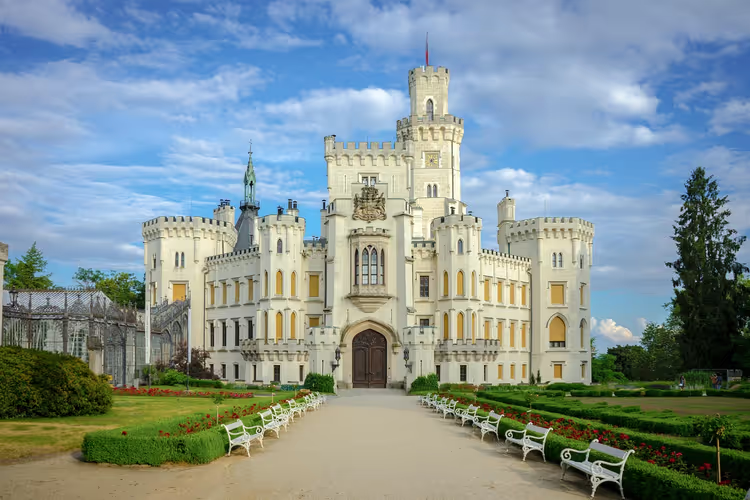
What to see in Czechia besides Prague: 14 places from Kutna Hora to Karlstejn
Prague grabs all the attention, but beyond it lies a second Czechia. The ossuary made of human bones in Kutná Hora, the brewery in Plzeň, and Gothic Karlštejn are all within an hour or two of the capital.
Below are 14 places in Czechia worth seeing outside Prague. For each one, we've put together what to see there, how to get there, and what to book in advance.
The Sedlec Ossuary is open to visitors even during restoration, and the ticket covers both floors of the chapel and the Cathedral of the Assumption of Our Lady (verified 14.09.2026 on the Sedlec Ossuary website).
Ad: this article contains affiliate links, we earn a commission if you book through them, at no extra cost to you.
1. Kutná Hora and the ossuary
💡 In short:
- Direct trains run to Kutná Hora from Prague's main station, and the trip takes just over an hour.
- In Sedlec you'll find the ossuary and the Cathedral of the Assumption of Our Lady, both covered by one ticket.
- St. Barbara's Cathedral in the center is sold separately, so save it for the afternoon.
The Sedlec Ossuary, in a suburb of Kutná Hora, is known far beyond Czechia. Human bones are arranged here into a chandelier, garlands, crosses, and the Schwarzenberg family coat of arms. Estimates suggest the decoration uses the remains of 40,000 to 70,000 people (according to the Kutná Hora tourism portal).
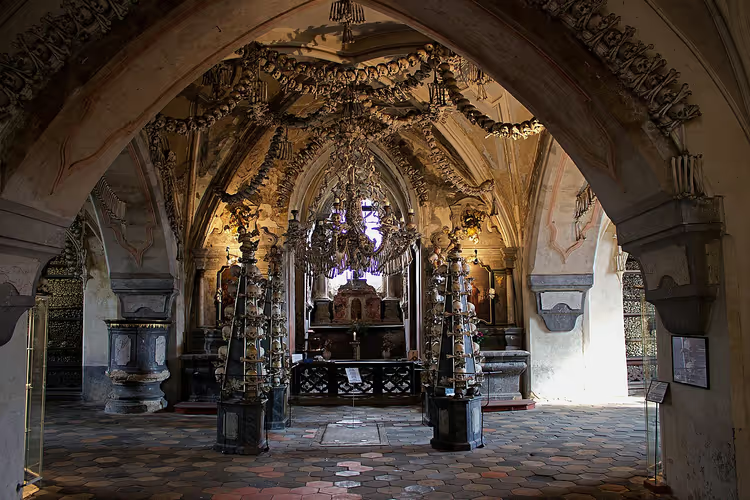 © Pedro Krtička · CC BYPhoto: Pedro Krtička, CC BY (https://creativecommons.org/licenses/by/3.0), Wikimedia Commons
The site's history began in the 13th century, when the local cemetery was declared holy ground. Over time, bones from old graves were dug up and stacked in the chapel. Today it is an active Catholic church, so speak quietly inside and don't touch the exhibits.
Nearby, see the Cathedral of the Assumption of Our Lady and St. John the Baptist, which is included in the same ticket. In the city center, you'll find St. Barbara's Cathedral with its stained glass and the old silver mines. Half a day is enough if you leave Prague in the morning.
2. Pilsner Urquell brewery in Plzeň
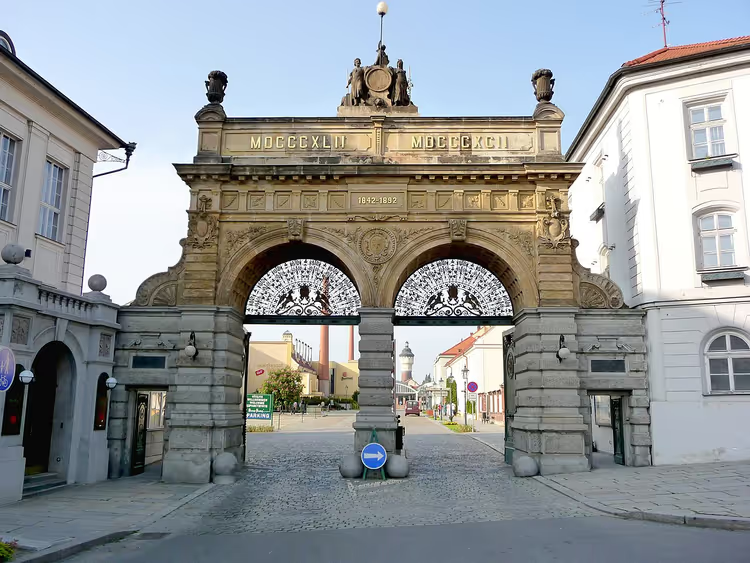 © David J. Fred ( Dfred ) · CC BY-SAPhoto: David J. Fred ( Dfred ), CC BY-SA (https://creativecommons.org/licenses/by-sa/3.0), Wikimedia Commons
Plzeň is famous for the Pilsner Urquell brewery, where the world's first pale lager was brewed. The modern plant operates next to the old production halls, and the tour takes you through both. You descend into cellars with oak barrels and at the end taste unfiltered beer straight from the barrel.
The brewing museum tells the story of local production and the people who started it. Book the tour in advance: groups are filled on a schedule, and spots run out faster on weekends.
- Who it's for: those who want to see production from the inside and try beer from the barrel.
- How to get there: trains from Prague take about an hour and a half, and the station in Plzeň is in the center.
If you want to visit the cellars with a guide, choose tours on GetYourGuide.
3. Karlovy Vary
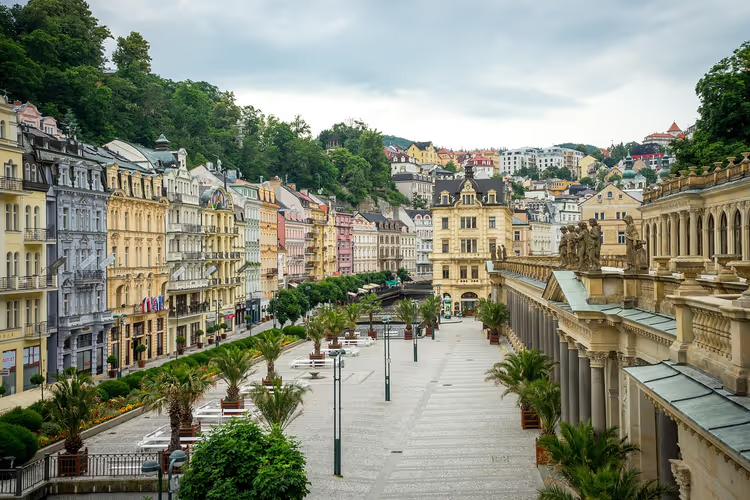
Karlovy Vary was founded by Charles IV, and the town still thrives on its thermal springs. Hot water rises from the ground right in the center, and colonnades were built around it, where people stroll with spa cups. The Hot Spring and Mill colonnades and Dvořák Gardens make up a classic route through the town.
Two days is enough if you want not only to walk around but also to take a course of treatments. Baths and sanatoriums should be booked in advance, especially for spring and autumn.
- Who it's for: those coming for spa treatments, forest walks, and a relaxed pace.
- Location: the colonnades, hotels, and springs are all close to each other.
For Karlovy Vary hotels, see Trip.com.
4. Moravia and its castles
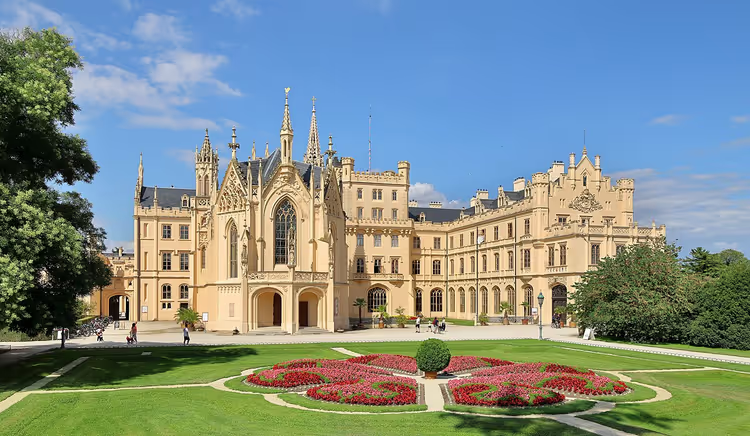 © C.Stadler/Bwag · CC BY-SAPhoto: C.Stadler/Bwag, CC BY-SA (https://creativecommons.org/licenses/by-sa/4.0), Wikimedia Commons
Moravia occupies the eastern half of Czechia and keeps its own history. In Brno, Špilberk Castle rises above the city, which grew up around it. In Ostrava, the Silesian Ostrava Castle has been preserved, and in the surrounding area you'll find the Gothic Pernštejn Castle and the cathedral in Brno.
Almost every town in the region has at least one old castle or cathedral. If you plan to visit several towns, start from Brno: trains run from there to Ostrava and beyond.
Train tickets for the Czech Republic are easy to book on Trip.com.
5. Moravian Karst
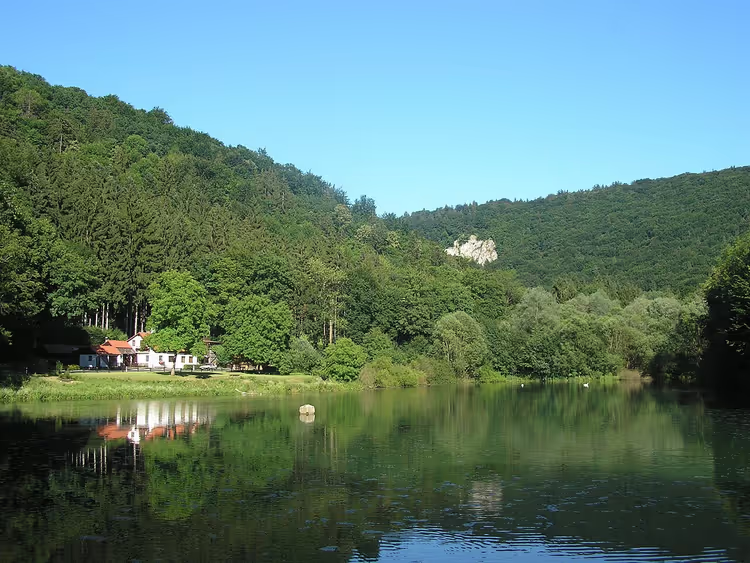
Moravian Karst is considered the largest karst area in Central Europe. Underground, you'll find caves with stalactites and stalagmites, the Punkva River, and the Macocha Abyss. Several caves are open to tourists, and part of the route is done by boat along the underground river.
The trails above the abysses are well maintained, but wear comfortable shoes. In summer, arrive at opening time: by midday there's a line at the ticket office, and groups are admitted in timed slots.
- Who it's for: nature lovers and anyone who doesn't mind underground passages.
- Tickets: tickets on Tiqets are best booked for a specific time.
6. Olomouc
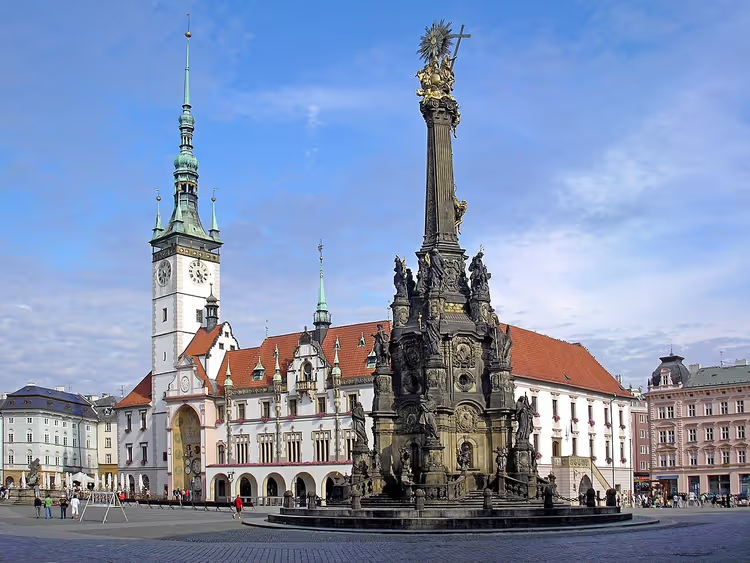
Olomouc is called an open-air museum of antiquities. The historic center is anchored by three squares, surrounded by the Holy Trinity Column, the town hall with its astronomical clock, and St. Wenceslas Cathedral. The column is a UNESCO World Heritage Site, and its height makes it visible from anywhere in the center.
The city is compact, and you can walk it in a day. Stop at Upper Square, where you'll also find cafes and old houses with arcades.
For accommodation in the center, check hotels in Olomouc on Trip.com.
7. Adršpach Rock Town
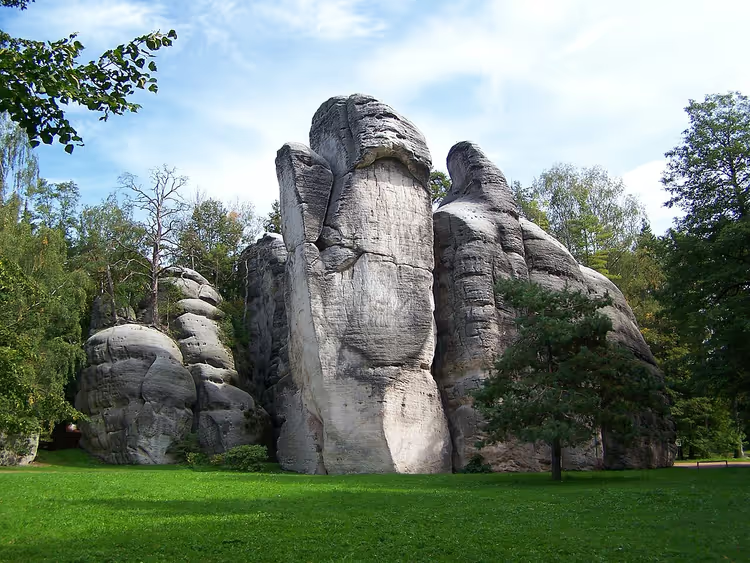 © Lestat (Jan Mehlich) · CC BY-SAPhoto: Lestat (Jan Mehlich), CC BY-SA (http://creativecommons.org/licenses/by-sa/3.0/), Wikimedia Commons
Adršpach Rock Town spreads out as a labyrinth of sandstone towers in northeastern Czechia. The marked trails were laid out back in the 19th century, so it's hard to get lost here. The most famous rocks got their names from their shapes: Cukrová homole, Džbán, and the entrance is framed by Gotická brána.
The route leads through a gorge to the viewing area called Sloní náměstí. In winter, some trails are closed, so check access before your trip. Bring water and proper shoes: there are plenty of climbs.
- Who it's for: those ready to spend several hours walking over rocks and stairs.
8. Brandýs nad Labem Castle
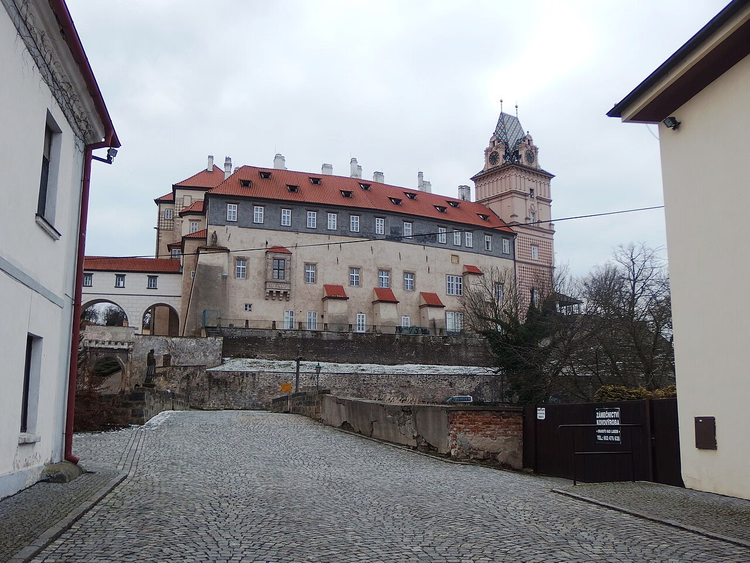 © Palickap · CC BY-SAPhoto: Palickap, CC BY-SA (https://creativecommons.org/licenses/by-sa/4.0), Wikimedia Commons
Brandýs nad Labem Castle sits half an hour from Prague and easily fills a day trip. It was built starting in the 14th century, and the building took its final form in Renaissance and Empire styles. Inside, you'll see murals, sculptures, and the park that surrounds the palace.
Today it hosts concerts, festivals, and weddings.
9. Terezín: fortress and memorial
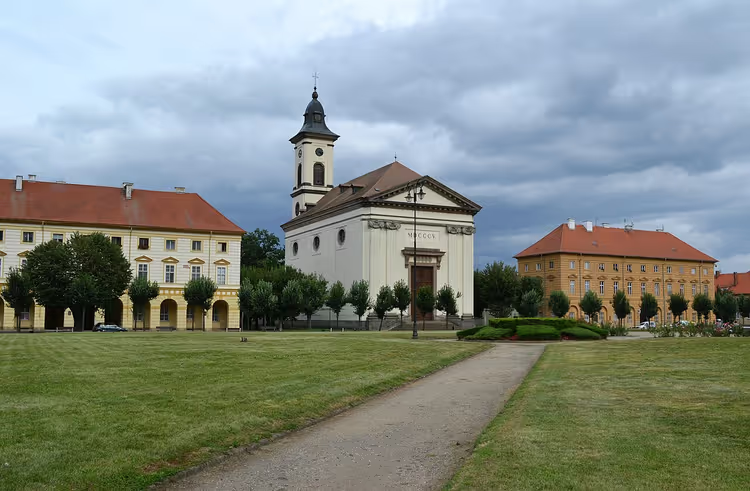 © RomanM82 · CC BY-SAPhoto: RomanM82, CC BY-SA (https://creativecommons.org/licenses/by-sa/4.0), Wikimedia Commons
Terezín was built as a fortress in the 18th century, but it went down in history as a place of remembrance for World War II. During World War I, political prisoners were held here, and during the war years the Nazis set up a Jewish ghetto and transit camp in Terezín. Tens of thousands of people passed through it, sent onward to the east.
Today a memorial complex operates here: a cemetery, a columbarium, the Ghetto Museum, and a prayer house. It's a heavy place, and you walk through it in silence. Take a guided tour to understand the context.
- Not for: this is not a place for a fun outing with children.
10. Mariánské Lázně
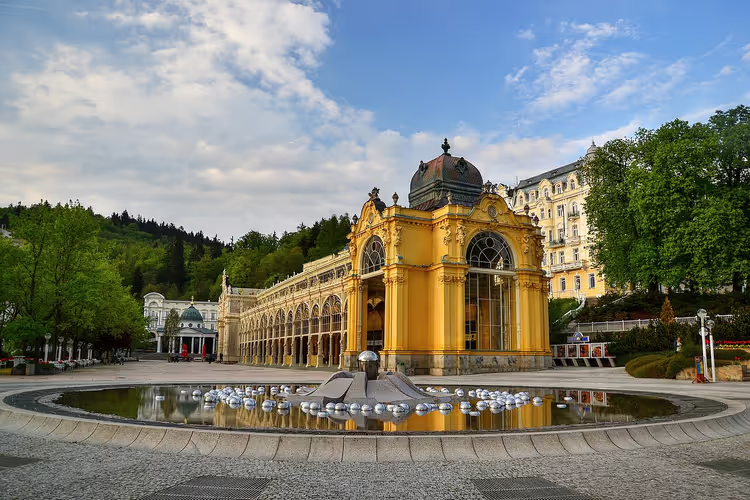 © LenkaSvasek · CC BY-SAPhoto: LenkaSvasek, CC BY-SA (https://creativecommons.org/licenses/by-sa/4.0), Wikimedia Commons
Mariánské Lázně became the Czech Republic's second major spa resort, also known as Marienbad. The town gained spa status in the 19th century and grew from a village into a fashionable destination within a couple of decades. In the center, you'll find the Colonnade with the Singing Fountain and landscaped parks.
For architecture, see Teplá Monastery with its Gothic buildings and Kynžvart Castle, where original furniture has been preserved. The resort is linked to the names of Goethe and Chopin, and their museums are located here.
- Who it's for: those looking for a quiet resort with walks through parks.
For a spa hotel near the springs, see options in Marianske Lazne on Trip.com.
11. Benatky nad Jizerou Castle
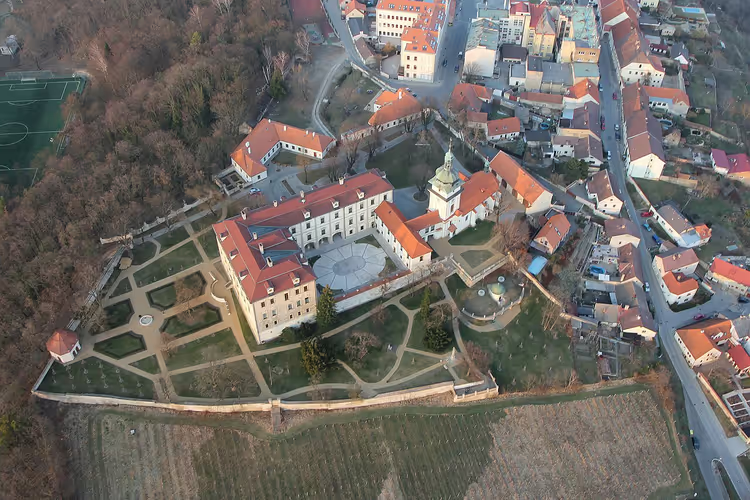 © Zdeněk Fiedler · CC BY-SAPhoto: Zdeněk Fiedler, CC BY-SA (https://creativecommons.org/licenses/by-sa/3.0), Wikimedia Commons
Benatky nad Jizerou Castle grew up on the site of an old fortress and changed many owners over its history. In the 16th century, Emperor Rudolf II stayed here with the astronomer Tycho Brahe, which is why the castle has an observatory and a laboratory. The exhibition tells the story of the scientist's work and the search for a plague cure.
It's also worth stopping by the Muzeum hraček with its collection of antique dolls, toy cars, and scooters. The town has preserved the Church of St. Mary Magdalene and the Chapel of the Holy Family. Two to three hours is enough for the castle and the toy museum.
12. Cesky Krumlov
 © Xth-Floor · CC BY-SAPhoto: Xth-Floor, CC BY-SA (https://creativecommons.org/licenses/by-sa/4.0), Wikimedia Commons
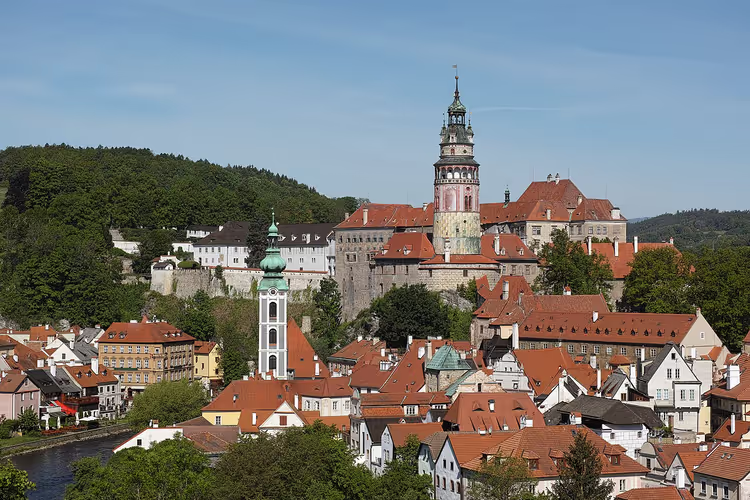
Cesky Krumlov has preserved its medieval look: the Vltava winds between the streets and divides the town into little islands. The Krumlov castle complex is a UNESCO site, with original interiors and a Baroque theater inside. The three-level Cloak Bridge connects parts of the castle and doubles as a viewing platform.
The active Church of St. Vitus stands in the center, and outside town you'll find the medieval Vyssi Brod monastery. If you also want to stop at Hluboka, renting a car in the Czech Republic gives you flexibility with timing.
- How to get there: buses and trains from Prague take a few hours.
13. Hluboka Castle
 © Thomas Zimmermann ( THWZ ) · CC BY-SAPhoto: Thomas Zimmermann ( THWZ ), CC BY-SA (https://creativecommons.org/licenses/by-sa/3.0/de/deed.en), Wikimedia Commons
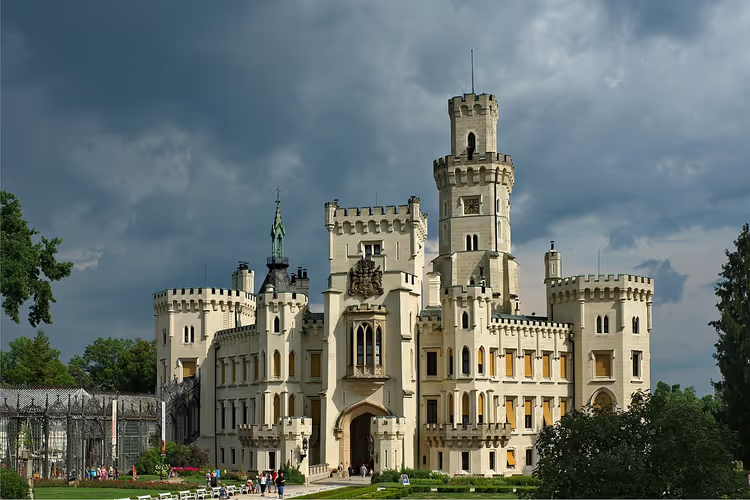
Hluboka Castle stands on a rocky bank and is considered one of the most beautiful in the Czech Republic. It was founded in the 13th century, and the building got its neo-Gothic look after a reconstruction by the Schwarzenberg family. Outside you'll see towers and a park; inside, Flemish tapestries, paintings, and a weapons collection await.
The castle is close to Cesky Krumlov, so both are easy to see in one day. Buy tickets for a specific tour online, as visits are guided only.
14. Karlstejn Castle
 © Jürgen Regel, Marian… · CC BYPhoto: Jürgen Regel, Marian…, CC BY (https://creativecommons.org/licenses/by/3.0), Wikimedia Commons
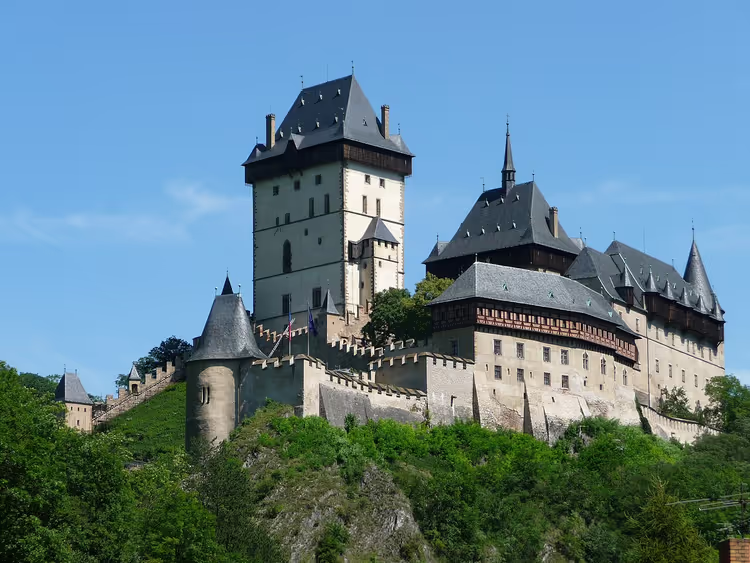
Karlstejn Castle was built by Charles IV as a residence and a treasury for royal relics. The fortress stands on a rock above the Berounka River, where besieging enemies could not break through. Inside you'll find the Imperial Palace, the Marian and Great Towers, and the Chapel of the Holy Cross.
Karlstejn is open most of the year, with tours running on a schedule (according to the official website). The tour of the Chapel of the Holy Cross is available only by advance reservation and not year-round.
- The catch: Tour II with the Chapel of the Holy Cross is not sold at the ticket office on the day of your visit (as of 09/2026, official website).
- How to get there: the suburban train from Prague takes under an hour, and a signposted road leads from the station to the castle.
You'll find tours from Prague to Karlstejn and other castles on GetYourGuide.
Tours and tickets
Guided tours, skip-the-line tickets and activities — most offers can be cancelled free of charge.
See offers on GetYourGuideThe widget loads once you give your consent.
Czechia on the map
All 14 places are marked on one map to make it easier to plan your route. Kutna Hora, Karlstejn, and Brno are connected to Prague by direct trains, while Moravia and the Adrspach rocks are easier to see by car.
What to see in the Czech Republic besides Prague
Places on the map
- 1Kutná Hora An hour's drive from Prague, the ossuary in Sedlec and St Barbara's Cathedral
- 2All Saints Chapel with the ossuary Ossuary made from the bones of 40-70 thousand people, an active Catholic church
- 3Pilsner Urquell Brewery A tour of the workshops and a tasting of unfiltered beer from the barrel
- 4Karlovy Vary Thermal resort of Charles IV, the Geyser and Mill colonnades
- 5Moravia The eastern half of the Czech Republic, Špilberk, Silesian Ostrava and Pernštejn castles
- 6Moravian Karst The largest karst massif in Central Europe, caves and the Macocha abyss
- 7Olomouc Open-air museum of antiquities, the Holy Trinity Column listed by UNESCO
- 8Adršpach Rock Town A rock town of sandstone towers in the north-east of the Czech Republic
- 9Brandýs nad Labem Castle A castle half an hour from Prague in Renaissance and Empire style, concerts and festivals
- 10Terezín 18th-century fortress and a memorial to the ghetto's victims of World War II
- 11Mariánské Lázně The Czech Republic's second spa resort, the colonnade with the Singing Fountain, Teplá Monastery nearby
- 12Benátky nad Jizerou Castle Castle with Tycho Brahe's observatory and a toy museum
- 13Český Krumlov Medieval town in a bend of the Vltava, a UNESCO-listed castle with the Cloak Bridge
- 14Hluboká nad Vltavou Castle Neo-Gothic Schwarzenberg castle on a rocky bank, tapestries and weapons
- 15Karlštejn Castle Residence of Charles IV on a cliff, the Chapel of the Holy Cross by appointment
⁉️🤔 Frequently asked questions
How many days do you need for places in Czechia outside Prague?
Plan at least three days. Kutna Hora and Karlstejn each take one day from Prague, while Karlovy Vary, Moravia, and Cesky Krumlov are worth an overnight stay. If you want to see the whole list, take a week and move between cities by train or car.
Can you see Kutna Hora and Karlstejn in one day?
Technically yes, but it will be a rush. The two places lie in different directions from Prague, and travel will eat up your time. It's better to set aside one day for each and take your time seeing the ossuary, St. Barbara's Cathedral, and the castle.
Is Moravian Karst worth visiting with kids?
Yes, the caves with an underground river appeal to both kids and adults. Part of the route is done by boat, so hold your child's hand. Check the tour schedule in advance: in summer, groups leave at set times and fill up quickly.
What to see in Karlovy Vary besides the springs?
Stroll along the colonnades and climb up to the Goethe Tower for a view of the city. In the evening, walk down to Dvorak Gardens. There are plenty of hotels at the resort, so it's easy to stay here for a couple of nights.
Do you need a car for a trip around Czechia?
Not necessarily. Trains run to Kutna Hora, Karlstejn, and Brno, and buses go to Cesky Krumlov. A car comes in handy for Moravia and the Adrspach rocks, where public transport is infrequent. Compare rental options in advance.
In short: what's worth booking
If you have one free day, go for Kutna Hora with the ossuary and St. Barbara's Cathedral. If you love castles, choose Karlstejn, Hluboka, and Cesky Krumlov. If you want a spa town, stay in Karlovy Vary or Marianske Lazne. If you're drawn to nature, plan for Moravian Karst and the Adrspach rocks.
Book tickets to the ossuary and castles in advance, especially on weekends and in high season. Tours and tickets on GetYourGuide will help you cover the route without waiting in line.

A small editorial team writing guides for independent travel. We travel ourselves, but we haven’t been everywhere, so we check prices, opening hours and how to get there against official sources.