
















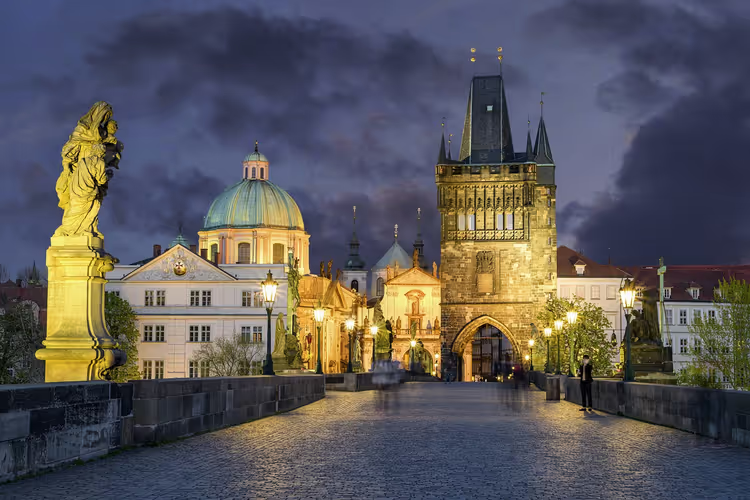
Where to go from Prague for 1 day: 27 routes with verified hours and tickets
A single free day in Prague can easily turn into a trip to a castle or a silver town. Prague sits almost in the center of the Czech Republic, so you can reach many places within an hour, and the German and Austrian borders in two to four hours. We've put together twenty-seven one-day routes: castles, historic towns, and a national park on the Elbe. Verified 09/2026 on official websites: where you need a timed ticket, where places are closed on Mondays, and where you can't get in during the season without a reserved slot. At the Sedlec Ossuary and Konopiště, you need a timed ticket purchased in advance. You pick a route, book transport ahead of time, and leave extra time for the journey.
Ad: this article contains affiliate links. We earn a commission if you book through them, at no extra cost to you.
1. Karlštejn Castle
💡 In short:
- The fastest option: a suburban train runs to Karlštejn from the main station, under an hour each way.
- At the Sedlec Ossuary and Konopiště, you need a timed ticket purchased in advance.
- Prices and opening hours: 09/2026, verified on the official website.
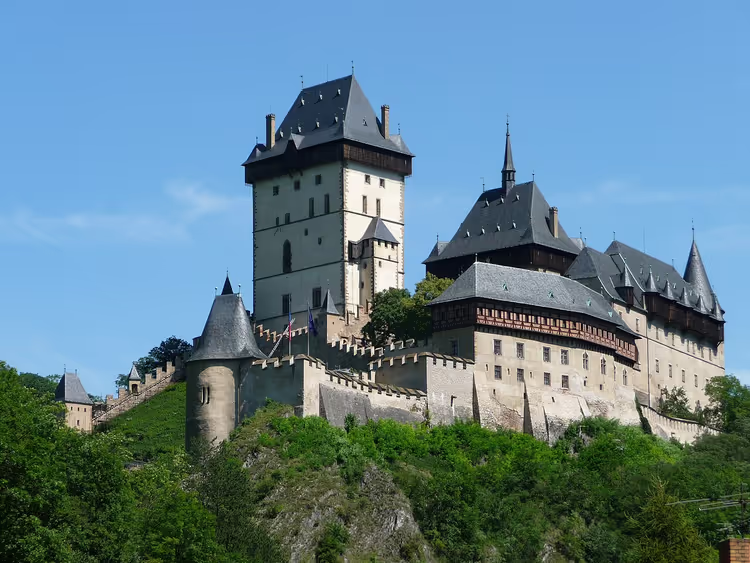 © Jürgen Regel, Marian… · CC BYPhoto: Jürgen Regel, Marian…, CC BY (https://creativecommons.org/licenses/by/3.0), Wikimedia Commons
Karlštejn rises on a cliff above the Berounka River, about thirty kilometers from Prague. Charles IV founded it in the 14th century as a repository for the royal regalia and treasury. You can only go inside with a guided tour, but the route takes you through the emperor's chambers, the Marian Tower, and the Chapel of the Holy Cross.
The season here is short: in September the castle is open Tuesday through Sunday from 9:30 to 17:30, in October until 16:30, and in November only Friday through Sunday (as of 09/2026, official website). In summer, tour slots sell out well before the date, so buy your ticket online. You can get there by suburban train from the main station, with trains running every half hour.
- How to get there: suburban train Prague - Karlštejn, about an hour each way; buses run from the station to the castle.
- Cost: entry is by guided tour only; check the current price and book on the official website.
- The catch: closed on Mondays, and in November the castle is open only on weekends.
2. Konopiště Castle
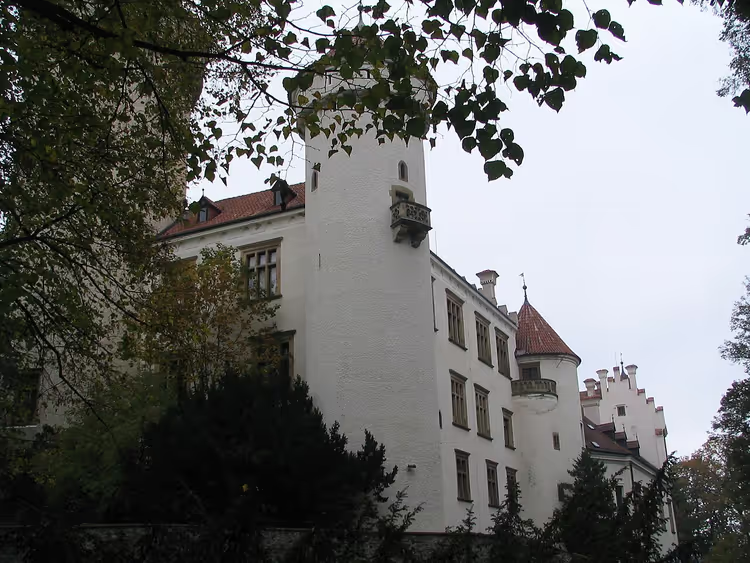 © Maxx · CC BY-SAPhoto: Maxx, CC BY-SA (https://creativecommons.org/licenses/by-sa/3.0), Wikimedia Commons
Near Benešov, less than an hour from Prague, stands Konopiště. From the outside it's a true fortress with ramparts and moats; inside it's a cozy hunting château with a park. Peacocks stroll along the park paths, sculptures stand by the fountains, and the halls display collections of weapons, crystal, and paintings.
The last owner was Crown Prince Franz Ferdinand. He renounced his claim to the throne for a morganatic marriage and bought the castle as a family home. Today you can only go inside with a ticket purchased in advance and printed out: sessions run from 10:00 to 12:00 and from 12:30 to 17:00, groups of nineteen people every half hour, with a tour lasting about fifty minutes (as of 09/2026, official website).
- How to get there: suburban train to Benešov, then about a half-hour walk to the castle gates.
- Who it's for: those who want to combine a castle visit with a walk in the park.
- The catch: photography and filming are prohibited inside the halls, and you won't be admitted without an online ticket.
Prague - Benešov train on Trip.com
3. Kutná Hora
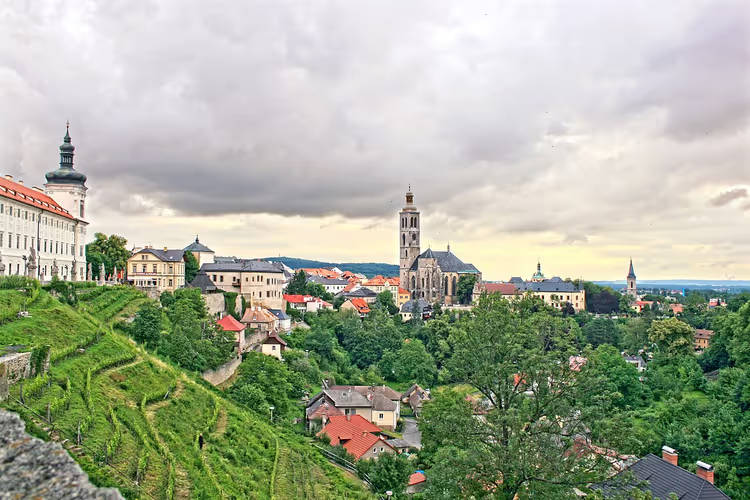 © Laima Gūtmane (simka… · CC BY-SAPhoto: Laima Gūtmane (simka…, CC BY-SA (https://creativecommons.org/licenses/by-sa/3.0), Wikimedia Commons
Kutná Hora grew up on silver: ore was discovered here in the 13th century, and the mined metal was minted into Czech coins. The central mint and the Italian Court are still shown to tourists, and underground there's a route through an old silver mine. Above the town rises the Cathedral of St. Barbara with frescoes, where you can hear the organ in summer.
For many tourists, the main reason to come here is the Sedlec Ossuary, the All Saints chapel in the cemetery. Inside are the bones of several tens of thousands of people. An adult ticket costs 220 crowns, and starting in 2025 both chapels are accessible only on foot due to reconstruction (as of 09/2026, official website).
- How to get there: train from the main station to Kutná Hora station, about an hour, the Ossuary is off to the side in Sedlec.
- Who it's for: those who are ready for a line at the entrance and for intense impressions.
- The catch: photography is prohibited inside the Ossuary, and without a time slot at the entrance there's nothing to count on.
Prague - Kutná Hora train on Trip.com
4. Český Šternberk Castle
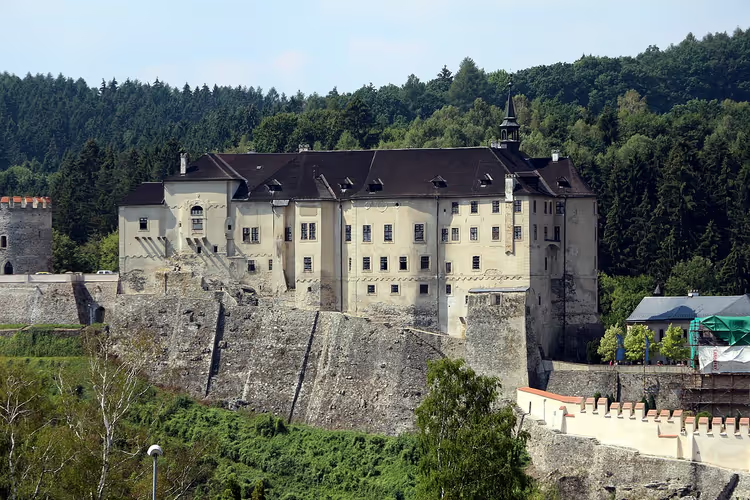 © Evgeny L. · CC BY-SAPhoto: Evgeny L., CC BY-SA (https://creativecommons.org/licenses/by-sa/3.0), Wikimedia Commons
Český Šternberk stands on a cliff above the Sázava River, about an hour's drive from Prague. The castle was built in the 13th century and named after the Sternberg family, whose coat of arms is visible on the facade. The south side is protected by the Gladomorna bastion, built in the 15th century, and next to it rises a preserved three-story tower.
You'll see the interiors as the 17th century left them: stucco and frescoes in the Golden Salon and the Knights' Hall, 16th-century furniture, and 18th-century crystal chandeliers weighing about three hundred kilograms. A separate exhibit shows a collection of copper engravings from the Thirty Years' War era and an armory. A descendant of the family still works in the ancestral castle, and after the tour you can relax in the castle park.
- How to get there: train or bus from Prague heading east, about an hour.
- Who it's for: those who prefer interiors and family collections over parks.
- The catch: the castle is closed in winter, and some rooms are open only in season.
Prague - Český Šternberk train on Trip.com
5. Karlovy Vary
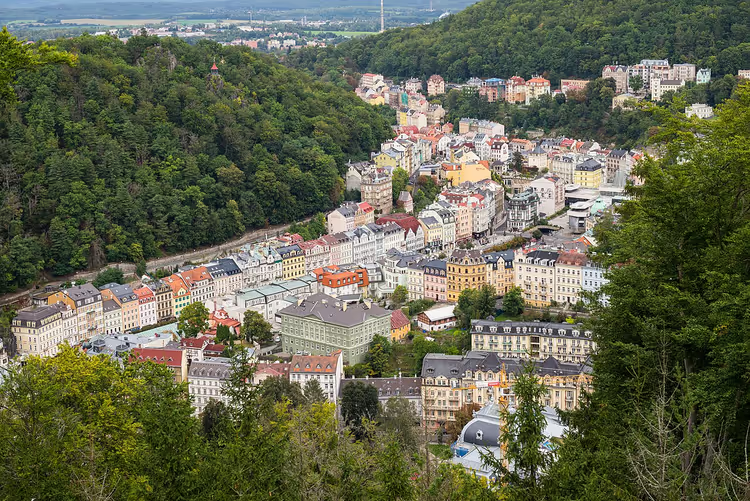 © rboed* · CC BYPhoto: rboed*, CC BY (https://creativecommons.org/licenses/by/2.0), Wikimedia Commons
Karlovy Vary begins with a hunting legend: Charles IV saw a valley with hot springs and ordered a town to be founded here. From Prague, you get here by intercity bus in about two hours. Walking around the resort is easy: the colonnades with mineral water are just a few minutes apart.
The town has its own 19th-century theater with a hand-painted curtain, the Diana observation tower with a funicular, and the 14th-century Valeč Castle. The Church of St. Mary Magdalene got its current look in the late 18th century, although it was founded by the Crusaders. Kids usually enjoy the Christmas Museum, where the holiday is set up year-round.
- How to get there: bus from Prague's bus station, about two hours.
- Cost: access to the springs is free, tickets are needed only for the funicular and museums.
- The catch: in season the colonnades are packed with spa guests, it's calmer to come in the morning.
Prague - Karlovy Vary bus on Trip.com
6. Tábor
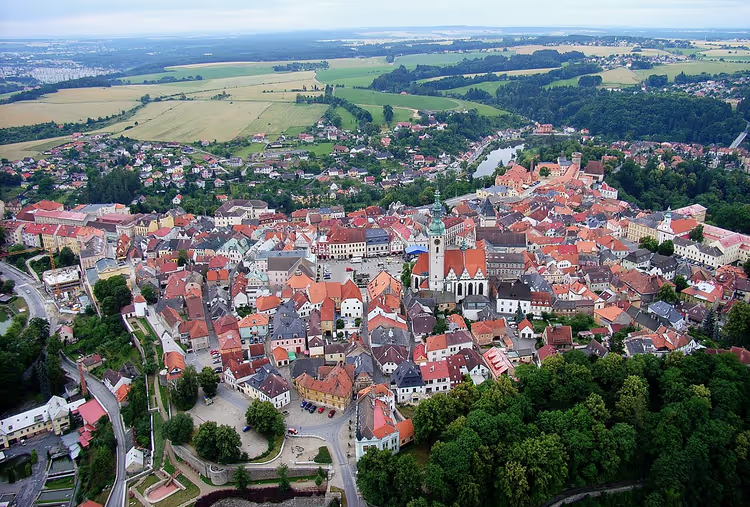
Tábor stands in the south of Czechia and grew out of a Hussite camp: the word itself means "fortification." The town received royal status in the 15th century, and its center has barely been rebuilt since. On the square you'll see the 16th-century town hall, which now houses a museum, and the Church of the Transfiguration of Our Lord.
The Fronton House also survives from the 16th century. The Kotnov Castle tower and the 15th-century Bechyně Gate are among the sights. Monuments to Jan Žižka and Jan Hus stand on the streets, and the most curious visitors descend into the underground corridors where the Hussites hid.
- How to get there: train or bus from Prague, about an hour and a half.
- Who it's for: those interested in the history of the Hussite movement.
- The catch: in the evening the center empties out, most museums close early.
Prague - Tábor train on Trip.com
7. Plzeň
 © Txllxt TxllxT · CC BY-SAPhoto: Txllxt TxllxT, CC BY-SA (https://creativecommons.org/licenses/by-sa/4.0), Wikimedia Commons
Plzeň is known above all for Pilsner beer. So visitors are taken to the brewing museum and to bars that pour lager from local breweries. The plant where Škoda cars are made is also in the city.
At the same time, Plzeň remains a beautiful old town. Fountains flow on Republic Square, and the Cathedral of St. Bartholomew rises above it. A huge underground labyrinth is open beneath the center, where supplies and water used to be stored. It's also worth stopping by the Armory and the Museum of West Bohemia.
- How to get there: train from the main station, about an hour and a half.
- Cost: the underground tour and the brewing museum are paid, check the price on site.
- The catch: on weekends brewery tours get booked up in advance.
Prague - Plzeň train on Trip.com
8. Liberec
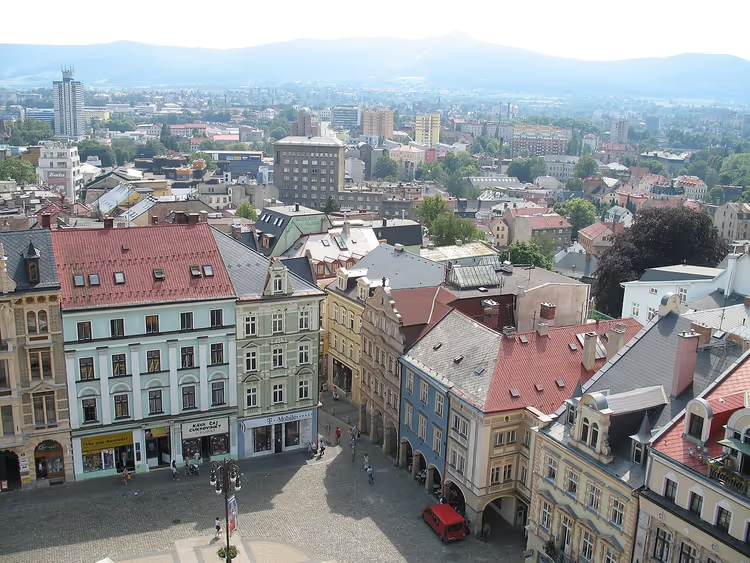 © Thalion77 · CC BY-SAPhoto: Thalion77, CC BY-SA (https://creativecommons.org/licenses/by-sa/2.5), Wikimedia Commons
Liberec was founded in the 14th century and lived through wars and uprisings along with the rest of Czechia. At one time it had a large German population, and the city itself was part of Germany. Today it is a developed city that appeals to travelers of all ages: in winter people come for the ski slopes, in summer for the water park and amusement park.
To see Liberec from above, take the cable car up to the observation deck by the city TV tower. The Regional Museum houses a large collection of paintings, including works by French artists. The amusement park has plenty of interactive areas that kids love.
- How to get there: bus or train from Prague, about two hours.
- Who it's for: families with children and skiers.
- The catch: some attractions are closed in the off-season.
Prague to Liberec bus on Trip.com
9. Ceske Budejovice
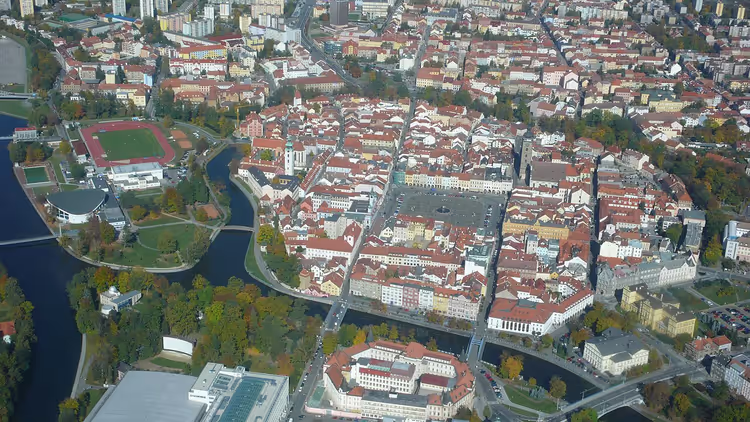 © Pavel Rychtecký · CC BYPhoto: Pavel Rychtecký, CC BY (https://creativecommons.org/licenses/by/3.0), Wikimedia Commons
Ceske Budejovice is known for Budweiser beer, but save the bar for after your walk. The historic center has kept its town hall with sculptures on the facade and the Black Tower, over seventy meters tall. From its gallery you can see the whole city, and right next to it stands the Cathedral of St. Nicholas.
A large fountain with a statue of Samson splashes in the main square. Guides show visitors the Dominican monastery, the Church of the Presentation of the Virgin Mary, and the museum of the royal dynasty. Ceske Budejovice also draws people with fairs and small workshops selling handmade souvenirs.
- How to get there: train from the main station, about two hours.
- Who it's for: those who want to combine the beer theme with an old town center.
- The catch: some museums and beer halls are closed on Mondays.
Prague to Ceske Budejovice train on Trip.com
10. Cesky Krumlov
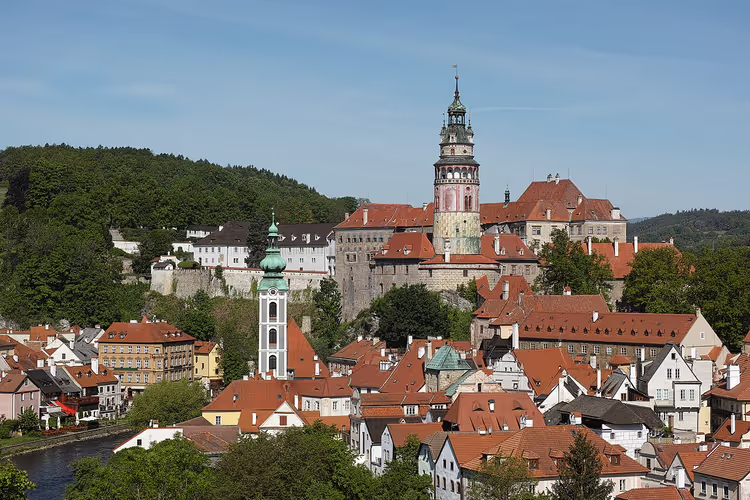 © Xth-Floor · CC BY-SAPhoto: Xth-Floor, CC BY-SA (https://creativecommons.org/licenses/by-sa/4.0), Wikimedia Commons
Cesky Krumlov was first built in the 13th century, and the city coat of arms still bears the red rose of the Rosenbergs. The main sight is Krumlov Castle, which covers about ten hectares and took three centuries to build. A separate curiosity is the 18th-century Cloak Bridge, a three-story gallery spanning the moat.
The town has several churches. The most famous, the 14th-century Church of St. Vitus, is decorated with frescoes, and nearby stand the 15th-century Church of the Body of Christ and the 17th-century Minorite monastery. The local 18th-century theater gives performances only three times a year, so tickets are hard to come by. The castle and town center are on the UNESCO list, so the town is crowded with tourists in summer.
- How to get there: bus from Prague, about three hours, the station is in the center.
- Who it's for: those willing to face the crowds for the most beautiful panorama in Czechia.
- The catch: the narrow streets get packed in summer, and parking in the center is expensive.
Prague to Cesky Krumlov bus on Trip.com
11. Hluboka nad Vltavou Castle
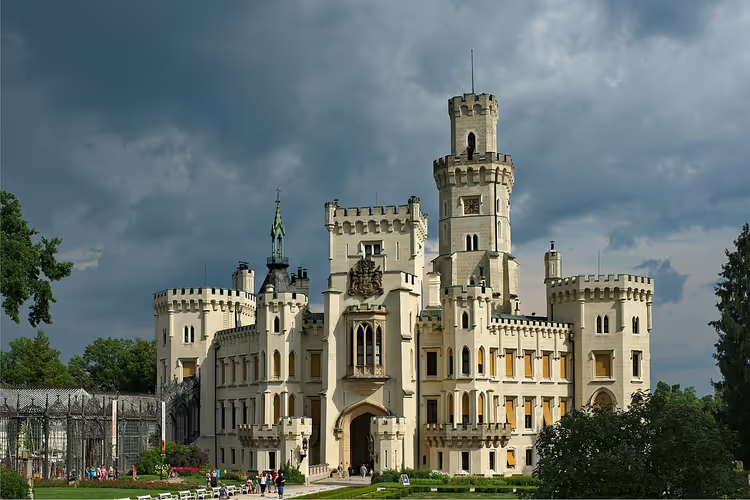 © Thomas Zimmermann ( THWZ ) · CC BY-SAPhoto: Thomas Zimmermann ( THWZ ), CC BY-SA (https://creativecommons.org/licenses/by-sa/3.0/de/deed.en), Wikimedia Commons
Hluboka nad Vltavou lies south of Prague, a little over two hours away. The snow-white castle with crenellated towers and balconies was built in the first half of the 13th century and later rebuilt in the Romantic style. Inside there are more than a hundred rooms, a dining hall seating several dozen people, and a library with thousands of volumes.
Tours run along five routes: the main route, the winter route, the private apartments, the kitchen, and the observation tower. After the castle, take a walk through the landscaped park with flower arrangements and rare trees. The park replicates the design of Windsor Castle's park, which is why it is called the Czech Windsor. The easiest way to get here is by rental car; by bus or train you will need to make connections.
- How to get there: by car south on the highway, or by bus with a transfer in Ceske Budejovice.
- Cost: tickets for different routes are sold separately, check prices on site.
- The catch: without a car, the trip takes twice as long.
Prague car rental on DiscoverCars
12. Ostrava
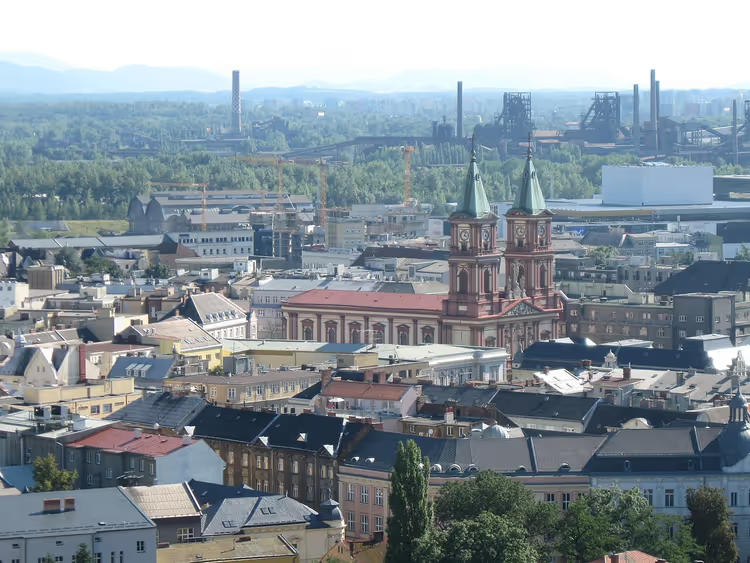 © Lukáš Mižoch · CC BYPhoto: Lukáš Mižoch, CC BY (https://creativecommons.org/licenses/by/3.0), Wikimedia Commons
Ostrava is the third-largest city in Czechia, with a population of over three hundred thousand. It was founded in the 13th century, and rapid growth began in the 18th century when coal was discovered nearby and the Northern Railway was built. The main sights include Masaryk Square with the old town hall, which now houses a museum.
On the same square stands a plague column, erected by the townspeople in gratitude for the end of an epidemic. The Church of St. Wenceslas, the Basilica of the Savior, and the Church of St. Catherine are all beautiful. You can go up to the observation deck of the new town hall building, and fans of industrial history will enjoy the Firefighting Museum and the Mining Museum.
- How to get there: train from the main station, about three hours.
- Who it's for: those interested in industrial history, not just castles.
- The catch: the one-way trip eats up half a day, so it's better to stay overnight in the city.
Prague to Ostrava train on Trip.com
13. Dresden
 © Bgabel · CC BY-SAPhoto: Bgabel, CC BY-SA (https://creativecommons.org/licenses/by-sa/3.0), Wikimedia Commons
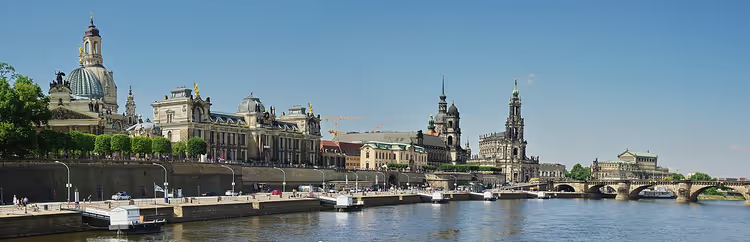
Dresden is about one hundred and fifty kilometers from Prague. The city was founded in the 13th century, and today it is one of Europe's major cultural centers. Start with the Church of Our Lady, rebuilt after World War II, and Brühl's Terrace, known as the balcony of Europe.
The terrace is home to the Academy of Fine Arts and the baroque Zwinger Palace. The Zwinger houses a picture gallery with works by Raphael. On Theater Square you will see the Semper Opera House, and further on stands the Albertinum museum with paintings and sculptures. Many visitors take photos at the "Procession of Princes" mural, and technology enthusiasts will enjoy the Volkswagen factory.
- How to get there: train or intercity bus, two to three hours each way.
- Cost: tickets to the Zwinger and Albertinum are sold online, with a shared visiting day.
- The catch: some museums are closed on Mondays.
Prague to Dresden bus on Trip.com
14. Křivoklát Castle
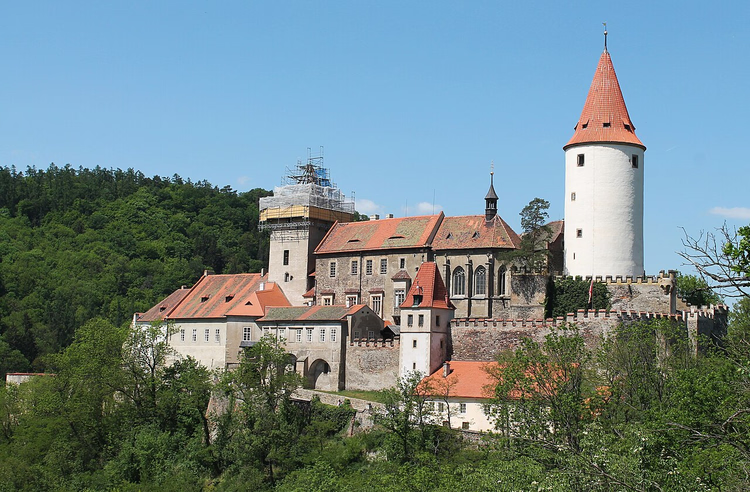
Křivoklát stands in the forests above the Berounka River. It is surrounded by a UNESCO biosphere reserve. This is one of the oldest Gothic castles in Czechia, serving for several centuries as a residence of Bohemian kings and princes.
 © Harold · CC BY-SAPhoto: Harold, CC BY-SA (https://creativecommons.org/licenses/by-sa/3.0), Wikimedia Commons
Inside you will see the Royal Hall with its star vault, the Knight's Hall with a collection of weapons, and wall paintings preserved from the Middle Ages. Separate tours cover the picture gallery, a library of tens of thousands of volumes, and a collection of historical sleighs. The chapel has a carved altar, and the best way to end the day is by climbing the forty-meter tower: the viewing platform offers a view over the forests.
- How to get there: train to Beroun, then a bus, about an hour and a half in total.
- Who it's for: those who want Gothic architecture without crowds and lines.
- The catch: in spring and autumn the castle is open only on weekends.
Prague to Křivoklát bus on Trip.com
15. Sychrov Castle
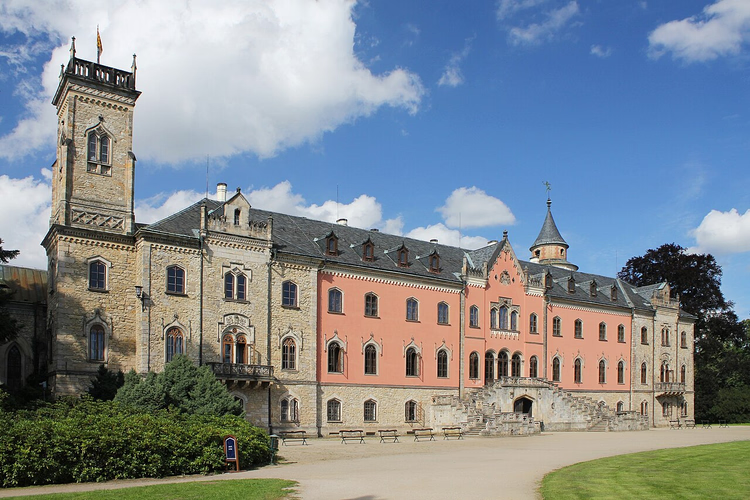
Sychrov stands in northern Czechia, a hundred kilometers from Prague, near the Bohemian Paradise nature reserve. The castle's history begins in the 15th century, but it took its current form under the French Rohan family. It is a neo-Gothic stone manor with interiors from the family's heyday.
 © This image is a work by Miloslav Rejha ( User:M.Rejha ). When reusing, please credit me as: Miloslav Rejha, Wikimedia Co · CC BY-SAPhoto: This image is a work by Miloslav Rejha ( User:M.Rejha ). When reusing, please credit me as: Miloslav Rejha, Wikimedia Co, CC BY-SA (https://creativecommons.org/licenses/by-sa/3.0), Wikimedia Commons
The walls are hung with portraits of three generations of the Rohans, with more than two hundred paintings displayed across several halls. They are joined by collections of weapons, antique furniture, porcelain, and old Venetian glass. Around the castle lies an English park with shady alleys, an orangery, and the Chapel of Our Lady; the park also features a Chinese lake with a cast-iron bridge and the ruins of Arthur's Castle. A legend tied to the castle tells of a Black Lady who guards treasures in the dungeons.
- How to get there: train to Turnov or Liberec, then a bus, about two hours each way.
- Who it's for: those who enjoy portrait galleries and park walks.
- The catch: the castle is closed on Mondays and during the winter months.
Prague to Sychrov bus on Trip.com
16. Turnov
 © Michielverbeek · CC BY-SAPhoto: Michielverbeek, CC BY-SA (https://creativecommons.org/licenses/by-sa/4.0), Wikimedia Commons
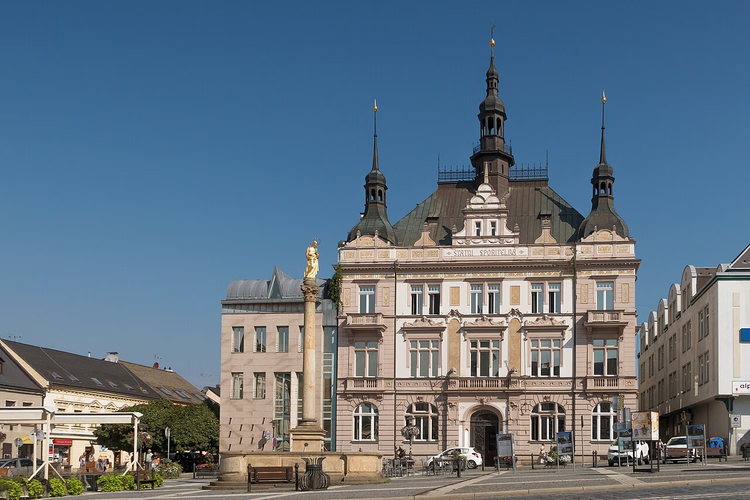
Turnov was founded in the 13th century on the Jizera River, about an hour from Prague. The town's prosperity is tied to the garnet, which is used here to make jewelry. Even on the approach you can see the Church of St. Nicholas with its four-sided tower about twenty-five meters high, rebuilt in the Baroque style.
The tombstones in the church tell the lineage of the Wartenberg dynasty, which owned the town from the 16th century. The three-nave Church of the Nativity of the Virgin Mary from the 19th century also stands here. Hruby Rohozec Castle on the outskirts appears in late Neoclassical style and is surrounded by a park: three routes take about an hour and a half, and you'll see the library, dining room, billiard room, and guest apartments. End the day at the Museum of the Bohemian Paradise with its mineral collection and jewelry hall.
- How to get there: train or bus from Prague, about an hour and a half.
- Who it's for: those interested in garnet jewelry and parks.
- The catch: the castle itself is only open with a guided tour in the warm season.
Prague - Turnov train on Trip.com
17. Saxon Switzerland
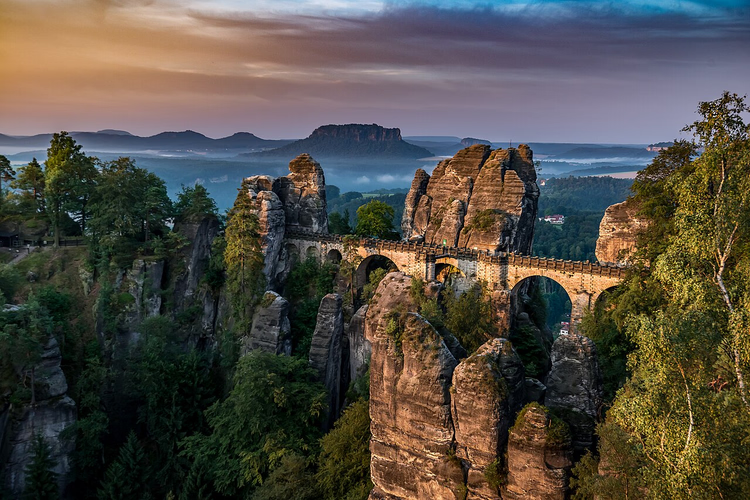 © Bernd Thaller from Graz, Austria · CC BYPhoto: Bernd Thaller from Graz, Austria, CC BY (https://creativecommons.org/licenses/by/2.0), Wikimedia Commons
Saxon Switzerland is a national park in the Elbe Valley on the border of the Czech Republic and Germany. In one day you can climb the Bastei rocks and cross the bridge that has become the park's calling card. From the viewing platform at about two hundred meters up, you get a view of the river and the sandstone towers.
The Bastei Bridge is about seventy-five meters long and consists of seven arches. Königstein Fortress rises about two hundred and fifty meters above the Elbe, with some fifty buildings, a military history museum, and the deepest well in Europe. Below is the Lichtenhain Waterfall: every half hour the dam is opened and the water flows to music. If you still have energy, stop by Stolpen to see the fortress with a well cut into basalt rock, or the resort of Rathen, where performances are staged in a rock theater.
- How to get there: train to Dresden or Bad Schandau, then bus; faster by car.
- Who it's for: those who want to combine rocks, forest, and a fortress in one day.
- The catch: the Bastei plateau is always windy, and in summer the viewing platforms get crowded.
Car rental for a Bastei trip on DiscoverCars
18. Mělník
Mělník Castle stands thirty kilometers from Prague, where the waters of the Elbe and Vltava meet. For centuries it served as the residence of an aristocratic family and still remains a lived-in historic building that welcomes tourists. Half of the rooms are open for viewing.
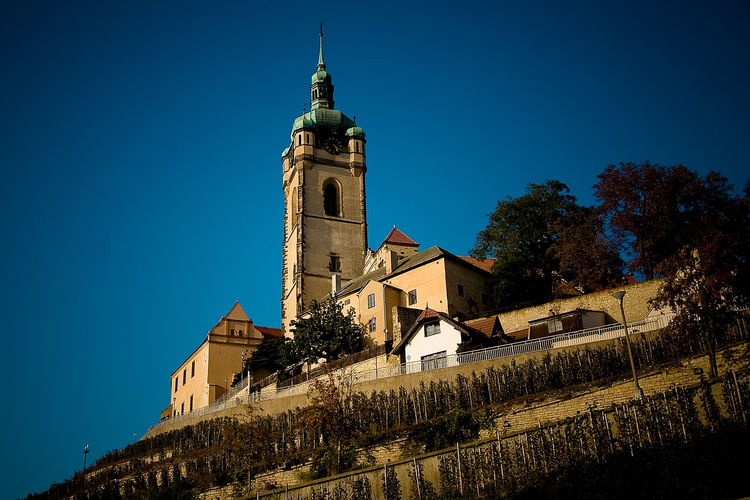 © Oskera Miroslav · CC BY-SAPhoto: Oskera Miroslav, CC BY-SA (https://creativecommons.org/licenses/by-sa/3.0), Wikimedia Commons
The historic halls display collections of paintings, porcelain, and glass, Baroque furniture, and hunting trophies. The Knight's Hall is decorated with armor and a collection of weapons, and the owner leads guests through the wine cellars first established under Charles IV. In the chapel built during the time of his wife, visitors see ancient frescoes. Mělník is known as the castle of widowed queens: for several centuries, royal wives were sent here.
- How to get there: bus or train from Prague, about an hour, then on foot.
- Who it's for: those interested in lived-in interiors and wine cellars.
- The catch: visits are only possible with a guided tour, and the castle is closed on Mondays.
Prague - Mělník bus on Trip.com
19. Vienna
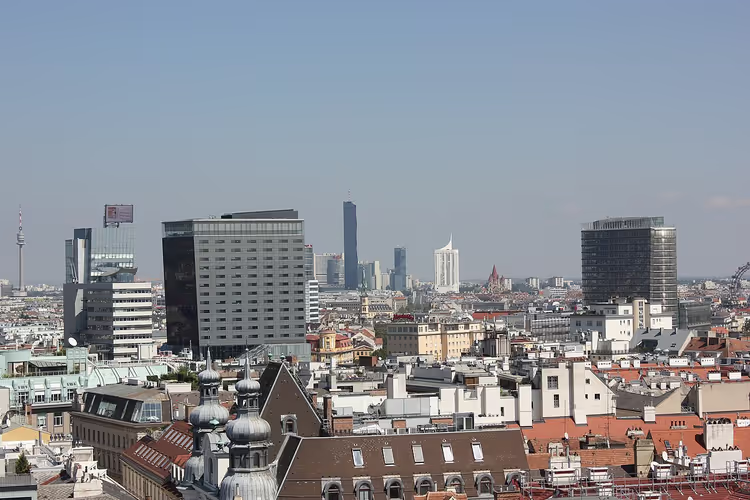 © Andrzej Otrębski · CC BY-SAPhoto: Andrzej Otrębski, CC BY-SA (https://creativecommons.org/licenses/by-sa/4.0), Wikimedia Commons
From Prague, Vienna is about four hours by bus. You can't cover the entire capital of Austria in one day, but you'll see the main sights at Stephansplatz: St. Stephen's Cathedral with its two towers of different heights. Inside the cathedral, visitors see medieval art, tombstones, and the burial vaults of Austrian monarchs.
From the square it's a stone's throw to Mozart's house, and along the way you'll pass beautiful old buildings. On Graben Street stand the Leopold and Joseph fountains and the Plague Column, with the Baroque Peterskirche nearby. For something sweet, stop at the Demel pastry shop, then continue to the Hofburg, the winter residence of the monarchs. On Josefsplatz, the Pálffy Palace and the Augustinian Church draw the eye, and on the Ringstrasse you'll find the Vienna State Opera and the Palace Garden with its palm house and Butterfly House.
- How to get there: bus from Prague, about four hours, station in the center.
- Who it's for: those willing to make the long trip for museums and architecture.
- The catch: in one day you can realistically only see the historic center.
Bus Prague - Vienna on Trip.com
20. Brno
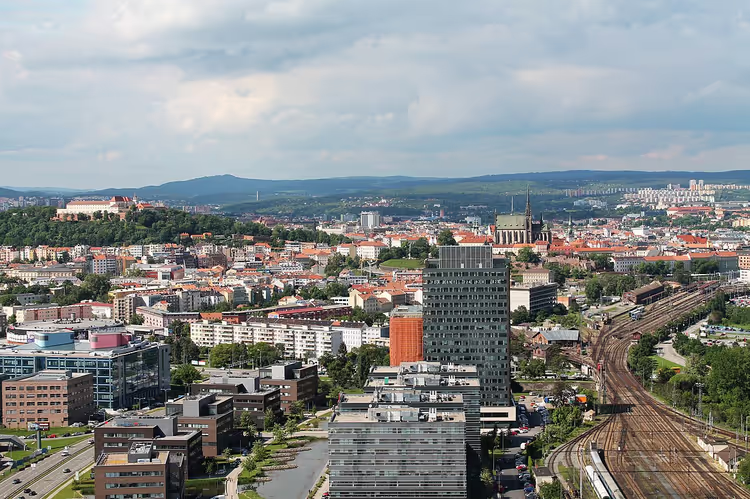 © Harold · CC BY-SAPhoto: Harold, CC BY-SA (https://creativecommons.org/licenses/by-sa/3.0), Wikimedia Commons
Brno is the second largest city in the Czech Republic, and the trip from Prague takes about two and a half hours. The historic center has remained almost unchanged since the 13th century. Finding the Old Town Hall, the symbol of the city, is easy here, and right next to it stands the active Church of St. James, where Gothic is combined with Romanesque style.
The Spilberk fortress with its castle rises above the city. The observation deck offers a panorama of Brno. On Cabbage Market Square, the Parnas fountain flows, and nearby stand the Reduta Theater and the Dietrichstein Palace with its history museum. The 18th-century Cathedral of St. Peter and Paul on Petrov Hill is visible from everywhere by its two spires. It is the one depicted on the ten-crown coin. In the Church of the Finding of the Holy Cross, you can see the burial sites of mummified monks. End your walk at Freedom Square, where the House of the Atlantes, the Plague Column, and the Brno Astronomical Clock stand.
- How to get there: bus or train from Prague, about two and a half hours.
- Who it's for: for those who want to see a Czech city without tourist crowds.
- The catch: some rooms in the Spilberk fortress are open only in season.
21. Nuremberg
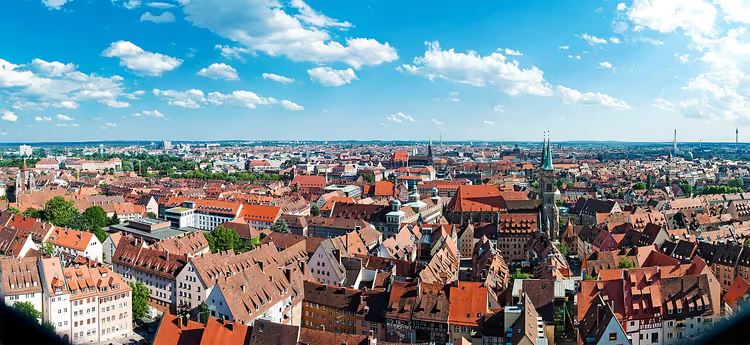 © YuTrofimov · CC BYPhoto: YuTrofimov, CC BY (https://creativecommons.org/licenses/by/3.0), Wikimedia Commons
The most convenient way to get to Nuremberg from Prague is by bus. The old town is surrounded by a 15th-century fortress wall about five kilometers long, and the Pegnitz River flows through its center. On opposite banks stand two 13th-century churches: the Church of St. Sebald, the city's patron saint, and the Church of St. Lawrence with its rich decoration and organ.
On the way to the Market Square, it is worth stopping at the Museum Bridge, from which you can see the city panorama. The main decoration of the square is the Church of Our Lady: every noon, figures move on its facade as the clock chimes. Nuremberg's fountains are known both for their artistic value and their legends: the gilded "Beautiful" fountain grants wishes, and the "Marriage Carousel" fountain shows scenes of family life. Art lovers head to the Albrecht Durer house museum, and with children it is worth visiting the toy museum. Nuremberg Christmas gingerbread is sold year-round.
- How to get there: intercity bus from Prague, about four hours.
- Who it's for: for those who love old cities with dense history on every corner.
- The catch: in December the city is packed because of the fair, and hotels get expensive well in advance.
Bus Prague - Nuremberg on Trip.com
22. Munich
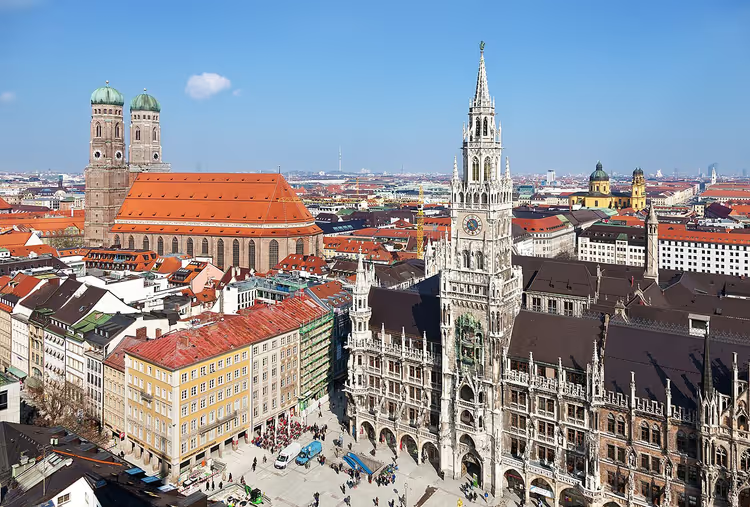 © Thomas Wolf , www.foto-tw.de · CC BY-SAPhoto: Thomas Wolf , www.foto-tw.de, CC BY-SA (https://creativecommons.org/licenses/by-sa/3.0/de/deed.en), Wikimedia Commons
Munich is about four hundred kilometers from Prague, and the trip takes at least five hours. With such a journey, it is better to plan the trip with an overnight stay. Start at Marienplatz, where the Column of the Virgin Mary stands, and walk up to the Fischbrunnen fountain in front of the New Town Hall.
The New Town Hall, with its tower over eighty meters high, puts on a glockenspiel show: three dozen figures act out scenes from city life. Opposite stands the Old Town Hall with a statue of Louis the Bavarian and a moon clock with zodiac signs. A must-see is the Frauenkirche cathedral with the "devil's footprint" on the floor, which is said to bring good luck. Next, it is worth stopping by the arcaded Feldherrnhalle hall near Marienplatz, where sculptures made from captured cannons are displayed. Art lovers usually set aside a separate day for Munich because of the three Pinakothek museums.
- How to get there: train or bus from Prague, at least five hours.
- Who it's for: for those who are ready to stay in the city overnight.
- The catch: the long trip both ways takes up almost an entire day.
Train Prague - Munich on Trip.com
23. Berlin
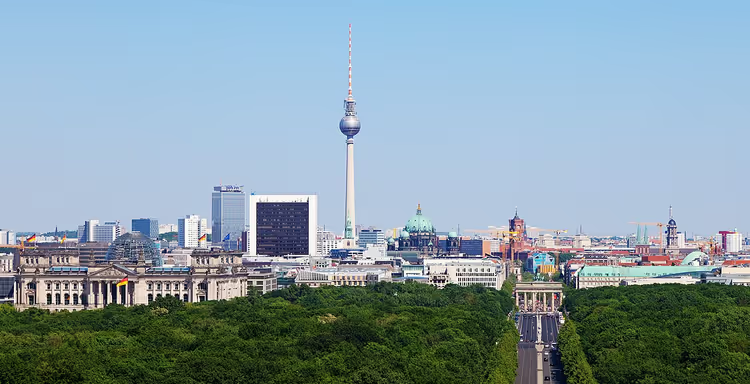 © Thomas Wolf , www.foto-tw.de · CC BY-SAPhoto: Thomas Wolf , www.foto-tw.de, CC BY-SA (https://creativecommons.org/licenses/by-sa/3.0), Wikimedia Commons
Berlin is a five-hour drive from Prague, so people usually go there with an overnight stay. Germany's capital is called one of the most beautiful cities in Europe, and you'll definitely find plenty to see in a day. Start at Alexanderplatz, where the TV tower and the World Clock stand, then walk along the Spree to Museum Island.
Museum Island is home to the Old and New Museums, the National Gallery, the Bode Museum, and the Pergamon Museum. The Berlin Cathedral rises above the island. A stroll along Unter den Linden boulevard will take you to the Crown Prince's Palace and the 17th-century Arsenal, while Bebelplatz is where the Berlin State Opera and St. Hedwig's Cathedral stand. On Gendarmenmarkt, the French and German Cathedrals and the Concert Hall face each other. Finish with the remains of the Berlin Wall, the Brandenburg Gate with the goddess Victoria, and the Reichstag.
- How to get there: bus or train from Prague, about five hours each way.
- Who it's for: those willing to stay in the city overnight.
- The catch: Museum Island museums close on a rotating schedule, check the days on site.
Prague - Berlin bus on Trip.com
24. Salzburg
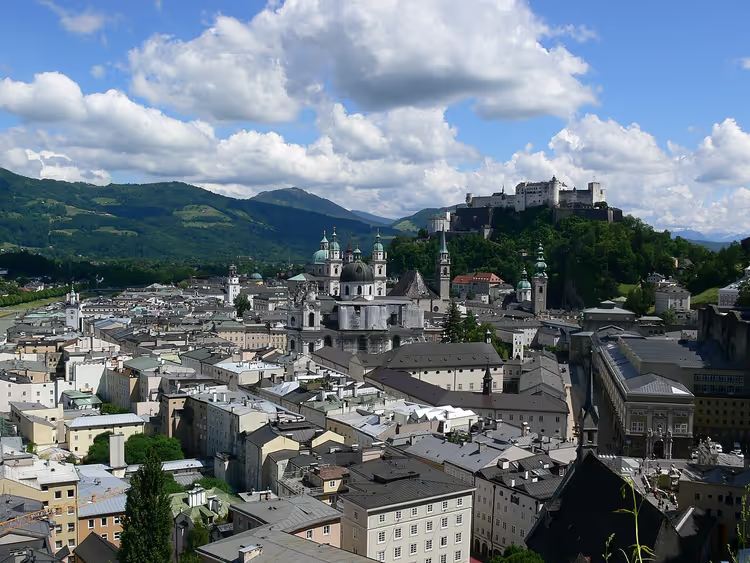 © Photo: Andreas Praefcke · CC BYPhoto: Photo: Andreas Praefcke, CC BY (https://creativecommons.org/licenses/by/3.0), Wikimedia Commons
Salzburg is about three hundred kilometers from Prague, so the trip is best planned with an overnight stay. If you arrive by train, Rainerstrasse will lead you from the station to Mirabell Palace with its park and mythological sculptures. Walking through the park, you'll find yourself on Makartplatz at the Mozart family house.
To see the panorama of the center and Hohensalzburg Fortress, climb Kapuzinerberg hill by stairs or along the path. On the other side of the river is the main shopping street Getreidegasse with the house where Wolfgang Amadeus Mozart was born. You can rest near Kollegienkirche church in Furtwängler Park, and nearby are the Archbishop's Residence with its art gallery and the Cathedral where Mozart was baptized. Then take the funicular up to Hohensalzburg Fortress: it's a city within a city, with walls, a military history museum, and a marionette museum.
- How to get there: train from Prague, about five hours each way.
- Who it's for: those who care about Mozart, the fortress, and views from above.
- The catch: the fortress and central museums close earlier than you'd like.
Prague - Salzburg train on Trip.com
25. Bamberg
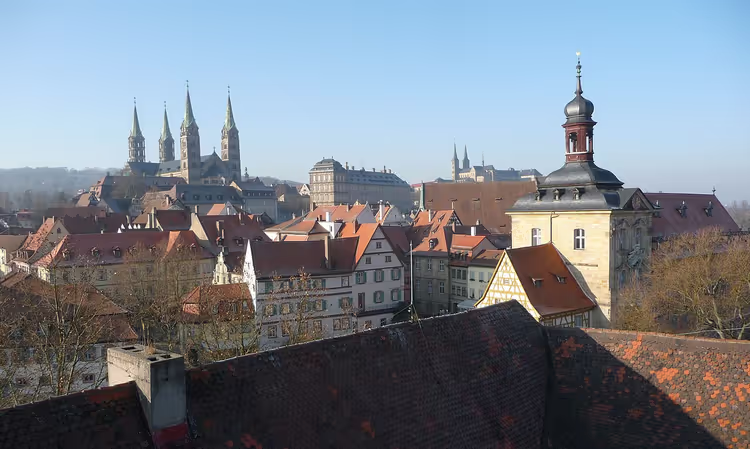
Bamberg, with its thousand-year history, lies about two hundred and fifty kilometers from Prague. The old town is a UNESCO World Heritage Site. On the way to the Old Town Hall you'll pass two old churches: the 12th-century St. Gangolf's Church and St. Martin's Church on Grüner Markt square.
The Old Town Hall was built on a purpose-built island, and its ceremonial hall displays frescoes and a collection of royal porcelain. From the town hall, past colorful half-timbered houses, you'll walk to Bamberg Cathedral: here you'll find the Bamberg Horseman sculpture, the tomb of Emperor Henry II and his wife, the grave of Pope Clement II, and the Chapel of the Holy Nail. Next to it lies the 18th-century Rose Garden with fountains and sculptures in Baroque and Rococo styles, offering a view of St. Michael's Monastery on the hill. The descent leads to the Regnitz river embankment in the "Little Venice" district, where every house has its own dock.
- How to get there: bus from Prague, about five hours each way.
- Who it's for: those who want to see an entire UNESCO-listed town.
- The catch: without an overnight stay, you only get a few hours in Bamberg.
Prague - Bamberg bus on Trip.com
26. Telč
 © xkomczax · CC BY-SAPhoto: xkomczax, CC BY-SA (https://creativecommons.org/licenses/by-sa/4.0), Wikimedia Commons
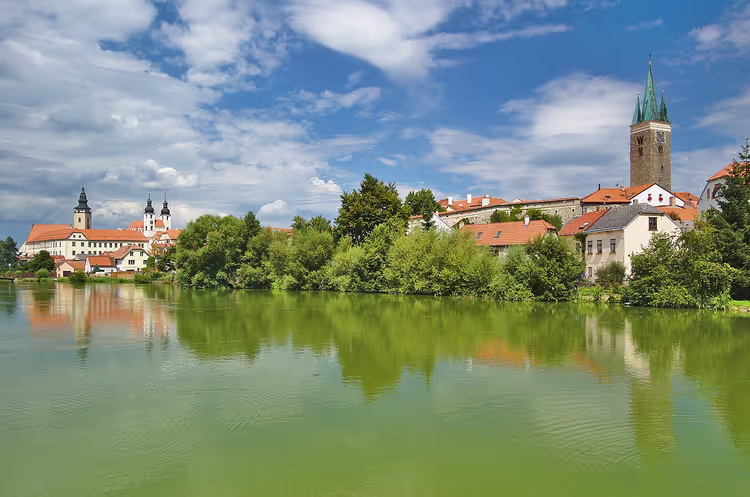
Telč draws visitors with its old "gingerbread" houses, the reflection of Telč Castle in the lake, and the rare preservation of its center. The town is called the Moravian Venice and a museum town. Start your walk at the main Zachariáš Square, decorated with colorful houses with stucco facades.
Behind the houses lies the town square with the Marian Column. Then head to Telč Castle, which has kept its Renaissance appearance: in the Golden Hall, look at the carved ceiling and the portrait gallery of the Zachariáš family, and in the Knight's and African Halls, the collection of battle and hunting trophies. Adjacent to the castle is the Chapel of All Saints, built by Italian architects. At the end, see the oldest building in town, the Church of the Holy Spirit, and climb its forty-nine-meter tower: the gallery offers a view of all of Telč.
- How to get there: bus from Prague, about three hours each way.
- Who it's for: those traveling for architecture and photography.
- The catch: in winter the castle and some churches are closed.
27. Třebíč
 © Nostrifikator · CC BY-SAPhoto: Nostrifikator, CC BY-SA (http://creativecommons.org/licenses/by-sa/3.0/), Wikimedia Commons
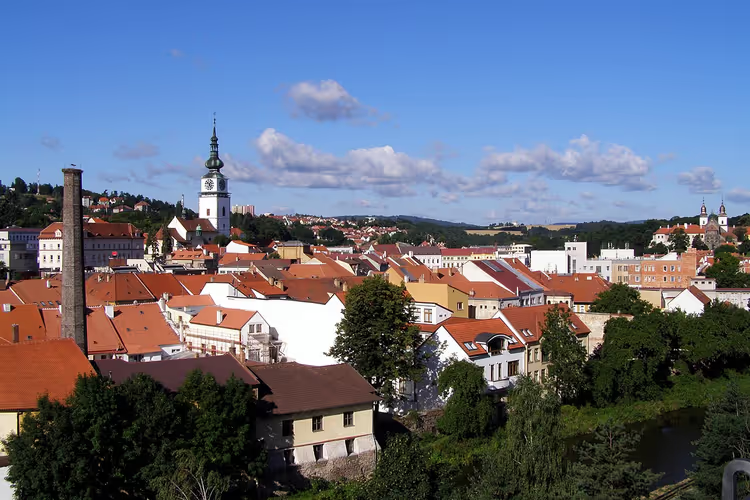
Třebíč grew up on the site of a monastery, whose basilica survives in the castle, and the town began to develop outside the fortress walls in the 13th century. On the central Charles Square stand two Renaissance buildings, the Black House and the Painted House: their facades are decorated with hunting scenes done in sgraffito technique.
Further on you'll see the town hall and the monument to Cyril and Methodius, and on Martin's Square the tower of St. Martin's Church, about seventy-five meters high. At thirty-five meters there's an observation gallery with a panorama of the town, and the tower itself has a clock with one of the largest dials in Europe. UNESCO has recognized two sites in Třebíč: the Jewish Quarter with its cemetery and the Basilica of St. Procopius with the "Gate of Paradise," where Gothic meets Romanesque.
- How to get there: train or bus from Prague, about two and a half hours each way.
- Who it's for: those who want to see UNESCO sites without the crowds.
- The catch: the town is small, and almost everything closes in the evening.
Prague - Třebíč train on Trip.com
One-day route from Prague on the map
Day trips from Prague
Places on the map
- 1Karlštejn Castle Charles IV's Gothic castle, entry only with a guided tour
- 2Konopiště Castle A hunting chateau with a park and peacocks, tickets only online in advance
- 3Kutná Hora The Silver City with St Barbara's Cathedral and the Sedlec Ossuary
- 4Český Šternberk Castle The Šternberk family's ancestral castle with 17th-century interiors
- 5Karlovy Vary A spa town with mineral-water colonnades and the Diana Tower
- 6Tábor The Hussite city with a town hall and underground passages
- 7Plzeň Home of Pilsner beer, an underground cellar and Republic Square
- 8Liberec An observation deck by the TV tower and an amusement park
- 9České Budějovice The city of Budweiser beer with the Black Tower and the Samson Fountain
- 10Český Krumlov Krumlov Castle and the Cloak Bridge, a UNESCO site
- 11Hluboká Castle A snow-white castle in the romantic style with a landscape park
- 12Ostrava An industrial city with Masaryk Square and a plague column
- 13Dresden The Zwinger palace, the Brühl Terrace and the Church of Our Lady
- 14Křivoklát Castle A Gothic castle in the forest, a UNESCO biosphere reserve around it
- 15Sychrov Castle The Rohan family estate with a portrait gallery and an English park
- 16Turnov The city of garnet with St Nicholas's church and Hrubý Rohozec Castle
- 17Saxon Switzerland A national park with the Bastei rocks and Königstein Fortress
- 18Mělník A castle of dowager queens above the confluence of the Elbe and the Vltava
- 19Vienna Stephansplatz, the Hofburg and the palace garden with a palm house
- 20Brno Špilberk Castle and the Old Town Hall, a symbol of the city
- 21Nuremberg An old town within its city walls, the Church of Our Lady with chimes
- 22Munich Marienplatz, the New Town Hall and the Frauenkirche
- 23Berlin Museum Island, the Brandenburg Gate and the Reichstag
- 24Salzburg Mirabell Palace, Mozart's house and Hohensalzburg Fortress
- 25Bamberg The Old Town Hall on an island and the cathedral with the Bamberg Horseman
- 26Telč The Moravian Venice with Zachariáš Square and a Renaissance castle
- 27Třebíč The Jewish Quarter and the Basilica of St Procopius, UNESCO sites
The map shows all twenty-seven places in this selection, so it will be easier to plan your route. Karlštejn and Mělník are the closest to Prague: about an hour away. Longer trips, Vienna, Berlin, Munich, Salzburg, and Bamberg, are better planned with an overnight stay, otherwise the day will be spent entirely on the road.
⁉️🤔 Frequently asked questions
Where can I go from Prague for a day without a car?
Almost all the places on the list are reachable by train or bus: Karlštejn, Kutná Hora, Karlovy Vary, Plzeň, Tábor, Český Krumlov, Brno. Getting to Hluboká, Sychrov, and Křivoklát castles is easier with a transfer or by car. Check schedules when buying tickets, and book castle time slots in advance.
What should I see in Kutná Hora in one day?
Start with St. Barbara's Cathedral, then go down into the silver mine and stop by the Italian Court. Spend the second half of the day in Sedlec with the Bone Church and the Cathedral of the Assumption of Our Lady. Get a timed ticket for the Bone Church, and allow at least a full day for the whole route.
Is it worth going to Vienna or Dresden for a day?
You can, but it will be a long day. Dresden takes a couple of hours to reach, Vienna about four. In Dresden it's realistic to cover the Zwinger and the city center; in Vienna, only the historic core around Stephansplatz. If you want to see museums without rushing, book an overnight stay and come back on a different train.
When are Czech castles closed?
Most castles are open from April to October and switch to a winter schedule in November. Karlštejn in November is open only Friday through Sunday; Konopiště closes for the winter. Always check the official website before your trip: hours change by month and by day of the week.
Do I need to buy tickets in advance?
Yes, if you're traveling in season. Karlštejn and the Bone Church require timed entry tickets, and Konopiště admits visitors with a pre-purchased ticket. Weekend slots sell out days and weeks ahead, so book as soon as you've settled on a date, and print your ticket.
In short: what's worth booking
If you have only one free day, pick whatever is closest: Karlštejn, Kutná Hora, Konopiště, or Mělník. All four close early, so head out in the morning.
- If you want a castle with rich interiors: Konopiště, Sychrov, or Mělník.
- If you want a town: Kutná Hora, Plzeň, Brno, or Český Krumlov.
- If you're willing to travel far: Dresden, Vienna, or Bamberg, ideally with an overnight stay.
- If you're traveling without a car, book your train or bus ticket in advance.
Hotels in towns along the route on Trip.com
Car rental in Prague on DiscoverCars
Book your transport and time slots in advance so you don't lose a day to travel and lines.

A small editorial team writing guides for independent travel. We travel ourselves, but we haven’t been everywhere, so we check prices, opening hours and how to get there against official sources.