
















One day in Versailles: tickets 2026, palace halls and Trianon park
Versailles is less than an hour from Paris. In one day you can realistically see the palace, the park, and the Trianon. The main challenge is not the trip, but the scale: the complex is enormous, and a timed-entry ticket works by time slot.
A passport ticket for the entire complex costs 25 € in low season and 35 € in high season (as of 09/2026, official website). Citizens and residents of the EEA get a discount: 22 € and 32 €. The same page lists reduced and free categories.
Below is a one-day itinerary: fifteen sights from the Hall of Mirrors to Marie Antoinette's hamlet. You will learn when to book a time slot, how much time to allow for each sight, and how to cover the entire complex without rushing.
Ad: this article contains affiliate links. We earn a commission if you book through them, at no extra cost to you.
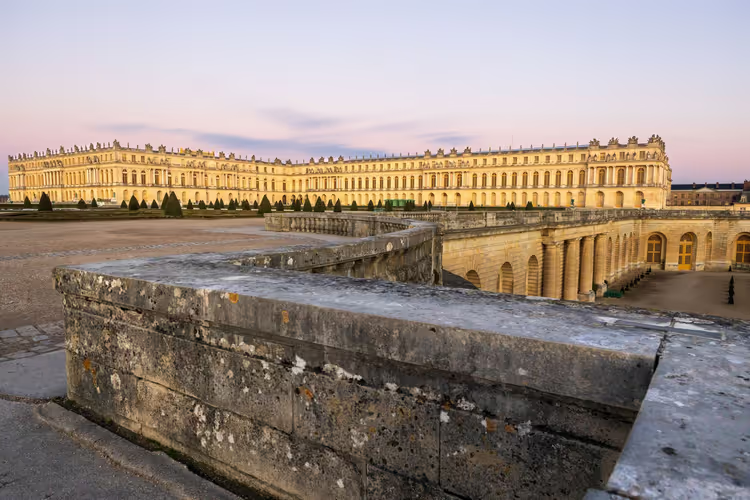
Palace of Versailles and its history
💡 In short:
- Book a morning time slot: by midday the halls are already crowded.
- Plan a full day for the palace and the Trianon, while the park alone takes a couple of hours.
- Prices and opening hours: 09/2026, verified on the official website
 © ToucanWings · CC BY-SAPhoto: ToucanWings, CC BY-SA (https://creativecommons.org/licenses/by-sa/3.0), Wikimedia Commons
The palace grew out of a hunting lodge. King Louis XIII liked the forests around the village of Versailles, and he ordered a small retreat built here. After the owner's death the land passed to the crown, the lodge was reinforced, and it began to resemble a small fortress.
Louis XIV disliked living in the capital and preferred the country residence. The location proved convenient: close to Paris, yet the nobility remained under watch. The palace grew for more than practical reasons. The king understood that the scale of the building would raise his authority, so the treasury did not count the cost.
A separate story involves the finance minister Fouquet. He was arrested, and his fortune went to the royal residence. The architects Le Vau, Le Brun, and Le Nôtre, who had previously worked on Fouquet's palace, were commissioned to continue building Versailles. Wars merely paused the construction, but never stopped it.
Louis XIV's descendants continued to alter the palace, but more modestly: they mostly redid the interiors and the park. The town itself grew around the residence. Aristocrats settled nearby to keep up with the king, and each built lavish apartments. Those houses still adorn the Paris suburbs today.
The palace operates on time slots: closing at 5:30 PM, last entry at 4:45 PM (as of 09/2026, palace opening hours). You must not be late for your time. Arrive early so you can pass security calmly and not lose your slot.
Tickets are easy to compare by season (as of 09/2026, prices on the official website).
Ticket | Low season | High season |
|---|---|---|
Passport, full rate | 25 € | 35 € |
Passport, EEA rate | 22 € | 32 € |
High season runs from April through October. During those months entry to the gardens is also paid, while in winter the park and gardens are open free of charge. This way you can plan your trip budget in advance.
Hall of Mirrors
 © Myrabella · CC BY-SAPhoto: Myrabella, CC BY-SA (https://creativecommons.org/licenses/by-sa/3.0), Wikimedia Commons
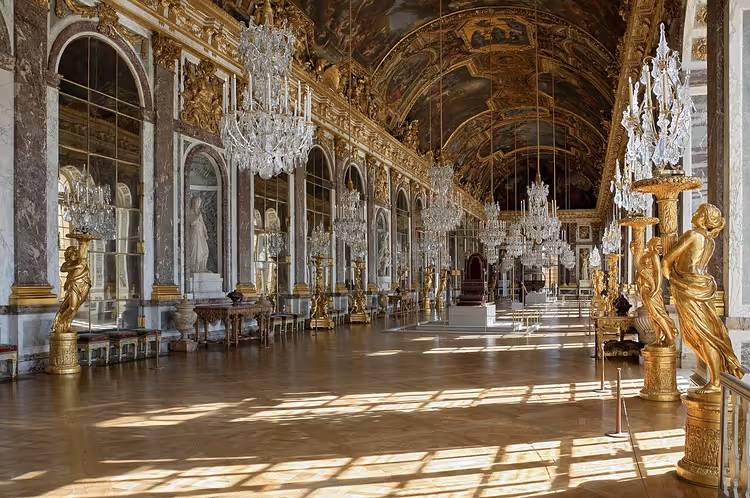
The gallery served as the Sun King's ceremonial hall. Mirrors on the walls were a luxury: in those days they were made rarely and at great expense. Ambassadors were received here, balls were held, and agreements were signed.
The gallery connected the king's apartments with the chapel, so people walked through it every day. Part of the decor was later removed and melted down for the army. Today the hall is restored to its ceremonial appearance, and the government of France holds state receptions here.
Book tickets for the palace halls in advance. Versailles tickets on Tiqets come with a time slot, and in high season you may not be allowed inside without an online ticket.
Louis XIV's royal apartments
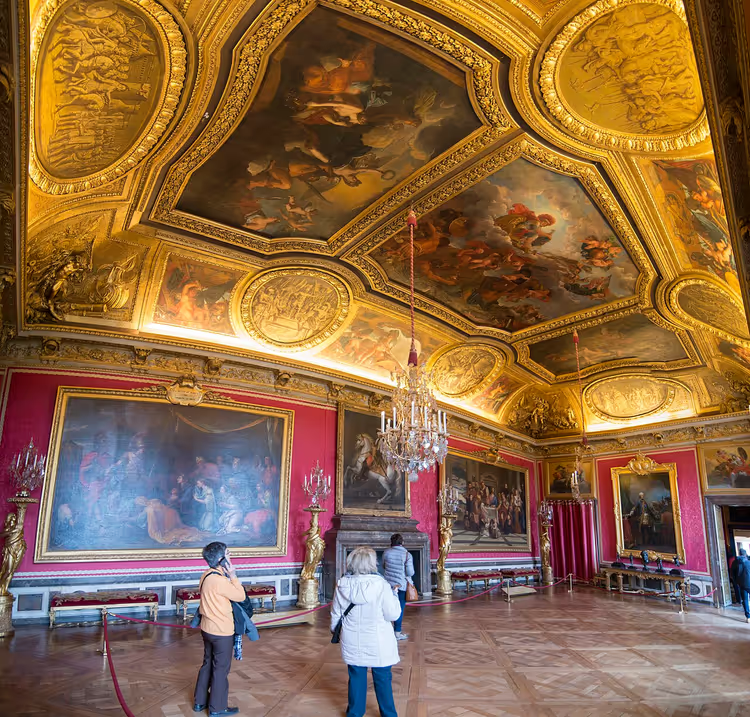
The apartments belonged personally to the Sun King, and the interiors have survived almost completely. The rooms run as an enfilade, one leading into the next. The tour starts with the loggia: even this small room was finished in marble.
 © Jorge Láscar from Melbourne, Australia · CC BYPhoto: Jorge Láscar from Melbourne, Australia, CC BY (https://creativecommons.org/licenses/by/2.0), Wikimedia Commons
Next comes the guard room. Guards were on duty here around the clock, so the hall looks modest, with walls painted white. Then the private apartments begin, where the king dined and rested. The walls display canvases with battle scenes, painted by Courtois and Parrocel.
The Bull's Eye Hall is considered the most beautiful in the enfilade. Its name comes from a window on the south side, shaped like a bull's eye. It features many large mirrors and paintings by Veronese, and above the door is a grille depicting dancing boys.
The bedroom served more than just for sleep. Private negotiations were held and ambassadors received there, so the decor is rich: tapestries, draperies, paintings by Van Dyck, Caravaggio, and Domenichino. Louis XIV died in this room.
The enfilade ends with the Royal Council Hall. The furnishings emphasize the room's purpose: a bust of Alexander the Great, vases with Venus and Mars, wood carvings. A single ticket is enough; no separate entry is needed here.
Royal chapels of Versailles
There were five chapels on the site of Versailles, but only one has survived to this day. The first four were dismantled or rebuilt for the palace's needs. Their history clearly shows how quickly the residence changed.
The first chapel was built by Louis XIII, father of the Sun King. It was a wooden building two stories high, demolished during construction of the Grotto of Thetis. The second was commissioned by Louis XIV right after the new wing of the palace; later it housed a court.
The third was built nearby for the royal family and the court. It turned out cramped and inconvenient, so it was later converted into a coronation hall. The fourth was built after the third wing of the building and served its purpose until the early 18th century.
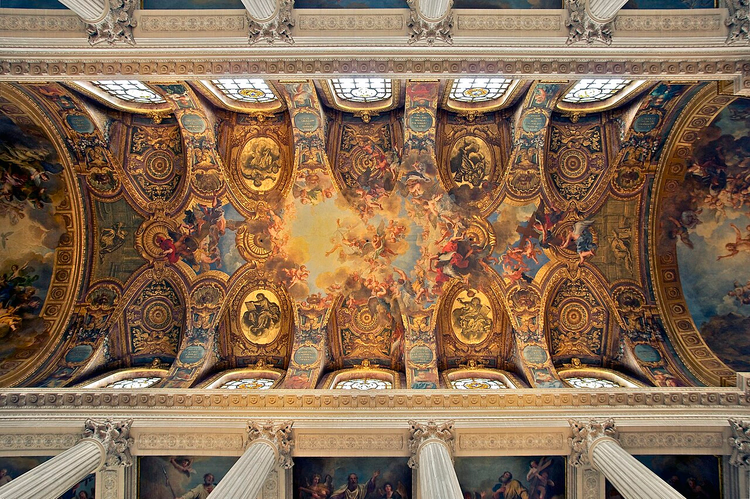
The fifth chapel became a long-term project: it was built from 1689 to 1710, with a break for the war. Because of the predominance of horizontal lines, some historians call it a giant catafalque. The exterior is richly decorated, and the interiors have retained their splendor.
Services were held here until the late 19th century; now the space is used for official meetings. The acoustics remain excellent, so concerts are regularly given in the chapel. You can get inside with a general palace ticket.
Notre-Dame Church in Versailles
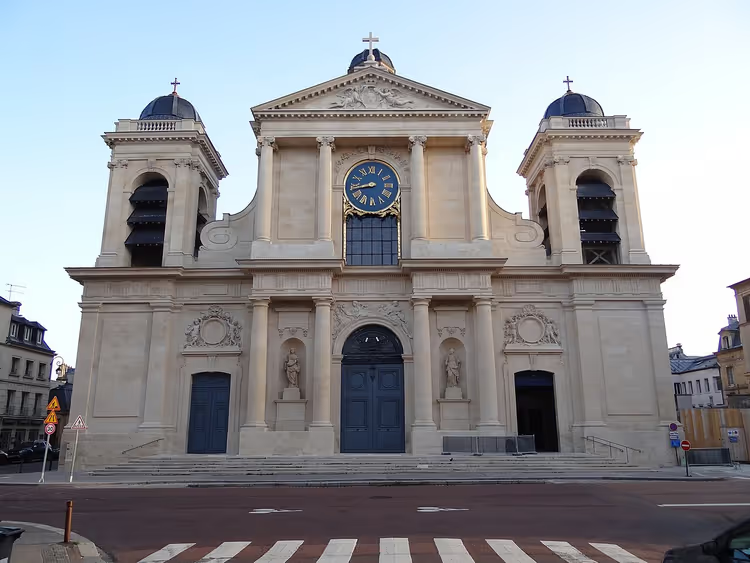
Notre-Dame Church served both as a parish and as the private chapel of the palace owners. Births, marriages, and deaths of royal family members were recorded in the parish registers.
The design was developed by Jules Hardouin-Mansart in the French classical style. Construction went quickly: about two years passed from the first stone to the consecration. The building looks pressed to the ground, and that is not an architect's mistake.
Louis XIV forbade building tall houses in the area so as not to spoil the view from the residence windows. That is why the surrounding development remained low. The church has been restored several times, facades and interiors have been added to, and the main altar was replaced at the end of the last century.
The church is active, so visit outside service hours. It stands in the city center, near the palace, and fits well into a walk around Versailles after the park.
The Orangery and citrus gardens
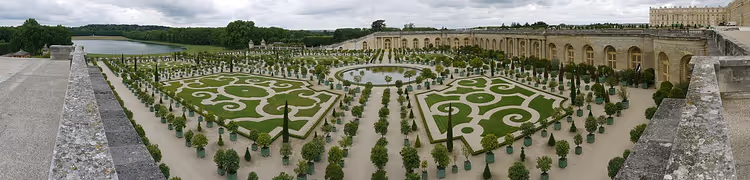 © Yves Tennevin · CC BY-SAPhoto: Yves Tennevin, CC BY-SA (https://creativecommons.org/licenses/by-sa/3.0), Wikimedia Commons
The Sun King wanted to be first in botany too. Gardeners maintained a large collection of citrus trees that flowered and bore fruit at the same time. A special system of watering, pinching, and feeding was used to achieve this.
The plants were kept in tubs and brought into the orangery only during the cold season. In spring and summer, the bitter orange trees were set out in the garden parterre. The building is well designed: light comes through huge south-facing windows, and the vaulted ceiling helps retain heat.
The orangery also served as a stage. Queen Marie Antoinette's troupe performed here while the permanent theater was being built. During the Paris Commune, it was adapted to hold prisoners.
Today the orangery displays a large marble basin. It is all that remains of the Bath Pavilion. The octagonal bathtub was bought back for the palace, and it only fit here. According to one version, the Sun King himself rinsed his tired feet in it after hunting.
Fountain of Apollo and the Grand Canal
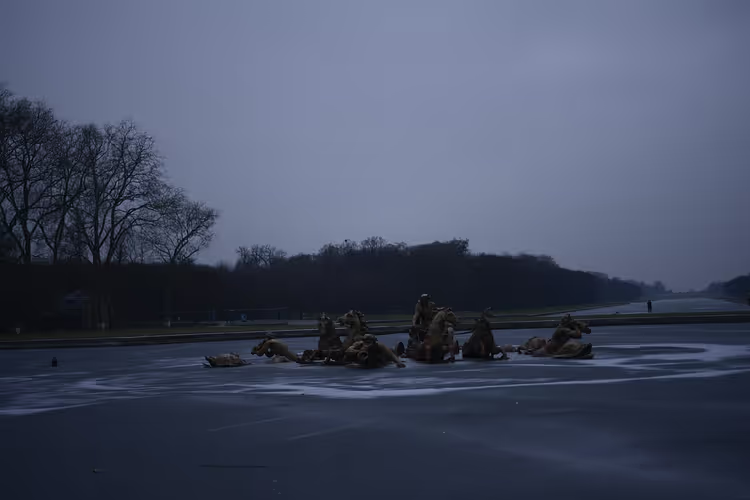 © Aspargos · CC BYPhoto: Aspargos, CC BY (https://creativecommons.org/licenses/by/3.0), Wikimedia Commons
The fountain stands on the site of the old Swan Pond. The name came in handy: swans were part of the retinue of Apollo's mother, the goddess Latona. In the composition, Apollo rides his chariot across the sky, tracing the path of the sun.
The chariot moves along the Grand Canal, so the motion seems endless. The jets form a lily, the heraldic symbol of the French kings. The central stream shoots higher than the side ones, and together they create an almost glowing curtain.
The fountain was described by La Fontaine. The writer was struck by how ordinary jets of water produced both fire and smoke at once. During the musical fountain season, lighting and music are switched on here, but the schedule changes. Check the fountain schedule before your visit.
Lambinet Museum in the city center
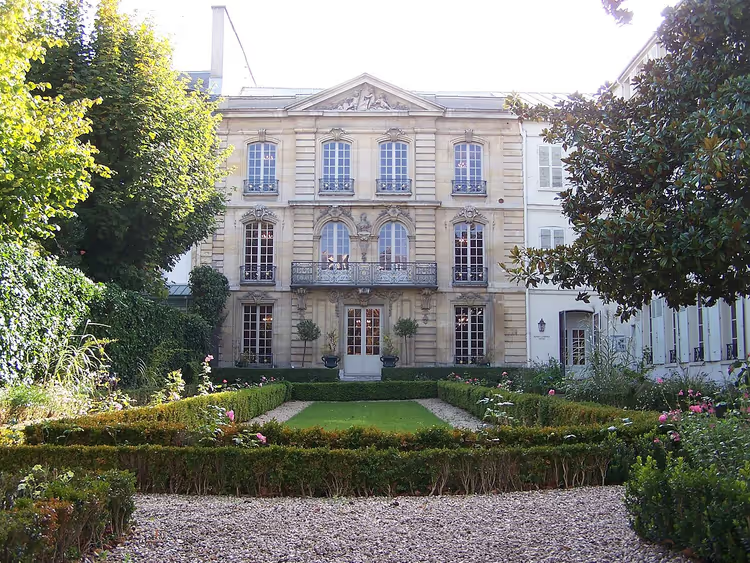 © Henry Salomé · CC BY-SAPhoto: Henry Salomé, CC BY-SA (https://creativecommons.org/licenses/by-sa/4.0), Wikimedia Commons
The Lambinet Museum occupies a mansion built for his family by the contractor Blanchard. From the mid-19th century, the building belonged to the collector Lambinet. He collected porcelain and antique trinkets, and his heirs donated the house to the municipality.
Today it displays paintings, graphic art, and decorative art objects connected with the city's history. A separate room tells the story of the French Revolution and Versailles' role in those events.
There are few visitors, so you can calmly walk through the rooms and examine the exhibits. Check the address and opening hours on the tourist office website. The museum is in the center, so it is easy to include in a walk around the city.
Royal Opera of Versailles
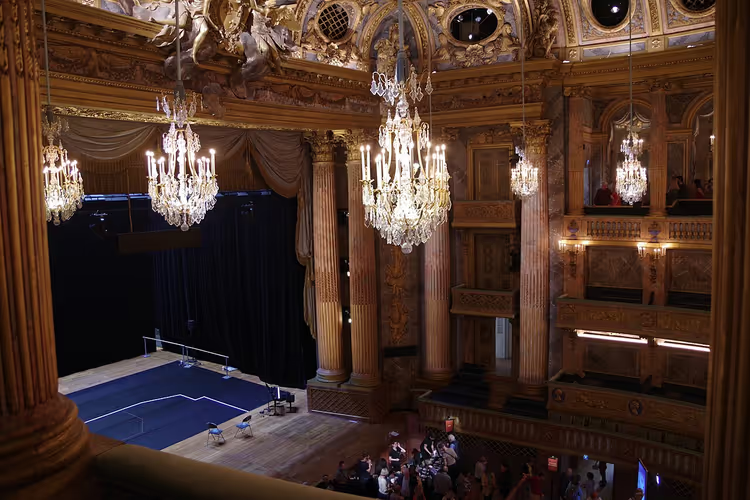 © AlSepPhoenix · CC BY-SAPhoto: AlSepPhoenix, CC BY-SA (https://creativecommons.org/licenses/by-sa/4.0), Wikimedia Commons
The opera house was built in the late 18th century and immediately impressed with its interiors and productions. The hall's technical equipment was cutting-edge for its time. The balconies ran without partitions, so more spectators could fit.
The central ceiling panel depicts Apollo crowning artists. Around it are lamps with smaller cupids. The acoustics turned out so successful that the first and last rows hear equally well.
Later, music and dance gave way to political speeches: the monarchy fell. The building was abandoned, and during the occupation it suffered heavy damage. The theater was remembered in the 20th century, and restoration began, finishing in the early 21st century.
Today the opera house has its original appearance and modern technical equipment. World-famous performers appear here, and the repertoire is published on the tickets page. You can attend a performance with a ticket for a specific date.
Grand Trianon
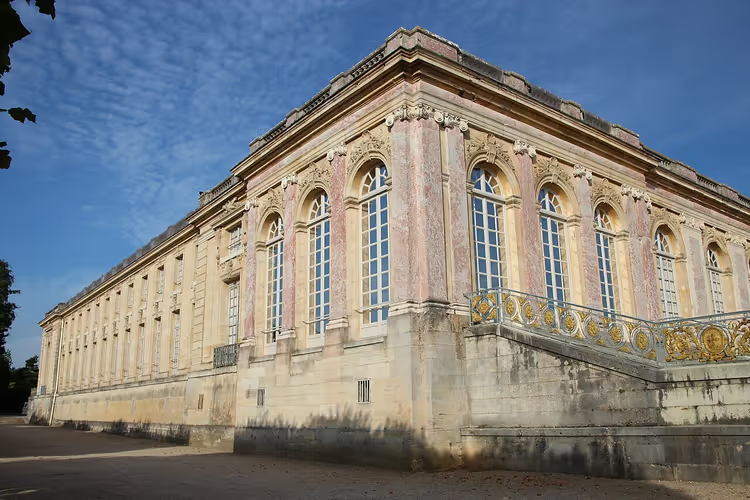 © Lionel Allorge · CC BY-SAPhoto: Lionel Allorge, CC BY-SA (https://creativecommons.org/licenses/by-sa/3.0), Wikimedia Commons
Over time, Louis XIV wanted a less pompous but cozier residence near the palace. For this, the lands of the village of Trianon were purchased, the houses demolished, and a chateau built on the cleared site. Alleys and flower beds were laid out around it.
The first version was faced with faience tiles, and the building was nicknamed the Porcelain Trianon. At the time, people saw almost no difference between porcelain and faience. The cladding quickly deteriorated, the tiles cracked, so the structure was dismantled.
In its place appeared a new chateau with a marble facade, the Marble Trianon. When the Petit Trianon was built nearby, it was renamed the Grand Trianon. The interiors are modest by Louis XIV's standards, but still impressive.
The king used the chateau for meetings with his favorites, and his heirs visited rarely. Gradually the Trianon fell into neglect. Today it is a separate area of the park, and you need a combined ticket for the Trianon estate.
Petit Trianon
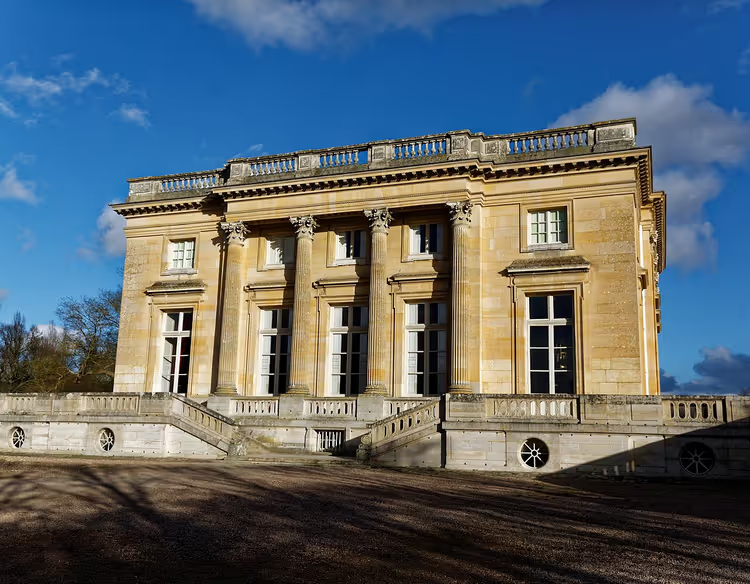 © KimonBerlin · CC BY-SAPhoto: KimonBerlin, CC BY-SA (https://creativecommons.org/licenses/by-sa/2.0), Wikimedia Commons
A well-kept alley leads from the Grand Trianon to the Petit Trianon. Benches are placed along the way where you can rest. It is easy to imagine the Sun King himself relaxing in the shade of the trees.
The chateau was built for the favorite of Louis XIV's heir, but Madame de Pompadour did not live to receive the gift. The palace first went to a new favorite, and later to Marie Antoinette. The interiors here are rather austere, not lavish.
The layout suggests that the architect wanted to avoid chance encounters. The corridors curve, with unexpected turns and dead ends. The furnishings are more modest than in the main residence.
A visit leaves a feeling of calm. To see both the Grand and Petit Trianon and the village, get a combined ticket for the entire Trianon complex. It is valid longer than the regular entrance ticket.
Marie Antoinette's hamlet
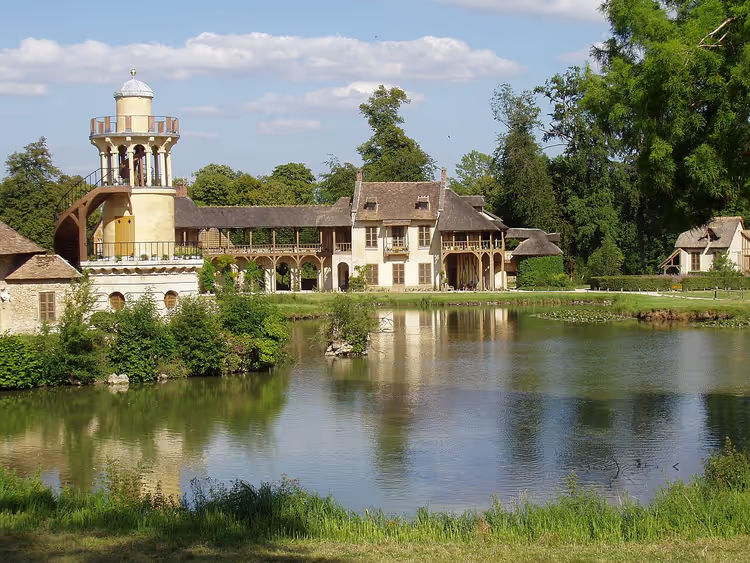 © Daderot · CC BY-SAPhoto: Daderot, CC BY-SA (http://creativecommons.org/licenses/by-sa/3.0/), Wikimedia Commons
Marie Antoinette wanted her own place to relax, and in the late 18th century an entire village was built along the pond's shore. The cottage roofs were made of reeds, and the walls were artificially aged. A vegetable garden and fruit trees were planted by each house.
The windows were decorated with flowers in blue-and-white pots, and small streams and mounds were created on the grounds. This required destroying the botanical garden, a decision that outraged European botanists.
On the outside, the cottages imitated peasant houses, but inside they were furnished with royal luxury. Marie Antoinette wore a simple dress and strolled along the clean lanes, sometimes with her children and close friends. The place was decorative but generated income, because vegetables, fruit, and dairy products were supplied to the royal table.
Houses for the miller and dairy farm workers were built to maintain the grounds.
The buildings are spread over a large area, so be prepared for long walks. Wear comfortable shoes and bring water. Entry to the hamlet is included in the combined ticket for the Trianon estate.
King's Kitchen Garden
The kitchen garden came into being thanks to Jean-Baptiste de La Quintinie. He first studied law and practiced in that field, and took up botany only as an adult. Traveling through Italy, he studied new plant varieties and cultivation techniques.
Returning to France, La Quintinie abandoned legal cases and devoted himself to gardening. Louis XIV noticed his passion and invited the scholar to create a kitchen garden for the palace. The king chose a poor site: a marshy lowland with poor soil.
La Quintinie drained the plot and fertilized it with manure from the stables. He designed underground heating for the beds, so vegetables ripened year-round. When the king wanted bananas and pineapples, greenhouses were built for them.
The idea caught on beyond the palace: noble lords began growing vegetables at their homes. Today the King's Kitchen Garden still exists and remains a working farm. Local vegetables and exotic fruits are still grown here, though on a different scale.
The garden belongs to the school of landscape architecture, and a market of local vegetables and fruits operates alongside it. Check the exact hours and days of your visit on the tourist office portal before your trip. It is best to go on market days, when the garden beds are also open.
Royal tennis court
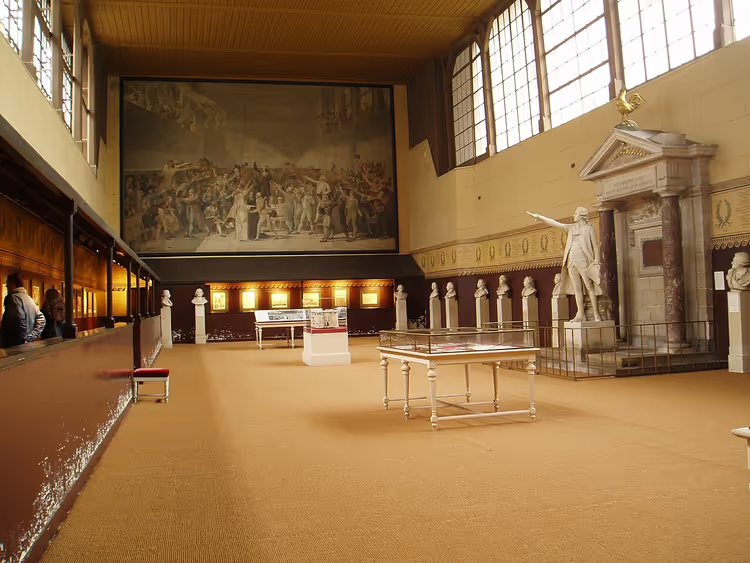 © User:BenP · CC BY-SAPhoto: User:BenP, CC BY-SA (https://creativecommons.org/licenses/by-sa/2.5), Wikimedia Commons
The hall for jeu de paume, the predecessor of tennis, was built for Louis XIV, and later Louis XVI also played here. It became famous during the Estates General, when representatives of the Third Estate could not find space in the main hall.
They held their own meeting and swore not to disperse until the king signed a constitution. This episode went down in history as the Tennis Court Oath. Today the hall is open for free visits.
Admission is free, open Tuesday through Sunday and on holidays, from 12:30 to 18:30, last entry at 17:45 (as of 09/2026, official website). It is about a ten-minute walk from the palace toward the town.
Cathedral of Saint Louis
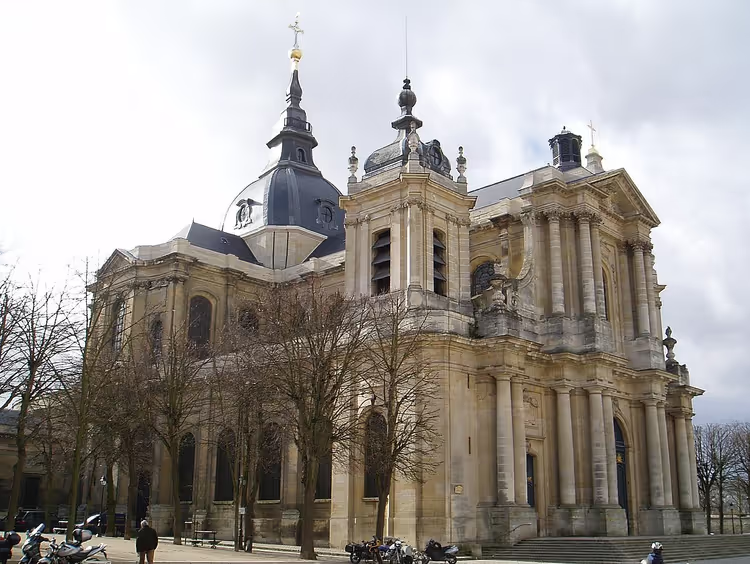 © BenP · CC BY-SAPhoto: BenP, CC BY-SA (https://creativecommons.org/licenses/by-sa/2.5), Wikimedia Commons
Before the ensemble was built, a small church of Saint Julian stood on the site of the cathedral. It was demolished to clear the area for the palace's needs. Later a wooden chapel was built for the town's residents, but it did not last long either.
Construction of a new church began on the same site, designed by Jacques Hardouin-Mansart. The construction took twelve years, but the result exceeded expectations. The building has the shape of a Latin cross in plan.
The central nave is surrounded by side aisles connected to chapels. The walls are faced with yellow limestone that was left unpainted: this makes the cathedral look more majestic. The pride of the church, a massive organ, was commissioned and paid for by Louis XV.
The instrument remains in working condition and can be heard during services. The cathedral is active, so visit outside of worship times. It stands in the center of town, so it is convenient to see after the palace and park.
One-day Versailles route on the map
The route is easiest to build from Versailles Château Rive Gauche station: it is the closest to the palace. First tour the palace halls, then head down into the gardens to the Apollo Fountain. After lunch, go to the Trianon, and on the way back stop in town at the Cathedral of Saint Louis.
Versailles in 1 day route
Places on the map
- 1Palace of Versailles Residence of Louis XIV, grew from a hunting lodge
- 2Hall of Mirrors The Sun King's state hall, ambassador receptions and balls
- 3Royal Apartments Louis XIV's private chambers, the Bull's Eye room (Œil-de-Bœuf)
- 4Chapels Versailles' fifth chapel, services were held here until the 19th century
- 5Church of Notre-Dame Notre-Dame, where three Louis in a row were married
- 6Orangery of Versailles The Sun King's citrus collection, marble pool
- 7Apollo Fountain Apollo's chariot on the site of the old Swan Pond
- 8Lambinet Museum A mansion with a collection of porcelain and paintings on the city's history
- 9Royal Opera A late-18th-century theatre with an Apollo ceiling
- 10Grand Trianon A marble pavilion for Louis XIV's meetings with his favourites
- 11Petit Trianon A château for Madame de Pompadour, later Marie Antoinette
- 12Queen's Hamlet A decorative hamlet with thatched roofs by a pond
- 13King's Kitchen Garden Louis XIV's working kitchen garden, vegetables year-round
- 14Royal Tennis Court Site of the Tennis Court Oath, free admission
- 15Cathedral of Saint-Louis A working cathedral with a massive organ from Louis XV's time
You will walk several kilometers around the estate, so wear comfortable shoes. From Paris, the train is the easiest option, and if you do not want to deal with transfers, book a transfer from Paris to Versailles.
If you are taking the train, check the schedule on the official website in advance. Versailles Château Rive Gauche station is closer to the palace than Versailles Chantiers, and it is only a couple of minutes from the entrance.
⁉️🤔 Frequently asked questions
How much time do you need for Versailles?
A full day. The palace halls take two to three hours, the gardens and fountains take about the same, and the Trianon and the hamlet take up the second half of the day. If you are short on time, stick to the palace and gardens.
Is the palace closed on Mondays?
Yes, the palace halls and the Trianon are closed on Mondays (as of 09/2026, official website). The gardens and park are open every day. The Royal Tennis Court is also closed on Monday. Plan your visit from Tuesday to Sunday.
Do you need to book tickets in advance?
Yes, entry to the palace is by timed slot (as of 09/2026, tickets and opening hours). In high season, you may not be admitted without an online ticket. Buy in advance and arrive at your time so you do not have to wait in line.
What is included in the Passport ticket?
The Passport includes the palace, the gardens, the Grand and Petit Trianon, and Marie Antoinette's hamlet. It is more convenient than separate tickets if you want to see the whole estate in one day. In low season, the gardens and park are free for all visitors.
Can you see Versailles in half a day?
You can, but only superficially. In half a day you can realistically see the Hall of Mirrors and the royal apartments, then walk through the gardens. It is better not to plan on the Trianon and the hamlet on such a short visit, otherwise you will be rushing.
Tours and tickets in Versailles
Guided tours, skip-the-line tickets and activities — most offers can be cancelled free of charge.
See offers on TiqetsThe widget loads once you give your consent.
In short: what to book
Versailles is easier to see with a combined ticket and in the morning. If you are going only for the palace and gardens, a timed ticket is enough. For a full day, get the Passport: it includes the Trianon and the hamlet.
The matrix is simple. If you have one day and it is your first time at Versailles, get the Passport and a morning slot. If you are traveling with children and get tired of crowds, start with the gardens and leave the palace for the second half of the day. If you are only interested in architecture, focus on the palace and the Grand Trianon.
Palace slots sell out quickly, so get your Versailles tickets in advance. Look for guided tours on GetYourGuide.
If you want to stay near the park, book your accommodation on Trip.com.

A small editorial team writing guides for independent travel. We travel ourselves, but we haven’t been everywhere, so we check prices, opening hours and how to get there against official sources.