
















Thermal resorts of Austria: 20 places for treatment and recreation with children
Austria is associated with alpine skiing for most travelers. But you can't ski everywhere or all year round, while thermal springs operate constantly. If you want a restful, health-focused getaway without rushing, look not at the ski slopes but at the towns around the springs.
The country's thermal industry is built on underground waters. They rise from the depths already hot and carry minerals with them. In total, Austria has about 40 thermal complexes (as of 09/2026, Austrian National Tourist Office). Tickets are sold by the hour or for the whole day, and many complexes are connected to a hotel.
Ad: this article contains affiliate links. We earn a commission if you book through them, at no extra cost to you.
How to choose a thermal resort in Austria
💡 In short:
- First, check which spring feeds the complex and what its indications are.
- Decide what matters more to you: treatment, a water park with kids, or a base for skiing.
- Prices and opening hours: 09/2026, verified on the official Rogner Bad Blumau website.
There's plenty to choose from. There are old towns with springs, and there are modern complexes spanning several hectares. The difference is practical. At some spas you drop in for a couple of hours between walks, at others you live right on the grounds and never leave.
If you're going for treatment, look at the water composition and the list of procedures. If you're going with kids, check the children's pools and slides. The journey matters too. Resorts near Vienna, Salzburg, or Graz are convenient for a short trip and easy to reach by train. Remote locations usually require a car or a transfer.
Plan your arrival with time to spare. It's worth waiting between baths and massage, and spas are quieter on weekdays. That way you'll easily find a free lounger and won't stand in line at the entrance.
1. Bad Blumau
 © Intentionalart · CC BY-SAPhoto: Intentionalart, CC BY-SA (https://creativecommons.org/licenses/by-sa/3.0), Wikimedia Commons
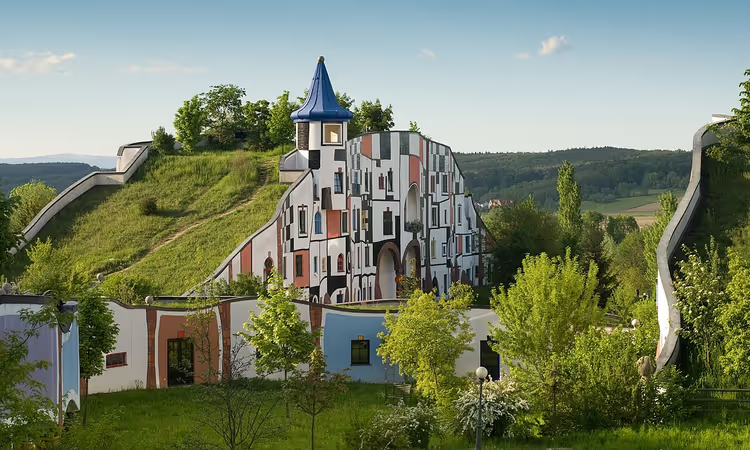
Bad Blumau lies in southeastern Austria, in Styria, in a region of thermal springs and volcanoes. The town is quite small, but its thermal complex is known far beyond the country's borders. Rogner Bad Blumau was built according to a design by the artist Friedensreich Hundertwasser. It features colorful facades, golden domes, and green roofs, with almost no straight lines. The complex is called the largest inhabited work of art (according to the official website).
The water is supplied by the Rogner spring. It rises from great depths, arrives almost boiling, and is cooled before being fed into the pools. In terms of mineral saturation, the local water is considered one of the strongest in Styria (according to the state tourism portal). Treatment is best done after consulting a doctor: there are many indications, and they don't suit everyone.
Besides the baths, you'll be offered a sauna, a gym, massage, and a relaxation area. There's a freshwater pool and a children's paddling pool, so you can come with kids. In summer, cycling, fishing in mountain lakes, and swimming are added. In winter, guests head off to ski at nearby resorts.
- Who it's for: those who want to combine treatment and relaxation without moving anywhere.
- The catch: in winter, you'll have to travel to another region for skiing.
- Hotels in Bad Blumau on Trip.com
2. Baden
 © C.Stadler/Bwag · CC BY-SAPhoto: C.Stadler/Bwag, CC BY-SA (https://creativecommons.org/licenses/by-sa/4.0), Wikimedia Commons
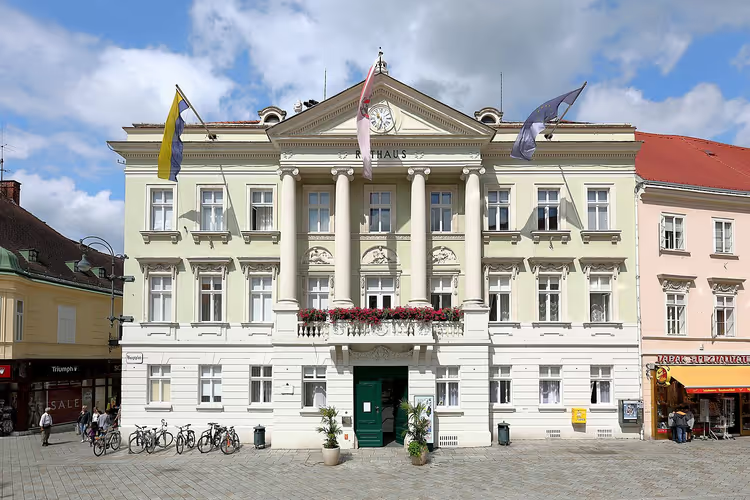
Baden sits right next to Vienna and is easy to reach by commuter train. The climate here is mild: no sweltering heat in summer, almost no frost in winter, and the town is surrounded by forests and vineyards. The local springs with their high sulfur content were known as far back as the Roman Empire, when legionaries used them for treatment. Later, emperors, aristocrats, and people of creative professions came here.
The waters help with musculoskeletal disorders, nervous exhaustion, and even nicotine addiction. The local baths are particularly valued for their subaquatic therapy and hydromassage. The resort was rebuilt twice, after a fire and after World War II, so there are fewer old buildings than you might expect. On the other hand, the cultural program is extensive: concerts, excursions, and walks in the park.
- How to get there: by commuter train from Vienna, about half an hour.
- Who it's for: those who want treatment and to return to the capital every evening.
- Hotels in Baden on Trip.com
3. Bad Ischl
 © Peterburg23 · CC BY-SAPhoto: Peterburg23, CC BY-SA (https://creativecommons.org/licenses/by-sa/3.0), Wikimedia Commons
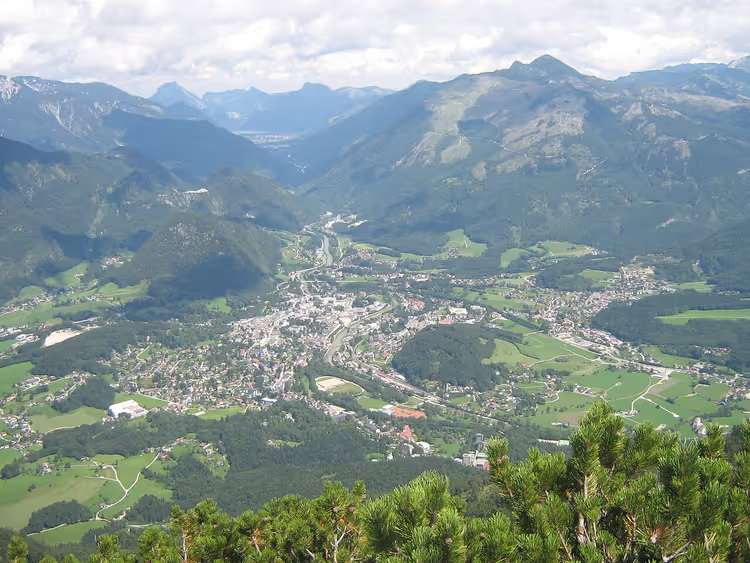
Bad Ischl sits in Austria's lake district, not far from Salzburg. Salt was mined in this area for centuries, and in the early nineteenth century healing springs were discovered as well. For the Habsburg dynasty, the town was a place of good fortune. Archduchess Sophie came here for treatment, and Franz Joseph later met his beloved in Bad Ischl. Their villa served as a summer residence for many years and remains the town's main attraction.
Today visitors have access to more than a dozen hot and cold springs. The thermal center has pools, jacuzzis, saunas, a solarium, treatment rooms, and massage rooms. The local waters are considered beneficial for cardiovascular conditions, stomach issues, nervous system disorders, and musculoskeletal problems. Walking routes are laid out for strolls, and a cable car takes you up the mountainside.
- Who it's for: those who want to combine treatments with mountain walks.
- Hotels in Bad Ischl on Trip.com
4. Bad Kleinkirchheim
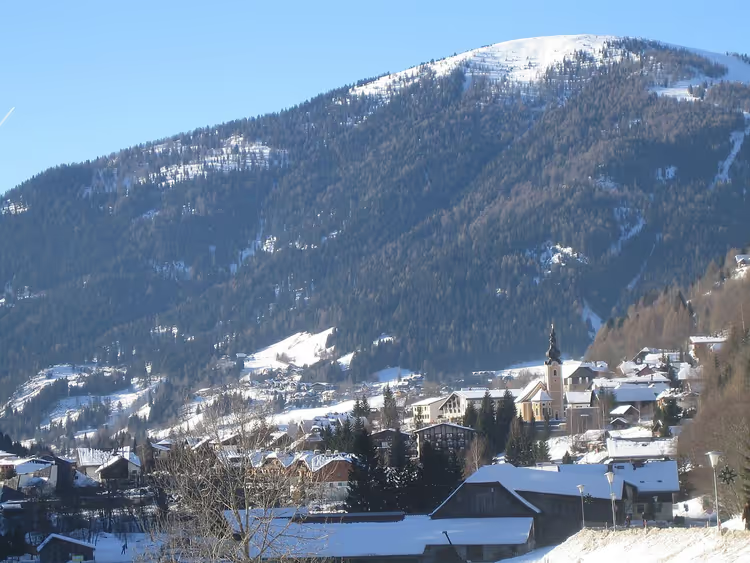 © User:Popie · CC BY-SAPhoto: User:Popie, CC BY-SA (http://creativecommons.org/licenses/by-sa/3.0/), Wikimedia Commons
The name Bad Kleinkirchheim translates as "spa by the little church." The town lies in northern Carinthia, and the healing properties of its waters were known as far back as the Middle Ages. According to legend, the local water healed the wounded Count Potto, and the mountains still contain stone "bathtubs" that were used for centuries.
Today it is not only a spa resort but also a ski resort. The local mountains are well suited to ski runs, so the town is lively in winter. There are plenty of hotels, from simple guesthouses to five-star properties with their own thermal complexes. The baths feature outdoor and indoor pools with thermal water that arrives warm and highly mineralized. Massage, exercise therapy, and treatments are also offered. The local waters help with rheumatism and immune system disorders.
- Who it's for: those who want treatment and skiing in one place.
- Hotels in Bad Kleinkirchheim on Trip.com
5. Bad Loipersdorf
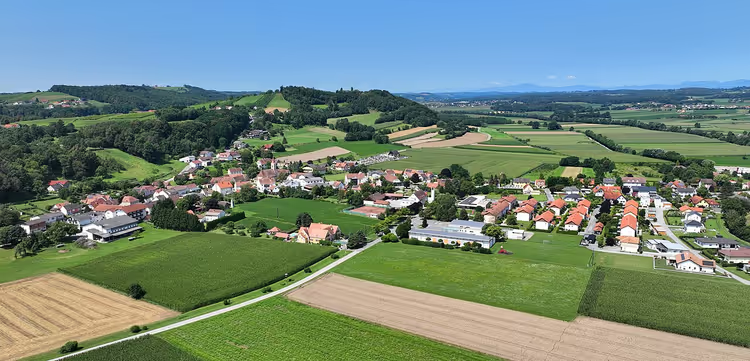 © C.Stadler/Bwag · CC BY-SAPhoto: C.Stadler/Bwag, CC BY-SA (https://creativecommons.org/licenses/by-sa/4.0), Wikimedia Commons
Bad Loipersdorf is located in Styria, a couple of hours' drive from Vienna. The mineral springs and therapeutic mud were discovered by accident while drilling a well in search of oil. Today people come here from different countries for treatment and simply to relax. The climate is Mediterranean: no extreme heat, and plenty of sunny days.
The main attraction is a large thermal park divided into zones. One zone operates as a water park with rides, water slides, and pools for toddlers. The second zone is a therapeutic complex with outdoor and indoor pools where the water is highly mineralized. The local mud is used for polyarthritis, ankylosing spondylitis, and rheumatism. In your free time you can play golf, tennis, go horseback riding, take excursions, and sample local wines.
- Who it's for: families with children and those who need mud treatments.
- Hotels in Bad Loipersdorf on Trip.com
6. Bad Tatzmannsdorf
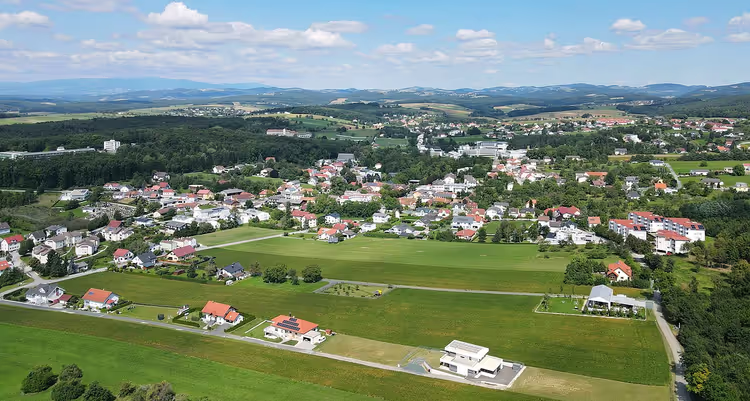 © C.Stadler/Bwag · CC BY-SAPhoto: C.Stadler/Bwag, CC BY-SA (https://creativecommons.org/licenses/by-sa/4.0), Wikimedia Commons
Bad Tatzmannsdorf is located near the Hungarian border, in Burgenland. Treatments here include thermal waters, mud wraps, and carbon dioxide baths. You can visit at any time of year, and prices remain moderate even in high season. The local baths and mineral water were used as far back as the Middle Ages, while peat came into use later. The town officially became a spa resort in the first half of the twentieth century.
The warm carbon dioxide waters are rich in calcium, sodium, magnesium, and iron. People come here for cardiovascular conditions, stomach issues, urogenital disorders, and metabolic problems. The mud helps with gynecological conditions and musculoskeletal inflammation, and is also used in cosmetology. Hot springs were discovered here in the late twentieth century, expanding the list of indications. In your free time you can play golf, tennis, or soccer, go horseback riding, or go fishing.
- Who it's for: those undergoing long-term treatment who want to stay within a reasonable budget.
- Hotels in Bad Tatzmannsdorf on Trip.com
7. Bad Hall
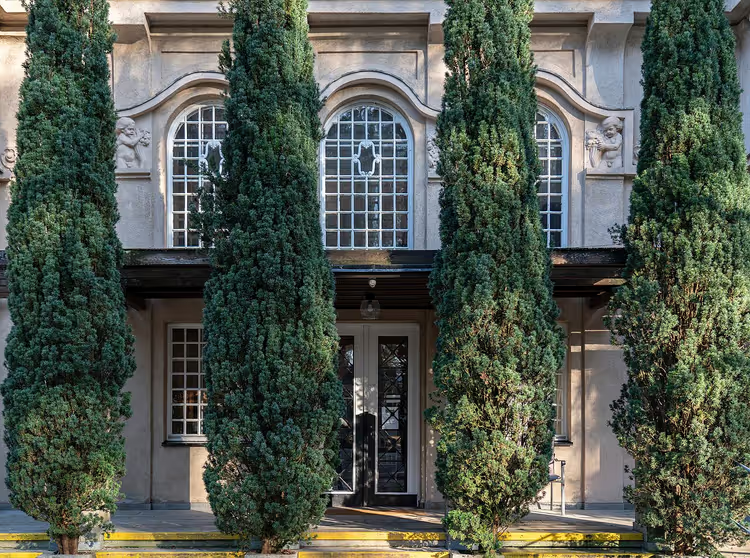 © Thomas Ledl · CC BYPhoto: Thomas Ledl, CC BY (https://creativecommons.org/licenses/by/4.0), Wikimedia Commons
Bad Hall is located in the Traunviertel region and is considered a very quiet place. There are no industrial plants or heavy street traffic here, but there are iodine springs. The resort gained its reputation in the late nineteenth century, when well-known people came here to restore their health. The mountains protect the town from strong winds, so winters here are mild and summers are not hot.
The local springs contain iodine, bromine and chlorine in proportions suitable for the human body. This water strengthens blood vessel walls, helps with atherosclerosis, normalizes metabolism and suppresses inflammatory processes. You may be prescribed baths, wraps, massage, inhalation and electrophoresis. The best time for treatment is May and September. For variety, they offer a flight on a plane with a transparent bottom.
- Who it's for: those who need a quiet resort focused on iodine treatments.
- The catch: only May and September are considered the best months for treatment.
- Hotels in Bad Hall on Trip.com
8. Bad Hofgastein
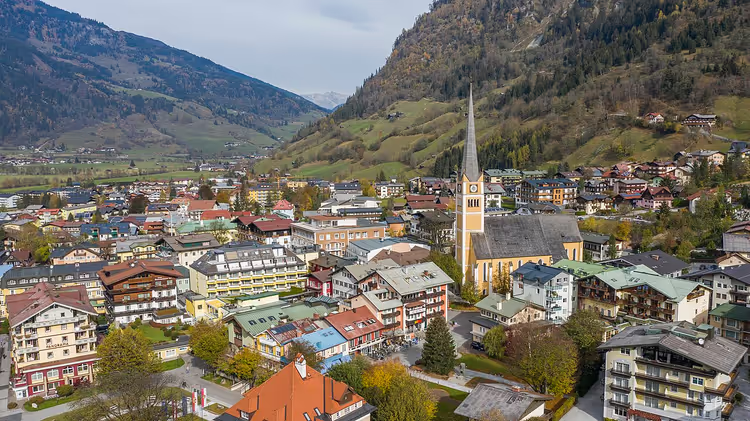 © Arne Müseler · CC BY-SAPhoto: Arne Müseler, CC BY-SA (https://creativecommons.org/licenses/by-sa/3.0/de/deed.en), Wikimedia Commons
Bad Hofgastein lies in the Gastein Valley, on the grounds of a national park. It is one of the most beautiful towns in Austria: low-rise houses, green streets, a park and postcard-perfect views. There are both prestigious hotels and modest guesthouses where you can stay inexpensively. The main pride of the place is the Alpentherme Gastein thermal center.
According to legend, the healing power of the local waters was discovered back in the seventh century, when monks healed a wounded deer. The hot radon waters are of particular value. They relieve symptoms of musculoskeletal disorders, help wounds heal and normalize blood pressure. Treatment in radon galleries is considered highly effective. The complex offers a drinking course, baths, irrigation, inhalation and bathing in thermal pools.
The best time to relax and get treatment here is in spring or early autumn. Keep in mind that the most rain in this area falls in June. For thermal spa prices, see the official Alpentherme Gastein website: it has both evening rates and full-day tickets. If you love alpine skiing, the local slopes are at your service in winter.
- Who it's for: those who need radon treatments and scenic walks.
- The catch: June has the most precipitation here.
- Hotels in Bad Hofgastein on Trip.com
9. Warmbad-Villach
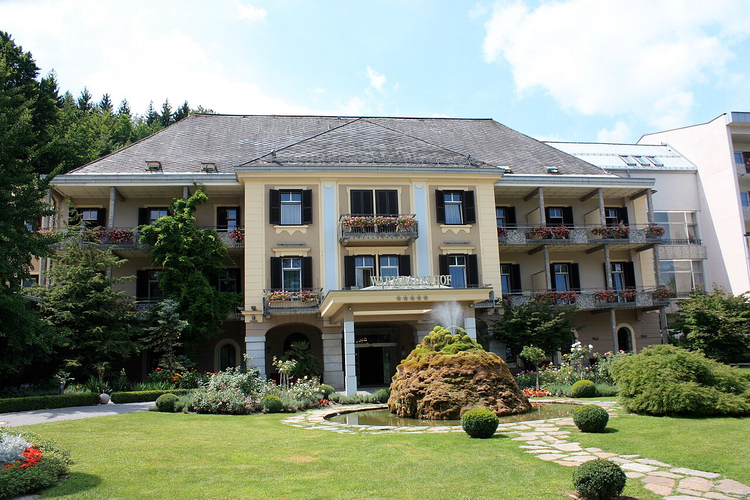
Warmbad-Villach is one of the southernmost resorts in Austria. It is located in Carinthia and is mentioned in sources from the late fifteenth century. The local waters are rich in magnesium, calcium and bicarbonates, and beautiful lakes lie nearby. The bottom of one of the pools is made of natural mountain rock.
People come here for musculoskeletal disorders, high blood pressure, cardiovascular ailments, obesity and nervous exhaustion. It is also a place for recovery after serious injuries and surgeries. In winter, it is also a good ski resort with modern slopes, and the town itself sits among lakes. You will have somewhere to relax on your day off.
- Who it's for: those recovering from surgeries and injuries.
- Hotels in Warmbad-Villach on Trip.com
10. Geinberg
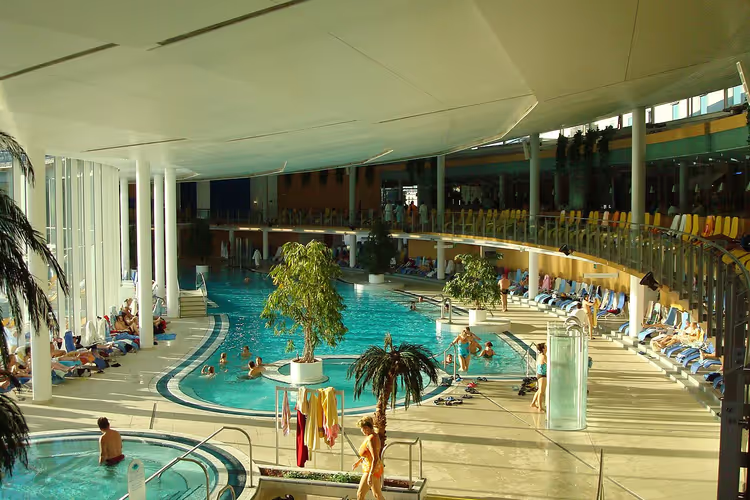 © mawieser · CC BY-SAPhoto: mawieser, CC BY-SA (https://creativecommons.org/licenses/by-sa/3.0), Wikimedia Commons
Geinberg is located in Upper Austria and is one of the youngest balneological centers in the country. The resort opened only in the late twentieth century, but the modern complex quickly made it well known. The buildings stand on a hillside surrounded by forest, so right from the pool you see trees and the valley. Until the late eighteenth century, these lands belonged to Bavaria.
The mineral springs here were also discovered by accident, while searching for oil. The local waters contain boron and hydrogen sulfide, and the spring temperature is high, so the water is cooled before being fed into the pools. Skin diseases, nervous system disorders, joint problems and metabolic disorders are treated here. You will be offered various types of massage, thalassotherapy and therapeutic exercise. Nearby there are gyms, golf, tennis courts and mountain trails.
- Who it's for: those who want to combine treatments with sports.
- Hotels in Geinberg on Trip.com
11. Salzburg
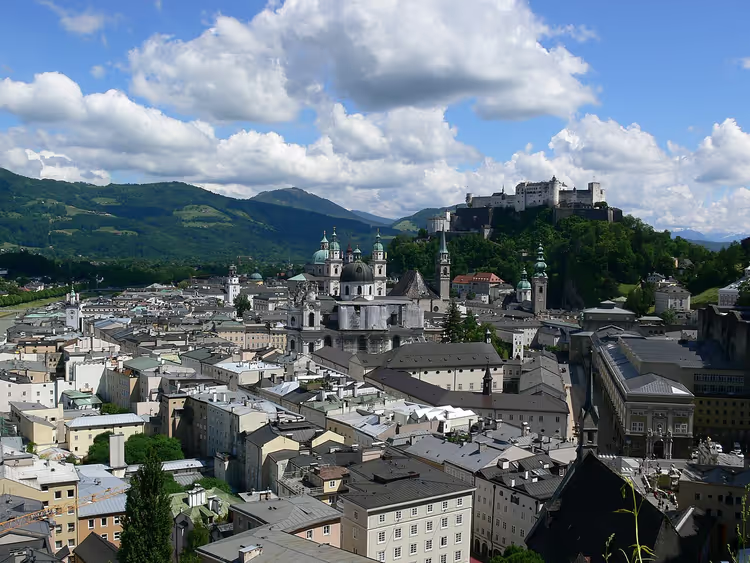 © Photo: Andreas Praefcke · CC BYPhoto: Photo: Andreas Praefcke, CC BY (https://creativecommons.org/licenses/by/3.0), Wikimedia Commons
Salzburg has long attracted medical tourism enthusiasts. The mild climate, scenery, and high-quality hotels draw many patients here every year. You can get diagnostic tests and doctors' recommendations in the city, and Austrian medicine is well known far beyond the country's borders. Local private clinics and nearby resorts are especially popular.
Hot radon springs are used here and included in treatment and recovery programs. People come here for respiratory, cardiovascular, spinal, and joint conditions, as well as for rehabilitation after serious injuries. Recovery is supported by attentive staff, a special diet, and appropriate physical activity.
The city is surrounded by the Alps, so it's easy to make your vacation active at any time of year. You'll find hiking and cycling routes, ski slopes, and plenty of sights in the old town.
- Who it's for: those who value diagnostics and doctors' consultations, not just a pool.
- Hotels in Salzburg on Trip.com
12. Kaprun
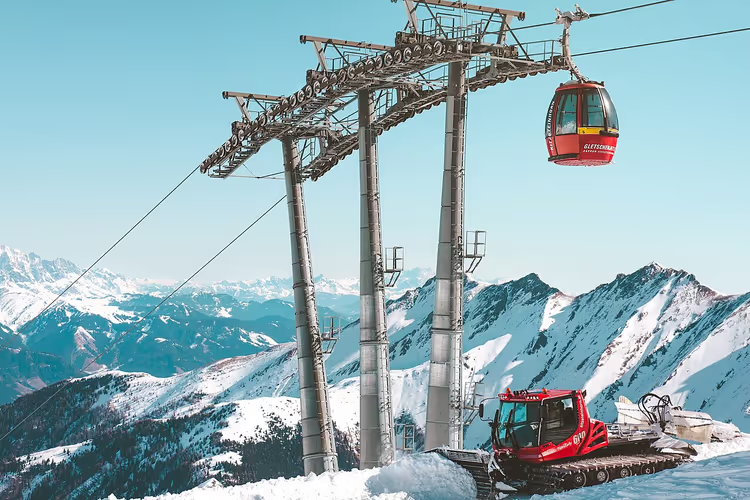
Kaprun is located in the state of Salzburg and is known as a ski and thermal resort. It's a very quiet place, and the town was first mentioned in historical sources in the tenth century. It only became a resort center in the mid-twentieth century, when skiers started coming here.
The modern thermal complex was built here in the early twenty-first century. It has adult and children's pools, saunas, a spa area, and treatment rooms. Mineralized water is delivered from a depth of about eight hundred meters: it contains sulfates, calcium, magnesium, and sodium. Bathing improves skin tone and nervous system function. There's a water park for children, underwater massage for adults, and mountain views from the outdoor pools.
It's best to arrive at the complex in the morning and buy a ticket for several hours. The easiest place to stay is the Tauern hotel, which has a direct walkway to the thermal complex.
- Who it's for: those who combine skiing with thermal baths and travel with children.
- The catch: a short visit isn't possible, tickets are sold for a minimum of several hours.
- Hotels in Kaprun on Trip.com
13. Carinthia
 © C.Stadler/Bwag · CC BY-SAPhoto: C.Stadler/Bwag, CC BY-SA (https://creativecommons.org/licenses/by-sa/4.0), Wikimedia Commons
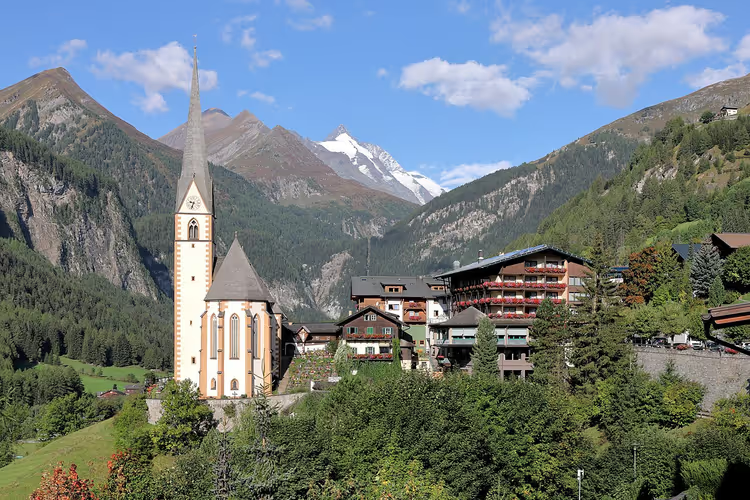
Carinthia lies in southern Austria and borders Italy. The climate here is perhaps the best in the country, and this region is home to Austria's highest mountain, Grossglockner. Besides mountain ranges, there are plenty of plains and lakes, and the water is so clean you can drink it. For vacation and treatment, it's best to choose Pörtschach, Maria Wörth, or Krumpendorf.
In summer, the lakes warm up to a comfortable temperature, which is why families with children love this region. A pool has been built directly over the Warmbad-Villach springs, with natural mountain rock as its floor. Nearby there are indoor pools with slides and fountains, a solarium, a jacuzzi, and massage services. The local mineral water, rich in bicarbonates, magnesium, and calcium, is also used for drinking. Treatment here is recommended for heart, spinal, and nervous system conditions.
You can get an examination and doctor's recommendations on site, without traveling to Vienna or Graz. For active recreation, there are cycling routes, mountain trails, and water activities.
- Who it's for: those who want treatment by the lakes and want to combine it with time on the water.
- Hotels in Carinthia on Trip.com
14. Langenfeld
 © Manfred Mammut · CC BY-SAPhoto: Manfred Mammut, CC BY-SA (https://creativecommons.org/licenses/by-sa/4.0), Wikimedia Commons
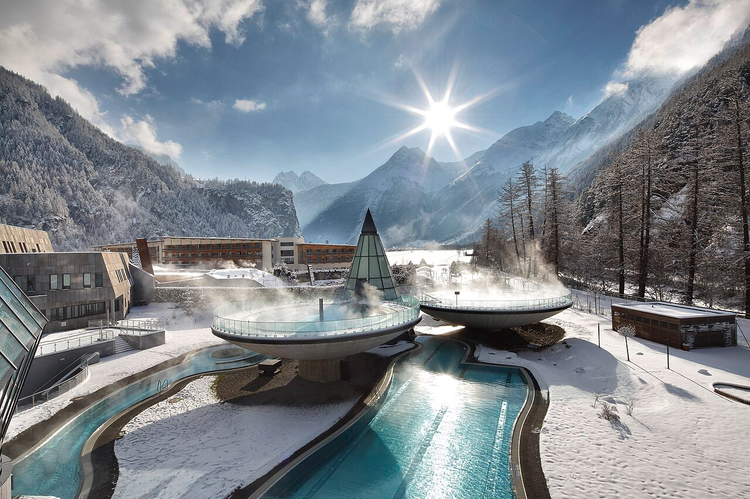
Langenfeld lies in Tyrol, in the Ötztal valley, and its name translates as "long field". There are many small, picturesque villages nearby, and the whole area looks so beautiful that tourists come here all year round. The Langenfeld thermal baths are considered among the most modern in the country, even though the first bathing house appeared here back in the sixteenth century.
The old springs dried up, and in the 1980s a new well was drilled here. The water originates in glaciers, passes through mountain rock, and is extracted already warm and rich in sulfur. This water is good for joint problems, rheumatism, sprains, and circulatory disorders. In winter, treatment is easy to combine with skiing, and in summer with hiking through the valley.
- Who it's for: those who want modern thermal baths and skiing nearby.
- Hotels in Langenfeld on Trip.com
15. Laa an der Thaya
 © C.Stadler/Bwag · CC BY-SAPhoto: C.Stadler/Bwag, CC BY-SA (https://creativecommons.org/licenses/by-sa/4.0), Wikimedia Commons
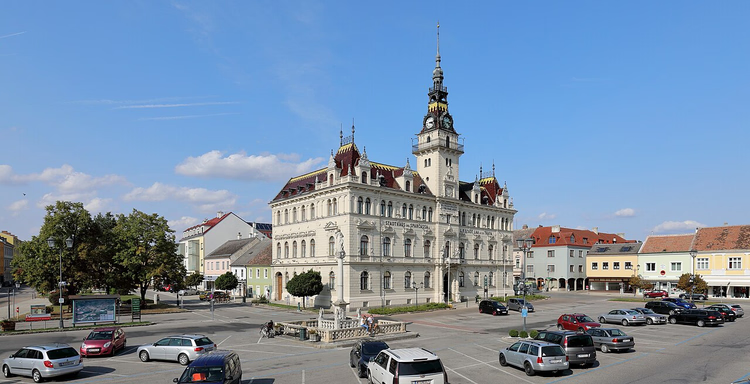
Laa an der Thaya sits on the border with the Czech Republic. It has everything at once: scenic surroundings, mineral waters, treatment programs, plenty of sights, and colorful festivals. Around six thousand people live in the town permanently, but many tourists add to that number. A military garrison was once stationed here, and massive walls remain from that era.
Historic buildings from the thirteenth century have survived: the town hall, a church, residential houses, and a hospital. But it was the mineral waters that brought the town its fame. Here you can recover after a heart attack or stroke, and find relief for spinal conditions, vision problems, and nervous system disorders. Preventive treatments play a major role, and the local waters contain iodine and sodium chloride.
The cuisine here is another reason to visit: the table features game, dumplings, stuffed fish, and local pastries. The town brews beer and makes wine.
- Who it's for: those who want treatment without being bored between procedures.
- Hotels in Laa an der Thaya on Trip.com
16. Tyrol
 © Herbert Ortner , Vienna, Austria · CC BYPhoto: Herbert Ortner , Vienna, Austria, CC BY (https://creativecommons.org/licenses/by/2.5), Wikimedia Commons
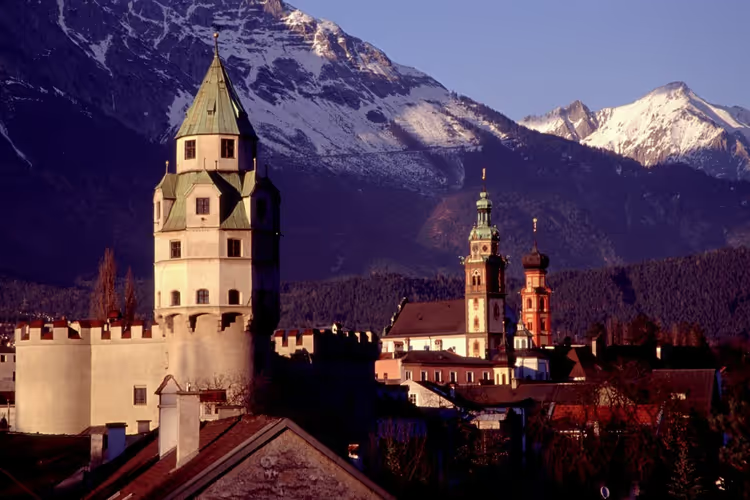
Tyrol lies in the Alps and is considered one of Austria's most in-demand regions. It has stunning nature, rich traditions, excellent cuisine, and numerous ski slopes. Hotels and guesthouses are available for every taste, and there is no shortage of sights: castles, museums, a silver mine, and an imperial palace.
This is also home to Aqua Dome, a huge thermal spring complex. The local water contains sulfur and sodium, chloride and sulfate. People come here for rheumatism and joint problems, and treatment and spa procedures are offered on site. Another well-known health resort in the region is Aigner Bad. Ordinary people were already receiving treatment here in the eighteenth century, and the water is rich in calcium and helps with gout and sciatica. The place is quiet, and treatment there is pleasant.
- Who it's for: those who want thermal baths and a full program of mountains and castles.
- Hotels in Tyrol on Trip.com
17. Zell am See
 © Andrew Bossi · CC BY-SAPhoto: Andrew Bossi, CC BY-SA (https://creativecommons.org/licenses/by-sa/2.5), Wikimedia Commons
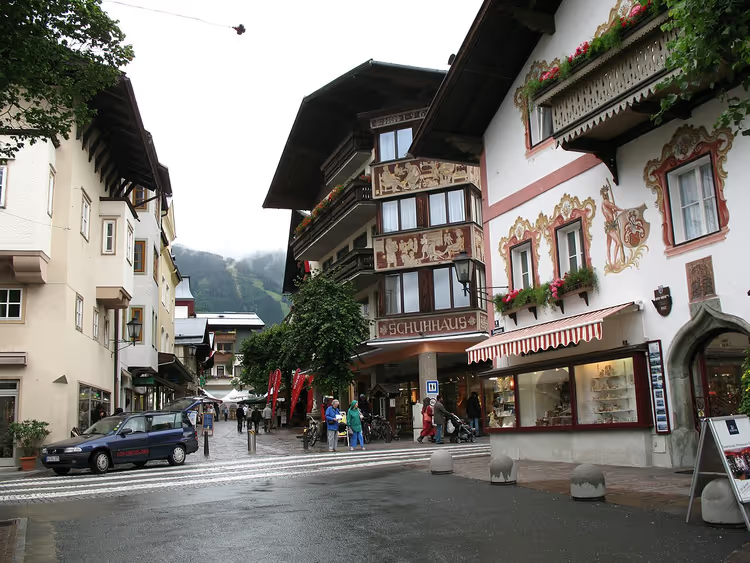
Zell am See stands on the shore of a lake and is very popular with tourists. People come here all year round, and Salzburg is about an hour and a half away. The first inhabitants of this place were monks, and the town grew out of their monastery. The lake still inspires admiration today: the clean water warms up well in summer and attracts divers.
They dive to great depths and see unusual fish, and sometimes the remains of old sunken vessels. Besides diving, the lake is suitable for swimming and fishing. Zell am See is also known for its ski slopes, and there are facilities for horseback riding, cycling, tennis, and golf. The town has an art gallery and ice caves.
The thermal complex here opened relatively recently. The local water is used both for drinking and bathing. It helps with digestive and urogenital system disorders and speeds up recovery after injuries and surgeries. The facilities are spacious, the service is good, and the prices are reasonable.
- Who it's for: those who want to swim in the lake and visit thermal baths.
- Hotels in Zell am See on Trip.com
18. Fügen
 © böhringer friedrich · CC BY-SAPhoto: böhringer friedrich, CC BY-SA (https://creativecommons.org/licenses/by-sa/2.5), Wikimedia Commons
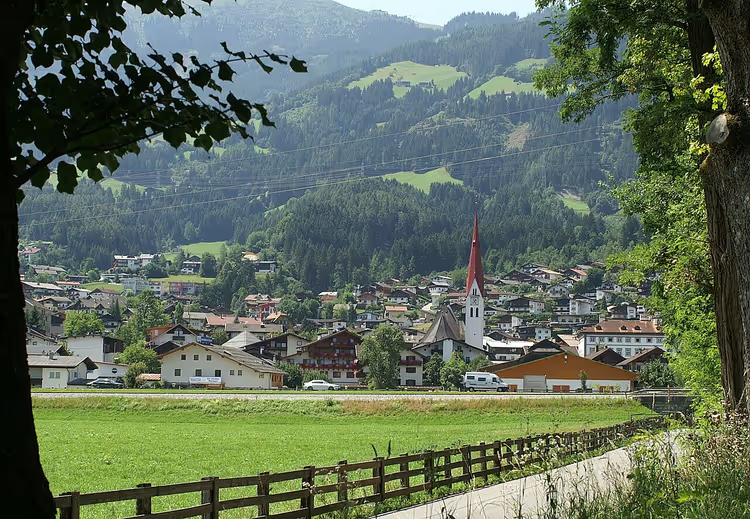
Fügen sits in the Zillertal valley, and the town has fewer than four thousand residents. Here you can ski, visit an aquapark, check out museums, see a church and a cheese dairy. The town's pride is its thermal complex, which welcomes both children and adults.
The indoor pool offers water massage, "tidal" waves, waterfalls and other attractions. Toddlers get their own separate splash pool. The complex has several saunas, including herbal, infrared and Turkish, and afterwards you can cool off in a pool with cold water. Massage therapists are also available. In summer, an outdoor pool opens and operates as a full aquapark.
- Who it's for: families with children and anyone who wants saunas and an aquapark.
- The catch: the outdoor aquapark only operates in summer.
- Hotels in Fügen on Trip.com
19. Stegersbach
 © Thermenurlauber · CC BYPhoto: Thermenurlauber, CC BY (https://creativecommons.org/licenses/by/3.0), Wikimedia Commons
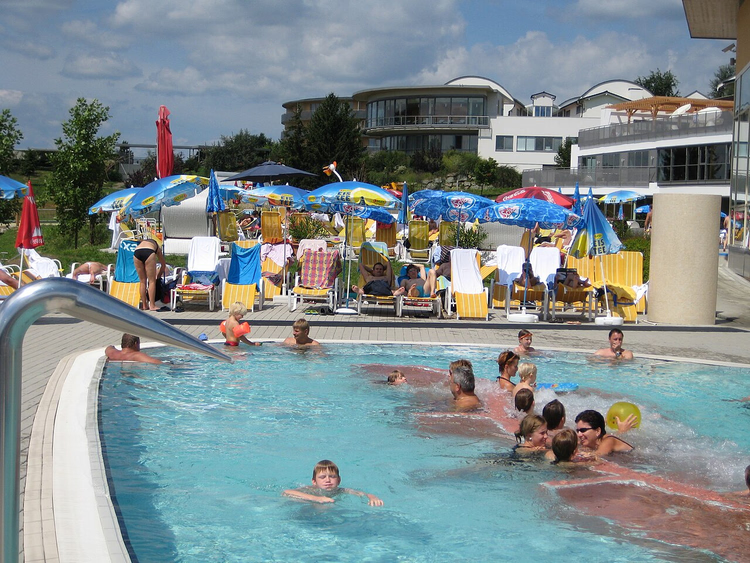
Stegersbach is considered one of Austria's best resorts for family vacations. It's in the south of the country, about three hours from Vienna. The town is small, and the scenery feels Italian: vineyards, green hills and homemade wine sold by local farmers.
The local springs contain sodium, sulfur and magnesium. The water arrives from deep underground already warm. The treatments are beneficial for musculoskeletal and skin conditions. You can also lose excess weight and boost your immune system here. The Spa Larimar hotel has a wellness center, and the Therme Stegersbach complex features pools, a stream and even a grotto.
You'll be offered massages, therapeutic mud applications, a variety of baths and pool exercises. For families, it's a convenient option: parents get their treatments while children swim nearby.
- Who it's for: families with children and anyone treating excess weight.
- The catch: it takes about three hours to get there from Vienna.
- Hotels in Stegersbach on Trip.com
20. Altenmarkt im Pongau
 © Arne Müseler · CC BY-SAPhoto: Arne Müseler, CC BY-SA (https://creativecommons.org/licenses/by-sa/3.0/de/deed.en), Wikimedia Commons
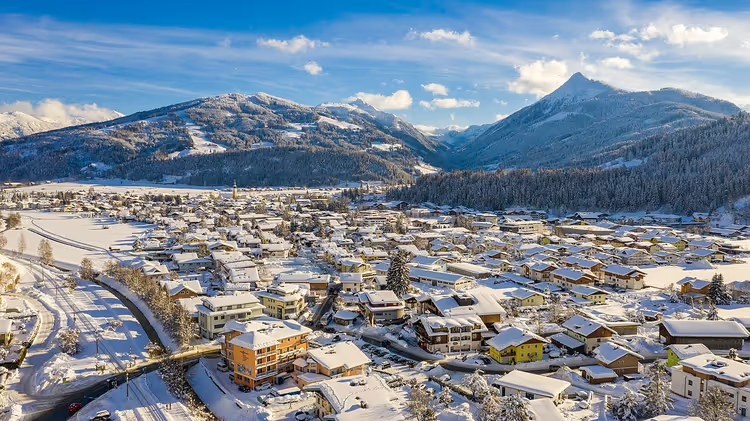
Altenmarkt im Pongau suits more than just active vacationers. Here you can get treatment and relax at the Therme Amadé complex. It has more than ten pools with warm water, both salt and fresh. In the children's splash pool, the water is warmer than in the adult pools, there's a slide and toys, and nannies look after the little ones. Parents can calmly go through their treatments or sit in the sauna during that time.
The adult pools have hydromassage and artificial waves. Those who aren't confident in the water are given special flotation aids, and strong swimmers can train with an instructor. The complex also offers therapeutic water exercises and diving lessons. Some pools are outdoors, and there are hydromassage tubs and a salt cave.
- Who it's for: families with children and anyone who needs mud treatments.
- The catch: some attractions are designed only for older children.
- Hotels in Altenmarkt im Pongau on Trip.com
Thermal resorts in Austria on the map
We've put all twenty resorts on one map to make planning your route easier. Some places are convenient to combine into a single trip: Baden, Bad Ischl and Bad Hall are relatively close to each other. Open the map and see how long the drive is between your favorites.
Thermal resorts of Austria
Places on the map
- 1Bad Blumau Hundertwasser thermal baths, the highest mineral content in Styria
- 2Baden Sulphur springs known since Roman times, near Vienna
- 3Bad Ischl Lake district, the Habsburgs' summer residence
- 4Bad Kleinkirchheim Balneological and ski resort of Carinthia
- 5Bad Loipersdorf Thermal park with a water park and therapeutic mud
- 6Bad Tatzmannsdorf Carbonic waters and mud wraps in Burgenland
- 7Bad Hall Iodine springs, a quiet resort in the Traunviertel
- 8Bad Hofgastein Radon waters, the Alpentherme Gastein thermal centre
- 9Warmbad Villach One of the southernmost resorts, recovery after injuries
- 10Geinberg A young balneological centre on a hillside
- 11Salzburg Medical tourism, radon springs and clinics
- 12Kaprun Ski and thermal resort with a water park for children
- 13Carinthia Lake region in southern Austria, pool above the Warmbad Villach springs
- 14Längenfeld One of the country's most modern thermal spas, in the Ötztal valley
- 15Laa an der Thaya Mineral waters on the border with Czechia, recovery after a heart attack
- 16Tyrol The Aqua Dome complex and the Aigner Bad health resort
- 17Zell am See Lakeside resort with a recently opened thermal complex
- 18Fügen Thermal complex with a splash pool in the Zillertal valley
- 19Stegersbach Family resort with mud treatments and a grotto
- 20Altenmarkt im Pongau The Therme Amadé complex with a children's splash pool and salt cave
⁉️🤔 Frequently asked questions
When is the best time to visit Austria's thermal resorts?
Thermal complexes operate year-round, so the season isn't the main factor here. If you want to combine treatment with walks, choose May, September, or early October: the weather is mild and there are fewer crowds. In winter, resorts near ski slopes are busy during school holidays, and accommodation should be booked in advance.
How much does entry to a thermal complex cost?
Prices depend on the resort, the range of areas included, and the length of your visit. Tickets are usually sold for a few hours or a full day, and the evening rate is cheaper than the daytime rate. Many complexes offer family and children's rates. Check current prices on official websites, for example on the Alpentherme Gastein website.
Which resorts are suitable for treating joints?
For musculoskeletal conditions, the most commonly recommended are Bad Hofgastein with its radon waters, Bad Loipersdorf with therapeutic mud, and Laa an der Thaya. The waters of Bad Tatzmannsdorf also help. A treatment plan is prescribed by a doctor on site, so bring your medical records and test results with you. A course is usually designed for more than one day.
Can you combine a thermal spa holiday with downhill skiing?
Yes, and it's convenient. Bad Kleinkirchheim, Kaprun, Längenfeld, Zell am See, and Bad Hofgastein all operate as ski resorts in winter. You ski in the morning, then head into the warm water after lunch. Families love this routine because kids spend time in the pool while adults are on the slopes.
Which resorts should you choose for a family with children?
For families, the most commonly recommended are Bad Loipersdorf, Altenmarkt im Pongau, Fügen, and Zell am See. These complexes have children's pools, slides, and some even offer childcare. Adults can enjoy treatments and saunas at the same time. Check in advance what age children are allowed into the thermal pools.
In short: what's worth booking
If you're going for treatment, choose Bad Hofgastein or Bad Tatzmannsdorf: they have strong springs and clear indications. If you're traveling with children, look at Altenmarkt im Pongau and Bad Loipersdorf. If you want to combine thermal baths with skiing, choose Kaprun or Bad Kleinkirchheim. Accommodation for popular dates gets booked up quickly, so reserve early.

A small editorial team writing guides for independent travel. We travel ourselves, but we haven’t been everywhere, so we check prices, opening hours and how to get there against official sources.