













70 Dishes of the Netherlands: what to try from herring to licorice
Netherlands food is simple and filling. People here eat herring with onions right on the street, deep-fry almost everything, and drink coffee with a warm waffle. Behind the "herring and cheese" facade lies a whole cuisine: winter potato stews, Indonesian rijsttafel, and Surinamese roti. Getting a handle on it during a short trip is hard.
We put together 70 dishes worth trying and organized them into groups.
Ad: this article contains affiliate links, we earn a commission if you book through them, at no extra cost to you.
Dutch cuisine in a nutshell
💡 In short:
- Season matters more than place: the first Hollandse Nieuwe is served from mid-June, white asparagus is sold from mid-April to late June, oliebollen are fried in December.
- Look for street food in cafetarias and snack bars, for example Febo: kibbeling, kroketten, patat met mayo.
- The Alkmaar cheese market runs on Fridays from 10:00 to 13:00, in 2026 until September 25.
- Hours and 2026 season: 09/2026, verified on the official cheese market website.
1. Stroopwafel
 © Takeaway · CC BY-SAPhoto: Takeaway, CC BY-SA (https://creativecommons.org/licenses/by-sa/3.0), Wikimedia Commons
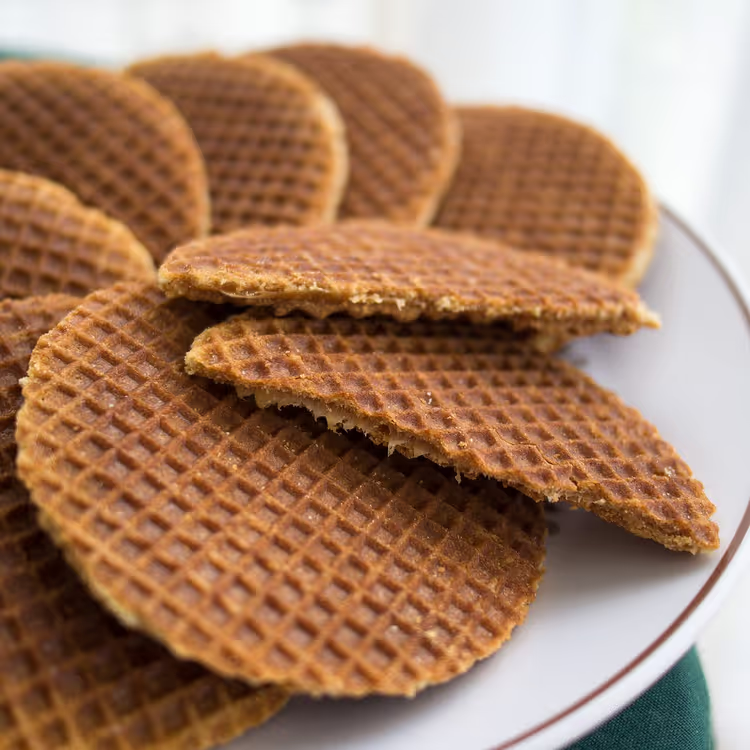
A Stroopwafel is two thin crispy waffles with caramel syrup between them. The recipe was invented in Gouda back in the 19th century from leftover dough and syrup. To soften the caramel, place the waffle on top of a cup of hot coffee or tea for a minute. Hot waffles are sold at markets, and in Gouda they are made right in front of you. The waffle travels well, so it makes a convenient edible souvenir.
- Where to find: Gouda, street stalls and fairs.
- Cost: a pack from the supermarket is cheaper than a hot waffle from a stall.
2. Bitterballen
 © Takeaway · CC BY-SAPhoto: Takeaway, CC BY-SA (https://creativecommons.org/licenses/by-sa/3.0), Wikimedia Commons
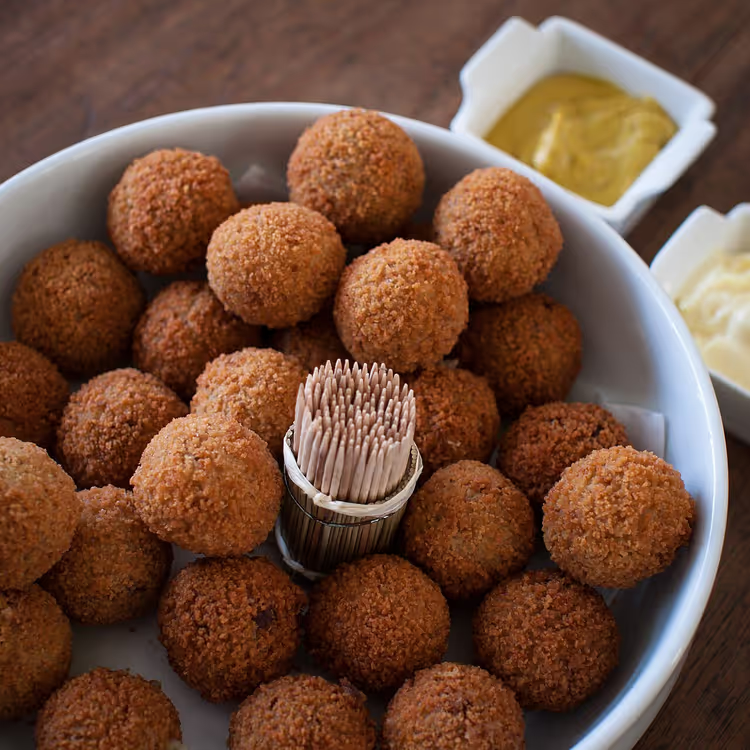
Bitterballen are deep-fried until they have a crispy crust. Inside is a hot ragout of beef or veal, thickened with flour and beef broth and seasoned with herbs. They are served with mustard and cold beer, and they are the main snack of a Dutch pub. The name comes from the word bitter, a bitter spirit they used to be served with. The catch: they are very hot inside, easy to burn your lips.
3. Poffertjes
 © Illustratedjc · CC BY-SAPhoto: Illustratedjc, CC BY-SA (https://creativecommons.org/licenses/by-sa/4.0), Wikimedia Commons
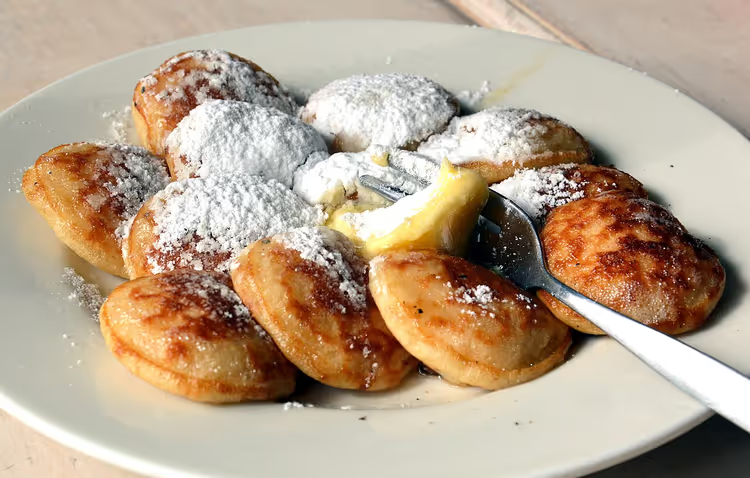
Poffertjes are fried on a cast-iron pan with indentations, which makes them round and fluffy. The batter is made with yeast and buckwheat flour, which gives them a light, airy texture. The finished pancakes are dusted with powdered sugar and topped with a piece of melting butter. In winter, stalls selling them appear at markets and festivals across the country, and you can easily find them at any fair.
4. Hollandse Nieuwe Haring
 © Donald Trung Quoc Don (Chữ Hán: 徵國單) - Wikimedia Commons - © CC BY-SA 4.0 International . ( Want to use this image? ) Or · CC BY-SAPhoto: Donald Trung Quoc Don (Chữ Hán: 徵國單) - Wikimedia Commons - © CC BY-SA 4.0 International . ( Want to use this image? ) Or, CC BY-SA (https://creativecommons.org/licenses/by-sa/4.0), Wikimedia Commons
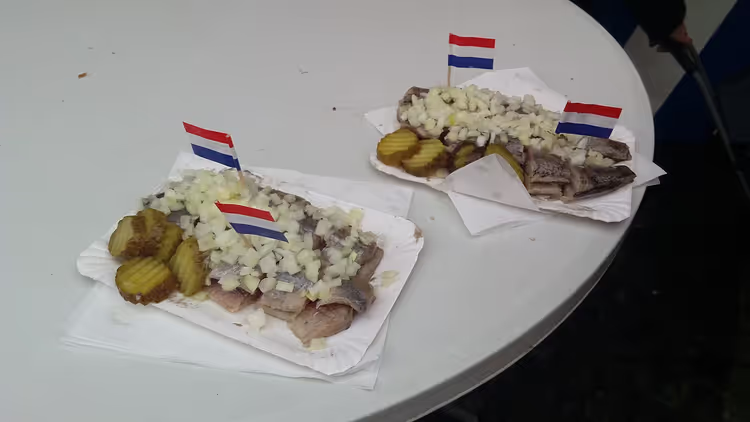
Fresh herring in the Netherlands is eaten raw, with onions and pickles. Hollandse Nieuwe is available from mid-June, when the fish is at its fattiest and most tender. You eat it with your hands: you hold the fish by the tail, tilt your head back, and swallow a piece. The best place for this is the Vlaggetjesdag festival in Scheveningen, which in 2026 took place on June 20 (as of 09/2026, official Vlaggetjesdag website). The catch: raw and salty fish is not for everyone.
5. Erwtensoep (Snert)
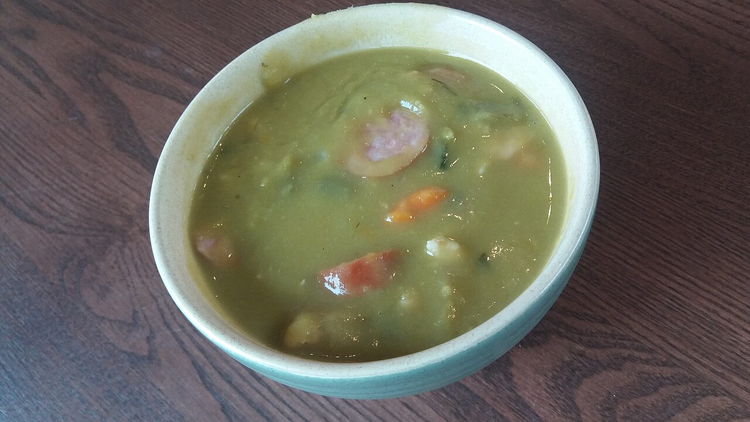
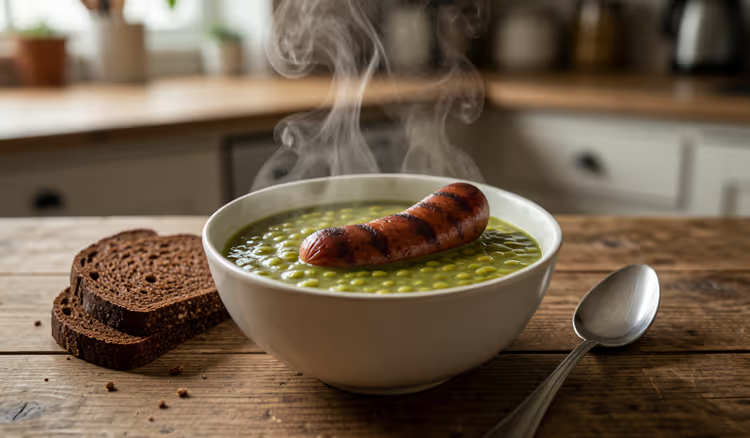
Erwtensoep, or snert, is made from split peas, celery, onions, carrots, and pork. The soup is simmered so long that it thickens to the consistency of a stew: a spoon stands upright in it. It is served with a slice of rookworst and rye bread with katenspek. In winter, this soup warms you up after a long walk, and the Dutch eat it from November to February. The recipe has been around for centuries, so the dish has a homey, consistent taste.
 © Hortensja Bukietowa · CC BY-SAPhoto: Hortensja Bukietowa, CC BY-SA (https://creativecommons.org/licenses/by-sa/4.0), Wikimedia Commons
6. Stamppot
 © Dutch Ministry of Foreign Affairs · CC BY-SAPhoto: Dutch Ministry of Foreign Affairs, CC BY-SA (https://creativecommons.org/licenses/by-sa/2.0), Wikimedia Commons
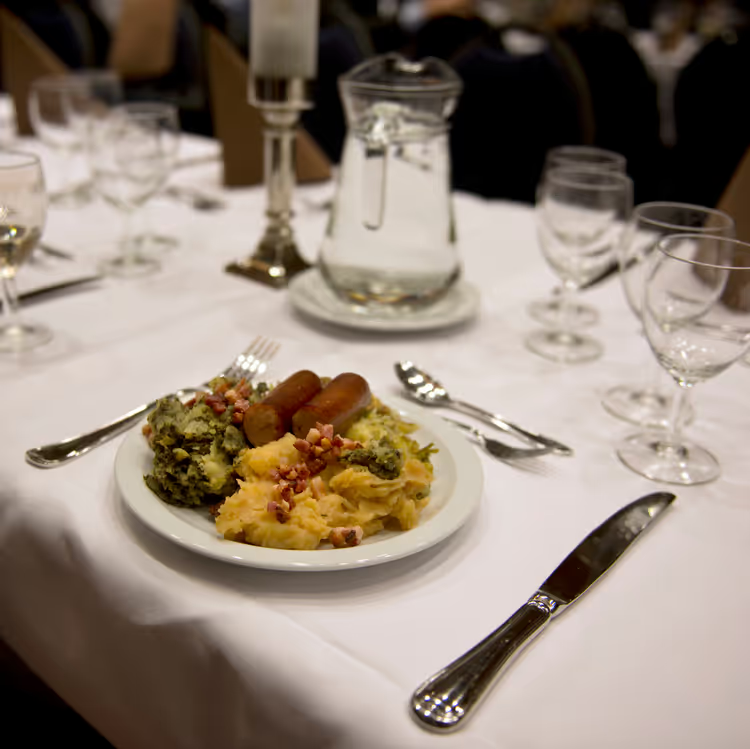
Stamppot is made from mashed potatoes mixed with vegetables. Most often it uses boerenkool (curly kale), andijvie (endive), zuurkool (sauerkraut), or hutspot made from carrots and onions. On top goes rookworst or a juicy meatball. The dish has been known since the 15th century and remains a winter classic. The catch: it looks unappetizing, although it tastes hearty and homey.
7. Kibbeling
 © Superbass · CC BY-SAPhoto: Superbass, CC BY-SA (https://creativecommons.org/licenses/by-sa/4.0), Wikimedia Commons
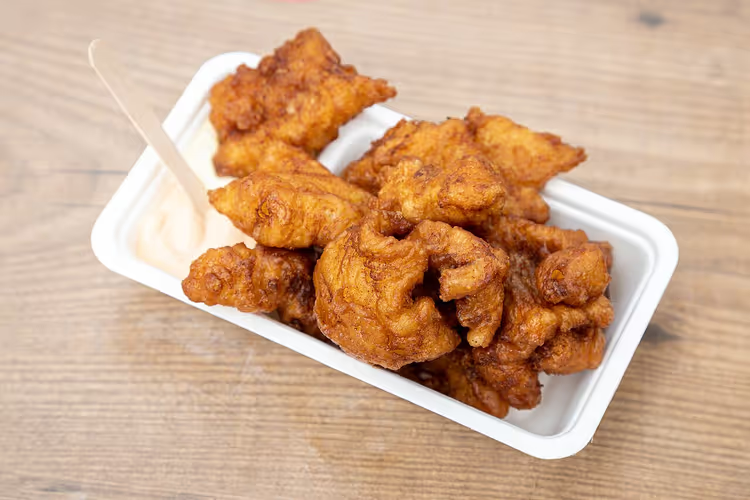
Kibbeling is made from pieces of white fish, usually cod, in batter. They are fried until golden and served with garlic or tartar sauce. Squeeze lemon over the fish, it brings out the flavor better. Look for fresh kibbeling by the sea: in Urk, Vlissingen, The Hague, Haarlem, Rotterdam, and Middelburg. Get a portion right at the fish market and eat it while the crust is still crispy.
8. Oliebollen
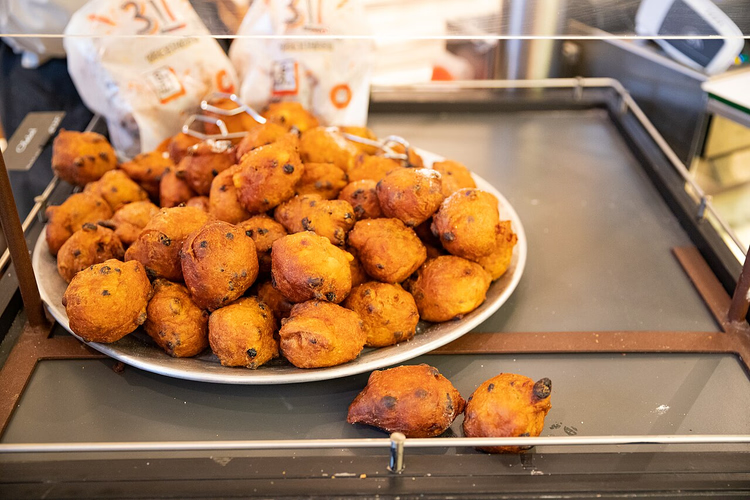
Oliebollen are deep-fried as large balls of yeast dough. Inside are raisins, currants, and candied fruit, and on top they are generously dusted with powdered sugar. The name translates as "oil balls," and the taste resembles doughnuts. They are crispy on the outside and stay soft and airy inside. They are sold all winter, but the peak comes at the end of December, when stalls stand on every square. Then a line at the counter is guaranteed.
 © dronepicr · CC BYPhoto: dronepicr, CC BY (https://creativecommons.org/licenses/by/2.0), Wikimedia Commons
9. Pannenkoeken
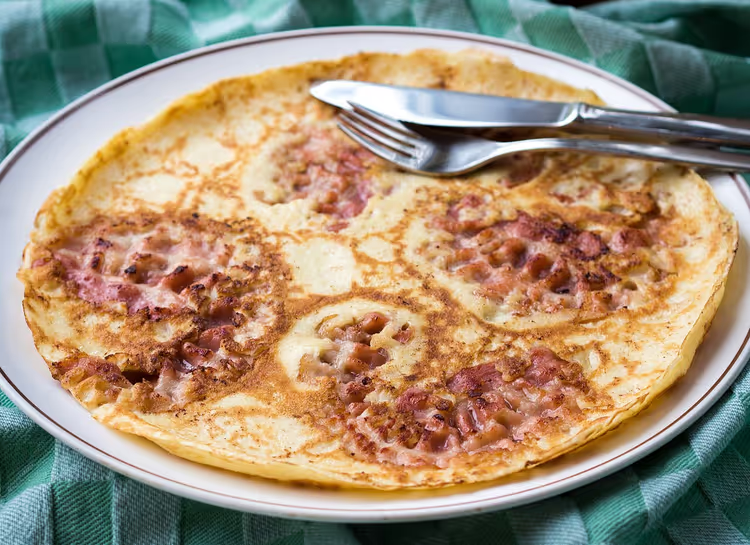 © Takeaway · CC BY-SAPhoto: Takeaway, CC BY-SA (https://creativecommons.org/licenses/by-sa/4.0), Wikimedia Commons
Pannenkoeken in the Netherlands are baked large and thin, usually the size of a plate. The batter is simple, made from flour, milk, and eggs, so the pancakes turn out versatile. Fillings can be sweet (syrup, powdered sugar, apples) or savory (cheese, bacon, vegetables). The country has entire restaurants that serve only pancakes, and they are worth visiting with kids. A pancake here is often ordered as a main course, not as a dessert.
10. Appeltaart
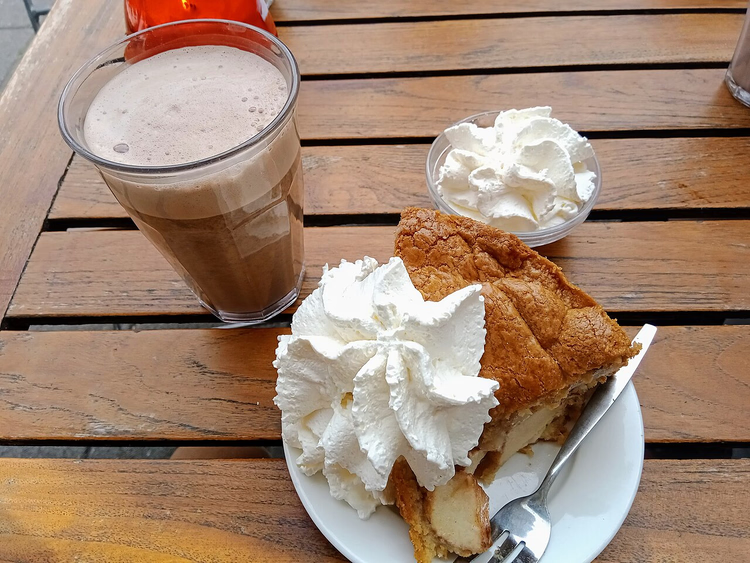 © Rémih · CC BY-SAPhoto: Rémih, CC BY-SA (https://creativecommons.org/licenses/by-sa/4.0), Wikimedia Commons
Appeltaart is baked deep, with a dense filling and buttery dough. Inside are tart apples, cinnamon, sugar, often raisins or nuts, and on top a lattice of dough. A slice is served with whipped cream and a cup of coffee. You will find this pie in almost any cafe, especially in Amsterdam. The crust stays crispy while the filling remains juicy.
11. Gouda
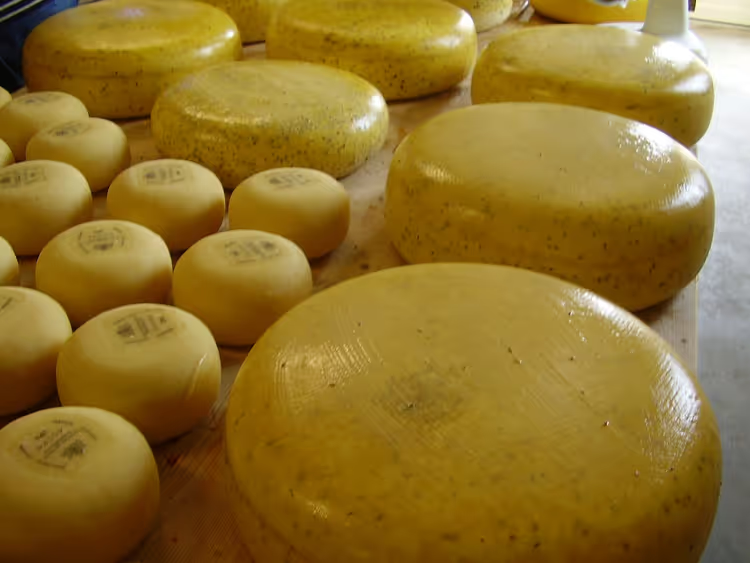
Gouda takes its name from the city of Gouda and belongs to the semi-hard cheeses. Young cheese is soft and creamy, while aged varieties become firmer and take on caramel notes. It is eaten in slices on bread, in cubes as a snack, or melted in hot dishes. Besides Gouda, try Leerdammer and Old Amsterdam. The cheese markets in Alkmaar and Gouda operate on a schedule (as of 09/2026, official cheese market website).
12. Hagelslag
Hagelslag is sprinkled on buttered bread and eaten for breakfast. To a foreigner it looks like a dessert, but in the Netherlands both children and adults start their day this way. The sprinkles come in milk chocolate, dark chocolate, white, and fruit varieties, so you can pick the flavor that suits you. Have one such sandwich to understand the local taste. This is the simplest dish on the whole list.
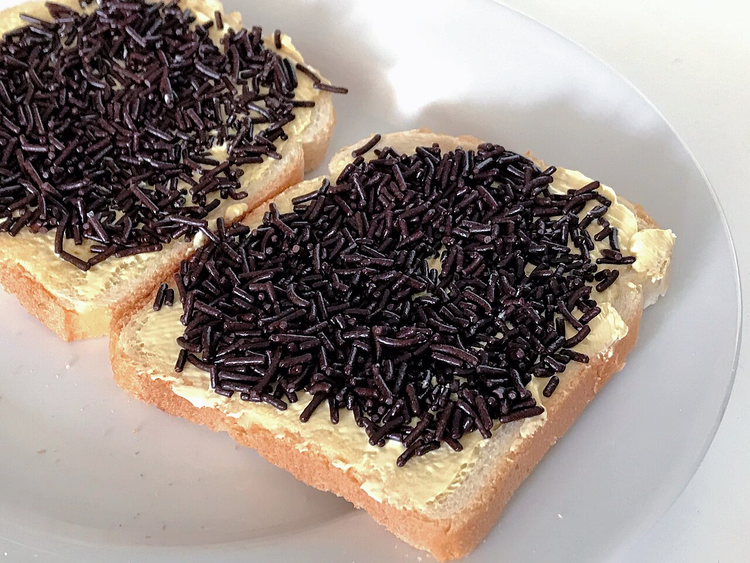 © Amin · CC BY-SAPhoto: Amin, CC BY-SA (https://creativecommons.org/licenses/by-sa/4.0), Wikimedia Commons
13. Kroketten
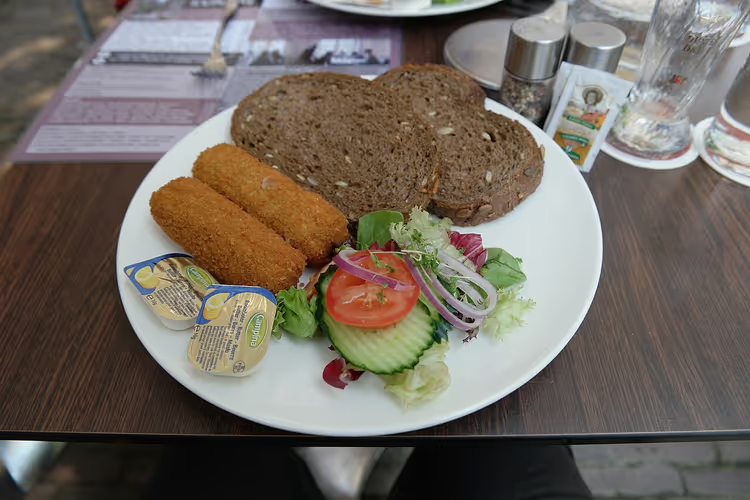 © StagiaireMGIMO · CC BY-SAPhoto: StagiaireMGIMO, CC BY-SA (https://creativecommons.org/licenses/by-sa/4.0), Wikimedia Commons
Kroketten are deep-fried, and inside they have the same creamy ragout as bitterballen, just in a cylinder shape. They are eaten as a quick snack or placed in a soft bun with mustard, making a broodje kroket. The largest chain, Febo, sells them from vending machines called a foodwall, and this is part of the local culture.
Get a kroket from the wall yourself, it is a simple and fast way to grab a bite in the city center. In the evening, young people gather around these machines, and you will understand why they love them. This snack is inexpensive, so both students and tourists buy it.
14. Hachee
Hachee is stewed from beef and a large amount of onions. The meat is cooked for a long time with bay leaf, cloves, and vinegar until it becomes tender and the sauce thick. It is served with boiled potatoes, red cabbage, or apple sauce. This hearty dish warms you up in the cold months, so it is often ordered in winter. The aroma of the spices fills the room long before it is served.
15. Zuurkoolstamppot
Zuurkoolstamppot is made by mashing potatoes with sauerkraut. The sour taste of the cabbage gives the dish a light tang, and sometimes bacon is added for richness. On top goes rookworst. This is a stamppot variation for those of you who like fermented notes. The catch: sauerkraut is not for everyone, and the dish itself looks plain.
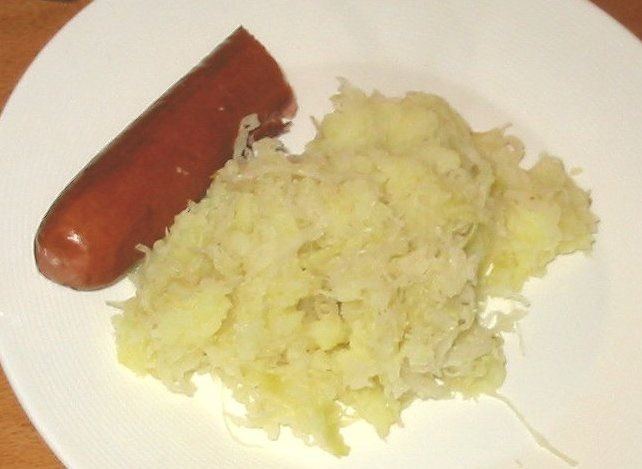 © Unknown author · CC BY-SAPhoto: Unknown author, CC BY-SA (http://creativecommons.org/licenses/by-sa/3.0/), Wikimedia Commons
16. Speculaas
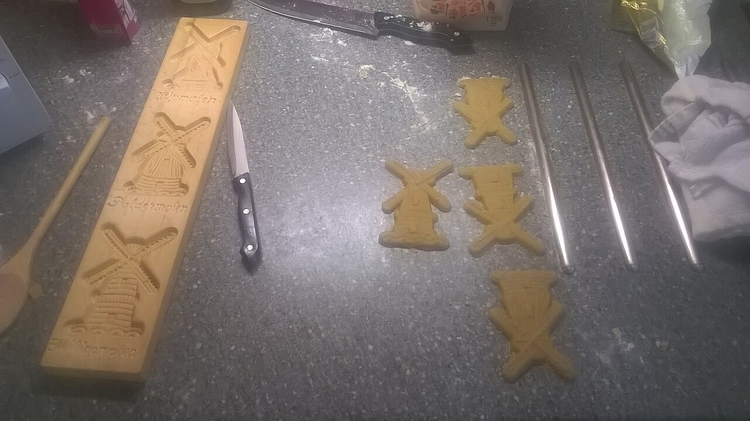 © DGH22 · CC BY-SAPhoto: DGH22, CC BY-SA (https://creativecommons.org/licenses/by-sa/4.0), Wikimedia Commons
Speculaas is baked as a spiced shortbread cookie. The dough includes cinnamon, nutmeg, cloves, and ginger, which gives it a warm, aromatic flavor. The dough is pressed into wooden molds featuring windmills, Sinterklaas figures, and animals. The cookie is especially popular in early December, around the Sinterklaas holiday. It is served with coffee or tea, and the small bite-sized pieces are called kruidnootjes. The crunchy texture holds up for several days, so it will survive the trip home.
17. Boterkoek
Boterkoek is baked dense and buttery. The base is butter, sugar, and flour, so the texture comes out soft and slightly crumbly. The pie is made in a round pan and then cut into squares or wedges. A golden caramel crust gives it a pleasant crunch. A piece goes well with a cup of coffee during an afternoon break.
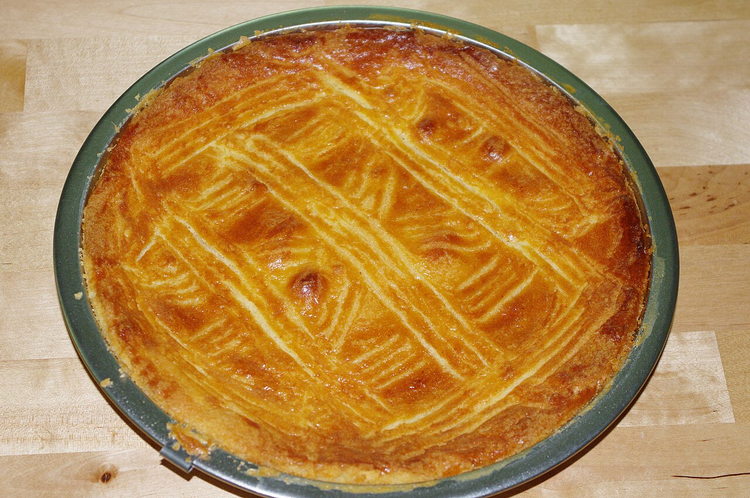 © JZ85 · CC BY-SAPhoto: JZ85, CC BY-SA (https://creativecommons.org/licenses/by-sa/3.0), Wikimedia Commons
18. Patat met mayo (or Patat oorlog)
 © www.snack-nieuws.nl · CC BYPhoto: www.snack-nieuws.nl, CC BY (https://creativecommons.org/licenses/by/2.0), Wikimedia Commons
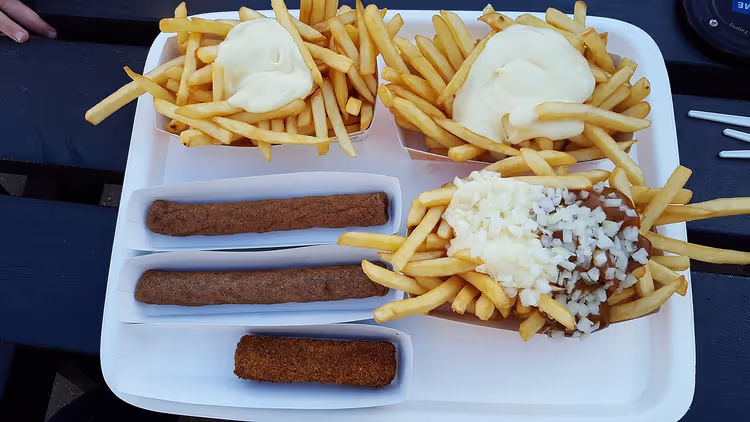
Patat in the Netherlands is cut thick and fried until crispy. The classic patat met mayo comes with a generous portion of mayonnaise. For the more adventurous, there is patat oorlog: mayonnaise is topped with peanut sauce pindasaus and chopped onion. The combination is unexpected, but many consider it the best snack after a night out. If that is not enough, get a kapsalon, a hearty version with meat and cheese.
19. Tompouce (Tompoes)
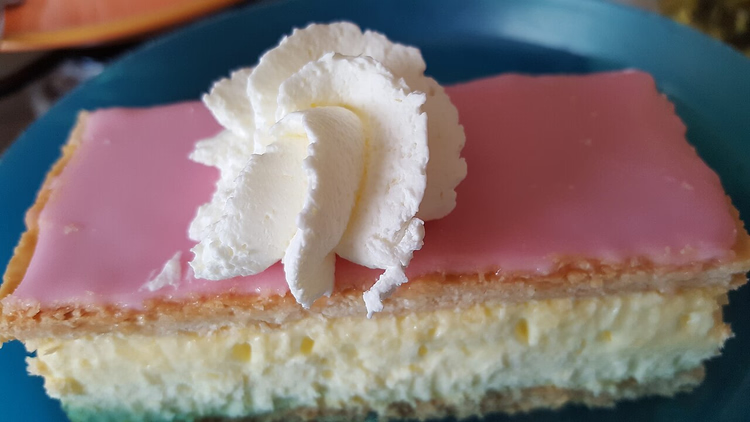
Tompouce resembles a mille-feuille. Two layers of crispy puff pastry are joined with thick vanilla cream, and the top is covered with glaze. The glaze is usually pink, but on King's Day it is made orange. It is awkward to eat: the cream squeezes out, and it almost always gets messy. The catch: it is too soft to cut neatly. The well-known chain Hema is famous for its tompouces, so get them there.
 © www.snack-nieuws.nl · CC BYPhoto: www.snack-nieuws.nl, CC BY (https://creativecommons.org/licenses/by/2.0), Wikimedia Commons
20. Frikandel speciaal
Frikandel is fried without a casing, like a dense oblong sausage made from a meat mixture. In the speciaal version, it is slit open and filled with mayonnaise, curry ketchup, and chopped onion. The snack looks plain, but it is one of the most popular items at snack bars. Get one and experience Dutch fast food from the inside. It tastes like a battered cutlet, just without the batter.
Regional dishes of the Netherlands
The first dishes on the list can be found across the whole country, while the following ones are tied to specific provinces and cities. Outside their region they are harder to find, but when traveling you get a reason to explore deeper into the country. Look for them in local bakeries, at markets, and in cafes near attractions.
21. Limburgse vlaai (Limburg)
Limburgse vlaai is baked on a thin yeast dough with various fillings. Cherry, apricot, rice cream (rijstevlaai), and crumble (kruimelvlaai) are popular. Unlike other pies, vlaai is light and not too sweet, so it is eaten with coffee as part of the koffietijd tradition. Maastricht, Venlo, and Roermond are famous for their vlaaien. A trip to Limburg without a slice of vlaai would be incomplete.
22. Haagse hopjes (The Hague)
Haagse hopjes are made like coffee caramels. According to legend, Baron Hendrik Hop loved coffee, but his doctor forbade him from drinking it, so he ordered a caramel with coffee flavor. The candies have a strong coffee note with a hint of butter and caramel. Try them with tea if you like sweets with coffee. These caramels will last you a long time, they are sold individually.
23. Brabantse worstenbroodje (Brabant)
Brabantse worstenbroodje is baked in the oven, not fried, and that is what sets it apart from frikandel. A soft roll is filled with a spiced sausage and baked until golden. It is especially loved at Christmas and carnival, but sold year-round. In Brabant bakeries, people grab them on the go as a quick snack. A warm worstenbroodje with mustard appeals to children too.
 © Henk Monster · CC BYPhoto: Henk Monster, CC BY (https://creativecommons.org/licenses/by/3.0), Wikimedia Commons
24. Drentse kniepertjes (Drenthe)
Drentse kniepertjes are baked thin and crispy, similar to waffles without caramel. The shape carries meaning: a flat cookie symbolizes the outgoing year, while one rolled into a tube represents the unfolding new year. They are eaten mainly at New Year's. If you are in Drenthe in winter, look for them at local fairs. The cookies are light, and you will eat a whole pack in one evening.
25. Groninger eierbal (Groningen)
Groninger eierbal resembles a Scotch egg. A whole boiled egg is covered with a thick spiced ragout, breaded, and deep-fried. It is crunchy on the outside and creamy inside. This is a popular Groningen snack worth trying for fans of unusual appetizers. Hold it carefully, the filling is hot and easily leaks out.
26. Zeeuwse bolus (Zeeland)
Zeeuwse bolus is twisted into a spiral from soft dough with dark sugar and cinnamon. The result is a sticky sweet bun that is often eaten with butter. The recipe has Jewish roots, and the bun itself has become a tradition of Zeeland. Look for it in Domburg, Veere, or other coastal towns. Have it with coffee, otherwise the sugar will quickly stick to your hands.
27. Fries suikerbrood (Friesland)
Fries suikerbrood is baked as a soft sweet bread with large sugar chunks and cinnamon. During baking, the sugar caramelizes and the crust becomes slightly crunchy. By tradition, this bread is given to new mothers. In Sneek and Leeuwarden, it is sold in local bakeries. A slice of this bread can replace both dessert and breakfast.
28. Arnhemse meisjes (Arnhem)
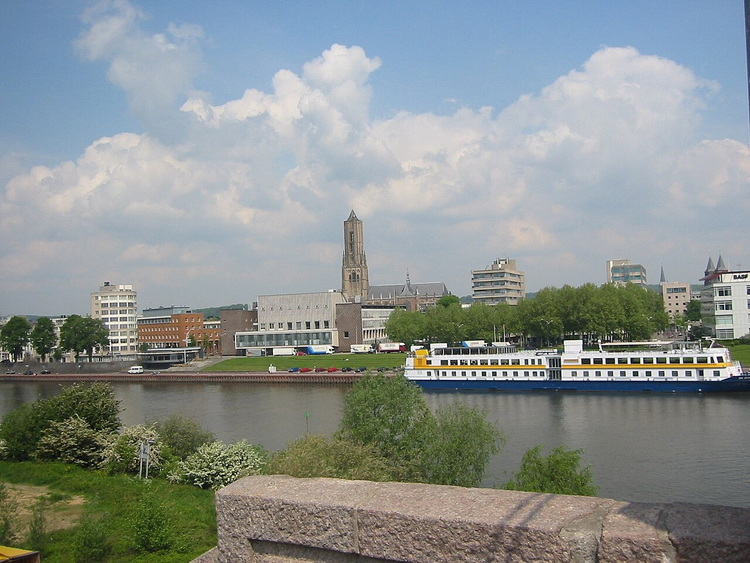
Arnhemse meisjes are baked from puff pastry, oval and thin. They are sprinkled with sugar on top and baked until caramelized, so the crust is crunchy. Despite their simplicity, they have a delicate sweetness and layered texture. Buy a couple to have with coffee in Arnhem, it is an inexpensive pleasure. They also keep well, so take a supply for the road.
29. Bossche bol (Den Bosch)
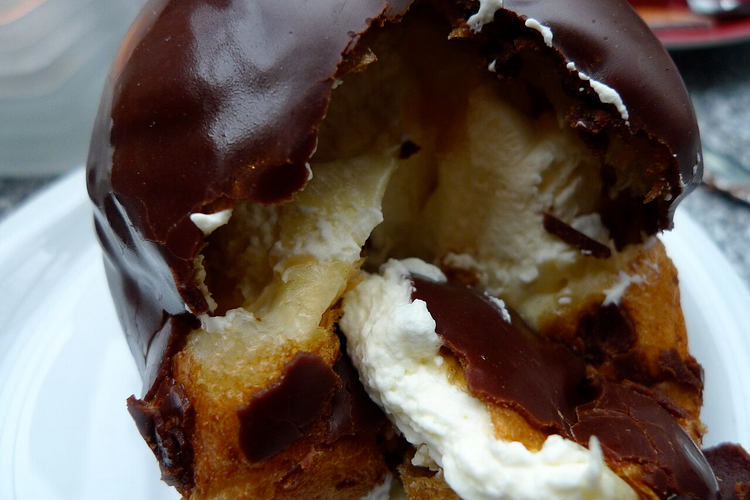
Bossche bol looks like a giant profiterole. It is filled with whipped cream and covered with a thick layer of glossy chocolate. The dessert originates from 's-Hertogenbosch, and that is where you should get it fresh from a bakery. The catch: it is almost impossible to eat without making a mess, but that is part of the fun. Order coffee with it, it will balance the sweetness.
 © Franklin Heijnen · CC BY-SAPhoto: Franklin Heijnen, CC BY-SA (https://creativecommons.org/licenses/by-sa/2.0), Wikimedia Commons
30. Uitsmijter
 © Weetjesman · CC BY-SAPhoto: Weetjesman, CC BY-SA (https://creativecommons.org/licenses/by-sa/4.0), Wikimedia Commons
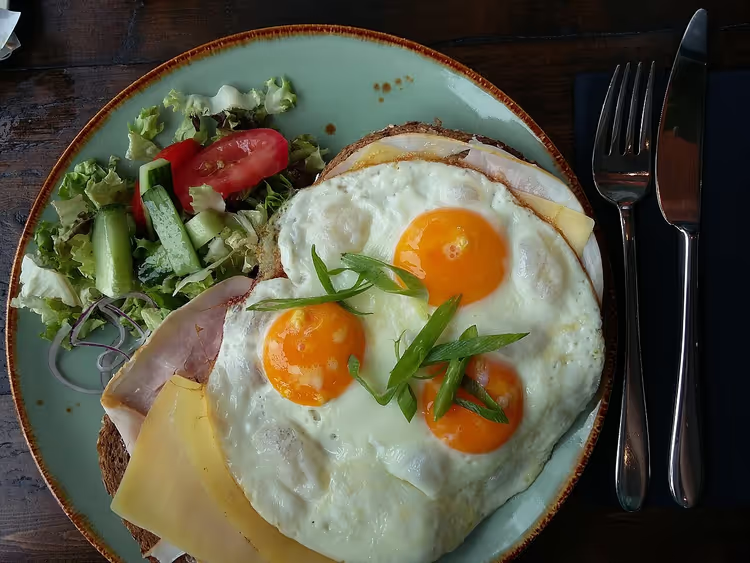
Uitsmijter is served for breakfast or a late dinner. Slices of bread are topped with ham, cheese, and fried eggs, sometimes with cucumber or lettuce added. The name translates as "bouncer": the dish is hearty and works well to cap off a night of eating. Order it at a cafe in Amsterdam, the portion will keep you full for a long time. This is a substantial breakfast option for the whole day.
- Tip: to try several dishes in one evening, check out food tours in Amsterdam on GetYourGuide.
31. Gelderse rookworst (Gelderland)
 AIIllustrative image: AI-generated
Gelderse rookworst is smoked and often served with pea soup. The sausage is made from pork with spices, so the flavor is rich and smoky. Unlike mass-produced versions, the traditional sausage has a natural casing and a crispy skin. Culemborg and Tiel are known for this sausage. Buy it at the market and add it to erwtensoep, the flavor will get deeper.
32. Haringbroodje (Rotterdam)
Haringbroodje is served in a soft bun. The herring is topped with onion and pickles, making it a convenient snack you can eat on the go. In Rotterdam, people prefer this bun over the classic way of eating herring by the tail. Look for it at fish stalls at the market. It is an easier way to try herring if the sight of a whole fish puts you off.
33. Brabantse suikerwafel (Brabant)
 © Nan Palmero from San Antonio, TX, USA · CC BYPhoto: Nan Palmero from San Antonio, TX, USA, CC BY (https://creativecommons.org/licenses/by/2.0), Wikimedia Commons
Brabantse suikerwafel is baked thick and buttery on yeast dough. Coarse sugar goes inside and caramelizes during baking. Unlike stroopwafel, this waffle is crispy on the outside but stays soft inside. Eat it warm, dusted with powdered sugar. A fresh waffle tastes best straight from the stall.
34. Hete bliksem
Hete bliksem is made from mashed potatoes with sweet-and-sour apples. The name translates as "hot lightning" and reflects the dish's ability to stay hot for a long time. It is served with rookworst or bacon. This is a hearty winter dish, especially popular in the north of the country. Despite the simple ingredients, the flavor is memorable.
35. Amsterdamse osseworst (Amsterdam)
Amsterdamse osseworst is made from beef and cold-smoked. Spices like nutmeg and black pepper give it a rich flavor. It is eaten raw, like tartare, sliced thinly. It goes well with mustard or on a sandwich. Try it if you are up for raw smoked meats.
36. Kruidnoten
 © Hanno Lans · CC BYPhoto: Hanno Lans, CC BY (https://creativecommons.org/licenses/by/4.0), Wikimedia Commons
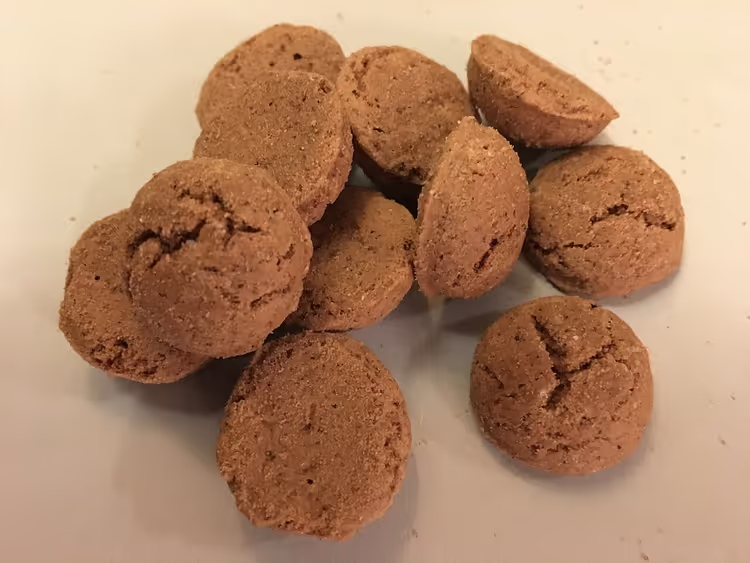
Kruidnoten are baked small and crispy from the same spice mix as speculaas. They are eaten in December for the Sinterklaas holiday, often with a chocolate coating. It is a light snack that is easy to grab by the handful. Try them with coffee or mulled wine. In December, they are in every supermarket.
37. Zwolse balletjes (Zwolle)
Zwolse balletjes have been cooked like hard caramels for over a century using a secret recipe. There are many flavors, from fruit to mint. For many Dutch people, these are childhood candies tied to visits to an old confectionery shop. Buy a handful in Zwolle as a keepsake. They keep well on the road, so they will make it home.
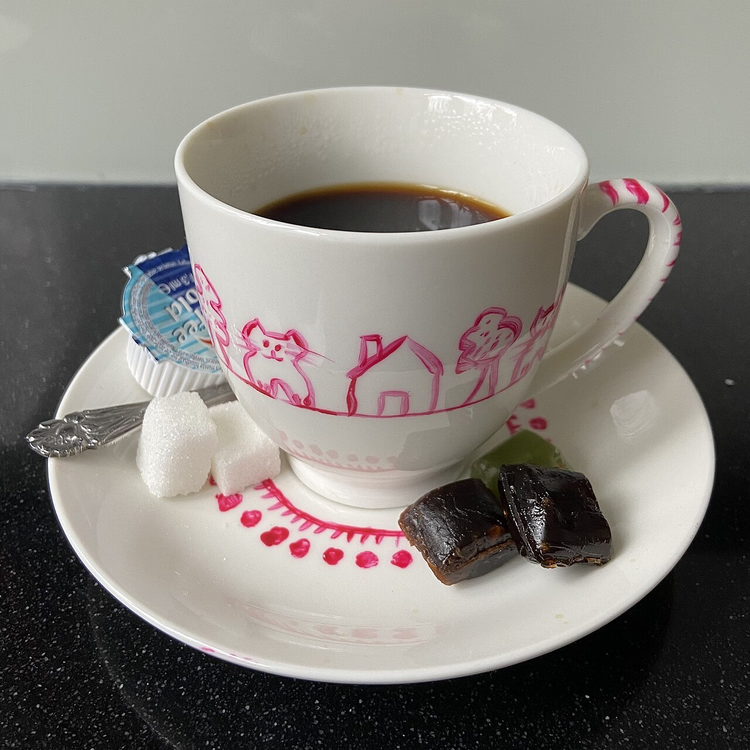
38. Pepernoten
Pepernoten are often confused with kruidnoten, but they have an irregular shape and a chewy texture. You can taste the anise, and this is also a Sinterklaas holiday treat. The recipe has been known since the 16th century. Choose these if you like softer spiced cookies. Their flavor is milder than crunchy kruidnoten.
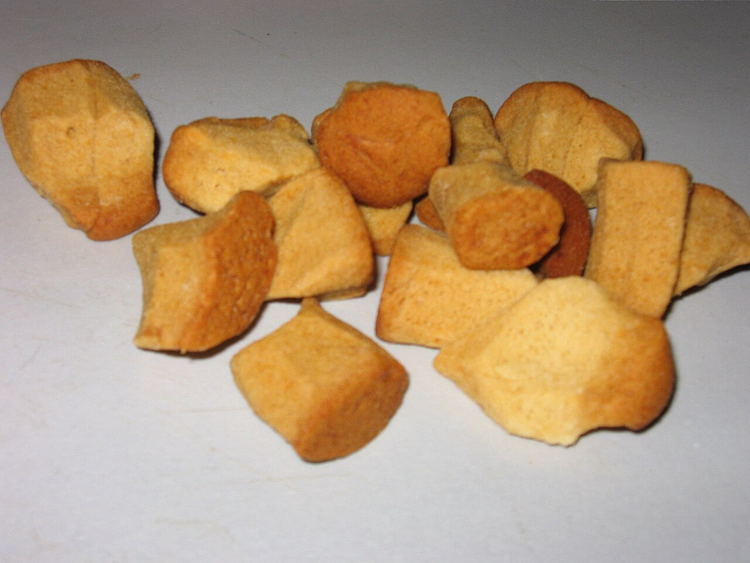 © M.Minderhoud · CC BY-SAPhoto: M.Minderhoud, CC BY-SA (http://creativecommons.org/licenses/by-sa/3.0/), Wikimedia Commons
39. Drentse turf (Drenthe)
Drentse turf is baked as a dense cookie that looks like a piece of peat. The shape hints at the history of peat harvesting in Drenthe. The dough contains brown sugar and spices, so the flavor is rich. This is a local favorite worth seeking out in the province's bakeries. Have it with tea, the cookie pairs well with it.
40. Groningens Mosterdsoep (Groningen)
Groningens mosterdsoep is cooked as a creamy mustard soup. Coarse mustard, leek, and onion give it a mild heat that is softened by cream, and sometimes bacon is added. It is served with a slice of rustic bread. If you like spiced soups, this one will surprise you. Have it for lunch, it will keep you full all day.
41. Moorkop
Moorkop resembles a smaller Bossche bol. It is choux pastry filled with whipped cream and covered in shiny chocolate glaze. A spoonful of cream and a piece of fruit are sometimes placed on top. You will find this dessert in bakeries across the country, especially in the south. It is smaller in size, so it is easier to eat on the go.
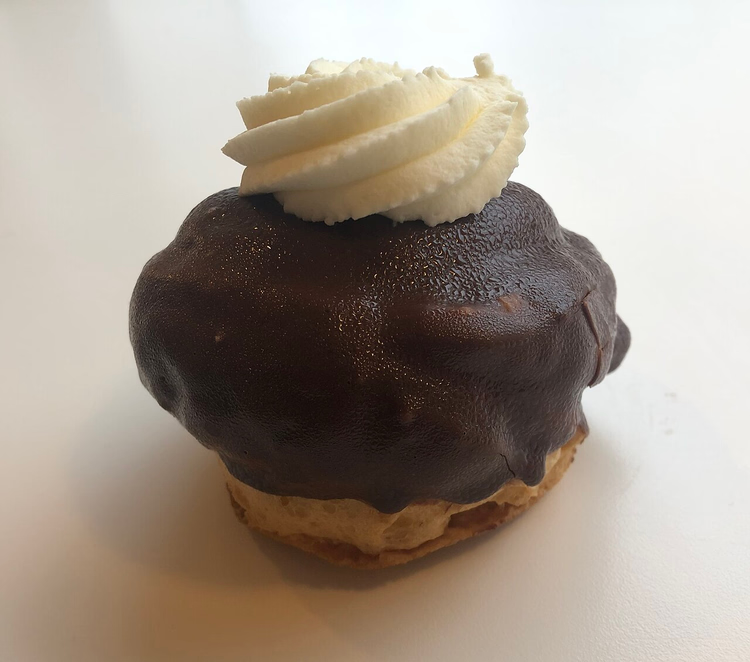 © Hanno Lans · CC BYPhoto: Hanno Lans, CC BY (https://creativecommons.org/licenses/by/4.0), Wikimedia Commons
42. Fries suikerlatte (Friesland)
Fries suikerlatte is baked as a bread stick coated in sugar. The outside is slightly crunchy, while the inside stays soft and airy. It goes especially well with coffee. This is a lesser-known Frisian treat worth looking for in local bakeries. You will not find it in a supermarket, only in a bakery.
43. Amsterdamse ui (Amsterdam)
Amsterdamse ui is pickled from yellow onions, so it turns out sweet with a slight sharpness. The bright yellow color comes from a marinade with turmeric and mustard seeds. The onions are eaten with herring or as a snack. Have it with a haringbroodje, and the flavor gets brighter. Regular pickled onions do not look like this, you will recognize this one right away.
44. Riefkoek (Twente & Achterhoek)
Riefkoek is fried as a hearty potato pancake. It is made from grated potatoes, onion, and a small amount of flour, then cooked in a pan until golden and crisp. It is served with applesauce or bacon. You will find a good riefkoek in Almelo and Enschede. This is a dish of the eastern provinces, where it is made at home.
45. Utrechtse vockingworst (Utrecht)
Utrechtse vockingworst is smoked and made semi-dry. Unlike rookworst, it is barely seasoned with spices, so the flavor is mild but noticeable. It goes best with mustard and rye bread. The recipe in Utrecht is over a century old. If you like delicate smoked meats, start with this one.
46. Goudse kaaswafels (Gouda)
Goudse kaaswafels are baked as crispy cheese cookies with real Gouda cheese. They are buttery, cheesy, and crumbly. This snack goes great with Dutch beer. Try them if you want an unusual cheese snack with your drink. They also work with wine, but beer is the classic pairing here.
47. Blote billetjes in het gras
Blote billetjes in het gras is made from white beans and green peas. The name translates as "bare buttocks in the grass": the beans play the role of the buttocks, and the peas the grass. Carrots or potatoes are sometimes added for heartiness. The dish comes from the north of the country. You will remember the name faster than the recipe.
48. Zeeuws spek (Zeeland)
Zeeuws spek is made from pork belly. It is seasoned with spices and slowly roasted, so the flavor is rich with a smoky note. It is eaten as a snack, put in sandwiches, or added to stamppot for flavor. Order it in Zeeland if you like smoked meats. In a sandwich, it works well as a substitute for ham.
49. Hengelose krentenwegge (Twente & Overijssel)
Hengelose krentenwegge is baked as a fruit bread with raisins and currants. It is sometimes made very long, up to a meter. By tradition, this bread is given to new parents to celebrate the birth of a child. In Twente and Overijssel, people buy it at local bakeries. A piece of this bread will last you a whole week with tea.
50. Brabantse eierkoek (Brabant)
Brabantse eierkoek is baked soft and slightly porous. It is a light egg cake with moderate sweetness, eaten for breakfast or as a snack. It goes well with a little butter or jam. Take it with you on the road if you need a light bite. Its texture resembles sponge cake, only denser.
51. Gerookte paling
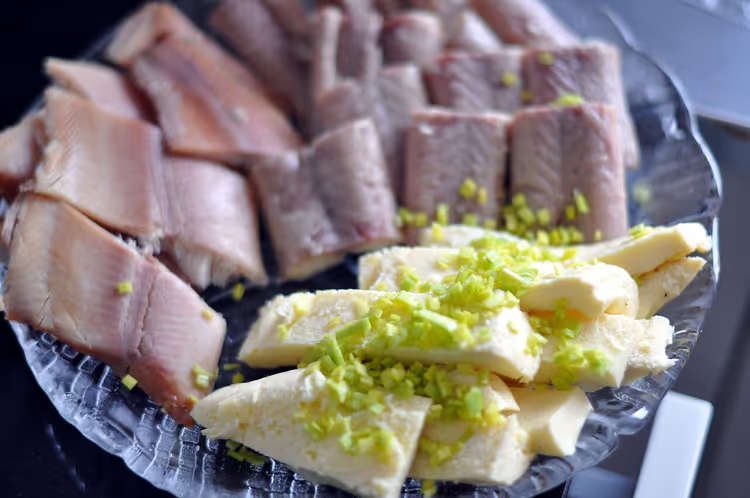 © cyclonebill from Copenhagen, Denmark · CC BY-SAPhoto: cyclonebill from Copenhagen, Denmark, CC BY-SA (https://creativecommons.org/licenses/by-sa/2.0), Wikimedia Commons
Gerookte paling, smoked eel, has long been considered a Dutch delicacy. Eel from lakes and coastal waters is salted and slowly smoked over oak or beech wood chips, so the flavor is deep and smoky. It is eaten simply, as fillet on white bread or as part of a seafood platter. The fishing villages of Volendam and Harderwijk are famous for their eel, and you should try it there. It is an expensive but memorable treat.
Colonial heritage in Dutch cuisine
The colonial past of the Netherlands brought Indonesian, Surinamese, and Turkish dishes to the country. Today they are served across the country and have long been part of the everyday menu. Below are dishes you will find both in a restaurant and in an ordinary snack bar.
52. Rijsttafel
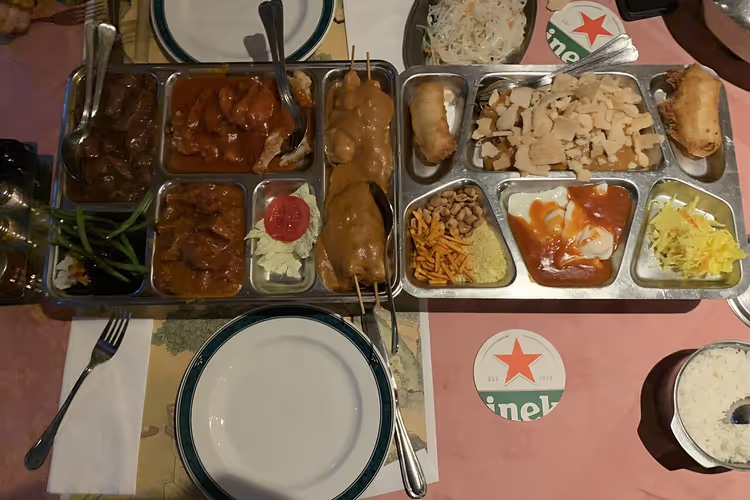 © Milliped · CC BY-SAPhoto: Milliped, CC BY-SA (https://creativecommons.org/licenses/by-sa/4.0), Wikimedia Commons
Rijsttafel translates as "rice table." It is a set of small portions of Indonesian dishes served with rice. The set can include satay, rendang (braised beef), gado gado (vegetables with peanut sauce), and sambal goreng (spicy fried snack). The dish came to the Netherlands from the colonial era and remains a festive dinner. Order it for a group, the portion is enough for two or more. The more guests, the more interesting the selection of dishes.
53. Saté
Satay in the Netherlands is made from meat on a skewer. Chicken or pork is grilled and served with thick peanut sauce called pindasaus. You can find it in Indonesian restaurants, in snack bars, and even with French fries, in which case the dish is called patat satay. The sauce is thick and hearty, it fills you up well. If you like nuts, try the sauce separately with the meat.
54. Babi pangang
Babi pangang is made in Dutch-Chinese restaurants. Crispy pork is served in a sweet-and-sour tomato sauce with white rice or French fries. Despite its Indonesian roots, the dish has become a classic of "Chinese" cuisine in the Netherlands. Try it if you want a familiar taste with a local twist. Order it for lunch, the portion is large.
55. Nasi goreng
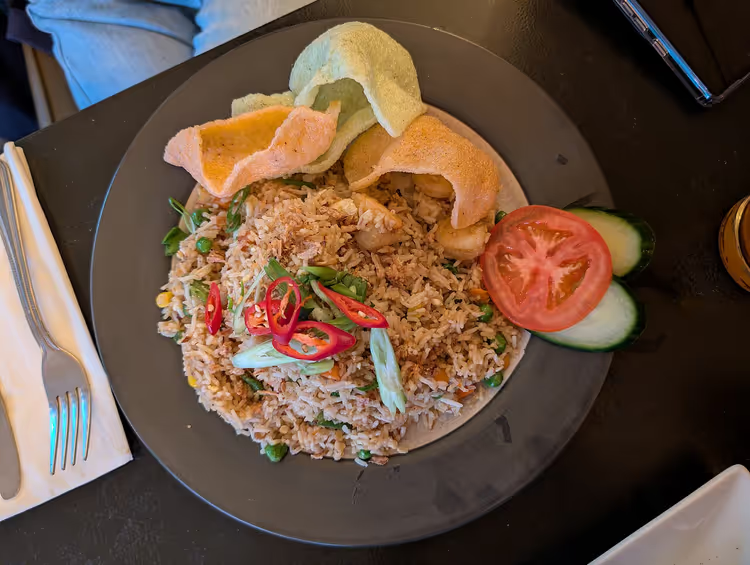
Nasi goreng is Indonesian fried rice. In the Netherlands, it is served with satay, a fried egg, pickled vegetables (atjar), and shrimp crackers (krupuk). Many Dutch families make it at home using ready-made spice mixes. It is a convenient dinner when you want to eat quickly and heartily. At a restaurant, get it with a fried egg on top, that is the most common way it is served.
56. Sotosoep
Sotosoep is cooked as an aromatic chicken soup with turmeric, lemongrass, and coconut milk. It includes boiled eggs, bean sprouts, and fried onions, and rice is often added. For many Dutch-Indonesian families, this is home-style comfort food. Order it if you want to warm up. The soup is both hearty and aromatic at the same time.
57. Roti (Suriname)
Roti comes from Surinamese cuisine, which has a strong influence on Dutch food. A thin flatbread is served with curried chicken (masala kip), potatoes, long beans, and a boiled egg. It is eaten with your hands: tear off pieces of the flatbread and scoop up the curry with them. For takeaway, we recommend getting roti rol, a roll with the same filling. The curry here is not tear-inducingly spicy, its flavor is mild and spiced.
58. Pom (Suriname)
Pom is baked in the oven from tayer root, a tropical vegetable similar to cassava. It is mixed with seasoned chicken and citrus juice. The flavor is slightly sweet, spicy, and filling. The dish is often made for holidays and family gatherings, and you should try it at a shared table. It looks like a casserole, but the taste is unlike anything else.
59. Bara (Suriname)
Bara is made from black lentils, garlic, and cumin. The dough is fried, so the snack is crispy on the outside while staying soft and slightly chewy inside. It is served with spicy chutneys or masala sauce. You can find bara in Surinamese bakeries and at street stalls, look for them in larger cities. Without sauce it is a bit dry, so get it with chutney.
60. Saoto soep (Suriname)
Saoto soep is the Surinamese version of soto soup with different seasonings and presentation. This Javanese-Surinamese chicken soup is seasoned with ginger, lemongrass, and soy sauce. It is served with rice, bean sprouts, boiled eggs, and crispy fried potatoes. If you like spicy soups, start with this one. The crispy potatoes on top add a pleasant contrast.
61. Kapsalon (Turkey)
Kapsalon was invented in Rotterdam and became a cult favorite. Fries go on the bottom, topped with döner or shawarma and melted cheese. Salad, garlic sauce, and sambal are added. It is the perfect late-night snack, one of the most famous Dutch street foods, and you should get one after a party. The portion is large, enough even for a very hungry person.
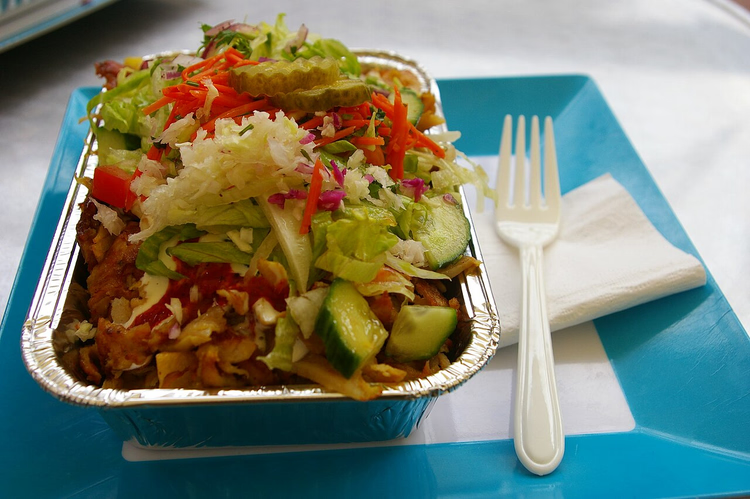 © MartinD · CC BY-SAPhoto: MartinD, CC BY-SA (https://creativecommons.org/licenses/by-sa/3.0), Wikimedia Commons
62. Döner Kebab (Turkey)
Döner kebab came from Turkey and became a mainstream fast food in the Netherlands. Thinly sliced meat, seasoned in its own way, is placed in a flatbread or roll with salad, garlic sauce, and sambal. It is a convenient lunch on the go or food after a party. There are plenty of kebab shops in cities, you will find yours quickly. The meat can be lamb, chicken, or beef, choose according to your taste.
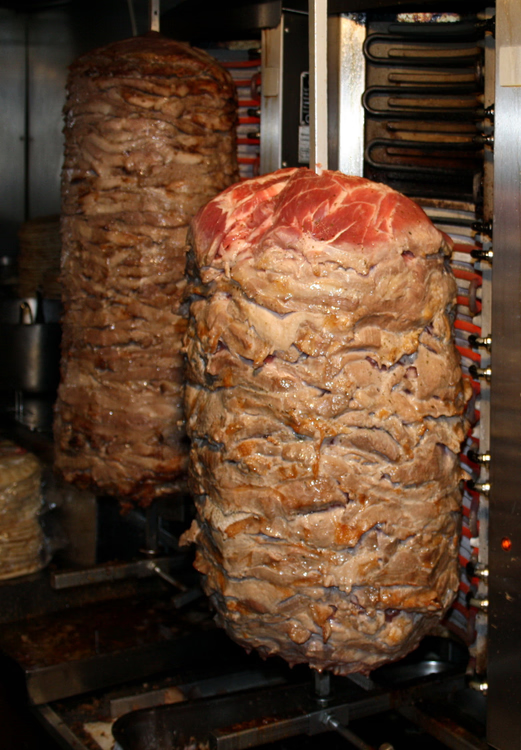 © Usien · CC BY-SAPhoto: Usien, CC BY-SA (https://creativecommons.org/licenses/by-sa/3.0), Wikimedia Commons
63. Shawarma (Middle East)
Shawarma is similar to döner, but the spices are different. The meat is served in a flatbread with garlic sauce and fresh salad, or as a plate with fries. Dutch shawarma is sometimes made with a mix of lamb and chicken to suit local tastes. If you want familiar and filling food, go for it. The plate portion is bigger than the roll.
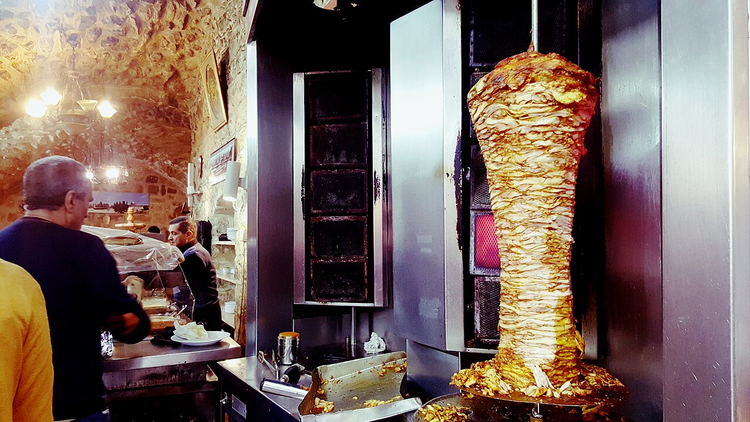 © جنان مريش · CC BY-SAPhoto: جنان مريش, CC BY-SA (https://creativecommons.org/licenses/by-sa/4.0), Wikimedia Commons
64. Lahmacun (Turkey)
Lahmacun, which in the Netherlands is called Turkish pizza, is baked from a thin crispy flatbread. Seasoned ground meat, tomatoes, and onions are spread on top. It is then rolled up with salad, garlic sauce, and sambal. Kebab shops often sell it cheaper than a döner roll. It is a lighter lunch option if you do not want heavy food.
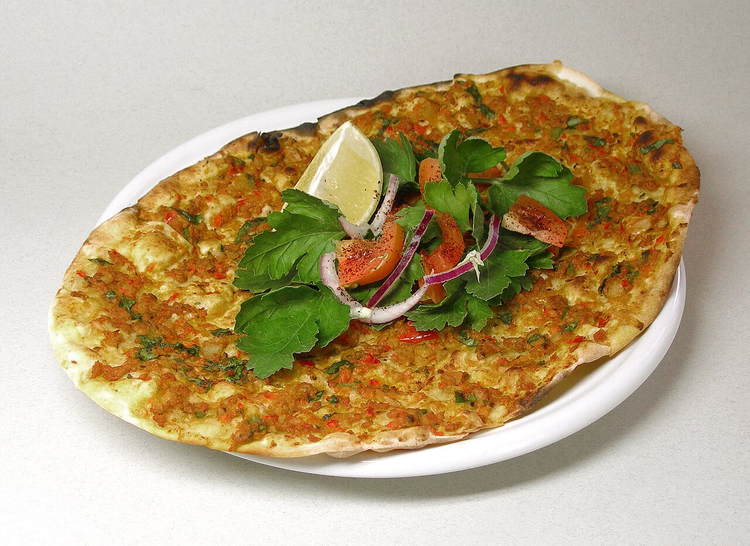 © Rainer Zenz · CC BY-SAPhoto: Rainer Zenz, CC BY-SA (http://creativecommons.org/licenses/by-sa/3.0/), Wikimedia Commons
65. Falafel (Middle East)
Falafel has become a popular vegetarian street food in the Netherlands. These crispy chickpea balls are served in a flatbread with hummus, garlic sauce, and pickled vegetables. It is especially popular in student cities. Amsterdam has excellent spots with fresh falafel, and you can easily find them in the center. For vegetarians, this is the most convenient snack in the city.
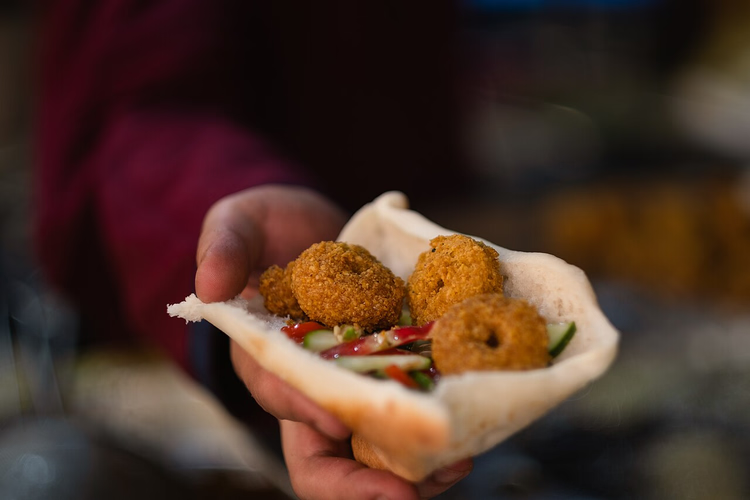
66. Borek (Turkey)
Borek is baked from thin phyllo dough. It is filled with cheese, spinach, or ground meat, and the pastry is filling and flaky. In Turkish bakeries in the Netherlands, it is often eaten for breakfast or lunch. It goes best with a cup of Turkish tea, order them together. Warm borek is crispy on the outside and soft inside.
67. Witte asperges (Limburg & Brabant)
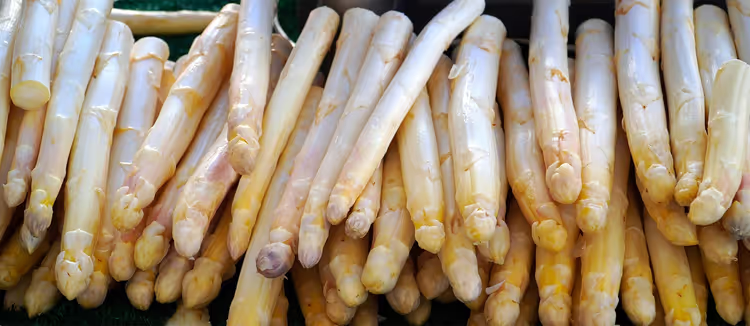
Witte asperges, or "white gold," is considered one of the most sought-after seasonal delicacies in the Netherlands, especially in Limburg and Brabant. Unlike green asparagus, these shoots grow underground and do not turn green without sunlight. They taste mild and slightly sweet, and they are sold only from mid-April to the end of June. They are also great in soups, try them in season. You cannot find them out of season, so plan your trip in advance.
68. Drop
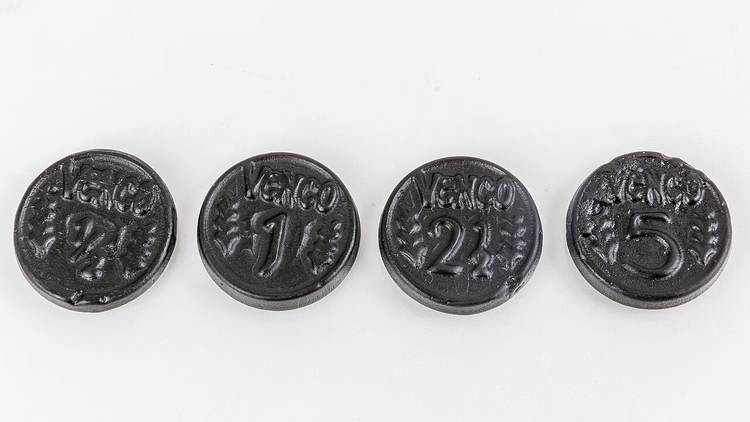
Drop, Dutch licorice, has long been a national passion. Dutch drop ranges from mildly sweet to intensely salty, and popular varieties are called zoute drop, dubbelzoute drop, and honingdrop. Some varieties contain ammonium chloride, and then the taste seems unusually sharp and salty to you. Licorice is sold in supermarkets, candy stores, and even pharmacies as a throat remedy. The catch: this taste is far from appealing to all foreigners, start with a small package.
 © Raimond Spekking · CC BY-SAPhoto: Raimond Spekking, CC BY-SA (https://creativecommons.org/licenses/by-sa/4.0), Wikimedia Commons
69. Beschuit met muisjes
 © Glenn Ederveen · CC BY-SAPhoto: Glenn Ederveen, CC BY-SA (https://creativecommons.org/licenses/by-sa/4.0), Wikimedia Commons
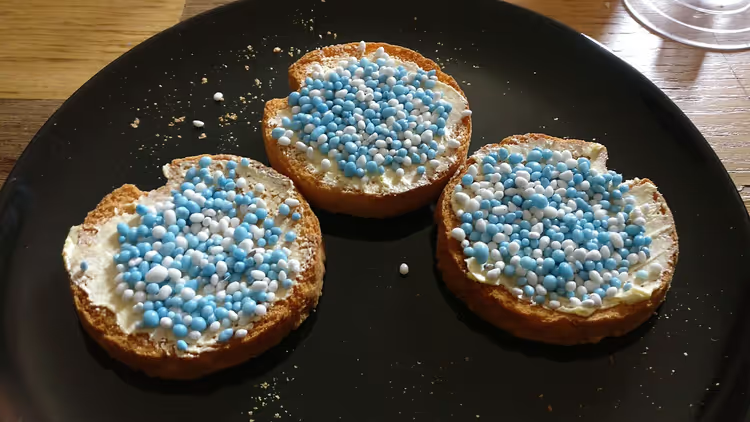
Beschuit met muisjes is served when a child is born. A crispy round rusk (beschuit) is spread with butter and sprinkled with aniseed sugar pearls, the so-called muisjes. Pink and white pearls mean a girl, blue and white mean a boy. The tradition dates back to the 17th century and is still alive today, and anise is believed to benefit nursing mothers. Try this rusk if you are invited to a Dutch family celebration. It is served both at home and in the hospital.
70. Spekkoek
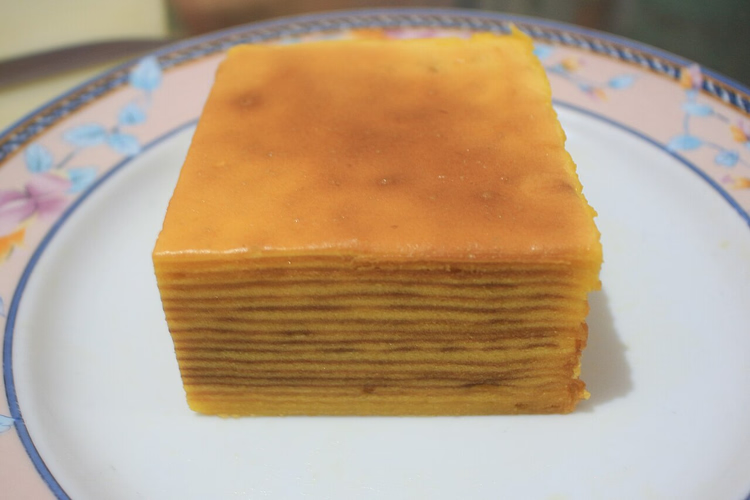
Spekkoek is baked as a multi-layered Indonesian-Dutch cake. Despite the name, which translates as "bacon," there is no bacon in it: the name comes from its resemblance to layers of fat. Thin layers of spiced batter are baked one after another, so the cut looks striped. The batter includes cardamom, cinnamon, nutmeg, and cloves. This cake is made for holidays and served in small slices with coffee. Because of the labor involved, it is rarely baked at home.
 © Ariefz · CC BY-SAPhoto: Ariefz, CC BY-SA (https://creativecommons.org/licenses/by-sa/4.0), Wikimedia Commons
Seasonal calendar and where to find dishes
Dutch cuisine depends on the time of year, and it is worth planning ahead. From April to June, witte asperges appears on menus, and from mid-June the first Hollandse Nieuwe is caught. In summer by the sea, get kibbeling or a haringbroodje from a fish stall: the fish there is fresher and cheaper than in the city center. In autumn in Limburg and Brabant, look for vlaai and seasonal baked goods. By December, oliebollen, kruidnoten, and speculaas return, and they are sold on almost every square.
Everyday Dutch food is eaten at cafetarias and snack bars. There you get patat met mayo, kroketten, and frikandel, and the Febo chain serves hot food straight from the wall. For fish and cheese, go to the market, where haring, kibbeling, and fresh baked goods are also sold. For a long dinner, choose restaurants with rijsttafel or Surinamese cuisine: there you can try several dishes from the list in one evening.
If you come in spring, ask about the seasonal menu at cafes, asparagus and young cheese are often served together. In winter, look for street stalls with oliebollen and hot chocolate, they warm you up on cold days. This way you will catch seasonal dishes, not just what is sold year-round.
Market and holiday schedules change, so check them before your trip. The dates of the Alkmaar cheese market and the Vlaggetjesdag festival are announced separately each year. You can check everything on the official websites of venues and local tourist offices, links are in the sections above.
⁉️🤔 Frequently asked questions
What should you definitely try first in the Netherlands?
Start with Bitterballen, fresh Hollandse Nieuwe herring, and Stroopwafel. In winter, add thick erwtensoep and stamppot. These dishes give you a basic sense of the cuisine, and from there you can choose your own direction: street food, cheese, or the colonial dishes of Indonesia and Suriname.
When is Hollandse Nieuwe season?
Young herring is served starting in mid-June, when the fish has built up fat. You can buy haring until the end of summer. At fish stalls, ask specifically for Hollandse Nieuwe so you don't end up with salted herring from the previous catch.
Is it true that the Dutch eat raw fish?
Yes, fresh haring in the Netherlands is eaten almost raw, but the fish is lightly salted beforehand. It's not ceviche or tartare in the restaurant sense, just a simple street snack with onion and pickle. If you're not used to it, start with a haringbroodje in a bun: the soft bread mellows the flavor.
Which cheese is worth bringing home?
Start with medium-aged Gouda: it strikes a balance between creaminess and a caramel note. Then try Leerdammer and Old Amsterdam. Young cheese works well on sandwiches, while aged varieties pair with wine or beer. You can buy them at a supermarket or at the cheese market in Alkmaar.
What do people eat for breakfast in the Netherlands?
Breakfast is usually simple: bread with butter and hagelslag, a slice of cheese or meat. Many people add yogurt, kwark, or muesli with fruit. Coffee is almost always part of the morning. For a hearty breakfast, order an uitsmijter with ham, cheese, and fried eggs.
How spicy is Dutch cuisine?
On its own, it's not spicy, but street food adds heat. Surinamese and Indonesian dishes come with sambal and spicy chutneys that you add to taste. Kapsalon and döner also include sambal. If you're worried about spice, ask for it on the side.
In short: what to book
The Netherlands has a long gastronomic list, and you can't cover everything in one trip. So choose dishes based on the situation.
- If it's your first time in Amsterdam, start with street food: Bitterballen, kroketten, and patat oorlog.
- If you're visiting in winter, order erwtensoep and stamppot, they warm you up better than anything else.
- If you have a sweet tooth, go for Stroopwafel, Appeltaart, and Bossche bol.
- If you're after something unusual, try Drop, haring, and Indonesian rijsttafel.
Putting together a route through the city is easier with a ready-made plan: check out food tours in the Netherlands on GetYourGuide. They cover both tastings and market walks, freeing up your time for the city itself. We verified market schedules as of 09/2026 (source: Alkmaar cheese market schedule).

A small editorial team writing guides for independent travel. We travel ourselves, but we haven’t been everywhere, so we check prices, opening hours and how to get there against official sources.