
















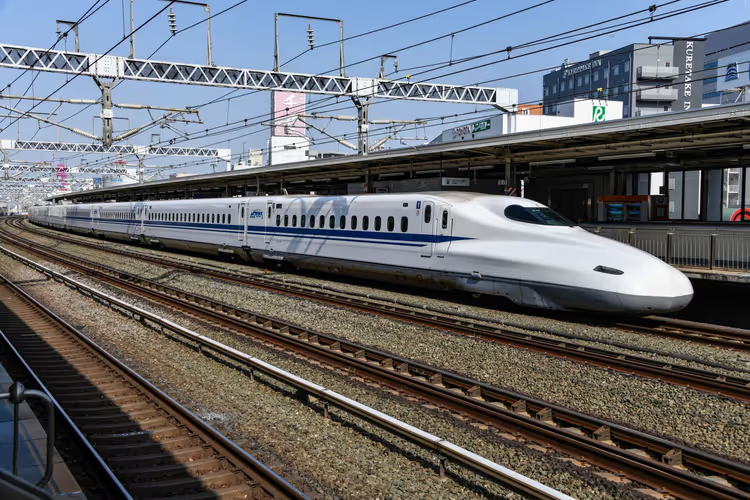
When the Japan Rail Pass is not worth it and what to replace it with in 2026
Japan Rail Pass is no longer a must-buy for a trip to Japan. After a sharp price hike, the pass is far from always paying off, and buying it blindly is no longer worth it.
It pays off if you crisscross the country in a short time: Tokyo and Hiroshima, Kyushu or Hokkaido in one itinerary. On the classic Tokyo, Kyoto and Osaka route, the pass usually loses to individual tickets, and regional passes cost less.
Ad: this article contains affiliate links, we earn a commission if you book through them, at no extra cost to you.
What Japan Rail Pass gives you in 2026
💡 In short:
- Validity: 7, 14 or 21 consecutive days across the entire JR network, including the shinkansen, JR buses and the ferry to Miyajima Island.
- Only foreign tourists with Temporary Visitor status (a stamp in the passport) can buy the pass.
- On the Tokyo, Kyoto and Osaka route, the pass usually loses to individual tickets.
- Prices and terms: 09/2026, verified on the Japan Rail Pass fare page.
 © Sitao Xiang · CC BY-SAPhoto: Sitao Xiang, CC BY-SA (https://creativecommons.org/licenses/by-sa/4.0), Wikimedia Commons
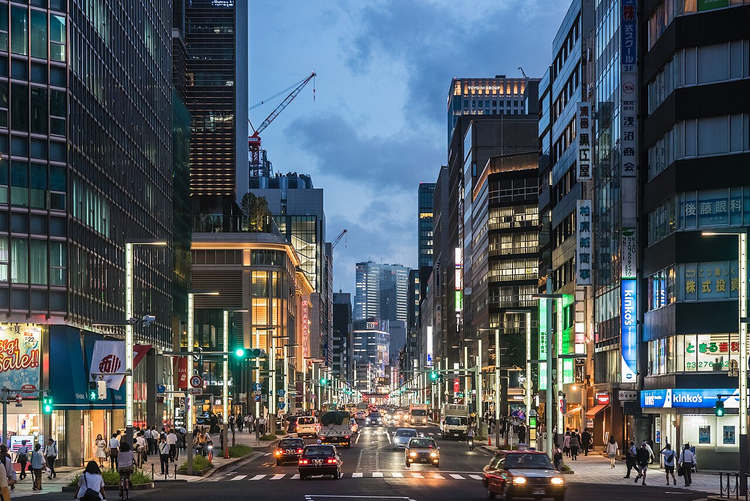
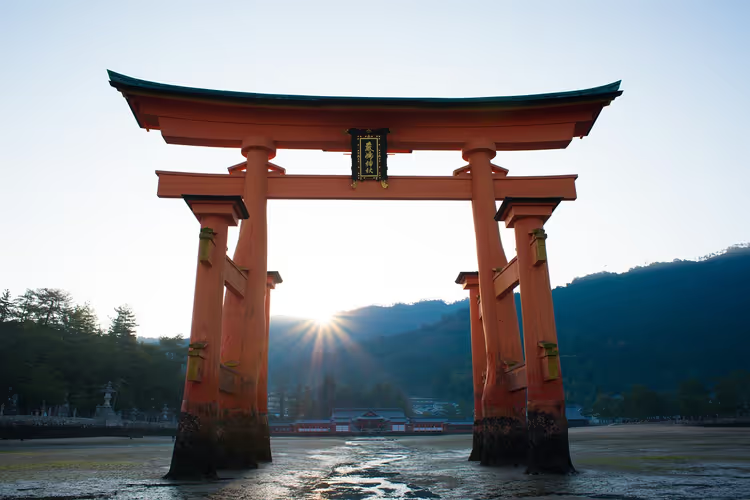
Japan Rail Pass gives unlimited travel on Japan Railways group lines. One ticket covers the shinkansen, JR local and express trains, the Haneda Airport monorail, JR buses and the ferry to Miyajima.
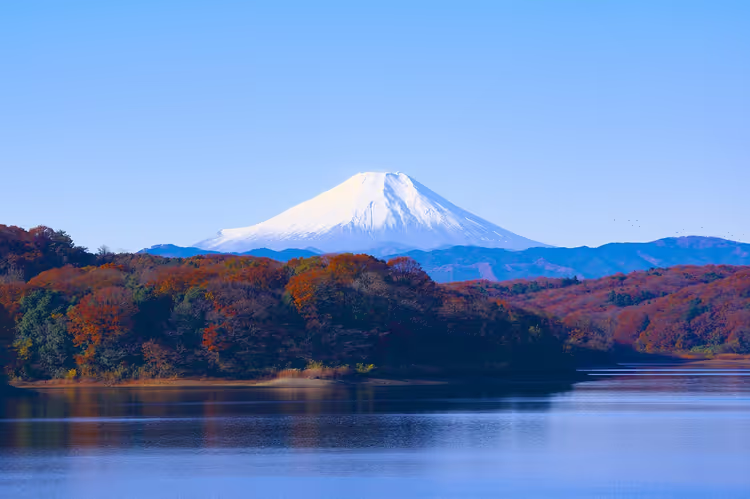
The pass is issued in two classes, ordinary and green (Green Car, first class), each for 7, 14 or 21 days (as of 09/2026, JR fares). Children aged 6-11 pay half the adult price. The pass itself is bought online, through overseas agencies or at some stations in Japan.
How much Japan Rail Pass costs
The prices below apply for online purchases and through overseas agencies until September 30, 2026. From October 1, 2026, the pass gets more expensive: 7 days up to 53,000 ¥, 14 days up to 84,000 ¥, 21 days up to 105,000 ¥ (as of 09/2026, 2026 price list).
Duration | Ordinary car, adult | Ordinary car, child 6-11 | Green Car, adult |
|---|---|---|---|
7 days | 50,000 ¥ | 25,000 ¥ | 70,000 ¥ |
14 days | 80,000 ¥ | 40,000 ¥ | 110,000 ¥ |
21 days | 100,000 ¥ | 50,000 ¥ | 140,000 ¥ |
Online payment is processed in yen, and the bank converts the amount at its own exchange rate on the purchase date. You can compare train and ticket prices for your route on Trip.com.
How to calculate whether the pass pays off on your route
Whether the pass pays off depends only on your legs. The more long-distance shinkansen trips you take, the closer the pass gets to being worth it.
Let's take the classic Tokyo, Kyoto, and Osaka route with a return to Tokyo over seven days. A seven-day pass costs 50,000 ¥ (as of 09/2026, Japan Railways prices). Individual shinkansen tickets for this route add up to less, so the pass doesn't pay off here.
To check your own trip, do this:
- Open a route-planning app, such as Japan Travel by NAVITIME or Google Maps.
- Add up the cost of all long-distance shinkansen and JR train segments for the days the pass would be active.
- Compare that total with the price of a 7-, 14-, or 21-day pass.
The pass covers not only the shinkansen but also local JR trains, buses, and the ferry, which matters when the difference is small.
7-day route | Individual tickets | 7-day pass | Best choice |
|---|---|---|---|
Tokyo, Kyoto, Osaka | cheaper than the pass | 50,000 ¥ | individual tickets |
Tokyo, Kyoto, Hiroshima, Tokyo | comparable to the pass | 50,000 ¥ | closer to the pass |
Tokyo and Hokkaido round trip | more expensive than the pass | 50,000 ¥ | pass is worth it |
Regional passes are usually cheaper
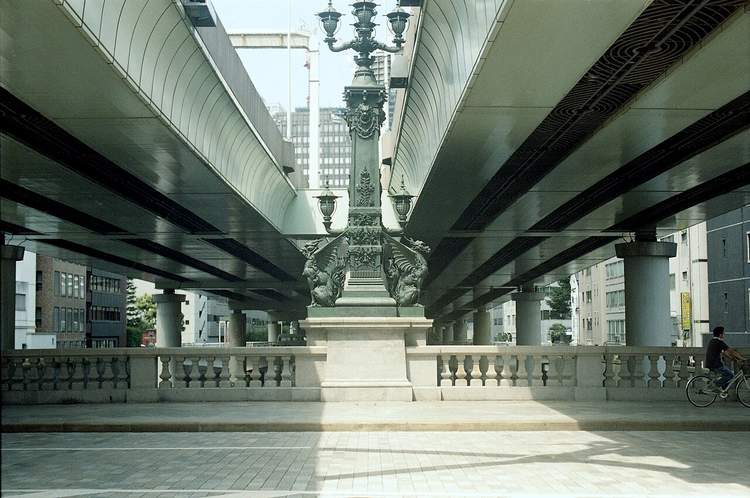
After the national pass price increase, regional passes became a better deal for most trips. They are issued by individual JR Group companies: JR West, JR East, JR Kyushu, and others. Each one covers its own zone, but costs noticeably less.
 © shikabane taro · CC BYPhoto: shikabane taro, CC BY (https://creativecommons.org/licenses/by/3.0), Wikimedia Commons
- The JR Hokuriku Arch Pass is issued by JR West. It connects Tokyo with Kyoto and Osaka via Kanazawa and Nagano. It costs 35,000 ¥ for 7 days (as of 09/2026, official JR East website). That's 15,000 ¥ cheaper than the national pass.
- The JR Kansai-Hiroshima Area Pass is convenient if you're traveling from Kyoto or Osaka to Hiroshima and Miyajima. It costs 17,000 ¥ for 5 days (as of 09/2026, official JR West website).
- The JR Tokyo Wide Pass covers day trips around Tokyo, including the Fuji area, Nikko, and Karuizawa. It's available for 3 days.
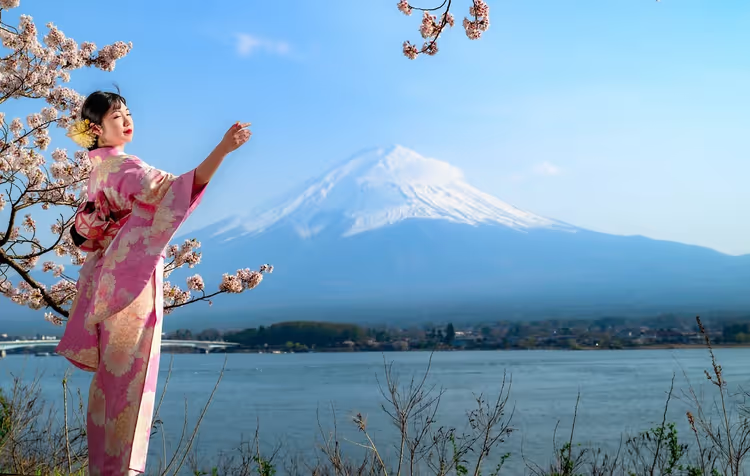
A regional pass often pays for itself after just two or three long-distance trips. Check the coverage zone: outside its boundaries, tickets are paid separately.
What's included in the Japan Rail Pass and what's not
Included in the price:
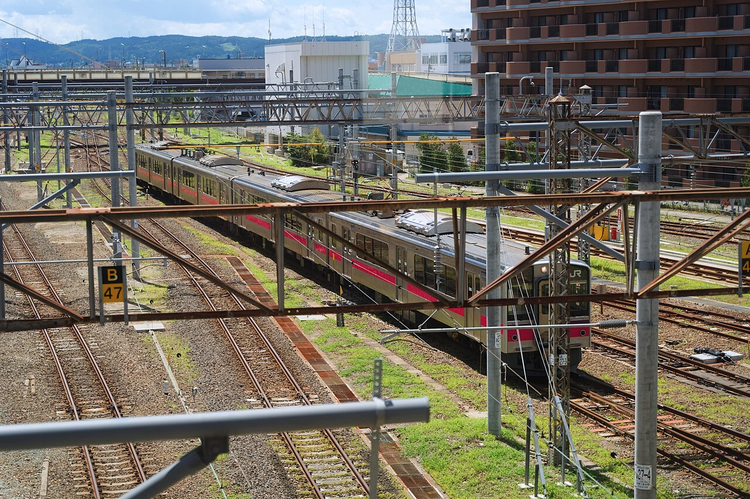 © Benlisquare · CC BY-SAPhoto: Benlisquare, CC BY-SA (https://creativecommons.org/licenses/by-sa/4.0), Wikimedia Commons
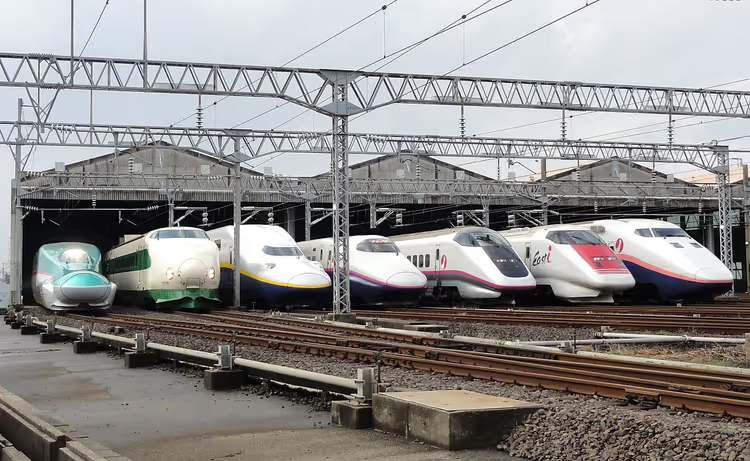
- Shinkansen types Hikari, Kodama, Sakura, Tsubame, and Hayabusa.
- Local and express JR trains, such as the Yamanote Line in Tokyo and the JR line to Nara.
- The Tokyo Monorail from Haneda Airport to central Tokyo.
- The JR ferry to Miyajima Island near Hiroshima.
- Local JR buses, such as the sightseeing bus in Hiroshima.
Not included or requires an extra payment:
- Subways and private lines: the Tokyo subway, Osaka subway, Kintetsu and Tobu lines. A stored-value card such as Suica or Pasmo is more convenient here.
- The Nozomi and Mizuho shinkansen. Technically you can ride them, but you need a separate supplementary ticket, which is issued only to pass holders. The time difference compared with the Hikari is small, so just take the Hikari: it's fully covered by the pass.
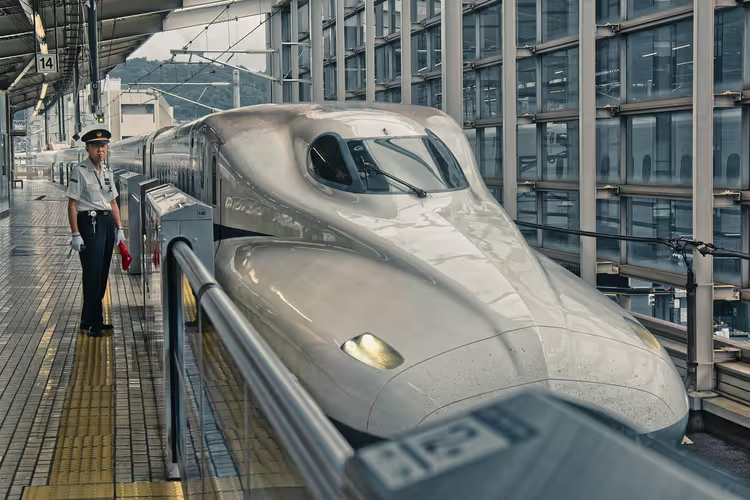
Check your lines against the JR network map in advance so you don't pay a supplement where you don't need one.
How to buy, exchange, and activate the pass
 © NipponiaNippon · CC BY-SAPhoto: NipponiaNippon, CC BY-SA (https://creativecommons.org/licenses/by-sa/3.0), Wikimedia Commons
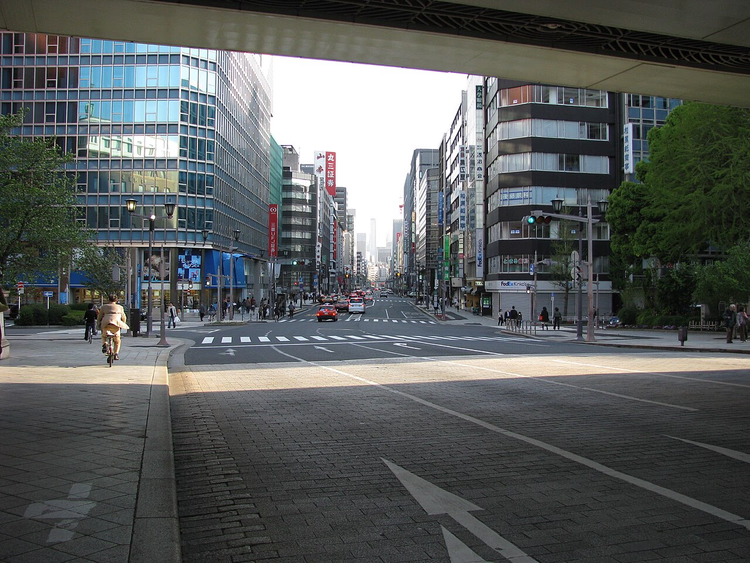
Step 1: order online
The pass is bought in advance, usually one or two months before the trip, through authorized partners. After payment, you receive an exchange voucher: a file with a QR code or a paper form. You must exchange the voucher in Japan within three months.
 © Aimaimyi · CC BY-SAPhoto: Aimaimyi, CC BY-SA (https://creativecommons.org/licenses/by-sa/3.0), Wikimedia Commons
Step 2: exchanging the voucher in Japan
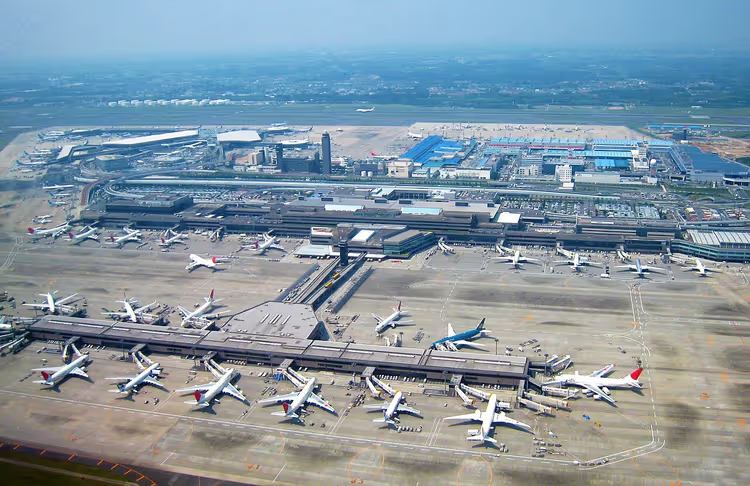
On arrival, go to a JR Exchange Office. These counters are available at Narita, Haneda, and Kansai airports, as well as at major train stations.
- Present your voucher and passport. The staff member will check for the Temporary Visitor stamp.
- State your activation date. It must fall within the next month.
 © PSnyan · CC BY-SAPhoto: PSnyan, CC BY-SA (https://creativecommons.org/licenses/by-sa/3.0), Wikimedia Commons
Step 3: passing through the ticket gates
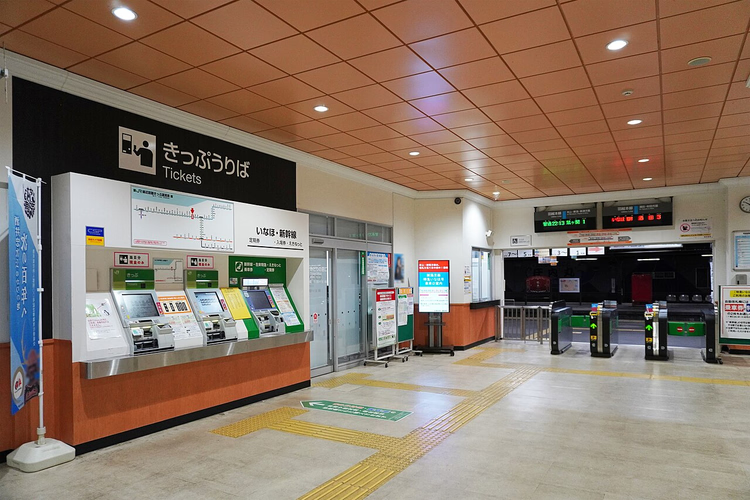
The pass looks like a ticket with a magnetic strip and a QR code. Insert it into the front slot of the gate, walk through, and be sure to take it back.
- Use the ticket gates, not the separate gates for Suica and Pasmo cards.
If you are traveling with a group, you can book trains and tickets on Trip.com in advance.
 © Mister0124 · CC BY-SAPhoto: Mister0124, CC BY-SA (https://creativecommons.org/licenses/by-sa/4.0), Wikimedia Commons
How to reserve a seat on the shinkansen
With the Japan Rail Pass, seat reservations on the shinkansen and limited express trains are free, and you can make them in two ways.
 © Rsa · CC BY-SAPhoto: Rsa, CC BY-SA (http://creativecommons.org/licenses/by-sa/3.0/), Wikimedia Commons
- Ticket machine. Switch the language to English and press the Japan Rail Pass button. Scan the QR code on the pass and enter your passport number. Then enter your departure and arrival stations and choose a seat.
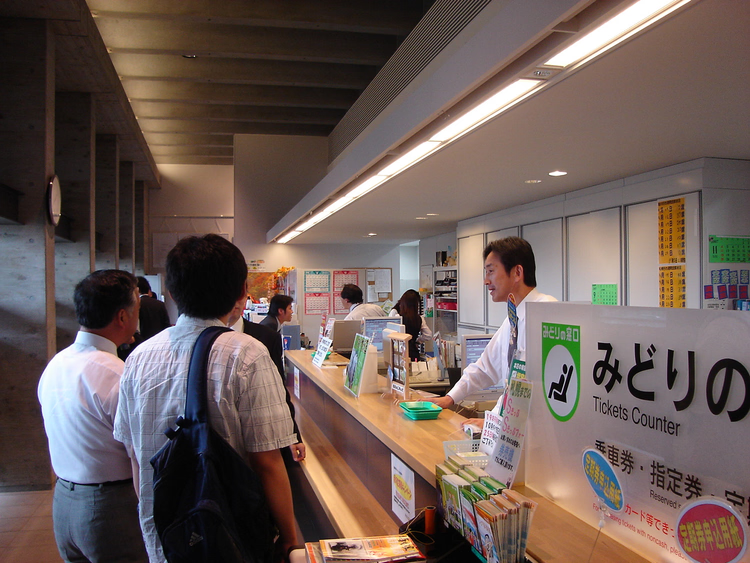
- JR ticket office (Midori-no-Madoguchi). Show your pass and tell the staff which train you want. They will issue the seat reservation.
Practical tip: in high season, reserve seats in advance. Peak periods are cherry blossom season in late March and early April, Golden Week in late April and early May, and the New Year holidays.
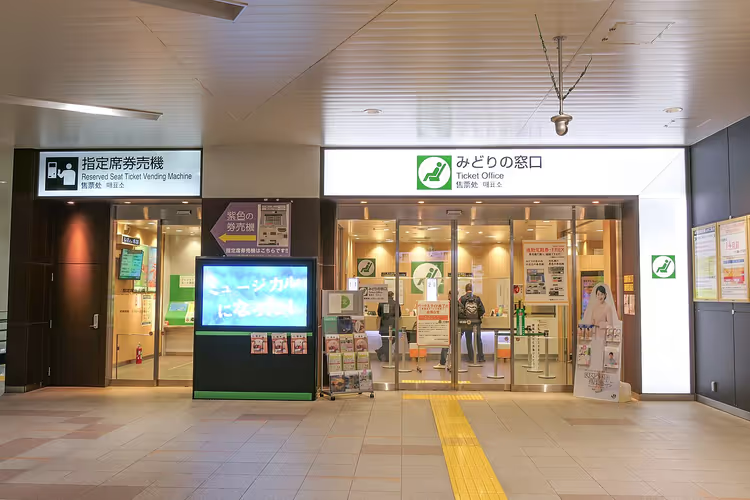 © MaedaAkihiko · CC BY-SAPhoto: MaedaAkihiko, CC BY-SA (https://creativecommons.org/licenses/by-sa/4.0), Wikimedia Commons
If you are traveling together, after scanning your own pass, scan the second traveler's pass and enter their details. Repeat until all travel companions are in the system.
Sometimes the train you want is no longer on the list because seats are sold out. The machine will then offer a different train or a different departure time.
If you are traveling in a large group, reserve seats for everyone at once.
If your plans change
Plans changed after booking, but this can be sorted out at a JR ticket office, even if the machine cannot help you. Staff will cancel the old reservation and issue a new one. At major stations, such as Hiroshima, there are dedicated counters just for foreign tourists with a pass. They can also help with special requests.
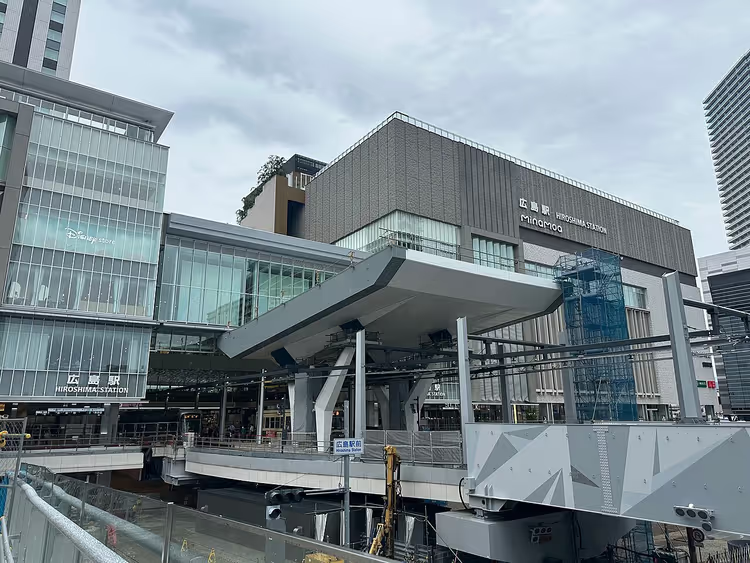 © ノボホショコロトソ · CC BYPhoto: ノボホショコロトソ, CC BY (https://creativecommons.org/licenses/by/4.0), Wikimedia Commons
Oversized baggage on the shinkansen
On the Tokaido, Sanyo, and Kyushu lines, a separate rule applies to oversized baggage (according to JR Central). Baggage with total dimensions of length, width, and height between 160 and 250 cm is considered oversized, and a free seat reservation is mandatory for it.
- When reserving, choose a seat with the Seat with an Oversized Baggage Area option. These are usually the last rows in the car.
- Reserving these seats with a pass is free if you do it before departure.
- Baggage up to 160 cm in total dimensions can be placed on the overhead rack. Items larger than 250 cm are not allowed on the shinkansen.
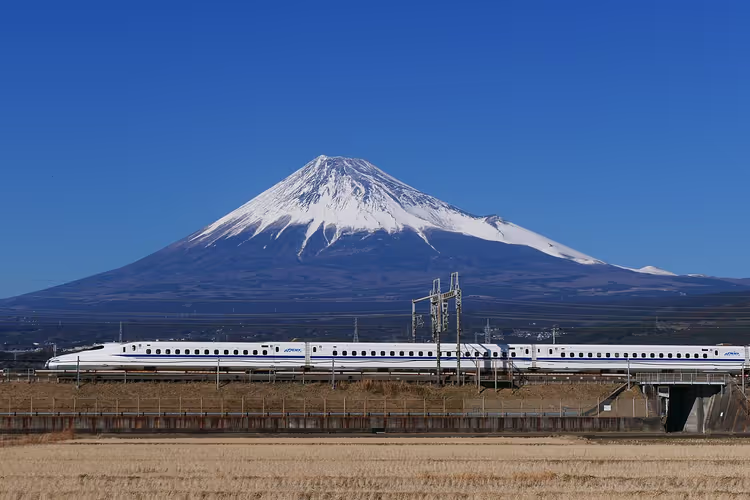 © MaedaAkihiko · CC BY-SAPhoto: MaedaAkihiko, CC BY-SA (https://creativecommons.org/licenses/by-sa/4.0), Wikimedia Commons
If you travel with oversized baggage without a reservation, you will be charged a fee on board. So reserve your seat in advance.
Who the Japan Rail Pass is right for in 2026
The national pass no longer guarantees savings. It suits travelers who cover very long distances over several days, for example from Tokyo to Hiroshima, Kyushu, or Hokkaido, and who value spontaneity.
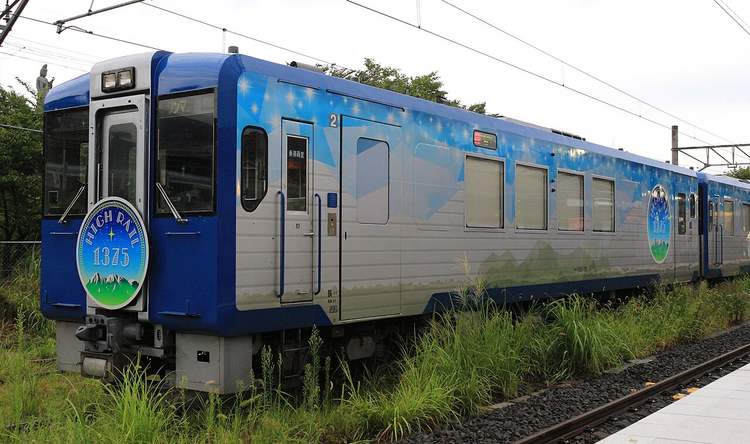 © Rsa · CC BY-SAPhoto: Rsa, CC BY-SA (http://creativecommons.org/licenses/by-sa/3.0/), Wikimedia Commons
For most trips, regional passes or individual tickets combined with an IC card are a better deal. Add up how many legs you have and compare the totals instead of buying the pass out of habit.
Your next steps:
- Identify the right type of pass for your route.
- Compare the national pass with regional passes.
- Check train prices in advance.
⁉️🤔 Frequently asked questions
Can I buy the Japan Rail Pass once I am already in Japan?
Yes, the pass is also sold at a number of stations in Japan. More often, people buy it online or from overseas agencies before the trip. In that case, you exchange the voucher you bought for the actual pass at a JR Exchange Office in Japan. The voucher is valid for a limited time, so exchange it as soon as you arrive.
Does the pass pay off on the Tokyo, Kyoto, and Osaka route?
Usually not. Individual shinkansen tickets on this route are cheaper in total than the pass (as of 09/2026, official japanrailpass.net website). The pass wins on very long legs, for example when returning to Tokyo from Hiroshima or traveling to Hokkaido.
Do I need to pay extra for seat reservations?
No, seat reservations on the shinkansen and limited express trains are free with the Japan Rail Pass. You only pay extra for Nozomi and Mizuho shinkansen trains.
What should I do with a large suitcase?
On the Tokaido, Sanyo, and Kyushu lines, baggage with total dimensions between 160 and 250 cm requires a free seat reservation in a designated row. Make the reservation when booking, otherwise you will be charged a fee on board.
Is the pass suitable for children?
Yes. Children aged 6-11 pay half the adult fare; prices are in the table above (as of 09/2026, conditions for children). The adult fare starts at age 12.
In short: what is worth booking
If you are short on time and covering long distances, the national pass is still justified. If your trips fit within one region, a regional pass will cost less.
- If you are visiting Kyoto, Osaka, and Hiroshima: get the 5-day JR Kansai-Hiroshima Area Pass.
- If you are visiting Tokyo, Kanazawa, and Kyoto: get the 7-day JR Hokuriku Arch Pass.
- If you are covering the whole country in a week: get the national Japan Rail Pass.
Prepare for your trip in advance and compare train prices on Trip.com.

A small editorial team writing guides for independent travel. We travel ourselves, but we haven’t been everywhere, so we check prices, opening hours and how to get there against official sources.