













When to go to Israel: weather by region and season
Israel is open for travel year-round, but the weather here depends less on the season and more on the region. On the same day, it can be raining in the north of the country while the Red Sea coast is warm and sunny. That is why each stop on your itinerary has its own ideal month.
Below: seasonality, weather by region, and the months you are better off avoiding.
Ad: this article contains affiliate links, we earn a commission if you book through them, at no extra cost to you.
When to go to Israel
💡 In short:
- The most comfortable time to go is March-May and October-November: daytime temperatures are around 20-28 °C, and rain is rare (as of 09/2026, Israel Meteorological Service climate atlas).
- If you are going for the sea, aim for June-October: the water is warm during this period, and there is almost no precipitation.
- In July and August, heat becomes the main problem: in Eilat and the Negev, the air heats up to 39-40 °C (as of 09/2026, temperatures by station).
- Climate, seasonality, and entry rules: as of 09/2026, verified on the Israel Meteorological Service climate atlas and the ETA-IL portal.
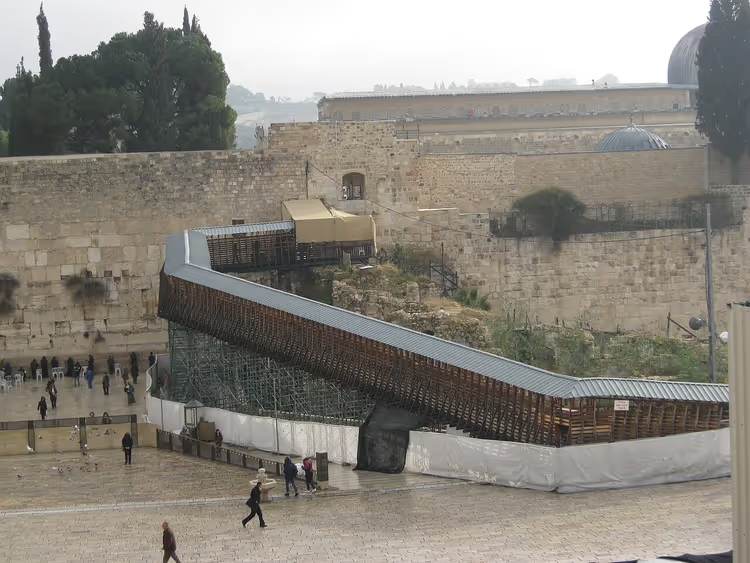
If you are planning a route across the country, spring and autumn work best. In March and April, you can walk through the Old City of Jerusalem without exhausting heat, and the north of the country is still green at this time. In May, people already swim on the coast, but the crowds are not yet as dense as in July.
In summer, you will have to adjust your day to the temperature: sightseeing before noon, beach after four o'clock. Autumn gives you a second comfortable window, because in October and November the heat subsides, the sea stays warm, and rain arrives only at the very end of the period.
Climate: three zones with different weather
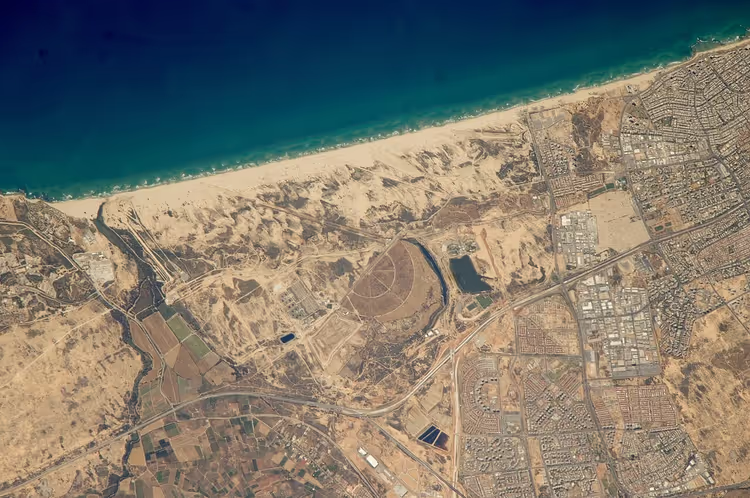
On the Mediterranean coast and in the northern part of the country, the climate is Mediterranean. Summers here are hot and dry, winters are mild and rainy, and humidity in summer is higher than in the mountains. In Tel Aviv, winter daytime temperatures are around 17-18 °C, while in August the average daytime temperature stays near 30 °C (as of 09/2026, Israel Meteorological Service).
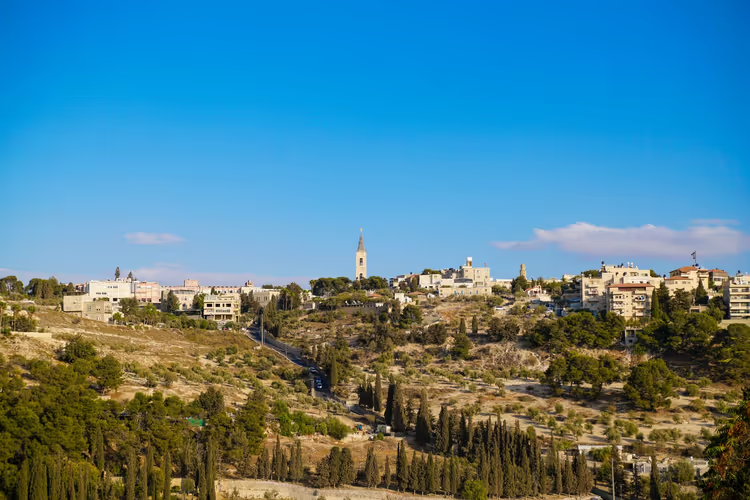
In the mountains, where Jerusalem stands, winters are noticeably cooler, and summer air is drier than on the coast. In January, Jerusalem daytime temperatures are around 12-13 °C, so you will need a jacket and sometimes an umbrella (as of 09/2026, Jerusalem normals). On the other hand, summer evenings here are cooler than in Tel Aviv.
In the south, in the Negev and around Eilat, a desert climate prevails. There is almost no precipitation, and the difference between day and night is greater than in the center of the country. In July and August, the air in Eilat heats up to 39-40 °C, but in winter daytime temperatures stay around 20-21 °C (as of 09/2026, station data).
Most of the rain falls from November to March, and from May to October there is practically no precipitation. According to the Israel Meteorological Service (09/2026, climate atlas), January and February remain the wettest months: in the center of the country, there are about ten rainy days per month. In winter, rain falls more often in the north than in the Negev, but snow there is rare and does not stay long.
Weather by month and season
Season | Months | Weather | Good for |
|---|---|---|---|
Spring | March-May | warm, green, rain ends | routes, sightseeing, first swims |
Summer | June-August | hot and dry, extreme heat in the south | beach, early departures, mountains |
Autumn | September-November | warm, sea is warm, rain at the end | beach, sightseeing |
Winter | December-February | cool and rainy in the center, warm in Eilat | Eilat, Dead Sea, cities |
Spring offers the most even conditions for a trip. During the day, a T-shirt is comfortable, nights in the mountains are cool, and rain is shorter and lighter than in winter.
Summer suits those who are going for the beach. During the day, the coast is hot and humid, and in the south the heat is harder to bear.
In September and October, the sea stays warm, and the heat subsides. At the end of November, rain begins on the coast, and you will need an umbrella again.
Winter does not shut the country down: in Eilat and at the Dead Sea, it is warm and sunny at this time, while Jerusalem is cool and damp. Plan your trip around the south if you do not want to bring warm clothes.
High season, prices, and lines
Peak demand falls on school holidays and on holidays that move according to the lunar calendar. Passover falls in March or April, and Rosh Hashanah and Sukkot fall in September and October. During these weeks, hotels are more expensive, and tickets and restaurant tables are best booked in advance.
In summer, prices stay high because of the vacation season. You are better off looking at May, early June, and November: demand is lower, and the weather is still or already suitable for walking around. In winter, the center of the country gets cheaper, but Eilat remains in demand.
Check the calendar separately. Public transport does not run on Shabbat, and many shops and cafes are closed from Friday evening to Saturday evening. Plan your transfers and shopping in advance, otherwise the day will be spent waiting.
Entry and what to pack
Visa-exempt tourists from EU countries need ETA-IL, an electronic entry authorization. The application is submitted online before the trip. The authorization is valid for up to two years or until the passport expires, and you can stay in the country for up to 90 days (as of 09/2026, official ETA-IL portal).
Pack light clothing for the day, a hat, and sunscreen in your suitcase: you need them year-round. In winter, add a jacket for Jerusalem and the north of the country. Beach gear comes in handy from May to October on the coast, and in Eilat and at the Dead Sea in almost any month.
⁉️🤔 Frequently asked questions
When is the best weather in Israel for traveling around the country?
If you are planning routes and sightseeing, choose March, April, May, October, and November. During these months, days are warm and rain is rare. In winter, there is more rain and shorter daylight, so less time is left for exploring cities.
Can you swim in Israel in winter?
Yes, if you are going south. In Eilat and at the Dead Sea in December and January, it is warm and sunny, and the air and water are suitable for swimming. On the Mediterranean, people rarely swim in winter: the water is cool, and rain falls more often than in the desert.
When should you go to avoid the heat?
Plan your trip for spring or autumn. In July and August, the south has extreme heat, so it is better not to book desert and Eilat tours at midday (as of 09/2026, climate data for the south of the country). If you are going in summer, leave the hotel in the morning and come back by evening.
What happens to prices and hotels in autumn?
September and October are more expensive than November, because Rosh Hashanah and Sukkot fall during these weeks. The holidays fill hotels across the country, and you need to book them several months in advance. In November, prices drop, and the weather remains suitable for sightseeing.
Do you need a visa for a trip to Israel?
Citizens of EU countries do not need a visa, but an ETA-IL electronic authorization is required. The conditions and validity period of the authorization are described in the entry section (as of 09/2026, visa-free entry rules).
In short: what to book
If you want even weather with almost no rain, choose March, April, October, or early November. For the beach, it is better to go in June or September: the sea is warm, and the heat is not yet at its peak. In winter, choose the south of the country, where it is warm and dry.
Plan your trip in advance, because holiday weeks sell out the fastest. It is better to lock in a car for your route before the trip: compare car rental prices. For overnight stays in the center of the country, check hotels in Tel Aviv on Trip.com.

A small editorial team writing guides for independent travel. We travel ourselves, but we haven’t been everywhere, so we check prices, opening hours and how to get there against official sources.