












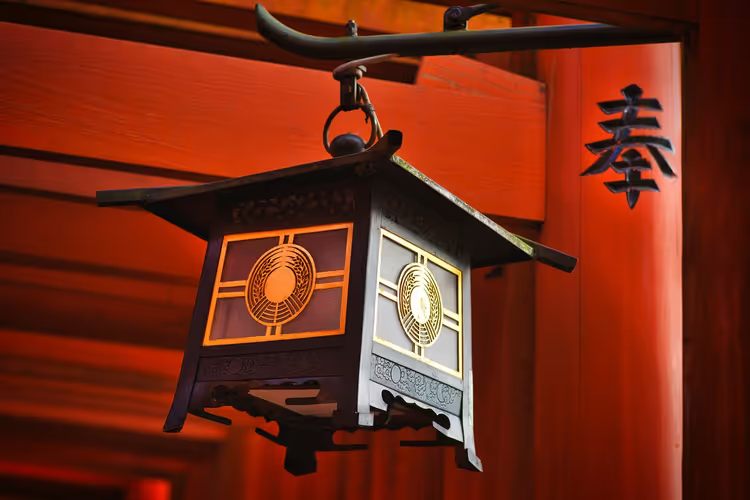
When to go to Japan in autumn: a calendar of color by region
In Japan, autumn begins before you have time to pack your suitcase. By mid-September, the first maples on Hokkaido are already turning red, and by mid-November the central part of the country is covered in orange and gold patches. The summer humidity fades, the air becomes dry, and there are fewer tourists than during cherry blossom season.
The main question travelers have is simple: when to go to catch the peak foliage. The answer depends on the region.
Below we break down the weather by month, the foliage calendar, the tradition of momijigari, autumn festivals, and specific spots from Kyoto to lesser-known routes.
Ad: this article contains affiliate links. We earn a commission if you book through them, at no extra cost to you.
When to go to Japan for autumn foliage
💡 In short:
- Best time for the central part of the country, including Kyoto, Tokyo, and Nikko: late October and the first half of November.
- On Hokkaido, foliage appears as early as September, while on Kyushu it lasts until early December.
- Bring layered clothing: mornings are cool, and daytime temperatures rise to 20 °C.
- Temperatures and foliage dates: 09/2026, verified on the Japan Meteorological Agency website.
Autumn weather in Japan: what to expect
Autumn in Japan is considered the most stable season for travel. After the humid summer comes dry, clear air, and the temperature difference between day and evening gives you a pleasant coolness for walking. These conditions are ideal for cities, parks, and mountains.
Autumn here is not like autumn in Europe: the leaves last longer and the air is drier, so you can walk all day without getting tired.
Average temperatures stay in the 12-22 °C range and depend on the region and elevation. In Tokyo, daytime highs in October are around 19 °C, and in November around 14 °C. On Hokkaido it gets colder earlier, while on Kyushu and Okinawa in October there is often a late summer (as of 09/2026, Japan Meteorological Agency).
Climate by city and month
City | October, daytime | November, daytime |
|---|---|---|
Tokyo | 17-22 °C | 10-17 °C |
Kyoto | 15-22 °C | 8-17 °C |
Sapporo | 8-16 °C | 1-8 °C |
Fukuoka | 16-23 °C | 10-18 °C |
as of 09/2026 | - |
While people on Hokkaido are already putting on jackets, tourists on Okinawa are still swimming in the sea. This geographic spread explains why the foliage season lasts almost three months and moves in waves from north to south. If you are planning a route through several regions, bring clothes for different temperatures.
Clothing and trip planning
Pack layered clothing, because mornings and evenings are noticeably colder than daytime. A light jacket and a sweater will come in handy in any region of the country. Bring a waterproof jacket and comfortable shoes: paths in parks and mountains are often rocky and wet after rain. If you plan to hike in the Japanese Alps or on Hokkaido, add a warm layer and gloves. Do not forget a compact umbrella: short showers happen even in clear months. In the mountains, temperatures drop quickly in the evening, so a warm scarf will not hurt.
Foliage forecast
National weather services publish an annual foliage forecast for each region. In recent years, climate change has pushed the season later, so it is worth checking current dates before your trip. Forecasts are updated weekly from September to December (as of 09/2026, Japan Weather Association).
Autumn foliage in Japan: colors, regions, and timing
Autumn foliage is the main reason many people travel to Japan specifically in the fall. The Japanese call this phenomenon koyo, and the act of admiring the foliage is called momijigari. Unlike sakura, which blooms for only a few days, autumn colors last for weeks, so you can catch them even with a tight schedule.
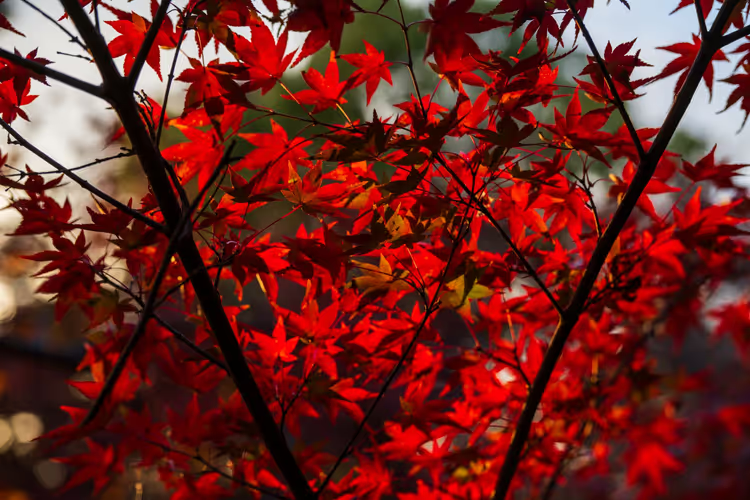
Experienced travelers plan their route to follow the wave of color from north to south. Start on Hokkaido and finish on Kyushu, and you will experience autumn twice. Besides maples, ginkgo trees also provide color: their crowns are the first to turn lemon yellow.
When leaves change color
The foliage season lasts from mid-September to early December. On Hokkaido, the first red leaves appear as early as September, while in central Japan around Kyoto and Tokyo the peak comes in November. The best weeks for the classic regions are late October and the first half of November (as of 09/2026, Japan National Tourism Organization).
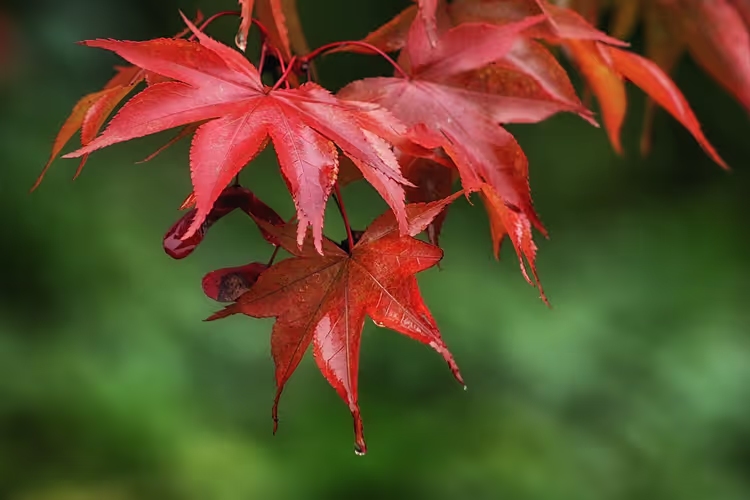
Which month is best for viewing fall foliage
- Hokkaido and Tohoku: mid-September through all of October.
- Nagano, Nikko, Fuji, Kyoto, and Tokyo: late October and November.
- Kyushu and southern Honshu: mid-November through early December.
The color comes from different trees: maple, ginkgo, and yellow cherry trees. It is convenient to plan your route along the color line, so you can see several waves of color in one trip (according to JNTO, 09/2026). The northern regions finish their peak while the season is only beginning in the center, so you always have an alternative.
Differences between regions
In the north, the first red leaves usually appear in Daisetsuzan National Park on Hokkaido. In the mountains of Nagano and around Fuji, the forests light up by early November. If you stay until December, you can still catch late foliage in the gardens of Fukuoka and the parks of Hiroshima.
Every year, forecasts update the dates for each prefecture, so an extra buffer day never hurts. In parks and gardens, signs usually show the current stage of color change, which makes it easy to adjust your plan on the go.
 © Sitao Xiang · CC BY-SAPhoto: Sitao Xiang, CC BY-SA (https://creativecommons.org/licenses/by-sa/4.0), Wikimedia Commons
Momijigari: the tradition of admiring fall foliage
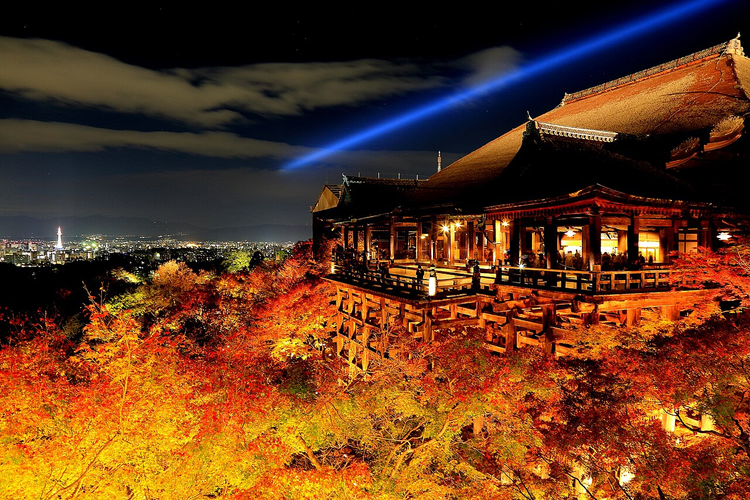
The love of autumn leaves in Japan has a long history. The tradition goes back to the Heian period, when courtiers made outings to maple trees and rode in boats beneath red canopies. Today, millions of people set out for momijigari, which literally means hunting for leaves.
 © Haibo Lu · CC BY-SAPhoto: Haibo Lu, CC BY-SA (https://creativecommons.org/licenses/by-sa/4.0), Wikimedia Commons
The word consists of two parts: momiji means maple, and gari means hunting.
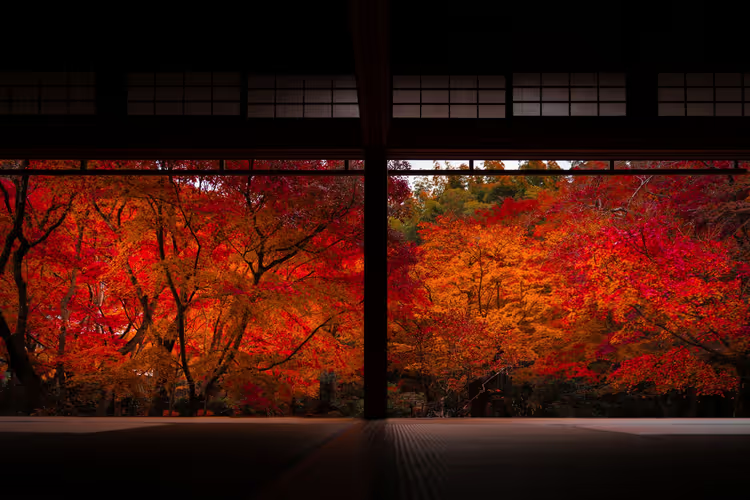
For the Japanese, this is not just a walk. Contemplating quickly falling leaves works as a quiet meditation and a reason to pause for a minute. Many people come to temples early in the morning, when there are almost no visitors.
Lesser-known spots for fall foliage
- Yamagata and Dewa Sanzan: sacred mountains of the north, with almost no Western tourists.
- Kirishima in Kyushu: volcanoes and onsens among the maples.
- Oirase Gorge in Aomori: waterfalls, moss, and a golden canopy of leaves.
- Rikugien Garden in Tokyo: known for evening foliage illuminations.
Evening illuminations have become a separate trend that is rarely written about outside Japan. Night foliage looks completely different from daytime. Many gardens open their gates only during illumination hours, so check the schedule in advance and buy tickets online.
October or November: when to go
The choice between the two months depends on what matters more to you. October is calmer and warmer; November is brighter in color, but there are also more people on the streets.
Japan in October
October is considered a good month for nature lovers and hikers. The summer heat is finally gone, and there are noticeably fewer tourists than during the November peak. In the Japanese Alps, on Hokkaido, and in the northern prefectures, golden forests and quiet already reign.
The weather in October is steady: rains are short, the sky is more often clear, and evenings are cool. For hiking, this is the best month because the trails are dry and the heat and mosquitoes are gone. If seeing temples without lines matters to you, take the first two weeks.
October vs. November
Criterion | October | November |
|---|---|---|
Daytime temperature | 16-22 °C | 8-17 °C |
Foliage | north and high mountains | peak in central Japan |
Tourists | fewer | more |
Events | chrysanthemum blooming | illuminations and a children's festival |
as of 09/2026 | - |
If you want maximum color and are ready for crowds, take mid-November. For a calm trip and hiking, October is the better choice. Plan your transfers in advance: trains and buses across Japan on Trip.com are convenient to book before your trip starts.
Fall holidays and events
In fall, Japan hosts holidays that rarely make it into ready-made itineraries. Here are a few worth remembering.
- Shichi-Go-San (November 15): a holiday for children aged 3, 5, and 7, when families wear kimonos and visit Shinto shrines (As of 09/2026, Japan Experience).
- Kiku Matsuri: chrysanthemum exhibitions from mid-October to mid-November at temples and parks (As of 09/2026, Kanpai Japan).
- Imoni-kai: fall picnics by rivers in Tohoku, where people cook a thick imoni soup.
You will easily catch one of these holidays if you travel with children. Near the chrysanthemum exhibitions, there are usually stalls with tea and seasonal sweets.
When the best weeks are
The peak of fall foliage lands on different dates every year because the weather shifts the season. Check the forecast before your trip and leave a free day in case of rain.
Classic fall Japan: Kyoto, Nikko, Miyajima
Classic routes are popular for a reason. In November, the colors here are so dense that even large crowds do not spoil the overall impression. We suggest combining one popular route with one lesser-known one: that way you get both postcard views and quiet.
Kyoto
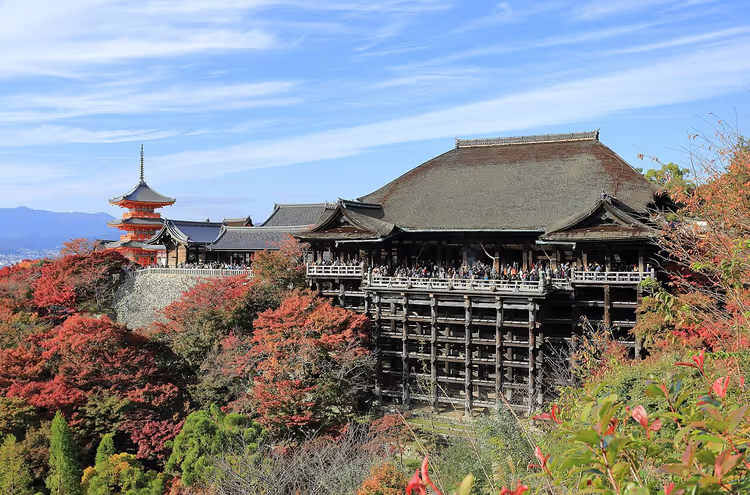
In fall, Kyoto turns into a sea of fire. The Kiyomizu-dera and Eikan-do temples, as well as the Philosopher's Path, stand among red maples. Early in the morning or during evening illuminations, you will see them in a calm atmosphere. On weekends in November, the city center is gridlocked, so get around by bus or bicycle. The fall illumination at Kiyomizu-dera usually runs in the second half of November: in 2025 it lasted from November 22 to December 7, with entry extended until 9:30 PM (As of 09/2026, JAL Japan Travel). Temple gardens are designed to emphasize color: ponds provide reflections, and dark hedges serve as a backdrop for the maples. Hotels in central Kyoto get booked months in advance, so check options in Kyoto on Trip.com early.
 © Martin Falbisoner · CC BY-SAPhoto: Martin Falbisoner, CC BY-SA (https://creativecommons.org/licenses/by-sa/4.0), Wikimedia Commons
Nikko
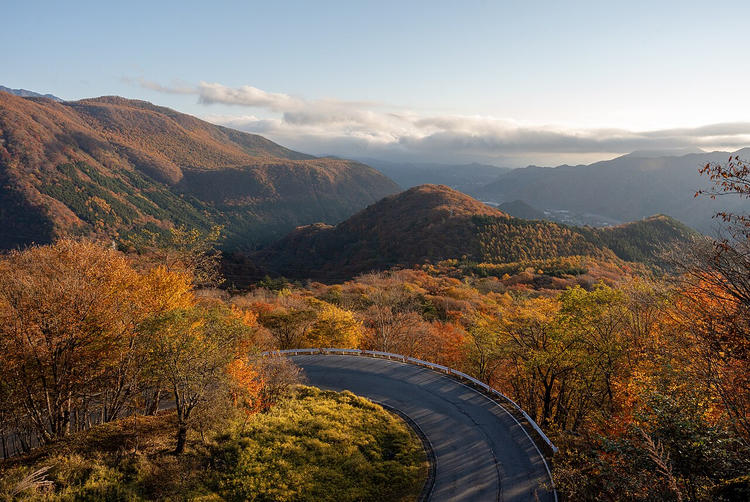
Nikko, north of Tokyo, combines UNESCO sites and nature. The winding Irohazaka road is especially beautiful, surrounded in October by glowing trees. Come here in the first half of the day, while the light is soft.
 © Raita Futo from Tokyo, Japan · CC BYPhoto: Raita Futo from Tokyo, Japan, CC BY (https://creativecommons.org/licenses/by/2.0), Wikimedia Commons
Miyajima
Miyajima near Hiroshima is known for its torii gate standing in the water. In fall, the red gate contrasts with the foliage on the slopes, and the morning quiet appeals to photographers. It is convenient to take the first ferry to the island, so you can capture the gate against the water.
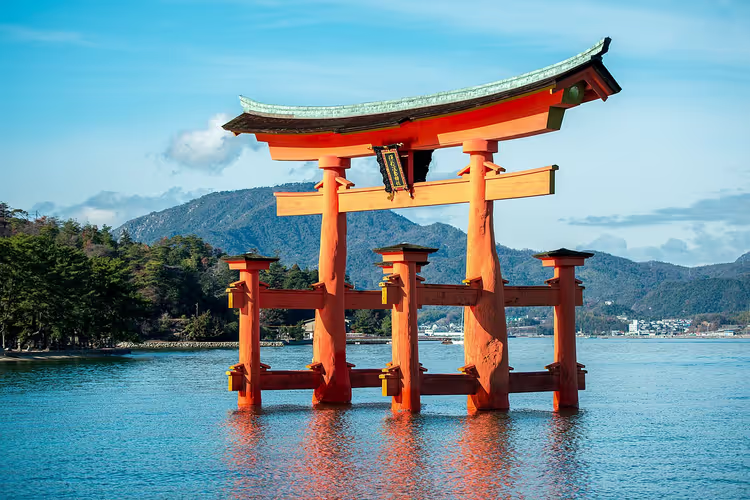 © JordyMeow · CC BY-SAPhoto: JordyMeow, CC BY-SA (https://creativecommons.org/licenses/by-sa/3.0), Wikimedia Commons
Lesser-known places for a fall trip
Popular spots are packed at peak time, so it is worth looking elsewhere. We have gathered destinations that almost never appear in ready-made itineraries.
- Oirase Gorge (Aomori): waterfalls, mossy rocks, and golden leaves, best from early to mid-October.
- Yamagata and Dewa Sanzan: sacred mountains of the north among forests in deep red tones.
- Kirishima (Kyushu): volcanoes and onsens, with foliage lasting until late November.
- Kumano Kodo (Wakayama): ancient pilgrimage trails through colorful forests.
- Takao-san near Tokyo: a day trip loved by locals.
These places are also good because there are almost no organized groups there. In Aomori and Kyushu, you can walk several kilometers and meet only a couple of people. The infrastructure, however, is more modest: buses run infrequently, so plan on a rental car or taxi. If you go in October, you will catch the foliage in several of these destinations at once.
Photographing fall Japan: light and illuminations
Fall Japan offers endless subjects: maple alleys, reflections in ponds, temples in morning mist. To get good shots, arrive early in the morning or in the evening, when the light is soft and there are few people.
Many temples and gardens hold evening illuminations of the foliage. Rikugien Garden in Tokyo and Korakuen in Okayama open special evening sessions where maples are lit with warm light. Bring a tripod and a spare battery, because evening shots require long exposures. Evening sessions are usually paid and run on a separate schedule, so check the dates on site.
If you want to catch reflections, look for ponds and canals. In Kyoto parks, such spots exist in almost every garden, and in Tokyo the imperial palace moat works well. Rain does not necessarily ruin a shoot: wet foliage glistens, and fog adds depth. Keep your camera warm under your jacket so condensation does not settle on the lens.
⁉️🤔 Frequently asked questions
When is the peak of fall foliage in Japan?
For central Japan, including Kyoto, Tokyo, and Nikko, the peak falls in late October and the first half of November. In Hokkaido, the foliage shows itself as early as September, while in Kyushu it lasts until early December. Before your trip, check the forecast, because the dates shift every year (according to the Japan National Tourism Organization, 09/2026).
What is momijigari?
It is the Japanese tradition of admiring fall foliage, literally hunting for leaves. Even in ancient Kyoto, the nobility rode boats under red maples. Today, millions of people go to parks and temples to see the peak of color. For the Japanese, it is both a walk and a quiet meditation.
Is October or November better for a trip to Japan?
October is warmer and calmer, so it suits hiking and the northern regions. November is colder, but that is when the foliage peaks in Kyoto, Nikko, and Tokyo. If your goal is maximum color, choose the first half of November. For a quieter experience, go in October.
Where to see autumn foliage in Kyoto?
In November in Kyoto, head to Kiyomizu-dera and Eikan-do temples, as well as the Philosopher's Path. Evening illuminations let you see them without the daytime crowds. Kiyomizu-dera's autumn illumination usually takes place in the second half of November. Book nearby hotels in advance, rooms sell out quickly.
What to wear in Japan in autumn?
Bring layered clothing, because mornings and evenings are cool while daytime temperatures rise to 20 °C. A waterproof jacket and comfortable shoes will serve you well in parks and mountains. For hikes in Hokkaido or the Japanese Alps, add a warm layer and gloves.
How many days do you need for a foliage trip?
For central Japan, a week is enough: two days in Tokyo, three in Kyoto, and one in Nikko. If you add Hokkaido or Kyushu, allow at least ten days, because travel between regions takes time. In autumn it gets dark early, so visit temples in the morning.
In short: what to book
Autumn Japan requires advance booking, especially in November. Here is a matrix to help you choose dates and places.
- If you want the classics: choose Kyoto and Nikko in mid-November.
- If you want quiet and hiking: plan Hokkaido and the Japanese Alps for October.
- If you are traveling with children: catch Shichi-Go-San in mid-November at Shinto shrines.
Tours and tickets at popular spots sell out fast, so check out tours on GetYourGuide before you fly. During peak season, book accommodation in advance: in Kyoto and Nikko there are almost no rooms left.

A small editorial team writing guides for independent travel. We travel ourselves, but we haven’t been everywhere, so we check prices, opening hours and how to get there against official sources.