

When to go to Montenegro: monthly weather and sea temperature
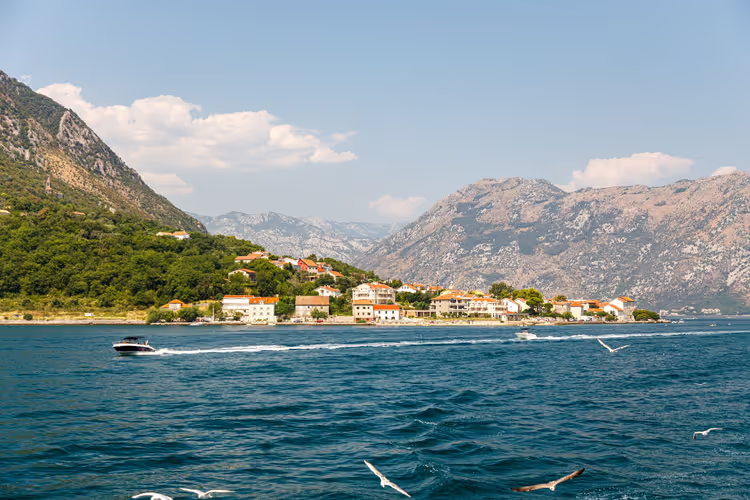
The Adriatic coast of Montenegro and its mountains live on different climate schedules. In Budva you sunbathe on the beach, while in Žabljak snow is still on the ground at the same time. The best month for your trip depends on what you want: the sea, hiking, or old towns without the crowds.
The tourist season on the coast runs from May through October (as of 09/2026, official tourism portal of Montenegro). Below you will find a monthly weather table, sea temperatures, and a breakdown of seasons for the beach, the mountains, and sightseeing.
Ad: this article contains affiliate links, we earn a commission if you book through them, at no extra cost to you.
When to go: the short version
💡 In short:
- May-June and September-October give you the best balance: warm, fewer people, lower accommodation prices.
- Beach season runs from late May to early October.
- Durmitor and Žabljak: hiking trails are open from June through September, and the Savin Kuk ski center operates in winter.
Weather by month
Average values for Budva show what to expect from the coast: daytime, nighttime, and sea temperatures, plus the number of rainy days (as of 09/2026, climate table for Budva).
Month | Daytime, °C | Nighttime, °C | Sea, °C | Rainy days |
|---|---|---|---|---|
January | 11 | 2 | 14 | 12 |
February | 12 | 3 | 14 | 12 |
March | 15 | 5 | 14 | 11 |
April | 18 | 8 | 15 | 12 |
May | 22 | 12 | 19 | 9 |
June | 26 | 16 | 23 | 8 |
July | 30 | 18 | 25 | 5 |
August | 30 | 18 | 26 | 6 |
September | 26 | 15 | 24 | 6 |
October | 21 | 11 | 21 | 9 |
November | 16 | 7 | 19 | 14 |
December | 12 | 4 | 16 | 13 |
As of 09/2026, summary of water and air temperatures for Budva.
January-February: quiet winter
Winter on the coast is the off-season: around 11-12 °C during the day, 2-3 °C at night, the sea at 14 °C, and rain roughly every other day (as of 09/2026, wassertemperatur.org). Hotels get cheaper and the waterfronts empty out. You will be comfortable walking around Kotor and Herceg Novi in a jacket, but swimming is out of the question. In the mountains this is full winter: the Savin Kuk lifts run from 10:00 to 16:00, weather permitting (as of 09/2026, Durmitor National Park website).
March-April: blossoms and walks
In spring the air warms up to 15-18 °C, nights are still cool, and the sea stays at 14-15 °C, so only the hardiest swim (as of 09/2026, wassertemperatur.org). But spring is when mimosa blooms along the coast, and you can hike the trails around the Bay of Kotor before the heat arrives. Bring a windbreaker. It rains 11-12 days a month, and snow in the upper reaches of Durmitor lasts until late spring.
May-June: start of the swimming season
From May the water warms to 19 °C, by June it reaches 23 °C, and daytime air stays at 22-26 °C (as of 09/2026, wassertemperatur.org). The sun shines 10-12 hours a day, and it rains 8-9 days a month. Swimming is comfortable from late May. You get a warm sea without the August crowds and heat, and in Budva, Kotor, or Ulcinj you can still find accommodation at a reasonable price.
July-August: heat and peak season
Peak summer looks like this: around 30 °C during the day, 18 °C at night, water at 25-26 °C, and rain 5-6 days a month (as of 09/2026, wassertemperatur.org). The sea is the warmest of the year. But accommodation prices and lines in Kotor are also at their peak. If you go in July or August, book ahead and get to the beach before 9 a.m. After midday the heat is stronger, and finding a free lounger gets harder.
September-October: the best balance
In September it is around 26 °C during the day, and the sea stays at 24 °C. In October air and water are both around 21 °C (as of 09/2026, wassertemperatur.org). Beaches empty out slowly, the water stays warm, and you can combine swimming with sightseeing. September beats August for comfort, and October suits hiking and old towns. For many, this is the best time to visit Montenegro.
November-December: rain and the off-season
Toward the end of the year the weather worsens: 12-16 °C during the day, 4-7 °C at night, the sea cools to 16-19 °C, and it rains 13-14 days a month (as of 09/2026, wassertemperatur.org). Some cafes on the coast close, but the mountains get ready for ski season. In Kotor and Herceg Novi you can walk around without lines and book accommodation at low prices.
Sea and swimming season
The swimming season stretches from late May through October: in July and August the water stays at 25-26 °C, in September 24 °C, in October 21 °C (as of 09/2026, Budva water temperature summary). The water is clean, but entries on many beaches are rocky and steep, so kids need water shoes.
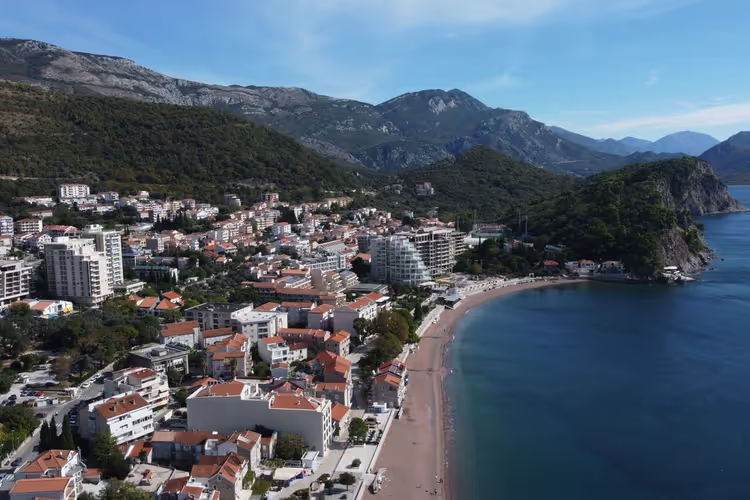
Beaches near Budva differ in character. Mogren sits a few hundred meters from the old town, Slovenska plaža stretches along the bay for kilometers, and Jaz made Lonely Planet's list of Europe's best beaches in 2015 (according to the Budva weather page). Kitesurfers and fans of wide sandy beaches should head to Ulcinj.
Where to go in which season
The coast and the mountains offer two different vacations: at the sea the season runs from May to October, while in Durmitor the best time is from June to September (according to the official tourism portal).
Destination | Best months | Why go |
|---|---|---|
Budva | May-October | beaches, old town, evening promenade |
Kotor | April-June, September-October | Bay of Kotor, fortress above the town |
Sveti Stefan | May-June, September | view of the island fortress, Milocer beaches |
Ulcinj | May-September | long sandy spit, wind for kitesurfing |
Herceg Novi | April-June, September-October | promenade and subtropical garden |
Durmitor and Zabljak | June-September | Black Lake, hike up Bobotov Kuk |
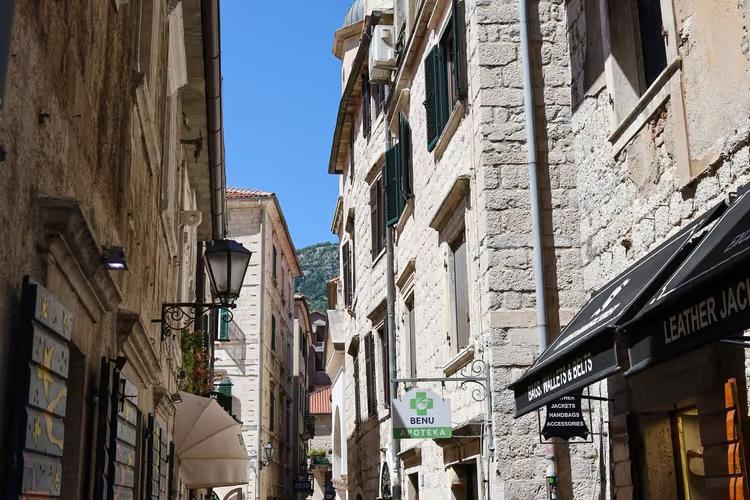
Kotor is best visited in spring and in September: the old town can be covered in a couple of hours, and the climb to the fortress takes a little over an hour (according to the map). In July the narrow streets get hot, so start in the morning.
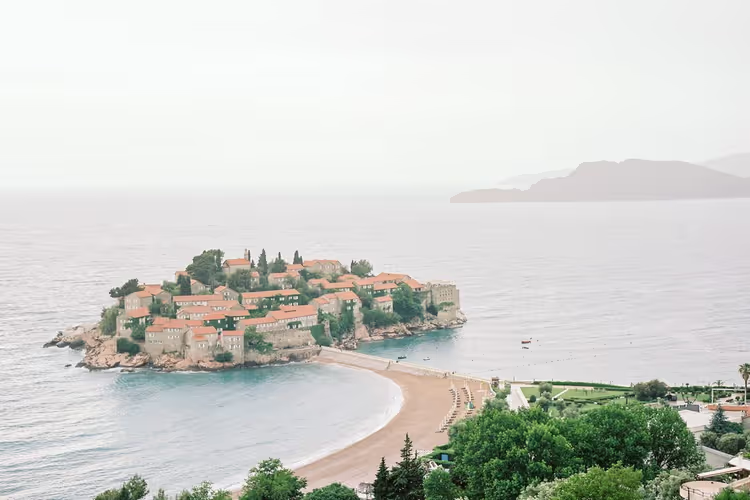
Sveti Stefan is known for the view from the highway: the island fortress with red roofs sits on a rock, and the best viewpoint is right by the road. The viewing platform is free, and you leave your car in the parking lot before the descent.
Durmitor has 25 marked hiking trails, including the climb to Bobotov Kuk, the highest peak of the massif (as of 09/2026, Durmitor National Park website). Zabljak is the most convenient base for overnight stays.
If you want to combine the sea and the mountains, book accommodation in Budva: hotels in Budva on Trip.com are within walking distance of the beaches. The drive from the coast to Zabljak takes about three hours along winding mountain roads (according to the map).
What to keep in mind when planning
Buy national park tickets online: children under 15 enter free (as of 09/2026, official national parks price list). This saves you time at the entrance to Durmitor and at Lovcen.
A car makes the trip more flexible. Buses between Budva, Kotor and Zabljak run infrequently, so compare car rental in Montenegro in advance.
In July and August, book accommodation and transfers several weeks ahead: demand is at its peak. In the off-season the same options cost less, but some cafes are closed.
Bring two pairs of shoes. In the mountains you need sneakers with good tread, and on rocky beaches water sandals will come in handy.
⁉️🤔 Frequently asked questions
When is the best time to go to Montenegro for swimming?
Beach season runs from late May to early October. The warmest water is in July and August. For swimming without the heat, choose late May, June, or September.
Is the sea warm in Montenegro in May?
In May the water warms up to 19 °C, and by June it reaches 23 °C (as of 09/2026, water temperature data for Budva). By late May the water becomes comfortable for swimming. Meanwhile, daytime air stays at 22-26 °C, so you can walk along the coast without the August humidity.
When are there fewer tourists on the coast?
The fewest people are there in winter and November. Among the beach months, May, June, and October are the calmest. In September the beaches empty out gradually, the water stays warm, and accommodation prices are lower than in August. High season falls in July and August, when accommodation and excursions are also more expensive.
What is there to do in Durmitor in winter?
The Savin Kuk ski center operates in Žabljak. Roads to Black Lake are cleared, but some trails are closed by snow. The marked summer routes turn into ski and snowmobile trails in winter.
Can you swim in Montenegro in October?
Yes, but with caveats. The sea stays around 21 °C (as of 09/2026, sea temperature by month), daytime air is 21 °C, and it rains about 9 days per month. You can swim, and the beaches are almost empty and accommodation is cheaper.
In short: what to book
The seasonal summary is simple. For the beach, choose late May, June, or September: the sea is warm and there are fewer crowds. For the mountains, leave June to September, when all Durmitor routes are open. For old towns, choose April-May and October, when there is no heat.
If your dates are not flexible: go in any month from May to October, just book accommodation in advance in July and August. If you are on a tight budget: accommodation on the coast is cheapest in winter and November. Among the beach months, May and October are the most affordable. If you are traveling with children: September is milder than August in terms of heat. If your goal is hiking: July or August offer the most stable weather in the mountains.
Coastal and national park excursions are easier to book in advance: find excursions in Montenegro.

A small editorial team writing guides for independent travel. We travel ourselves, but we haven’t been everywhere, so we check prices, opening hours and how to get there against official sources.