














When to go to Singapore: dry season, rains and holidays 2026
Singapore sits almost on the equator, so it is hot here all year round.
The choice of travel dates is determined not by temperature, but by rain. From February to September there is noticeably less rainfall, and walking around the city is more comfortable. From November to January, downpours are most frequent. We have compiled monthly data, monsoon seasons, and 2026 holidays based on information from the Meteorological Service Singapore (as of 09/2026). You will see when booking hotels is more advantageous and which weeks coincide with festivals.
Ad: this article contains affiliate links, we earn a commission if you book through them, at no extra cost to you.
Best time for Singapore: in short
💡 In short:
- Best time to travel: February to September, the driest and sunniest stretch of the year.
- The climate is tropical all year round: 30-32 °C during the day, 23-25 °C at night, humidity above 80% (meteorological service statistics, 09/2026).
- Downpours are short and intense, so keep a couple of indoor options in your plan for the day.
Singapore's climate: what you need to know
Singapore lies about one degree from the equator, so there are no classic seasons here. There is only a drier period and a wet one. The average temperature stays around 28 °C, 30-32 °C during the day, 23-25 °C at night (meteorological service data, 09/2026).
Humidity never drops below 80%, and before a downpour it reaches 90% (according to weather observations, 09/2026). For a tourist from Europe, this weather feels muggy. But air conditioning is everywhere here: in the metro, shopping malls, museums, and hotels. You quickly get used to it and start planning your day between two downpours.
Average monthly figures (checked 09/12/2026): Meteorological Service Singapore
Indicator | Jan | Feb | Mar | Apr | May | Jun | Jul | Aug | Sep | Oct | Nov | Dec |
|---|---|---|---|---|---|---|---|---|---|---|---|---|
Maximum, °C | 30 | 31 | 31 | 32 | 32 | 31 | 31 | 31 | 31 | 31 | 30 | 30 |
Minimum, °C | 23 | 24 | 24 | 25 | 25 | 25 | 24 | 24 | 23 | 23 | 24 | 23 |
Sunny hours per day | 5 | 7 | 7 | 6 | 6 | 6 | 6 | 6 | 5 | 5 | 4 | 4 |
A tropical downpour rarely lasts all day. More often, a heavy stream of water hits the city for 30-60 minutes, usually in the afternoon, and then the sun comes out again. But at the height of the wet season, there are days when rain drags on for several hours at a time. That is when an indoor route comes in handy.
Because of this climate, the city is built around shade and canopies. Covered galleries on shopping streets, walkways between blocks, and metro stations protect you from sun and water. Knowing this, you do not lose a day to the weather.
Ideal time to travel
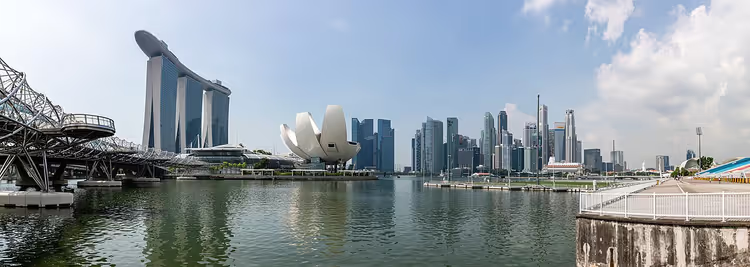 © Dietmar Rabich · CC BY-SAPhoto: Dietmar Rabich, CC BY-SA (https://creativecommons.org/licenses/by-sa/4.0), Wikimedia Commons
The ideal stretch for a trip to Singapore starts in February and ends in September. During these months there is less rain, the temperature stays in a comfortable range, and the sun shines for 6-7 hours a day.
Why: from February to September the air is drier, humidity stays around 80-83% (according to climate statistics, 09/2026), and rainy days are shorter. March, April, June, July, and August are especially good. For Sentosa beaches and walks around the center, this is the best weather of the year, and you can plan more confidently.
Hotels for this period are booked in advance: compare hotel prices in Singapore on Trip.com. During the high season of winter holidays, rooms are more expensive, while from March to May prices are calmer.
Northeast monsoon: November to January
The wet season in Singapore lasts from November to January. The northeast monsoon brings most of the annual rainfall, and it rains more often in the afternoon and evening. According to the meteorological service, these three months account for the peak of rainfall, and December is the wettest month.
The temperature does not drop during this period: around 30 °C during the day. Rain brings freshness, not cold. Humidity rises, and the streets feel more stuffy, so bring light clothing and a compact umbrella that fits in your bag.
Southwest monsoon: June to October
The southwest monsoon blows from June to October. It brings short downpours, but overall the weather is drier and more stable. During these months you can comfortably walk through parks, head to Sentosa, and spend the evening on the Marina Bay waterfront.
Rainy days happen here too, but there are fewer of them. June, July, and early August are considered the driest weeks of the year. If you are traveling for the beach and outdoor walks, plan your trip for this window.
Weather by month
The monthly picture of rainfall and humidity shows where the difference between seasons hides.
As of (checked 09/12/2026): NEA rainfall data
Indicator | Jan | Feb | Mar | Apr | May | Jun | Jul | Aug | Sep | Oct | Nov | Dec |
|---|---|---|---|---|---|---|---|---|---|---|---|---|
Rainfall, mm | 198 | 154 | 171 | 141 | 158 | 140 | 145 | 143 | 177 | 167 | 252 | 300 |
Rainy days | 12 | 10 | 13 | 14 | 14 | 13 | 14 | 13 | 14 | 15 | 19 | 19 |
Humidity,% | 83 | 82 | 83 | 84 | 84 | 83 | 83 | 83 | 84 | 84 | 86 | 87 |
The most rain falls in December: up to 300 mm and about 19 rainy days. The driest months are June to September, with rainfall around 140-180 mm. If you are traveling for walks and beaches, choose the period from February to September.
It is always warm during the day, but in the rain it feels cooler because of the wind. Bring a light windbreaker or raincoat; they take up little space in a backpack.
December and January
In December and January the temperature is slightly lower: around 23 °C at night and around 30 °C during the day. These months fall in the peak of the monsoon, so rain can last for several days in a row. The sun appears least often: in December only about 4 hours a day (according to the Singapore meteorological service, 09/2026).
Despite the rain, late December remains festive: the city is decorated for Christmas and New Year, and shopping streets stay open late into the evening. If the holiday atmosphere matters more to you than dry days, December works well.
February to May
From February to May the air heats up the most: up to 32 °C during the day and up to 25 °C at night. The sun shines for 6-7 hours, rainfall is lower, and humidity stays around 80-85% (according to the meteorological service summary, 09/2026). For trips to Sentosa and beach time, this is one of the best stretches of the year.
April and May are considered the hottest months. You should plan walks for the morning and take cover in museums, shopping malls, or by the pool after lunch.
June to September
From June to September the temperature holds steady at around 31 °C. June is the driest month of the year: about 140 mm of rainfall. This weather suits walks and outdoor excursions, and you run less risk of getting caught in prolonged rain.
In summer, local festivals and seasonal sales take place, and tropical plants bloom in the parks. Many travelers use Singapore as a one- or two-day layover and still manage to see the main sights.
What to do in the rain
 © Photograph by Mike Peel ( www.mikepeel.net ). · CC BY-SAPhoto: Photograph by Mike Peel ( www.mikepeel.net )., CC BY-SA (https://creativecommons.org/licenses/by-sa/4.0), Wikimedia Commons
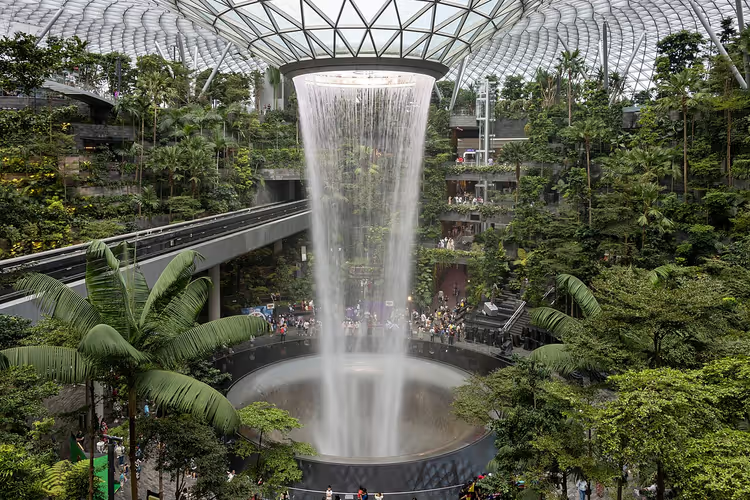
Rain in Singapore is no reason to stay in your hotel. The city has plenty of indoor attractions where you can spend several hours.
Families most often choose Madame Tussauds on Sentosa: it has wax figures of celebrities and an indoor 4D theater. A second option for a rainy day is the Singapore Oceanarium on Sentosa, which opened on the site of the former S.E.A. Aquarium. Tickets start at S$43, children under 4 go free (as of 09/2026, official website). Inside there are more than 100,000 marine animals and 22 zones, so you can easily spend half a day there.
Tickets to Sentosa attractions are cheaper to buy in advance: Singapore tour tickets on GetYourGuide. That way you avoid standing in line in the rain and choose a convenient entry time.
Holidays and events
Singapore lives by several calendars at once: Chinese, Malay, and Indian. That means there are more holidays here than in neighboring countries, and something is happening almost every month.
Chinese New Year
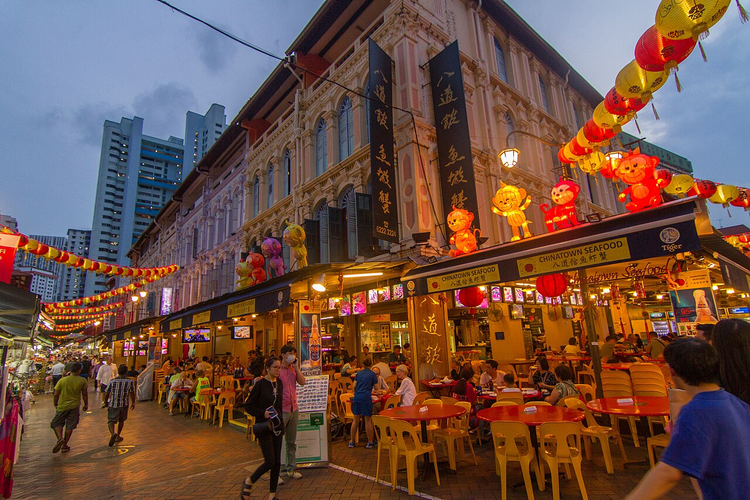
Chinese New Year is celebrated for 15 days, with street dances, parades, and red-and-gold decorations. In 2026 it falls in mid-February (according to Singapore's Ministry of Manpower, as of 09/2026). During these days, banks and some shops are closed, and hotels get booked well in advance.
 © Maksym Kozlenko · CC BY-SAPhoto: Maksym Kozlenko, CC BY-SA (https://creativecommons.org/licenses/by-sa/4.0), Wikimedia Commons
Festive markets and lion dances draw both locals and tourists. If you want to see the city at its most vibrant, come during these weeks.
National Day
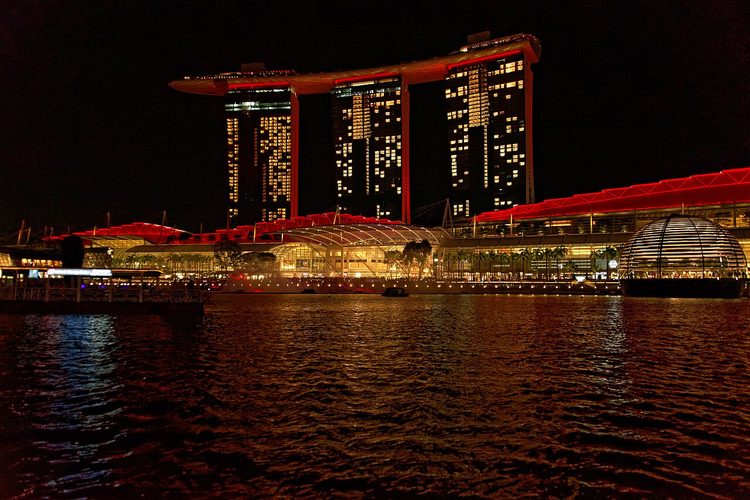
National Day is celebrated on August 9. Parades, choreographed performances, and fireworks over Marina Bay draw thousands of spectators. In 2026 the holiday falls on a Sunday, and Monday, August 10 becomes a public holiday (according to MOM, as of 09/2026).
 © Jakub Hałun · CC BYPhoto: Jakub Hałun, CC BY (https://creativecommons.org/licenses/by/4.0), Wikimedia Commons
Tickets to the parade are distributed among residents, but the fireworks are visible from many points around the city. Get to the waterfront early, people start claiming spots in the evening.
Formula 1 Grand Prix
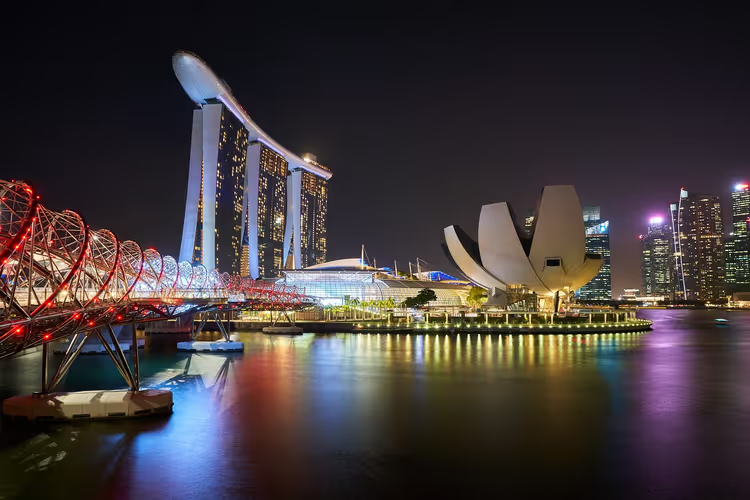
The Singapore Grand Prix takes place in October. In 2026 the race on the Marina Bay street circuit is scheduled for October 11, with the full race weekend running from October 9 to 11 (according to Formula 1, as of 09/2026).
 © Dietmar Rabich · CC BY-SAPhoto: Dietmar Rabich, CC BY-SA (https://creativecommons.org/licenses/by-sa/4.0), Wikimedia Commons
It is one of the few night races on the calendar, so the city is lit up and streets are closed off. If you are coming on these dates, book your hotel several months ahead.
⁉️🤔 Frequently asked questions
When is the best time to visit Singapore?
The most comfortable period is from February to September: less rain and more sun. The weather is especially steady in March, April, June, and July. During the high season there are more tourists and hotels are more expensive, so book your accommodation in advance. If you want a balance of price and weather, look at March and April.
When does Singapore get the most rain?
Peak rainfall comes in November, December, and January, when the northeast monsoon blows. December sees the most rain. Downpours are usually short and intense, so an umbrella and an indoor plan for the day will help.
What is the weather like in Singapore in December?
December is warm: around 23 °C at night and around 30 °C during the day. The sun appears least often, and rainfall is higher than in other months. On the plus side, the city is getting ready for the holidays, the streets are decorated, and evening walks through the center are especially pleasant.
What is there to do in Singapore when it rains?
Head for indoor entertainment. Families choose Madame Tussauds and the Singapore Oceanarium on Sentosa. The city also has plenty of shopping malls and museums.
How many days do you need in Singapore?
For a first visit, three to four days is enough. In that time you can see the city center, the Marina Bay waterfront, Sentosa, and one or two museums. If you want to add parks and beaches, plan for five to seven days.
In short: when to book your trip
If your vacation is in spring or summer, go for February to May or June to September: drier, sunnier, and Sentosa's beaches are at their best.
If festivals and a decorated city matter more to you, look at mid-February or early August, but be prepared for higher prices.
If you only have two or three days on a layover, come in March or April: the chance of a dry day is higher, and museum lines are shorter.
Compare accommodation options in advance: find hotels in Singapore on Trip.com. That way your trip will happen in a season that suits you and without weather surprises.

A small editorial team writing guides for independent travel. We travel ourselves, but we haven’t been everywhere, so we check prices, opening hours and how to get there against official sources.