
















 AIIllustrative image: AI-generated
25 places in Sri Lanka: what to see and when to go
Twenty-five places, and almost all of them are far apart.
Distances in Sri Lanka are deceptive. A stretch that looks short on the map turns into half a day in a car. Mountain switchbacks eat up an hour for every few kilometers, and the bus stops at every lamppost. Plan your route by travel time, not by kilometers on the map.
 AIIllustrative image: AI-generated
The island covers 65 628 km², and that area holds eight UNESCO World Heritage sites. The most expensive ticket in the country is for Lion Rock: about $30 per adult (as of 2026, 2026 ticket price overview). The Dambulla cave temple costs several times less, and most beaches are free to enter. The list below is not ranked from best to worst. It is built as a working route: read it in order and you will see right away which stops fit into one trip.
Below are 25 stops with the ticket price, the journey from the airport and a suitable hotel nearby. At the end you will find a short section on what to book in advance, plus answers to frequently asked questions about the visa, money and season.
Ad: this article contains affiliate links, we earn a commission on them, and the price for you stays the same.
Useful tips before you go
- Visa: official portal only. You need an ETA electronic visa to enter. Apply on the official site eta.gov.lk, because middleman sites charge tens of dollars extra for the same document. The application steps and requirements are covered in the visa guide. Your passport must be valid for at least six months from the date of entry, and you will be asked for a return ticket at the desk.
- Money: rupees and cash. The country runs on the Sri Lankan rupee (LKR). Cards are accepted in hotels and larger cafés, while markets, tuk-tuks and small guesthouses need cash. Bank of Ceylon and Commercial Bank ATMs stand in the arrivals hall, where the rate and fees are better than at the exchange booths by the beach.
- Season: the island has two seasons. The south and west, from Colombo to Tangalle, are best visited from November to April. The east, Arugam Bay and Trincomalee, comes into its own from May to September. Ella and Nuwara Eliya in the mountains are good all year round, but evenings there are cool, so bring a jacket.
- Duration: two to three weeks. In one week you will see either the Cultural Triangle or the southern beaches, but not both. A two-week route fits in Kandy, Ella, one safari and a couple of beaches. A month lets you add the north and the east coast.
- Transport: train, tuk-tuk, driver. The mountain train in Sri Lanka is a sight in its own right. Between towns it is easier to travel with a private driver or in a rented tuk-tuk. Buses are cheap, but the ride is long and cramped, and most of them have no air conditioning.
- Connectivity: eSIM or local SIM. Coverage in towns is good, while in the national parks and the mountains there is no internet at all. Pick a plan with data to spare, and do not count on hotel Wi-Fi in the provinces. Local SIM cards are sold at the airport, but the line there is long.
- Insurance: compare the terms in advance. Care in private clinics is paid, and getting to Colombo from the provinces takes hours. Buy your policy before you fly, not in the arrivals hall. Check whether the insurance covers safaris, surfing and tuk-tuk rental.
1. Hikkaduwa beach
💡 In short:
- Build your route as a loop: the south and west until April, the east from May to September.
- Spend your first night on the southwest coast, closer to the airport.
 © Sendaru Perera · CC BY-SAPhoto: Sendaru Perera, CC BY-SA (https://creativecommons.org/licenses/by-sa/4.0), Wikimedia Commons
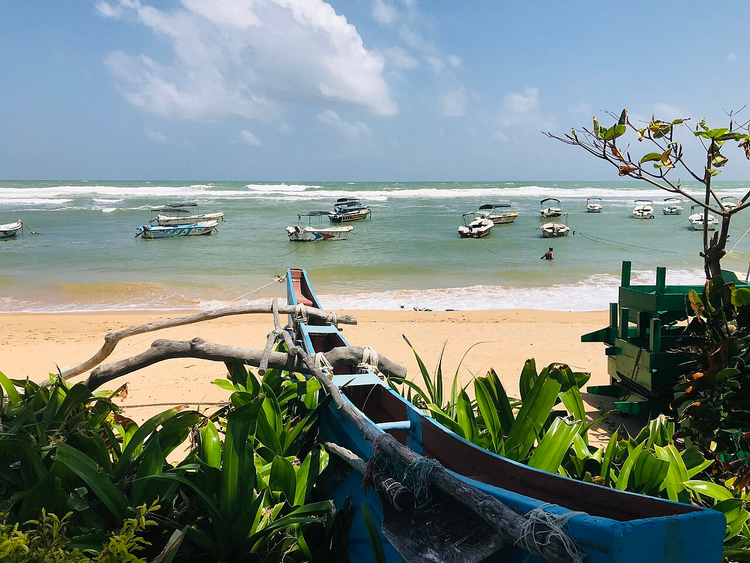
From Bandaranaike International Airport to Hikkaduwa it is about 141 km, which means roughly 2.5 hours by car (per the map). The resort sits on the southwest coast, so high season here runs from November to April, and the rain falls mostly at night.
The beach is known for two things: sunsets and turtles. Green turtles come to the shore all year round because locals feed them. Every evening a group of people gathers in the shallows, and the animals swim calmly between the bathers. You should not feed them by hand: turtles get used to the food and start mistaking plastic for seaweed.
The bottom is sandy and the waves are moderate, so the water works for both swimming and snorkeling. The coral reef lies a few hundred meters offshore, and small boats go out to it. The water is clearer in the morning, and by evening the surf stirs up the sediment.
The village itself is small and quiet. One evening is enough to walk along the water, watch the turtles and catch the sunset from a terrace. If you are heading further south, Hikkaduwa makes a convenient first stop rather than a destination for several days. The road to Galle runs along the ocean, and this stretch is a pleasure to drive in daylight.
- Getting there: 141 km and about 2.5 hours from Bandaranaike Airport (per the map), then along the coast by tuk-tuk or train.
- How long: one night, which is enough for a small village.
- Hotel: Geo Guest Hikkaduwa on the beachfront, with direct access to the sand.
- Food: the hotel café right on the beach and Café Sunny Side Up a couple of minutes away on foot.
- The catch: it gets crowded around the turtles in the evening, and it is calmer to come during the day.
2. Galle Fort
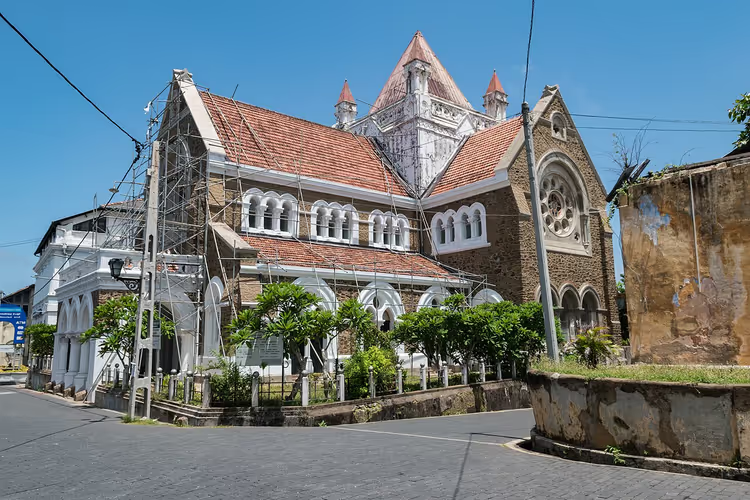
Galle sits on the south coast, 15 minutes by tuk-tuk from Unawatuna. The old town is ringed by fortress walls that were first built by the Portuguese and later rebuilt by the Dutch. Today the fort is on the UNESCO World Heritage list. Inside the walls, whole blocks of colonial houses with courtyards, churches and warehouses have survived.
The fort's main spots are the white lighthouse on the headland, the Clock Tower and the Flagrock Bastion viewpoint. From the bastion you look out over the bay, the rooftops of the old town and the fishermen by the breakwater. The streets inside the fortress are narrow, lined with boutiques, galleries and cafés, and it is a pleasure to simply wander here with no plan and no map.
In the evening locals gather on the walls. Boys jump into the water from the rocks, cricket is played along the parapet, and a breeze blows in from the sea. This is the best free view in town, and it is worth coming an hour before sunset.
Decide in advance where to sleep. Staying inside the fort is expensive, while Unawatuna is cheaper and closer to the beaches. Many travelers stay in Unawatuna and come to Galle for the evening, because a night in the old town costs noticeably more than in the neighboring villages. A tuk-tuk back at night costs more than during the day.
- Getting there: 15 minutes by tuk-tuk from Unawatuna, about an hour along the highway from Hikkaduwa.
- What to see: the lighthouse, the Clock Tower and Flagrock Bastion at sunset.
- How long: one or two nights, or at least three if you combine it with Unawatuna.
- Hotel: prices at The Charleston Galle on Trip.com
- Food: Café 82 for ice cream, Maru Galle Fort for lunch and Coffee Brunch Galle Fort for coffee.
- The catch: accommodation inside the fort costs more than in Unawatuna, 15 minutes away.
 © dronepicr · CC BYPhoto: dronepicr, CC BY (https://creativecommons.org/licenses/by/2.0), Wikimedia Commons
3. Dalawella beach
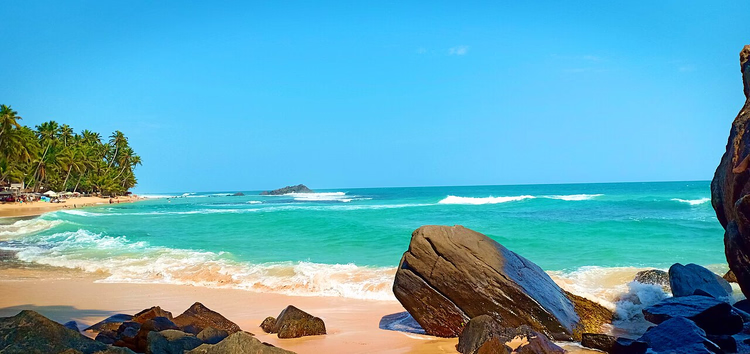
Dalawella lies a couple of minutes by tuk-tuk from Unawatuna, and the main reason to come here is the turtles. Locals feed the animals by hand, so the turtles stay near the shore all day and are barely afraid of people. We do not support the feeding, but watching the turtles from a distance is interesting and safe.
 © Umeshani Wickramanayake · CC BY-SAPhoto: Umeshani Wickramanayake, CC BY-SA (https://creativecommons.org/licenses/by-sa/4.0), Wikimedia Commons
Swimming at Dalawella is easy: the entry into the water is gentle, and there are simple snorkeling spots by the rocks. The beach is small, but long enough for a quiet walk along the water's edge. Fishing boats stand between Dalawella and Unawatuna, and in the morning the fishermen lay out their catch on the sand.
From November to April a surf school operates in Unawatuna, and beginners get up on the board in a single lesson. The wave here is soft, the bottom is sandy, and the instructors speak English. Those who want more adrenaline should head east to Arugam Bay.
Unawatuna is close by, so it is more convenient to pick accommodation there. From the village you reach Dalawella in a few minutes by tuk-tuk, and you also get access to restaurants, ATMs and a pharmacy. If you want to see both Galle and Dalawella without moving hotels, book at least three nights in Unawatuna.
- Getting there: a few minutes by tuk-tuk from Unawatuna, about 20 minutes from Galle Fort (per the map).
- How long: one or two nights, or plan three if you combine it with Galle.
- Hotel: prices at Voda Hotel Unawatuna on Trip.com
- What to do: surf lessons in Unawatuna run from November to April, and the instructors speak English.
- Food: Wild and the Sage for daytime coffee, Sky Breeze for lunch and dinner right by the beach.
- The catch: in high season the beach is packed with sunbeds and groups around the turtles.
4. Secret Beach in Mirissa
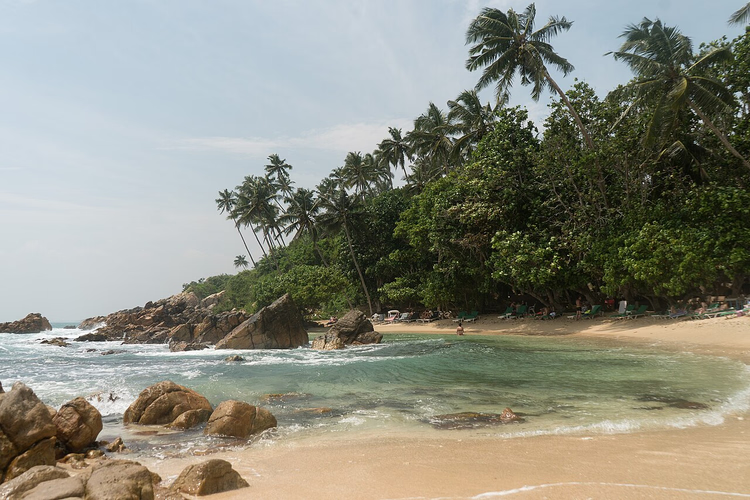
Secret Beach hides behind palm trees between Mirissa and a rocky headland. The name is misleading: today this is the busiest and most developed beach on the south coast that we saw on the island. Groups come here, and dozens of sunbeds with umbrellas line the water. The palms grow almost at the water's edge, so there is shade even at noon.
 © Alexey Komarov · CC BY-SAPhoto: Alexey Komarov, CC BY-SA (https://creativecommons.org/licenses/by-sa/4.0), Wikimedia Commons
It does make sense to come here, but only early in the morning. At opening time there is almost no one on the beach, the water is clear, and the shade holds until noon. By lunchtime a free spot is hard to find, and after lunch vendors and fishing boats join the crowd. If you want quiet, arrive by seven and leave by eleven.
The road down is narrow and steep in places. On foot from Mirissa it takes half an hour, while a tuk-tuk gets you almost to the water for a small parking fee. In high season the tuk-tuk is what saves your energy, because the climb back up in the heat is hard going. After rain the road is slippery, and on a wet slope it is better to walk.
Further along the coast Mirissa begins, and it is a convenient base for planning the rest of the south. A night here is cheaper than in Galle, and you reach Galle in half an hour. In the season from November to April, boats leave from here on sea trips to see dolphins and whales, but it is better to get tickets in advance, since seats go quickly.
- Getting there: about 30 minutes on foot from Mirissa or a few minutes by tuk-tuk, with parking at the bottom for a small fee.
- When to go: at opening time, around seven in the morning, when you will find the beach almost empty.
- Hotel: prices at Losu Polhena Mirissa on Trip.com
- What to do: whale-watching trips from Mirissa run from November to the end of April, so get tickets in advance.
- Food: Shady Lane Mirissa and Squeeze Me for coffee, Bob SL for lunch with local cuisine.
- The catch: by noon there is no free space left on the beach, and the sunbeds are paid.
5. Coconut Tree Hill
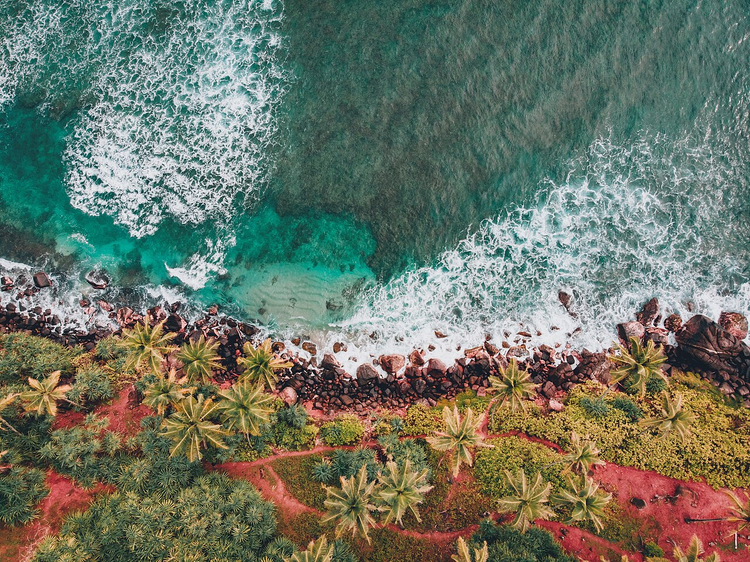
Coconut Tree Hill is a terracotta hill that juts out into the ocean and is almost entirely covered with coconut palms. Entry is free and open around the clock, but in practice people come here for one shot and the sunset. During the day the hill is hot, there is no shade, and the grass burns yellow.
Come as early as you can. At sunset a line of people wanting a photo against the sea forms on the narrow path, and strangers end up in your frame. In the morning you will stand on the hill almost alone, and the light for shooting is softer and more even. From the entrance to the top it is a few minutes' walk along a dirt path.
- Getting there: 15 minutes on foot from Mirissa beach, free entry.
- When to go: at sunrise or an hour before sunset, there is little point at other times.
- What to do: a dolphin boat trip from Mirissa in the morning, while the hill is empty.
- The catch: at sunset there is a line on the narrow path and a crowd in every shot.
 © Rovin Shanila · CC BY-SAPhoto: Rovin Shanila, CC BY-SA (https://creativecommons.org/licenses/by-sa/4.0), Wikimedia Commons
6. Hiriketiya beach
Hiriketiya is a hipster village between Mirissa and Tangalle where surfers live for months at a time. The beach itself is small and looks like a postcard: a bay, palms along the edges, calm water near the shore. There are no sights here, but there is a reason to do nothing for a few days.
Most of the cafés and shops stretch along Hiriketiya Road right by the beach access. From here it is easy to visit neighboring Dickwella Beach, which will appeal to those looking for quiet. The simplest plan is to combine Hiriketiya with Mirissa and Tangalle in one leg of the route. During the day the street is lively and loud, and by evening it quiets down along with the surf.
Accommodation prices vary a lot. For a budget option pick a guesthouse by the road, and for mid-range and upscale stays choose hotels right by the water. If you are not ready to move every day, plan one or two nights, otherwise you will miss the rest of the south. Surfing works here all year round, but the best wave comes in the season from November to April.
- Getting there: between Mirissa and Tangalle, about 25 minutes by tuk-tuk from Mirissa (per the map).
- How long: one or two nights, after that it gets monotonous.
- Hotel: prices at Belika Beach Club Hiriketiya on Trip.com
- What to do: surfing, yoga and a trip to Dickwella Beach.
- Food: Pranaya Hiriketiya for coffee, Malu Poke Café for bowls by the beach, South Lankan Healthy Food for egg hopper.
- The catch: egg hopper portions by the road cost more than in other towns, and the dishes here are washed carelessly.
7. Silent Beach near Tangalle
Silent Beach is among the calmest beaches in Tangalle. The name here is not marketing: the waves are quiet, there are no buildings, and the entry into the water is so gentle that you can swim with children. The morning water is clear, a light ripple appears during the day, but the current is weak.
Right on the sand there is Silent Beach Café, where people go for coconuts and bowls. A little further, toward Tangalle, stands Café Salt Breeze, also with access to the water. Between them an empty stretch runs along the shore, and you can almost always find a spot to yourself there.
- Getting there: along the coast from Tangalle, 10-15 minutes by tuk-tuk (per the map).
- How long: one or two nights.
- Hotel: prices at Villa Blu Tangalle on Trip.com
- Don't miss: a coconut at Silent Beach Café and dinner at Café Salt Breeze.
- The catch: the area is deserted in the evening, and you need a ride to reach the nearest shops.
8. Udawalawe National Park
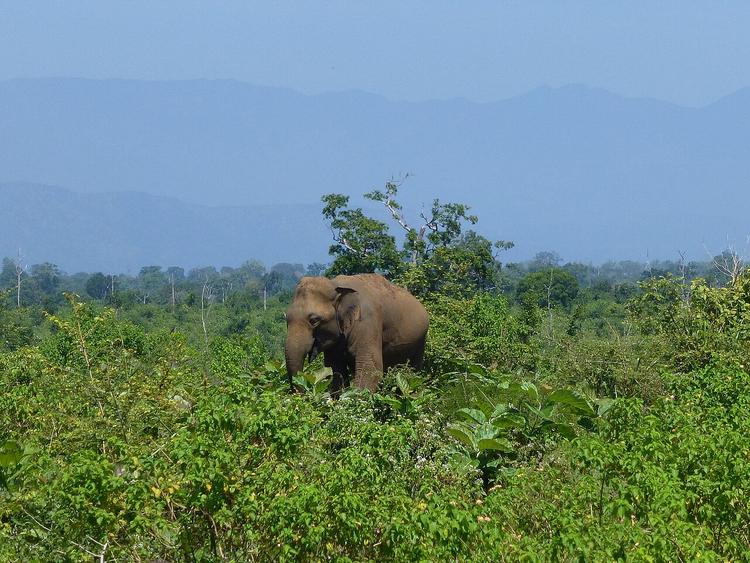
Udawalawe was created in 1972 to protect elephants and birds. Today several hundred Asian elephants live in the park, and it is the best place on the island if you want to be sure of seeing animals. Besides elephants you will find water buffalo, crocodiles, monkeys and a huge number of birds.
 © Ji-Elle · CC BY-SAPhoto: Ji-Elle, CC BY-SA (https://creativecommons.org/licenses/by-sa/3.0), Wikimedia Commons
The animals are best watched from an open jeep. The vehicle moves slowly, the elephants are visible at close range, and the calves walk beside their mothers and barely react to people. There is no point comparing this safari with an African one: the scale is different. But when it comes to elephants, Udawalawe delivers more than the better-known Yala, where the animals are more skittish and keep their distance.
An afternoon safari covers everything you need. You enter the park in the second half of the day, return by evening and move on the next morning. There are few hotels nearby, so book your stay in advance, since in season the free rooms run out quickly. In the morning on the way to the park you often see peacocks and monitor lizards right by the roadside.
- Getting there: about three hours by car from Mirissa or Tangalle, then only with a guide in a jeep.
- How long: one night and one afternoon safari.
- Hotel: prices at Jungle Paradise Udawalawe on Trip.com
- Tickets and tour: safaris run only with a guide in a jeep, so book the entry ticket and vehicle in advance.
- What you will see: elephants, buffalo, crocodiles, monkeys and dozens of bird species.
- The catch: apart from elephants there is almost nothing to see, and there are no big cats here.
9. Yala National Park
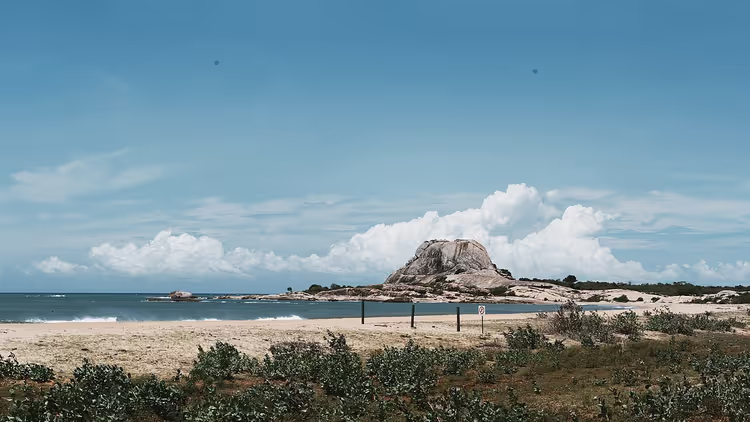
Yala is known for two residents: elephants and leopards. Several dozen leopards live in the park, and most groups come for them. There are elephants here too, but they stay further from the roads, so they are harder to find than in Udawalawe.
 © Ranmith Welikala · CC BY-SAPhoto: Ranmith Welikala, CC BY-SA (https://creativecommons.org/licenses/by-sa/4.0), Wikimedia Commons
Yala's main problem is the leopard chase. Some guides put the vehicle in a line and spend the whole trip waiting for a single animal. Choose an operator that does not chase the leopard and does not sit in a column of jeeps, otherwise you will spend hours in the dust with nothing to show for it. It is worth lowering your expectations here in advance.
The evening safari runs from two in the afternoon to half past six. You can meet wild elephants already on the way to the park: they come out to the roadside and are not afraid of vehicles. Keep your distance and do not feed the animals. Tuk-tuks on this stretch get overturned more often than you would think, and drivers carry watermelons with them just in case.
The road along the park follows the island's most famous highway, and it is worth driving even without a safari. The dust hangs thick, but the landscape changes every few minutes: dry forest, lagoons, open plains. Look around and do not get out of the vehicle.
- Getting there: the base is Tissamaharama, about 30 minutes from there to the park entrance (per the map).
- How long: one night and one evening safari.
- Hotel: prices at Ariya Tissa on Trip.com
- Tickets and tour: the evening safari in Yala runs from two in the afternoon to six thirty in the evening, so book a jeep with a guide in advance.
- The catch: the leopard hunt takes up the whole trip, and no one guarantees you will see one.
10. Arugam Bay beach
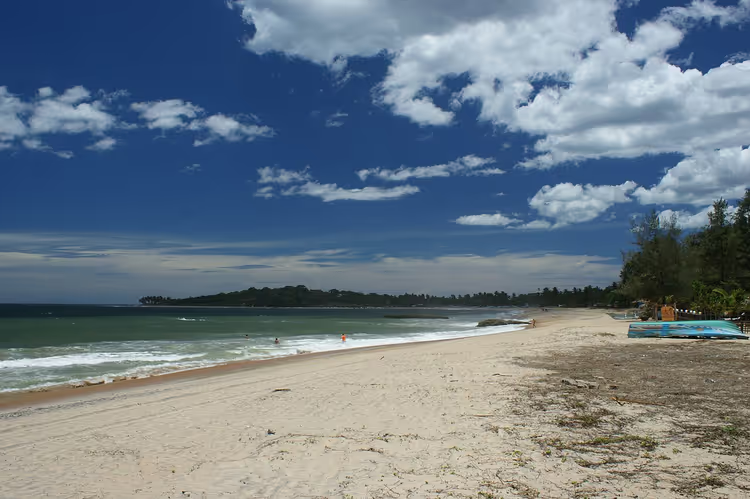
Arugam Bay sits on the east coast and moves to a completely different rhythm from the south. It is a surf town with a long arc of beach, wide sunsets and Crocodile Rock, from which you can sometimes see elephants by the water. The atmosphere here is relaxed, and there are noticeably fewer tourists than in Mirissa.
Arugam Bay's season is the opposite of the south's. From May to September it is dry and windy here, the wave is consistent, and the town runs at full capacity. In the other months not only some of the hotels but also most of the cafés close, so there is no point coming out of season. The beach is long, and there is room for everyone even at the height of the season.
Choose accommodation by its distance from the water. Hotels right on the beach cost more, but you step out of your room straight to the surf. Options in the center are cheaper and closer to the shops, and the beach is a few minutes' walk away. In the evening the town switches over to bars and street food.
- Getting there: about six hours by car from Colombo and the airport, and the transfer is worth booking in advance.
- How long: two or three days if you surf, and one night if you do not.
- Hotel: prices at Stay Golden Arugam Bay on Trip.com
- What to do: surf lessons in Arugam Bay and sunset at Crocodile Rock.
- Food: The Natural Earth for dinner and Nami Café for bowls.
- The catch: from October to April the town is effectively closed, with only a handful of hotels open.
 © Kondephy · CC BY-SAPhoto: Kondephy, CC BY-SA (https://creativecommons.org/licenses/by-sa/4.0), Wikimedia Commons
11. Nine Arch Bridge
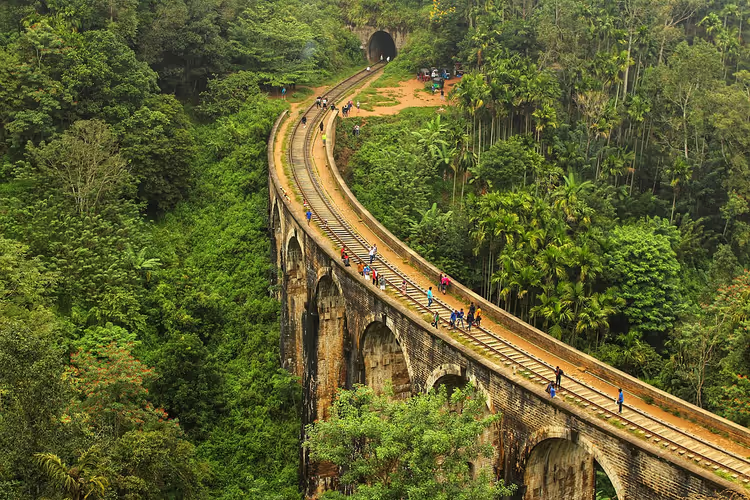
The Nine Arch Bridge is a colonial viaduct near Ella and one of the island's top sights. A working railway runs across it, trains pass with almost no timetable, and the structure itself has survived from British times. Stone piers, greenery on the slopes and a blue sky make a shot that people recognize without a caption.
About twenty trains a day cross the bridge, most of them in the first half of the day. The light is better in the afternoon, when the train comes from the interior of the island toward the camera. But the crowds are thinnest in the morning: if you want to shoot the bridge without a group of tourists, arrive by six in the morning and wait for the first train.
The logistics matter more than the shot itself. Hotels with a view of the bridge stand on a steep slope, and you cannot get down to town from there without a tuk-tuk. Many people split their stay in Ella into two parts: a night with a view of the bridge and a night closer to the center. The path to the bridge runs through tea bushes, so bring shoes with good grip.
- Getting there: 10-15 minutes by tuk-tuk from the center of Ella, then on foot along the path (per the map).
- How long: three or four nights in Ella, to cover both the bridge and the mountain walks.
- Hotel: prices at Green Nature Paradise Ella on Trip.com
- What to do: a walk along the tracks, the climb up Little Adam's Peak and Ella Rock.
- Food: Kirikopi Ella for coffee and The Clay Pot Ella for curry right by the rails.
- The catch: the bridge is crowded in the morning and evening, and the hotels on the slope are far from the center.
 © Knthabrew · CC BY-SAPhoto: Knthabrew, CC BY-SA (https://creativecommons.org/licenses/by-sa/4.0), Wikimedia Commons
12. Little Adam's Peak
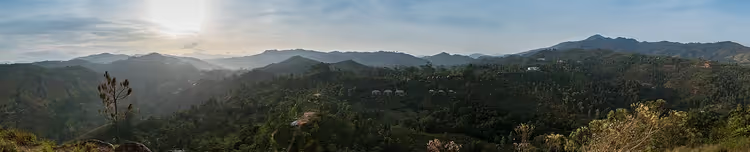
Little Adam's Peak is the easier of Ella's two summits. The climb takes about twenty minutes, the trail runs along an open slope with no difficult sections, and at the top a view over the whole Ella highlands awaits you. There is no point comparing it with Ella Rock: the climb there is longer and harder, and the panorama is similar.
The trail starts right behind the Nine Arch Bridge. You can set out from the bridge, climb the peak and return to town by a different route, which makes a proper half-day walk. If you go without a guide, follow the signs, as the route here is better marked than on the neighboring summits. It is windy at the top, so take a jacket.
- Getting there: start at the Nine Arch Bridge or from the center of Ella, with a climb of about twenty minutes (per the map).
- How long: half a day together with the walk along the railway.
- Tickets and tour: a day tour of Ella's three summits, if you do not want to find the trail yourself.
- The catch: a lot of people gather at the top at sunset and sunrise.
 © dronepicr · CC BYPhoto: dronepicr, CC BY (https://creativecommons.org/licenses/by/2.0), Wikimedia Commons
13. Tea plantations and waterfalls of Nuwara Eliya
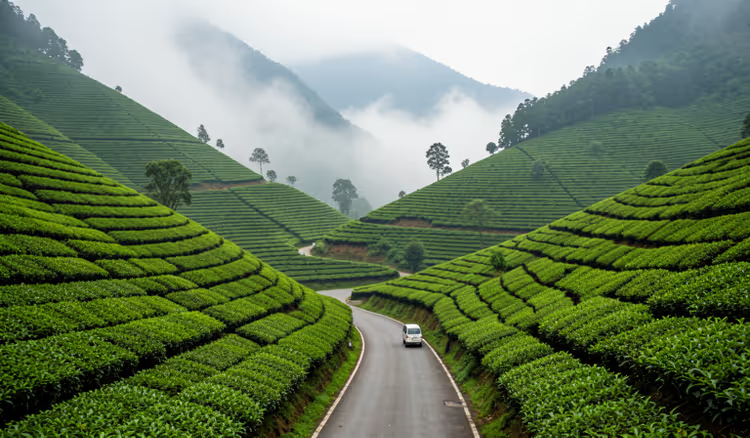
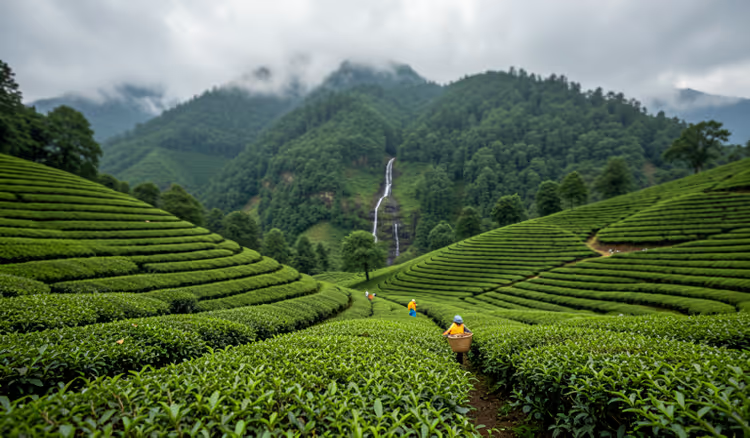
Nuwara Eliya is the coldest town in Sri Lanka and the heart of tea country. At night the temperature drops to ten degrees, hotels light their fireplaces, and plantations run in rows all around the town. People come here for the green hills, the waterfalls and the factories where Ceylon tea is made.
 AIIllustrative image: AI-generated
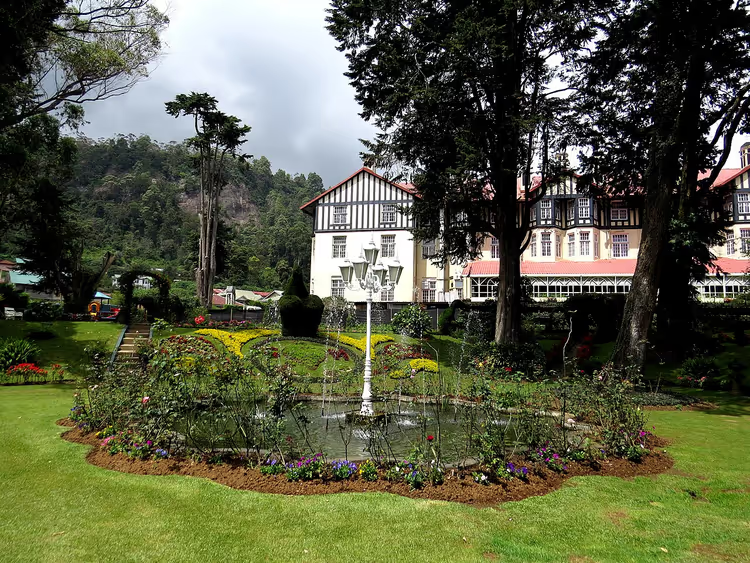
In the town itself it is worth seeing the Clock Tower, the old post office and the Grand Hotel with its colonial architecture. A few kilometers from the center is the Lover's Leap waterfall, and nearby there are working factories such as Blue Field Tea Factory, where they show the full leaf-processing cycle and let you taste different varieties. Beyond the town lies Horton Plains National Park with the World's End cliff, where the morning excursion heads.
A tea factory is not just a tasting. You see how the leaf is withered, rolled and dried, and you understand why Ceylon tea is graded by the altitude of the plantation. The tour takes about an hour, entry is usually free, and the factories make their money from the shop. Buying tea on the spot is cheaper than at the airport.
One night is enough here. The hotels stand on the hills, and from the windows you can see the Clock Tower and the island's highest mountain. There are few restaurants in town, and that is Nuwara Eliya's main inconvenience: free tables run out early at dinnertime. On the other hand, accommodation prices here are lower than on the coast.
- Getting there: by train or car from Kandy, then a winding road through the plantations.
- How long: one night, there is nothing more to do in town, but the surroundings are worth a day.
- Hotel: prices at Yara Nuwara Eliya on Trip.com
- Tickets and tour: the excursion to Horton Plains and a tea factory leaves in the morning, and park entry is arranged in advance.
- Food: Café Noshers and Ayurveda Coffee Shop, both open for lunch.
- The catch: the choice of cafés and restaurants is minimal, and the town goes quiet early in the evening.
 © vivali · CC BYPhoto: vivali, CC BY (https://creativecommons.org/licenses/by/3.0), Wikimedia Commons
14. Temple of the Tooth in Kandy
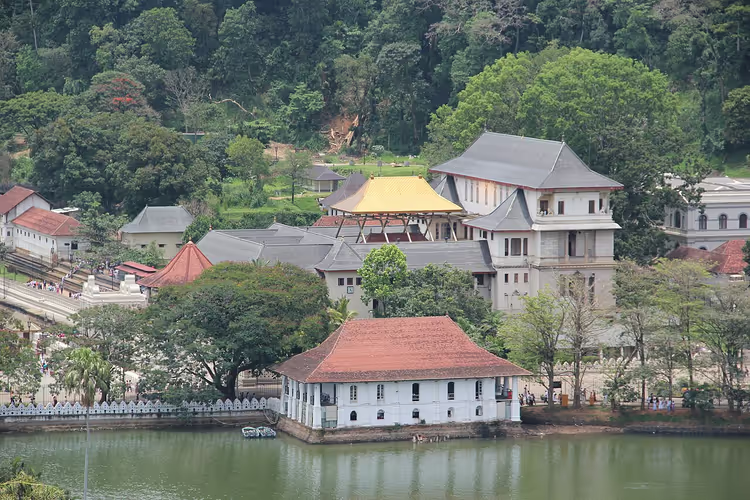
Sri Dalada Maligawa, or the Temple of the Tooth, is Kandy's main Buddhist temple and one of the most revered on the island. The Buddha's left canine is kept here, and the temple itself stands on the shore of the lake in the center of town. The tooth is shown for just a few minutes a day and only at set times, so check the schedule on the spot.
Even without the relic, the temple is worth a visit. Carved walls, golden roofs and the evening service with drums create an atmosphere that no photograph conveys. After the temple you can go to the Kandyan Cultural Centre: the show with dancing and drums runs every evening from five to six. Tickets are sold at the entrance, and the hall is small.
In the evening a service is held at the temple: monks beat drums, worshippers bring lotus flowers, and the square in front of the entrance fills with people. Come half an hour before it starts, and you will have time to pass through the security gate and take a place by the wall. Shoes are left at the entrance, and shoulders and knees must be covered.
Kandy itself is a big, noisy and dusty city, but this is where the cultural part of the route begins. Besides the temple it is worth stopping by the botanical garden, and in the evening taking a local cooking class: the cooking is done in village families, and after a lesson like that you look at curry differently. Heading further south from here is easiest by train.
- Getting there: the temple stands in the center of Kandy, about ten minutes on foot from the bus station and the train station.
- How long: one or two nights, there is no need to stay longer in Kandy.
- Hotel: prices at Kandy Tree Tops on Trip.com
- Tickets and tour: a private cooking class in Kandy or a food walk around the city.
- Food: Café Secret Alley and Café Banana Chill, both in the center.
- The catch: the city is noisy and dirty, and accommodation in the center is expensive.
 © Antony Stanley from Gloucester, UK · CC BY-SAPhoto: Antony Stanley from Gloucester, UK, CC BY-SA (https://creativecommons.org/licenses/by-sa/2.0), Wikimedia Commons
15. The train from Kandy to Ella
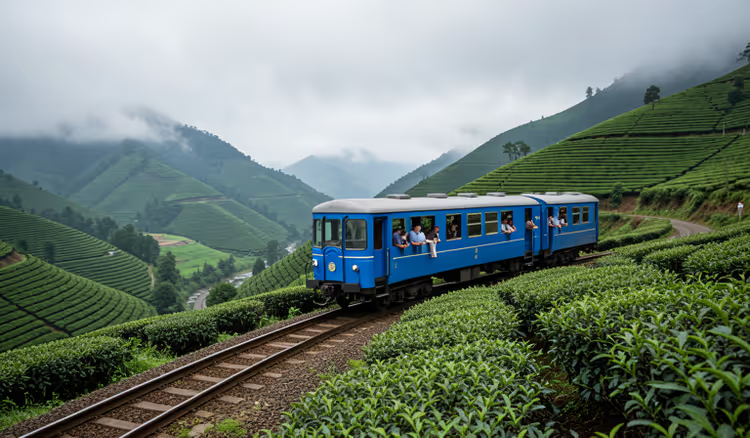
The train ride from Kandy to Ella appears on lists of the world's most beautiful railway routes. The train passes through tea plantations, tunnels, bridges and waterfalls, climbing into the mountains at walking pace. It is for this stretch that many people travel to the highlands, not for Ella itself.
You do not have to ride the whole way. The most spectacular section lies between Ella and Nanu Oya, the station for Nuwara Eliya, and takes about two and a half hours. You can board halfway and avoid spending a whole day on the journey. If you are traveling in your own tuk-tuk, it is convenient to cover part of the route on wheels and save the train for a single leg.
Choose your seats by class. In first class the windows and doors are closed, while in second and third the doors are open and you see more from there. In high season buy tickets with reserved seats online in advance, because in July the carriages get so packed that you have to stand in the aisle. The timetable changes and some trains are canceled, so check the operator's website before buying.
- Getting there: from Kandy's central station, and the train takes almost a whole day to reach Ella.
- How long: one leg on the day of the trip, the rest by car or tuk-tuk.
- Tickets and tour: train tickets for the mountain route with a choice of class.
- Tip: sit by the open doors in second or third class, not by the window.
- The catch: in high season without a reservation you ride standing, and first class is closed off from the view.
 AIIllustrative image: AI-generated
16. Ancient city of Polonnaruwa
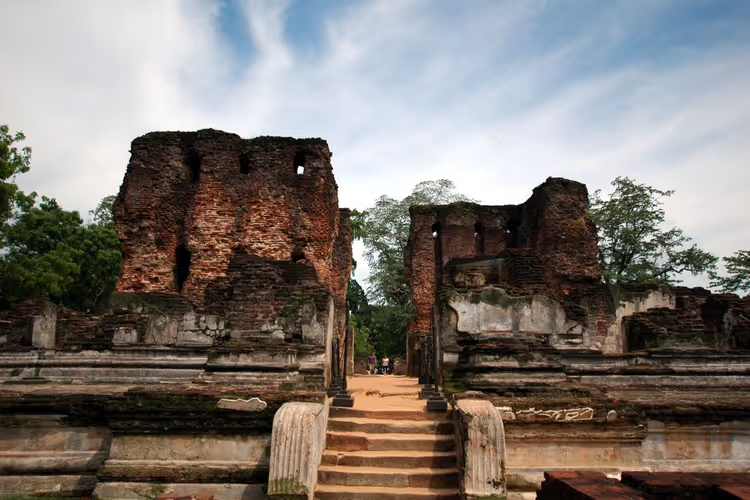
Polonnaruwa became the island's second capital after Anuradhapura was destroyed at the end of the tenth century. What survives today are the stone ruins of palaces, bathing pools and stupas built under the ruler Parakramabahu I in the twelfth century. The site is large, and it is best explored by bicycle or with a driver.
Above all, see the royal baths, the statue of Parakramabahu and the Vatadage temple with its stone columns. The ruins stand in an open field with almost no shade, so plan your visit for the morning or the second half of the day. Bring drinking water with you, as the nearest shop is far from the entrance.
- Getting there: about an hour from Sigiriya and roughly two hours from Kandy by car.
- How long: one or two nights, and one full day is enough for the ruins.
- Hotel: prices at Ekho Lake House Polonnaruwa on Trip.com
- Tickets and tour: buy the entry ticket to the archaeological site at the entrance, and book a day tour with lunch in advance.
- The catch: it is an open site with no shade, and the daytime heat is hard to bear.
17. Dambulla cave temple
The Dambulla cave temple stands half an hour's drive from Lion Rock and is on the UNESCO World Heritage list. Hidden under a huge rock overhang are five caves with more than a hundred Buddha statues and paintings on the ceiling. Outside you are greeted by a giant golden Buddha, which is where the ticket office is.
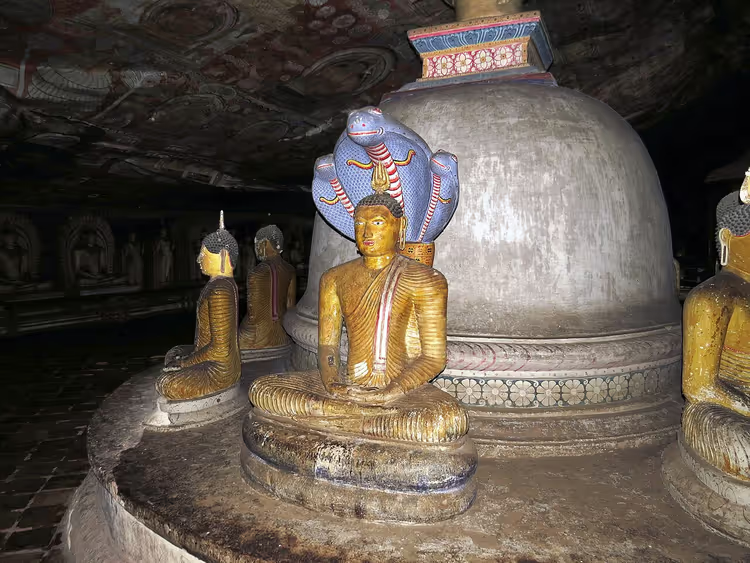 © vivali · CC BYPhoto: vivali, CC BY (https://creativecommons.org/licenses/by/3.0), Wikimedia Commons
Entry costs about 3 000 rupees per person, which is less than €10 (as of 09/2026, temple guide). The temple is open from seven in the morning to five in the evening, and tickets are sold at the bottom, before the climb up the stairs. Shoulders and knees must be covered, shoes are left at the entrance, and it is best to bring socks.
You do not need to stay overnight in Dambulla. Most travelers stay in Sigiriya and come here for half a day. If you do stay the night, see the caves in the morning without the groups and move on in the afternoon.
- Getting there: about thirty minutes by tuk-tuk from Lion Rock and Sigiriya (per the map).
- How long: one night or a short trip out from Sigiriya.
- Hotel: prices at Kandalama Lodge Dambulla on Trip.com
- The catch: "helpers" hang around the stairs and demand money for directions.
18. Lion Rock in Sigiriya
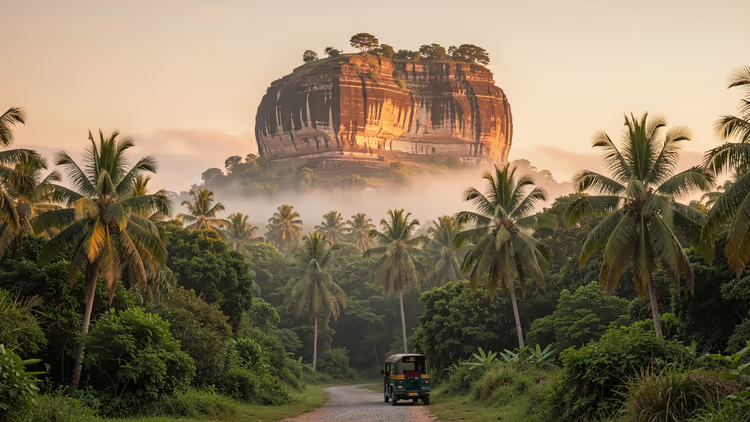
Lion Rock, also known as Sigiriya, is one of the island's eight UNESCO sites and is considered the most impressive. The rock rises almost vertically, and on its summit the ruins of a fifth-century palace survive. Entry costs about $30 per adult, and in high season the price rises to $35 (as of 2026, fortress guide).
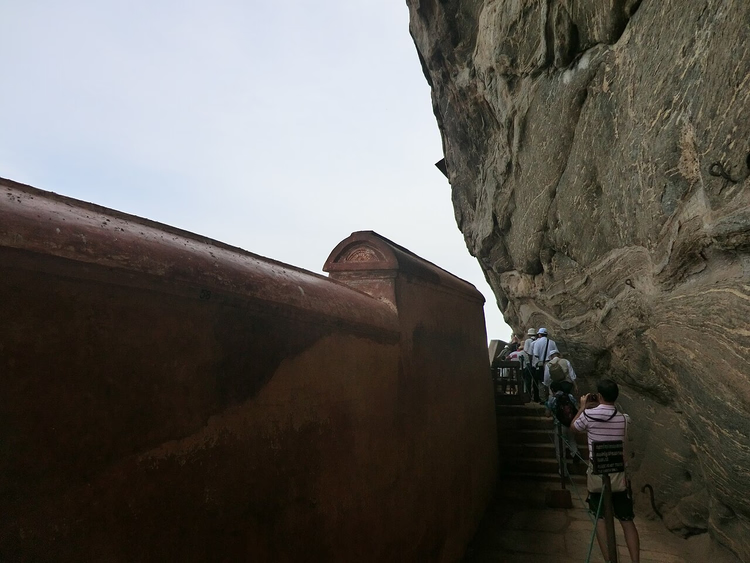 © Daibo Taku · CC BYPhoto: Daibo Taku, CC BY (https://creativecommons.org/licenses/by/3.0), Wikimedia Commons
Many people go not to the rock itself but to neighboring Pidurangala Rock. It has the best view of Sigiriya, entry is cheaper, and the climb is shorter. There is little room at the top, so a crowd gathers here at sunrise and sunset. To avoid that, go up right after seven in the morning.
The climb up Lion Rock itself takes about half an hour and ends with a scramble up the steps between the lion's paws. Take water and do not schedule the climb for noon: the rock gets scorching hot, and there is almost no shade on the route. The ticket office is at the foot, and the ticket covers the whole complex with the gardens and the Mirror Wall.
A safari is worth arranging near Sigiriya. Herds of elephants gather in Minneriya and Kaudulla national parks, and half a day is enough to see them. In the evening return to the village, where there are a few cafés with a view of the rock. It is best to have dinner before dark, because kitchens close after sunset.
- Getting there: about three hours from Kandy and four from Colombo and the airport by car.
- How long: one or two nights, the village itself is small.
- Hotel: prices at Lion Gate Hotel Sigiriya on Trip.com
- Tickets and tour: a safari in Minneriya or Kaudulla takes up the second half of the day, so book a jeep with a guide in advance.
- Food: Gala Addara Café with a view of the rock and Little Hut Sigiriya for dinner.
- The catch: the entry price is higher than at any other sight on the island.
19. Red Mosque in Colombo
The Red Mosque, or Jami Ul-Alfar Mosque, is one of the oldest mosques in Colombo. The striped red-and-white facade is visible from afar, and inside, halls with columns and arches have been preserved. Tourists are let in at certain hours, but the schedule changes, so check it on the spot.
The area around the mosque is worth walking. The narrow streets are crammed with stalls, spices and street food, and this is the liveliest corner of the capital. If you are in a tuk-tuk, leave it at the large city parking lot in the center: parking right by the mosque is a problem, and the traffic is heavy.
One night in Colombo is enough. The city is convenient as an entry and exit point, but the real Sri Lanka begins beyond its limits. Most travelers leave straight away for Negombo or the south.
- Getting there: on foot from Fort railway station, about twenty minutes (per the map).
- How long: one night, there is nothing more to do in the capital.
- Hotel: prices at Maniumpathy Hotel Colombo on Trip.com
- The catch: tourists are not let in at just any time, and the schedule changes without notice.
20. Negombo fish market
Negombo is the island's fifth-largest city, a blend of Portuguese, Dutch and English heritage. A sandy beach about eight kilometers long stretches along the shore, and the city itself is noticeably calmer than the capital. There is not much to see here apart from St. Mary's Church and a small fort that is not worth planning a night around.
The main reason to come is the fish market. Every morning the fishermen lay out their catch right on the ground: tuna, shrimp and small fish are heaped up there, haggled over, salted and dried in the sun. It is a powerful sight, but you need to come early in the morning, before it gets hot and before the best goods are gone. The smell is strong, and it is a good idea to wash your shoes after the market.
Negombo is convenient above all for its location. The international airport is an hour from Colombo and just fifteen minutes from here, so it makes sense to spend your first or last night right here. Before your route starts you have time to see the market and get a good night's sleep. The beach in Negombo is long, but the water is murkier than in the south.
- Getting there: about fifteen minutes from Bandaranaike Airport and about an hour from Colombo (per the map).
- How long: one night, usually the first or the last.
- Hotel: prices at Uga Riva Negombo on Trip.com
- When to go: come to the market in the first half of the day, as trading winds down later.
- Food: Zen Cafe for lunch in the city center.
- The catch: apart from the market and the beach there is nothing to see in the city.
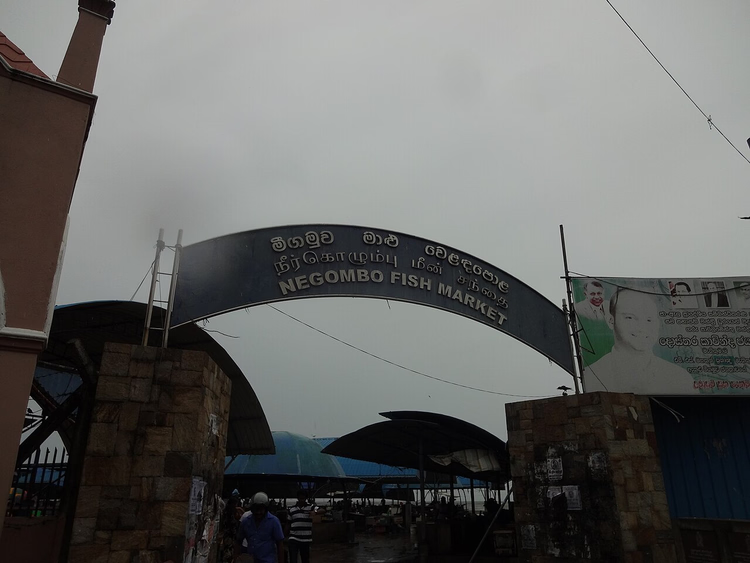 © Z thomas · CC BY-SAPhoto: Z thomas, CC BY-SA (https://creativecommons.org/licenses/by-sa/4.0), Wikimedia Commons
21. Bentota beach
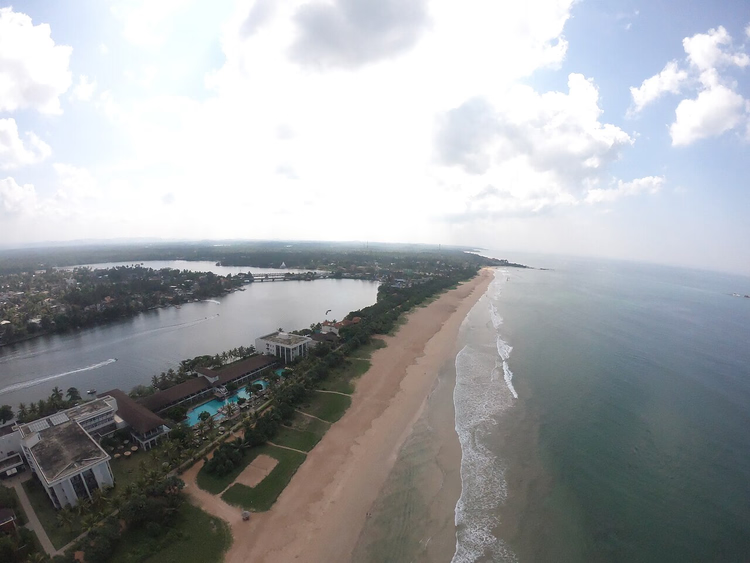
Bentota is a beach town south of Colombo, if you follow the coast. Its strength is that it is close to the airport and suits one or two nights at the start or end of a route. A wide strip of sand, palm trees and calm water make it a convenient place to relax without moving around.
The main activity here is a river trip. By boat you pass through mangroves and watch monitor lizards, monkeys and birds, and sometimes crocodiles by the bank. The excursion takes a few hours and requires no physical fitness. The best time for it is the morning, before the heat sets in.
- Getting there: about an hour and a half by car from the airport and Colombo.
- How long: one or two nights.
- Tickets and tour: Bentota river safari through the mangroves
- The catch: the waves can be strong, and the town itself is quiet as early as nine in the evening.
 © Supunsamithajayalath · CC BY-SAPhoto: Supunsamithajayalath, CC BY-SA (https://creativecommons.org/licenses/by-sa/4.0), Wikimedia Commons
22. Wilpattu National Park
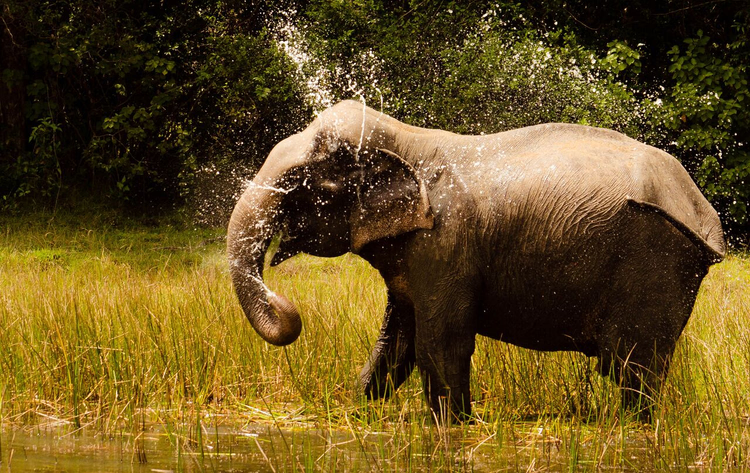
Wilpattu is the country's largest national park: more than a thousand square kilometers of forest and more than a hundred lakes and ponds. It lies on the west coast, roughly one hundred and seventy kilometers north of Colombo, so there are noticeably fewer tourists here than in Yala or Udawalawe. The main reason to come is the leopards, which are what the park is known for.
The best time for a safari runs from May to early October. Because it is so remote, most travelers visit Wilpattu as a day trip from Negombo or Waikkal rather than staying overnight by the park itself. The drive takes several hours each way, so you need to leave early in the morning. Bring water, a hat and insect repellent.
- Getting there: about four hours by car from Negombo, then only by jeep with a guide.
- How long: one day from Negombo, without an overnight stay in the park.
- Tickets and tour: an all-inclusive jeep safari in Wilpattu from Negombo and Waikkal.
- The catch: it is far from the other stops on the route, and the drive eats up half a day.
 © Mahoora Tented Safari Camps · CC BY-SAPhoto: Mahoora Tented Safari Camps, CC BY-SA (https://creativecommons.org/licenses/by-sa/4.0), Wikimedia Commons
23. Ruwanwelisaya stupa in Anuradhapura
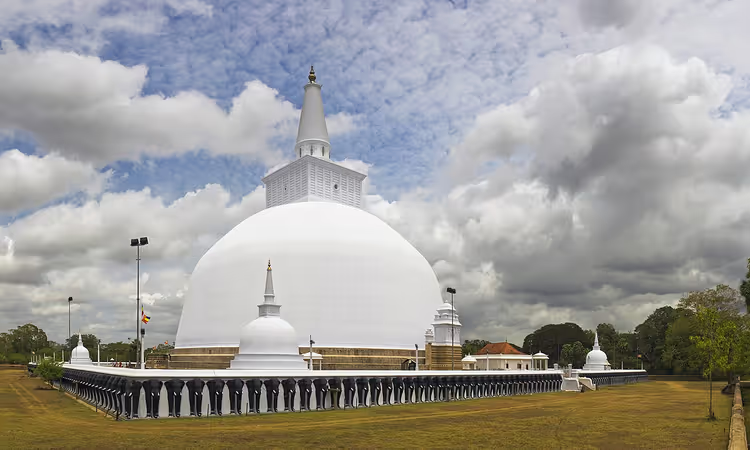
Anuradhapura was the island's capital and remains a sacred city for Buddhists. One hundred and nineteen Sinhalese kings ruled here, and today people come for the snow-white stupa Ruwanweli Maha Seya. It stands in the center of the complex and can be seen from anywhere in the city.
The Bodhi tree grows nearby. It is a cutting from the very tree in India under which the Buddha attained enlightenment, so a line of pilgrims forms to reach it. People bring flowers, light oil lamps and stand at the railing for a long time. Entry to the complex is free for worshippers, while foreigners pay for a ticket to the whole archaeological reserve.
The special day here is the full moon. On that day Buddhist ceremonies take place in the city, and visitors are allowed to attend. Bring white clothing: it is customary to wear white in Sri Lanka's shrines, and in shorts or a tank top you simply will not be let in. Hats come off too.
- Getting there: about four hours by car from Kandy and Sigiriya.
- How long: one or two nights, to walk the whole complex at an easy pace.
- Hotel: prices at Hotel Heladiv Anuradhapura on Trip.com
- Tickets and tour: a guided city tour with hotel transfer takes half a day, and the reserve ticket is bought separately.
- Food: Palhena Village Restaurant, where they cook local curries.
- The catch: you cannot get around the complex without a car or tuk-tuk, as the distances inside are huge.
 © KennyOMG · CC BY-SAPhoto: KennyOMG, CC BY-SA (https://creativecommons.org/licenses/by-sa/4.0), Wikimedia Commons
24. Trincomalee
Trincomalee is a port city on the northeast coast with wide, palm-lined beaches. There are fewer tourists here than in the south, so the atmosphere is calmer and prices are lower. If you are looking for authentic Sri Lanka without the crowds, Trincomalee fits.
Two beaches are best for swimming. Dutch Beach is quiet and almost empty, while Uppuveli Beach is developed and lined with cafés and restaurants. A tuk-tuk gets you between them in a matter of minutes. The best time to visit here is from May to September, and it often rains in the other months.
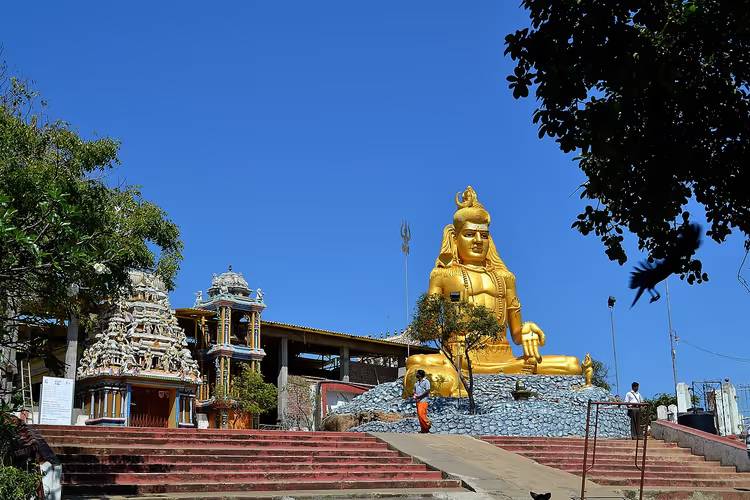
A must-see is Fort Frederick. The fortress was built by the Portuguese in the seventeenth century, later held by the Dutch and the English, and inside there are still old buildings and the Hindu Koneswaram temple with its deer. Entry is free, and it has a view over the whole bay. The road to the fort runs uphill, so a tuk-tuk is easier than walking.
- Getting there: about six hours from Kandy and about seven from Colombo by car.
- How long: one or two nights, if you want to fit in both beaches.
- Hotel: prices at Amaranthe Bay Resort Trincomalee on Trip.com
- Food: Café on the 18th for bowls and the vegetarian Pure Vege Rest.
- The catch: from October to April some of the cafés and guesthouses are closed.
 © Shamli071 · CC BY-SAPhoto: Shamli071, CC BY-SA (https://creativecommons.org/licenses/by-sa/3.0), Wikimedia Commons
25. Jaffna
Jaffna, in the north of the island, lives by different rules from the rest of Sri Lanka. Tamil is spoken here, not Sinhala as in most of the country. Few Western tourists come here, and that is exactly what makes the north interesting.
A chapter of history in its own right is the civil war, which ended in two thousand nine after a quarter of a century of fighting. Today Jaffna is considered a safe destination, but the infrastructure here is more modest: you will not find trendy coffee shops or Western restaurants, though the Indian influence is felt in everything. You come here for a different Sri Lanka, not for beaches.
The things to see in Jaffna are the temples and markets. Numerous Hindu temples with brightly colored sculptures stand right in the middle of residential neighborhoods, and the markets sell spices, fabrics and sweets. The clock tower in the center is a handy landmark for a walk, and the main shopping street starts from it.
- Getting there: about four and a half hours by tuk-tuk from Anuradhapura (per the map).
- How long: one or two nights, easy to combine with Anuradhapura or Trincomalee.
- Hotel: prices at Fox Jaffna on Trip.com
- Best season: from January to September, after which the rainy season begins.
- The catch: there is none of the usual tourist infrastructure, and English is not understood everywhere.
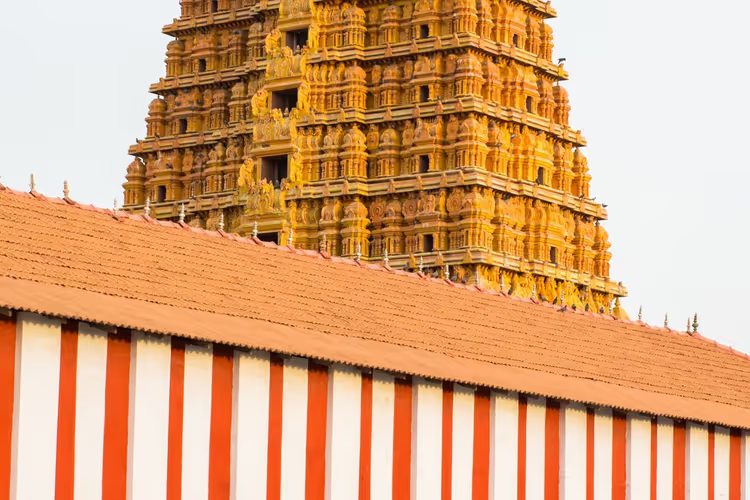
When to go: seasons by region
Region | Best months | What to keep in mind |
|---|---|---|
South and west: Galle, Mirissa, Tangalle | November-April | high season, book in advance |
East: Arugam Bay, Trincomalee | May-September | everything is closed out of season |
Mountains: Ella, Nuwara Eliya | all year round | about ten degrees at night |
Cultural Triangle: Sigiriya, Kandy | all year round | hot during the day, little shade |
Where to stay in Sri Lanka
Sri Lanka is not Bali. There are noticeably fewer hotels here, and the choice in a given town may come down to a dozen options. Anyone who does not book in advance ends up, in high season, settling for whatever is left on the spot, and what is left is usually the worst.
A separate difficulty is the geography. The sights are scattered across the whole island, and getting from one place to another takes several hours. Picking one base and driving out to each stop from there is impossible. The right approach is different: build the route out of stops and sleep right where you are sightseeing.
The south of the island welcomes tourists all year round. The most commonly booked places are Bentota, Hikkaduwa, Galle, Unawatuna, Mirissa, Hiriketiya and Tangalle. In the mountains, add Ella and Nuwara Eliya, which are good in any month. Kandy and Sigiriya also work for a year-round trip.
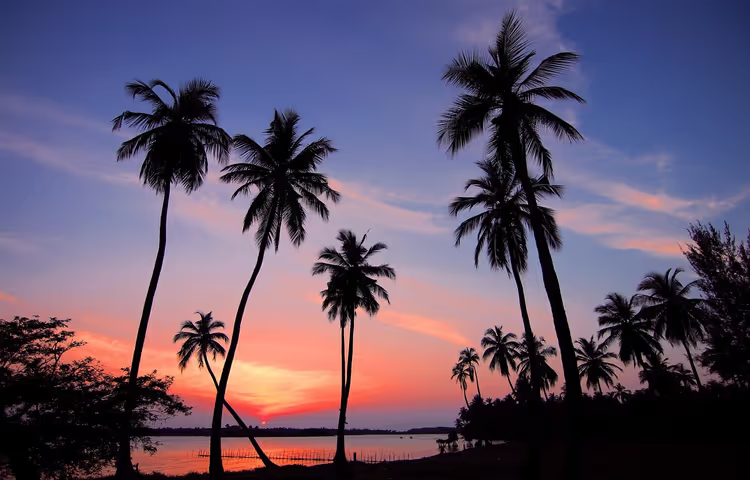
The climate splits the island into two parts. The southwest follows a season from November to April, the northeast from May to September. Between them lie the two most visited national parks: Udawalawe with its elephants and Yala with its leopards. Both safaris fit neatly into the southern loop of the route.
For a trip in December, January or April, book accommodation several months ahead. In those months Europeans and locals vacation in the south at the same time, and there are almost no free rooms left by the water. In the east during this period, by contrast, everything is closed, and prices in the remaining hotels are at their lowest.
Tours and tickets
Guided tours, skip-the-line tickets and activities — most offers can be cancelled free of charge.
See offers on GetYourGuideThe widget loads once you give your consent.
Tuk-tuk around Sri Lanka
Having your own tuk-tuk changes the trip more than any other form of transport. You stop wherever you like, you are not tied to train and bus timetables, and you drive stretches that tours do not cover. For the highlands and the south coast it is the best way to get around.
The easiest way to rent one is through Tuk Tuk Rental. The company specializes in tourists, handles the local driving license with the authorities itself and gives you a trial driving lesson. After a short session you understand the basics and head out on the road almost like a local driver.
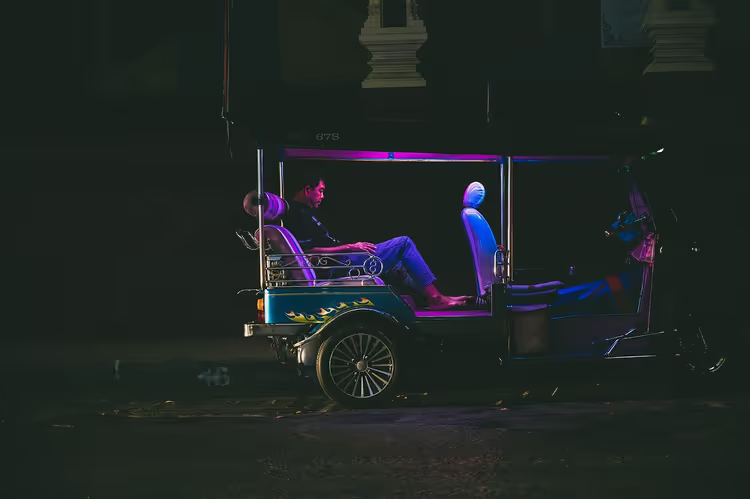
Keep two limitations in mind. A tuk-tuk is not fast, so long highway legs take a lot of time. Gas stations are scarce on secondary roads, so fill up at the first opportunity and keep a reserve of fuel. On sandy stretches the vehicle gets stuck, and it is better not to drive onto them.
Your own tuk-tuk also comes in handy when parking. Colombo, Galle and Kandy have free city lots for three-wheelers, where you leave the vehicle and go off to explore on foot. With a rental car there is no such option, and parking costs more.
⁉️🤔 Frequently asked questions
When is the best time to go to Sri Lanka?
The season depends on the region. For the south and west, that is from Colombo to Tangalle, the best time is from November to April. For the east coast, Arugam Bay and Trincomalee, it is from May to September. Ella, Nuwara Eliya, Kandy and Sigiriya work all year round, though evenings in the mountains are cool. Plan your route around the season of the specific coast, not the country as a whole.
Do I need a visa and how do I get one?
Yes, you need an ETA electronic visa to enter. Apply only on the official portal eta.gov.lk, because middlemen charge tens of dollars extra for the same document. Submit your application in advance, a few days before your flight, and print out the confirmation. Your passport must be valid for at least six months from the date of entry, and the application steps are covered in the visa guide.
What money should I bring and are cards accepted?
The country runs on the Sri Lankan rupee (LKR). Cards are accepted in hotels and larger cafés, while markets, tuk-tuks and small guesthouses need cash. Withdraw money from Bank of Ceylon and Commercial Bank ATMs, including at the airport. Keep a reserve of cash on you, because ATMs in the provinces do not always work.
Is it safe to travel around Sri Lanka?
Yes, the country is considered a safe destination, including for independent trips. The civil war in the north ended in two thousand nine. Follow the usual rules: do not leave belongings in a tuk-tuk, do not walk through deserted areas at night, and keep an eye on conditions on the roads. Before your trip, check the current travel advice for your country.
How do I build a two-week route?
Start in Negombo or Colombo, then head to the Cultural Triangle: Sigiriya, Dambulla, Polonnaruwa. Next comes Kandy and the train through the mountains to Ella, and from there the descent south to Yala or Udawalawe. Finish on the beaches, for example in Mirissa, Hikkaduwa or Tangalle. Two weeks let you cover this route without rushing.
How much does entry to the main sights cost?
The most expensive ticket is for Lion Rock, about $30 per adult (as of 2026, latest price overview). The Dambulla cave temple costs about 3 000 rupees, which is less than €10 (as of 09/2026, temple page with prices). Beaches and most walks are free, and the main expenses come from safaris and transfers.
In brief: what is worth booking
If you have a week, take the southern loop: Hikkaduwa, Galle, Mirissa, Tangalle. If you have two weeks, add Sigiriya with Dambulla, Kandy and Ella. If you are heading into the mountains and want your own transport, rent a tuk-tuk in advance, as in December and January there are almost no vehicles left.
If you are traveling in December, January or April, book accommodation by the water several months ahead. In the east everything is closed in those same months, so leave Trincomalee and Arugam Bay for May and June. National parks close during the monsoon season, so check the schedule before you set out.
If this is your first visit and you do not want to deal with transport, start with hotels by the beaches and in the mountain towns, and book safaris and excursions as ready-made tours. Sri Lanka hotel prices on Trip.com

A small editorial team writing guides for independent travel. We travel ourselves, but we haven’t been everywhere, so we check prices, opening hours and how to get there against official sources.