
















Transport in the USA: what to choose between plane, train, bus and car rental
There are four ways to get around the US, and each one pays off at a different distance. Choosing wrong costs you money and a full day of travel. According to FAA data, more than 44,000 flights operate in the country's airspace every day (faa.gov). But flying doesn't make sense on every route: sometimes a train or bus turns out to be faster and cheaper. And without a car, you can't reach most national parks.
We compared four options by price, time, and convenience, and added the honest catch for each one. You'll see where saving money turns into a lost day.
Ad: this article contains affiliate links, we earn a commission if you book through them, at no extra cost to you.
Planes
💡 In short:
- On short routes, a train or bus is often a better deal once you factor in getting to the airport.
- For long distances, fly, and for parks and small towns you need a car.
- Carrier schedules and fares: 09/2026, verified on the Amtrak website and FAA.
 © 4300streetcar · CC BYPhoto: 4300streetcar, CC BY (https://creativecommons.org/licenses/by/4.0), Wikimedia Commons
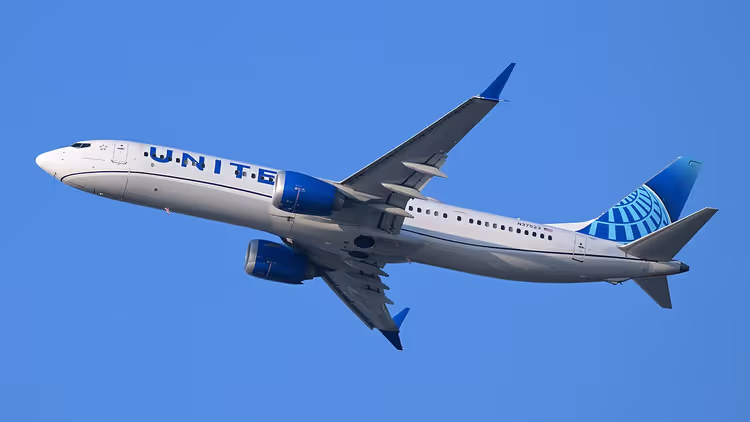
For long distances, a plane saves you an entire day. The US domestic travel market is huge, with American Airlines, Delta, United, Southwest, Alaska, JetBlue, Spirit, and Frontier competing in it. That competition puts pressure on prices, so a domestic flight ticket sometimes costs less than a train on the same route.
The airport network has almost no gaps. Even in a small town you'll find an airfield, and with connections through hubs you can reach virtually any point in the country. The catch: getting to the airport and going through TSA screening on busy days takes several hours, and that time quietly eats up all the speed advantage.
Count connection time separately. If the layover is short, any schedule disruption turns into a night in the terminal. Don't compare ticket prices, compare total door-to-door time: sometimes a train or bus gets you to your destination faster and with less stress.
Flying is convenient for reaching major national parks. For example, to get to Yosemite you fly to San Francisco or Fresno, and to get to Olympic National Park you fly to Seattle.
Trains
 © Han Zheng · CC BY-SAPhoto: Han Zheng, CC BY-SA (https://creativecommons.org/licenses/by-sa/2.0), Wikimedia Commons
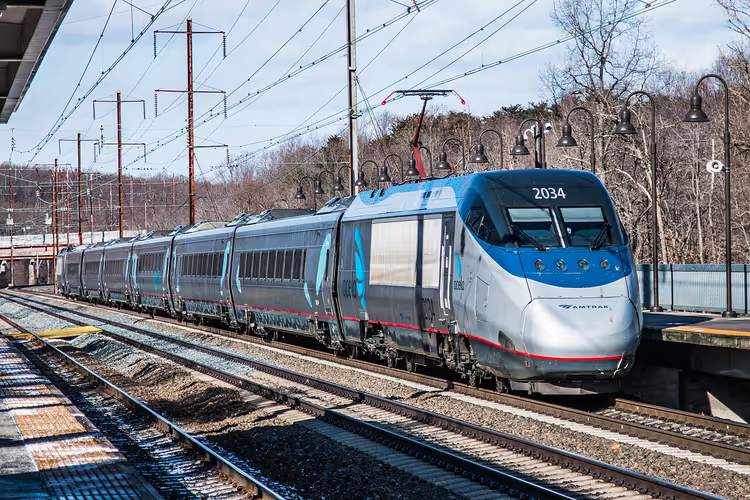
Amtrak remains the only nationwide passenger rail company in the country (amtrak.com). Trains connect major cities, but the network is noticeably sparser than in Europe. On the Boston-New York-Washington line, trains run frequently and are almost always full, while in other regions a route may run once a day.
Train prices are comparable to a plane ticket, and on long routes sometimes higher. In return, you get a roomy seat, a power outlet, and free baggage, and in a sleeper car you also get a bed. The catch: a trip across half the country takes a day or more, so it's not an option for urgent matters.
Book your ticket in advance: around holidays, seats sell out weeks ahead. You can compare train options on Trip.com: the service shows schedules and prices by date.
Bus
 © 4300streetcar · CC BYPhoto: 4300streetcar, CC BY (https://creativecommons.org/licenses/by/4.0), Wikimedia Commons
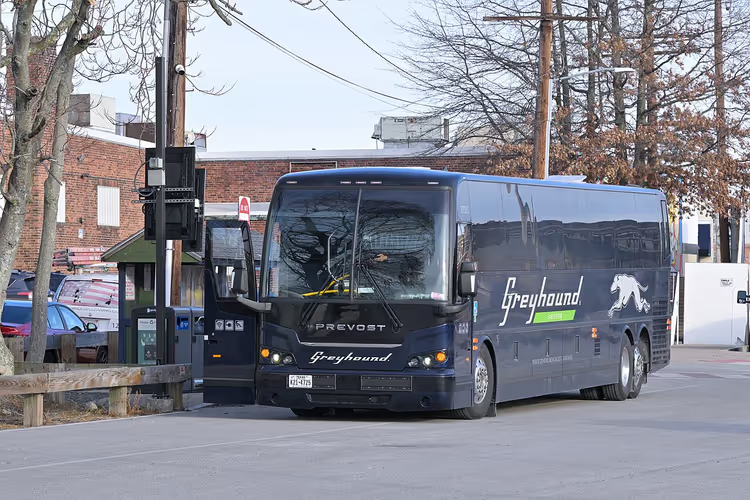
The bus remains the cheapest way to cross the country. Greyhound (greyhound.com), FlixBus (flixbus.com), and Megabus carry passengers between cities, including places with no flights or trains. Greyhound has the widest network of stops, reaching even small towns.
Many departures run overnight, so you save on a hotel. Buses usually have Wi-Fi, power outlets, and a restroom, and baggage is included in the ticket price. The catch: seats are not assigned, so get to the boarding area early to grab a comfortable spot.
The earlier you buy your ticket, the lower the fare. Carriers raise prices as the bus fills up, so booking a few weeks ahead is cheaper. Buy online in the company's app and show the QR code when boarding.
Car rental
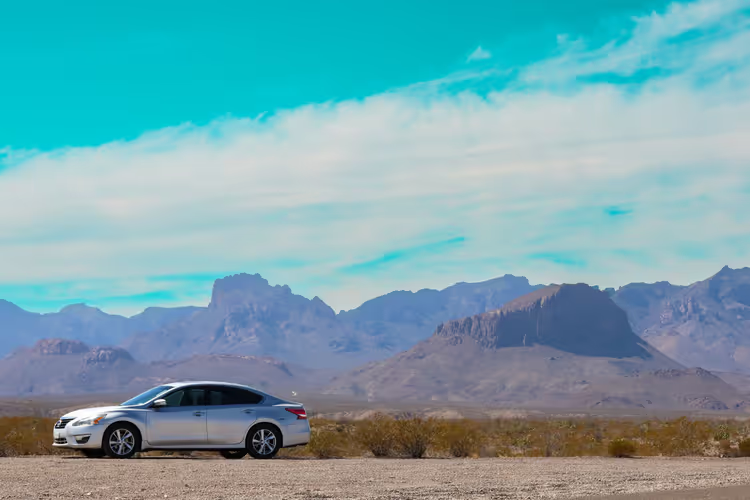
A rental car gives you freedom that trains and buses cannot. You choose your own route, pace, and length of stops, and you can pick up the car in one city and drop it off in another. For national parks, scenic roads, and rural areas, it is the only realistic option.
Rental desks are available at every major airport and main train station. Check in advance whether the company accepts your driver's license and whether a credit card is required for the deposit. Traffic rules vary by state, so review local signs and toll roads.
Toll bridges and highways often charge automatically, and the bill may arrive after your trip. The catch: in big city centers you pay for parking, and rush-hour traffic eats up more time than the subway.
You can easily compare rental car prices by date on DiscoverCars.
Other types of transportation
 © Error46146 at English Wikipedia · CC BYPhoto: Error46146 at English Wikipedia, CC BY (https://creativecommons.org/licenses/by/3.0), Wikimedia Commons
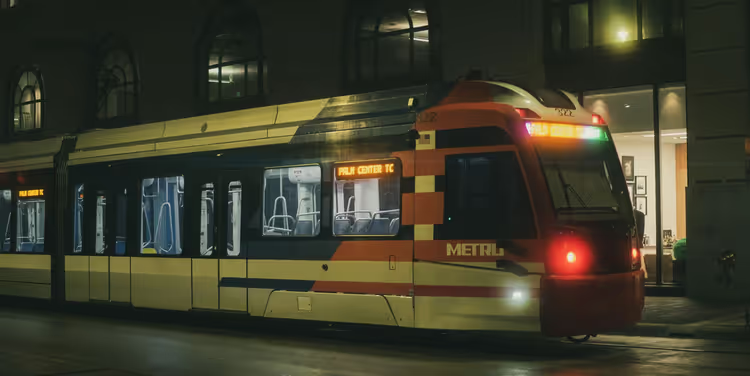
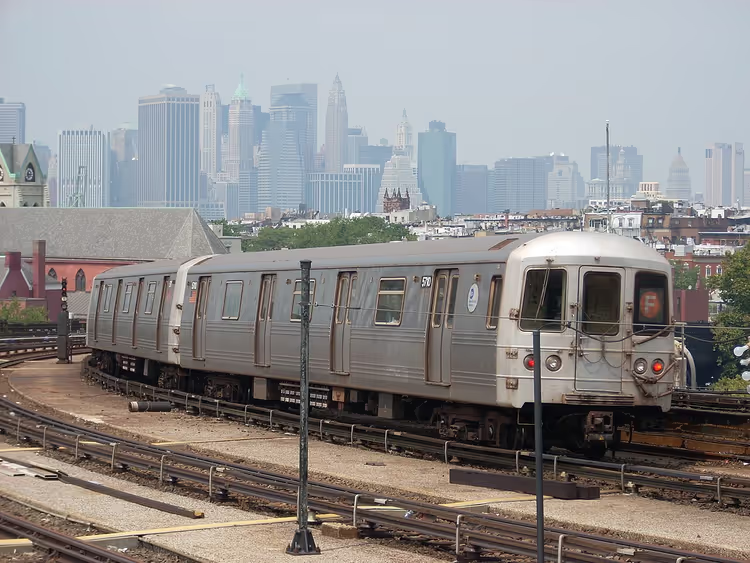
Within cities, you can almost always get by with the subway, tram, or bus. The New York City subway runs around the clock, and in Chicago and Boston commuter rail lines complement it. Taxis and services like Uber (uber.com) and Lyft cover evening routes when public transit runs infrequently.
There are also passenger routes on the water. The Staten Island Ferry in New York is free and doubles as a sightseeing cruise along Manhattan. On the Alaska coast and in the Pacific Northwest, ferries carry passengers along with their cars.
⁉️🤔 Frequently asked questions
Can you travel around the US without a car?
Yes, but with caveats. Between major cities you can get there by plane, Amtrak train, or bus. Getting to national parks and small towns without a car is difficult: there are almost no flights to those places, so you are left with tours and shuttles. Plan your route along major cities if you do not want to rent a car.
What is cheaper in the US: train or bus?
The bus is almost always cheaper. Greyhound, FlixBus, and Megabus sell tickets for little money if you buy in advance, while Amtrak trains on long-distance routes cost as much as plane tickets. The train wins on comfort and speed only on the Boston-New York-Washington corridor. Compare total travel time, not just the price.
Do you need an international driver's license to rent a car?
Many states accept a regular license from your country of residence, but rental companies often ask for an international driving permit as a translation. Bring both documents and a credit card for the deposit. Check age restrictions and young driver surcharges in advance on the company's website.
How long does it take to travel between cities?
It all depends on the distance and the mode of transport. A coast-to-coast flight takes a full day when you factor in getting to the airport. The train takes longer, and the bus can take a day or more. Allow at least one day for the trip and do not schedule two cities back to back on the same date.
How do you buy tickets for transportation in the US?
Planes, trains, and buses are booked online on the carrier's website or app. Taxis are ordered through the Uber and Lyft apps. You do not need to print anything; a QR code on your phone is enough. Book your rental car in advance, otherwise there will be no cars in the class you need left during peak season.
In short: what to book
If you need to cross the country quickly, get a plane ticket. For travel between Boston, New York, and Washington, the Amtrak train is more convenient. When budget matters more than comfort, choose the bus. And for national parks and a flexible route, rent a car.
Find a flight on Kiwi.com right now.

A small editorial team writing guides for independent travel. We travel ourselves, but we haven’t been everywhere, so we check prices, opening hours and how to get there against official sources.