
















Day trips from Milan: 20 lakes, cities and castles
From Milan, you can get to another city in a day and be back by evening.
The only question is where exactly to go. There are dozens of places around Lombardy: medieval towns, alpine lakes, wineries, and an old seaport. Choosing between them often takes more time than the trip itself.
We've put together 20 destinations you can realistically reach in a single day. Trains leave from Milano Centrale, Milano Porta Garibaldi, and Cadorna from early morning, and Trenord gets you to Bergamo in under an hour for €6 (checked on 09/15/2026 on the Trenord website).
Ad: this article contains affiliate links, we earn a commission if you book through them, at no extra cost to you.
How to plan a day trip
💡 In short:
- Trains leave from Milano Centrale, Porta Garibaldi, and Cadorna, with travel times from half an hour to two hours.
- For one day, pick a single destination: a city, a lake, or a wine region, not everything at once.
- Check tickets and opening hours the day before; on weekends trains and museums fill up.
- Lombardy train schedule: 09/2026, checked on the Trenord page for the Milano - Bergamo route.
Milan sits at the center of Lombardy, and for short trips that's more convenient than it seems. Regional trains run almost every hour, and tickets on them are cheaper than high-speed ones. You can leave in the morning, walk around for a few hours, and be back by evening.
The second option is a rental car. It helps where trains are inconvenient: Lake Iseo and Orta San Giulio. Parking near old town centers is paid, so on weekends it's better to arrive at opening time.
Destination | Travel time | Main attraction | Who it's for |
|---|---|---|---|
Bergamo | under an hour | Città Alta and the funicular | medieval history lovers |
Verona | just over an hour | Arena di Verona and Juliet's house | those coming for architecture |
Sirmione | about an hour and a half | Scaliger Castle on Lake Garda | those who want a fortress by the water |
Iseo | about two hours | the lake and Franciacorta wineries | wine enthusiasts |
Genoa | one and a half to two hours | the old port and palazzi | sea lovers |
Turin | just over an hour | royal residences | those interested in Savoy history |
Bologna | about two hours | Piazza Maggiore and the towers | foodies |
Padua | about two hours | frescoes and Prato della Valle | painting lovers |
Venice | two and a half hours | canals and St. Mark's Square | first-time visitors to Venice |
Stresa | about an hour and a half | Isola Bella and the Borromean Islands | those who want palaces on a lake |
Luino | an hour and a half | the Lake Maggiore waterfront | those looking for a quiet town |
Isola dei Pescatori | boat from Stresa | fishermen's houses and Chiesa di San Vittore | those who want a car-free island |
Orta San Giulio | about an hour by car | San Giulio island and Lake Orta | those traveling by car |
Lecco | about an hour | the Lake Como waterfront | mountain and water lovers |
Nesso | about two hours | the waterfall and arched bridge | those who want nature |
Como | about an hour | the Duomo and Villa Olmo | first-time lake visitors |
Varenna | about an hour | Castello di Vezio and Fiumelatte | those who want views of Como |
Lugano | just over an hour | the waterfront and Santa Maria degli Angioli | those open to Switzerland |
Brescia | about forty minutes | the forum and Piazza della Loggia | those coming for Roman history |
Locarno | 3.5-4 hours with a transfer | Piazza Grande and the funicular | those who want a panoramic route |
1. Bergamo
 © RiccardoT · CC BYPhoto: RiccardoT, CC BY (https://creativecommons.org/licenses/by/3.0), Wikimedia Commons
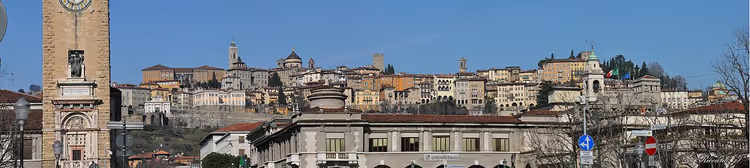
Bergamo is divided into two cities: the business-oriented Lower Town and the medieval Upper Town, Città Alta, on a hill. The Trenord train from Milano Centrale takes under an hour, and a ticket costs €6 (as of: 09/2026, Trenord fares). A funicular takes you from the Lower to the Upper Town, so you won't have to walk uphill.
The main square of Città Alta, Piazza Vecchia, is surrounded by palazzi. Here you'll find the Contarini fountain, Palazzo della Ragione, and the Torre del Campanone. Through an arch you come out to the Cappella Colleoni and the cathedral, the Duomo, with the Basilica di Santa Maria Maggiore nearby. A second funicular takes you up to Castello di San Vigilio, where the viewpoint offers views of the Alps.
In the Lower Town, stop by the Accademia Carrara: it houses paintings from the Lombard and Venetian schools. You can have lunch at one of the city's many restaurants.
- How to get there: Trenord train from Milano Centrale, under an hour, then the funicular to Città Alta.
- Cost: train ticket from Milan €6 (as of: 09/2026, Trenord).
- Who it's for: those who want an old town and a panorama without a long journey.
2. Verona
 © Maurizio Moro5153 · CC BY-SAPhoto: Maurizio Moro5153, CC BY-SA (https://creativecommons.org/licenses/by-sa/4.0), Wikimedia Commons
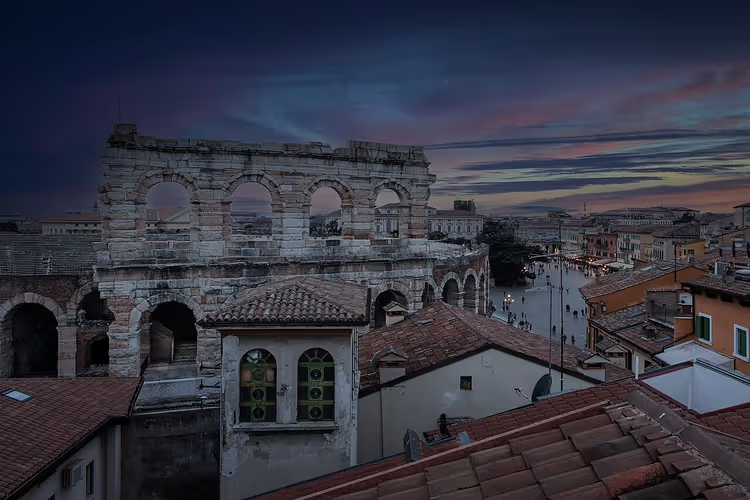
The high-speed Italo train from Milano Centrale gets you to Verona in just over an hour, with tickets starting at €8.90 (as of: 09/2026, Italo). It's worth spending a full day here: the city is compact, buses run from the station to the center, and the old town is walkable.
The main landmarks are clustered close together. There's the Arena di Verona, an ancient amphitheater that still hosts opera performances. Next to it stands Juliet's house with its balcony and a crowd in the courtyard. Further on is Piazza delle Erbe with its market and the Palazzo della Ragione.
North of the center you'll find Castelvecchio on the banks of the Adige River: the castle houses a museum of painting and sculpture. Across the bridge from it stands the Basilica di San Fermo with its striped facade and frescoes inside. If you still have energy, climb the hill to Giardino Giusti: from there you get a view of the whole city and the river.
- How to get there: Italo train or regional Trenitalia from Milano Centrale, just over an hour.
- Cost: Italo ticket from €8.90 (as of 09/2026, Italo).
- Who it's for: those coming for the ancient Arena and Renaissance palaces.
- The catch: the square by Juliet's house is packed all day, and it's hard to photograph the wall with "letters" without people in the frame.
3. Sirmione
 © Arne Müseler · CC BY-SAPhoto: Arne Müseler, CC BY-SA (https://creativecommons.org/licenses/by-sa/3.0/de/deed.en), Wikimedia Commons
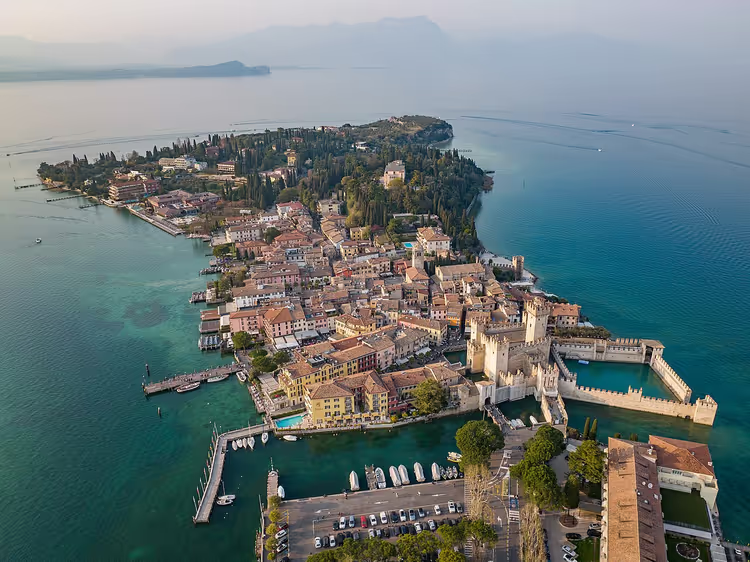
Sirmione sits on a narrow spit of land that juts into Lake Garda. From Milan you take a train to Desenzano del Garda-Sirmione station, and from there a bus or boat takes you to the town. The trip takes about an hour and a half.
The first thing you see is the Scaliger Castle, Rocca Scaligera. The crenellated walls and towers of the fortress are open to visitors: you can walk along the walls, and the observation deck offers a view of the entire lake. At the entrance to the town there's a thermal spring with a sulfur smell that locals come to as well.
Beyond that begins the pedestrian street Corso Vittorio Emanuele with its shops and cafes. Deeper in the town stands the Chiesa di Santa Maria Maggiore with frescoes, and right by the water lie the ruins of the Grottoes of Catullus, a Roman villa in an olive grove. There's an admission fee, with tickets in the low double digits.
- How to get there: train to Desenzano del Garda-Sirmione, then bus or boat, about 15 minutes.
- Cost: the Grottoes of Catullus and the castle charge separate admission, check exact prices on site.
- Who it's for: those who want a fortress, water, and ancient ruins in one place.
- The catch: in summer the narrow streets of the old center get crowded, and parking lots at the entrance fill up by morning.
Hotels in Sirmione on Trip.com
4. Lake Iseo
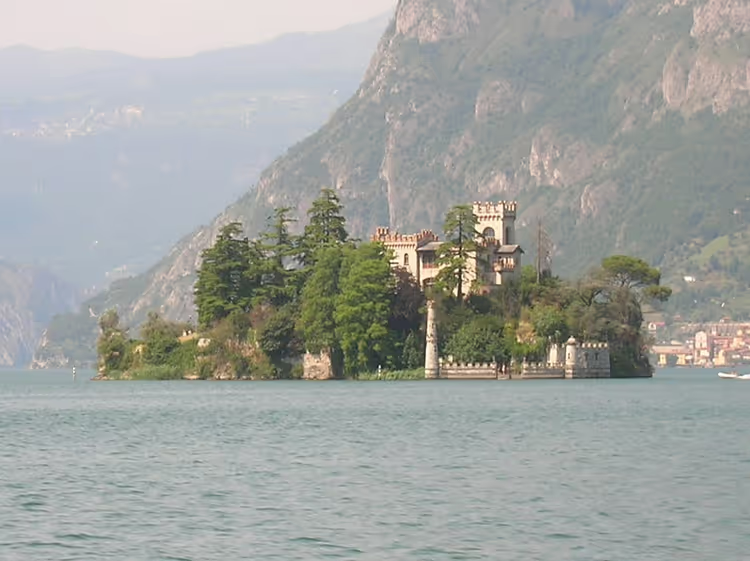 © Unknown author · CC BY-SAPhoto: Unknown author, CC BY-SA (http://creativecommons.org/licenses/by-sa/3.0/), Wikimedia Commons
Lake Iseo lies between Bergamo and Brescia. By car you can circle it in a day, and by train you get there with a change in Brescia. The ring of towns around the lake is short: Iseo, Lovere, Sarnico, and Pisogne sit almost right next to each other.
Lovere surprises you with houses that have frescoes on their facades and bright shutters. In Sarnico you walk through medieval quarters and see art nouveau villas. Pisogne is lush with greenery, and the houses here are covered in wild grapevines.
The main reason to come here in spring and fall is wine. Lake Iseo and neighboring Franciacorta produce the sparkling wine served throughout Lombardy. At a winery you can book a tasting with glasses and snacks; check the price on the producer's website.
- How to get there: about an hour by car, by train with a change in Brescia.
- Cost: a tasting at a winery costs in the upper double digits.
- Who it's for: those who want a lake, wine, and short drives between towns.
- The catch: without a car you'll have to work around infrequent buses between towns.
5. Genoa
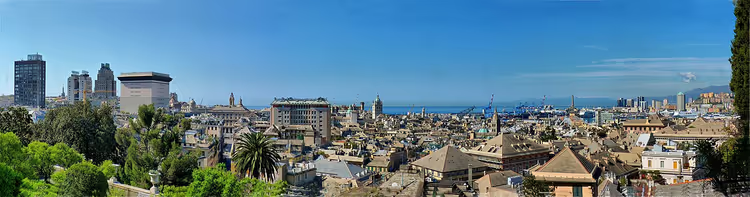 © patano · CC BY-SAPhoto: patano, CC BY-SA (https://creativecommons.org/licenses/by-sa/3.0), Wikimedia Commons
Genoa is the old seaport of Liguria and the birthplace of Columbus. The train from Milan takes one and a half to two hours, and by lunchtime you're standing on the waterfront. The first stop on the route is the port with its huge Aquarium, a replica of the sailing ship Neptune, and a panoramic elevator.
From the port you climb up to Piazza Caricamento. Here stands Palazzo San Giorgio with frescoes on its facade, and along Via San Lorenzo you reach the cathedral of the same name, Cattedrale di San Lorenzo. Its striped facade of black and white stone can't be confused with any other church in Italy.
Further on, the center opens onto Piazza De Ferrari with its fountain and palaces around the perimeter. Nearby lies the quarter of palaces where the Genoese aristocracy lived, and through the Porta Soprana gate you can see Columbus's house. One day is enough to see everything, but the Aquarium museum takes a separate two to three hours.
- How to get there: Trenitalia or Frecciarossa train from Milano Centrale, one and a half to two hours.
- Cost: a train ticket from Milan in the lower double digits.
- Who it's for: those who want sea, port, and palaces in one day.
- The catch: the port and the Aquarium area are crowded with tourists; the line is shorter at opening time.
6. Turin
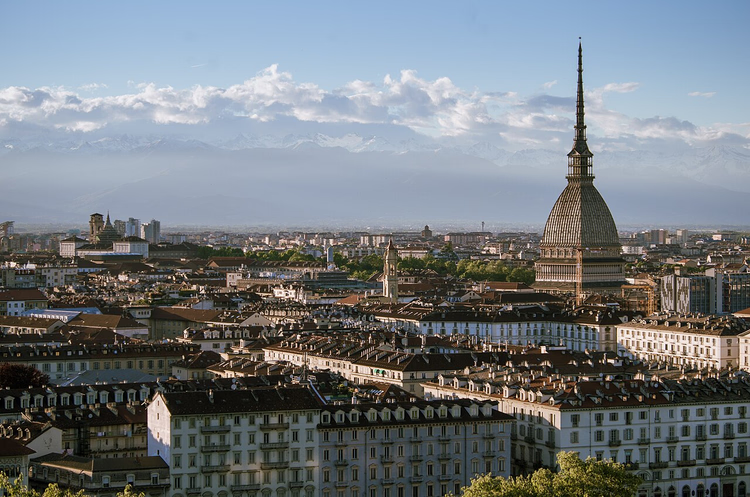 © Francesco Manzari · CC BY-SAPhoto: Francesco Manzari, CC BY-SA (https://creativecommons.org/licenses/by-sa/2.0), Wikimedia Commons
Turin is the capital of Piedmont and the former capital of the Kingdom of Savoy. Italo and regional Trenitalia trains run from Milano Centrale in just over an hour, so the city is easy to see in one day. The center is compact, and you walk between the squares.
Start at Piazza Castello. Here stand Palazzo Madama, the royal theater Teatro Regio, and the Armeria Reale with its weapons collection. Across Via Palazzo di Città you can see Chiesa di San Lorenzo, the court church of the House of Savoy.
Just beyond the square begins Piazza Reale with Palazzo Reale. Inside, dozens of rooms with baroque decor are open, and gardens are laid out behind the palace. Nearby stands Duomo di Torino, where the Shroud of Turin is kept in an attached chapel. It is rarely displayed, but the Cappella della Sacra Sindone itself can be seen through glass.
Toward the Po River stands Castello del Valentino, a former country residence. If you have time left, walk to the embankment and climb the hill to Chiesa di Santa Maria del Monte dei Cappuccini: from there you get a panorama of the city and the Alps.
- How to get there: Italo or a regional train from Milano Centrale, just over an hour.
- Cost: a train ticket from Milan in the lower double digits.
- Who it's for: those interested in royal residences and baroque.
- The catch: Palazzo Reale and the Cappella della Sacra Sindone museum run on schedules, and some rooms are closed on Mondays.
7. Bologna
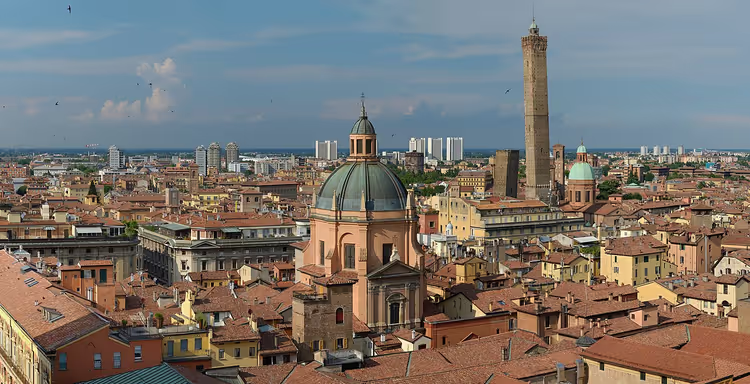 © Ввласенко · CC BY-SAPhoto: Ввласенко, CC BY-SA (https://creativecommons.org/licenses/by-sa/3.0), Wikimedia Commons
Bologna is the center of Emilia-Romagna, the land of parmesan, mortadella, and tagliatelle. The train from Milan takes about two hours, and you can also get there by bus. Arriving in the morning, you have time for both the viewpoint and a long lunch.
The heart of the city is Piazza Maggiore with Palazzo d'Accursio and the bell tower. On the square stands Fontana del Nettuno, and nearby rises the unfinished facade of Basilica di San Petronio. Beyond that begins the district of porticoes, under whose roofs you can walk all the way to the outskirts.
A must-see is Due Torri. Torre degli Asinelli is noticeably taller than the neighboring Torre della Garisenda, which has a pronounced lean. The climb to the top is open and costs a small amount, but the staircase is narrow, so it's better to arrive at opening time. Also worth seeing in the city are the Santo Stefano complex with several churches and Casa Isolani in the courtyard.
- How to get there: train or bus from Milan, about two hours.
- Cost: climbing Torre degli Asinelli costs in the lower double digits.
- Who it's for: those who combine sightseeing with food.
- The catch: in summer Piazza Maggiore has almost no shade, and the porticoes are packed at lunchtime.
8. Padua
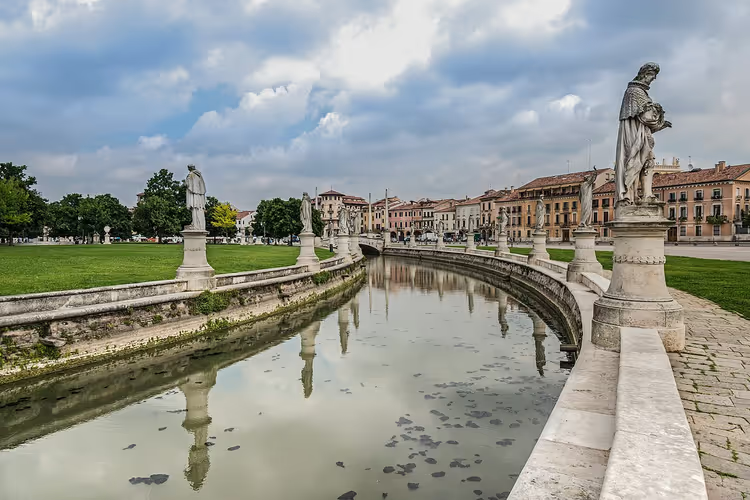 © Didier Descouens · CC BY-SAPhoto: Didier Descouens, CC BY-SA (https://creativecommons.org/licenses/by-sa/4.0), Wikimedia Commons
Padua is older than Milan and is famous for Italy's oldest university. Trains from Milano Centrale take about two hours, and the ticket costs more than to Verona. The city's layout is flat, and the center is threaded with kilometers of covered porticoes.
The main reason to come here is the Cappella degli Scrovegni with Giotto's frescoes. It is one of the key cycles in European art, but entry is limited to small groups and only with a timed ticket. Book your slot in advance, especially on weekends.
Nearby lies Prato della Valle, one of the largest squares in Europe. It is surrounded by statues of notable residents and visitors to the city, and a canal with a green island runs through the center. From here you can walk to Piazza dei Signori with the Palazzo del Bo, home to the university, and to the Duomo with its baptistery.
- How to get there: train from Milano Centrale, about two hours.
- Cost: entry to the Cappella degli Scrovegni is by timed slots only; check the exact price on the official website.
- Who it's for: those coming for Giotto's frescoes and a quiet old center.
- The catch: you can't get into the chapel without a reservation, and the group spends only a few minutes inside.
9. Venice
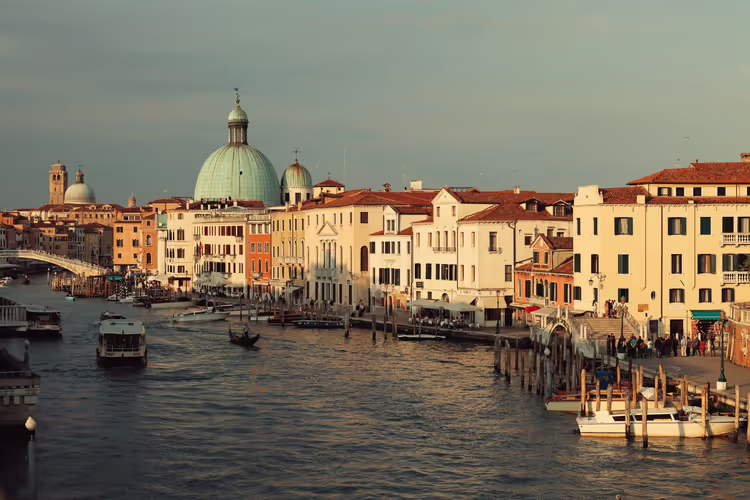
Venice is two and a half hours from Milan by train. Stepping out of Santa Lucia station, you immediately see the Ponte degli Scalzi and the first canal. Beyond that, the city opens up only on foot and by water: there are no cars here.
Start with a vaporetto ride along the Grand Canal. Palaces of noble families line its banks, and the route leads to St. Mark's Square. On the square you'll find St. Mark's Basilica with its mosaics, the Doge's Palace, and the tall bell tower, which is worth climbing for the panorama of the lagoon.
From the square, walk to the Riva degli Schiavoni and continue across the Rialto Bridge. Beyond it begins the Rialto Market, where fish and vegetables are sold in the morning. If you're in the mood for art, stop by the Galleria dell'Accademia: the collection spans several centuries of Venetian painting. The city has more than a hundred churches, so in one day you'll only pick a few.
- How to get there: train from Milano Centrale to Venezia Santa Lucia station, two and a half hours.
- Cost: vaporetto rides and museum entries are paid separately; check prices on site.
- Who it's for: those visiting Venice for the first time who want to see the highlights without rushing.
- The catch: in summer, St. Mark's Square and the Rialto Bridge are extremely crowded; it's best to arrive at attractions when they open.
10. Stresa
 © Gianni Careddu · CC BY-SAPhoto: Gianni Careddu, CC BY-SA (https://creativecommons.org/licenses/by-sa/4.0), Wikimedia Commons
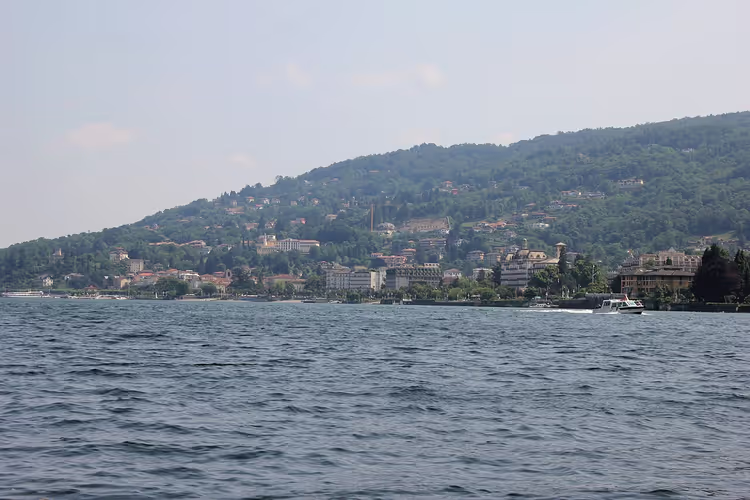
Stresa sits on the shore of Lake Maggiore, at the foot of the Alps. A Trenitalia regional train from Milano Centrale takes about an hour and a half, with the first departure leaving early in the morning. From the station, streets lead down to the lake past old villas and hotels.
The main reason to come here is the Borromean Islands. A boat takes you to Isola Bella with Palazzo Borromeo and its terraced gardens.
Stresa itself is cozy and compact: a promenade, benches, views of the water and mountains. In summer, a boat station operates, offering lake excursions. If you want quiet, take a boat to Isola Madre with its botanical garden, where there are noticeably fewer people.
- How to get there: Trenitalia regional train from Milano Centrale, about an hour and a half.
- Cost: the boat and entry to Palazzo Borromeo are paid separately, with a ticket in the upper double-digit range.
- Who it's for: those who want palaces, gardens, and Alpine views.
- The catch: boats to the islands run on a schedule.
11. Luino
 © Flodur63 · CC BY-SAPhoto: Flodur63, CC BY-SA (https://creativecommons.org/licenses/by-sa/4.0), Wikimedia Commons
Luino is a small town on Lake Maggiore right at the Swiss border. The train from Milano Porta Garibaldi takes about an hour and a half, so it's convenient to come here for half a day. The town retains traces of Swiss and Austrian influence, and it shows in the architecture.
The main spot is the long lakeside promenade. From here you get views of the lake and the mountains on the opposite shore. In summer, boat trips are offered at the pier, while in winter the promenade is almost empty and well suited for a quiet walk.
In the center stands Chiesa del Carmine, and if you're here on a weekend, catch the flea market. You can have lunch at the family-run restaurant Al Cantinone: it has been operating here for over a century, with a menu full of fish dishes and pasta.
- How to get there: train from Milano Porta Garibaldi, about an hour and a half.
- Cost: a train ticket from Milan in the lower double-digit range.
- Who it's for: those looking for a quiet lakeside town without crowds.
- The catch: on weekdays many shops and some restaurants are closed; it's liveliest on weekends.
12. Isola dei Pescatori
 © Unknown author · CC BY-SAPhoto: Unknown author, CC BY-SA (http://creativecommons.org/licenses/by-sa/3.0/), Wikimedia Commons
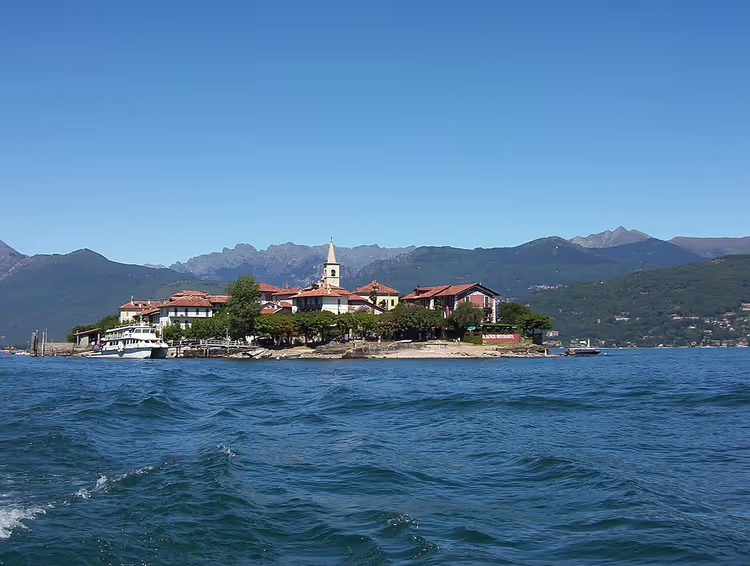
Isola dei Pescatori is a tiny patch of land in the middle of Lake Maggiore. Boats and ferries come here from Stresa, Luino, and other lakeside towns, with the trip taking just a few minutes. There are no cars on the island, so it's quiet here.
The island is taken up by fishermen's houses, restaurants, and small shops. There are few permanent residents, but during the day the island comes alive. Restaurants serve dishes made from fresh fish, and souvenir shops sell handmade goods.
The main landmark is Chiesa di San Vittore. Inside, frescoes and an old altar have been preserved, and the church itself has been known since ancient times. You can walk around the island in half an hour, so it's easy to combine with Isola Bella in one day.
- How to get there: boat or ferry from Stresa, Luino, and other lakeside towns.
- Cost: the boat ride is paid separately, with a round-trip ticket in the lower double-digit range.
- Who it's for: those who want an island walk between two villas on the lake.
- The catch: there's little to do on the island for more than a couple of hours; life quiets down in the evening.
Hotels on Lake Maggiore on Trip.com
13. Orta San Giulio
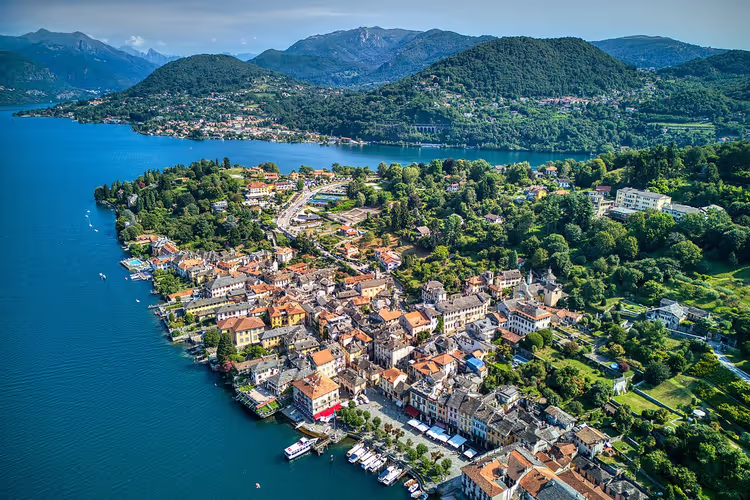 © Hagai Agmon-Snir حچاي اچمون-سنير חגי אגמון-שניר · CC BY-SAPhoto: Hagai Agmon-Snir حچاي اچمون-سنير חגי אגמון-שניר, CC BY-SA (https://creativecommons.org/licenses/by-sa/4.0), Wikimedia Commons
Orta San Giulio sits on the small Lake Orta, which tourists reach far less often. The most convenient way to get here is by car: no transfers, and the drive takes about an hour. Buses and trains also run, but with transfers and noticeably longer travel times.
The main goal of the trip is the island of San Giulio. It has just one street, Via del Silenzio, known as the Way of Silence. Every building is marked with a plaque bearing a philosophical saying. It's not the island that's on the UNESCO list, but the Sacro Monte near the town.
Some buildings on the island are currently closed for restoration, including the Bishop's Palace and the Benedictine monastery. The churches from the 16th to 18th centuries, the monastery library, and the Basilica of San Giulio are open. According to legend, the Greek saint Julius crossed over here on his cloak and drove out dragons, as told in the frescoes on the walls. Half a day is enough for the town and the island, after which you can drive along the eastern shore of the lake.
- How to get there: about an hour by car, or by public transport with transfers.
- Cost: entry to the basilica is free; some buildings are closed for restoration.
- Who it's for: those who want a quiet lake, an island, and minimal tourists.
- The catch: getting there without a car is inconvenient, and part of the island is closed for restoration.
Hotels on Lake Orta on Trip.com
14. Lecco
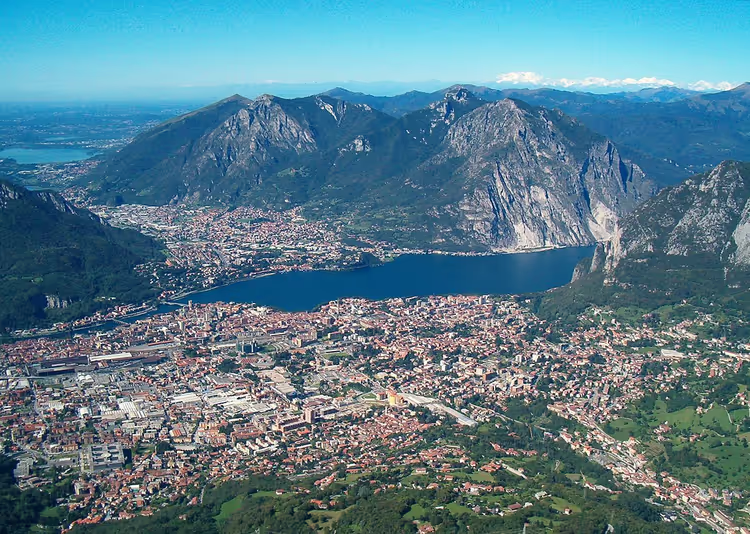
Lecco stands where Lake Como flows into the Adda River. The city is surrounded by cliffs, which is why climbers train here, and local masters are called the Spiders. The train from Milano Centrale takes about an hour, but often with a transfer.
The old center is built mainly in the neoclassical style. Its author, architect Giuseppe Bovara, left the city even streets and squares. The main square, Piazza XX Settembre, brings together Chiesa di San Nicolò with its tall bell tower and Palazzo delle Paure, which now houses a museum.
From there, it's worth walking up the riverside promenade. From here you can see the mountains, and several cafes operate by the water. If you want adventure, take the cable car and head higher into the mountains: hiking routes of varying difficulty are laid out above Lecco.
- How to get there: train from Milano Centrale, about an hour, often with a transfer.
- Cost: a train ticket from Milan in the lower double-digit range.
- Who it's for: those who want a lake, mountains, and a short trip.
- The catch: the old center has few ancient castles and palaces; the main draw here is nature.
15. Nesso
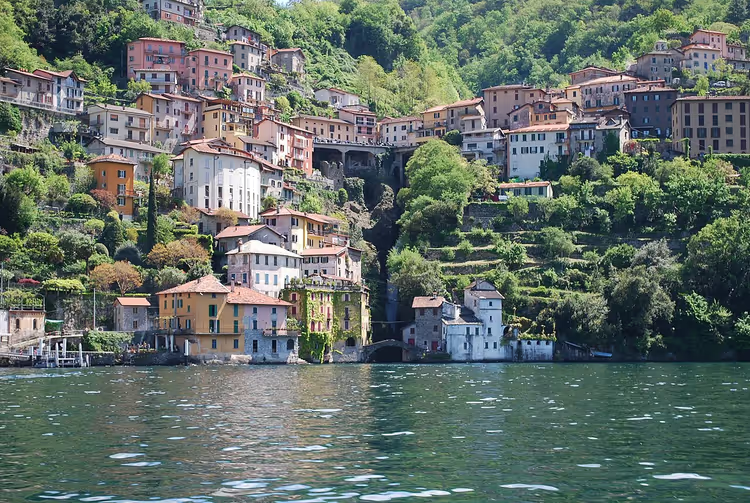 © Civvì · CC BY-SAPhoto: Civvì, CC BY-SA (https://creativecommons.org/licenses/by-sa/4.0), Wikimedia Commons
Nesso, a quiet little town on the eastern shore of Lake Como. First you take a train to Como San Giovanni, then you get on a bus and forty minutes later get off at the Nesso stop. The trip takes about two hours, but the views are worth it.
The most famous spot is the Orrido di Nesso gorge with its waterfall. The water drops into a narrow canyon, and a short trail leads to the viewing platform. An old arched bridge, attributed to the Roman era, also stands here.
In the town itself, the Chiesa di San Martino with its bell tower, the Chiesa di Santa Maria in Vico with its paintings, and the baroque Chiesa dei Santi Pietro e Paolo are all worth seeing. A little further on is the Masero cave, an unusual geological formation. After the walk, it's nice to have lunch at one of the local restaurants serving fish dishes.
- How to get there: train to Como San Giovanni, then bus C30, about two hours total.
- Cost: the bus ticket is paid separately, priced in the low double digits.
- Who it's for: those who want a waterfall, a gorge, and a village without tourist crowds.
- The catch: you can't get there without switching to a bus, and the trail to the waterfall is slippery in places.
Hotels on Lake Como on Trip.com
16. Como
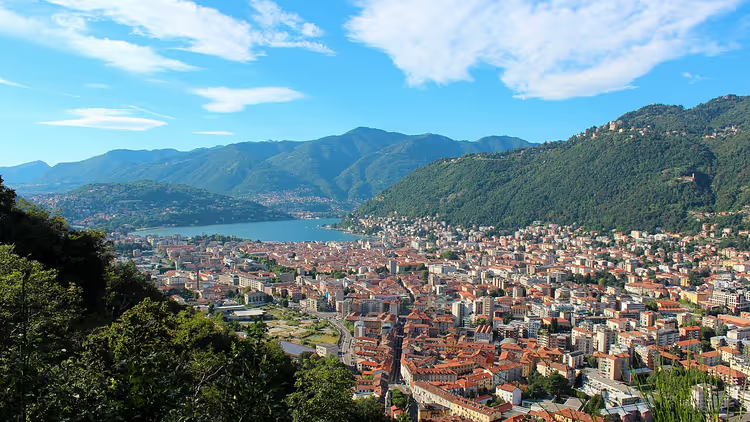
Como, a city on the southern shore of the lake of the same name. Trains leave from several Milan stations, the trip takes about an hour, and a ticket costs less than ten euros. The city is easy to see in half a day, and you can give the second half to the lake.
Como's center is built around the Duomo di Como and the Basilica of Sant'Abbondio. The cathedral is beautiful both outside and inside, and the basilica is worth a separate walk, as it stands on the edge of the old town. Near the cathedral you'll find the Palazzo Broletto and the Museo Voltiano, dedicated to the city's native son Alessandro Volta.
Further on, the walk leads to the lakeside promenade and Villa Olmo. Boat tours on the lake start from here: a short route runs along the shore past the villas. If you want to see more, buy a ticket to Cernobbio or beyond, but then your day will end on the water rather than in the city.
- How to get there: train from Milan stations, about an hour.
- Cost: train ticket under ten euros, the lake boat is paid separately.
- Who it's for: those visiting Lake Como for the first time who want to combine the city and the water.
- The catch: in summer, a line forms at the pier on the promenade for the boats, so buy your ticket in advance.
17. Varenna
 © Ashley Pomeroy · CC BY-SAPhoto: Ashley Pomeroy, CC BY-SA (https://creativecommons.org/licenses/by-sa/3.0), Wikimedia Commons
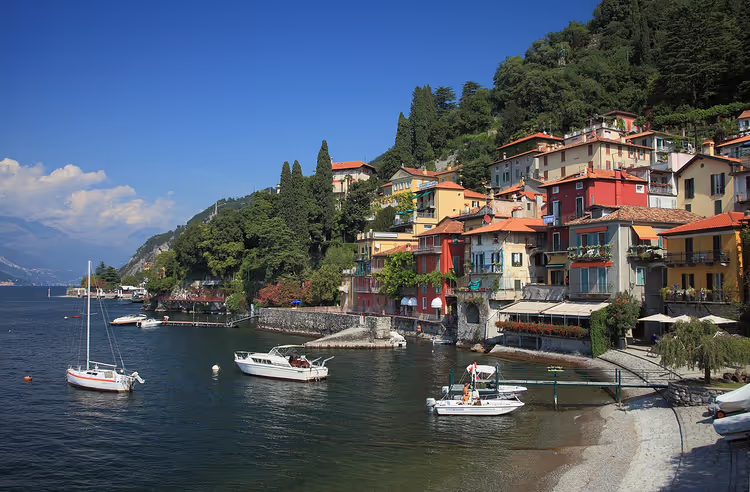
Varenna sits on the eastern shore of Lake Como, right at the water's edge. The train from Milano Centrale takes about an hour, and a ticket costs less than ten euros. Locals have quarried marble here for centuries, which is said to explain the town's character.
Varenna's houses, like those in Venice, come right up to the water, and boats moor at the doorstep. Above the town stands Castello di Vezio: a tower and part of the fortifications remain from the original walls. You climb up via a drawbridge and enjoy the lake views, and next to the castle there's a flower garden.
Further down the shore you'll find Villa Monastero and Villa Cipressi with gardens you can visit by ticket. In the center stands Chiesa di San Giorgio. And don't miss Fiumelatte, Italy's shortest river: it runs down to the lake for less than three hundred meters.
- How to get there: train from Milano Centrale, about an hour.
- Cost: train ticket under ten euros, villa gardens charge a separate fee.
- Who it's for: those who want Lake Como views and an old town by the water.
- The catch: few parking spots in the center, and the waterfront promenade is short.
18. Lugano
 © Aconcagua · CC BY-SAPhoto: Aconcagua, CC BY-SA (https://creativecommons.org/licenses/by-sa/3.0), Wikimedia Commons
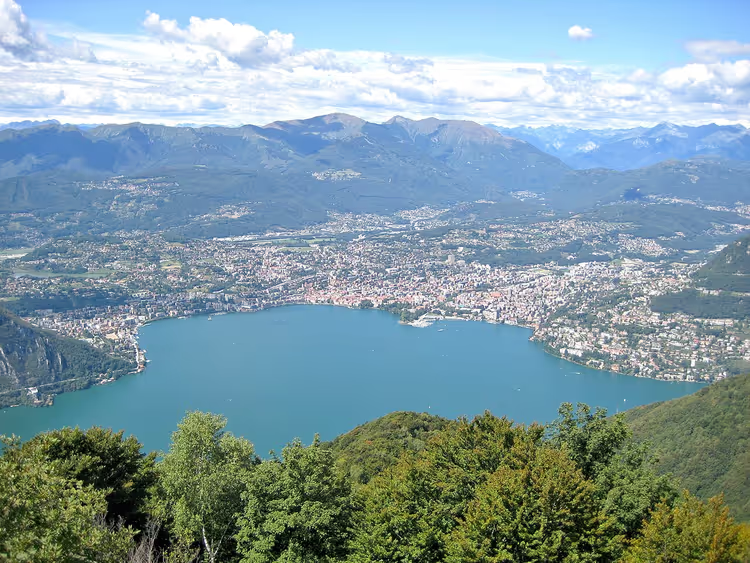
Lugano is already in Switzerland, on the shore of its own lake and surrounded by the Alps. The train from Milan takes a little over an hour, and the ticket costs more than within Italy because it's a different country. The city speaks Italian, so there's no language barrier.
Start with the lakeside promenade under the plane trees. Swans, flower beds, and mountain views make this walk a must. The city's parks follow one after another, and cafes line the water.
The city has a cantonal art museum with works by Italian-Swiss masters. Be sure to visit Chiesa di Santa Maria degli Angioli: it houses a fresco by Luini, a student of Leonardo. Nearby stands Chiesa di San Rocco with an altarpiece and frescoes. Lunch is cheaper at Italian restaurants than at Swiss eateries along the waterfront.
- How to get there: train from Milano Centrale, a little over an hour.
- Cost: train ticket costs more than within Italy, and city prices are higher than Italian ones.
- Who it's for: those willing to take a short trip to Switzerland for the lake and the Alps.
- The catch: prices in cafes and shops are noticeably higher than in Italian towns on the lake.
19. Brescia
 © This Photo was taken by Wolfgang Moroder . Feel free to use my photos, but please mention me as the author and send me a · CC BY-SAPhoto: This Photo was taken by Wolfgang Moroder . Feel free to use my photos, but please mention me as the author and send me a, CC BY-SA (https://creativecommons.org/licenses/by-sa/3.0), Wikimedia Commons
Brescia is older than Milan and preserves traces of the Roman, Lombard, and later eras. The train from Milano Centrale takes about forty minutes, so you can go either in the morning or after lunch. Better to leave early: the city is large, and you need a full day to see it.
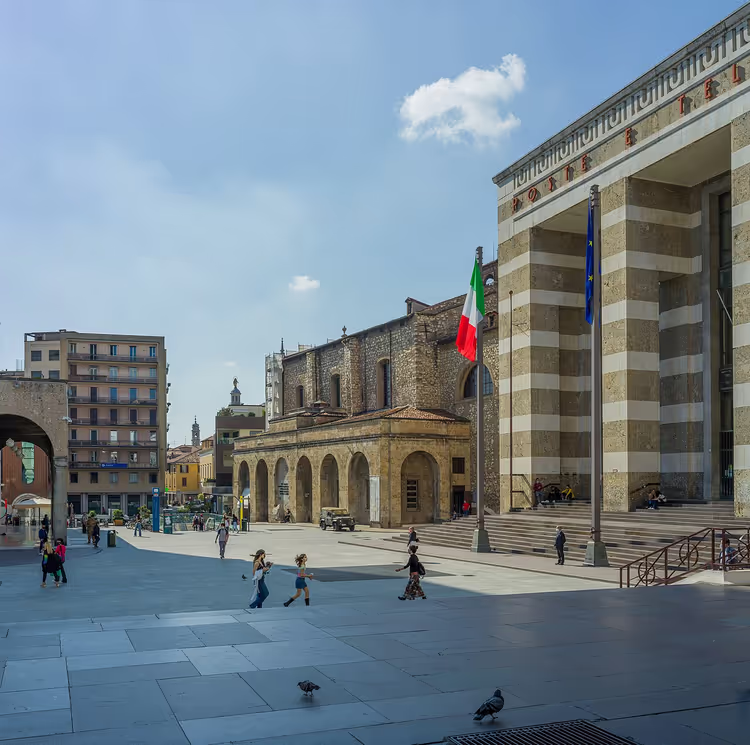
The old town is bounded by boulevards along its perimeter. In the western part rises the Cidneo Hill with Castello di Brescia and a park around it. From there, Via Gramsci leads to Piazza della Vittoria, designed in the 1930s. Here stands Palazzo delle Poste with its two towers.
Nearby lies Piazza della Loggia with Renaissance buildings from the 16th century. Palazzo della Loggia now houses the city hall, and across from it rises the building with the clock tower Torre dell'Orologio: metal figures strike the bell every hour. In one day you can cover both the hill and the squares.
The Roman forum of Brescia, the theater, and the capitol are on the same hill, next to the castle. This makes the city convenient for those interested in antiquity: the monuments sit close together and are connected by pedestrian streets. After sightseeing, it's worth stopping at one of the restaurants near Piazza della Loggia.
- How to get there: train from Milano Centrale, about forty minutes.
- Cost: train ticket from Milan in the low double digits.
- Who it's for: those coming for Roman history and open-air museum hours.
- The catch: the sights are spread across the hill and the center, so you'll do a lot of walking in a day.
20. Locarno
 © scudici · CC BY-SAPhoto: scudici, CC BY-SA (https://creativecommons.org/licenses/by-sa/3.0), Wikimedia Commons
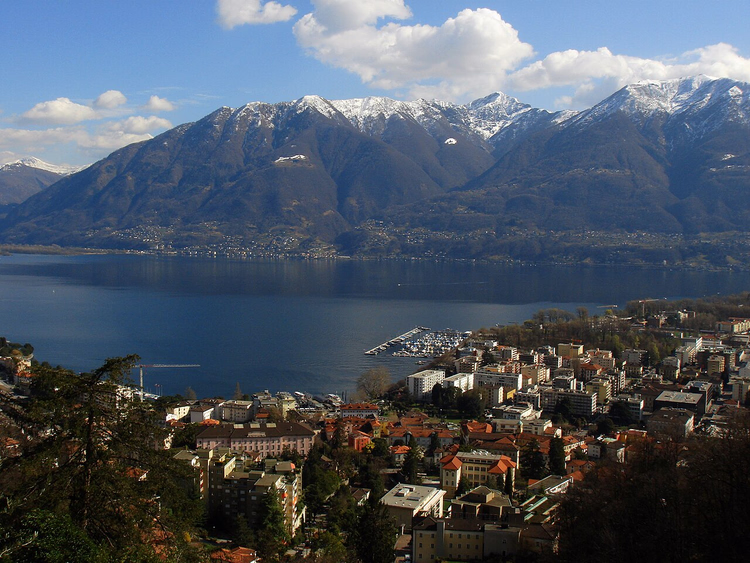
Locarno is a Swiss town on Lake Maggiore and the endpoint of a panoramic railway. The journey involves a transfer, but that's part of the trip: trains from Milan go to Domodossola, and from there the mountain route through Centovalli begins.
Trains from Milan depart frequently, with the last service in the evening, and the panoramic line runs on the schedule posted at vigezzianacentovalli. In summer you can return by ferry to Stresa and then take a train from there: that adds one more lake stop to your route.
In Locarno itself, the main square, Piazza Grande, serves as the meeting point: arcades, cafes, and pizzerias. To the west, Castello Visconteo houses an archaeological museum with finds from ancient Rome. You reach the church of Madonna del Sasso on foot or by funicular: it stands on a cliff above the city. In the center, it's worth stopping at Casa Rusca with its picture gallery, and ending the day with a stroll along the flower-lined waterfront.
- How to get there: train to Domodossola with a transfer to the panoramic line, about 3.5-4 hours.
- Cost: panoramic line ticket in the high double digits.
- Who it's for: those who want a panoramic route, a lake, and a Swiss town.
- The catch: you can't get there without a transfer, and the return ferry runs only from April to October.
⁉️🤔 Frequently asked questions
Where to go from Milan for one day without a car?
The easiest options are places where the station is right next to the center. That's Bergamo, Como, Varenna, Brescia, and Padua: trains take from half an hour to two hours, and you can walk from the station to the sights. For Lake Como and Lake Maggiore, buy tickets in advance: morning services on weekends fill up fast.
Is Venice worth a day trip?
Yes, if you're ready for a two-and-a-half-hour journey each way. Take the first train out, and from Santa Lucia station head straight to St. Mark's Square and the Rialto Bridge. Take an evening train back, and you'll have a full day without an overnight stay in an expensive city.
Which to choose, Lake Como or Lake Maggiore?
Como is closer and faster: the train from Milan takes about an hour, and once there you have a town with a cathedral and boats. Maggiore is farther, but it gives you Stresa, Isola Bella, and the Borromean Islands with a palace and gardens. If you're short on time, choose Como; if you want palaces, go to Maggiore.
Do you need to buy museum tickets in advance?
Yes, if it's the Cappella degli Scrovegni in Padua, the Grottoes of Catullus in Sirmione, or the climb up Torre degli Asinelli in Bologna. Those admit visitors by time slots or in small groups. Train tickets are also better bought the day before: on weekends prices are higher and seats sell out.
Can you fit two cities into one day?
You can, but only ones close to each other. Bergamo and Brescia pair well, as do Como and Varenna on the same lake, and Stresa and Isola dei Pescatori. But Venice and Padua are better not combined in one day: the travel will eat four hours, leaving only two for each city.
Map of day trips from Milan
Where to go from Milan for 1 day
Places on the map
- 1Bergamo Città Alta on the hill, funicular and the Accademia Carrara
- 2Verona Arena di Verona and Juliet's house
- 3Sirmione Scaliger Castle on a spit of Lake Garda
- 4Iseo Lake and wineries of Franciacorta
- 5Genoa Old harbour, the Aquarium and the striped Cathedral of San Lorenzo
- 6Turin Royal residences of the House of Savoy
- 7Bologna Piazza Maggiore and the Due Torri towers
- 8Padua Giotto's frescoes in the Scrovegni Chapel and Prato della Valle
- 9Venice Canals, St Mark's Square and the Doge's Palace
- 10Stresa Isola Bella and the Borromean Islands on Lake Maggiore
- 11Luino Quiet town with a promenade near the Swiss border
- 12Isola dei Pescatori Fishermen's houses and the church of San Vittore on Lake Maggiore
- 13Orta San Giulio San Giulio island with the Way of Silence on Lake Orta
- 14Lecco Como lakeside promenade where the Adda River flows out
- 15Nesso Orrido di Nesso gorge with a waterfall and a Roman bridge
- 16Como Como Cathedral (Duomo) and Villa Olmo on the waterfront
- 17Varenna Castello di Vezio and the Fiumelatte river by Lake Como
- 18Lugano Promenade and the church of Santa Maria degli Angioli in Switzerland
- 19Brescia Roman forum and Piazza della Loggia
- 20Locarno Panoramic road through Centovalli and Piazza Grande
The map shows all twenty destinations from the list. Open it on your phone and plot a route from Milano Centrale station to the city you want: that way you immediately see what's far and what's close. For the lakes, it's better to set your route to the pier rather than the center.
In short: what's worth booking
If you have just one day and it's your first visit, go with Bergamo or Como: the journey is short, and there's plenty to take in.
If you want water and palaces, plan for Stresa and the Borromean Islands. If you're ready for a long journey, Venice and Locarno will give you the most.
Book train tickets in advance and check hotels through Trip.com. For tours or timed-entry tickets, GetYourGuide is a convenient option.

A small editorial team writing guides for independent travel. We travel ourselves, but we haven’t been everywhere, so we check prices, opening hours and how to get there against official sources.