
















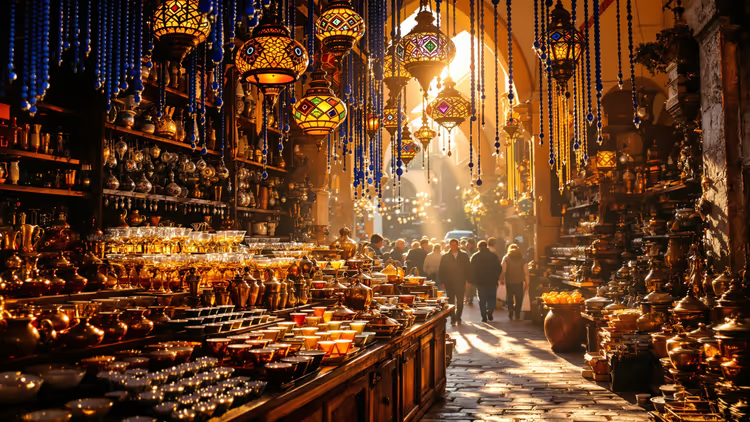
 AIIllustrative image: AI-generated
Gifts from Istanbul: 25 bazaar ideas that will make it home
Istanbul sells more than just experiences. People bring home tea, ceramics, spices, and sweets from here. Choosing a gift is harder than it seems: there are thousands of shops, and prices in Turkey get rewritten almost every month.
We've put together souvenirs that you can actually fit in a suitcase. For each one, we've noted who it suits, where to find it, and how the purchase might disappoint you. This list is handy to keep open on your phone right at the bazaar.
Ad: this article contains affiliate links, we earn a commission if you book through them, at no extra cost to you.
What people bring from Istanbul: an overview
💡 In short:
- Set your budget and suitcase weight allowance before heading to the market.
- Put fragile and expensive items in your carry-on, and buy food at the end of your trip.
- Market selection: 09/2026, according to Turkey's official tourism portal
The list below goes from light to bulky. First food and amulets, then ceramics, and at the end textiles and carpets. Below is a quick selection matrix.
Our picks
Souvenir | Who it's for | Where to find it |
|---|---|---|
Tea and çaydanlık | parents, colleagues | Grand Bazaar, Spice Bazaar |
Kurukahveci Mehmet Efendi coffee | coffee lovers | Eminönü, brand stores |
Nazar Boncuğu | friends and colleagues | anywhere there are tourists |
Rosense rose water | skincare enthusiasts | pharmacies, cosmetics shops |
Iznik ceramics | interior design lovers | Grand Bazaar, Sultanahmet galleries |
1. Black tea
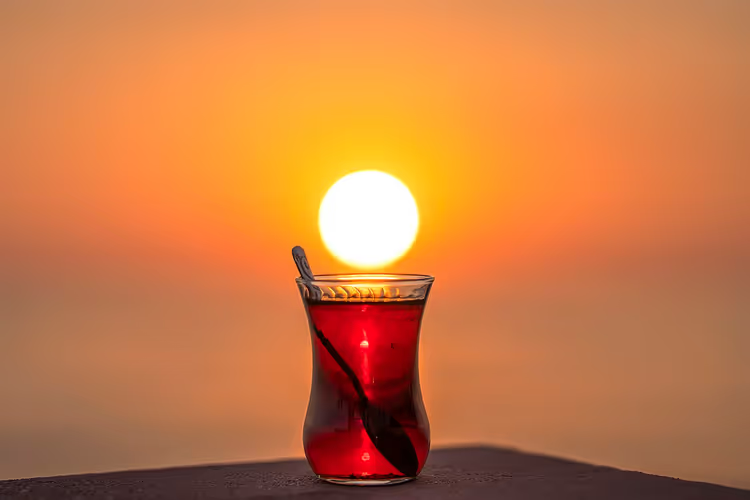 © Prodronemovie · CC BY-SAPhoto: Prodronemovie, CC BY-SA (https://creativecommons.org/licenses/by-sa/4.0), Wikimedia Commons
Turkey drinks tea constantly, and for locals it's a ritual of connection, not just a drink. Real tea here is strong, astringent, and unflavored. Milk or honey, in locals' opinion, only ruins the taste. Flavored powders with apple, pomegranate, or hibiscus have almost nothing to do with real tea leaves.
The raw material grows on the Black Sea coast, in the Rize region. The fresher the batch, the denser the brew. Ask the seller to let you taste the dry leaves and find out which variety they recommend for the morning.
- Who it's for: parents, colleagues, lovers of strong tea.
- Not for: those who only drink herbal infusions.
- Where to find it: Grand Bazaar, Spice Bazaar, brand stores in Beyoğlu.
- The catch: without the right teapot, the flavor fades; at home you'll need the right equipment and time.
2. Tea accessories
 © Zafer · CC BY-SAPhoto: Zafer, CC BY-SA (https://creativecommons.org/licenses/by-sa/4.0), Wikimedia Commons
Tea leaves barely open up without the right vessel. Brewing the usual way in a regular teapot gives a completely different taste, so get a two-tier çaydanlık teapot. Its principle is close to a samovar: water boils in the lower compartment, while very strong tea steeps in the upper one. You dilute it to taste right in the glass.
Tea is drunk from armudu glass cups. They have a heavy bottom and a noticeable narrowing in the middle. The shape isn't just for looks: the top part cools faster, so you won't burn yourself. The volume of such a glass is small, so tea is poured several times.
- Who it's for: those who have already brought Turkish tea home.
- Not for: those who brew tea in a mug and aren't ready to change the habit.
- Where to find it: Grand Bazaar, kitchenware shops around the Spice Bazaar.
- The catch: the glass is fragile; pack it in checked luggage only in a rigid box.
3. Ground coffee
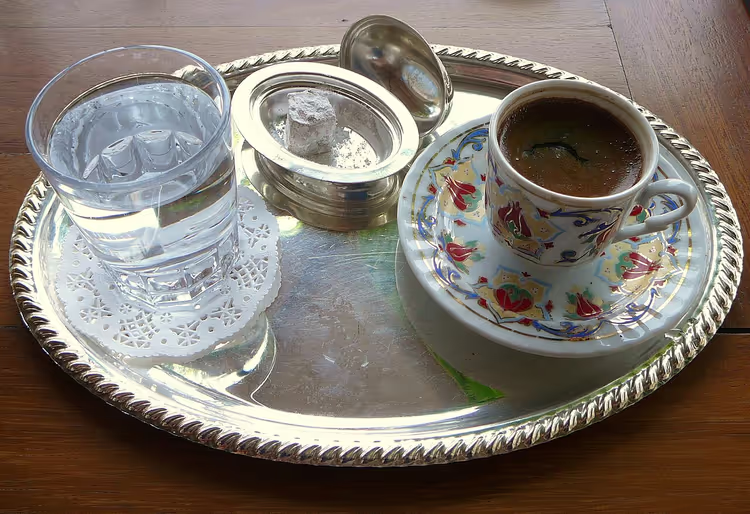 © Tema · CC BY-SAPhoto: Tema, CC BY-SA (https://creativecommons.org/licenses/by-sa/3.0), Wikimedia Commons
Turkish coffee is brewed in a cezve, but the key to success is still in the grind. It should be as fine as flour, otherwise the grounds won't settle. It's better to buy freshly ground blends rather than beans: you won't be able to grind beans that fine yourself later.
In Istanbul, it's worth visiting the flagship Kurukahveci Mehmet Efendi shop in Eminönü. Here coffee is roasted and ground right in the shop, in front of customers, and the aroma fills the whole street. According to the GoTürkiye portal, Turkish coffee culture is on the UNESCO intangible heritage list, and an entire ritual is built around the cup here.
- Who it's for: coffee lovers, colleagues, those who brew in a cezve.
- Not for: those who only drink whole-bean coffee from an espresso machine.
- Where to find it: the flagship shop in Eminönü, shops at the Grand Bazaar.
- The catch: ground coffee goes stale quickly, so buy a small package.
4. Copper cezve
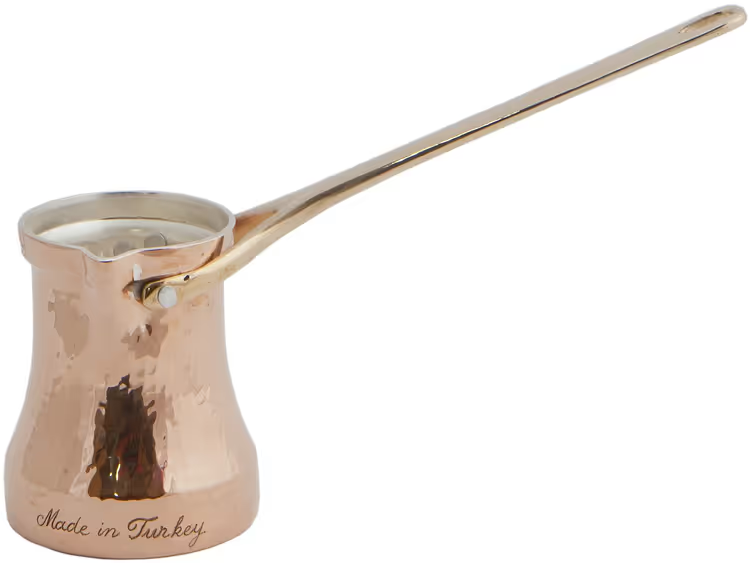 © Serg Dorohoff · CC BY-SAPhoto: Serg Dorohoff, CC BY-SA (https://creativecommons.org/licenses/by-sa/3.0), Wikimedia Commons
To brew the real thing, tea leaves alone are not enough. You need a cezve, which is what the Turks call the pot. It is a vessel that narrows toward the top, with a wide bottom and a long handle. The best ones are made of copper: the metal transfers heat quickly and evenly, and the grounds have time to release their aroma.
The technique is simple. Warm the bottom, pour in a little water, and add a couple of spoonfuls of ground coffee. Keep the cezve over very low heat, or better yet in hot sand. Take it off the heat when the foam rises to the rim and a light spot remains in the center. Never let it boil.
- Who it's for: people who brew coffee at home and want the Turkish taste.
- Not for: people who have an espresso machine and no time for the ritual.
- Where to find it: the Grand Bazaar, household shops in Eminönü.
- The catch: copper needs care, so don't leave the cezve wet until the next morning.
5. Eastern sweets
 © Dr._Colleen_Morgan · CC BYPhoto: Dr._Colleen_Morgan, CC BY (https://creativecommons.org/licenses/by/2.0), Wikimedia Commons
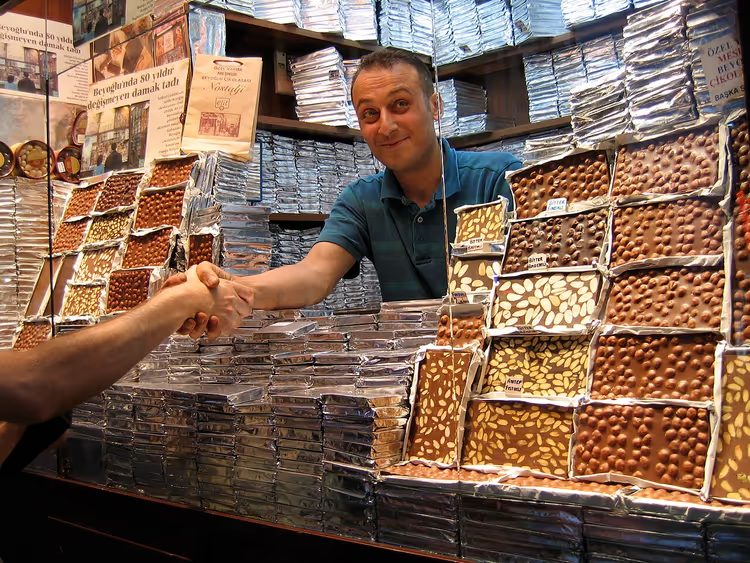
The national desserts fall into several groups: Turkish delight, nuts in honey, layered baklava, and chocolate. Anyone with a sweet tooth should head to Istiklal Street in Beyoğlu. There, in a small shop called Meşhur Beyoğlu Çikolatacısı, they make chocolate that easily holds its own against good French and Belgian brands.
- Who it's for: friends with a sweet tooth, coworkers.
- Not for: people who avoid sugar and watch their weight.
- Where to find it: Istiklal Street, the Grand Bazaar, the Egyptian Bazaar.
- The catch: chocolate melts in the heat, so buy it on your last day.
6. Honey and jam
 © alibarisondul · CC BYPhoto: alibarisondul, CC BY (https://creativecommons.org/licenses/by/3.0), Wikimedia Commons
In Turkey, honey is treated almost like medicine. Here you can find rare honeydew honey, also called pine honey. It is collected in the pine forests around Marmaris, and its color is dark, with an amber tint. The flavor is dense and slightly resinous.
A separate gift for people who appreciate the unusual is rose petal jam. It is made only from the buds of young plants and is called gülbeşeker. This delicate, aromatic dessert goes well with tea and with cheese.
- Who it's for: parents, grandmothers, people who like something sweet with tea.
- Not for: people allergic to pine pollen.
- Where to find it: the Egyptian Bazaar, markets in the Kadıköy and Beşiktaş neighborhoods.
- The catch: a glass jar breaks easily, so wrap it in clothing.
7. Olive oil
 © my friend · CC BYPhoto: my friend, CC BY (https://creativecommons.org/licenses/by/2.5), Wikimedia Commons
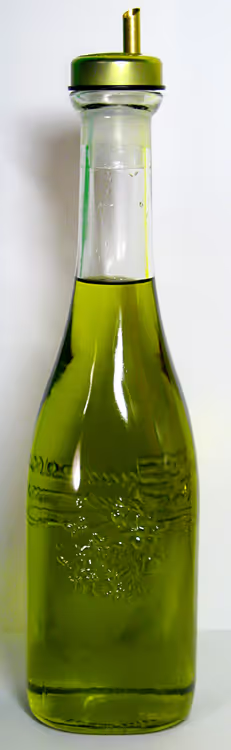
In Turkey, olive oil is called breast milk for adults, and that is not a joke. People use it to dress salads, to fry, and even to care for their skin. The country produces dozens of varieties, and the difference between them is noticeable even in the taste.
In a store, look at the color and the label. Good oil has a slight green tint, while a grayish shade means the olives were overripe. Look for the mark soğuk sıkım, meaning first cold pressing from hand-picked olives. A well-known local brand is Kristal Naturel Sızma.
- Who it's for: people who cook at home and like quality products.
- Not for: people who buy oil only from the supermarket near their home.
- Where to find it: food markets, the Egyptian Bazaar, specialty shops.
- The catch: glass and weight, so take one bottle and pack it well.
8. Turkish cheeses
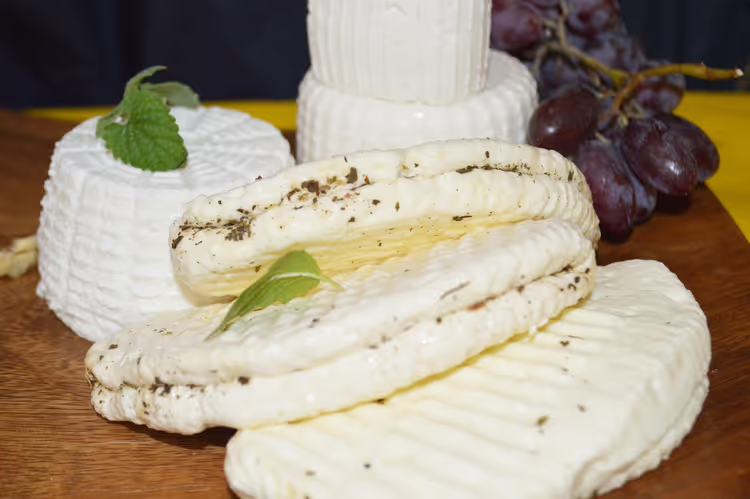
Turkey counts hundreds of cheese varieties, and some of them can compete with Italian Parmesan or Dutch Maasdam. The pride of cheesemakers is the salty, hard Tulum Peyniri made from sheep's or goat's milk. It is aged in animal skins, which gives it a dense, spicy flavor.
Another favorite is Kaşar Peyniri, a hard cheese with a rich yellow color. It works for breakfast, in pasta, and in baked goods. Fans of the unusual will like Küflü Peyniri, a blue cheese that matures in caves.
- Who it's for: gourmets, hosts, people who like cheese with wine.
- Not for: people who are put off by strong flavors and smells.
- Where to find it: food markets, the Egyptian Bazaar, cheese shops in Kadıköy.
- The catch: cheese cannot be brought into EU countries. To other countries, carry it only in vacuum packaging, otherwise the smell will spread through your suitcase.
9. Spices and seasonings
 © Robert Anders from Hamburg, Germany · CC BYPhoto: Robert Anders from Hamburg, Germany, CC BY (https://creativecommons.org/licenses/by/2.0), Wikimedia Commons
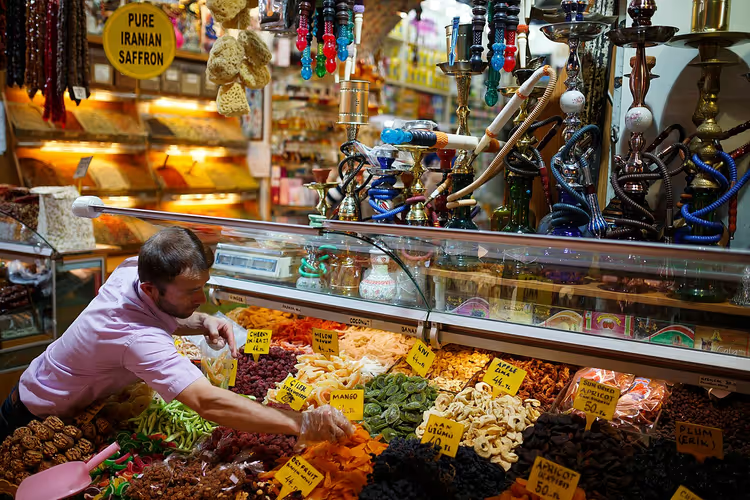
There's no point bringing the usual mint, cumin, or cinnamon, they're available in any supermarket. People buy rare spices you can't find at home, and always fresh ones. Head to the Egyptian Bazaar (Mısır Çarşısı) in the Eminönü district for them. Under the painted lead roof, shops selling spices, tea, nuts, dried fruit, and natural cosmetics stand packed together.
- Who it's for: people who cook a lot and love Middle Eastern cuisine.
- Not for: those whose spice rack at home hasn't changed in years.
- Where to look: Egyptian Bazaar, Grand Bazaar, shops in Eminönü.
- The catch: ground spices lose their aroma quickly, buy whole ones.
10. Anise rakı
A strong drink for those who know their spirits. Rakı is often called anise vodka, but by production method it's closer to brandy or an unsweetened liqueur. The base comes from grape or fig distillate. The raw material is distilled in copper stills, infused with anise seeds, distilled a second time, and left to mature.
You shouldn't drink it neat; to an inexperienced person the drink will seem scorching. Pour a little into a narrow tall glass and dilute with water, usually about three parts water to one part rakı. The liquid turns cloudy and milky white, which is why locals call rakı lion's milk. It's served at the table with cold fish appetizers.
- Who it's for: adult guests, lovers of strong spirits.
- Not for: those who only drink wine and cocktails.
- Where to look: supermarkets and wine shops, airport duty-free.
- The catch: glass in luggage under pressure, wrap the bottle separately.
11. Pomegranate wine

Another drink for those looking for unusual flavors. A thick, sweet wine with a dark amber color and red highlights. The taste carries the juiciness of pomegranate juice, a light tartness, and a nutty aftertaste. Among local brands, look for KUTMAN products.
It's served at the end of a meal, chilled. Small port glasses or Madeira glasses work well. Nuts, blue cheeses, and olives pair nicely with the wine, and for dessert, ice cream, pastries, and strudel.
- Who it's for: those who love sweet dessert wines.
- Not for: those who prefer dry drinks.
- Where to look: food markets, wine shops, large supermarkets.
- The catch: better not to carry the bottle in hand luggage, the volume and glass work against you.
12. Nazar Boncuğu amulet
 © FocalPoint · CC BY-SAPhoto: FocalPoint, CC BY-SA (http://creativecommons.org/licenses/by-sa/3.0/), Wikimedia Commons
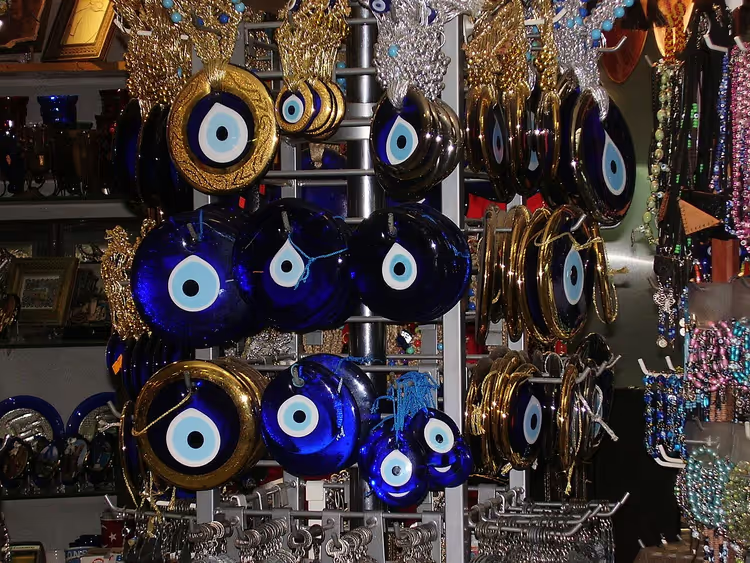
Wherever you go in Istanbul, a round white-and-blue disc with an eye pattern will follow you. This is the Nazar Boncuğu, an amulet against envy and ill wishes. People hang it at home, attach it to clothing and strollers, wear it as jewelry, and give it to loved ones.
Amulets resembling an open eye were known as far back as Ancient Egypt. According to the official GoTürkiye portal, this symbol remains the country's most recognizable souvenir. Today people believe in it just as much as before, considering it to ward off the evil eye and bring good luck. You can find small beads, bracelets, and patterned wall hangings.
- Who it's for: friends, colleagues, superstitious acquaintances.
- Not for: those who see amulets only as decor.
- Where to look: Grand Bazaar, Egyptian Bazaar, shops in Sultanahmet.
- The catch: cheap glass breaks easily, check the setting right on the spot.
13. Cats of Istanbul
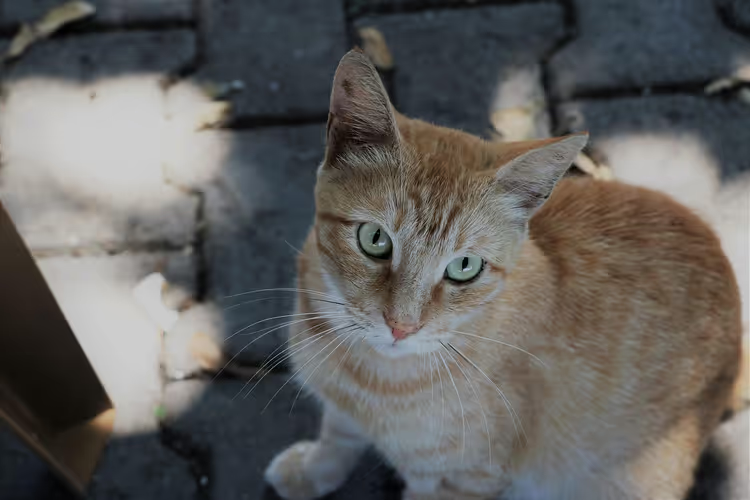
For cat lovers, the best gift is something featuring a whiskered hero. Magnets, postcards, keychains, bags, and figurines are sold everywhere, and that's no accident. Istanbul has long been considered one of the cat capitals of the world.
In Islam, cats are treated with respect and allowed into mosques. City cats live freely: residents feed their favorites, put out bowls of water on the streets, and build houses out of cardboard boxes. One stray cat named Tombili was even immortalized in bronze.
There's also a legend about the snow-white Muezza, the Prophet's favorite cat. According to the story, she saved him from a venomous snake bite, and since then these animals have held special respect in Islam.
- Who it's for: children, friends, all cat people.
- Not for: those indifferent to animals.
- Where to look: shops in Sultanahmet, Grand Bazaar, stores in Beyoğlu.
- The catch: the selection is huge, it's easy to buy a dozen similar souvenirs.
14. Iznik ceramics
 © Dosseman · CC BY-SAPhoto: Dosseman, CC BY-SA (https://creativecommons.org/licenses/by-sa/4.0), Wikimedia Commons
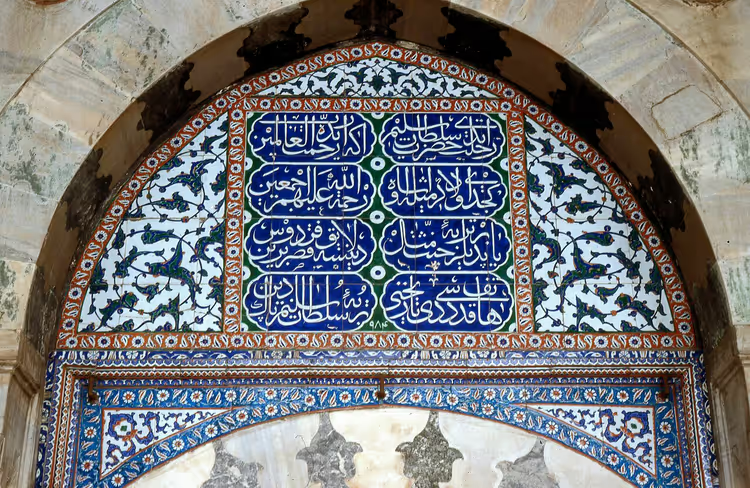
Elegant plates, vases, and pitchers with bright painted designs come from the town of Iznik, which sits by the lake of the same name away from Istanbul. Workshops began making ceramics there back in Ottoman times. Local tiles decorate the Blue Mosque and the harem chambers of Topkapı Palace.
Iznik pieces are known for durability, luster, and heat resistance. The ornamentation most often features birds of paradise, intertwined stems, and the tulip, the symbol of the Ottoman dynasty. Genuine old pieces are classified as cultural property, but replicas of painted plates are freely sold at the bazaars.
- Who it's for: lovers of interior design and beautiful tableware.
- Not for: those not willing to carry fragile items in luggage.
- Where to look: Grand Bazaar, galleries and shops in Sultanahmet.
- The catch: check the glaze, chips, and cracks right at the counter.
15. National costumes
A gift for those who grew up on TV series about sultans. The Turkish national costume took shape back in the early Middle Ages. It was sewn from light natural fabrics: linen, silk, and cotton.
The foundation of the women's outfit is the entari, a long dress in bright colors. Wide şalvar trousers are often worn underneath. The men's costume is more restrained, dominated by green, blue, and black tones. A full set is expensive, so many people buy individual pieces: red fezzes with tassels and colorful shoes with upturned toes.
Men in traditional dress wear a striped or white shirt and an open vest, belted with a sash. The women's dress is made loose and bright so it's comfortable to move in.
- Who it's for: theater people, collectors, history enthusiasts.
- Not for: those who only wear modern clothing.
- Where to look: Grand Bazaar, costume shops in Sultanahmet.
- The catch: sizes are designed for local body types, trying on is a must.
16. Dervish figurine
 © Dosseman · CC BY-SAPhoto: Dosseman, CC BY-SA (https://creativecommons.org/licenses/by-sa/4.0), Wikimedia Commons
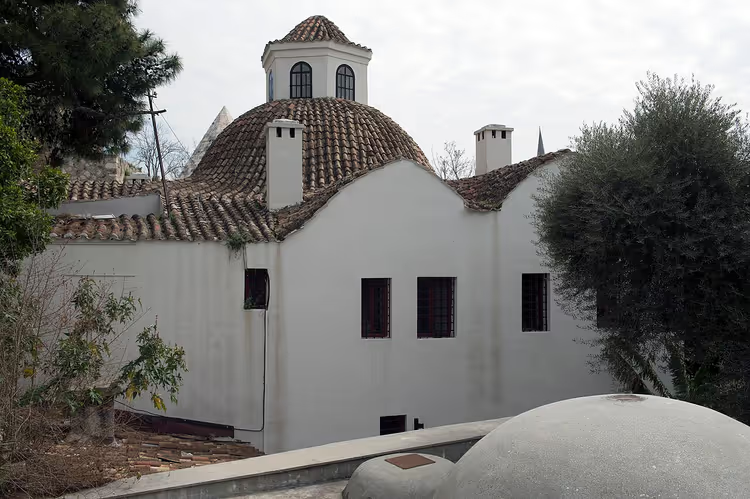
To the sound of a droning flute and drumbeat, dancers in white skirts spin smoothly. Eyes closed, heads in tall hats tilted, skirts rising into a swaying dome. The right hand reaches to the sky palm up, the left points down. Anyone who has seen the dervish dance once is unlikely to forget it.
This is not just a show. For dervishes of the Mevlevi order, spinning is a form of prayer, and it's over seven centuries old. The ritual originated in the city of Konya, but you can watch the sema ceremony in Istanbul too, at the Galata Mevlevi Lodge Museum. If the dance captivates you, buy a figurine of a whirling dervish as a keepsake.
- Who it's for: lovers of culture and unusual decor.
- Not for: those looking for a practical gift.
- Where to look: shops near the Galata Mevlevi Lodge Museum, Grand Bazaar.
- The catch: plaster figurines are fragile, keep them away from the edge of the shelf at home.
17. Mosaic lamps
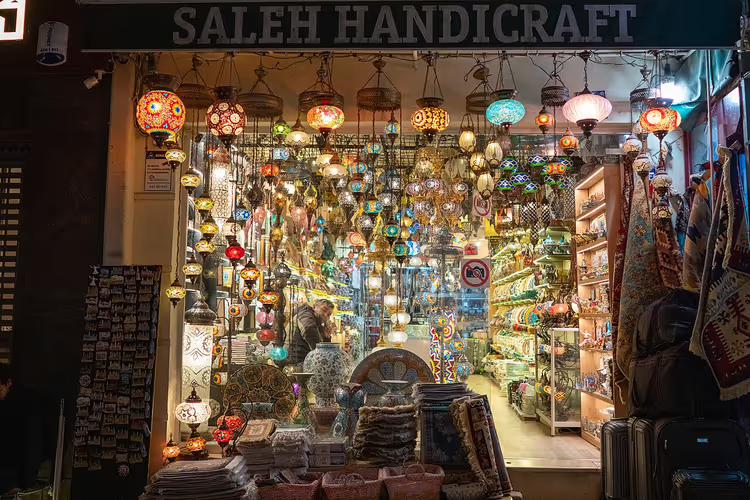 © Nan Palmero from San Antonio, TX, USA · CC BYPhoto: Nan Palmero from San Antonio, TX, USA, CC BY (https://creativecommons.org/licenses/by/2.0), Wikimedia Commons
Hanging lamps made of multicolored glass create an Eastern atmosphere in a room. Craftsmen assemble the shades from hundreds of tiny pieces of glass and set them into a metal frame. A candle used to burn inside, now there's a light bulb, but the look doesn't suffer for it.
When choosing a lamp, look at the metal. Brass or copper indicates handmade work, while plastic gives away cheap mass production. Small irregularities in the pattern are normal: they're left by the craftsman's hands, not automation.
- Who it's for: lovers of cozy lighting and Eastern decor.
- Not for: those who choose only minimalist items.
- Where to look: Grand Bazaar, workshops in Sultanahmet.
- The catch: glass and metal are heavy, pick a small model for your suitcase.
18. Nargile hookah
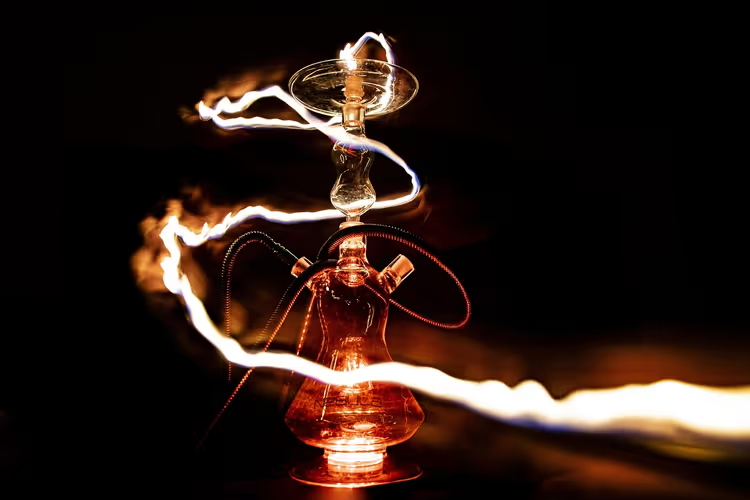
The hookah, called nargile in Turkey, won over Ottoman homes as early as the seventeenth century. Offering a guest a smoke was considered good manners, and refusing could be taken as an insult. Later interest in nargile faded, but it came back at the end of the last century.
A real nargile is also a piece of interior decor. Markets have hookahs in every color and size, but the risk of running into a Chinese knockoff is high. Look for the brands Elmas Nargile, El Nefes, and Tekdemir. Buy the tobacco separately: popular brands are Adalya, Tanya, Al Saha, Serbetli, and Ayisigi. The classic is apple flavor, which produces a lot of smoke and mixes well with other varieties.
- Who it's for: people who smoke hookah at home and when meeting friends.
- Not for: households with children and a ban on tobacco smell.
- Where to find: specialty shops, the Grand Bazaar, the market in Eminonu.
- The catch: a large hookah takes up half a suitcase, so get a collapsible model.
19. Leather and fur
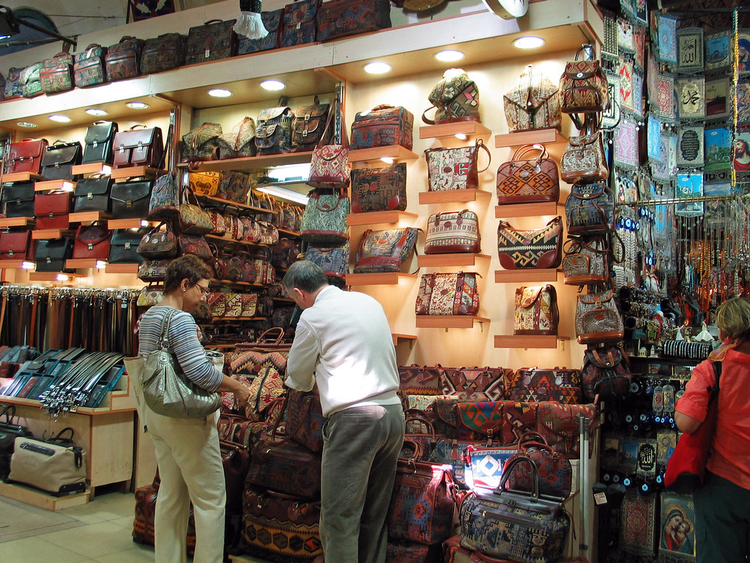 © Gareth1953 All Right Now · CC BYPhoto: Gareth1953 All Right Now, CC BY (https://creativecommons.org/licenses/by/2.0/), Flickr
Shopping in Istanbul rarely happens without leather and fur shops. Turkish products are among the leaders in price-to-quality ratio. Entire industrial zones of the country handle hide processing, and a significant share of the world's fur velour and suede is made right here.
For a quality item that will last for years, head to the Zeytinburnu district. There you'll find stores like Derimod, Yıldız Deri, Revani, Punto, and Deri Sarayi. The selection is wide: from a simple leather vest to a chinchilla fur coat. The size or style doesn't fit? Local tailors will sew an item to your measurements in a couple of days and deliver it to your hotel.
Haggling here is part of the ritual. Sellers enjoy negotiating, so bargain calmly and with a smile. The starting price is not final.
- Who it's for: people ready to haggle and who know what they're looking for.
- Not for: people who only buy from brand boutiques.
- Where to find: the Zeytinburnu district, Derimod and Yıldız Deri stores.
- The catch: fur requires special care and closet space.
20. Handmade carpets
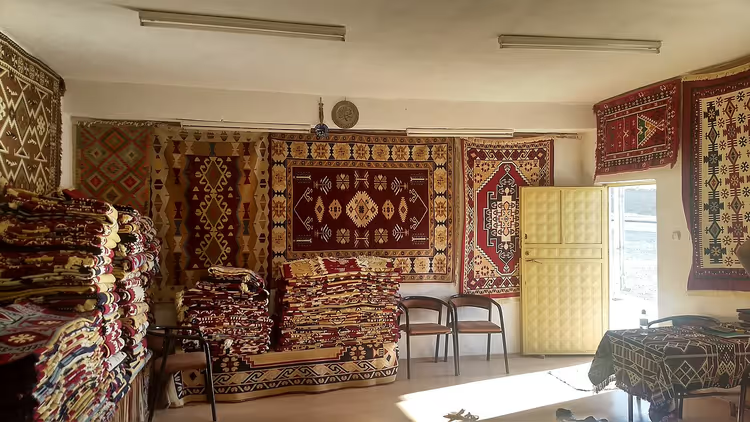 © Kerem Delialioğlu · CC BY-SAPhoto: Kerem Delialioğlu, CC BY-SA (https://creativecommons.org/licenses/by-sa/4.0), Wikimedia Commons
They say a hostess won't say no to tea in the cupboard, feta in the fridge, and a carpet on the floor. If that sounds like you, add a traditional woven piece to your list. Artisans make carpets from viscose, silk, or wool and dye them with natural colorants. Regardless of material, Turkish carpets are durable and dense.
Selling a carpet turns into a mini show. Sellers unfurl the piece in the air and spread it on the floor so the pattern starts to shimmer. Each item has its own ornament, and the price depends on density, material, size, and technique.
If you want an antique handmade carpet, be sure to get a certificate from the store with details about its age. Exporting items older than a certain age without special permission from the authorities is prohibited, so keep the documents with you.
- Who it's for: people furnishing a home and who appreciate handwork.
- Not for: people traveling with only a carry-on.
- Where to find: specialty galleries, the Grand Bazaar, the Sultanahmet district.
- The catch: a carpet is heavy, and an antique one can't be exported without a certificate.
21. Gold jewelry
 © jdlasica · CC BYPhoto: jdlasica, CC BY (https://creativecommons.org/licenses/by/2.0/), Flickr
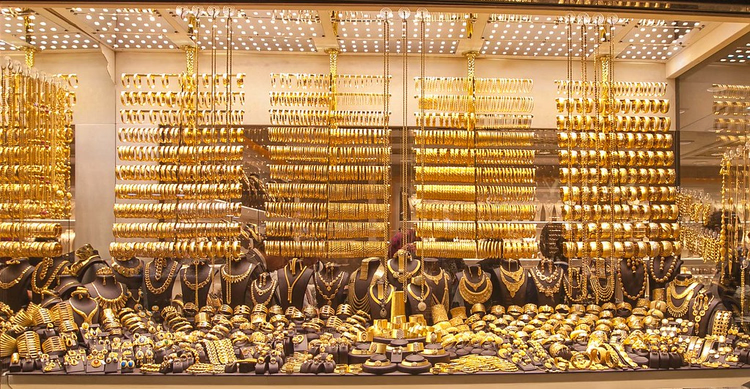
Gold has always been loved in Turkey. According to legend, the sultan himself made jewelry for his wife, and the tradition of giving gold is still alive. At weddings here people always give so-called republican gold, coins of various weights. You can buy them and later sell them back to a jewelry store.
The main advantage of local jewelry is the affordable price. Artisans rarely use the highest-grade gold; they more often add silver or copper, which makes the piece cost less. There are a lot of jewelry shops, but buying at the bazaar is risky. Tombac, an alloy of copper and zinc, can be sold as gold, and it's almost impossible to tell the difference. For certified goods, go to ZenDiamond, Pink Gold Store, Storks, Altınbaş, and Cetaş stores.
- Who it's for: for a wedding, an anniversary, a loved one.
- Not for: people who don't check the hallmark and certificate.
- Where to find: jewelry stores, the Grand Bazaar for price comparison.
- The catch: high risk of fakes at the bazaar, you need a trusted seller.
22. Oil perfumes
 © Slyronit · CC BY-SAPhoto: Slyronit, CC BY-SA (https://creativecommons.org/licenses/by-sa/4.0), Wikimedia Commons
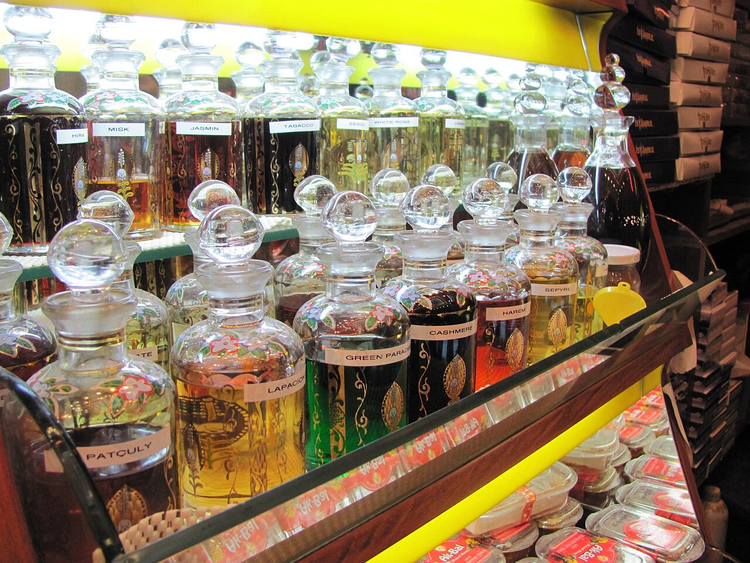
Walking around Sultanahmet or the Grand Bazaar, you'll definitely notice shop windows labeled Parfüm. Inside, dozens of glass bottles crowd the shelves, filled with fragrant liquid based on essential and carrier oils.
The main feature of these perfumes is the absence of alcohol, which is why they last a very long time. One drop on the wrist, and the trail stays with you all day. The intensity increases with movement and warmth and weakens at rest and in cool air. The compositions are built on dense oriental notes: sandalwood, agarwood, saffron, tuberose, vanilla, musk, orchid, and amber.
Don't buy these perfumes as a gift for someone who likes light, fresh scents. The fragrance is enveloping and thick, and it won't suit everyone.
- Who it's for: people who love rich oriental fragrances.
- Not for: people who prefer fresh and light scents.
- Where to find: Sultanahmet, the Grand Bazaar, Parfüm shops in Beyoglu.
- The catch: the bottle may leak, so pack it separately from your clothes.
23. Natural cosmetics
Even if your makeup bag at home is already full, don't walk past Turkish brands. Dalan d'Olive, Thalia, Unice, and Bioscha make creams, gels, serums, lotions, and masks based on olive oil, fruit extracts, medicinal clay, and hyaluronic acid.
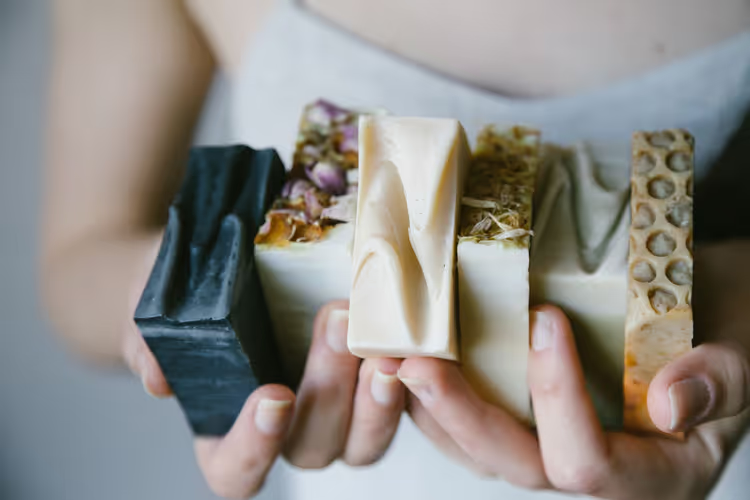
The market's calling card is rose water. It cleanses the skin, refreshes, tightens pores, and soothes irritation. The production leader remains Rosense, which has its own rose plantations. Another bestseller is soap: olive, pomegranate, or pistachio, handmade, with essential oils and herbs. It's also worth looking for dark beldi soap, a thick paste for the hammam.
- Who it's for: people who take care of their skin and love natural products.
- Not for: people with sensitivity to essential oils.
- Where to find: pharmacies, cosmetics shops, the Egyptian Bazaar.
- The catch: the ingredient list on a duplicate package may differ from the original.
24. Hammam sets
 © Dosseman · CC BY-SAPhoto: Dosseman, CC BY-SA (https://creativecommons.org/licenses/by-sa/4.0), Wikimedia Commons
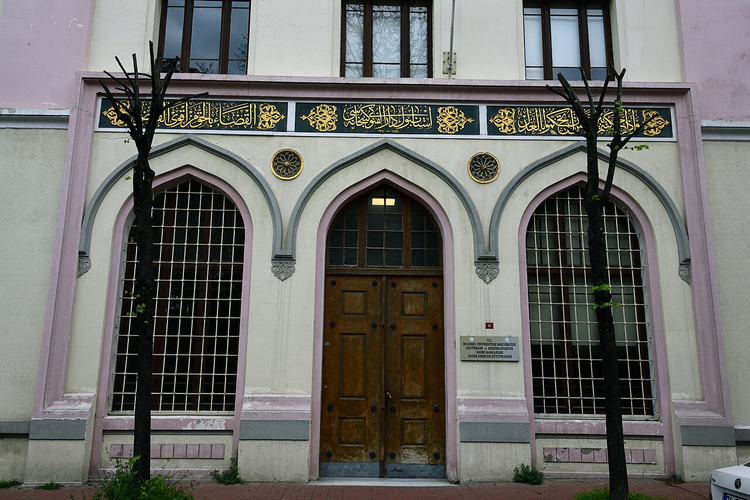
The word hammam translates from Arabic as a warm place. The Turkish steam bath maintains a comfortable temperature and very high humidity, and its benefits were known to physicians in ancient times. You can't recreate that atmosphere at home, but you can bring part of the ritual to your own bathroom.
Markets sell ready-made sets: fragrant soap, pumice, a foam-lathering pouch, and a kese. A kese is a mitt made of natural material for exfoliation. Put it on your hand and rub your steamed body with massaging motions, and your skin will become noticeably smoother. Many people forget about exfoliating gels after using such a mitt.
- Who it's for: people who love baths and skin care.
- Not for: people who prefer showers and don't spend time on rituals.
- Where to find: the Egyptian Bazaar, markets, shops at hammams.
- The catch: it's best to pack the mitt and soap in a separate bag.
25. Home textiles
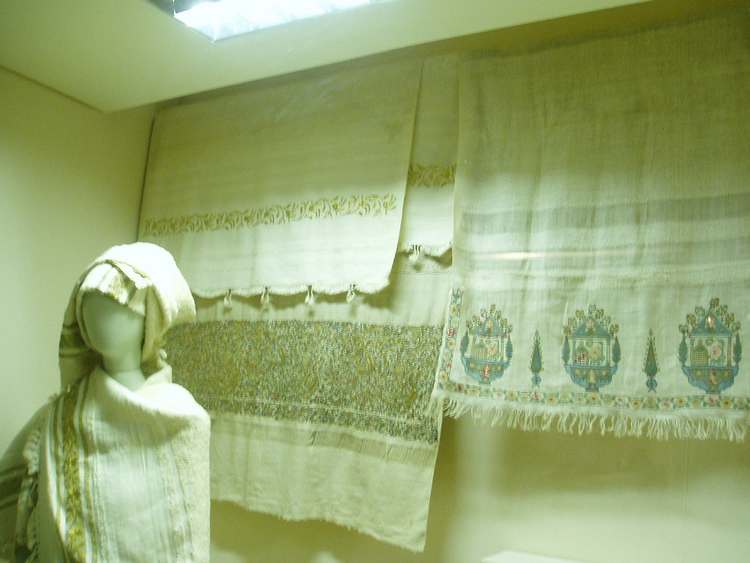 © mellen_petrich · CC BY-SAPhoto: mellen_petrich, CC BY-SA (https://creativecommons.org/licenses/by-sa/2.0/), Flickr
If there's room left in your suitcase, fill it with products from Turkish textile manufacturers. Terry robes, loungewear sets, throws, towels, and bedspreads are attractively priced here. The best in the segment are considered to be Boyner Ev, Taç, Özdilek, and Mudo Concept.
A special find is the peştemal, a thin cotton towel with fringe. It's hard to imagine a hammam visit without one. It feels pleasant to the touch, absorbs moisture well, and dries quickly. Despite its large size, a peştemal is very compact and light and takes up almost no space.
- Who it's for: for home, as a gift for parents, and for housewarmings.
- Not for: people flying with only a carry-on.
- Where to find: Boyner and Özdilek stores, markets, and shopping malls.
- The catch: terry items are bulky, so you need spare luggage space.
What you can't take out
Istanbul is a shopper's paradise, but Turkish customs rules are worth keeping in mind. This mainly applies to cultural property. Antique carpets, old books, and handmade items above a certain age cannot be exported without a special permit. If you buy something like that, get a certificate from the shop stating the item's age.
Alcohol and tobacco are subject to quantity limits, and it's best to check those before your trip. EU countries prohibit bringing in dairy and meat products, including cheese. The general rule is simple: declare expensive items and keep your receipts until the end of the trip. Before flying home, check the import rules for your own country. Before buying antiques or a large batch of goods, check the current export restrictions on the official tourism portal of Turkey.
⁉️🤔 Frequently asked questions
Where can I buy souvenirs cheaper in Istanbul?
The cheapest places are the Grand Bazaar and the Egyptian Bazaar: competition is high there, and it's easy to negotiate the price down. Food items like tea, spices, and honey are easier to buy in the shops of Eminönü. For ceramics and textiles, look at manufacturers and shopping malls, where the markup is lower than at tourist spots in Sultanahmet.
How much money should I bring for gifts?
Nobody can give you an exact figure in advance: prices in Turkey change quickly. Keep in mind that small souvenirs like Nazar Boncuğu cost pennies, while a carpet or gold can eat up your entire budget. Bring cash in lira for the markets and keep your card for shops and larger purchases.
Can I take Turkish tea, spices, and sweets out of the country?
Yes, in reasonable quantities it's usually fine. Technically, tea, coffee, and spices fall under restrictions, but customs is relaxed about a small supply in a tourist's luggage. Declare expensive items and keep your receipts until the end of the trip, and check the exact limits in advance. Dairy and meat products, including cheese, cannot be brought into EU countries.
What gift works for colleagues and friends?
A universal option is tea, coffee, or sweets, almost everyone likes those. For friends with a sense of humor, get a cat figurine or a Nazar Boncuğu amulet. People who are into home decor will appreciate Iznik ceramics or textiles. And lovers of the unusual will enjoy pomegranate wine or oil-based perfumes.
Do I need to haggle at the bazaar?
Yes, at markets haggling noticeably lowers the starting price, often by half. Start with a polite question about a discount and stay calm, nobody is rushing you. In shops with fixed prices and in shopping malls, however, haggling makes no sense.
In short: what's worth booking
Gifts from Istanbul come together on a simple principle: edible, beautiful, and not too heavy. Pick one category for each person and don't mix everything into one suitcase. That way you'll keep your budget in check and won't break anything along the way.
Task | What to get | Where to look |
|---|---|---|
Parents | Tea with çaydanlık, honey | Grand Bazaar |
Colleagues | Kurukahveci Mehmet Efendi coffee, Nazar Boncuğu | Eminönü, bazaars |
For the home | Ceramics, textiles, carpet | Sultanahmet, Zeytinburnu |
Lovers of the unusual | Rakı, pomegranate wine | wine shops |
A keepsake for yourself | Mosaic lamp, dervish figurine | Grand Bazaar |
If you want to plan your route through the markets in advance and not get lost among the stalls, check out tours and food experiences in Istanbul on GetYourGuide.

A small editorial team writing guides for independent travel. We travel ourselves, but we haven’t been everywhere, so we check prices, opening hours and how to get there against official sources.