
















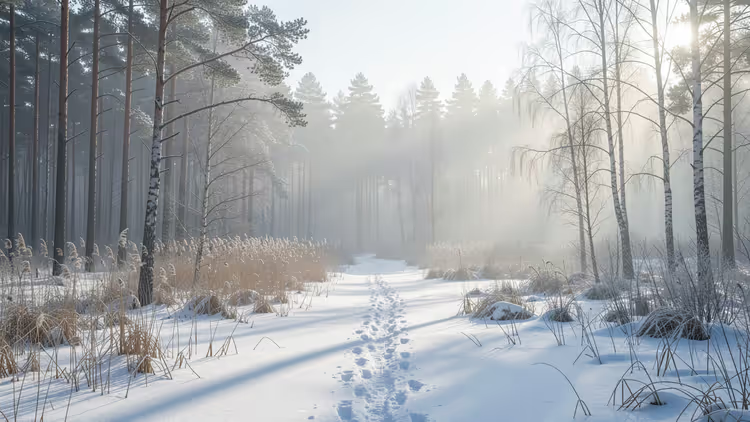
 AIIllustrative image: AI-generated
Mezhrechensky park in winter: ski ecotrails, cranberry bogs and moose
A winter forest, snow to the horizon, and silence. Such landscapes exist not only in Scandinavia: north of Kyiv, between the Dnieper and the Desna, lies one of the largest natural parks in Ukraine, Mizhrichynskyi.
The park is about 100 km along the P69 highway (discover.ua guide, as of 09/2026), and people come here both for a day trip and for a full weekend.
You walk or ski along marked eco-trails, spot moose and beaver lodges, and in late autumn you see ripe cranberries in the marshes.
Below we'll look at which trails to choose in winter, how to get there from Kyiv, and what to bring for a full day in the forest.
Mizhrichynskyi Park between the Dnieper and the Desna
💡 In short:
- The park was established in 2002 in the interfluve of the Dnieper and the Desna (park profile, as of 09/2026).
- Access to the eco-trails is free; only guided tours are paid (park winter tours).
- In winter, bring skis or trekking boots: some routes cross marshes.
The park was created near the Desna and Honcharivske military training grounds (overview on discover.ua, as of 09/2026). People once lived here, but after the construction of the Kyiv Reservoir the villages were resettled, and the entire area returned to nature.
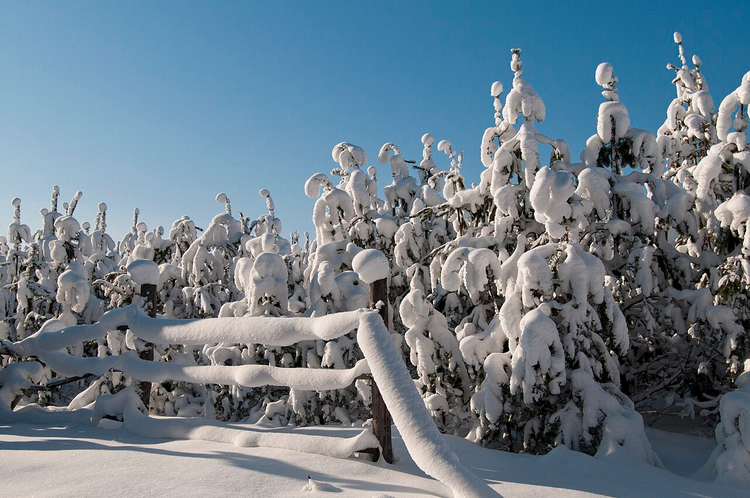
Today it is pine forests, glacial sand dunes, floodplain meadows, patches of ancient oaks, and impassable marshes. The park has four marked eco-trails, and two of them start right at the administrative building (route descriptions).
 © Жовтенко Всеволод · CC BY-SAPhoto: Жовтенко Всеволод, CC BY-SA (https://creativecommons.org/licenses/by-sa/4.0), Wikimedia Commons
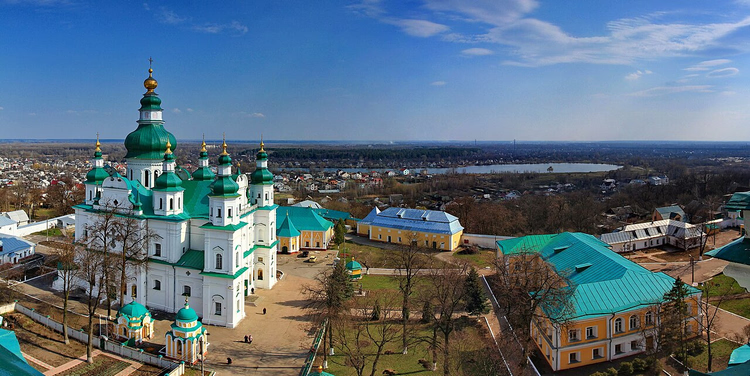
The park's visitor center operates in the village of Otrokhy, Chernihiv Oblast, and next to it there is a forest crafts museum with tools used by Polissian fishermen and hunters.
The table below will help you choose a route for your group.
Trail | What to see | Best season |
|---|---|---|
"Kliukva" | forest, animal tracks, a partisan hideout, and a pagan temple | winter, on skis |
Sviate Lake | cranberry marsh | late autumn |
Bondarivske Marsh | the park's largest marsh | year-round, check conditions |
Terrace above the Desna | riverbank and floodplain views | year-round, check conditions |
Winter eco-trail "Kliukva"
In winter this trail is done on skis. The route goes through forest and marshes, and it is the most accessible winter option in the park.
Along the way you come across fresh tracks: a fox, a hare, a beaver lodge by the water. If you're lucky, you'll see a moose at a winter feeding station. But more often the animals leave you only their tracks in the snow.
 © Лариса Дмитрієва · CC BY-SAPhoto: Лариса Дмитрієва, CC BY-SA (https://creativecommons.org/licenses/by-sa/3.0), Wikimedia Commons
In the far part of the route there is a partisan hideout and a pagan temple built by ancient Slavs. These are the most unusual points of the entire trail.
- Who it's for: those visiting the park for the first time who want to see both forest and marsh in one day.
- The catch: in winter the trail markers get covered by snow, so without a park map it's easy to lose your way. Download the map in advance.
Sviate Lake marsh and cranberries
The second popular route leads to the Svyatoye Ozero bog. Wild cranberries grow here, and they ripen in late fall (park page).
 © Nickispeaki · CC BY-SAPhoto: Nickispeaki, CC BY-SA (https://creativecommons.org/licenses/by-sa/3.0), Wikimedia Commons
In winter, the trail crosses frozen bog sections. A separate trail, the Bondarevskoye Bog, crosses part of the park's largest bog (route list), and it's best to hike it with a guide: there are thaw holes under the snow.
- Who it's for: those who want to see real Polesia bogs, not just pine forest.
- The catch: on an open bog in winter it's colder and windier than in the forest, so warm waterproof boots are a must.
Park wildlife and plants
Mezhrechensky Park is home to roe deer, wild boar, moose, deer, wolves, foxes, lynxes, hares, beavers, and martens (fauna data). The animals here are wary, so you'll mostly see them through their tracks in the snow.
With patience, you can also watch birds: common cranes, black grouse, and white-tailed eagles stay in the Desna floodplain. Bring binoculars, because here they're more useful than a camera.
Besides cranberries, blueberries, raspberries, wild strawberries, and lingonberries grow here, as well as red-listed sundews and orchids. Picking these plants is prohibited because the park is a protected area.
How to get there and when to go
To reach the park, drive north from Kyiv on the P69 highway, and it's a full-day trip (see map). Leave early in the morning so you can return before dark.
There is no direct public transport to the visitor center. For groups, the park can arrange transport to the village of Otrokhy for an additional fee (official park website, as of 09/2026), so without a car it's easier to join an organized tour.
For a winter walk, dry frosty weather after a snowfall is best. During a thaw, the bog trails turn to mud, so some routes are closed for safety. Before heading out, check trail conditions by calling the park.
Pack a thermos, snacks, spare gloves, and a power bank in your backpack. Mobile coverage in the depths of the park drops out in places, so download an offline map in advance.
Admission and tours
- Park entrance: free, no payment required (visiting rules).
- Guided tour: paid, the park gives the price when you book for your group.
- Overnight stay on site: there is a guest house, a campground and a hostel (accommodation rules).
Tours in the park are led by its director Andriy Sahaidak and visitor center staff (list of tours). The programs vary: themed walking tours, Desna River floats, wildlife photography and children's tours (tour programs).
The park quotes the price per group, so the more people you have, the cheaper it is per person (cost estimate). Transfer and meals are paid separately if you order them.
Ad: this article contains affiliate links, we earn a commission if you book through them, at no extra cost to you.
Where to stay nearby
You can stay overnight on the park grounds: guests can choose from a rural guest house, a campground and a hostel (park website). This works well for a two-day itinerary when you want to hike both trails without rushing.
If you plan to combine the trip with the city, you can check hotels in Kyiv on Trip.com. It's best to leave Kyiv early in the morning to get to the park.
⁉️🤔 Frequently asked questions
Can you visit the park on your own?
Yes, you don't need a guide. You can get trail maps at the visitor center in the village of Otrokhy. The Kliukva trail can be hiked on your own with the park map. For Bondarivske Marsh in winter, it's better to hire a guide: there are thaw holes under the snow.
How much does it cost to enter Mizhrichynskyi Park?
Park entry itself is free. You only pay for a tour, group transfer and overnight stay (park information).
What to do in winter if you don't have skis?
Bring trekking boots and poles. The forest trails are walkable, but it's best not to go onto frozen bog sections without skis. Some routes are closed in winter, so check trail conditions with the park before you set off.
When should you go for cranberries?
Bog cranberries ripen in late fall (cranberry picking season, as of 09/2026). This is exactly when the trails to Svyate Lake are especially interesting. In winter the berries disappear under the snow, so fall is the time to go for cranberries. In other months you'll see the bog without berries.
In short: what's worth booking
Mezhrechensky Park delivers that winter "Scandinavia" near Kyiv: marked eco-trails and Polesia bogs with cranberries. For your first visit, choose the "Klyukva" trail, and add Svyate Lake for the bog experience.
If you have one day, arrive in the morning and hike "Klyukva" before dark. If you have a full weekend, book accommodation inside the park and do both routes without rushing. For a group, it's more cost-effective to book a guided tour with transfer directly through the park.
For an overnight stay in the city, you can book a hotel in Kyiv on Trip.com.

A small editorial team writing guides for independent travel. We travel ourselves, but we haven’t been everywhere, so we check prices, opening hours and how to get there against official sources.