
















Finland without myths: 10 facts about sauna, aurora and everyday details
Finland surprises even experienced travelers. You may think you already know about the sauna, the northern lights, and strong coffee. But the country hides dozens of everyday details that rarely make it into guidebooks.
We have gathered ten facts that will help you understand Finnish life before your trip: from heated sidewalks to Easter in a cup. Below, in short, is what surprises visitors the most.
1. Safety
💡 In short:
- Finland is safe for solo travel, and tap water here is drunk without worry.
- The best time for the northern lights: September, October, February, and March.
- Facts and seasonality: 09/2026, verified on Visit Finland.
If you are traveling alone and worried about safety, Finland removes that fear. Street crime is low, and locals do not always lock their homes and cars. Most lost wallets are returned to their owners, sometimes with the money still inside. People will come up and help you if you stand looking lost with your phone in your hand. This is how it works almost everywhere in Scandinavia. The catch is only one thing: the weather changes abruptly, so warm clothing matters more than in central Europe.
 © Safa Hovinen · CC BYPhoto: Safa Hovinen, CC BY (https://creativecommons.org/licenses/by/2.0), Wikimedia Commons
2. Northern lights
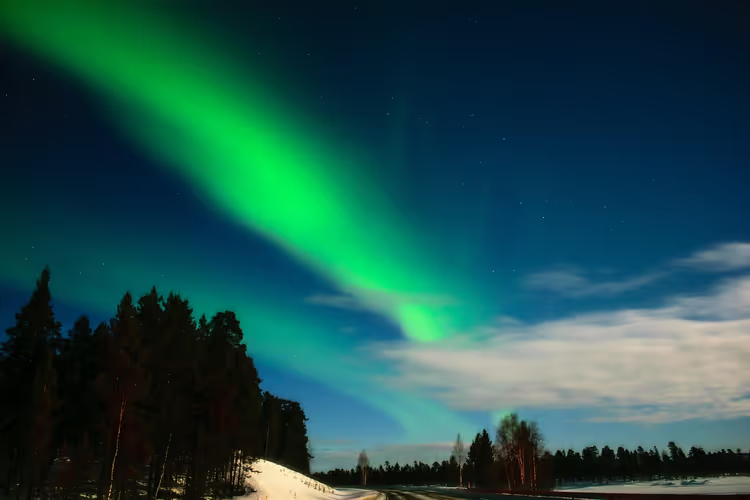
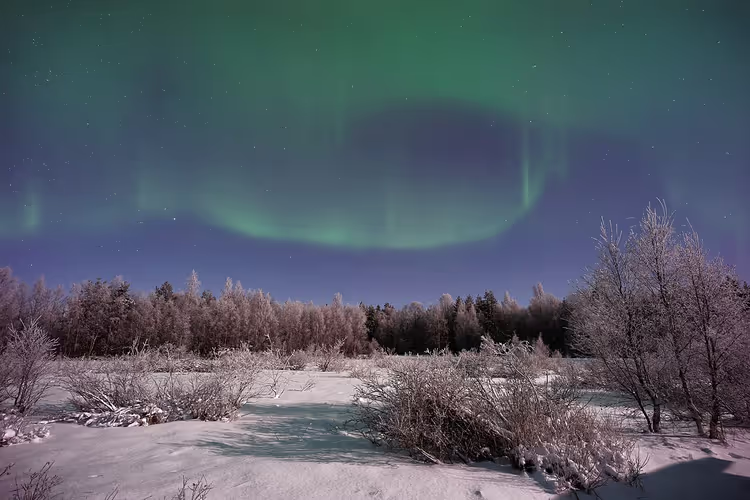
Hunting the aurora often becomes the main goal of a trip north. In winter, the northern lights are visible from almost anywhere in Lapland, and sometimes even in Helsinki under clear skies. Your chances are higher outside the city, where there is no street lighting and fewer clouds. According to data from the tourist office, the northern lights season runs from late August to April, and the sky is clearest in September, October, February, and March. Finns recommend Kilpisjarvi, Saariselka, the village of Nellim, and Sodankyla. Plan your outing for dark, clear nights and give yourself several attempts: the weather here is changeable.
3. Saunas
For a Finn, the sauna is not a weekend bathhouse, but part of everyday life. The Finnish sauna is the hottest and driest: the air is heated very strongly, and humidity is kept low. According to Visit Finland statistics, the country has more than three million saunas for a population of about 5.4 million, roughly one per household. Finns believe the sauna helps with almost everything. They have a saying: "If tar, vodka, and sauna do not help, nothing will." Many business negotiations here also take place in the sauna. The logic is simple: without clothes, a person is more honest and less likely to embellish. In public saunas, staff will explain the rules if it is your first time.
4. Unusual competitions
Finns know how to entertain themselves and involve visitors in it. Every year the country hosts world championships in mobile phone throwing and boot throwing, wife carrying contests, air guitar competitions, swamp soccer, and winter swimming. The wife carrying championship is held in Sonkajarvi, and teams from different countries come to take part. Fans of swimming in icy water are called "seals," "otters," or "ringed seals" by Finns. If you want to watch, choose summer: most tournaments take place outdoors. Bring clothing for changeable weather.
 © Paju · CC BY-SAPhoto: Paju, CC BY-SA (https://creativecommons.org/licenses/by-sa/3.0), Wikimedia Commons
5. Drinking water
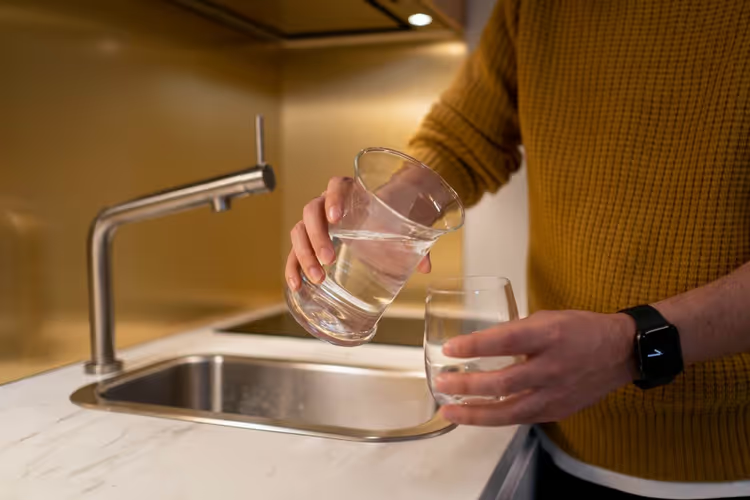
Tap water in Finland can be drunk straight from the faucet, and for locals this is normal. It is among the cleanest in the world, so a restaurant will happily bring you a carafe of tap water. Drinking fountains are everywhere: in parks, at train stations, and in shopping centers. If you are used to buying bottles, here that is an unnecessary expense and unnecessary plastic. Bring a reusable bottle and fill it anywhere. You will save money and produce less waste.
6. Service without tips
In Finnish cafes and restaurants, tipping is not customary. If you leave money, you will most likely be politely refused with a smile. The staff here are friendly and attentive, and it is hard to make a waiter angry. The amount on the bill is already final, so you do not need to calculate percentages on the go. Forget about grumpy cashiers: in Finland you will want to smile back. For your travel budget, this is a pleasant bonus, since tips are not added to every bill.
 © Ввласенко · CC BY-SAPhoto: Ввласенко, CC BY-SA (https://creativecommons.org/licenses/by-sa/3.0), Wikimedia Commons
7. Finnish rock
By the number of rock and metal bands per capita, Finland is considered a world leader. Heavy music here coexists with the melodic Finnish language and produces an unusual sound. In summer, the country turns into a festival venue: open-air concerts take place almost every weekend. Major festivals include Ruisrock, Pori Jazz, Provinssirock, Tuska, Ilosaarirock, and Ankkarock. If you love live music, plan your trip for July and buy tickets in advance: for big festivals they sell out quickly.
 © WanderingTrad · CC BY-SAPhoto: WanderingTrad, CC BY-SA (https://creativecommons.org/licenses/by-sa/4.0), Wikimedia Commons
8. No ice on sidewalks
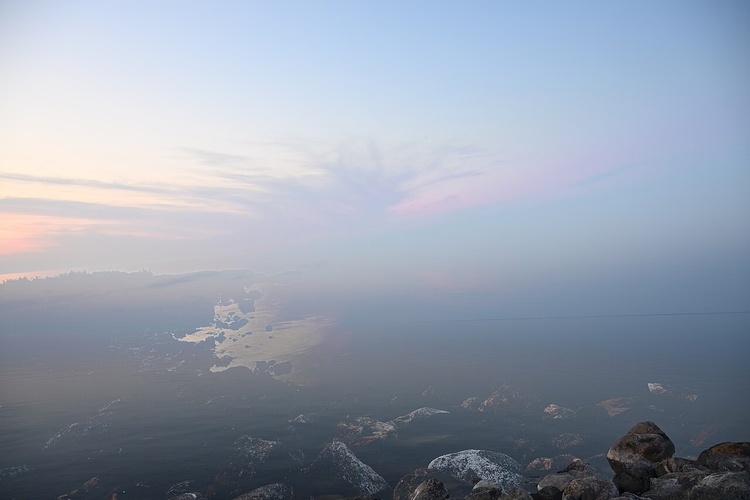
Heated sidewalks exist only in central Helsinki. Outside that area, ice forms in winter. In central Helsinki, many sidewalks and boulevards are heated from below, so snow and ice do not linger there. Snow melts on the paving stones and drains into the city sewer system, with heating pipes laid under the slabs. The heating is adjusted based on air temperature, so you will not step into a puddle or slip on ice. The sidewalk heating system in the capital was first introduced several decades ago. For you, this means smooth walks even in severe frost.
 © Regina-celina · CC BY-SAPhoto: Regina-celina, CC BY-SA (https://creativecommons.org/licenses/by-sa/4.0), Wikimedia Commons
9. Ice skates
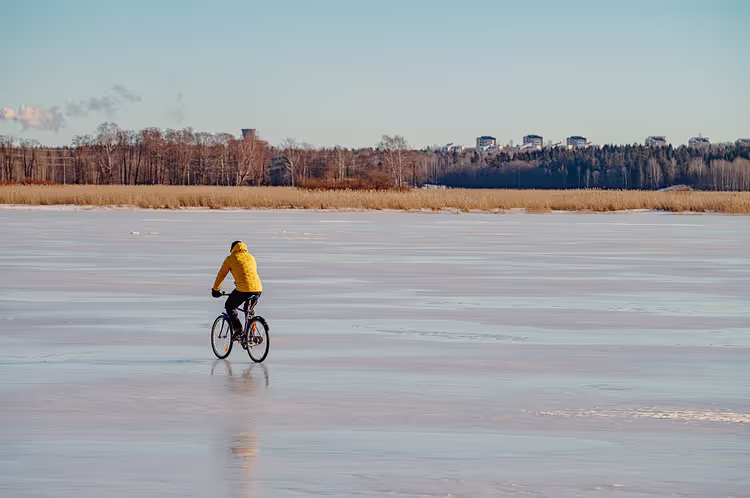
It is believed that the prototype of modern ice skates appeared in what is now Finland several thousand years ago. Ancient people made them from sharpened animal bones or stone. Today, winter skating trips on the ice of rivers and lakes are popular here. A group puts on backpacks, takes special poles, and skates tens of kilometers across natural ice. You can go out on the ice only in hard frost and with sufficient ice thickness, otherwise it is dangerous. If you want to try it, hire a guide and join an organized trip.
 © Tiia Monto · CC BY-SAPhoto: Tiia Monto, CC BY-SA (https://creativecommons.org/licenses/by-sa/3.0), Wikimedia Commons
10. Easter in a cup
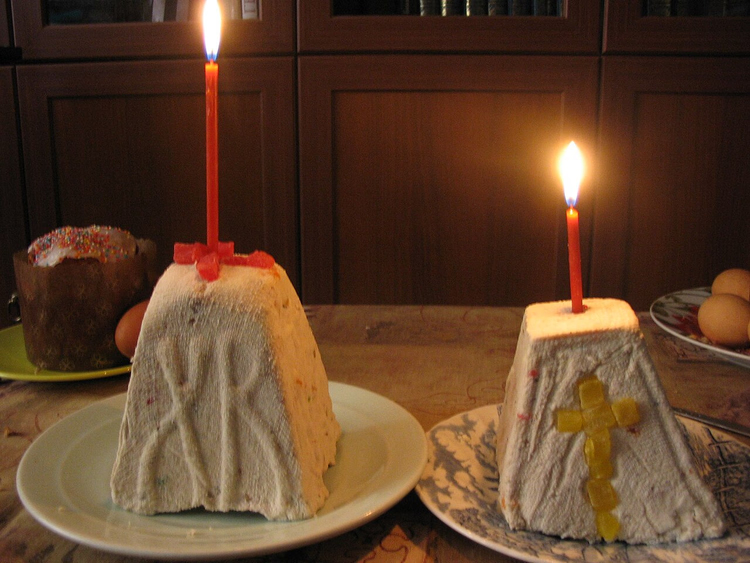
One of the most unexpected Finnish customs is connected with Easter. Pasha is a traditional holiday dessert made from quark. In Finland, it is sold in plastic cups, like yogurt. The dessert is called "pasha" (Pasha) and is a delicate quark cream with citrus and raisins. What surprises people is exactly this presentation of a festive dish. The holiday itself is celebrated not only in churches and at the family table: concerts, exhibitions, and city events take place across the country. If you find yourself in Finland in spring, stop by a supermarket and try pasha in a cup.
⁉️🤔 Frequently asked questions
What is the best time to go to Finland for the northern lights?
The aurora season runs from late August to April, but the sky is clearest in September, October, February, and March.
Do you need to leave tips in Finland?
No, tipping is not customary here. The amount on the bill in cafes and restaurants is already final.
Can you drink tap water in Finland?
Yes, Finns themselves drink water from the faucet, and it is among the cleanest in the world.
What unusual competitions are held in Finland?
The most famous are the wife carrying championship in Sonkajarvi, mobile phone throwing, and swamp soccer. Most tournaments take place in summer.
When is there less ice on the streets in Finland?
Ice does not linger only in central Helsinki, where sidewalks are heated. Outside the center, ice does form. Shoes with non-slip soles are still useful, especially in the evening.
In short: what to book
Your Finland trip scenario depends on the season. If you are going for the northern lights, book accommodation in Lapland for September, October, February, or March and leave several nights in reserve. For a relaxed city trip, Helsinki works well: heated sidewalks and clean tap water make walks comfortable even in frost. For festivals, come in July and buy tickets in advance. In winter, do not forget non-slip shoes and a warm layer of clothing, and Finland will show you its best side.

A small editorial team writing guides for independent travel. We travel ourselves, but we haven’t been everywhere, so we check prices, opening hours and how to get there against official sources.