
















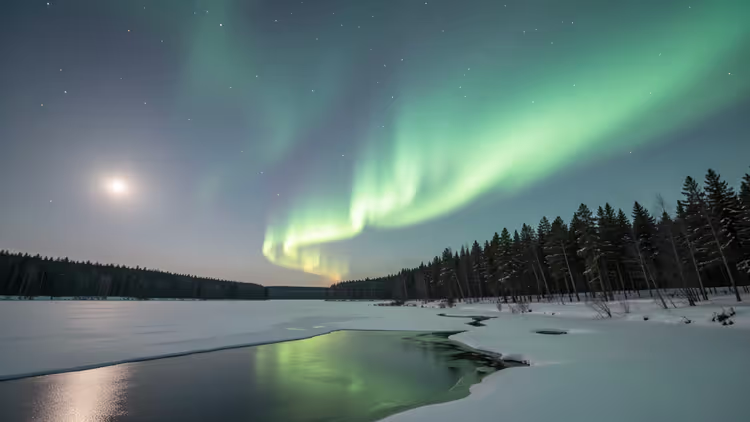
 AIIllustrative image: AI-generated
Northern lights: where to go for polar skies in 2026
The Northern Lights have been seen live by few people. Even in the Arctic, the sky does not light up every night: you need darkness, clear weather, and an active Sun. So your chances of seeing them depend above all on location and season.
We have put together 7 spots from Svalbard to Alaska and added timing, travel details, and honest catches. The timing is good right now: viewing conditions are better than they have been in the past eleven years, because solar activity is holding at its peak in 2024-2026 (verified on 09/14/2026 on the official Visit Norway website).
Ad: this article contains affiliate links, we earn a commission if you book through them, at no extra cost to you.
When and why the northern lights are visible
💡 In short:
- Go north of the Arctic Circle and choose the season from September to March.
- Check two forecasts at once: cloud cover and geomagnetic activity.
- Season and viewing conditions: 09/2026, verified on the official Visit Norway website.
The aurora is born at the upper edge of the atmosphere. Charged particles from the solar wind fly into Earth's magnetic field and glow above the auroral oval, a broad zone around the magnetic pole. The oval shifts every night: during quiet hours it moves far north, and during active hours it drops toward the middle latitudes, where the aurora is noticed even by residents of large cities.
The season for a traveler runs from September to March, because you need long, dark nights. In Finnish Lapland, the hunt starts as early as late August and continues through April (Visit Finland).
What decides the outcome of your night? A dark sky away from streetlights, clear weather, and geomagnetic activity above a Kp index of 2-3. A three-day forecast is published by NOAA, and it is worth checking it in the morning so you do not waste an evening trip for nothing.
Where to see the northern lights in Europe
In Europe, people travel to Scandinavia and Iceland for the aurora. Here you get a dark northern sky and familiar comfort: hotels, transfers, ready-made tours.
1. Longyearbyen, Svalbard, Norway
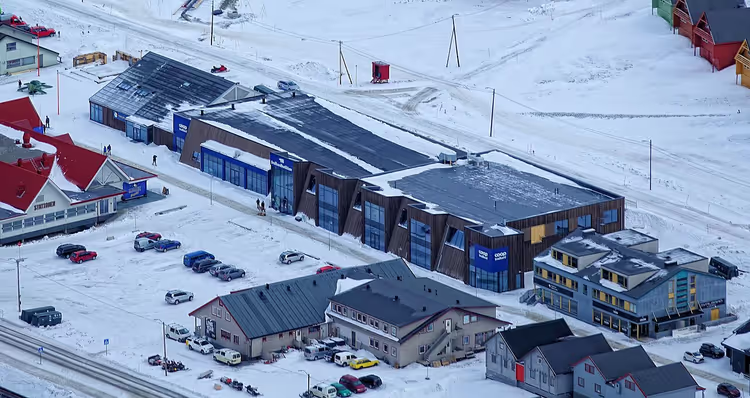 © Bjørn Christian Tørrissen · CC BY-SAPhoto: Bjørn Christian Tørrissen, CC BY-SA (https://creativecommons.org/licenses/by-sa/4.0), Wikimedia Commons
Longyearbyen, the administrative center of Svalbard, lies almost at the edge of the inhabited world. You can only get here by plane, usually with a connection, and tickets are expensive. But the aurora is observed here regularly, and few places can match the archipelago for the variety of shades.
- The catch: expensive tickets and connections.
2. Tromsø and Alta, Norway
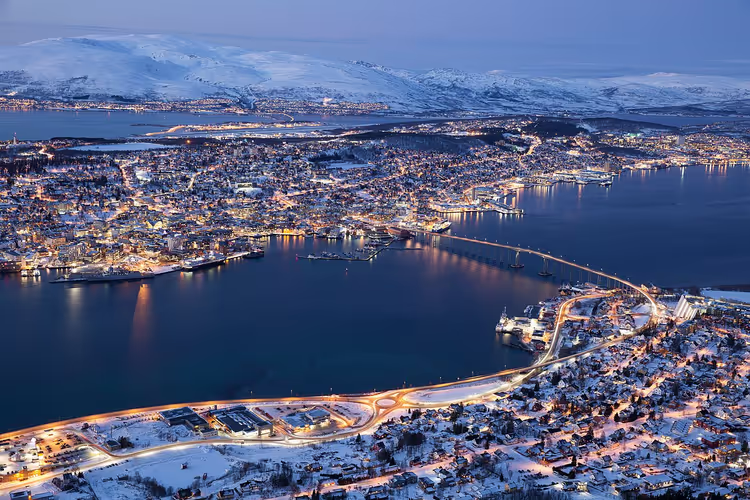 © Svein-Magne Tunli - tunliweb.no · CC BY-SAPhoto: Svein-Magne Tunli - tunliweb.no, CC BY-SA (https://creativecommons.org/licenses/by-sa/4.0), Wikimedia Commons
On mainland Norway, people head to two cities for the aurora: Tromsø and Alta. Hotels here come in every category, from budget hostels to full comfort, and dedicated aurora tours operate. Tromsø is convenient because accommodation is in the center, while dark-sky spots are reachable by car. You will only need to keep an eye on the forecast.
- Accommodation: hotels in Tromsø on Trip.com
3. Abisko, Lapland, Sweden
 © Ximonic (Simo Räsänen) · CC BY-SAPhoto: Ximonic (Simo Räsänen), CC BY-SA (https://creativecommons.org/licenses/by-sa/4.0), Wikimedia Commons
Abisko sits inside a national park, away from major cities, and Swedes call it the best place on Earth for watching the aurora. The elevation and clear skies really do help: there are fewer clouds here than on the coast. The catch: the hotel in Abisko itself is expensive, so many people stay in neighboring Lapland towns and drive in.
4. Lapland, Finland
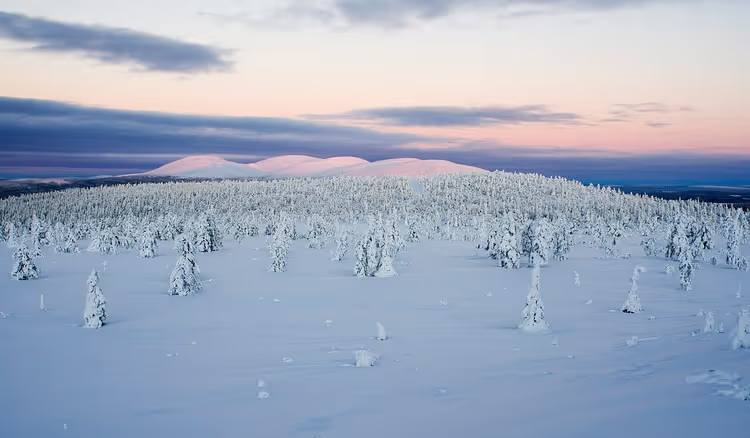 © Petr Vodička · CC BY-SAPhoto: Petr Vodička, CC BY-SA (https://creativecommons.org/licenses/by-sa/4.0), Wikimedia Commons
The Finns have their own word for the aurora, "revontulet", and a whole hunting season for it. The best time to go to Lapland is late winter or early spring: in clear weather the aurora appears almost every night. The only thing that can get in your way is cloud cover, so keep one or two backup nights.
- The catch: overcast weather can ruin your viewing plans.
5. Akureyri, Iceland
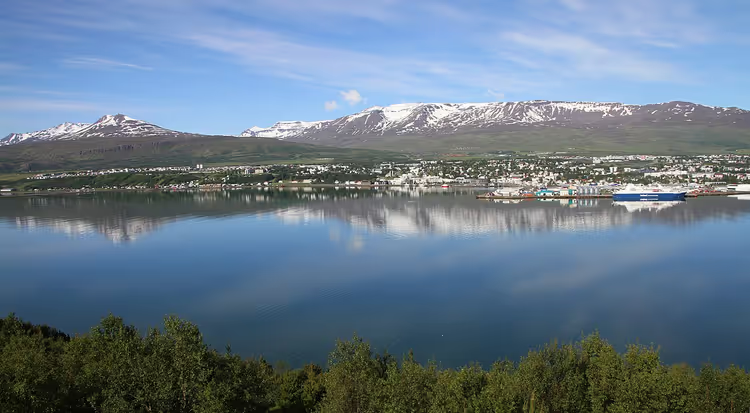 © Gerd Eichmann · CC BY-SAPhoto: Gerd Eichmann, CC BY-SA (https://creativecommons.org/licenses/by-sa/4.0), Wikimedia Commons
If you don't handle cold well, Iceland is a good fit: a warm current keeps temperatures around freezing during aurora season. The catch is something else: the weather here is often cloudy and rainy, so it's better to head to the north of the country, to Akureyri. Iceland is also great for photography: mountains and water will end up in your frame.
6. Isle of Skye, Scotland
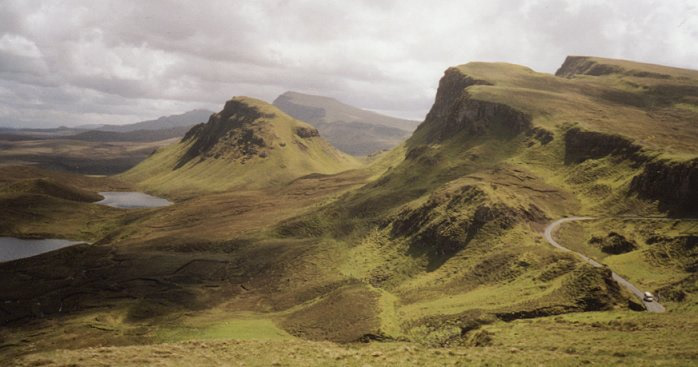 © Unknown author · CC BY-SAPhoto: Unknown author, CC BY-SA (https://creativecommons.org/licenses/by-sa/2.0), Wikimedia Commons
The Isle of Skye proves that the aurora reaches as far as Scotland. The best months for viewing here are in winter, when it gets dark early. Portree is a convenient base, a fishing town with colorful houses, cafes, and shops. You won't need a rental car if you book local tours.
Where to see the northern lights in North America
In North America the options are limited: Canada and Alaska. We're betting on Alaska, where the aurora-hunting infrastructure is better developed.
7. Alaska, USA
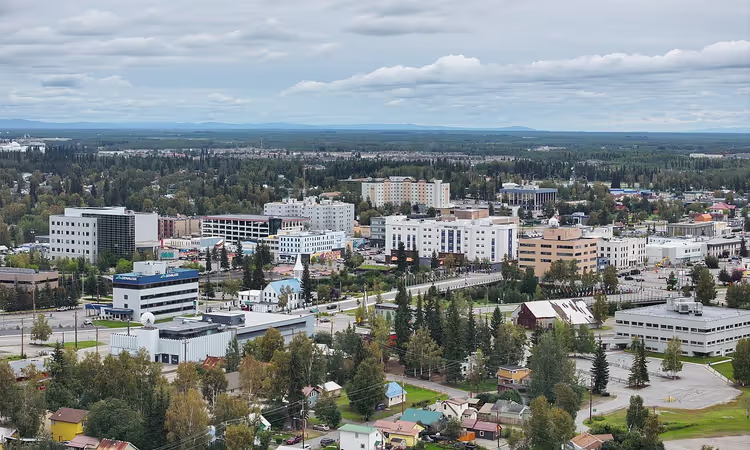 © Quintin Soloviev · CC BYPhoto: Quintin Soloviev, CC BY (https://creativecommons.org/licenses/by/4.0), Wikimedia Commons
People go to Alaska specifically for the sky, and the best period starts in late August and runs through late April (according to the Alaska tourism office). The most convenient bases are Fairbanks or Denali National Park: the aurora appears more often there, and lodging is comfortable. Local guides take you even farther north, so you can combine nighttime hunting with a daytime itinerary.
- The catch: harsh climate and expensive logistics.
- Where to stay: Fairbanks hotels on Trip.com
How to improve your chances of seeing the aurora
Get as far away from city lights as you can: artificial light kills contrast, and your eyes never adjust to the dark. Dress in layers and bring a thermos. The wait often lasts for hours, and the cold drains you fast.
Don't just check the activity index, check cloud cover too: even a strong storm behind the clouds won't show you anything. Let your eyes adjust to the dark, and keep phone screen use to a minimum. And don't leave after the first night: the strongest aurora often comes on the second or third.
⁉️🤔 Frequently asked questions
When is the best time to go see the northern lights?
The season runs from September through March, when nights are long and dark. Within the season, the best months are often fall and spring, when the weather is clearer.
How many nights should you plan in one place?
Allow at least two or three nights. Weather in the Arctic changes fast, and one cloudy night can easily ruin the whole trip. On Svalbard and in Alaska logistics are more expensive, so coming away empty-handed is especially frustrating.
Do you need extreme cold for the aurora?
No. Iceland proves this better than anywhere: the aurora is visible there at temperatures around freezing. Extreme cold is more of a hindrance to you than a help to the sky. What matters is darkness, clear skies, and an active sun.
Where is the aurora brighter: Scandinavia or Alaska?
The brightness of the aurora depends on geomagnetic activity on a given night, not on the country. Whether you see it comes down to cloud cover and darkness around you. Scandinavia wins on comfort and ready-made tours, Alaska on the feeling of a real expedition.
In short: what to book
If you want European comfort and ready-made tours, look at Tromsø and Finnish Lapland. If you don't handle cold well, choose Akureyri. If you're ready for a long journey in exchange for very dark skies, plan for Svalbard or Fairbanks.
Whatever you choose, check the geomagnetic forecast: without it, aurora hunting turns into a lottery.

A small editorial team writing guides for independent travel. We travel ourselves, but we haven’t been everywhere, so we check prices, opening hours and how to get there against official sources.