









When to go to Armenia: weather by month, region and holidays 2026
Weather in Armenia depends on elevation more than on the month. The plateau sits at 1,500-2,000 meters above sea level, the capital is at about 1,000 meters, and Sevan is at 2,000 meters. So on the same day you can be freezing in Gyumri and sweating in Yerevan.
If you are choosing when to travel in 2026, start with the season, not the date. Below is the best time for the valleys and highlands, weather by season, months for trekking and skiing, plus holidays that make good anchors for planning your route.
Ad: this text contains affiliate links, we earn a commission if you book through them, at no extra cost to you.
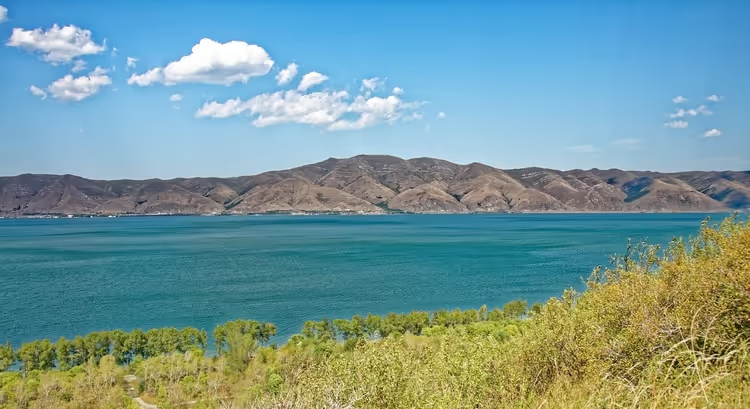
When to go to Armenia
💡 In short:
- For the valley around Yerevan, pick May and the second half of September with October.
- For the highlands (Sevan, Gyumri), the best period runs from June through September.
- In summer the mountains are cooler than the capital, and in winter the ski season is open.
- Seasonality and weather: 09/2026, checked against data from the climatestotravel guide.
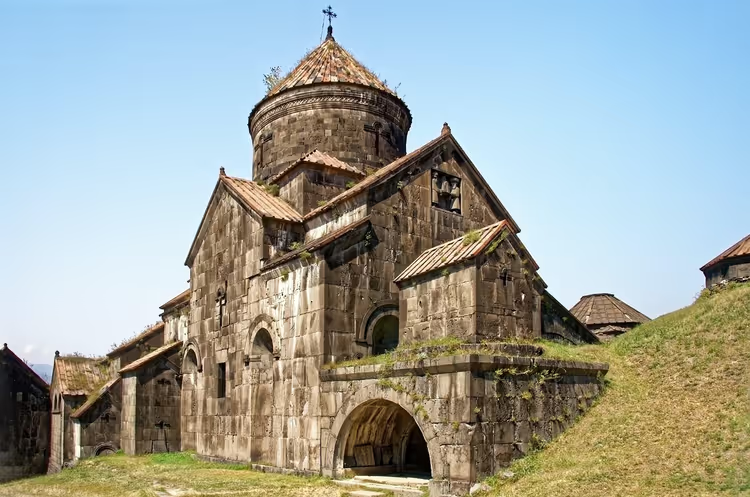
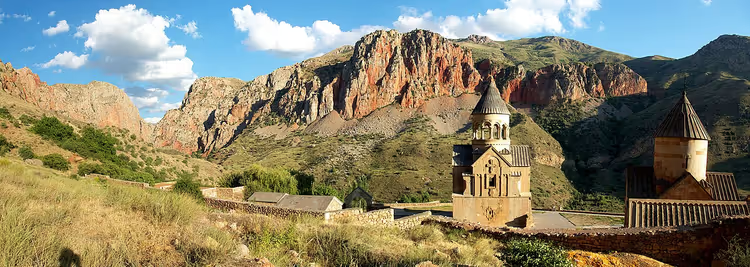 © Alexander Naumov · CC BYPhoto: Alexander Naumov, CC BY (https://creativecommons.org/licenses/by/3.0), Wikimedia Commons
There is no single ideal month for the whole country. Armenia stretches from north to south, and elevation ranges from 400 to 4,090 meters. If you need a compromise, pick June or September: in Yerevan it is already or still bearable, while the mountains are warm without being stuffy.
May and October beat July on temperature. In July, Yerevan averages +34.4 °C during the day, while in May it is only +24.8 °C. Rain falls mostly from April through June, but in short downpours, and July and August stay dry and dusty.
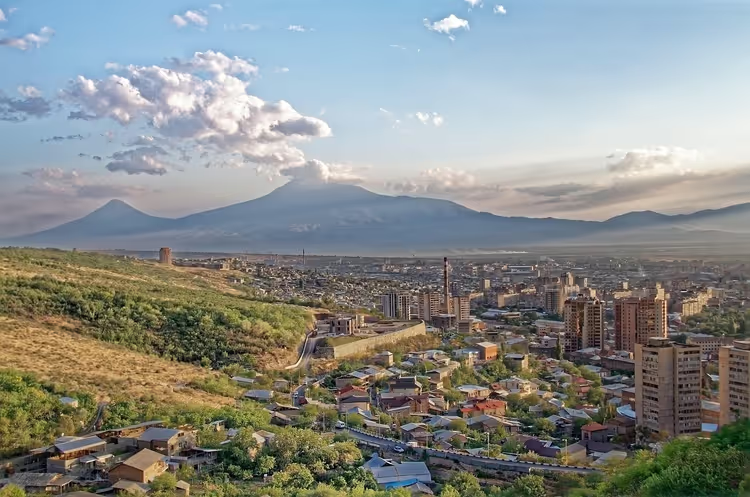
Armenia's climate: what elevation decides
Armenia's climate is continental and highland. Winters here are cold, summers are dry, and precipitation is low: Yerevan gets about 365 mm per year. The difference between regions is greater than the difference between months.
City | Elevation | January average | July average |
|---|---|---|---|
Yerevan | about 1,000 m | -3.4 °C | +26.8 °C |
Gyumri | 1,500 m | -8.2 °C | +20 °C |
Sevan | 2,000 m | -4.2 °C | +18.1 °C |
In January, the difference between Yerevan and Sevan is small, but in July it reaches almost nine degrees. If you head to the mountains in April, there is still snow on the passes, so some roads only open by May. Above 3,000 meters the climate is already alpine: about +10 °C in July and about -12 °C in January.
Weather by season
Winter (December-February). In the valley, nights average -8 °C, while in the highlands the average temperature stays below -10 °C, dropping to -20 °C on cold days. Snow in the valley is light, but it stays on the ground for weeks. The catch of the season is obvious: some passes are closed. On the plus side, the ski slopes are running and there are almost no lines at museums.
Spring (March-May). Spring is the rainiest season: May here is wetter than the other months, and strong winds occur in the mountains. There are pluses too: from April the valleys turn green, and from May the mountain roads to Sevan and Syunik open.
Summer (June-August). This is a dry and sunny season. In Yerevan, daytime highs are +34...+35 °C, sometimes up to +40 °C, while at Sevan and in Gyumri it is only +18...+27 °C. If you handle heat poorly, summer suits the mountains and does not suit the capital.
Autumn (September-November). From mid-September temperatures drop, and in October the chance of rain rises again. The second half of September and October are good for Yerevan and the monasteries: warm, but with fewer tourists than in July.
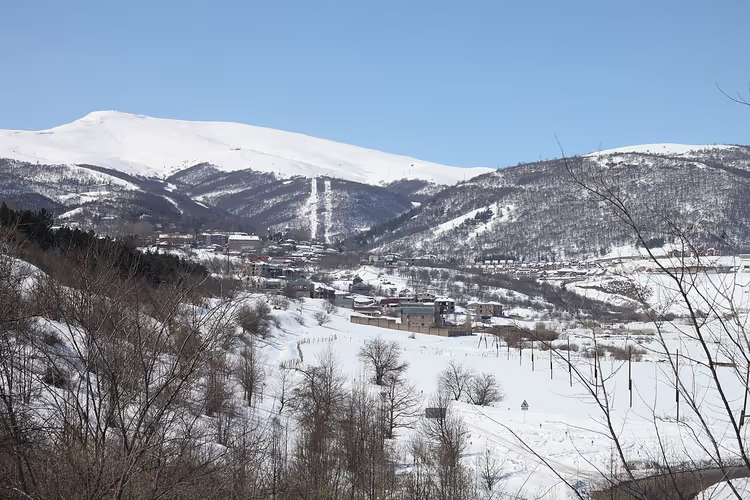 © Սէրուժ Ուրիշեան (Serouj Ourishian) · CC BYPhoto: Սէրուժ Ուրիշեան (Serouj Ourishian), CC BY (https://creativecommons.org/licenses/by/3.0), Wikimedia Commons
Best time for activities
Your itinerary changes the answer to the question of when to go. A cultural route and trekking require different weather, so it is easier to check the table.
Activity | Best months | Why then |
|---|---|---|
Culture and cities: Yerevan, Noravank Monastery, Etchmiadzin | April-June, September-October | warm without July heat |
Road trip: Lake Sevan, mountain roads | May-June, September-October | passes are open, less rain |
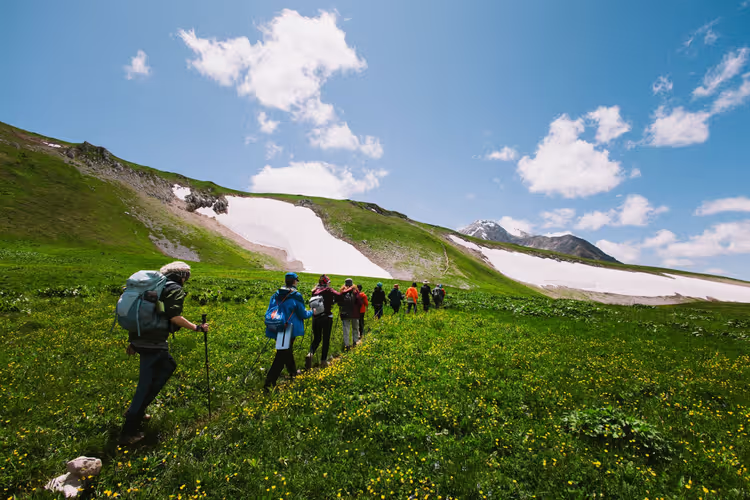
Trekking: Gegham Ridge, slopes of Aragats | May-October | snow clears from trails, days are long |
Alpine skiing and snowshoeing | December-February | snow lies on the slopes |
If you want trekking with a guide and transfers between trails, check out this selection of hiking tours on GetYourGuide. For skiing, January is the best month, but keep an eye on the forecast: winters in Armenia are low on snow.
Holidays and festivals in 2026
Armenia was the first country in the world to make Christianity the state religion, so many holidays are tied to the church and are usually celebrated with family. For a traveler, this is a reason to adjust the plan: on non-working days, transport and museum schedules change.
2026 date | Holiday |
|---|---|
January 1 | New Year |
January 6 | Christmas and Epiphany |
January 28 | Army Day |
March 8 | Women's Day |
April 5 | Easter |
April 24 | Armenian Genocide Remembrance Day |
May 1 | Labor Day |
May 9 | Victory Day |
May 28 | First Republic Day |
July 5 | Constitution Day |
Sunday in September | Exaltation of the Cross (Khachverats) |
September 21 | Independence Day |
December 31 | New Year's Eve |
As of: Armenia holiday calendar for 2026. Besides state dates, the country widely celebrates church holidays: Trndez on February 14, Vardavar in summer, Surb Sarkis at the end of winter. The dates of Vardavar and Surb Sarkis are movable, so check them against the church calendar before your trip.
Important: April 24 and September 21 are non-working days. If you plan to travel between cities on these days, book tickets in advance.
⁉️🤔 Frequently asked questions
When is the most comfortable weather for a trip to Armenia?
May, June, September, and the first half of October. In Yerevan, daytime temperatures are around +20...+27 °C, rain is short, and mountain roads are open. In July and August the valley is hot, but that is when Sevan and Gyumri are at their most comfortable.
Can you go to Armenia in winter?
Yes, if your goal is mountains and snow. The ski season runs from December through February, the valley averages -3.4 °C in January, and at night it can drop to -8 °C or lower. Bring a shell jacket, a down jacket, and a hat, and check mountain pass conditions in advance.
When is the best time to see Lake Sevan and the highlands?
From June through September: at 2,000 meters the average temperature is about +18 °C, and in summer people swim and sunbathe by the shore. May and October are also possible, but nights are cold, and in winter some roads around the lake are closed.
How much time should you allow for a first trip?
A week is enough for the classics: Yerevan, Etchmiadzin, Gegham Ridge, and Lake Sevan. If you add Syunik or several days of trekking, plan for ten days or more. The timing depends on the season: in spring some trails are still closed.
Do holidays affect a trip?
Yes. Transport and museum schedules change on holidays, so check opening hours the day before.
What is the Vardavar holiday?
Vardavar is tied to the Feast of the Transfiguration and is celebrated in summer, most often in July. In cities, people traditionally splash each other with water, so on that day do not carry electronics without a case. Check the exact date for 2026 against the church calendar.
In short: what to book
- If you want comfortable weather without heat: choose May or late September with October.
- If you want mountains, Lake Sevan, and trekking: book June or September.
- If you are going for snow and skiing: look at December-February and accommodation with heating.
- For Yerevan in the heat, get a room with air conditioning; for Sevan, get one with heating: nights at elevation are cold.
In high season, accommodation gets booked up early, so compare options with free cancellation: hotels and guesthouses in Yerevan on Trip.com.

A small editorial team writing guides for independent travel. We travel ourselves, but we haven’t been everywhere, so we check prices, opening hours and how to get there against official sources.