
















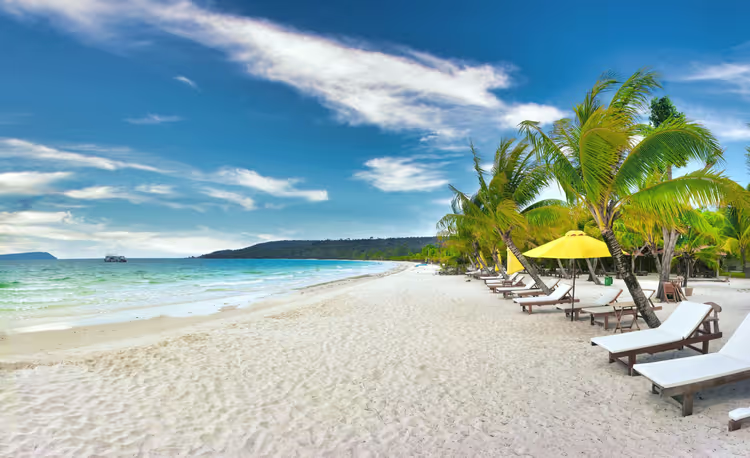
Cambodia: 15 resorts from the beaches of Sihanoukville to the jungles of Banlung
Cambodia combines beaches, jungles, and ancient temples in a single trip. Some people go for the sea and the islands in the Gulf of Thailand, others for Angkor. Choosing a destination is not easy: the country is spread out, and the road between resorts takes hours.
The coast has both busy cities and nearly deserted islands. Take Koh Rong, for example: it is only 25 km by sea from Sihanoukville (on the map). The new international airport near Siem Reap opened in November 2023 and is designed for 7 million passengers a year (according to AP).
Ad: this article contains affiliate links, we earn a commission if you book through them, at no extra cost to you.
How to choose a resort in Cambodia
💡 In short:
- Decide what kind of trip you want: beach and diving in the south, temples and history inland.
- In the dry season (November to April), the weather is more stable and the sea is calmer.
- You reach the islands by speedboat ferry from Sihanoukville, and you fly to Siem Reap for Angkor.
- Visa and entry rules: checked on 15.09.2026 on the official website of the Cambodian Ministry of Foreign Affairs.
A simple table helps you get oriented quickly. It sorts destinations by why you are going to Cambodia.
What you need | Where to go |
|---|---|
Beach and diving | Sihanoukville, Koh Rong, Koh Russey, Koh Prins |
Temples and history | Siem Reap, Battambang |
Nature and jungle | Banlung, Koh Kong, Koh Tang |
A quiet getaway | Kep, Kampot, Sun Nail |
A big city | Phnom Penh |
A secluded island | Koh Damlong, Koh Dek Koul |
1. Siem Reap
 © Bahnfrend · CC BY-SAPhoto: Bahnfrend, CC BY-SA (https://creativecommons.org/licenses/by-sa/4.0), Wikimedia Commons
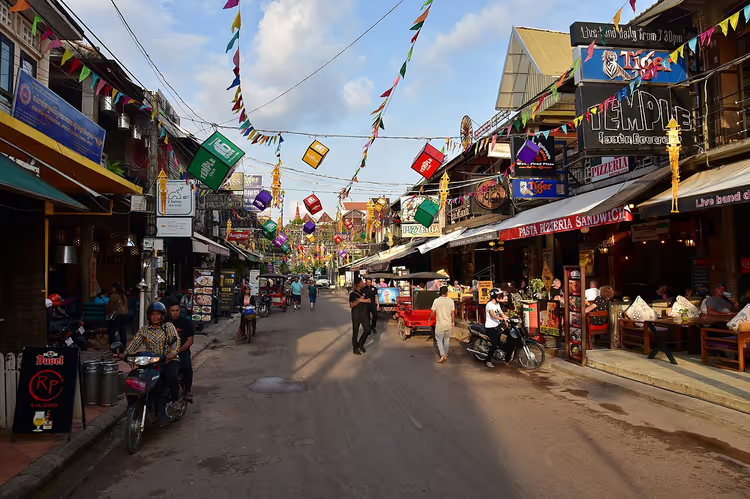
Siem Reap is the gateway to Angkor, the ancient capital of the Khmer Empire. The city is about 6 km from the temple complex (on the map), so people come here for one reason: to see Angkor Wat and the neighboring temples. The complex has been a UNESCO World Heritage Site since 1992 (according to UNESCO).
The city itself sits on both banks of the river and lives on tourism. There are plenty of hotels, restaurants, and bars, and the center stays lively in the evening. Allow at least two days for the temples: in one day you will only see the main temple. A tuk-tuk or a car with a driver takes you to the farther sites.
- How to get there: the new international airport is near the city; from there, take a taxi or a shuttle to your hotel.
- Who it's for: people who want to combine ancient temples with the city's nightlife.
Hotels in Siem Reap on Trip.com
2. Sihanoukville
 © Kiensvay · CC BY-SAPhoto: Kiensvay, CC BY-SA (https://creativecommons.org/licenses/by-sa/3.0), Wikimedia Commons
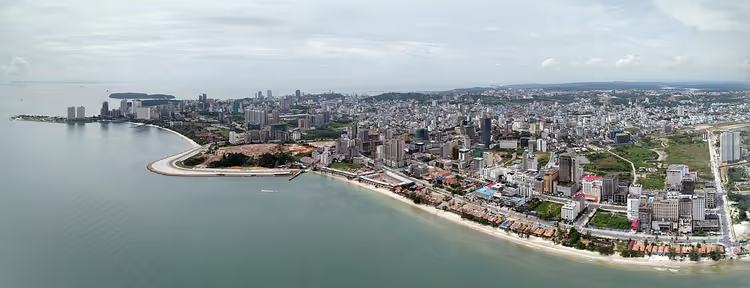
Sihanoukville is the country's main beach city and a major port. The French built it in the 1950s, and it became a resort only in the 1990s. Today ferries leave from here for the islands of the Gulf of Thailand, and it makes a convenient base for a few days.
The beaches here vary a lot. Serendipity Beach is loud, with bars and nightlife, while Otres Beach and Sokha Beach are quieter. Some stretches are not kept as clean as you would expect (from reviews). If you specifically want the beach, book a hotel by the water, not in the city center.
- Who it's for: people who want the sea, cafes, and an easy trip to the islands.
- The catch: part of the coast is densely built up, with litter in places.
Hotels in Sihanoukville on Trip.com
3. Phnom Penh
 © KY Geologist · CC BYPhoto: KY Geologist, CC BY (https://creativecommons.org/licenses/by/2.0), Wikimedia Commons
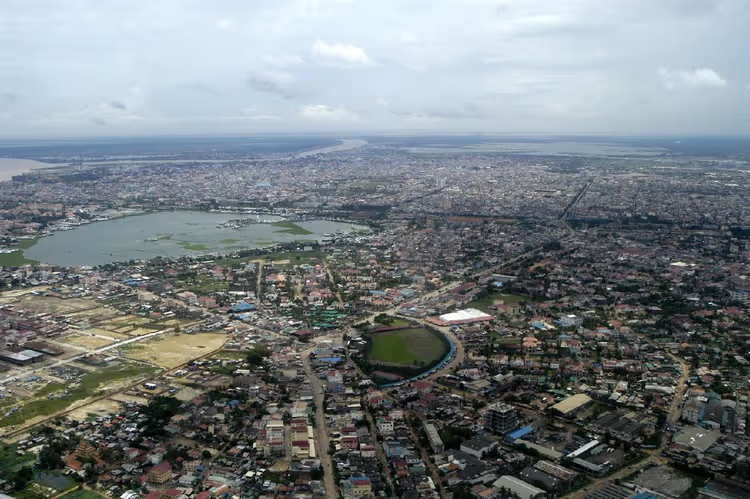
Phnom Penh is the capital and a city of contrasts. Palaces and pagodas stand next to ordinary neighborhoods, and the outskirts look poorer than the center. The city makes a mixed impression on tourists, and that is part of its character.
The main point on the route is the Royal Palace with the Silver Pagoda, the Emerald Buddha statue, and the Golden Tower. The second landmark is Wat Phnom hill with its temple and park: for Cambodians, this is a sacred place. The best time to visit is October to December, when the heat eases off.
- How to get there: the international airport is within the city limits; take a taxi to the center.
- The catch: the outskirts are dirty and littered.
Hotels in Phnom Penh on Trip.com
4. Battambang
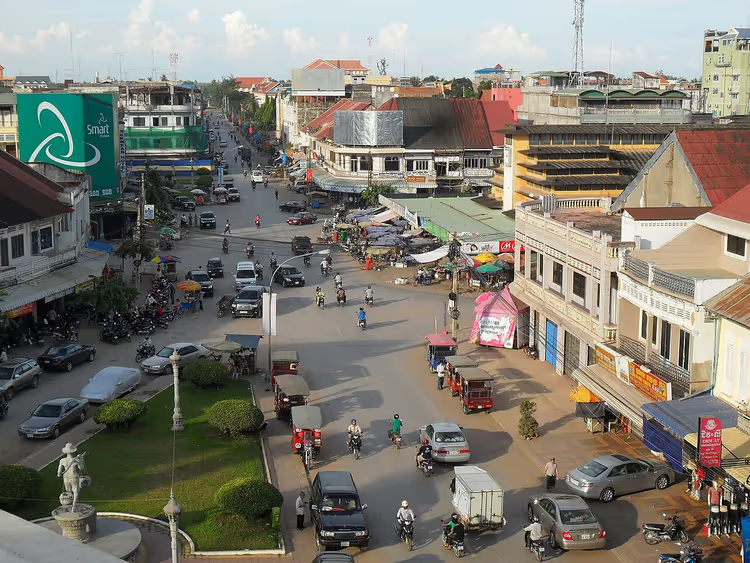 © Milei.vencel , Hungary · CC BY-SAPhoto: Milei.vencel , Hungary, CC BY-SA (https://creativecommons.org/licenses/by-sa/3.0), Wikimedia Commons
Battambang is the country's second-largest city. Its appearance still bears traces of the French colonial period, and its streets are pleasant to stroll without rushing. People come here not for the sea, but for the atmosphere of an Asian provincial town.
The tourism industry is less developed than at the well-known resorts. There are few large hotels and entertainment venues, but it is quiet. Visitors usually come to Battambang for a few days and combine the city with excursions around the surrounding area.
- How to get there: from Phnom Penh on a good road, then onward across the country by bus.
- Who it's for: those who have had their fill of big cities and are looking for peace and quiet.
- The catch: there is no beach holiday here, and few hotels.
Hotels in Battambang on Trip.com
5. Banlung
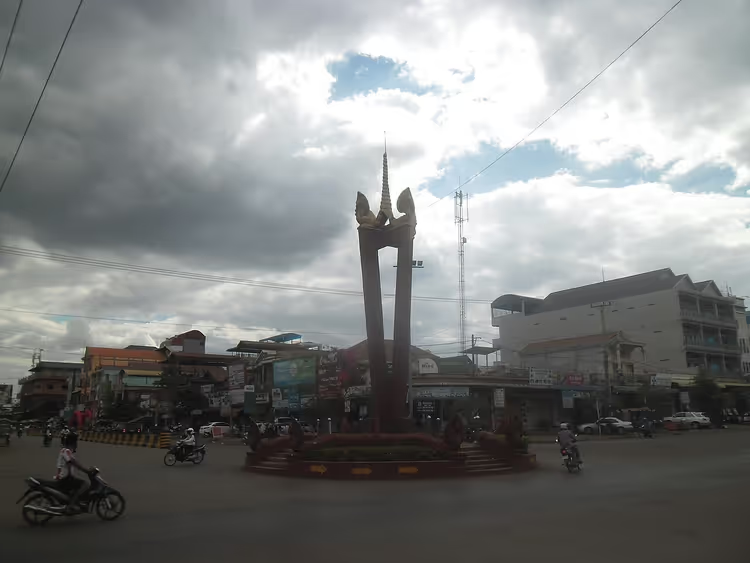 © August Dominus · CC BY-SAPhoto: August Dominus, CC BY-SA (https://creativecommons.org/licenses/by-sa/4.0), Wikimedia Commons
Banlung is a small town in the northeast, in Ratanakiri Province. Tropical forests, lakes, and waterfalls spread out around it. The road to the town is still partly unpaved, so there is little in the way of civilization here.
The main attractions are the crater lake Yeak Laom, waterfalls, and villages of hill tribes. Rubber trees, palms, and cashew bushes grow in the surrounding area. You can visit the market and try local fruit cheaper than on the coast.
- How to get there: from Phnom Penh by scheduled bus, taxi, or small plane.
- Who it's for: those who love nature and are ready for a long journey.
- The catch: the overland route is long, and the roads are bad in places.
6. Kampot
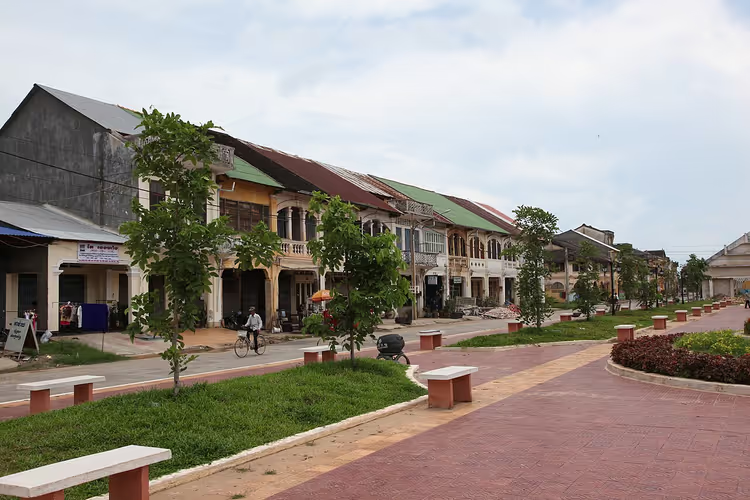 © Hans A. Rosbach · CC BY-SAPhoto: Hans A. Rosbach, CC BY-SA (https://creativecommons.org/licenses/by-sa/3.0), Wikimedia Commons
Kampot is a southwestern province on the Gulf of Thailand. The administrative center stands on the Tuek Chhou River, about 5 km from the sea (on the map). The place is valued for its peaceful nature and old buildings.
The sights here are concentrated in the mountains and along the river. You can climb to the abandoned Bokor Hill Station, see the Popokvil waterfall, and stop by black pepper plantations. The beaches are simpler than on the islands, but there are no crowds. Many people like to combine Kampot with neighboring Kep.
- How to get there: from Sihanoukville on a good highway by bus or taxi.
- Who it's for: couples and families who value peace rather than diving.
7. Koh Rong
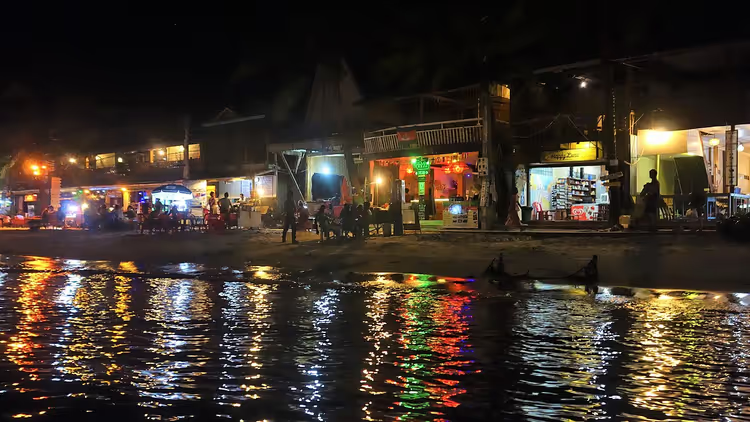 © Rômulo Gama Ferreira from Vitória-ES · CC BYPhoto: Rômulo Gama Ferreira from Vitória-ES, CC BY (https://creativecommons.org/licenses/by/2.0), Wikimedia Commons
Koh Rong is a large island about 25 km from Sihanoukville (on the map). Most of the island is covered by jungle, and long sandy beaches stretch along the shore. People come here for calm seas and diving.
Accommodation on the island is simple: bungalows, small houses, guesthouses. There are few luxury hotels, but there are no crowds either. During the day you can snorkel or take a boat to neighboring bays; in the evening, local cafes serve seafood.
- How to get there: speedboat ferry or boat from the pier in Sihanoukville.
- Who it's for: young people and those who value nature over comfort.
- The catch: accommodation is modest, and some beaches have no proper road access.
Hotels on Koh Rong on Trip.com
8. Koh Kong
Koh Kong is a province and archipelago on the border with Thailand. Nature here is still unspoiled by mass tourism: forests, waterfalls, mangrove thickets. Infrastructure is growing fast, but compared with Sihanoukville the area is quieter.
Because of its proximity to Thailand, Thai tourists often stop here, and part of the town caters to casinos. The natural highlight of the area is the Cardamom Mountains. You can swim at the beaches, but it is better not to go into the forest without a guide: predators live there.
- Who it's for: those looking for wild nature and diving.
- The catch: swimming in the local rivers is prohibited because of crocodiles.
Hotels in Koh Kong on Trip.com
9. Koh Dek Koul
 © Dmitry Makeev · CC BY-SAPhoto: Dmitry Makeev, CC BY-SA (https://creativecommons.org/licenses/by-sa/4.0), Wikimedia Commons
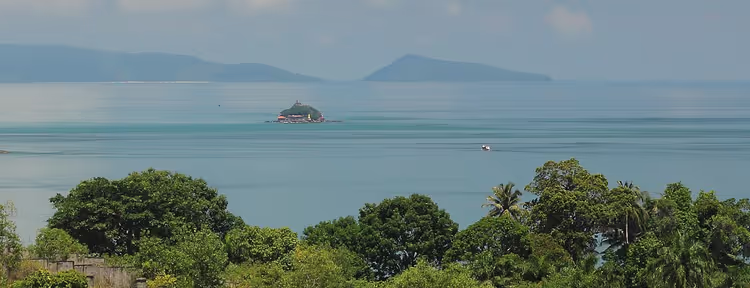
Koh Dek Koul is a small island in the Gulf of Thailand with a single hotel. It's about 4 km from Sihanoukville (on the map), which is where the boats depart from. Once uninhabited, today the island has become a place for active recreation.
The beaches here are white, the water is clear, and there's plenty of greenery. The hotel is small, so the island is quiet and there are no lines. You have access to water skiing, snorkeling, diving, and guided jungle excursions.
- How to get there: boat from Sihanoukville, then walk to the hotel.
- Who it's for: those who want seclusion and water activities in one place.
10. Kep
 © PsamatheM · CC BY-SAPhoto: PsamatheM, CC BY-SA (https://creativecommons.org/licenses/by-sa/4.0), Wikimedia Commons
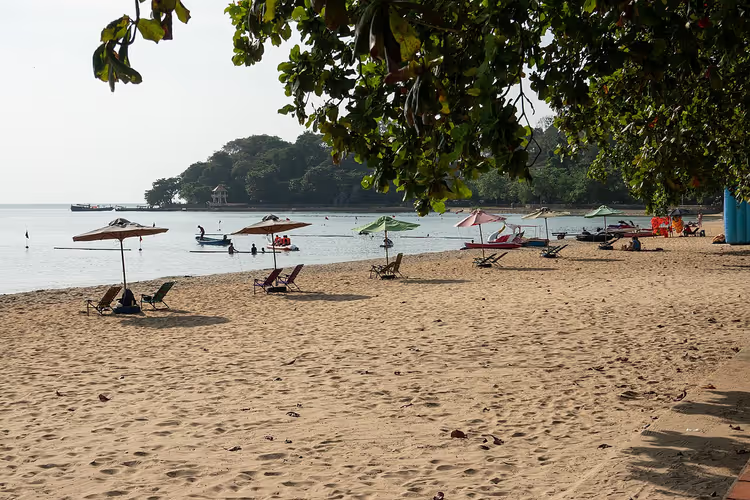
Kep is a small town in the south of the country, once an elite resort for the French and local nobility. The civil war destroyed most of the villas and gardens, and today the town is gradually reclaiming its former status.
The symbol of Kep is the blue crab. It's sold everywhere, and there's a dedicated crab market where the catch is cooked to order on the spot. Near the market stands a crab monument and a statue of a woman gazing out to sea. Popular activities here include mangrove walks, snorkeling, and fishing.
- How to get there: a short drive from Kampot, about two hours from Sihanoukville.
- The catch: some villas and buildings are still in ruins.
11. Koh Russey
 © Treehill · CC BY-SAPhoto: Treehill, CC BY-SA (https://creativecommons.org/licenses/by-sa/4.0), Wikimedia Commons
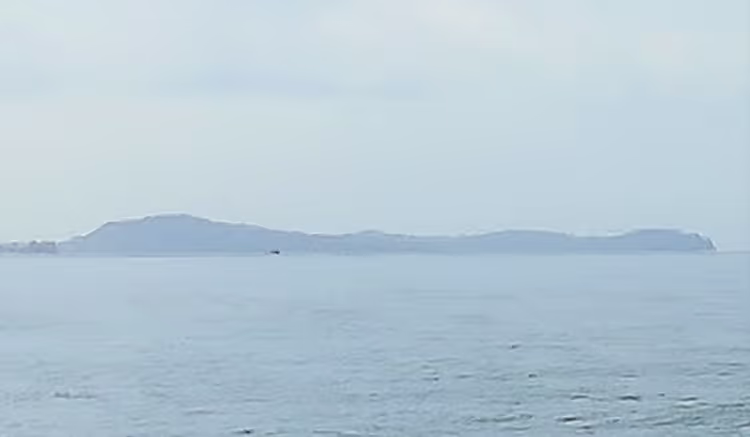
Koh Russey is a bamboo island in Ream National Park, about 20 km from Sihanoukville (on the map). It's covered in dense tropical vegetation, and its beaches are wide with white sand. The island is often chosen for a quiet family vacation.
It's pleasant to take boat trips through the mangroves and stroll through the small villages. The sand is kept strictly clean, with the beach swept every evening. You can rent water sports equipment right on the shore.
- Who it's for: families and those who want calm seas and greenery.
- The catch: the island is small, with few evening entertainment options.
Hotels on Koh Russey on Trip.com
12. Koh Sdach
Koh Sdach is a small island often described as magical. The scenery is peaceful, and the quiet encourages a slow pace of rest. People come here for seclusion, not nightlife.
Accommodation on the island is modest: bungalows with basic amenities. In the evenings, the beachfront restaurant serves seafood and hosts music nights. During the day, you can fish, swim, and walk along the palm-lined paths.
- Who it's for: couples and those who don't need much comfort.
- The catch: the bungalow amenities are basic.
13. Koh Tang
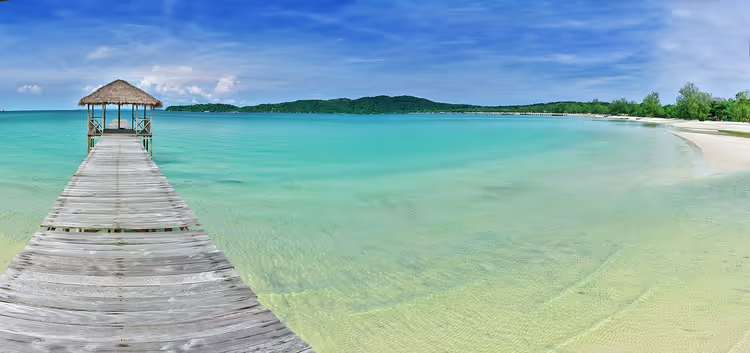
Koh Tang is one of Cambodia's largest islands, near the border with Vietnam. In the past it served as a refuge for Vietnamese smugglers, and its caves were used to store goods. Today people come here for nature and diving.
The island's coast is ringed by cliffs that form grottoes and coves. Coconuts, bananas, mangoes, and pineapples grow on the island. There are no venomous snakes or large predators here, so walking is safe. Around it are many tiny islets that you can reach by longtail boat.
- How to get there: by speedboat from the coast, a trip of several hours.
- Who it's for: divers and those who want secluded nature.
14. Koh Prins
Koh Prins is a group of three small islands. During the war, Vietnamese forces had a firing position here, and the islands were bombed more than once. The memory of those events remains, but today it's a popular diving destination.
The islands differ from one another. The largest has a fishing village and sandy beaches, Koh Moan has a rocky shore, and the third island is almost entirely stony. The water is so clear that you can see the bottom at a depth of about 20 m. Divers see reefs, moray eels, and several species of sharks.
- How to get there: only by boat, usually as part of a dive tour.
- Who it's for: experienced divers and underwater wildlife enthusiasts.
15. Koh Damlong
Koh Damlong lies about 60 km from mainland Cambodia (on the map). The island made the news because of an unrealized large resort project, and it became a tourist destination only recently. As a result, its nature remains almost untouched.
The island has air-conditioned bungalows, a restaurant with a bar, and simple jungle huts. People usually come here for two or three days. Snorkeling will reveal underwater wildlife you won't find elsewhere.
- How to get there: by boat from the coast, several hours en route.
- The catch: infrastructure is limited, and only a few facilities operate.
Cambodia resorts on the map
Below is an interactive map with the main points from this selection. Open it and note the distances between towns and islands for yourself.
Resorts of Cambodia
Places on the map
- 1Siem Reap Gateway to Angkor, the UNESCO temple complex
- 2Sihanoukville The main beach town and port, ferries to the islands
- 3Phnom Penh The capital with the Royal Palace and the Silver Pagoda
- 4Battambang The country's second city with a French colonial look
- 5Banlung A northeastern town by the crater lake Yak Loam
- 6Kampot A river province with pepper plantations and Bokor Hill Station
- 7Koh Rong A large island 25 km from Sihanoukville, jungle and beaches
- 8Koh Kong An archipelago province on the Thai border, the Cardamom Mountains
- 9Koh Dek Koul A tiny island with the only hotel, 4 km from Sihanoukville
- 10Kep A former French elite resort, its symbol is the blue crab
- 11Koh Russey A bamboo island in Ream National Park, quiet family holidays
- 12Sun Neil A small secluded island with bungalows and fishing
- 13Koh Tang One of the largest islands near the Vietnamese border, grottoes and coves
- 14Koh Preang A group of three islands, a popular diving spot
- 15Koh Damlong An island 60 km from the mainland with almost untouched nature
⁉️🤔 Frequently asked questions
When is the best time to visit Cambodia?
The dry season runs roughly from November to April: less rain, calmer seas, and more tolerable heat. From May to October, monsoon downpours arrive, humidity rises, and the sea can get rough. For Angkor, the dry season is also more convenient because the trails are dry. In high season, hotels are more expensive, so book in advance.
How do you get to the islands from Sihanoukville?
Speed ferries to the Gulf of Thailand islands depart from the pier in Sihanoukville. Trips to Koh Rong and Koh Russey take from half an hour to an hour. Buy tickets in advance, as seats sell out quickly in high season. For the small Koh Dek Koul, you arrange a boat separately through your hotel.
Do you need a visa to travel to Cambodia?
You apply for a tourist visa on the official website of the Cambodian Ministry of Foreign Affairs. The application is submitted online, and a decision usually arrives within a few days. The visa allows you to stay in the country for up to 30 days. Before traveling, check the current requirements and fees, as rules sometimes change.
How many days do you need for Angkor?
Allow at least two days for the minimum route: in one day you'll only see Angkor Wat and a couple of neighboring temples. Three days give you time for the outer temples and Siem Reap itself. Tickets for the complex are purchased on the official Angkor Enterprise website, and morning entry slots are best.
Where are the best beaches in Cambodia?
The most popular beaches are concentrated on the islands and in Sihanoukville. On Koh Rong the sand is white and fine, while Koh Sdach has quiet stretches for couples. In Sihanoukville, Otres Beach and Sokha Beach are calmer, while Serendipity Beach is noisy. On the mainland, the beaches in Kep and Kampot are simpler than those on the islands.
In short: what to book
If you want beach time and diving, use Sihanoukville as your base and add Koh Rong or Koh Russey for a few days. For temples, head to Siem Reap; for colonial atmosphere, Battambang; for quiet, Kep and Kampot. The Gulf of Thailand islands suit those who are fine with simple accommodation and a ferry ride.
- If it's your first time and you have about a week: Siem Reap and Sihanoukville.
- If you only want the sea: Koh Rong, Koh Russey, or Koh Sdach.
- If you're traveling with children: Sihanoukville and Kampot.
- If you love nature and trekking: Banlung, Koh Kong, Koh Tang.
Hotels in Sihanoukville on Trip.com and guided tours on GetYourGuide.

A small editorial team writing guides for independent travel. We travel ourselves, but we haven’t been everywhere, so we check prices, opening hours and how to get there against official sources.