
















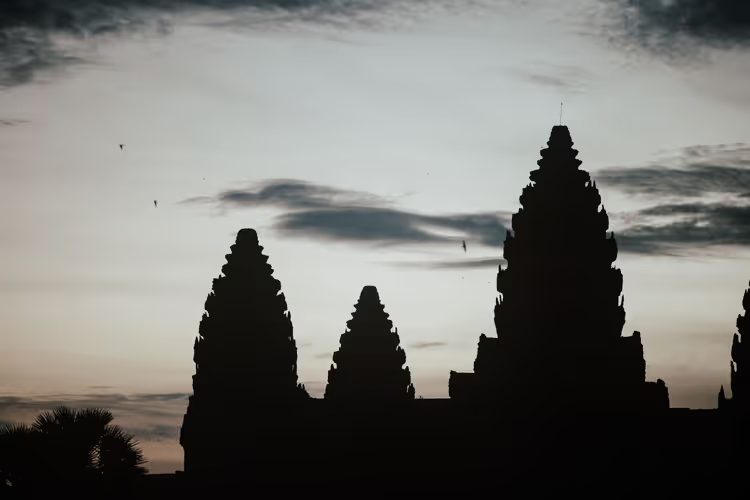
Cambodia instead of Thailand: seasons, Angkor and holiday prices in 2026
Cambodia is cheaper than Thailand, and there are noticeably fewer tourists here. The flight is longer and the service is simpler, but the country has not turned into one big resort.
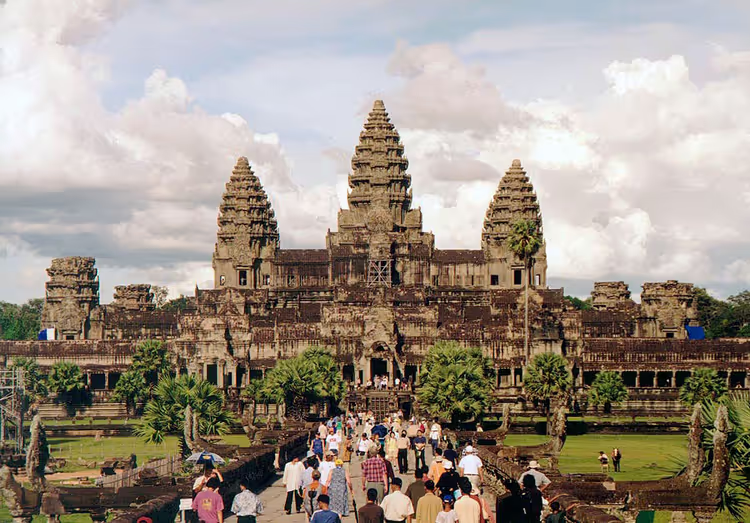
A pass to the Angkor temple complex costs $37 per day, and a three-day pass will run you $62 (as of 09/2026, official Angkor Enterprise website). Angkor Wat remains the main reason to go to Cambodia. The rest you can fill in with the sea, the capital, and the rice fields.
Below is a practical breakdown: seasons, a route through the main sights, prices, visa, and transport. Everything that could be checked against an official source, we checked.
Ad: this article contains affiliate links. We earn a commission if you book through them, at no extra cost to you.
When to go: dry season and rains
💡 In short:
- The dry season runs from November to April: sun, low humidity, comfortable nights.
- Rains come from May to October, but downpours are short and hotels are cheaper.
- Angkor, the capital, and the southern coast fit into a two-week route.
- Prices and opening hours: 09/2026, verified on the official Angkor Enterprise website.
The year in Cambodia is divided into two big seasons, and the line between them is fairly clear. The dry season runs from November to April: hot during the day, low humidity, almost no rain. These months see the main flow of tourists, so hotels in Siem Reap should be booked in advance.
From May to October the country lives in the rainy season. The downpours are heavy but usually short: the sky unloads in an hour and the sun comes out again. During this time prices drop and the landscapes turn greener. The catch: washed-out dirt roads and mugginess.
If you are going for the temples and beaches without compromise, take December or January. If you want to save money, look at June: the rains are still tolerable, and hotels are noticeably cheaper.
Holidays happen all year round. Khmer New Year is celebrated in April, and the water festival with boat races takes place in autumn. Exact dates depend on the lunar calendar and are confirmed locally. Locals are friendly to tourists, and tourism itself has long been one of the country's main sources of income.
 © Manfred Werner ( talk · contribs ) · CC BY-SAPhoto: Manfred Werner ( talk · contribs ), CC BY-SA (http://creativecommons.org/licenses/by-sa/3.0/), Wikimedia Commons
Angkor and Siem Reap: the main reason to go
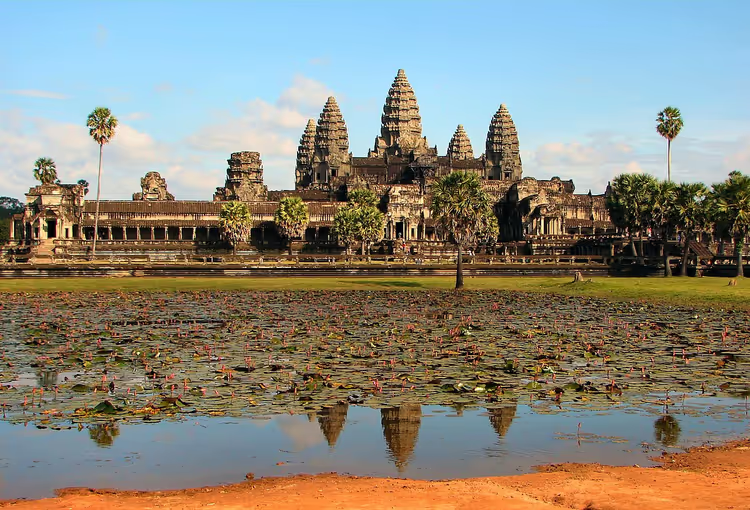
Angkor Wat stands a few kilometers from Siem Reap, and it takes at least a day. The pass is bought once and works for both the small circuit and the large circuit. It is more convenient to stay in the city rather than at a hotel near the park: in the evening there are places to have dinner.
 © Bjørn Christian Tørrissen · CC BY-SAPhoto: Bjørn Christian Tørrissen, CC BY-SA (https://creativecommons.org/licenses/by-sa/4.0), Wikimedia Commons
Get to the western entrance before dawn. The crowd gathers at the reflection pond, and by midday the temple is packed with people. The reverse order also works: first the far points, then Angkor Wat toward sunset.
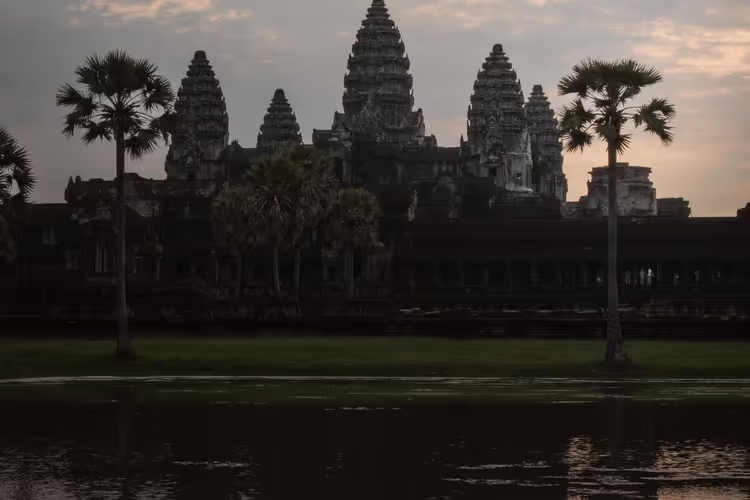
Besides the main temple, it is worth seeing Bayon with its stone faces, Ta Prohm with tree roots over the ruins, and the pink Banteay Srei. For the far points you need transport: a tuk-tuk for the whole day or a car with a driver.
Guided tours should be booked in advance: Angkor tours on GetYourGuide will help you make sense of the bas-relief scenes. With a guide you will understand what you are actually looking at; without one, it is just rocks.
Phnom Penh: the palace and pages of history
The capital stands at the confluence of the Mekong and the Tonle Sap. The Royal Palace and the Silver Pagoda take up half a day, with the riverfront and markets nearby. For a first introduction, one full day is enough.
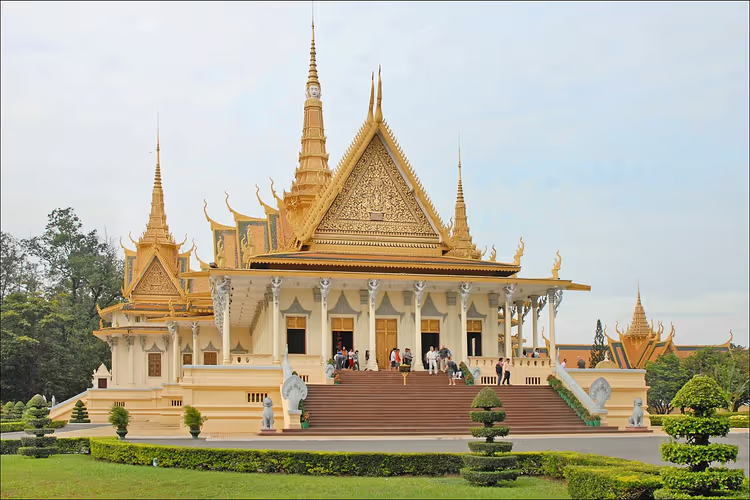 © Jean-Pierre Dalbéra from Paris, France · CC BYPhoto: Jean-Pierre Dalbéra from Paris, France, CC BY (https://creativecommons.org/licenses/by/2.0), Wikimedia Commons
The Tuol Sleng Genocide Museum and the Choeung Ek memorial tell the story of the Khmer Rouge years. These places are heavy but important for understanding the country. Take the audio guide: without explanations, many things remain unclear.
Staying in the center near the river is convenient: you can walk to the palace and the markets. Taxis and tuk-tuks are inexpensive, but it is better to agree on the price in advance.
The coast: Sihanoukville, Koh Rong, and Kampot
The southern coast is washed by the Gulf of Thailand, and the water here is warm almost all year round. Sihanoukville remains a transport hub and a city with hotels rather than a quiet resort. From there ferries go to the islands, where there is white sand and little development.
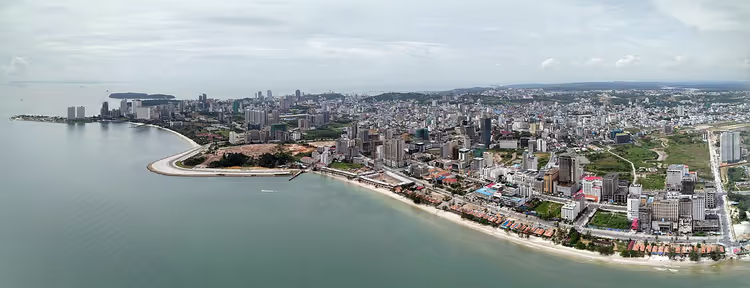 © Kiensvay · CC BY-SAPhoto: Kiensvay, CC BY-SA (https://creativecommons.org/licenses/by-sa/3.0), Wikimedia Commons
Koh Rong, the country's second largest island after Koh Kong, is a good fit for long beach days. The neighboring islands are quieter and pricier: fewer hotels and almost no tour groups. Ferries leave from the city pier, and tickets are sold on site and online.
Further east are Kampot and Kep. Kampot is known for its pepper and river trips, while Kep is coming back to life as a quiet town with a crab market. Hotels here are cheaper than in Sihanoukville, and there are noticeably fewer people.
The easiest way to compare options in advance is by price and area: hotels on Cambodia's coast on Trip.com.
Battambang and tonle sap lake
Battambang sits on the northern rail line and is known for its colonial buildings and the bamboo train. The town is calmer than Siem Reap: fewer tourists, lower prices.
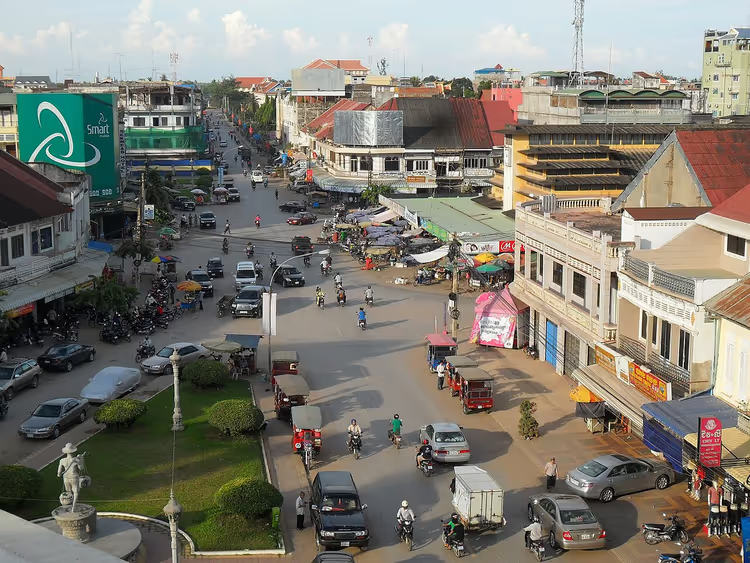 © Milei.vencel , Hungary · CC BY-SAPhoto: Milei.vencel , Hungary, CC BY-SA (https://creativecommons.org/licenses/by-sa/3.0), Wikimedia Commons
Tonle Sap Lake changes size with the seasons. During the rainy period it swells and floods the forest; in the dry season it shrinks. Along its shores are stilt villages and floating villages that you can reach by boat from Siem Reap.
Plan your trip for the morning: by midday it gets hot and the light turns harsh. Check the water level in advance, as some channels are impassable in the dry season.
Visa, passes, and opening hours
The e-visa is arranged in advance through the government's official portal, while the visa on arrival is issued at the airport. Your passport must be valid for at least six more months, and a return ticket is sometimes requested at the counter. Keep a copy of your visa on your phone.
Angkor passes are sold in three options, and the trip always starts at the ticket office or website (as of 09/2026, official Angkor Enterprise website):
Pass | Price | Valid for | Where to buy |
|---|---|---|---|
1 day | $37 | one day | |
3 days | $62 | ten days | |
7 days | $72 | thirty days |
The park opens early and closes after sunset, and tickets are checked at every major temple. Keep your pass with you; the photo for it is taken on site using your passport. Opening hours shift by season, so check them before your trip.
Tours and tickets in Siem Reap
Guided tours, skip-the-line tickets and activities — most offers can be cancelled free of charge.
See offers on GetYourGuideThe widget loads once you give your consent.
How to get there and how to get around
There are no direct flights from Western Europe: you fly to Cambodia via Istanbul, Doha, Dubai, Bangkok, or Singapore. Phnom Penh, Siem Reap, and Sihanoukville all have international airports, so look for tickets with a connection.
Buses are a convenient way to travel around the country. Night routes connect Siem Reap, Phnom Penh, and Sihanoukville, and the carrier Giant Ibis is considered one of the most reliable. Roads are narrow in places, so allow extra time.
There is also a railway. Royal Railway runs trains from Phnom Penh north to Battambang and south to Kampot, Kep, and Sihanoukville (as of: 09/2026). The schedule is sparse, tickets are sold at the counter and online, so check departure times before you travel.
Locally, people get around by tuk-tuk and moto taxi, and prices in the Grab app are fixed. Agree on the fare before you get in. Ferries and speedboats run between the islands.
Connectivity and money: buy an eSIM for Cambodia before you fly, and pay in dollars and riel on the ground. Cash comes in handy at markets and small cafes.
Where to stay: three bases for your trip
Siem Reap works well for the temples: hotels in every category are located in the center and along the road to Angkor. It is convenient to spend three or four nights there, after which the town starts to feel repetitive.
Phnom Penh is worth one or two nights for the palace, markets, and museums. Traffic and heat wear you out quickly, so pick a hotel closer to the riverfront.
The coast offers three different scenarios: Sihanoukville for convenience, the islands for white sand, and Kampot and Kep for quiet and good food. If you are going for a longer stay, split your vacation between two cities and one island base.
Find hotels in Cambodia
Compare prices across booking sites and filter for rooms with free cancellation.
Compare prices on Trip.comThe widget loads once you give your consent.
⁉️🤔 Frequently asked questions
Is a week enough for Cambodia?
In a week you can cover Angkor, the capital, and one beach, but travel between them will eat up two days. Two weeks gives you a relaxed pace: three nights in Siem Reap, a day in Phnom Penh, and a few days on the coast. If you have less time, pick one area and don't try to see everything at once.
How much does an Angkor pass cost?
Prices for one-, three-, and seven-day passes are in the table above (as of 09/2026, official pricing site). One pass covers the small and grand circuits, which means dozens of temples.
How do I get a visa and what should I bring?
Visa options and passport requirements are covered in the visa section above. Keep a copy of your visa and bookings on your phone, they will come in handy at the border.
Is it safe to vacation in Cambodia?
Resorts and tourist towns are calm, and serious crimes against tourists are rare. Don't stray from marked routes in remote areas near the border: landmines left over from the war are a real danger there. Get medical insurance before you fly, and drink only bottled water.
When is the best time to go to the beaches?
The coast and islands are at their best from December to March: dry, calm seas, clear water. From May to October it rains, but showers are short and hotels are noticeably cheaper. The south is wetter in the rainy season than Siem Reap, so factor that into your planning.
In short: what to book
If you're short on time: go with Siem Reap and an Angkor pass, and leave the rest for another trip. If you're after the beach: look at Sihanoukville and the islands, where you'll find white sand and little development. If you want to see the whole country: add Phnom Penh and Battambang, and save the coast for the finale.
Book your Siem Reap hotels and flights in advance: in the dry season there are fewer available rooms and prices are higher. Everything else can be bought on the spot, often at the same price.

A small editorial team writing guides for independent travel. We travel ourselves, but we haven’t been everywhere, so we check prices, opening hours and how to get there against official sources.