
















Twenty one-day trips from Rome: trains, tickets and travel times
Rome keeps you at the center of it all. But the most interesting part of Lazio begins beyond the city limits.
Regional trains leave from three stations, Cotral buses climb into the Apennines, and ferries connect the coast with the islands. A day trip costs a few euros and takes a couple of hours each way (as of 09/2026, train schedule). By evening you're back in the city.
Below are twenty destinations: lakes in volcanic craters, Etruscan towns, the papal summer residence, an ancient port, and the largest palace in Europe. Most are in Lazio. Orvieto, Assisi, and Narni are in Umbria, while Caserta and the Amalfi Coast are in Campania. For each one you'll find transport, travel time, and which tickets to book in advance.
Ad: this article contains affiliate links, we earn a commission if you book through them, at no extra cost to you.
How to get out of Rome for a day
💡 In short:
- Trenitalia regional trains, the regionale category, run from Roma Termini, Tiburtina, and Ostiense.
- Buy your ticket at a machine or in the app and validate it before boarding.
- Cotral buses take you into the Lazio mountains, and ferries to the islands leave from Anzio and Formia.
- Schedule, prices, and travel times: 14.09.2026, checked on the company's official website.
Almost all day-trip routes from Rome start with the railway. Regional trains are cheaper than high-speed ones, take longer, and stop in every small town. Buy your ticket at a machine or in the app before boarding: without one, the inspector will fine you.
On Sundays the schedule is shorter than on weekdays, and some runs are canceled. Check your return train in advance, or you'll get stuck out in the provinces. On weekdays trains run hourly or more often, so you can plan your day freely.
Cotral buses connect Rome with the towns of the Castelli Romani and the mountains. They leave from metro stations on the outskirts, not from the central station. Get to the stop early: a seat on the bus is not guaranteed.
Ostia Antica is served by the Roma-Lido train from Piramide station, and its ticket works like a metro ticket. It's the easiest way to start exploring Lazio if you have one free day.
Destination | Transport | Travel time |
|---|---|---|
Tivoli | regionale from Termini or Tiburtina | about an hour |
Bracciano | regionale from Ostiense | about an hour |
Viterbo | regionale from Ostiense | about two hours |
Orvieto | regionale from Termini | about an hour and a half |
Nettuno and Anzio | train from Termini | under an hour |
Ostia Antica | metro and Roma-Lido | under an hour |
Ponza | train to Anzio, then ferry | about half a day |
Nemi and Genzano | Cotral bus | about an hour |
Assisi | train with a change in Foligno | from two hours |
Caserta | high-speed train | from an hour and a half |
Sorrento, Positano, Amalfi | high-speed train to Naples, then a connection | from three hours |
Travel times are based on carrier data for September 2026.
1. Bracciano
 © Albarubescens · CC BY-SAPhoto: Albarubescens, CC BY-SA (https://creativecommons.org/licenses/by-sa/4.0), Wikimedia Commons
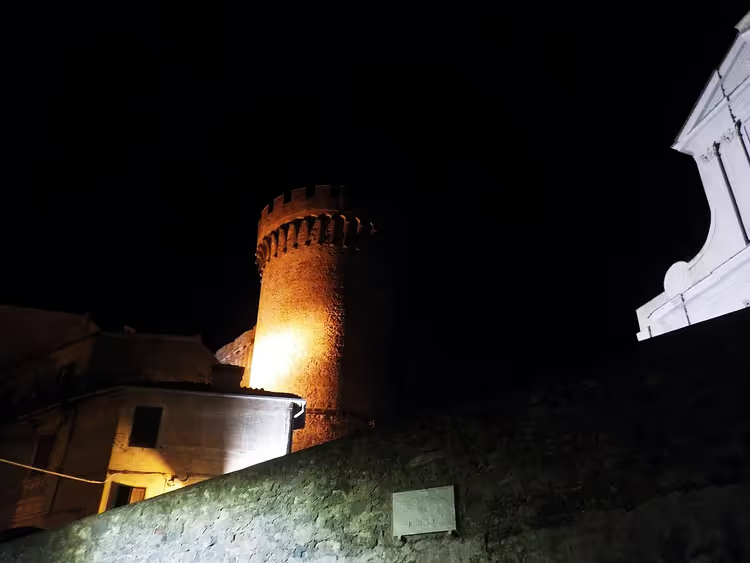
Bracciano sits on hills above a lake that fills the crater of an extinct volcano. A regional train gets you here from Roma Ostiense in about an hour.
The town is small, and at first glance it doesn't stand out from its neighbors. Fountains in the squares, stone houses among greenery, olive groves on the slopes. But behind that modesty are two reasons to come.
First, the lake itself. Local legend says a sunken ancient city lies at the bottom, which is why divers come here. You can also swim: there's a well-kept beach on the shore with views of the water and the mountains.
The second reason to come: the Odescalchi Castle, also known as Castello Orsini-Odescalchi. The first watchtower appeared on this spot back in the tenth century. Later the fortress became the main residence of the Orsini family, and today it belongs to the Odescalchi family and is open to visitors.
Inside you'll see halls with weapons, frescoes, and antique furniture. The castle is still rented out for weddings and film shoots, so some rooms are sometimes closed to tourists.
An old winery operates near the lake. The local wine is made according to Etruscan recipes, from people who lived on these hills long before the Romans.
- How to get there: regionale from Roma Ostiense, about an hour.
- What to see: the lake, Odescalchi Castle, wineries on the slopes.
- Who it's for / Not for: for those who want to combine swimming and a medieval fortress in one day. Not for those who want a packed city itinerary.
- The catch: some halls are closed for weddings, so the schedule changes.
- Where to stay: hotels in Bracciano on Trip.com.
2. Viterbo
 © Mac9 at Italian Wikipedia , 14 July 2010 (original upload date) · CC BY-SAPhoto: Mac9 at Italian Wikipedia , 14 July 2010 (original upload date), CC BY-SA (https://creativecommons.org/licenses/by-sa/3.0), Wikimedia Commons
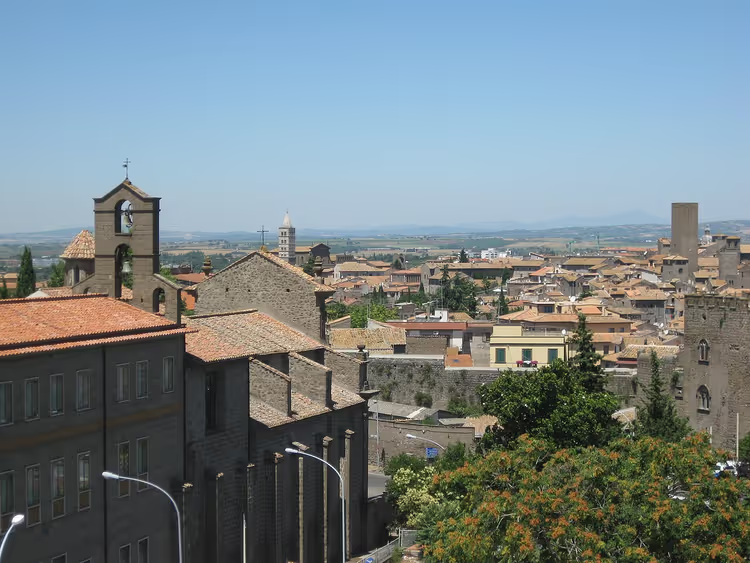
Viterbo lies north of Rome, and the regionale train takes about two hours to get here. You'll find one of the most intact medieval cities in Lazio.
Start with Villa Lante in the Bagnaia suburb. It has an Italian garden with trimmed shrubs, green labyrinths, and fountains. Each one is designed as a separate work of architecture.
The second reason to come: Lake Vico in a crater, part of a nature reserve. In the heat you can swim in its clear water. Hotels stand on the shore, so it's easy to extend the trip to two days.
- How to get there: regionale from Roma Ostiense, about two hours.
- What to see: the gardens of Villa Lante, Lake Vico, the medieval quarters.
- Who it's for / Not for: for lovers of gardens, quiet, and leisurely walks. Not for those looking for bustling city life.
- The catch: swimming in Lake Vico depends on the weather and water temperature.
- Where to stay: hotels in Viterbo on Trip.com.
3. Castel Gandolfo
 © Sudika · CC BY-SAPhoto: Sudika, CC BY-SA (https://creativecommons.org/licenses/by-sa/3.0), Wikimedia Commons
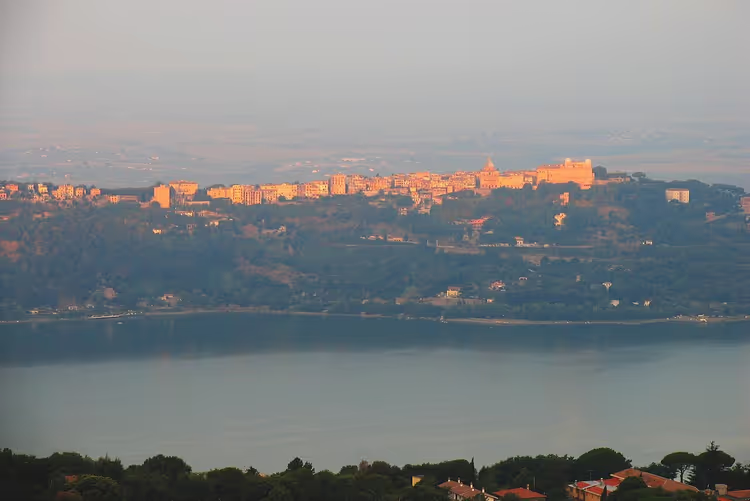
Castel Gandolfo sits on the shore of Lake Albano in the Castelli Romani. A train from Termini or a Cotral bus gets you here in under an hour.
The main reason to come: the pope's summer residence on the lakeshore. Until the sixteenth century, the town was owned by the Tuscolo and Gandolfo families, then the estate passed to the Vatican. Pope Clement VIII facilitated the transfer, and a summer residence for the pontiff was built on the site of the castle.
Pope Urban VIII oversaw the palace's decoration. He knew architecture, so he had a hand in embellishing the halls. Today the papal palace, gardens, and underground galleries are open to visitors through Vatican Museums tours (as of 09/2026, Musei Vaticani).
Besides the residence, there are many churches and villas here. The local landscapes inspired the Russian artist Alexander Ivanov to paint "Tree over Water in Castel Gandolfo." And according to one legend, the founding brothers of Rome were born in this area.
- How to get there: train from Roma Termini or Cotral bus, under an hour.
- What to see: the papal palace, gardens, Lake Albano, the town's churches.
- Who it's for / Not for: for those interested in Vatican history and who want a lake nearby. Not for those who want ancient ruins.
- The catch: the palace and gardens are only accessible with a guided tour and a ticket, there is no free entry.
- Where to stay: hotels in Castel Gandolfo on Trip.com.
4. Tivoli
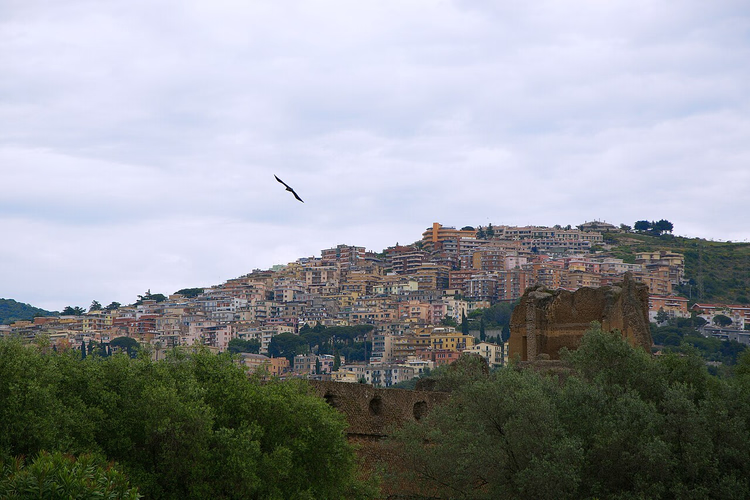 © Beatrice · CC BY-SAPhoto: Beatrice, CC BY-SA (https://creativecommons.org/licenses/by-sa/4.0), Wikimedia Commons
Tivoli lies east of Rome, and the train takes about an hour from Termini or Tiburtina. Here you'll find three major sights in one day.
The first, Villa d'Este, is a UNESCO site and is famous for its park with hundreds of fountains. Entry is paid, a ticket costs about 15 € (as of 09/2026, villa website). Buy your ticket in advance: in summer the line at the ticket office is long.
The second sight, Hadrian's Villa, was built in the second century. The imperial residence fell into decline, and locals dismantled it for building materials. Excavations brought statues and mosaics back to the world, but the ruins still look neglected.
The third sight, the Rocca Pia fortress, stands in the town itself. From here you get a view of the valley and both villas.
- How to get there: train from Roma Termini or Tiburtina, about an hour.
- What to see: Villa d'Este, Hadrian's Villa, Rocca Pia fortress.
- Who it's for / Not for: for those ready to walk a lot through parks and up stairs. Not for those who find it hard to walk uphill.
- The catch: Hadrian's Villa is partly dismantled, almost no intact halls remain.
- Tours: Tivoli tours on GetYourGuide.
5. Orvieto
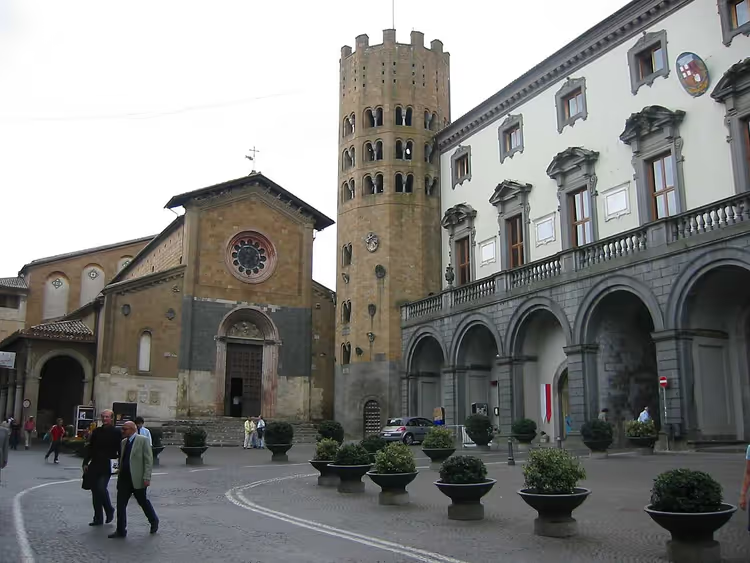 © Fantasy · CC BY-SAPhoto: Fantasy, CC BY-SA (http://creativecommons.org/licenses/by-sa/3.0/), Wikimedia Commons
Orvieto sits on a tufa cliff, and the train from Termini takes about an hour and a half. A funicular takes you from the station up to the upper town.
Beneath the town lies a second, underground Orvieto. A cave city with wells, corridors, and galleries was discovered inside the hill. You can only go down there with a guide and as part of a group.
Up top, the cathedral awaits with its carved facade and mosaics. The town was a papal residence for a long time, and that left its mark on the architecture. The white Orvieto Classico wine is made at vineyards in the surrounding area.
- Getting there: train from Roma Termini, about an hour and a half, then the funicular.
- What to see: the cathedral, the underground city, wineries.
- Who it's for / Not for: for those who love history and wine. Not for those who need a beach.
- The catch: the cave city is only accessible with a guide, you can't go down on your own.
- Where to stay: hotels in Orvieto on Trip.com.
6. Civita di Bagnoregio
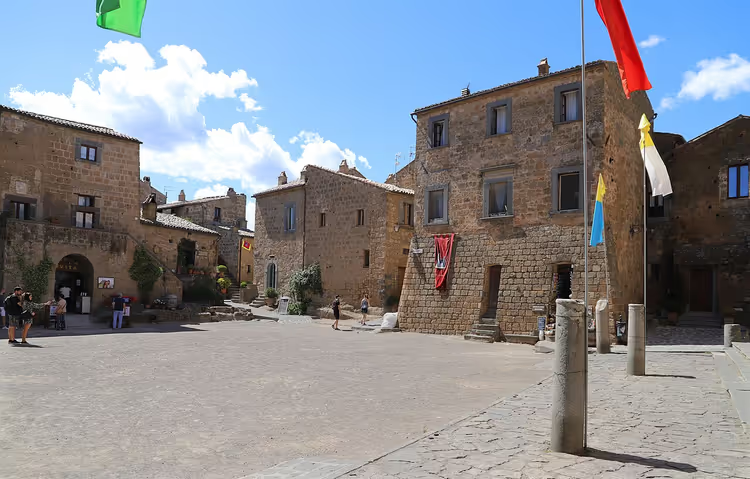 © Sailko · CC BYPhoto: Sailko, CC BY (https://creativecommons.org/licenses/by/3.0), Wikimedia Commons
Civita di Bagnoregio stands on top of a cliff between two valleys. A long pedestrian bridge leads to the town, and cars are not allowed in.
The trip takes about two hours. At the end of the seventeenth century, a major earthquake struck here, and residents abandoned their homes. The rock beneath the town is unstable, so flooding and landslides keep recurring.
There is a fee to cross the bridge, a ticket costs 5 € (as of 09/2026, official website). Inside, there are restaurants, cafes, and small hotels. In the center you'll find the main square, a medieval church, and a bell tower.
- Getting there: train to Orvieto or Viterbo, then a bus, about two hours.
- What to see: the bridge, the square, the church, the narrow streets.
- Who it's for / Not for: for photographers and lovers of unusual places. Not for those who find it hard to walk uphill in open terrain.
- The catch: permanent residents left long ago, and the infrastructure is minimal.
- Tours: Civita di Bagnoregio tours on GetYourGuide.
7. Assisi
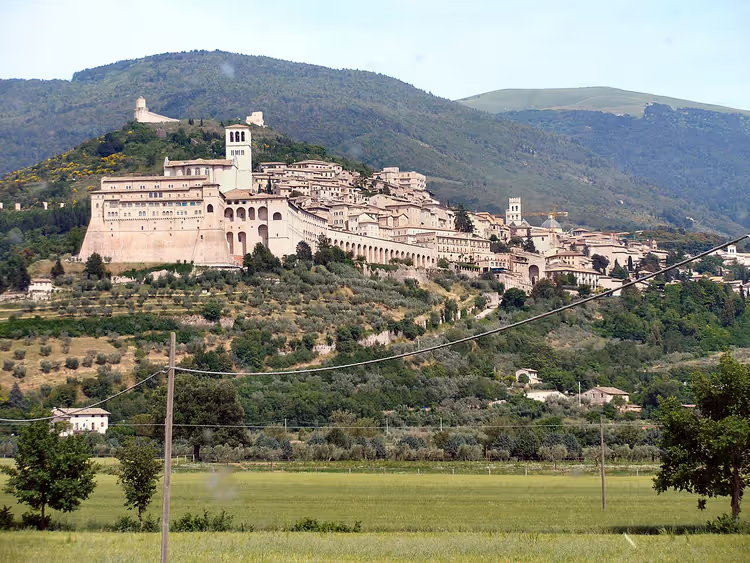
Assisi is known as the spiritual center of Catholicism. Saint Francis was born here, as was his follower Saint Clare, and both left their mark on the town's character.
The main site, the Basilica of Saint Francis, stands on the Hill of Hell about a kilometer from the center. Until the thirteenth century, convicts were executed on this spot. Francis asked for the hill to be renamed the Hill of Paradise, but the new name never caught on.
The Rocca Maggiore fortress rises above the town and is visible from anywhere. In the center, the ancient Temple of Minerva and a fountain with marble lions have survived.
- Getting there: train with a change in Foligno, from two hours.
- What to see: the Basilica of Saint Francis, Rocca Maggiore fortress, the Temple of Minerva.
- Who it's for / Not for: for those coming for history and tranquility. Not for those who want a lively resort.
- The catch: the basilica is a kilometer from the center, and the road goes uphill.
- Tours: Assisi tours on GetYourGuide.
8. Genzano di Roma
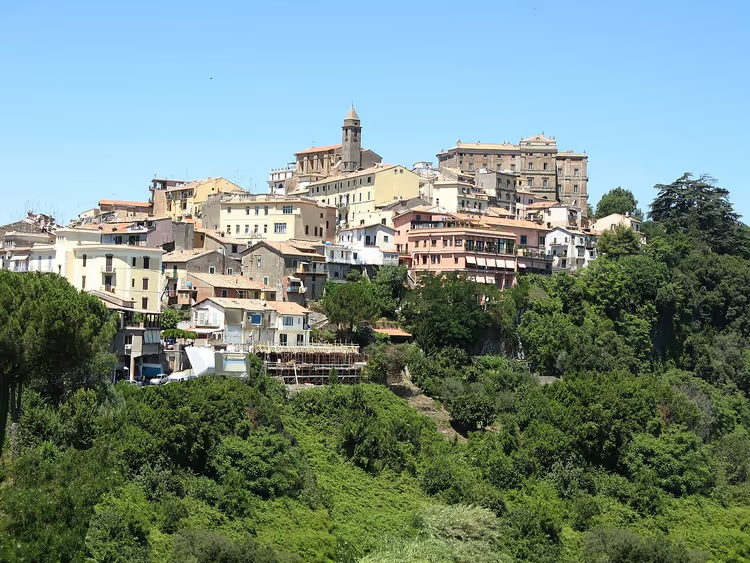 © Ferdinando Chiodo · CC BYPhoto: Ferdinando Chiodo, CC BY (https://creativecommons.org/licenses/by/2.5), Wikimedia Commons
Genzano di Roma sits above Lake Nemi in the province of Rome. It's a quiet town without boutiques or tour groups, where you'll see everyday Italian life.
The center is graced by the old San Sebastiano fountain, built in the eighteenth century. Nearby, a thirteenth-century castle has survived, a rare find for such a small place.
Twice a year, the town transforms. In June, for the Infiorata festival, the streets are covered with flower carpets and pictures. In September, a bread festival takes place with baked goods, cheese, cured meats, and wine.
- Getting there: Cotral bus from a metro station on the outskirts of Rome, about an hour.
- What to see: the San Sebastiano fountain, the castle, nearby Lake Nemi.
- Who it's for / Not for: for those who want to see a festival or a peaceful town. Not for those who need world-class museums.
- The catch: the flower festival happens once a year, and on other days the town is quiet.
- Where to stay: hotels in Genzano di Roma on Trip.com.
9. Nettuno
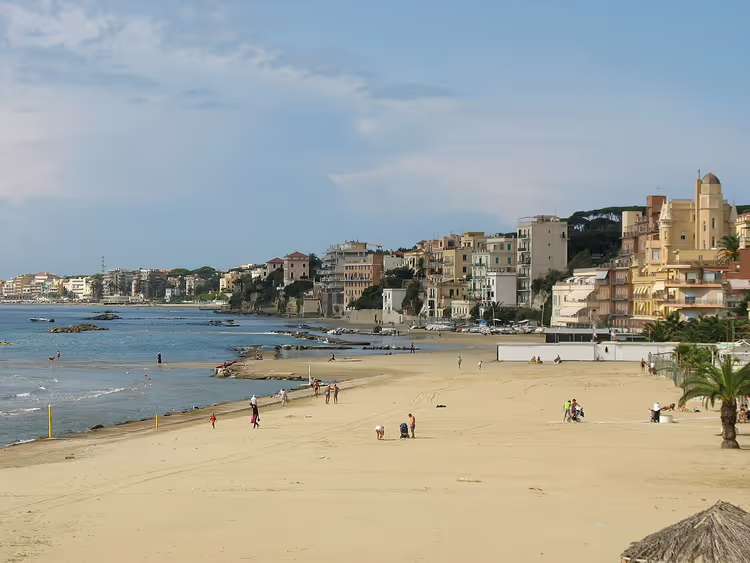 © Stefano.nicolucci at Italian Wikipedia · CC BY-SAPhoto: Stefano.nicolucci at Italian Wikipedia, CC BY-SA (http://creativecommons.org/licenses/by-sa/3.0/), Wikimedia Commons
Nettuno sits on the Tyrrhenian Sea less than an hour from Rome. The resort was founded in the ninth century and has since grown into a town of about fifty thousand people.
Up to eight hundred yachts can moor in the harbor at once, and regattas are held here. The beaches are equipped, but they get crowded in season, so head away from the center toward the outskirts.
There's a cultural side too. A well-preserved fort from the early sixteenth century is known as the Sangallo Fortress. The Borgo Medievale quarter is surrounded by an ancient wall, and Villa Borghese is known for its botanical garden.
- How to get there: train from Roma Termini, under an hour.
- What to see: the port, Sangallo Fortress, Borgo Medievale, Villa Borghese.
- Who it's for / Not for: for those who want the sea and swimming on the same day as Rome. Not for those looking for a secluded beach.
- The catch: beaches near the center are crowded, so it's better to head to the outskirts for a spot by the water.
- Where to stay: hotels in Nettuno on Trip.com.
10. Anzio
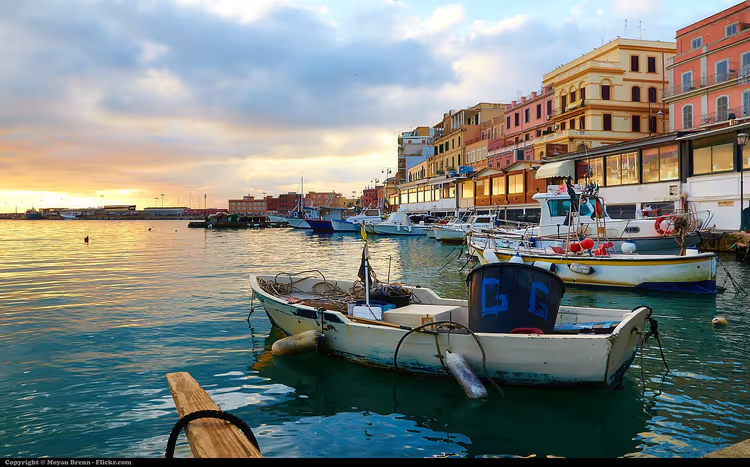 © Moyan Brenn from Italy · CC BYPhoto: Moyan Brenn from Italy, CC BY (https://creativecommons.org/licenses/by/2.0), Wikimedia Commons
Anzio neighbors Nettuno and stretches its coastline for twelve kilometers. It has soft sand and a gentle entry into the water, and you can swim until mid-October.
Villas line the coast, with Villa Sarsina and Nero's Villa standing out among them. Seafood restaurants operate nearby, and people come here for them even if they used to think pizza and pasta were the main Italian food.
The old part of town preserves the ruins of a Roman amphitheater and an archaeological park. On a nice day, you can easily arrange a boat trip at the local yacht club.
- How to get there: train from Roma Termini, under an hour.
- What to see: beaches, villas, the Roman amphitheater, the archaeological park.
- Who it's for / Not for: for those who want to combine beach and antiquity. Not for those who need mountains and cool weather.
- Where to stay: hotels in Anzio on Trip.com.
11. Ponza
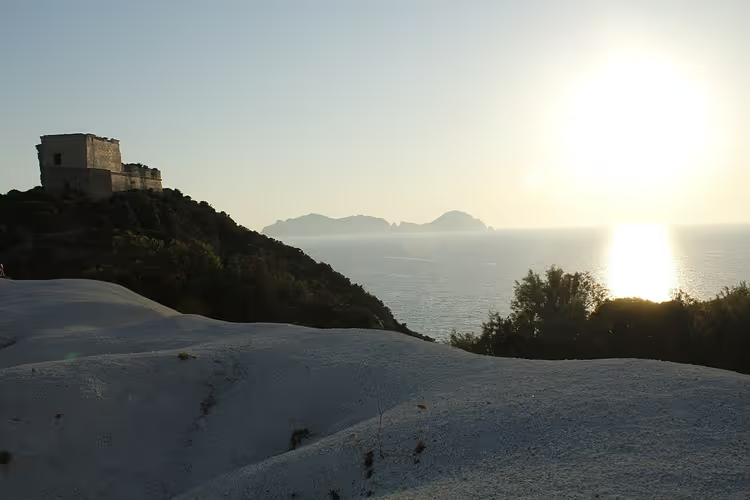 © Spurio Cassio · CC BY-SAPhoto: Spurio Cassio, CC BY-SA (https://creativecommons.org/licenses/by-sa/4.0), Wikimedia Commons
Ponza lies in the Tyrrhenian Sea, and people come here for the sea without the crowds. First take a train to Anzio or Formia, then a ferry or boat.
The island's calling card: grottoes and caves. The Grottoes of Pilate were carved into the coastal rock back in ancient Roman times. In the Bay of Papa, at a depth of twenty-one meters, lies an American ship that sank during World War II.
The Natural Arch stands above the water. You'll sail under the stone "gate" by boat, with emerald waves opening up all around. Diving, boat tours, fishing, and fresh seafood round out the day.
- How to get there: train to Anzio or Formia, then a ferry, about half a day.
- What to see: the Grottoes of Pilate, the Natural Arch, the sunken ship.
- Who it's for / Not for: for those willing to spend half a day traveling for the sea. Not for those who need a quick trip out of Rome.
- The catch: the journey takes half a day, leaving less time for the island itself.
- Where to stay: hotels on Ponza on Trip.com.
12. Rieti
 © Alessandro Antonelli · CC BYPhoto: Alessandro Antonelli, CC BY (https://creativecommons.org/licenses/by/3.0), Wikimedia Commons
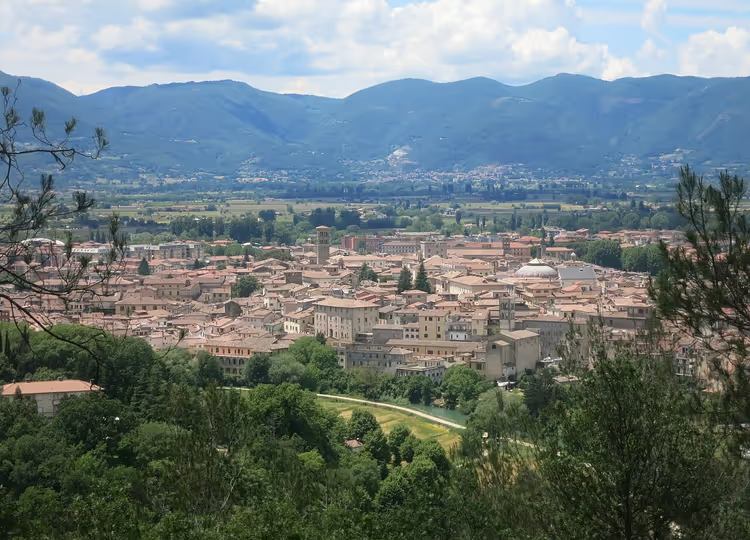
Rieti is called the geographic center of Italy. Instead of noise and bustle, you'll find yourself in a quiet town behind an ancient fortress wall.
The town lies at the foot of the Sabine and Reatine mountains, so the panorama from the streets opens wide. Monuments of antiquity and the Middle Ages survive here, and in the past Rieti was a favorite place of popes.
The province is rich in water. Lake Lago del Salto appeared in the middle of the last century amid forest and became part of the landscape. A walk through the underground part of the town will stay with you for its stone arches, balconies, and wells.
- How to get there: train or bus, about two hours.
- What to see: the fortress wall, the underground, Lake Lago del Salto.
- Who it's for / Not for: for those who want quiet and mountains. Not for those who need major museums.
- The catch: guides lead the underground tour in Italian.
- Where to stay: hotels in Rieti on Trip.com.
13. Sorrento
 © Kim Traynor · CC BY-SAPhoto: Kim Traynor, CC BY-SA (https://creativecommons.org/licenses/by-sa/3.0), Wikimedia Commons
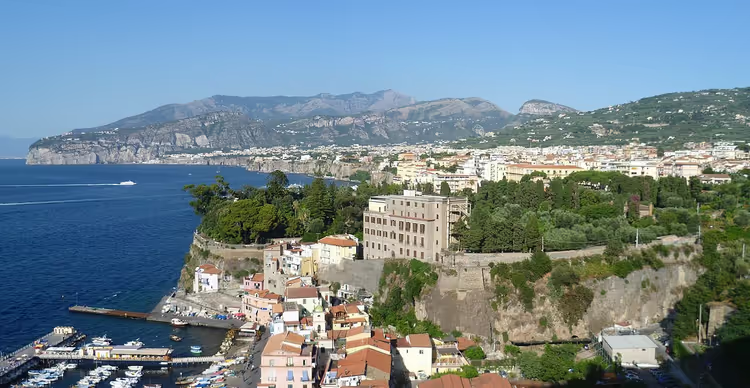
Sorrento spreads across a rocky plateau above the sea. It is a city of lemons, and everything around is steeped in citrus aroma.
This is where limoncello is made, and this is the best place to try it. The local Sorrento lemon variety, sugar, and alcohol produce a thick liqueur served chilled.
The Duomo cathedral stands in the center, built in the eleventh century. Over the centuries the cathedral was rebuilt, but the medieval baptismal font and bell tower survived, and the interior is decorated with frescoes and carvings. Piazza Tasso features a monument to Saint Anthony, the city's patron saint, while the Church of San Francesco looks more like a botanical garden.
- Getting there: high-speed train to Naples and a transfer, from three hours.
- What to see: the Duomo, Piazza Tasso, the Church of San Francesco, lemon gardens.
- Who it's for / Not for: for those willing to stay overnight by the sea rather than return in the evening. Not for those who want to fit it into one day without getting tired.
- The catch: the trip with a transfer in Naples takes more than three hours each way.
- Where to stay: hotels in Sorrento on Trip.com.
14. Positano
 © JeCCo · CC BYPhoto: JeCCo, CC BY (https://creativecommons.org/licenses/by/4.0), Wikimedia Commons
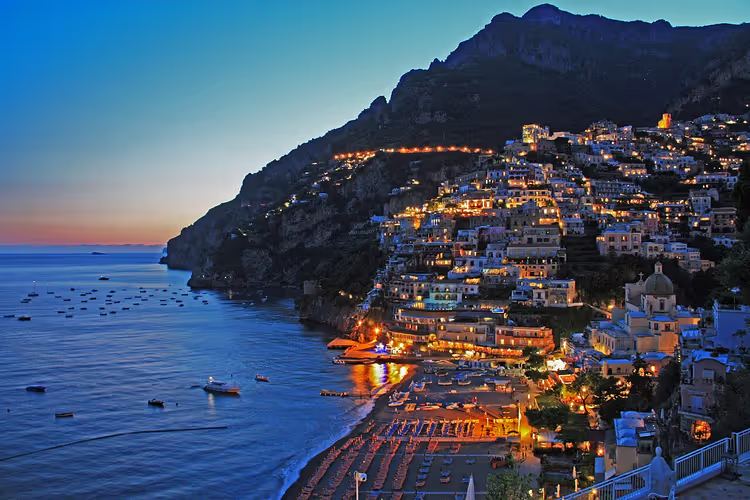
Positano cuts into the cliff above the sea, and its houses descend to the water in terraces. This is the most densely built and most crowded part of the Amalfi Coast in summer.
The main walk is the Path of the Gods. The trail runs along the ridge at about three hundred meters and opens up panoramas of the sea, white cliffs, and the coast all the way to Sorrento and Capri. Bring water and comfortable shoes.
The historic center has preserved the Church of Santa Maria Assunta with its majolica dome. Opposite the town lie the Li Galli islands, where sea legends say sirens once lived. In the twentieth century the island was bought by choreographer Leonid Massine, who planted gardens there.
- Getting there: train to Naples or Salerno, then a bus, several hours.
- What to see: the Path of the Gods, the Church of Santa Maria Assunta, the Li Galli islands.
- Who it's for / Not for: for those planning an overnight stay on the coast. Not for those who want to return to Rome the same evening.
- The catch: the trip with transfers is long, and beaches are crowded in summer.
- Where to stay: hotels in Positano on Trip.com.
15. Amalfi
 © Sudodana2048 · CC BY-SAPhoto: Sudodana2048, CC BY-SA (http://creativecommons.org/licenses/by-sa/3.0/), Wikimedia Commons
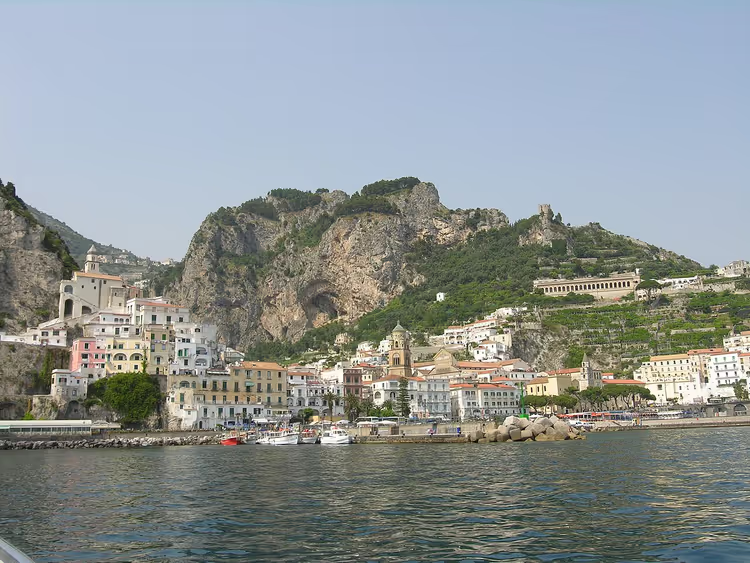
Amalfi is a town at the mouth of a gorge, with turquoise water by the cliffs and flower beds on terraces. The best time to visit is from April to October.
The town's calling card, the Cathedral of Sant'Andrea, dates back to the eleventh century. Carvings, mosaics, and frescoes in different styles create a harmonious ensemble inside.
Nearby hides the Emerald Grotto, where the water color shifts from soft turquoise to sapphire. In a storm the cave entrance is closed, so check your plans against the forecast. The town also has a paper museum, and from the surrounding area you can easily head to Pompeii or explore the castles of Naples.
- Getting there: train to Salerno or Naples, then a bus.
- What to see: the Cathedral of Sant'Andrea, the Emerald Grotto, the paper museum.
- Who it's for / Not for: for those visiting the whole coast, not just for one day. Not for those who need a short route from Rome.
- The catch: in a storm the Emerald Grotto is closed to boats.
- Where to stay: hotels in Amalfi on Trip.com.
16. Narni
 © Wikiriello · CC BY-SAPhoto: Wikiriello, CC BY-SA (https://creativecommons.org/licenses/by-sa/4.0), Wikimedia Commons
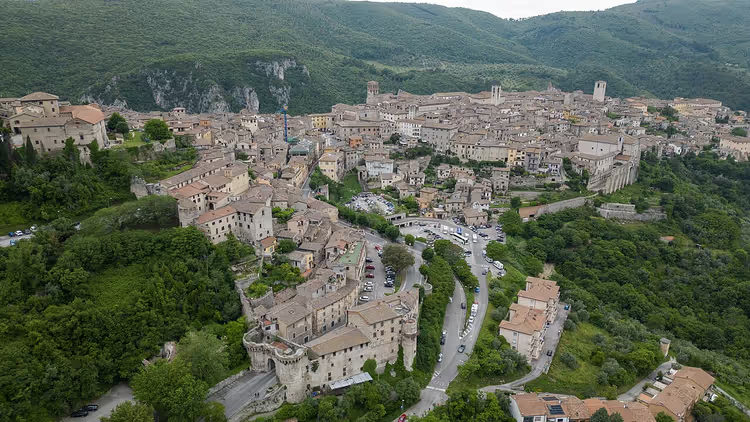
Narni sits on a hilltop north of Rome and lives at an unhurried pace. Stone arches and paved squares have preserved the town's medieval character.
The main sight, the Bridge of Augustus, is the largest ancient Roman bridge in the area. It stands about thirty meters high, and today only ruins remain.
The town has plenty of architecture from different eras. The Cathedral of San Giovenale began construction in the eleventh century, and work stretched over nearly a hundred years. Nearby stand sixteenth-century palazzos, a Romanesque church, and the city gate Porta della Fiera.
- Getting there: train to Terni or Narni station, about an hour and a half.
- What to see: the Bridge of Augustus, the Cathedral of San Giovenale, the Porta della Fiera gate.
- Who it's for / Not for: for those who love ancient bridges and quiet. Not for those who need a resort-style itinerary.
- Where to stay: hotels in Narni on Trip.com.
17. Palestrina
 © Sergio D'Afflitto · CC BY-SAPhoto: Sergio D'Afflitto, CC BY-SA (https://creativecommons.org/licenses/by-sa/3.0/it/deed.en), Wikimedia Commons
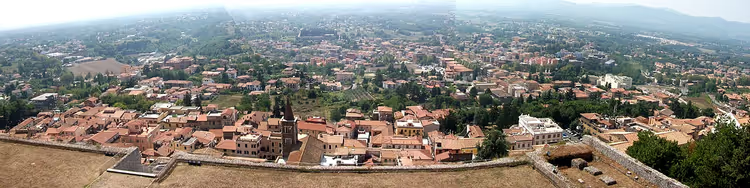
Palestrina sits in the Prenestini mountains, and in antiquity the city was called Praeneste. According to legend, it was founded by Telegonus, son of Odysseus.
People come here for the Nile mosaic. The ancient panel, measuring more than five by four meters, shows scenes from the life of Egyptians, alongside exotic animals and humanoid monsters. You can spend a long time examining the details of the mosaic.
The mosaic is housed in Palazzo Barberini, where the National Archaeological Museum operates. The Pietà statue from the Church of Santa Rosalia is now kept in Florence.
- How to get there: Cotral bus from a metro station in eastern Rome, about an hour.
- What to see: the Nile mosaic, Palazzo Barberini, the Church of Santa Rosalia.
- Who it's for / Not for: for those interested in archaeology and mosaics. Not for those looking for nature and a beach.
- Where to stay: hotels in Palestrina on Trip.com.
18. Nemi
 © User:New2022 · CC BY-SAPhoto: User:New2022, CC BY-SA (https://creativecommons.org/licenses/by-sa/4.0), Wikimedia Commons
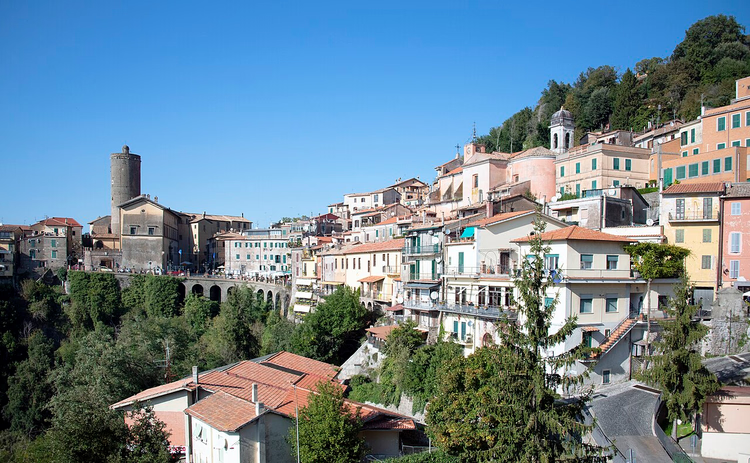
Nemi sits by a lake in a crater and is famous for its strawberries. The berry festival has welcomed visitors in early June for about a century, and a procession in historical costumes moves through the streets.
The strawberry is considered the symbol of the town, so the souvenirs here are themed. Berry-shaped jewelry, stationery, and printed textiles are sold on every corner.
Lake Nemi occupies the center of the area and is of volcanic origin. Its shape resembles a pocket mirror, which is why in past centuries it was called the "Mirror of Diana." House balconies are draped in flowers, and café tables stand right on the streets.
- How to get there: Cotral bus from a metro station in southern Rome, about an hour.
- What to see: Lake Nemi, the strawberry festival, streets with cafés.
- Who it's for / Not for: for those who want to catch a festival and a quiet lake. Not for those who need major landmarks.
- The catch: the strawberry festival takes place only in June; in other months the town is quiet.
- Where to stay: hotels in Nemi on Trip.com.
19. Ostia Antica
 © Marie-Lan Nguyen ( User:Jastrow ) · CC BYPhoto: Marie-Lan Nguyen ( User:Jastrow ), CC BY (https://creativecommons.org/licenses/by/2.5), Wikimedia Commons
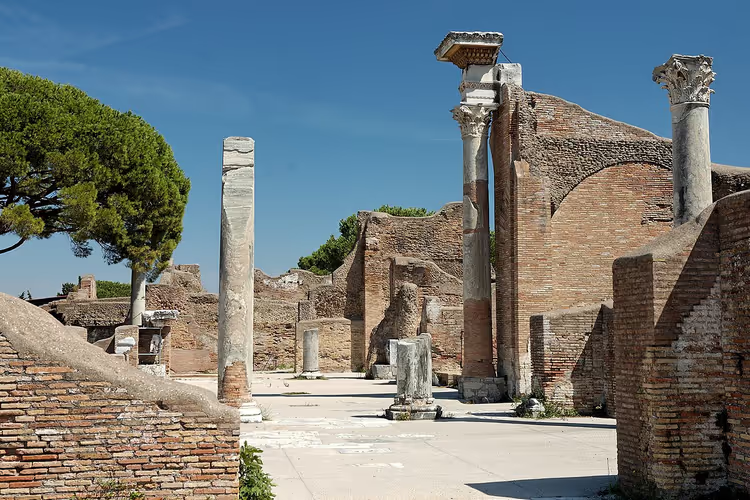
Ostia Antica shows what ancient buildings looked like without later layers. The excavations lie forty minutes from Rome, and you can get here with a regular metro ticket and the Roma-Lido train.
Ancient Roman construction techniques are on display here as clearly as in a lesson. A theater with a capacity of up to four thousand spectators survives, even though it is about two thousand years old. Admission costs €18 (as of 09/2026, tickets to Ostia Antica).
Nearby you can see insulae, multi-story apartment buildings constructed as the population grew. In the baths, a black-and-white mosaic of Neptune on a chariot lies on the floor. Fire stations, laundries, and columbarium tombs complete the open-air complex.
- How to get there: metro to Piramide and the Roma-Lido train, about forty minutes.
- What to see: the theater, insulae, the baths with the Neptune mosaic.
- Who it's for / Not for: for those who want antiquity without the crowds at the Colosseum. Not for those who need shade and benches.
- The catch: an open site with no shade; walking around it in summer is hot.
- Tours: Ostia Antica tours on GetYourGuide.
20. Caserta
 © Miguel Hermoso Cuesta · CC BY-SAPhoto: Miguel Hermoso Cuesta, CC BY-SA (https://creativecommons.org/licenses/by-sa/4.0), Wikimedia Commons
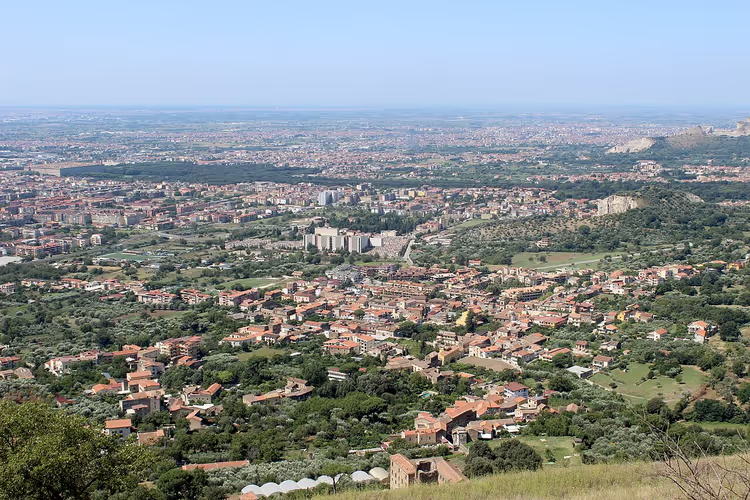
Caserta is home to the largest palace in Europe, the Royal Palace of Caserta. Charles VII of Bourbon commissioned it to surpass the French Versailles in size and decoration.
The palace has more than twelve hundred rooms, and the 120-hectare park features cascading fountains, sculptures, and landscaped gardens. Some of the rooms house the Opera Museum, the Territorial Museum, and an art gallery.
The town itself is young; it grew up around the residence with three- and four-story buildings. The streets are quiet, and there are squares, monuments, a Duomo, and a city theater. The palace is closed on Tuesdays (as of 09/2026, official website).
- Getting there: high-speed train to Caserta, from an hour and a half.
- What to see: the palace, the park with fountains, the Opera Museum, the town's Duomo.
- Who it's for / Not for: for those who love Baroque palaces and parks. Not for those who want an ancient city.
- The catch: the palace and park take a full day; you can't cover everything in a couple of hours.
- Where to stay: hotels in Caserta on Trip.com.
If you want to take a guided tour of any of these places, see the selection below.
Tours and tickets in Rome
Guided tours, skip-the-line tickets and activities — most offers can be cancelled free of charge.
See offers on GetYourGuideThe widget loads once you give your consent.
Day trip routes from Rome on the map
All twenty destinations are easy to view on a single map. Open it and choose a direction that fits your day.
One-day route from Rome
Places on the map
- 1Bracciano Lake in a volcanic crater and Odescalchi Castle
- 2Viterbo Medieval town, Villa Lante and Lake Vico
- 3Castel Gandolfo Pope's summer residence on Lake Albano
- 4Tivoli Villa d'Este with fountains, Villa Adriana and Rocca Pia fortress
- 5Orvieto Town on a tuff rock, underground city and cathedral
- 6Civita di Bagnoregio Town on a rock reached by a footbridge
- 7Assisi Basilica of St. Francis and Rocca Maggiore fortress
- 8Genzano di Roma San Sebastiano fountain, 13th-century castle, Infiorata festival
- 9Nettuno Port with regattas, Sangallo fortress, Villa Borghese
- 10Anzio Beaches, villas, Roman amphitheater and archaeological park
- 11Ponza Island with the Grotte di Pilato and the Natural Arch
- 12Rieti Geographic center of Italy, caves and Lake Salto
- 13Sorrento City of lemons, Duomo cathedral, limoncello
- 14Positano Path of the Gods and the Li Galli islands on the Amalfi Coast
- 15Amalfi Sant'Andrea Cathedral and the Emerald Grotto
- 16Narni Augustus Bridge and San Giovenale Cathedral
- 17Palestrina Nile mosaic in Palazzo Barberini
- 18Nemi Crater lake, "Diana's Mirror", strawberry festival
- 19Ostia Antica Ancient port city, theater, insulae, baths with Neptune mosaic
- 20Caserta Royal Palace of Caserta, the largest in Europe
⁉️🤔 Frequently asked questions
Can you fit two places into one day?
Yes, if the sites are on the same line. Tivoli connects Villa d'Este and Villa Adriana, while Nettuno and Anzio sit next to each other on the coast and are linked by a local train. For Sorrento, Positano, and Amalfi, allow two days: the journey with transfers takes too much time.
How much does a train ticket from Rome cost?
A regional ticket stays within a few euros; the exact price is shown on the carrier's website (as of 09/2026, fares and schedules). High-speed trains to Naples and Caserta cost more but are faster. Buy your ticket at a machine or in the app and validate it before boarding.
Where should I go with kids?
Little ones will enjoy Nettuno and Anzio: sand, a gentle entry into the water, and a short trip. Older kids will like Ostia Antica with its theater and mosaics, as well as Bracciano with its castle and lake. Save the long journey to the Amalfi Coast for a vacation.
What should I do if it rains?
Skip the beach trip and choose a town instead. In the rain, the museums of Palestrina, underground Orvieto, and the underground sites of Rieti work well. The palace in Caserta and the papal palace in Castel Gandolfo are also indoors, but keep in mind that parts of the palace and the gardens will still require going outside.
Do I need a car for these trips?
No, almost all destinations are accessible by train or Cotral bus. A car is useful for Lake Vico, Lake Bracciano, and the mountain villages of Palestrina. In central Rome, remember the ZTL zones and paid parking near train stations.
Where should I stay if I want to spend the night?
On the coast and on the island of Ponza, hotels sit right by the water, and you can extend your trip into a second day. Viterbo, Orvieto, and Sorrento also have hotels in the center. Book ahead in high season, because in summer there are almost no rooms left.
In short: what's worth booking
The twenty destinations fall into three groups. The nearby towns of Lazio can realistically be covered in one day without an overnight stay. The coast and the island of Ponza require an early departure. Campania and the Amalfi Coast only work with an overnight stay.
- If you have one day and it's your first time in Lazio: choose Tivoli, Orvieto, or Ostia Antica, train tickets on Trip.com.
- If you want the sea: choose Nettuno, Anzio, or Ponza, waterfront hotels on Trip.com.
- If you're ready for a long journey: plan Sorrento, Positano, or Amalfi with an overnight stay, hotels in the south on Trip.com.
- If you want a guide and a ready-made itinerary: tours on GetYourGuide.
Check the return train schedule before you leave and buy tickets in advance in high season. That way your day trip from Rome will go smoothly, and you'll be back in the city by evening.

A small editorial team writing guides for independent travel. We travel ourselves, but we haven’t been everywhere, so we check prices, opening hours and how to get there against official sources.