

















How to buy cheap flights: tricks that work
The same route is sold at very different prices. The difference depends on the search region, departure time, number of connections, and how early you started looking for a ticket. We've put together techniques that lower the cost of a flight without hunting for fare errors and without the risk of ending up without a boarding pass.
If you're looking for a ticket today, start simple: compare the route on two or three aggregators, turn on flexible dates, take a connecting flight with a single carrier, and check the price of a round-trip ticket. That's enough to avoid blindly overpaying.
Ad: this article contains affiliate links, we earn a commission if you book through them, at no extra cost to you.
Compare prices on several aggregators at once
💡 In short:
- Search for one route on two or three services: their lists of sellers don't match.
- Change the search region in settings: offers for the same route differ noticeably.
- A ticket with a connection and an off-peak departure time costs less than a direct one.
- A round-trip ticket is often cheaper than two one-way tickets.
Aggregators don't sell tickets themselves: they collect offers from agencies and carriers, and after you choose, they send you to the seller's website. Each service has its own set of sellers, so the same flight costs different amounts on each one. Before paying, check at least two aggregators.
Trip.com
Trip.com searches for tickets using filters and works with flexible dates: select them in the search, and the system will show the cheapest days within a month. Filters for departure time, number of connections, and baggage save time. You immediately see what's included in the fare and what's sold separately.

For long routes, enter the departure city and arrival city in full: that way the system won't substitute a neighboring airport or show unnecessary connections.
Skyscanner
Skyscanner compares agencies from dozens of countries. The fare chart shows how the price changes for a selected route over the course of a month, and the everywhere search suggests where you can fly cheaper on your dates. The service warns about long layovers and highlights low-price days in the calendar. Some offers lead to intermediary websites, and the fare there may differ from what's shown.

Check who's selling the ticket: an intermediary with no rating carries more risk than an agency with a history and reviews.
Google Flights
Google Flights shows current fares and adds analytics: whether the price is inflated or normal for the season. Find the flight you need, and the service will compare it with the average cost for that route. Price drop alerts require a Google account: without one, tracking isn't available.

A notification arrives by email when the fare changes. This approach is convenient if the trip is planned in advance and you're willing to wait.
The takeaway from the three services is simple.
Service | What it offers | Who it suits |
|---|---|---|
Trip.com | filters, flexible dates, ready-made fare packages | those who know their dates |
Skyscanner | price chart and agencies from different countries | those who search flexibly |
Google Flights | price analytics and alerts | those who plan ahead |
Remember the main point: finding options and buying are different steps. An aggregator only shows offers, and you close the deal on the seller's website.
Change the search region in settings
The region in aggregator settings changes not the language, but the list of sellers. The search engine selects agencies from the specified country, and their prices differ: the markup depends on the market, currency, and local fees. Changing the region is free and takes a couple of minutes, and you get different results for the same flight.
Look at the same route under different regions.
The Stockholm to São Paulo route stays the same, but the offers and prices in the results change: some agencies disappear, others appear.
Compare not only the number, but also the fare conditions: the cheapest offer often has no refunds and no baggage.
Agency or airline: where it's cheaper
It's logical to assume that a ticket is cheaper on the carrier's website. In practice, that's not always the case. Agencies buy seats in advance and sell them with their own markup, while the airline raises the fare as the cabin fills up. That's why you may see an offer on an aggregator that's lower than the carrier's own price for the same flight.

If you buy from an intermediary, check its rating and number of reviews. The fare on the aggregator may have become outdated while you were deciding. Add the paid extras that the agency offers at the payment stage, and the difference sometimes disappears.
Where to buy | Advantage | What to consider |
|---|---|---|
Airline | clear exchange and refund rules | fare rises as the cabin fills up |
Agency | sometimes cheaper | seller rating, paid extras, fare accuracy |
Buying directly is simpler: fewer intermediaries, clearer exchange and refund rules. Comparing agency offers on Kiwi.com is convenient when you need to quickly assess the set of sellers for a route.
What changes the price: comfort or savings
The ticket price depends on flight comfort. The fewer the conveniences, the lower the fare. You choose some of the conditions yourself when searching for a flight.
A connection instead of a direct flight
Flights with connections are usually cheaper than direct ones. The longer the layover, the lower the price. You pay for the savings with travel time.
 © 4300streetcar · CC BYPhoto: 4300streetcar, CC BY (https://creativecommons.org/licenses/by/4.0), Wikimedia Commons
Look at the total travel time, not just the number in the results: an overnight layover at a foreign airport adds both fatigue and expenses.
Departure time
Peak flights cost more. Early morning and late evening departures are usually cheaper. If you're willing to leave home before dawn, the fare will be lower. You'll need extra time for the trip: at night, public transport runs less frequently.
A connection with one carrier
If your ticket has a connection, take segments from one airline. When that's not possible, choose carriers from the same alliance: Star Alliance, Skyteam, or Oneworld. Within an alliance, codeshare agreements are in place, and if the first segment is delayed, your connection will be taken care of. With separate tickets, you bear the risks yourself.
Technique | When it works | What to consider |
|---|---|---|
Connection | on almost any route | longer travel time |
Night or early departure | outside peak hours | getting to the airport at night |
One carrier for the connection | route with a connection | fewer options |
Round-trip ticket | return date is known | tied to specific flights |
Buying in advance | cabin not yet full | sales may be cheaper |
A round-trip ticket is cheaper than two separate ones
A round-trip ticket is often cheaper than two one-way tickets. The carrier fights for the passenger this way and guarantees a filled cabin, so it sells the return segment cheaper.
 © Joybot · CC BY-SAPhoto: Joybot, CC BY-SA (https://creativecommons.org/licenses/by-sa/2.0), Wikimedia Commons
The screenshot shows how a one-way ticket turned out to be more expensive than a round-trip on the same route. Check both options before paying: the difference can be significant, but the rule doesn't work on every route.
Don't skip segments of a purchased ticket
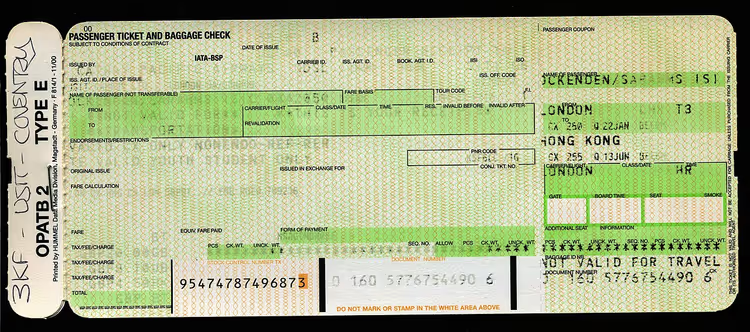
You can't outsmart the carrier. If you bought a round-trip ticket and didn't show up for one of the segments, the airline has the right to cancel the entire ticket. This is a violation of the conditions of carriage, not a minor formality.
Skipping the first segment is especially risky: the carrier will see the no-show and cancel the remaining flights. If your plans change, notify the airline in advance. Sometimes giving up a segment requires paying the difference from a one-way fare.
If your flight is delayed or canceled
Flight delay and cancellation in Europe entitle you to compensation under EU261 rules. The amount depends on the route distance: €250 for short flights, €400 for medium-haul, and €600 for long-haul (as of 09/2026, EU regulations). The right arises when arrival is delayed by three hours or more, when a flight is cancelled without notice, and when boarding is denied due to overbooking.
Contact the carrier in writing and keep your boarding passes: without them, proving you were on the flight is harder. You can also check your eligibility for compensation through an intermediary service: it charges a fee only on the payout you actually receive.
When to buy tickets in advance
The fare goes up as the cabin fills: the fewer seats are left, the more expensive the ticket. So buying in advance pays off. But there is a limit here too: buying too early means you miss the sales that carriers announce closer to the departure date.
A simple rule works. Keep the route in price tracking and buy when the fare drops below the usual level for the season. Compare fares on Trip.com together with alerts: you will see how the price changes from week to week. The myth about buying strictly in the middle of the week is not confirmed, but flights at the end of the week and on holidays do cost more.
Watch for promotions and sales
Sales break any timing rules. Low-cost carriers run them regularly, major carriers less often. A discount lasts only a few days: the fare for the same dates quickly returns to its usual level.
Check the promotions section on the airline's website and keep the route in tracking, then you will see the discount right away. Compare the sale price with the regular one: some discounts are calculated from an inflated base price. For long-haul flights, check offers from carriers in different countries: they have their own markets and their own promotions.
Carrier bonuses: stopover in Istanbul
Some airlines add a free program to a long layover. The most generous option is offered by Turkish Airlines. With a layover in Istanbul of 20 hours to 7 days, you are entitled to free accommodation in a partner hotel with breakfast (as of 09/2026, verified 09/13/2026 on the Stopover program page). The class of service determines the scope: in economy, one night in a 4-star hotel; in business, two nights in a five-star or boutique hotel. You apply no later than 72 hours before departure, and you can use the program once: either on the outbound or on the return flight.
 © Dosseman · CC BY-SAPhoto: Dosseman, CC BY-SA (https://creativecommons.org/licenses/by-sa/4.0), Wikimedia Commons
The program does not work from all countries: before applying, check the list on the carrier's website. For short layovers, there is a free tour of Istanbul under the Touristanbul program: you go to the desk at the airport and choose a route.
If you are not entitled to a free hotel and the layover is long, stay in the city at your own expense: hotels in Istanbul on Trip.com can be chosen near the metro line to the airport. Similar programs exist with other carriers: Qatar Airways, Emirates, Etihad, and Singapore Airlines. Each has its own conditions, check them on the airline's website.
⁉️🤔 Frequently asked questions
Can I skip one of the segments of a purchased ticket?
No. If you do not show up for a segment, the carrier has the right to cancel the entire ticket. More in the section "Do not skip segments of a purchased ticket."
Where are tickets cheaper: with the airline or on an aggregator?
Compare both options. Agencies buy seats in advance and sometimes sell them below the carrier's website price, but they add paid services and operate less transparently. On the airline's website, exchanges and refunds are easier. Look at the seller's rating and check the fare at the moment of payment: prices on aggregators sometimes become outdated.
When is the best time to buy a plane ticket?
A few weeks before departure, while the cabin is not full. There are no universal timeframes: the fare depends on the season, route, and flight load. Set a price alert in an aggregator and buy when the cost drops below the usual level for your dates. Flights at the end of the week and on holidays are always more expensive.
What should I do if a flight is delayed or canceled?
Keep your boarding pass and contact the carrier in writing. Under EU rules, compensation of 250 € to 600 € is due (as of 09/2026, passenger rights in the EU). More in the section "If a flight is delayed or canceled."
Is it true that a free hotel is provided on a long layover?
Yes, Turkish Airlines runs the Stopover program for a layover in Istanbul of 20 hours to 7 days (as of 09/2026, program conditions). More in the section "Carrier bonuses: stopover in Istanbul."
In short: what is worth booking
A cheap flight comes from habits: comparing aggregators, playing with the search region, and not chasing a direct flight. Start with price tracking for your route, and buy when the fare drops below the usual level for the season.
- If the return date is known: take a round-trip ticket, it is often cheaper than two one-ways.
- If the dates are flexible: start by comparing offers on Kiwi.com.
- If you have a long layover in Istanbul: check the stopover and hotels in Istanbul on Trip.com.
Compare fares in advance, not on the day of departure: this trick always works.

A small editorial team writing guides for independent travel. We travel ourselves, but we haven’t been everywhere, so we check prices, opening hours and how to get there against official sources.