
















7 Anime locations in Japan: from Akihabara to Yubaba's bathhouse
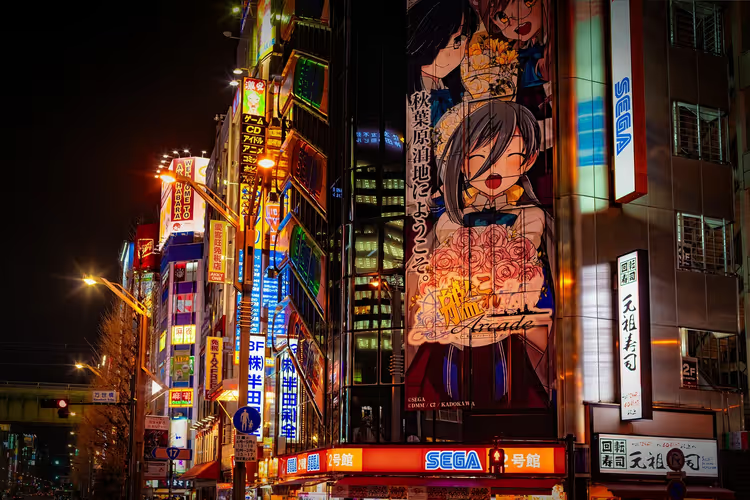
Akihabara wakes up before the tourists do. By nine in the morning, the figure shop windows are already open, and the neon signs are burning out after the night.
Planning a trip to the anime spots of Japan is no small task. Tokyo has hundreds of them, and old guides are often outdated. We've put together seven places worth seeing first.
The short answer: the core of the route is in Tokyo, in Akihabara and Nakano. Outside the city, you'll find the Studio Ghibli museum in Mitaka and the bathhouse from Spirited Away in Matsuyama.
Ad: this article contains affiliate links, and we earn a commission if you book through them. At no extra cost to you.
Tokyo for otaku: a quick map
💡 In short:
- Start with Akihabara and Nakano Broadway: that's where the anime shopping is concentrated.
- Buy Ghibli museum tickets in advance; sales open on the 10th of each month.
- Bathing at Dogo Onsen Honkan costs 700 yen on the first floor (as of 09/2026, Dogo Onsen website).
- Prices and opening hours: 09/2026, verified on the official Ghibli museum website
Ticket cheat sheet:
Place | Adult admission | Hours | Source |
|---|---|---|---|
Akihabara | free | district open 24/7 | |
Studio Ghibli Museum | 1,000 yen | timed entry sessions | |
Small Worlds | 3,200 yen | 09:00-19:00, entry until 18:00 | |
Dogo Onsen Honkan | 700 yen | 6:00-23:00 |
1. Akihabara: the electric town of anime
Akihabara covers roughly one square kilometer around JR Akihabara Station. After the war, a black market for radio parts thrived here, and today the district has become the center of otaku culture (according to the GoTokyo guide). Electronics, manga, and anime merchandise share the same blocks.
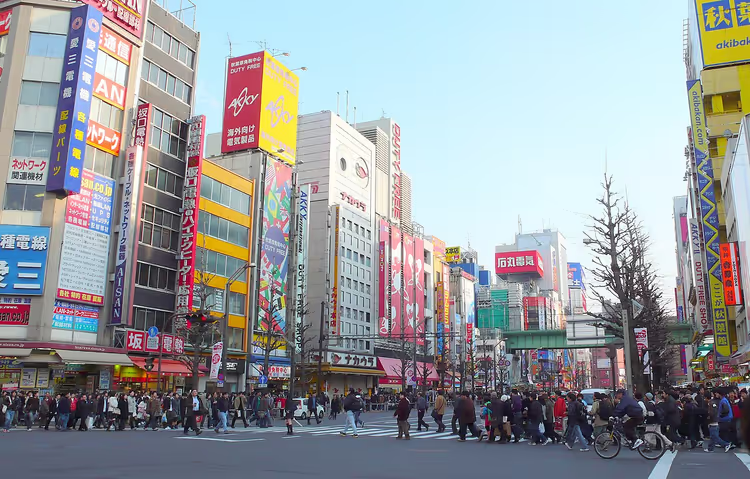
You step out of the subway at Akihabara station and immediately know where you are. Building facades run ads for the latest series, and the passageways are full of figure vendors. Mornings here are the calmest; by midday the streets fill up.
Figure vending machines sit right out in the open. One try costs a couple of coins, but the character you get is random. Experienced collectors head first to secondhand shops, where prices are lower and the condition is often flawless.
The multistory stores along Chuo-dori are packed with discs, manga, and merch. Walking in and buying nothing is nearly impossible. In the evening the district lights up with neon, and maid cafe promoters hit the streets.
Japan's secondary market is extremely well developed. Mugs, badges, keychains, and figures get sold to consignment shops for small amounts of money. Some items come from game centers, and certain lots are not even unboxed.
Set aside at least half a day to explore the area. Otherwise you will just rush down the main street and never check the upper floors. A neighborhood guide will save you time if you do not want to figure out the maze of streets on your own: see options on GetYourGuide.
- Who it's for: figure collectors, retro game and manga fans.
- The catch: new figures in display cases cost more than on the secondary market.
2. Maid cafes in Akihabara
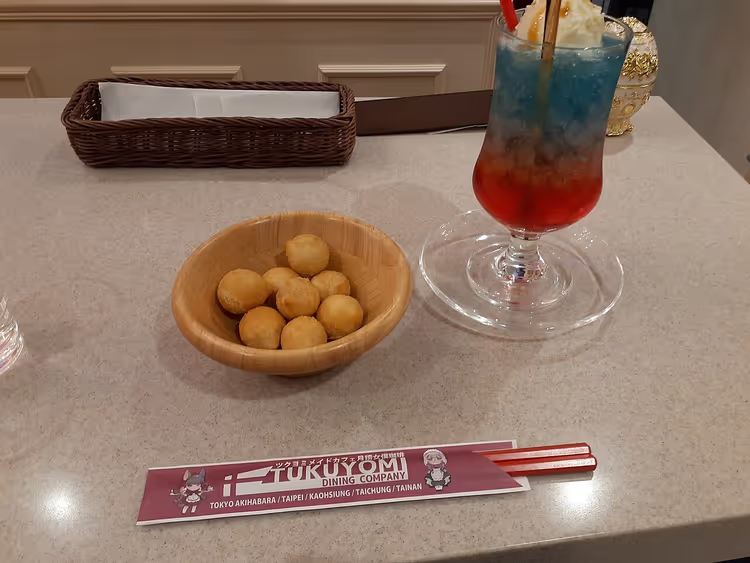
Maid cafes grew out of otaku culture and became their own genre of Japanese service. Akihabara has the most of them. On the surface, such a place looks like an ordinary coffee shop, but the entire floor is served by girls in maid costumes.
At the entrance you will almost certainly hear "Welcome home, master!" These words kick off a small performance where you get the lead role.
 © Vetalapancavimsatika · CC BY-SAPhoto: Vetalapancavimsatika, CC BY-SA (https://creativecommons.org/licenses/by-sa/4.0), Wikimedia Commons
The concept is simple. The guest is treated as the master, and the maid tries to please him. While you drink your coffee, she jokes, tells stories, and sings little songs.
Competition here is fierce, so the cafes cater to every taste. Some employ girls in ninja, nurse, or robot costumes. At certain establishments the staff is deliberately rude: the menu may be tossed onto the table, and this format has plenty of fans too.
The maid has long been an anime character. A short skirt, long knee socks, an apron, and ribbons in the hair are familiar to every fan of the genre. To understand the context, watch "Akiba Maid War" or "Steins;Gate."
- Who it's for: those who want to see otaku culture from the inside.
- The catch: an unprepared guest may feel uncomfortable; the "cuteness" level is off the charts.
3. Nakano Broadway: hunting for rare figures
Akihabara is called the heart of the anime industry, and Nakano Broadway its main warehouse. The complex sits in western Tokyo, near JR Nakano station. From the north exit to the shopping center entrance is a short walk.
The lower floors are occupied by ordinary shops and cafes. Higher up, anime territory begins: hundreds of retail spots sell figures, manga, cosplay, and accessories.
 © Richard, enjoy my life! · CC BY-SAPhoto: Richard, enjoy my life!, CC BY-SA (https://creativecommons.org/licenses/by-sa/2.0), Wikimedia Commons
The main hunt is for collectible figures. Some items here are cheaper than in Akihabara. You can also find character clothing, such as Naruto jackets or One Piece T-shirts.
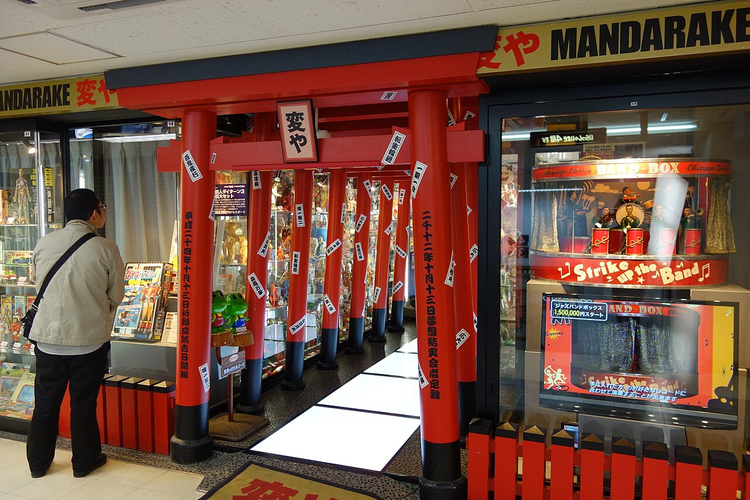
Cosplay shops let you put together a complete look. Besides costumes, they sell wigs, masks, and costume jewelry. A separate destination for collectors: the Mandarake secondhand chain branch, where items from old print runs turn up.
A useful tip for shoppers: check the counters with random assortments. If the seller did not sort the stock carefully, a rare figure may have been priced too low.
If you are learning Japanese, this is an inexpensive place to stock up on manga. In some shops the shelves look like a library, and they can take up a whole day.
As everywhere in Tokyo, there are soda vending machines with anime designs. The random principle applies here too, so until the last moment you do not know which character you will get.
To avoid wasting time on travel, book a hotel nearby in advance: see prices on Trip.com.
- Who it's for: hunters of rare figures and manga.
- The catch: secondhand lots often have no box or packaging.
4. Studio Ghibli Museum in Mitaka
The Studio Ghibli Museum is located in Mitaka, on the same line as Nakano Broadway. From central Tokyo to Mitaka station takes about half an hour (according to the museum's official website). From there a yellow bus goes to the museum, but you can also walk.
The museum was designed by Hayao Miyazaki himself and opened in 2001. Inside you will not find typical display cases: the building is laid out like a labyrinth so guests feel as if they are inside a cartoon.
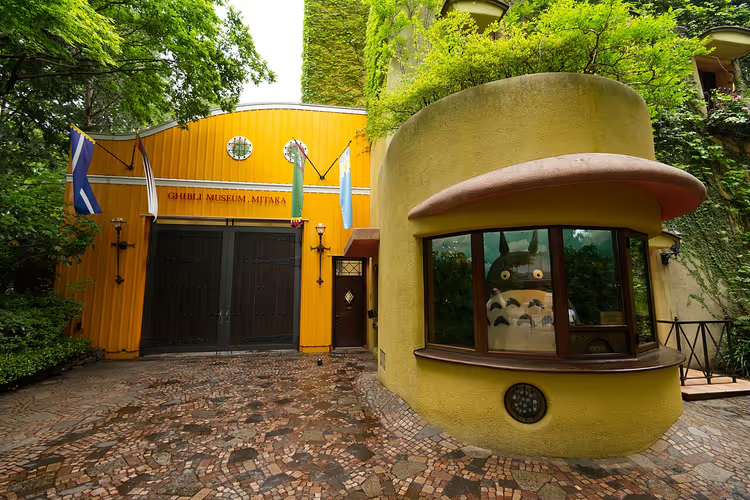 © Maarten Heerlien from Voorschoten, The Netherlands · CC BYPhoto: Maarten Heerlien from Voorschoten, The Netherlands, CC BY (https://creativecommons.org/licenses/by/2.0), Wikimedia Commons
Getting in here is harder than at a regular museum. Tickets are sold only in advance; sales start on the 10th of each month at 10:00 Japan time (as of 09/2026, sales rules on the museum website). Within a few minutes, slots are usually gone.
An adult ticket costs 1,000 yen. For ages 13-18 the price is 700 yen, for 7-12 it is 400 yen, for 4-6 it is 100 yen, and children under three enter free (as of 09/2026, ticket prices).
One room is packed with character sketches, another is recreated as a working studio. Every object here references a specific scene, so you can spend a long time examining the exhibition.
On the roof stands a statue of the "steel giant" from "Castle in the Sky." People take photos next to it, while photography inside the museum is prohibited. The ticket includes one screening at the museum's cinema, where a studio short film plays every half hour.
- Who it's for: Miyazaki fans and families with children.
- The catch: tickets sell out in minutes; without early booking you can forget about the trip.
5. Small Worlds: anime in miniature
Small Worlds opened in the Ariake district, three minutes from Yurikamome Ariake Tennis no Mori station (as of 09/2026, how to get there). It is one of the largest miniature museums in Asia, with an area of about 7,000 square meters.
At the entrance, guests are greeted by a statue of EVA-01 from Evangelion. People take photos next to it and then head to the ticket counter. An adult ticket costs 3,200 yen, a child ticket for ages 4 to 11 costs 1,700 yen, and kids under three get in free (as of 09/2026, ticket price on the museum website).
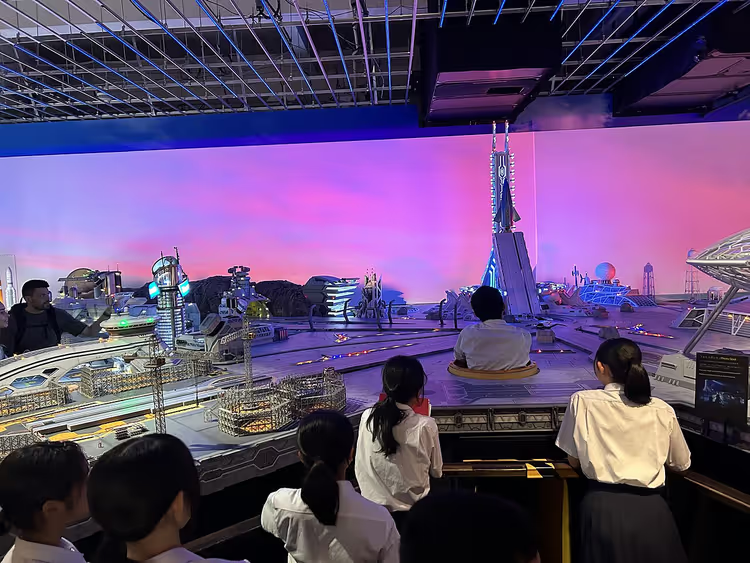 © Bea Phi · CC BY-SAPhoto: Bea Phi, CC BY-SA (https://creativecommons.org/licenses/by-sa/4.0), Wikimedia Commons
Inside there are several themed zones, and the most interesting ones are anime-related. The NERV hangar recreates the launch of combat robots, and underground Tokyo-3 hides from a cosmic threat (according to the zone descriptions on the website). Some of the displays move, so the scenes look alive.
The museum used to recreate the Azabu-Juban district from Sailor Moon, including the arcade and the heroine's apartment. The museum periodically changes its zone lineup, so check the official website for the current list.
The museum's main feature involves a 3D scanner. You get scanned in any pose and a 1:80 scale miniature is printed, which you can place in the world of your choice. The figurine is ready in about forty days (according to the figurine production times).
An annual "residency" in the Evangelion zone costs 19,800 yen and includes a pass and a free figurine (as of 09/2026, annual residency in the Evangelion world).
The museum is fully indoors, so weather won't get in the way of your visit. It's easy to combine with tickets to other Tokyo museums: see on Tiqets.
- Who it's for: Evangelion fans and families with kids.
- The catch: some of the moving displays are occasionally stopped for maintenance.
6. Anime pilgrimage: real locations
Japan has a whole movement called anime pilgrimage. The idea is simple: find the places that inspired familiar scenes. There's no religious subtext here, even though the word "pilgrimage" suggests otherwise.
In 2016, Makoto Shinkai's film Your Name came out. It broke box office records, and fans quickly tracked down its real locations. The director draws cities in great detail, so you easily recognize familiar streets.
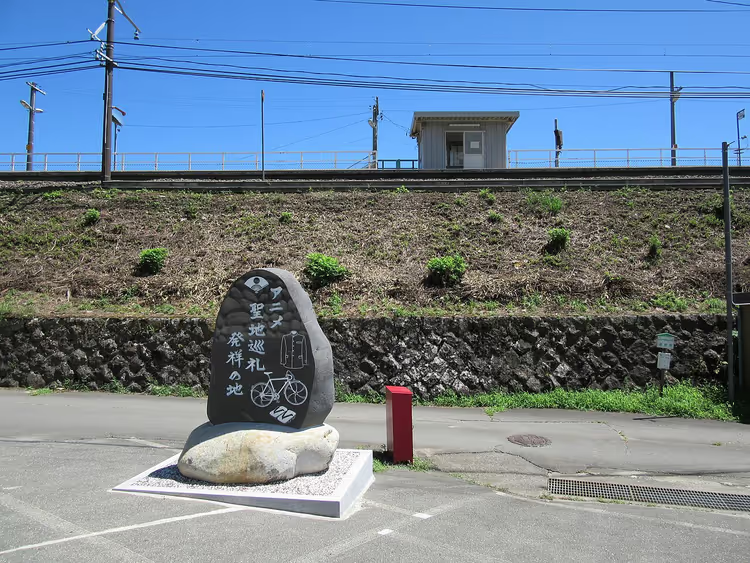 © Opqr · CC BY-SAPhoto: Opqr, CC BY-SA (https://creativecommons.org/licenses/by-sa/3.0), Wikimedia Commons
In Tokyo, such places include the Tokyo City View observation deck in Roppongi and Yotsuya Station. Even mailboxes and billboards on screen match the real ones. The quiet town of Hida in Gifu Prefecture turned into a tourist hub after the film's release.
A similar story happened with the village of Shirakawa-go. After the visual novel Higurashi When They Cry, fans started coming here. At the Shirakawa Shinto shrine, they leave wooden plaques with drawings.
In nearby Takayama, there's a cafe styled after Hyouka. The interior is recreated almost exactly, which feels a little unsettling.
The trip between Hida, Shirakawa-go and Takayama is best planned in advance: train tickets for Japan.
- Who it's for: those who want to see scenes from anime in real life.
- The catch: on weekends, popular locations draw crowds of the same kind of tourists.
7. Dogo Onsen Honkan: the bathhouse from Spirited Away
Dogo Onsen Honkan stands in Matsuyama on the island of Shikoku. The wooden public bathhouse opened in 1894, and in 1994 it was designated an important cultural property of Japan (according to the bathhouse's official website).
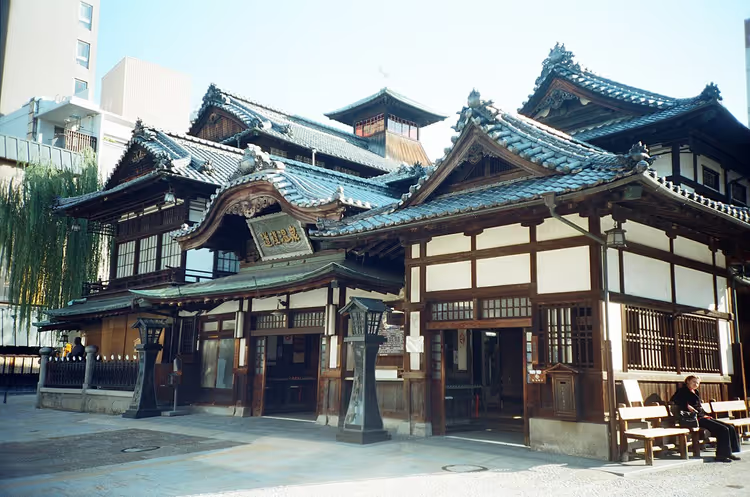 © Arnaud Malon · CC BYPhoto: Arnaud Malon, CC BY (https://creativecommons.org/licenses/by/2.0), Wikimedia Commons
This very building served as the prototype for the witch Yubaba's bathhouse in Spirited Away. The corridors have familiar details, although no spirits or river gods wander around here.
A modest sum is enough to take a bath. The Kami-no-yu bath on the first floor costs 700 yen for adults and 350 yen for children (as of 09/2026, pricing on the Dogo Onsen website). A spot on the second floor with a rest area will set you back 1,300 yen.
The renovation, which dragged on for six years, was completed in December 2024, and the building is now fully open (according to renovation news).
- Who it's for: those who want to combine an anime location with a real onsen.
- The catch: it's a public bathhouse, you can't stay overnight here.
⁉️🤔 Frequently asked questions
How many days do you need for the whole route?
Akihabara and Nakano Broadway are easy to split across two days, and the Ghibli Museum takes another half day including travel. Small Worlds fits into a short visit. The anime pilgrimage and Dogo Onsen Honkan are outside Tokyo, so set aside separate days for them.
Do you need to know Japanese?
No. At the Ghibli Museum, the short films are in Japanese, but the story is clear without words. In otaku districts, signs and menus are often duplicated in English, and station signs are intuitive to read. A couple of polite phrases will come in handy, but they're not essential.
When should you go to avoid crowds?
Weekday mornings are noticeably less crowded than evenings and weekends. At the Ghibli Museum, slots are distributed by session, so it's rarely packed inside. In Akihabara, the calmest window starts right after shops open. And at Dogo Onsen Honkan, locals love the morning, so you'll arrive at opening time together with them.
How much does admission cost?
Prices for the Ghibli Museum, Small Worlds and Dogo Onsen Honkan are collected in the table at the beginning of the article. Akihabara and Nakano Broadway, on the other hand, don't charge admission.
Can you take photos in the museums?
On the streets of Akihabara and in Nakano Broadway, shoot as much as you like. Inside the Ghibli Museum, photography is completely prohibited, even in the exhibition halls (according to museum visitor rules). At Small Worlds, photos are not only allowed but encouraged, with dedicated photo spots set up for them.
In short: what's worth booking
If you're coming primarily for shopping, base yourself in Tokyo and start your day with Akihabara. If you want to see the culture from the inside, add a maid cafe in the evening and a separate day for Nakano Broadway.
If you're traveling with kids, choose Small Worlds: everything is indoors. If you're planning ahead, book your Ghibli Museum slot first, otherwise suitable dates will be gone.
If you're short on time, save the pilgrimage and Matsuyama for your next visit. Hotels in Tokyo for your dates are easy to compare on Trip.com: find a hotel.

A small editorial team writing guides for independent travel. We travel ourselves, but we haven’t been everywhere, so we check prices, opening hours and how to get there against official sources.