
















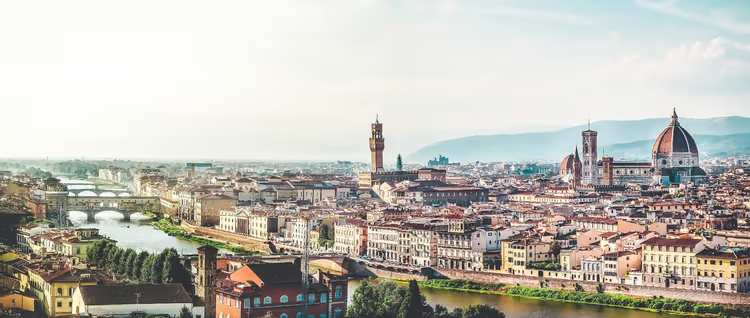
Florence guided tours: 17 routes and what to choose
Florence is compact, and its historic center can genuinely be walked in a day. The problem is something else. Without a guide, you can easily spend a couple of hours in line and walk right past the main sights, and by evening realize you never saw David or the Uffizi.
We've put together seventeen Florence tours with local guides in German or English: from a classic overview walk to a cooking class and a route based on symbols from the novel Inferno. For each one, we've noted what you'll see, where to meet, and who it's for. Museum tickets are almost always purchased separately, so at the end we've included a table with opening hours and links to official websites.
Ad: this article contains affiliate links, we earn a commission if you book through them, at no extra cost to you.
How to choose a tour in Florence
All routes fall into three types. Walking overview tours show you the city in a couple of hours. Thematic tours dive into one topic: the Medici, legends, gastronomy, medieval daily life. The third type takes you inside a museum, to the Uffizi Gallery or to Galleria dell'Accademia to see David.
Choose based on time and interests. If it's your first time in Florence, take an overview walk and add one gallery. Painting enthusiasts will appreciate the Uffizi with an art historian and Galleria dell'Accademia. Tickets to state museums are almost all sold online with a time slot, and in summer without a slot you'll stand in line for over an hour.
💡 In short:
- Overview walking tour: the city in two hours, no museum interiors.
- Thematic routes: the Medici, legends, gastronomy, daily life, Inferno.
- Museums separately: Uffizi, Galleria dell'Accademia, Palazzo Vecchio, Pitti Palace.
- Prices and opening hours: 09/2026, verified on the official Uffizi Gallery website
Route type | Who it's for | Duration | Museum tickets |
|---|---|---|---|
Overview walking | first time in the city | about two hours | not needed |
Thematic | interested in one topic | two to three hours | usually not needed |
Museum | art lovers | two to three hours | purchased separately |
1. Classic overview tour
The classic route through the center starts at Piazza del Duomo. The guide leads the group through Piazza della Signoria to the Loggia dei Lanzi, shows the Uffizi Gallery from the outside, and brings you out onto Ponte Vecchio. Along the way, you'll hear who built the Cathedral of Santa Maria del Fiore and whose money paid for the palaces and churches.
The guides live in Florence and don't recite dates from a textbook; they tell stories about the owners, architects, and painters. At the end of the walk, you can ask the guide for restaurant, cafe, and shop recommendations.
- Where to meet: Piazza del Duomo.
- What you'll see: Cathedral of Santa Maria del Fiore, Piazza della Signoria, Loggia dei Lanzi, the Uffizi from outside, Ponte Vecchio.
- Who it's for: you're in Florence for the first time and want to get your bearings.
2. Florence: all the essentials in two hours
 © Commonists · CC BY-SAPhoto: Commonists, CC BY-SA (https://creativecommons.org/licenses/by-sa/4.0), Wikimedia Commons
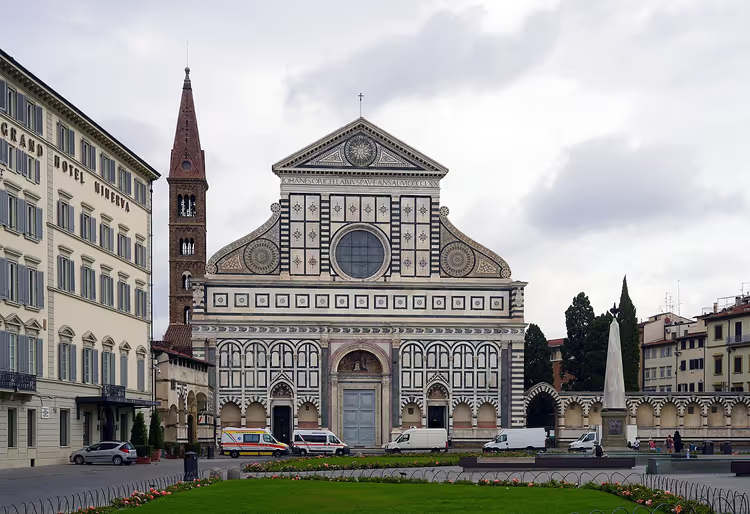
This is a walking tour without entering museums, galleries, or churches. You meet the guide at Piazza Santa Maria Novella, right in the center. In two hours, you'll walk the entire historic skeleton of the city: from the Duomo with Giotto's bell tower and the Baptistery to Piazza della Signoria with Palazzo Vecchio.
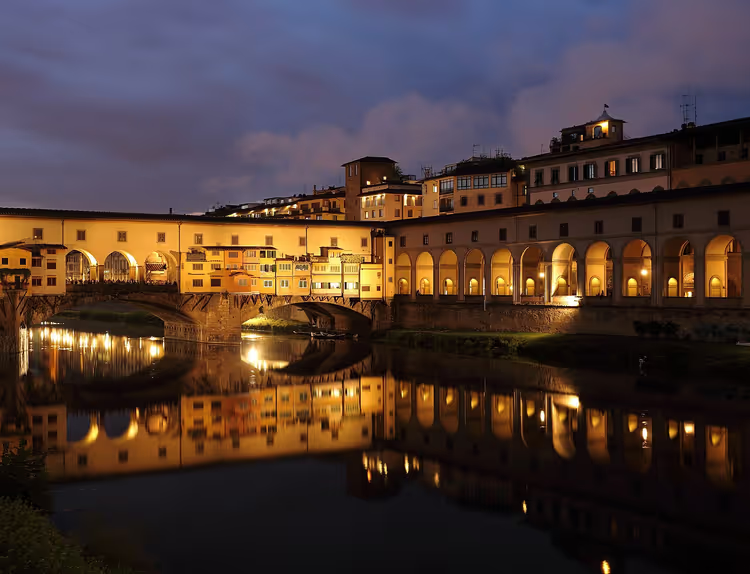
The route then continues across Ponte Vecchio and leads to the Basilica of San Lorenzo, the Medici family church and burial place. From the banks of the Arno, you can also see what's left outside the route: the old city walls, Piazzale Michelangelo, the Iris and Rose Gardens. No tickets are needed here, and the route works in any weather.
- Duration: about two hours.
- Where to meet: Piazza Santa Maria Novella.
- Who it's for: you have little time but want to see the whole city.
- The catch: museums along the route are not visited. See similar walking tours of Florence on GetYourGuide.
3. Legends and lore of Florence
 © Martin Falbisoner · CC BY-SAPhoto: Martin Falbisoner, CC BY-SA (https://creativecommons.org/licenses/by-sa/3.0), Wikimedia Commons
This route is built around stories, not dates. The guide tells how Michelangelo, Botticelli, Leonardo da Vinci, and Brunelleschi worked in Florence and why they considered it their home. The masters not only painted church walls but also built palaces and temples, and the city still inspires everyone who comes here.
In two hours, you'll see the main monuments of the center and hear the tales locals tell about their streets and squares. The format suits those who have already seen postcard Florence and want a second layer.
- Duration: about two hours.
- Who it's for: you're interested in stories and legends, not a list of dates.
- Not for: those expecting museum exhibits inside.
4. The real Florence: a locals' route
 © sailko · CC BY-SAPhoto: sailko, CC BY-SA (https://creativecommons.org/licenses/by-sa/3.0), Wikimedia Commons
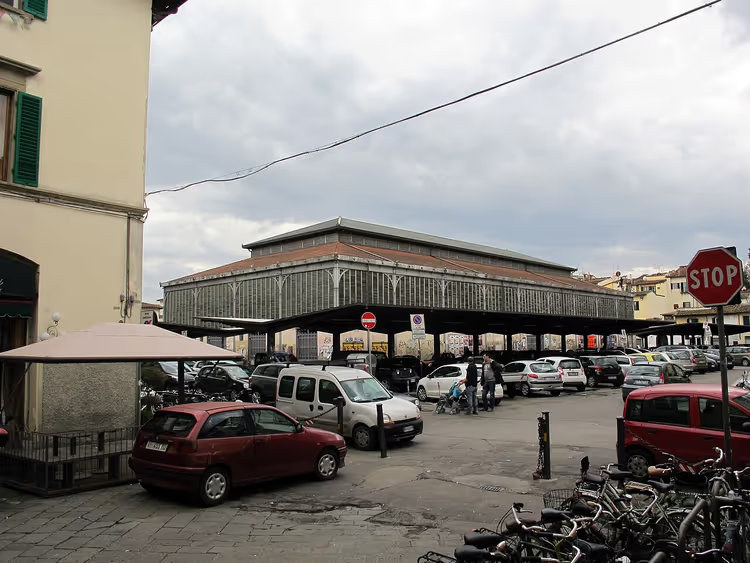
Florence is often perceived as one big museum. This route shows how ordinary city residents live in it. The guide takes you to places where Italians buy groceries and explains why coffee here is drunk standing at the bar counter.
You'll try street food and gelato, see street art and shops with genuine frescoes, and step into the entrance hall of a medieval house with ceilings over five meters high. Plus practical tips: where to park, how much it costs to live in the city, and where to get the freshest produce.
- Who it's for: you want to see the city, not just postcard facades.
- What you'll try: street food and gelato. Food and local tours of Florence are gathered in one place.
5. Florence for foodies
 © Francesco Bini · CC BY-SAPhoto: Francesco Bini, CC BY-SA (https://creativecommons.org/licenses/by-sa/4.0), Wikimedia Commons
The capital of Tuscany is known for more than just its architecture. This route is built around markets, cafes, and restaurants. It starts in a historic coffee house, then continues through medieval streets, where the guide explains how Florentines used to buy food and why their bread is unsalted.
Next, you'll learn how to tell real wine from a fake and which wine is considered sacred in Florence. At the end, for an extra fee, you can order a glass of Chianti with cheese, salami, and prosciutto. The guide will then take you to one of the city's best gelaterias. You can sample the local cuisine almost any day.
- What's included: guide accompaniment and a route through markets, cafes, and restaurants.
- What's not included: lunch and tastings are paid separately.
- Who it's for: you're interested in Tuscan cuisine and wine.
6. Non-touristy Florence
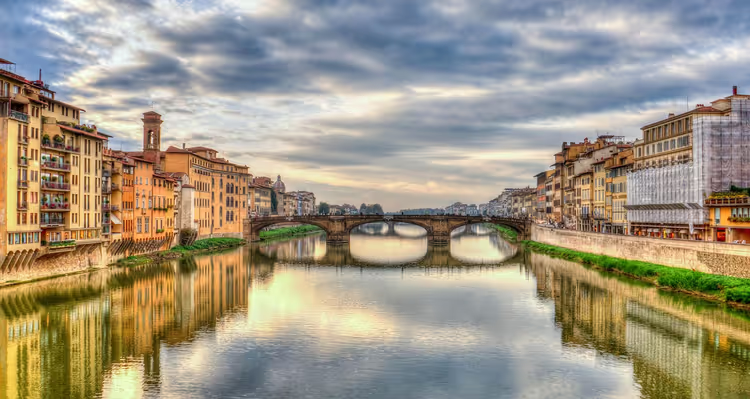
This route is for those who want to learn how to navigate the labyrinth of medieval streets on their own. The guide shows the city through the eyes of its residents: when Florentines get up, where the best market is, how and where they park their cars and buy groceries.
You'll see fountains with sparkling drinking water and places known only to locals. The tour is led by a Florence resident who knows the city not from a guidebook or postcards.
- Who it's for: you've already seen the center and want a different Florence. Non-touristy Florence tours with a local guide should be booked in advance.
7. The Medici and the Renaissance
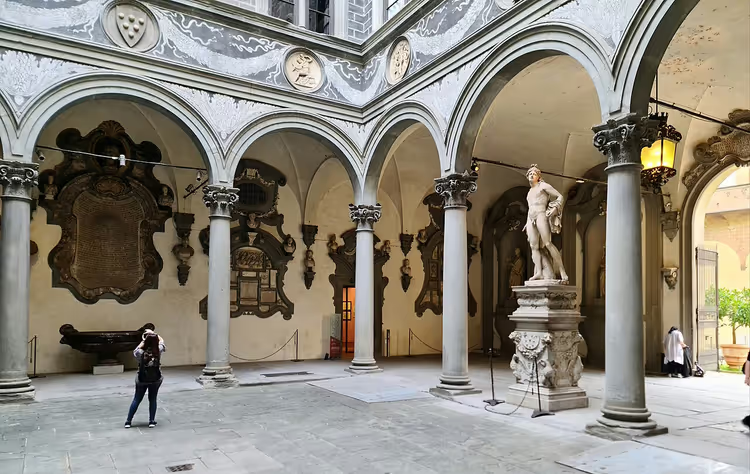 © Ricardalovesmonuments · CC BY-SAPhoto: Ricardalovesmonuments, CC BY-SA (https://creativecommons.org/licenses/by-sa/4.0), Wikimedia Commons
The Medici family were not only rulers of the city but also true patrons of the arts. They supported poets, painters, and architects, which is why the best Renaissance masters worked in Florence. The last member of the family, Anna Maria Luisa de' Medici, bequeathed all her property and art collection to the city, and that is how the history of the Uffizi Gallery began.
The guide takes you to sites connected with this family: the Medici Palace, the chapels, and the Basilica of San Lorenzo, which served as both the family church and their burial place. You'll learn about the most prominent members of the family and their contributions to the city.
- What you'll see: the Basilica of San Lorenzo, the Medici Chapels, the Medici Palace.
- Who it's for: you're interested in Renaissance history and politics.
8. Group tour of the Pitti Palace
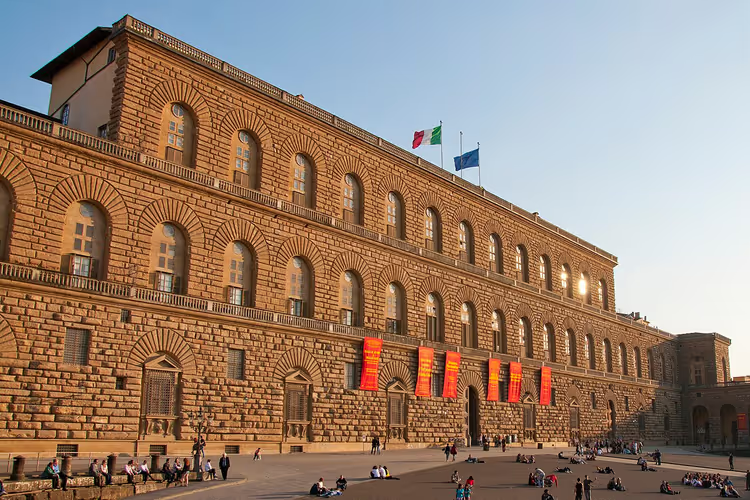 © Almaak · CC BY-SAPhoto: Almaak, CC BY-SA (https://creativecommons.org/licenses/by-sa/3.0), Wikimedia Commons
The Pitti Palace was the grandest residence in Florence and one of the three Medici estates. It was purchased by Eleanor of Toledo, wife of Duke Cosimo I. The Palatine Gallery displays Titian, Raphael, Botticelli and Tintoretto, while the palace walls and ceilings are decorated with frescoes by masters of that era.
The Silver Museum houses the Medici family's jewelry, and the Royal Apartments preserve their original furnishings. The group meets at the palace entrance on Tuesdays and Fridays at ten in the morning. The guide helps you navigate the wealth of cultural treasures around you.
- When: Tuesday and Friday, starting at ten in the morning.
- Ticket: purchased separately.
- Who it's for: you love painting and palace interiors. Look for Pitti Palace and Boboli Gardens tickets on GetYourGuide.
9. The Uffizi Gallery with an art historian
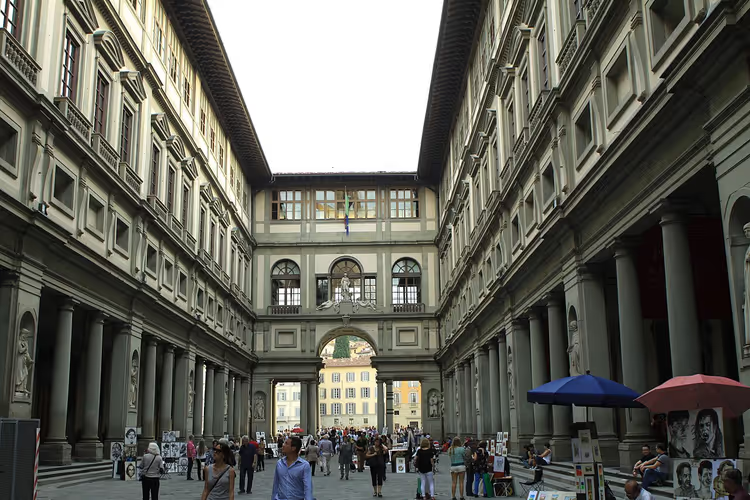 © Arek N. · CC BY-SAPhoto: Arek N., CC BY-SA (https://creativecommons.org/licenses/by-sa/3.0), Wikimedia Commons
The Uffizi Gallery is perhaps the most famous art museum in Italy. It houses Raphael, Michelangelo, Caravaggio, a large collection of Botticelli and Leonardo da Vinci. The palace was commissioned by the Medici, and the architect Giorgio Vasari designed long galleries in advance, where the paintings look especially striking.
Figuring out the rooms on your own without missing the highlights is difficult. An art historian will guide you through the Medici collection and show how eras and styles evolved from the early Middle Ages to the Renaissance. Tickets are purchased separately.
- Guide: art historian.
- Ticket: purchased separately, preferably with a time slot.
- Who it's for: you want to understand painting, not just walk through the rooms. Uffizi ticket with priority entry
10. Florence sightseeing tour
This route focuses on the New Market and Tuscan products. In two hours you'll walk through the center and get your bearings in the maze of medieval streets. The tour starts at Piazza del Duomo: the main cathedral, the Baptistery, Dante's house, Piazza della Signoria with the Palazzo Vecchio, the Uffizi Gallery and the Pitti Palace.
Be sure to make a wish at the Porcellino fountain on the loggia of the New Market. Here you'll also get acquainted with traditional products and customs of Tuscan cuisine. The guide will give practical tips on Tuscan artisan goods, cheeses and wines.
- Duration: about two hours.
- Meeting point: Piazza del Duomo.
- Who it's for: you're interested in Tuscan products, cheeses and wines, not just facades.
11. Italian cooking classes

Tuscany is a blessed land where almost any product is good on its own. In a master class with Italian chefs, you'll learn to cook local classics: Florentine steak and chicken in wine sauce. You'll discover new ways to prepare meat, vegetables and desserts.
You'll cook four dishes, choosing them from seven menu options, then sit down to a dinner of what you've just made with local wine. The class is held in Italian or English, and all ingredients, wine and the chef's services are included in the price.
- What's included: ingredients, wine and the chef's services.
- Language: Italian or English.
- Who it's for: you want to bring home not just memories, but skills. Cooking classes and food tours in Florence
12. Michelangelo Buonarroti: life and work
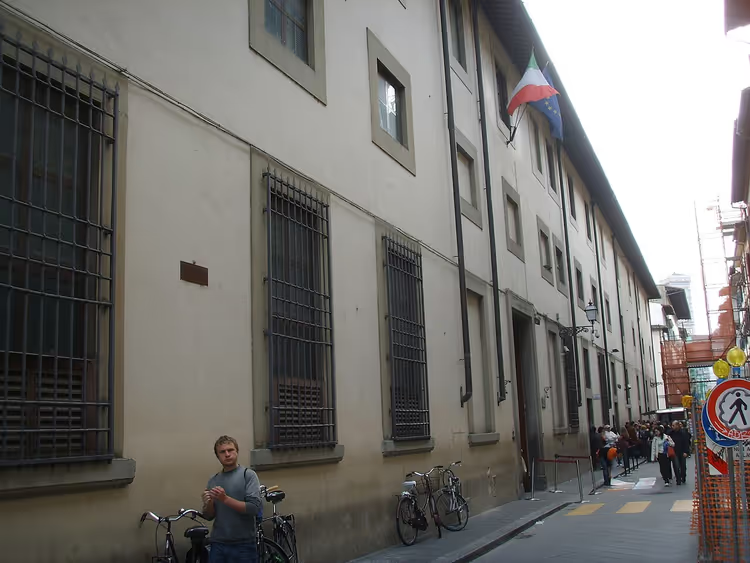 © sailko · CC BYPhoto: sailko, CC BY (https://creativecommons.org/licenses/by/2.5), Wikimedia Commons
Almost the entire life of the sculptor, architect, painter and poet Michelangelo Buonarroti is tied to Florence. He came from an impoverished noble family and created his best works here under Medici patronage. Florence is also where the ultimate standard for depicting the human body, David, was created, along with the sculptural group "The Slaves."
This monumental figure and "The Slaves" are housed in the Galleria dell'Accademia. In the Laurentian Library you'll feel the working atmosphere the master created. You'll see the sculptures of the Medici Chapel, and in the Basilica of Santa Croce you'll visit Michelangelo's own tomb.
- What you'll see: David and "The Slaves," the Medici Chapel, the Basilica of Santa Croce.
- Tickets: for museums and the basilica are purchased separately. David ticket with fixed entry time
13. Daily life, customs and passions of medieval Florence
 AIIllustrative image: AI-generated
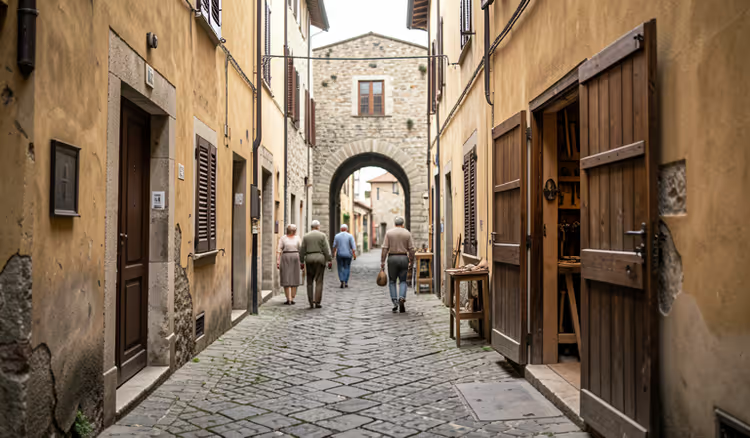
In the Middle Ages, Florence was the center of political and cultural life in Europe. People came here not only on business, but also to see the city in person. The best craftsmen worked here, guilds and merchant associations were founded, and real political passions boiled over the right to govern the city.
Dante, Boccaccio, and Petrarch lived here, and the Tuscan dialect in which their works were written became the foundation of literary Italian. The route passes Gothic buildings, fortress houses, towers, and basilicas along narrow streets: the Duomo, the Pagliazza Tower, the Palazzo della Signoria, Dante's house, the Bargello, and the churches of Santa Croce and Orsanmichele.
- What you'll see: Gothic architecture and the towers of the old city.
- Who it's for: you're interested in medieval daily life and politics.
14. Florence: the cradle of the Renaissance
 © Wikibusters · CC BY-SAPhoto: Wikibusters, CC BY-SA (https://creativecommons.org/licenses/by-sa/4.0), Wikimedia Commons
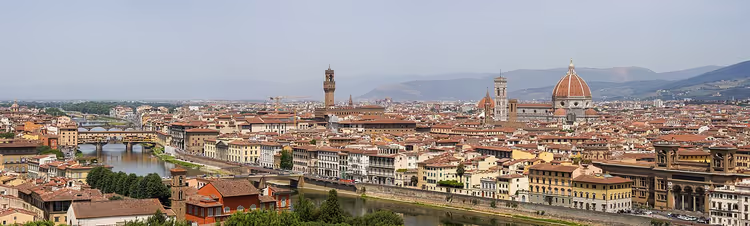
As early as the 13th century, Florentine artists began reviving ancient subjects and motifs. Later, in the 15th century, Florentine art flourished: Donatello and Brunelleschi worked here, Michelangelo, Botticelli, and Leonardo da Vinci created their works, and Raphael got his start.
These achievements are tied primarily to the policies of the Medici, many of whom were themselves creative and patronized artists. You'll follow in the footsteps of this era: the Brancacci Chapel, the Cathedral of Santa Maria del Fiore, the Church of San Lorenzo designed by Brunelleschi, the interiors of Santo Spirito, the Uffizi Gallery, and the Medici Palace.
- Duration: about three hours.
- What you'll see: the early Renaissance in architecture and painting.
- Who it's for: art history matters to you.
15. The splendor of the Signoria and Palazzo Vecchio
 © Txllxt TxllxT · CC BY-SAPhoto: Txllxt TxllxT, CC BY-SA (https://creativecommons.org/licenses/by-sa/4.0), Wikimedia Commons
Palazzo Vecchio on Piazza della Signoria was built back in the 13th century, and in 1540 it became the main residence of the rulers when Cosimo I de' Medici moved here with his wife Eleanor of Toledo. The palace walls are decorated with frescoes and paintings by Giorgio Vasari, a friend of Michelangelo.
In the Hall of the Five Hundred you'll see works by Michelangelo. On Vasari's fresco there is a mysterious message hidden, Cerca trova, and beneath it the master concealed a fresco by da Vinci instead of destroying it. You'll visit the duke's apartments, the secret room for alchemical experiments, and learn where the hidden passage runs.
- What you'll see: the Hall of the Five Hundred, Vasari's frescoes, the duke's apartments.
- Who it's for: you're interested in palaces, frescoes, and city secrets. Palazzo Vecchio ticket with a time slot
16. A tour inspired by the book "Inferno"
 © Diego Delso · CC BY-SAPhoto: Diego Delso, CC BY-SA (https://creativecommons.org/licenses/by-sa/4.0), Wikimedia Commons
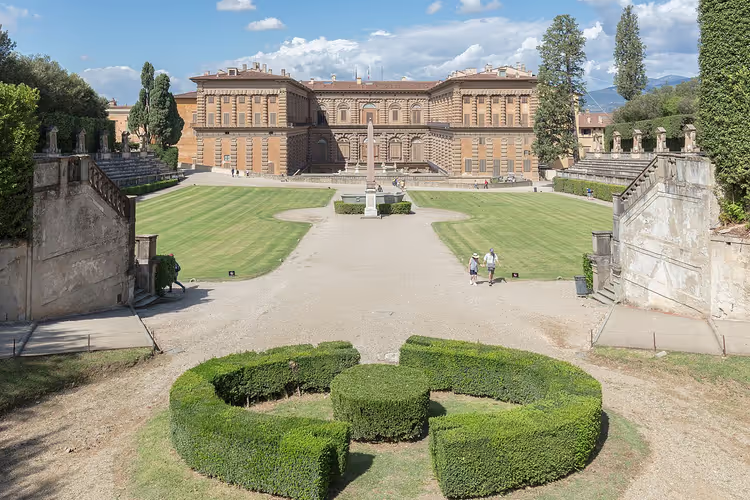
The route following Dan Brown's novel "Inferno" starts at the main entrance to the Boboli Gardens. From there you'll walk to Porta Romana and examine the sculptures at the entrance, reach the pond with the depiction of Oceanus, and climb up the Viottolone avenue to the Fountain with the Fork.
Next you'll see the Pitti Palace and the Buontalenti Grotto, where you'll find a hidden door to the Vasari Corridor. You'll cross to the other bank via the Ponte Vecchio, and in Palazzo Vecchio you'll see the alchemical laboratory "Studiolo" and search for Vasari's inscription Cerca trova yourself. At the end: Dante's death mask, Machiavelli's office, and the Church of Saint Margaret.
- Who it's for: you've read "Inferno" or love urban mysteries.
- Not for: those expecting a classic sightseeing tour. Literary tours of Florence
17. Florence in one day: city tour and the Uffizi
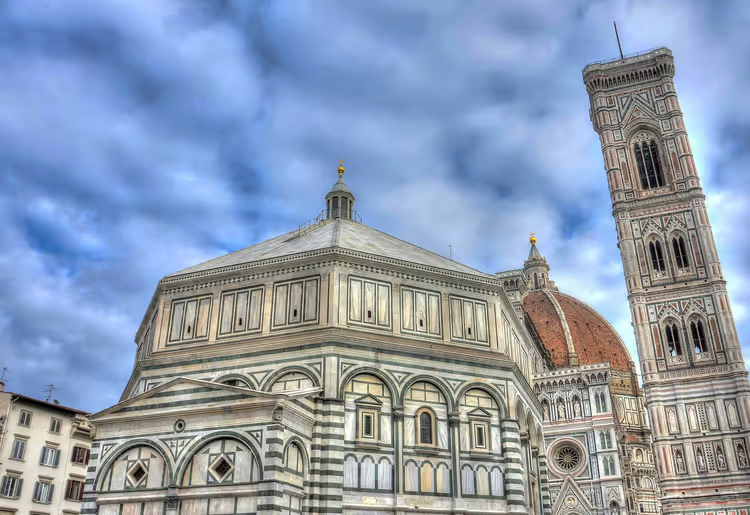
If you're short on time, it's worth combining a sightseeing tour and the Uffizi Gallery into one tour. This way you'll get to know the city, figure out what appeals to you most, and won't get lost in the endless halls of the gallery, where originals of world visual art hang.
The first part is devoted to the architecture of the medieval city and the history of Florence under the Medici. You'll see buildings designed by Brunelleschi, Vasari, Michelangelo, and Donatello: Santa Maria del Fiore, Piazza della Signoria and the palace, the Baptistery, the Ponte Vecchio, and the New Market. In the second part you move to the Uffizi to see works by Botticelli, Michelangelo, Titian, and Rubens.
- Duration: a full day.
- Who it's for: you have one day and want to make the most of it. Combined guided tours of Florence
Tickets and opening hours (as of 09/2026)
Almost all state museums in Florence are closed on Mondays, and in summer a ticket without a time slot means a long line. Check the schedule on official websites before your trip.
Place | Opening hours | Closed | Ticket |
|---|---|---|---|
Uffizi Gallery | Tue-Sun 8:15-18:30 | Monday | from 25 € (as of 09/2026, official website) |
Duomo and Baptistery | dome by time slots | check weekends | combined ticket from 15 € (as of 09/2026, official website) |
The Cathedral of Santa Maria del Fiore is free to enter. But climbing Brunelleschi's dome, Giotto's bell tower, the Baptistery, and the Duomo Museum requires one of the combined tickets. Dome time slots are limited, and in summer they sell out in advance.
Where a separate ticket is required, it's convenient to book entry online with a time slot: Duomo dome ticket with reservation or Hop-on Hop-off bus tour.
Tours and tickets in Florence
Guided tours, skip-the-line tickets and activities — most offers can be cancelled free of charge.
See offers on GetYourGuideThe widget loads once you give your consent.
Florence on the map
The center of Florence is compact: from Santa Maria Novella station to Ponte Vecchio you can walk in twenty minutes. Below is a map with the main route points so you can gauge distances in advance.
Plan museums for the first half of the day: by lunchtime the entry line grows, and by evening the halls close.
⁉️🤔 Frequently asked questions
How long do sightseeing tours in Florence last?
Walking sightseeing routes are designed for about two hours. Museums are not included, so no tickets are needed in advance. Three-hour routes add more sights and details.
Do I need to buy museum tickets separately from the tour?
Yes, almost everywhere the ticket is not included in the tour price. Galleria dell'Accademia, the Uffizi, Palazzo Vecchio, and Pitti Palace sell entry separately, and the guide only accompanies the group. Buy tickets online with a time slot so you don't stand in the ticket line.
When is the best time to go to the Uffizi and see David?
The Uffizi and Galleria dell'Accademia are closed on Mondays. Both museums open at 8:15, and in the first half hour the halls are almost empty. Arrive at opening time, before the main flow of tourists shows up.
Are tours suitable if you don't speak Italian?
Sightseeing and themed routes are led by guides in German or English, so Italian is not needed. The cooking class is held in Italian or English. For complex topics like art history, it's better to book a guide with specialized training.
Can you see the main sights in one day?
Yes, there's a combined tour for that: a walking tour of the center plus a visit to the Uffizi. In one day you'll see the Duomo, Piazza della Signoria, Ponte Vecchio, and the main halls of the gallery. If you're really short on time, add a Hop-on Hop-off bus tour.
In short: what's worth booking
Florence is easier to see in parts. Take a walking tour in the morning to understand the city layout, then visit one gallery in the afternoon rather than three in a row.
If it's your first visit: a classic sightseeing tour plus the Uffizi separately with an art historian. If you have one day: a combined tour of sightseeing plus the Uffizi. If you've already seen the center: off-the-beaten-path routes, food tours, or "Inferno". If you love art: Galleria dell'Accademia to see David and the Uffizi with a time slot.
Tours and tickets with time slots are easiest to book in advance on GetYourGuide, and before your trip it's worth comparing insurance options.

A small editorial team writing guides for independent travel. We travel ourselves, but we haven’t been everywhere, so we check prices, opening hours and how to get there against official sources.