
















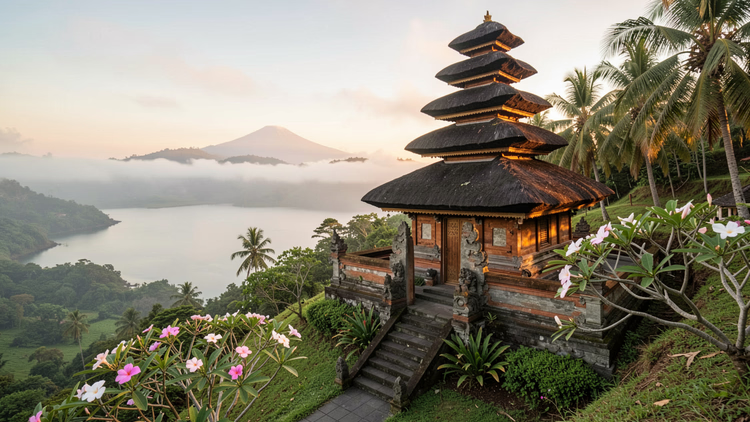
 AIIllustrative image: AI-generated
Temples of Bali: 19 main shrines with entrance, hours and route
Bali greets travelers with the ocean, but it is remembered for its temples. There are thousands of Hindu shrines on the island, and picking the main ones for a short trip is not easy. We have put together 19 temples in Bali worth seeing, with admission, hours, and route tips.
Admission to Pura Besakih for foreigners costs about 9 EUR (150,000 Indonesian rupiah, as of 09/2026, official temple website). The temple sits on the slope of Mount Agung, and exploring it takes half a day. Ahead is the full list, from the ocean cliffs of Uluwatu to the lake temples in the crater.
Below is the practical information. You will learn how much tickets cost and what hours the gates are open. Some temples lie on the same road as Ubud, and it is realistic to cover two or three of them in a day.
Ad: this article contains affiliate links, we earn a commission if you book through them, at no extra cost to you.
What to know before visiting Bali's temples
💡 In short:
- Allow one to two hours per temple, more for Besakih and Uluwatu.
- Arrive at opening time: tour buses pull up to famous temples during the day.
- Bring a sarong and sash: you will not be allowed in without them.
- Admission and hours: 09/2026, verified on the Pura Besakih website.
The dress code on Bali is the same for all shrines. Shoulders and knees must be covered, and you will be given a sarong and sash to borrow at the entrance. Shorts and tank tops are not allowed inside, so keep a wrap in your backpack.
Payment is almost everywhere in cash in Indonesian rupiah, cards are rarely accepted. Bring small bills: the ticket office does not always have change. Prices below are for foreign visitors, locals pay less.
Temple | Admission (foreigners) | Hours | Source |
|---|---|---|---|
Pura Besakih | 150,000 rupiah, about 9 EUR | 07:00-18:00 | |
Pura Tanah Lot | 75,000 rupiah | 07:00-19:00 | |
Uluwatu Temple | check at the ticket office | 07:00-19:00 | |
Pura Tirta Empul | 75,000 rupiah, cheaper for children | morning to evening |
1. Pura Besakih
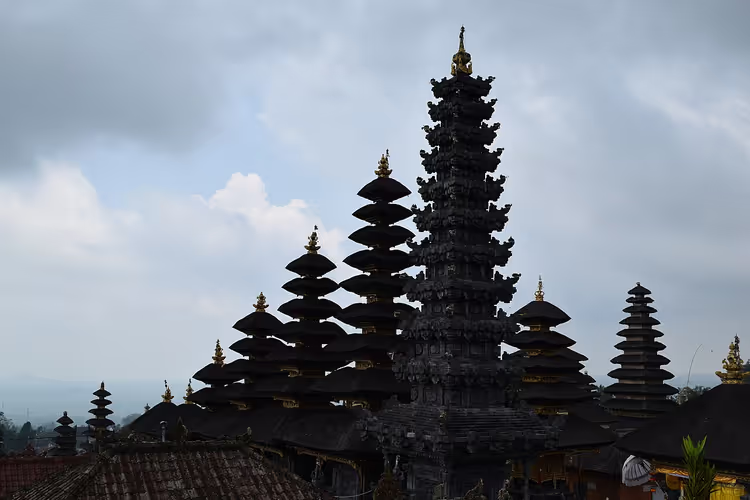 © ::::=UT=:::: · CC BY-SAPhoto: ::::=UT=::::, CC BY-SA (https://creativecommons.org/licenses/by-sa/3.0), Wikimedia Commons
Pura Besakih is called the Mother Temple of Bali. It was built in the 10th century on the slope of Mount Agung. The complex brings together about thirty structures on seven terraces. The heart of the ensemble, Penataran Agung, is dedicated to Shiva. A tall staircase with carved gates leads to the statues of Brahma, Vishnu, and Shiva.
The structures have survived two eruptions of Agung and still stand today. Local communities hold ceremonies here almost daily. You are entering a living temple, not a museum, and you feel it from the first minutes.
- Getting there: about two hours from Denpasar, the road goes uphill.
- Cost: entrance fee 150,000 rupiah, includes a sarong and a local guide (as of 09/2026, temple website).
- Tip: a guide is more convenient than a scooter, book a tour to Pura Besakih.
- The catch: on regular days, non-Hindus can only access the outer area; the inner courtyards are open just once a year.
2. Uluwatu Temple
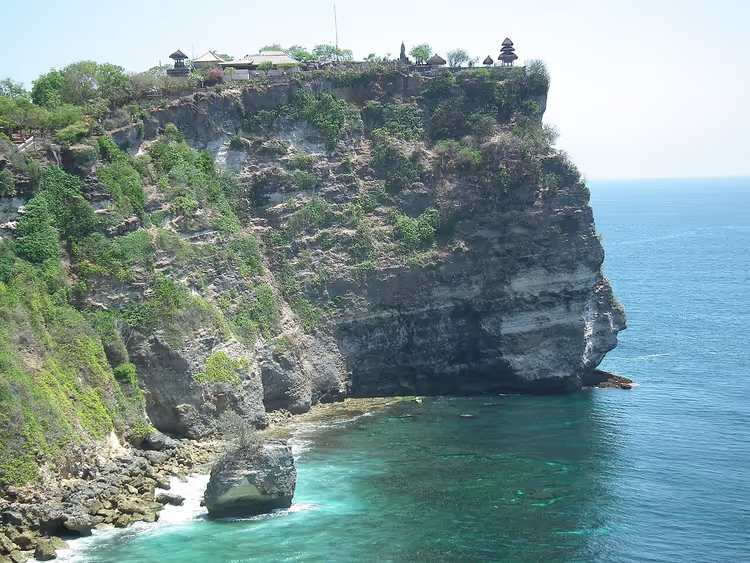 © GeoffClarke · CC BY-SAPhoto: GeoffClarke, CC BY-SA (https://creativecommons.org/licenses/by-sa/3.0), Wikimedia Commons
Pura Luhur Uluwatu stands on a cliff about seventy meters above the ocean. The temple was built in the 11th century, and until the early 20th century only members of the royal family were allowed inside. The name combines the words "ulu" and "watu": summit and rock. According to legend, the cliff was the ship of the sea goddess Dewi Laut.
The walls are made of dark stone and decorated with carvings, and statues with elephant heads stand at the entrance. In the evening, the Kecak fire dance is performed in the amphitheater near the temple, accompanied by a choir. Arrive by five in the evening to get seats with a sunset view.
- Getting there: south of the island, about an hour's drive from Kuta.
- Hours: 07:00-19:00, the dance starts around 18:00 (as of 09/2026, temple website).
- The catch: during the rainy season, from November to March, the evening Kecak is often canceled due to downpours.
3. Pura Tanah Lot
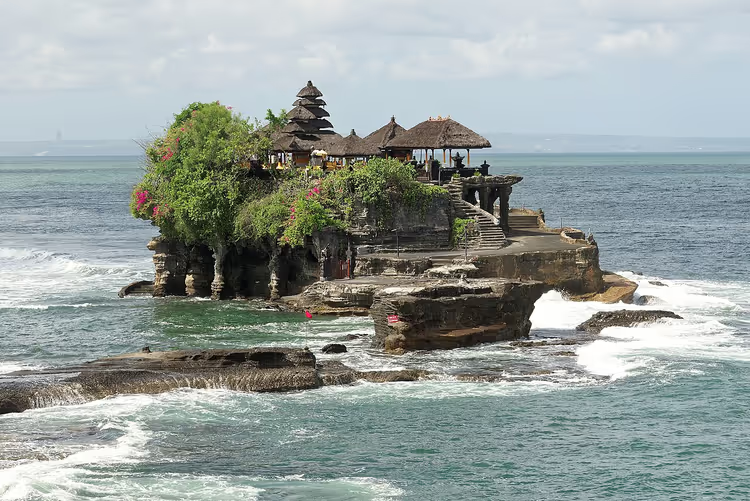 © Jakub Hałun · CC BY-SAPhoto: Jakub Hałun, CC BY-SA (https://creativecommons.org/licenses/by-sa/4.0), Wikimedia Commons
Pura Tanah Lot translates as "land in the sea." The temple stands on a rock connected by a narrow isthmus. At high tide, water covers it, and you can only reach the rock at low tide. Only worshippers are allowed inside, so you're left with the viewing platform and the view of the waves.
Tanah Lot was built in the 15th century. In the late 20th century, waves nearly destroyed the rock, and Japanese specialists reinforced it with modern materials. Nearby there's a market with souvenirs and cafes where you can comfortably wait for sunset.
- Getting there: about forty minutes from Canggu and Kuta; crowds head there for sunset.
- Cost: entrance fee 75,000 rupiah, paid in cash at the entrance (as of 09/2026, temple website).
- Tip: an evening tour to Tanah Lot picks up guests from southern hotels and brings them in time for sunset.
- The catch: at high tide you can't reach the temple, so all that's left is the view from a distance.
4. Pura Ulun Danu Batur
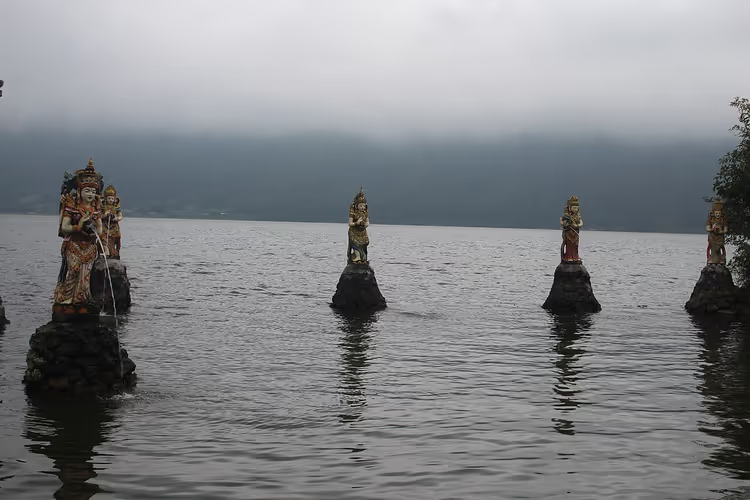 © Anggabuana · CC BY-SAPhoto: Anggabuana, CC BY-SA (https://creativecommons.org/licenses/by-sa/4.0), Wikimedia Commons
Pura Ulun Danu Batur stands on the edge of the crater of Mount Batur. A whole ensemble has grown up here, around nine shrines in one place. Balinese people believe that the main gods of their land live here. The temple guards the island's drinking water reserves.
Only the high priest has the right to address the water goddess Dewi Batari. Once every five years, a ritual with offerings and sacrifice is held here. On holidays, pilgrims from all over the island come here, and that is when you will see the temple at its most festive.
- How to get there: about two hours from Ubud, a winding road around the volcano.
- The catch: the active volcano nearby periodically makes itself known and closes part of the route.
5. Pura Ulun Danu on Lake Bratan
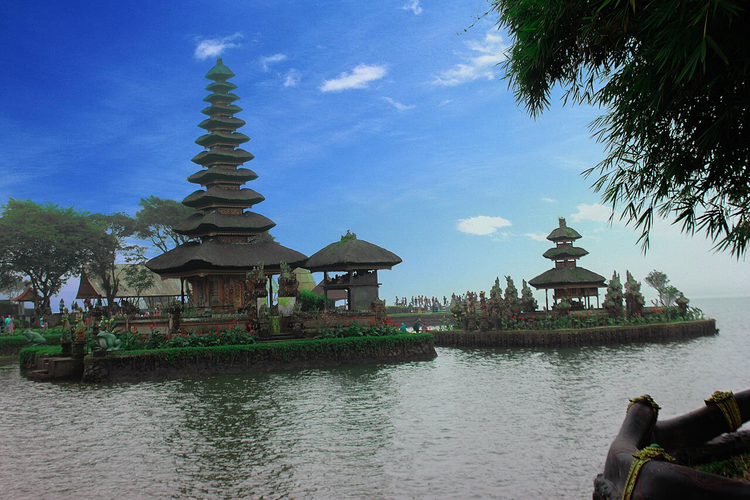 © Ananta Chandra Priambodo · CC BY-SAPhoto: Ananta Chandra Priambodo, CC BY-SA (https://creativecommons.org/licenses/by-sa/4.0), Wikimedia Commons
Pura Ulun Danu Bratan stands right by the water on Lake Bratan, in the Bedugul mountains. The temple is dedicated to the water goddess Dewi Danu and was built in the 17th century. The main building was raised to eleven tiers and placed on a small island, so it looks as if the pagoda is floating on the lake.
Inside there is a statue of Buddha, and nearby are pagodas with three, five, seven, and nine roofs. You can easily combine a visit with a walk through the nearby Eka Karya botanical garden. Come early: by midday, tour groups take over the area by the temple.
- How to get there: about an hour and a half from Ubud, the road climbs up into the mountains.
- Hours: the temple is open from early morning until evening, check the exact time at the entrance.
- The catch: it is cool at this altitude and often foggy, bring a jacket.
6. Pura Gunung Kawi
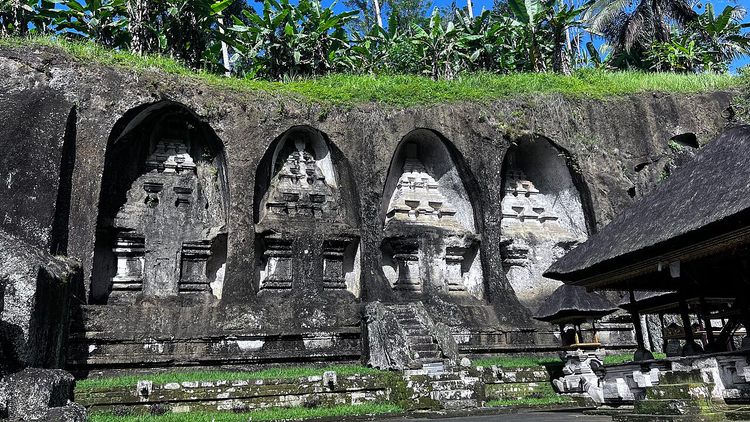 © www.Pinterpandai.com · CC BYPhoto: www.Pinterpandai.com, CC BY (https://creativecommons.org/licenses/by/3.0), Wikimedia Commons
Pura Gunung Kawi is carved into the cliffs of the Pakerisan River valley near the village of Tampaksiring. The site is called the mountain of the poet and the tomb of kings. The sanctuary dates back to the 11th century. Bas-reliefs up to seven meters high stretch along the cliff: these are burial towers bearing the names of rulers.
Multi-level tombs are unique to Bali. A wall used to cover the cliff, but an earthquake exposed the caves. In the center is a shrine with a spring that fills a small pond.
- How to get there: near Tirta Empul, both temples can be seen in one day.
- The catch: tickets are only sold on site, and in high season a line forms at the gate.
7. Gunung Kawi in Sebatu
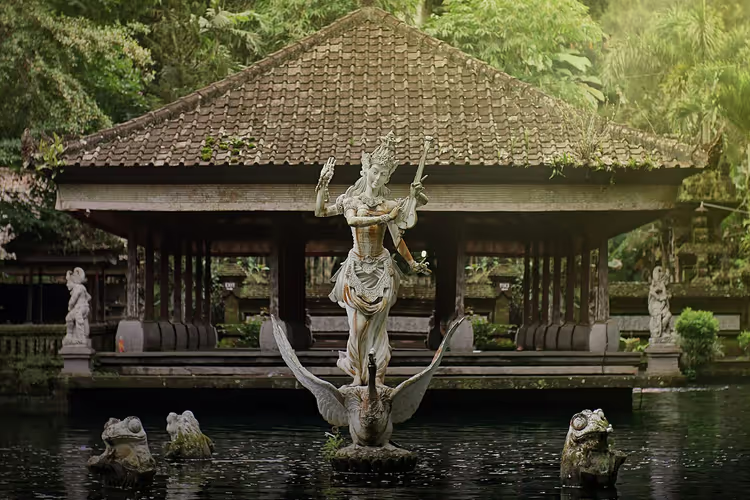 © Anggabuana · CC BY-SAPhoto: Anggabuana, CC BY-SA (https://creativecommons.org/licenses/by-sa/4.0), Wikimedia Commons
Gunung Kawi in Sebatu stands in the village of Sebatu, about five kilometers from the temple in Tampaksiring. This is a second temple with the same name, but it is dedicated to a holy spring. The main gate from the 16th century is shaped like hands folded in greeting. In the center rises a Padmasana throne in honor of Vishnu.
According to legend, Vishnu gave people the spring for healing. The waters help cleanse, and you can stand under the streams of three waterfalls alongside locals. Bathing areas are set up nearby, and the village is still home to stone and wood carvers.
- How to get there: combine with Tirta Empul and Gunung Kawi, they are close together.
- The catch: part of the grounds is taken up by bathing areas, leaving little space for sightseeing.
8. Pura Ulun Siwi
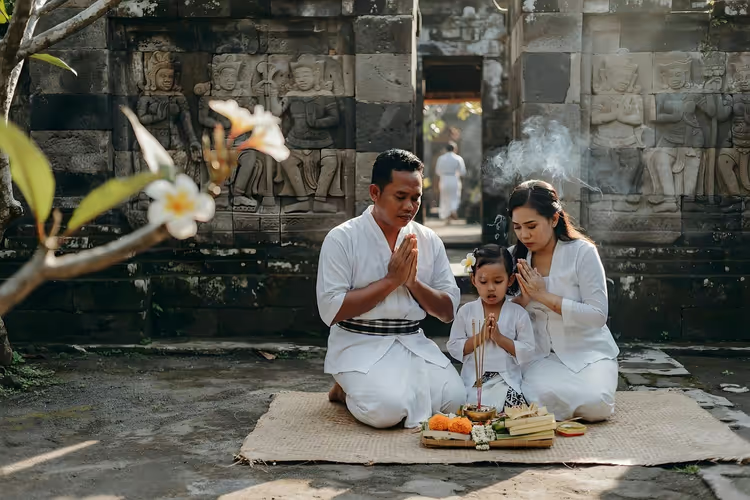
Pura Ulun Siwi stands in the center of Jimbaran, right at the entrance to the resort area. It is a public temple, not a family one: residents of the entire village come here. Twice a month, the Barong dance is performed at the gate, with dancers' costumes embroidered in gold and silver.
The architecture follows local canons: pelinggih shrines for offerings, an inner courtyard with sculptures of gods, and kori gong gates for priests. The facade faces east, not north like the neighboring temples.
- Getting there: Jimbaran, near the beach and the fish market.
- The catch: it is an active shrine, not a tourist attraction, and on ceremony days you will be denied entry.
9. Pura Lempuyang
 © Flickr user: yeowatzup https://www.flickr.com/photos/yeowatzup/ · CC BYPhoto: Flickr user: yeowatzup https://www.flickr.com/photos/yeowatzup/, CC BY (https://creativecommons.org/licenses/by/2.0), Wikimedia Commons
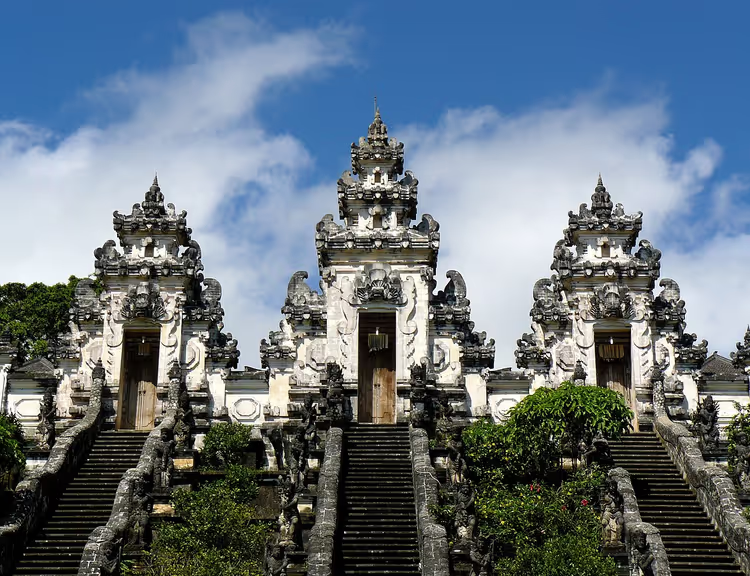
Pura Lempuyang stands on a mountain slope in eastern Bali. The complex rises across seven levels, and steps carved into the rock lead to the upper temple. There are about seventeen hundred of them, and the climb takes over an hour. Among the three staircases there is a central one, but only clergy may use it.
The Gates of Heaven are located at the lower temple, and people come from all over the island for that photo. In clear weather, you can see Mount Agung, rice fields, and the ocean from the upper terraces. The forest path passes six shrines, and fog often lingers in these areas.
- Getting there: east of the island, about two and a half hours from Kuta.
- Cost: entry is paid, a sarong is included, check the exact price at the entrance.
- The catch: there is a line for photos at the Gates of Heaven, and it is shorter in the morning.
10. Pura Goa Lawah
 © Arabsalam · CC BY-SAPhoto: Arabsalam, CC BY-SA (https://creativecommons.org/licenses/by-sa/4.0), Wikimedia Commons
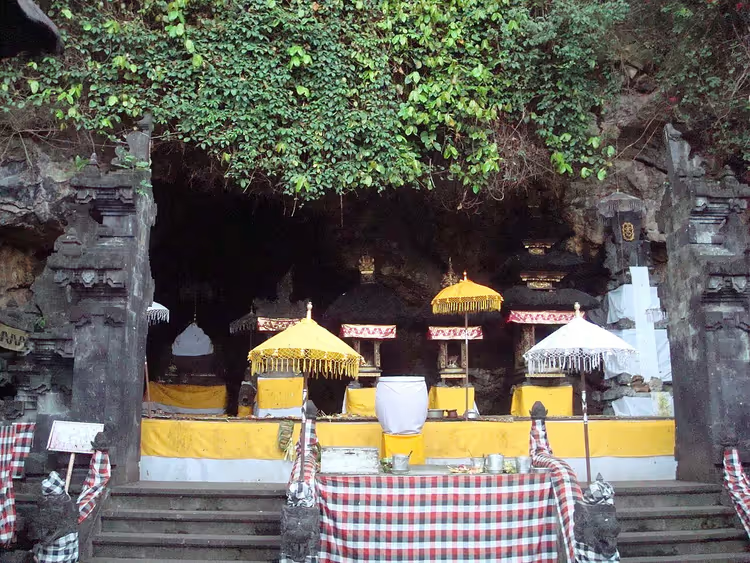
Pura Goa Lawah is known as the bat temple. It is built into a natural mountain cave whose ceilings are occupied by a huge colony. Balinese people consider the bats to be mini-dragons, and the cave itself to be the home of the giant serpent Basuki. According to legend, the underground labyrinth stretches for dozens of kilometers, and some expeditions here simply vanished.
The first altar appeared here in the 11th century. The complex is divided into three courtyards: altars to the gods, a dragon statue, and the cave itself. The shrine is built of black volcanic stone, and gilded figures with dragon symbolism hang inside. Sacred banyan trees grow at the entrance, and the passage is shaped like split gates. In the evening, monks bring offerings to the cave for the bats, and it is worth seeing.
- Getting there: eastern highway, on the road from Ubud to Padangbai.
- The catch: not everyone goes inside the cave with the colony, as the smell and cramped space put many people off.
11. Pura Luhur Batukaru
 © MajaK. · CC BYPhoto: MajaK., CC BY (https://creativecommons.org/licenses/by/3.0), Wikimedia Commons
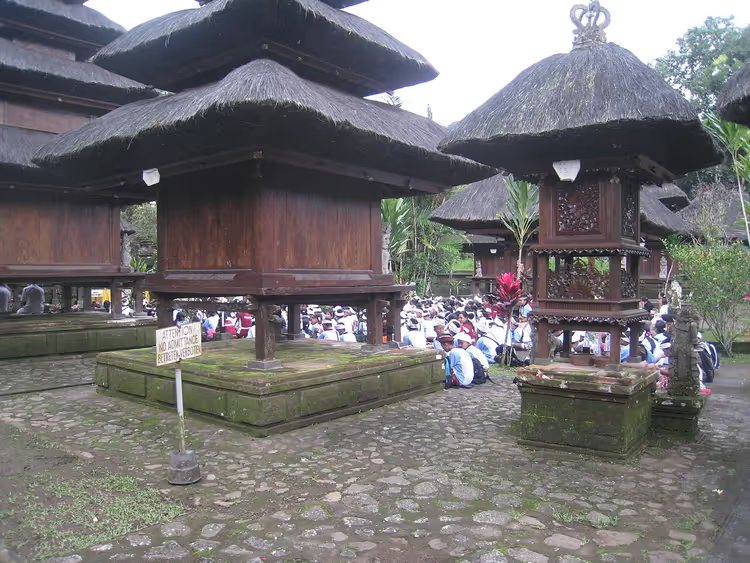
Pura Luhur Batukaru grew on the slope of Mount Batukaru. The mountain is considered the second highest on the island, and its summit holds the largest crater. The temple is counted among Bali's nine main shrines and is dedicated to the spirit of the mountain. It is believed to protect the western part of the island from evil spirits. During the annual pilgrimage to the mountain summit, a mandatory stop with rituals is made at the temple.
Built in the 11th century, the temple was completely destroyed in the early 17th century and restored only three hundred years later. The volcano has not awakened since. The main shrine is a seven-tiered pagoda, and exotic plants bloom all around, which is why you will hear its second name: the Garden Temple.
- Getting there: western Bali, the drive from Tabanan takes about forty minutes.
- The catch: there is almost no public transportation here.
12. Pura Kehen
 © Esme Vos · CC BYPhoto: Esme Vos, CC BY (https://creativecommons.org/licenses/by/2.0), Wikimedia Commons
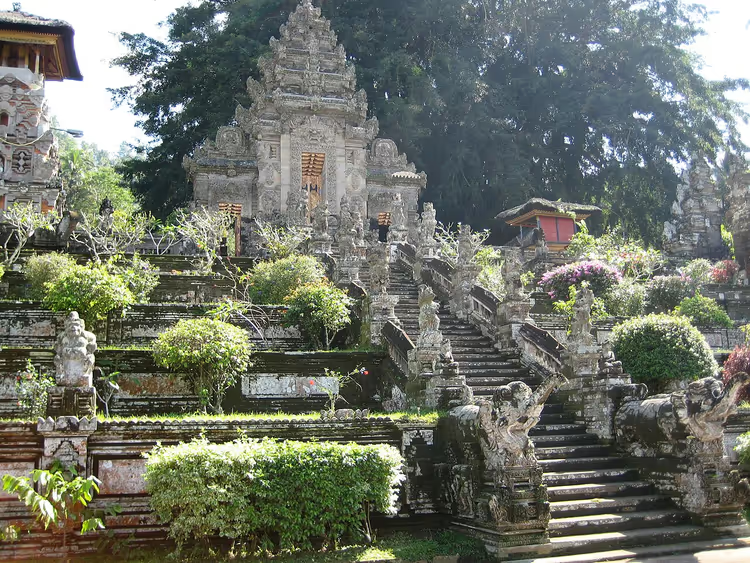
Pura Kehen in Bangli is compared to Besakih, only smaller. The complex rises across eight terraces, and the roofs are covered with black palm thatch. Inside, carvings and gold gleam, and these are not just decorations but also symbols of ancient rituals.
Not all levels are open to tourists. The upper ones are accessible only to clergy and worshippers, and only on major holidays. A banyan tree grows in the inner courtyard, said to be several thousand years old, and it sets the mood for the entire temple.
- Getting there: center of the island, Bangli lies on the way to Besakih.
- The catch: the closed levels hide the main relics, leaving you with only the lower section.
13. Goa Gajah
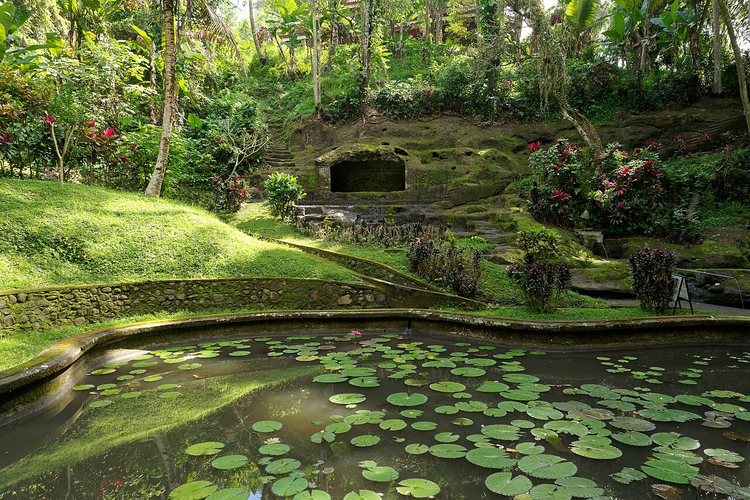
Goa Gajah, or the Elephant Cave, was hidden by tropical vegetation until 1954. Above the entrance, the face of the god Bhoma is carved, meant to ward off evil spirits. The sculpture resembles an elephant's head, hence the second name. You enter through the open mouth.
 © Jakub Hałun · CC BY-SAPhoto: Jakub Hałun, CC BY-SA (https://creativecommons.org/licenses/by-sa/4.0), Wikimedia Commons
Niches for hermits are carved into the cave, and a statue of Ganesha stands in one of them. At the eastern wall, three symbols of Shiva rise on a single pedestal in the form of black cylinders. During excavations, a bathing pool and a fountain with statues of women holding jugs were found nearby. The water here is used before meditation, and a garden with bridges and ponds surrounds the area.
- Getting there: near Ubud, about fifteen minutes by scooter.
- The catch: buses come here, and by midday there are many people and vendors at the entrance.
14. Pura Tirta Empul
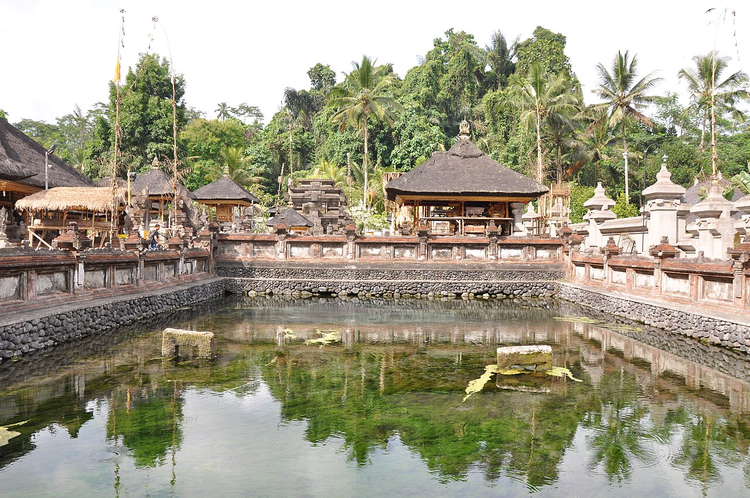
Pura Tirta Empul stands at an underground spring that feeds the Pakerisan River. The temple was built over a thousand years ago and dedicated to Vishnu. According to Hindu beliefs, the water purifies thoughts and body, so bathing here is the main ritual. Red brick pools are set in the outer courtyard, with separate bathing areas for men, women, and monks.
 © Jorge Láscar from Melbourne, Australia · CC BYPhoto: Jorge Láscar from Melbourne, Australia, CC BY (https://creativecommons.org/licenses/by/2.0), Wikimedia Commons
Bathing is done in clothing. Each fountain is believed to be responsible for its own blessing: purification of the spirit, an antidote, protection from evil. One fountain is avoided, as its water is taken for the deceased, and you should not enter it either.
- Getting there: Tampaksiring, between Ubud and Gunung Kawi.
- Cost: entry 75,000 rupiah, cheaper for children (as of 09/2026, temple website).
- The catch: you cannot enter the pools without a sarong, and on ceremony days some bathing areas are closed.
15. Pura Taman Ayun
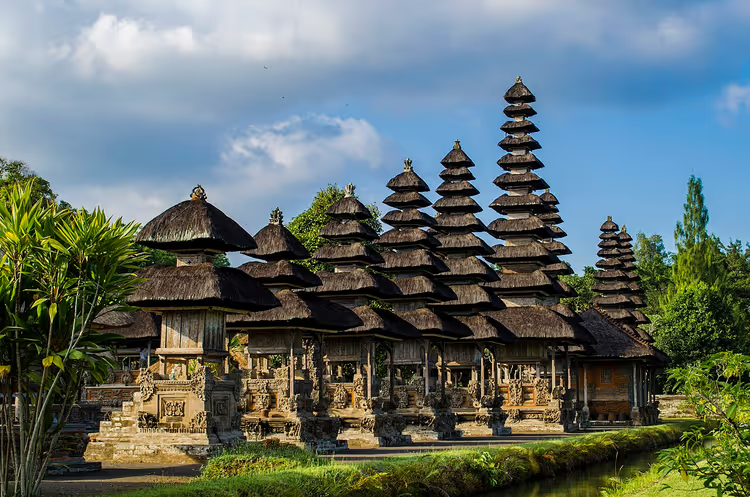
Pura Taman Ayun translates as "beautiful garden." The complex was founded in the 17th century under the Mengwi dynasty, and the royal family rested in the park. Canals surround the temple on all sides, and the only way in is across bridges. Beyond the gate, a courtyard opens up with a fountain that shoots nine streams.
 © Cindi CGJ · CC BY-SAPhoto: Cindi CGJ, CC BY-SA (https://creativecommons.org/licenses/by-sa/4.0), Wikimedia Commons
The complex is divided into four zones on different terraces. The lower one serves as a community hall, while the other three mirror the levels of the universe: the world of humans, gods, and sacred power. From a spiritual perspective, the ensemble depicts Mount Mahameru and the story of the world's creation. Every two hundred days, a major festival takes place here according to ancient customs, and you will see pilgrims in festive attire.
- Getting there: Mengwi, on the road from Ubud to Tanah Lot.
- The catch: the inner courtyards are closed to tourists, and viewing is done from the outer terrace.
16. Pura Brahmavihara Arama
Pura Brahmavihara Arama is the largest Buddhist temple in Bali. It stands on Tegeh Hill near Singaraja, in the north of the island. The buildings resemble Borobudur on Java: orange roofs, golden Buddha statues, sculptures of the serpent Naga. The temple is considered a pride of Indonesia.
 © Eric Bajart · CC BY-SAPhoto: Eric Bajart, CC BY-SA (https://creativecommons.org/licenses/by-sa/3.0), Wikimedia Commons
A meditation center operates at the temple. Participants live in separate cottages for several weeks, listen to lectures, and meditate together. The grounds are divided into five zones with their own purposes, from the Bodhi tree to the stupa, and you will notice this already at the entrance.
- Getting there: north of the island, about three hours from Denpasar.
- The catch: the meditation center occupies part of the grounds, and not all zones are open to tourists.
17. Batuan Temple
Batuan Temple is known for its split gates, which resemble a pagoda cut in half. According to belief, a person who passes between them gains peace of mind and the support of the gods. The village appeared in the early 11th century, and the ritual site existed even earlier. The inner grounds are strictly divided into zones for ancestors, people, and gods.
 © Anandajoti · CC BY-SAPhoto: Anandajoti, CC BY-SA (https://creativecommons.org/licenses/by-sa/4.0), Wikimedia Commons
Masks of the gods hang on the walls, and by the pond stands a sculpture of the giant turtle Bedawang, who holds up the universe. In the past, only worshippers were allowed inside; now you can enter along with everyone else, but the rules here are strict.
- How to get there: Batuan, between Ubud and Denpasar.
- The catch: the dress code and conduct requirements are strict, and you should not deviate from them.
18. Pura Maospahit
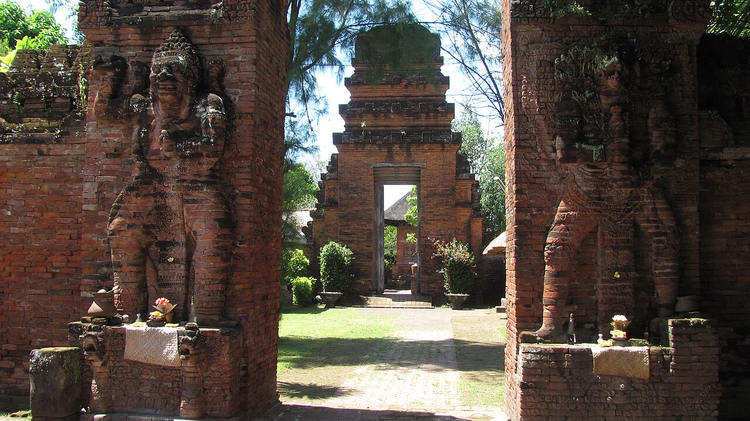
Pura Maospahit is an old family temple in Denpasar. Its history dates back to the 14th century, to the era of the Majapahit empire. The courtyard is divided by a wall into two halves, and you can enter through three gates with different functions. On regular days the left entrance is open, while the main gate is opened on holidays.
 © Torbenbrinker · CC BY-SAPhoto: Torbenbrinker, CC BY-SA (https://creativecommons.org/licenses/by-sa/3.0), Wikimedia Commons
The temple is built of red brick, and its decoration includes statues of Garuda and shrines with deer antlers. At the main gate you will see sculptures with menacing faces and five columns dedicated to the gods. Part of the ancient decoration has been lost to earthquakes and restorations. This is a quiet place in the city center that you rarely get to visit on a tour.
- Getting there: Denpasar city center, near the market.
- The catch: part of the grounds is closed, and few original reliefs remain.
19. Pura dalem agung padangtegal
 © Michelle Maria · CC BYPhoto: Michelle Maria, CC BY (https://creativecommons.org/licenses/by/3.0), Wikimedia Commons
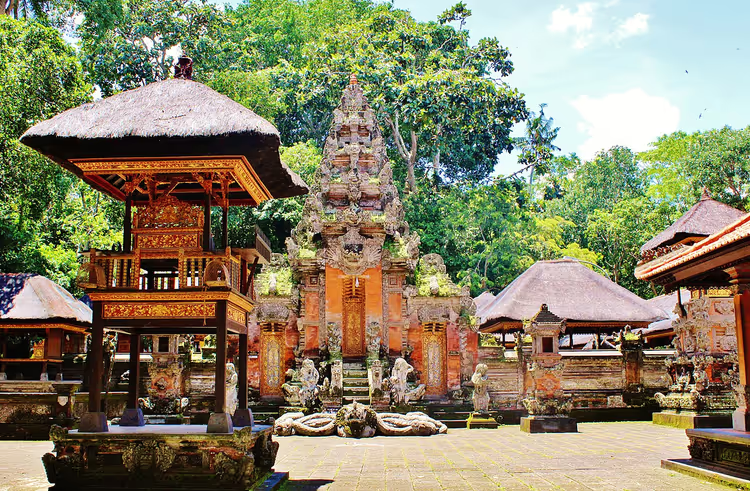
Pura Dalem Agung Padangtegal is part of the Monkey Forest complex in Ubud. It was built in the mid-14th century in honor of the god Sang Hyang. By tradition, Pura Dalem temples were placed on the edge of a village for cremation ceremonies. If a family cannot afford a separate cremation, the temple staff provide a temporary burial site, and a communal cremation is held once every five years.
The ashes are placed in a coconut shell and lowered into the river, and participants wear white festive clothing. The temple is built of red brick, and the entrance is guarded by sculptures of witches and sorcerers. Long-tailed macaques, considered protectors of the temple, keep watch over the grounds.
- Getting there: Ubud center, enter through the Monkey Forest with a general admission ticket.
- The catch: the monkeys grab glasses, phones, and bags, so do not hold your belongings in your hands.
The three temples of the Monkey Forest are connected by a single path, and one ticket covers all of them. With a guide it is easier to understand where the tourist area ends and the active shrine begins. If you want to see the temples with a guide, book a tour in advance.
Tours and tickets in Bali
Guided tours, skip-the-line tickets and activities — most offers can be cancelled free of charge.
See offers on GetYourGuideThe widget loads once you give your consent.
Temples of Bali on the map
There is no public transport on the island that would connect the temples into a convenient route. It is easier to rent a car with a driver or a scooter if you are confident in your skills. From Denpasar airport it is more convenient to book an individual transfer in advance than to look for a car at the exit.
The map below shows the main temples of Bali. Open it on your phone and plan your route based on the distance between points.
⁉️🤔 Frequently asked questions
How much does it cost to enter the temples of Bali?
Prices vary. At well-known temples there is an entrance fee for foreigners, while small family shrines ask for a donation. Always check the exact amount at the entrance, as rates change every year.
When is the best time to visit the temples?
Come at opening time or at the end of the day. Uluwatu and Tanah Lot are more beautiful at sunset, but they are crowded then. During the rainy season some ceremonies are canceled.
Do I need a guide at the temples?
For sightseeing, signs and a guidebook are often enough. But at Besakih and Tirta Empul a guide makes things clearer: they explain the ritual and the rules of conduct. A private driver for the day works out cheaper than several separate transfers. Hire a guide where you want to understand the meaning of the ceremonies.
Which temple should I choose if I have little time?
For one day, take the Uluwatu and Tanah Lot combination: both are in the south and both are about the ocean. If you are staying in Ubud, replace them with Gunung Kawi and Tirta Empul, which are close by. Leave Besakih for a separate day, as the drive there takes about two hours.
Can I take photos inside the temples?
Outside, you can take photos freely. Inside active shrines, you may sometimes be asked to put your camera away, especially during prayers and cremation ceremonies. Look at the signs and follow what the locals do. Drones are not allowed near temples, that is a separate restriction.
In short: what is worth booking
If you are visiting for the first time, a base in Ubud covers half the list: Gunung Kawi, Tirta Empul, and the Monkey Forest are close together. For the ocean temples, Uluwatu and Tanah Lot, it is more convenient to stay in the south.
The logic is simple. If you want a purification ritual, go to Tirta Empul. If you want a sunset over the ocean, choose Uluwatu. If you are looking for the Gates of Heaven shot, you need to head east to Lempuyang.
Book your transport in advance, as on the spot the options are fewer and the prices are higher.

A small editorial team writing guides for independent travel. We travel ourselves, but we haven’t been everywhere, so we check prices, opening hours and how to get there against official sources.