
















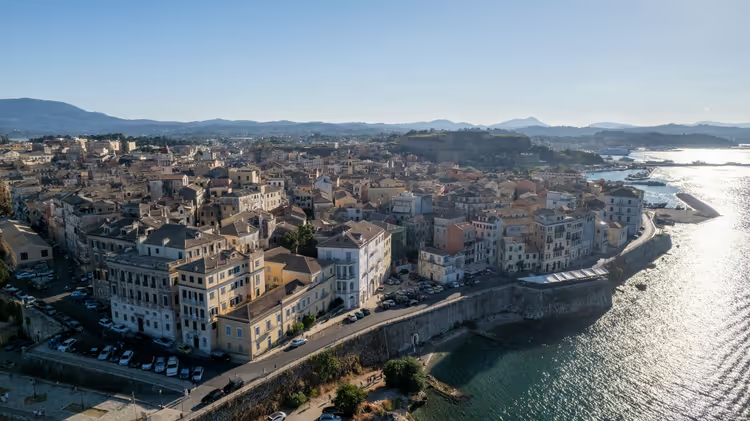
Corfu by car: 20 places from a Venetian shipyard to wild bays
Corfu looks small only on a map. In reality, it is mountains, olive groves, and three different coastlines. Public transport runs infrequently, taxis are expensive, and the most beautiful spots are hidden away from the main roads. That is why a car turns the island from a collection of beaches into a full journey.
We put together a driving route around Corfu: from the resorts of the east coast to the quiet villages and bays of the west. You will see where to stay, how long to drive between points, and what to look at along the way.
Ad: this article contains affiliate links. We earn a commission if you book through them, at no extra cost to you.
Benefits of renting a car
💡 In short:
- See the island in a loop: east coast, north, west, south.
- Plan no more than three or four stops a day, otherwise you will get tired of driving.
- Book a car in advance: in summer the selection is limited and prices are higher.
- Season and logistics: 09/2026, verified on the Greek tourism office website.
Having your own car gives you the main thing: independence from tour schedules. You decide where to stay an extra hour and where to simply drive past.
The island is convenient to drive around in a loop. First the east coast with its resorts and the capital, then the north near Mount Pantokrator, then the western bays and the south. This way you rarely face oncoming traffic and you see different sides of Corfu in one trip. There are more than two hundred mountain villages alone (as of 09/2026, VisitGreece).
The roads are narrow, with switchbacks and steep climbs. Gas stations are found in larger towns, and there are few of them in the mountains and in the west. Keep half a tank and do not plan drives after dark.

1. Gouvia
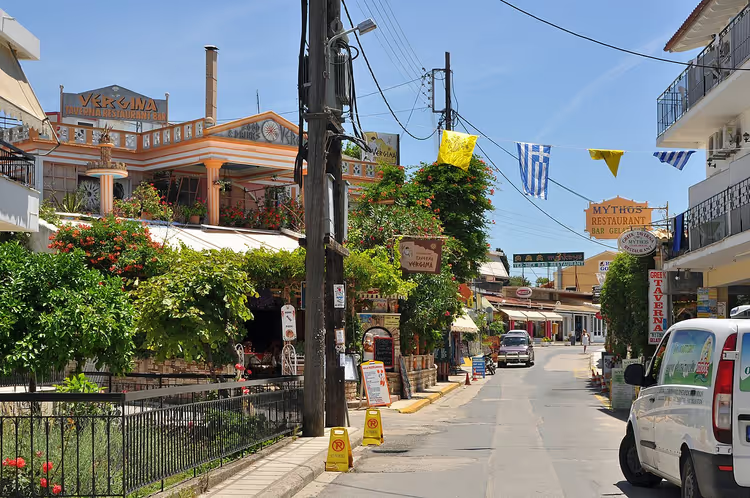
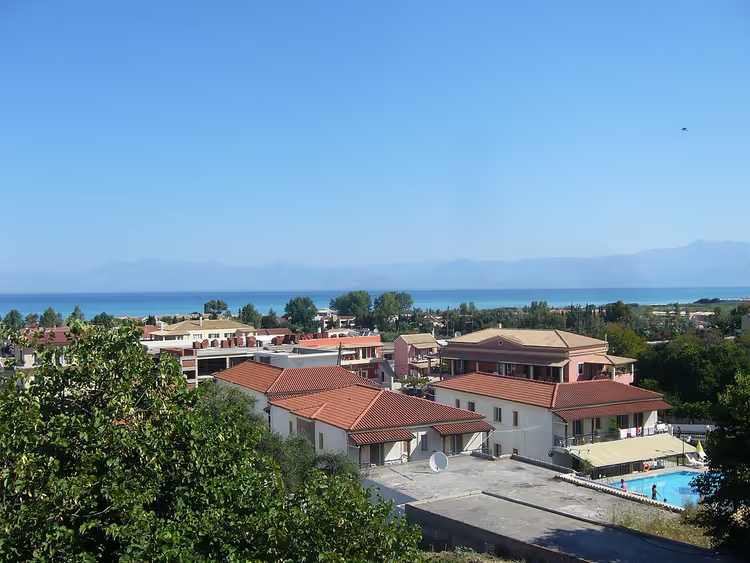
The resort of Gouvia occupies the east coast of the island. Once a Venetian harbor bustled here, where ships were built and repaired, and today it is a lively village with a marina and a long waterfront.
The beaches in Gouvia alternate: sandy and pebbly, all well equipped. Yachts and pleasure boats sit in the calm bay, and water attractions are available for active guests. You will also find gentle sections for children here.
What to see: the arches of the old Venetian shipyard and a small white church on the shore of the bay. In the evening, linger at one of the old Greek tavernas by the water.
- How to get there: from Corfu Town, head north along the coastal road, about ten minutes by car.
 © Marc Ryckaert ( MJJR ) · CC BYPhoto: Marc Ryckaert ( MJJR ), CC BY (https://creativecommons.org/licenses/by/3.0), Wikimedia Commons
2. Ipsos
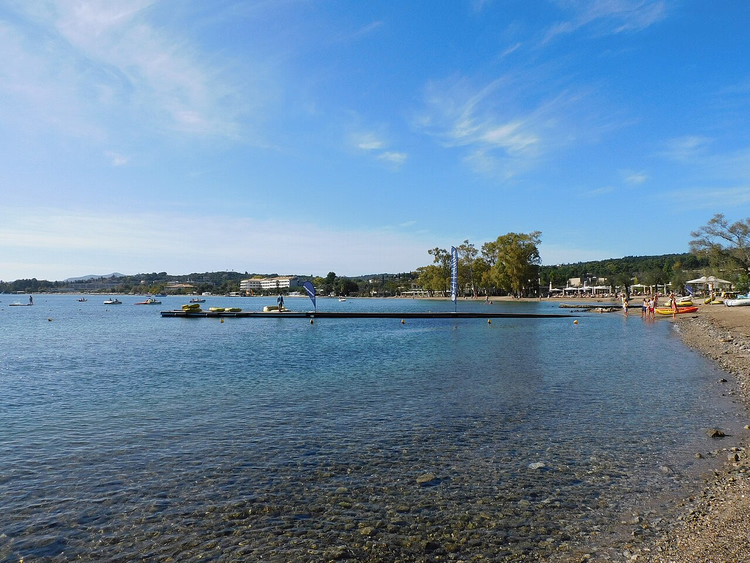
The village of Ipsos stretches along a long pebble-and-sand beach by the main road. It is surrounded by mountain ridges whose slopes are covered with olive groves, and the air smells of citrus from the surrounding orchards.
Small Ipsos is densely built up: hotel complexes, a bank branch, a supermarket, vehicle rental points. The beach has been awarded the Blue Flag for clean water and visitor amenities. Hotels here are worth booking in advance so you can choose from available options: see offers on Trip.com.
The beach area is divided into sectors. On one side there is calm swimming and sun loungers, on the other water attractions and sports areas. In the evening, tavernas, bars, and discos open, so it stays noisy here until morning.
 © Panek · CC BY-SAPhoto: Panek, CC BY-SA (https://creativecommons.org/licenses/by-sa/4.0), Wikimedia Commons
3. Kalami
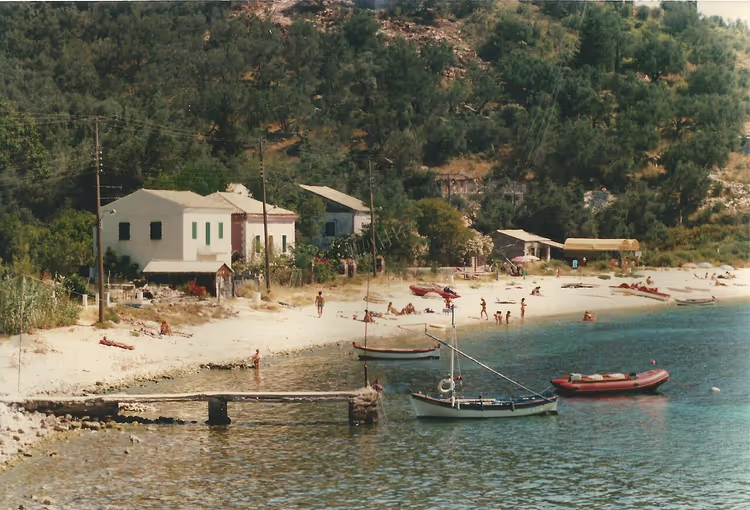
Kalami in the north of the island is considered one of the quietest places on Corfu. The coastline here resembles an amphitheater: rocky outcrops shelter it from two sides, and high hills protect the bay from cold winds and large waves.
People come to Kalami for a peaceful holiday away from busy resorts. The water in the bay is clear, and relict pines and firs grow near the shore. After leaving your car in the free parking lot, you can easily walk to the neighboring beaches.
Available activities include water skiing, catamarans, yacht and boat trips, and snorkeling. Tavernas, bars, and shops operate on the shore.
 © Ardfern · CC BY-SAPhoto: Ardfern, CC BY-SA (https://creativecommons.org/licenses/by-sa/3.0), Wikimedia Commons
4. Acharavi
Acharavi occupies flat terrain by the sea. The village is immersed in the greenery of pomegranate, almond, and orange trees, and along the coast runs the main street with hotels, restaurants, souvenir shops, and entertainment venues.
The main attraction here is a long sandy beach with fine pebbles. The shore has sun loungers, shade canopies, showers, and changing rooms. The coastal tavernas serve local dishes and refreshing drinks.
The resort sits on the north coast and works well as a base for exploring the north. From here it is convenient to drive to Kalami, Sidari, and Mount Pantokrator.
5. Pantokrator
The highest point of the island is Mount Pantokrator, 906 meters above sea level (as of 09/2026, Mount Pantokrator). From the summit you get a panorama of all of Corfu and the coast of Albania, and on especially clear days you can see Italy, which is about 130 km away (more about the mountain).
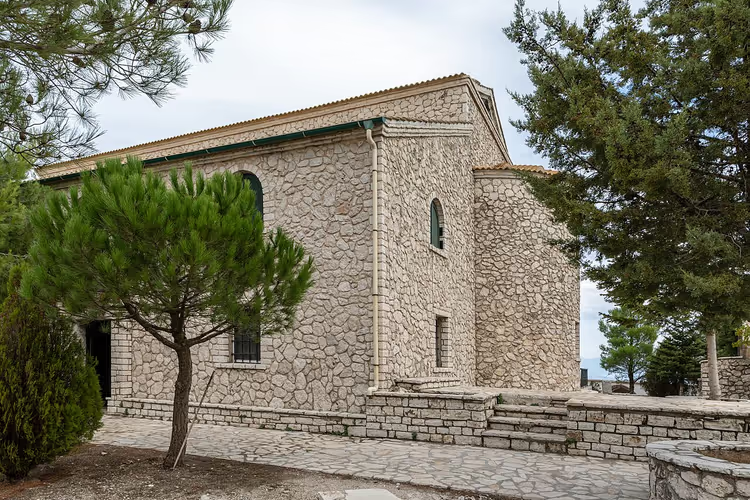
The road to the top is narrow, with sharp turns and steep climbs. On the plateau there is a telecommunications tower and an old monastery. The current church of the monastery dates to the late 17th century, and the facade was rebuilt in the 19th century (as of: same page). The walls and ceiling are covered with colorful frescoes.
Stay at the top until evening. At sunset the light falls on the western bays, and you can see two coastlines of the island at once.
 © Dietmar Rabich · CC BY-SAPhoto: Dietmar Rabich, CC BY-SA (https://creativecommons.org/licenses/by-sa/4.0), Wikimedia Commons
6. Perisia
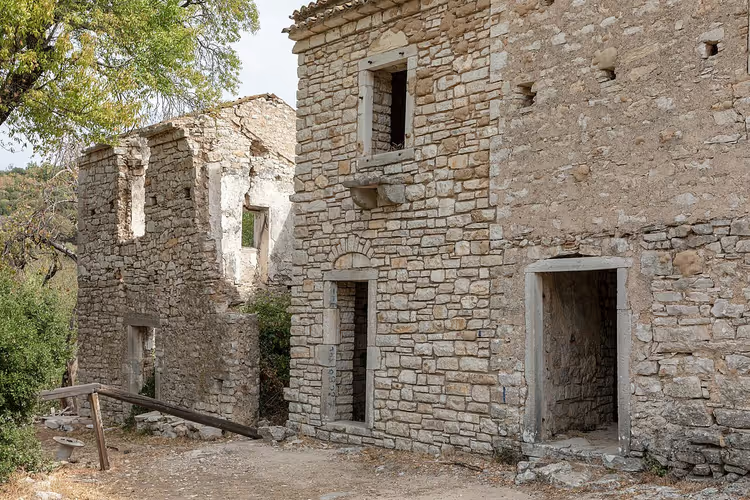
At the foot of the mountain ridges stands the semi-abandoned settlement of Perisia, also called Old Perithia. It is one of the oldest places on the island: the village was founded in the 14th century as a refuge from sea pirates. It cannot be seen from the sea, but the view of the bay from here is excellent.
Many houses have long since turned into ruins. You will walk past crumbling walls with boarded-up shutters and collapsed roofs overgrown with shrubs. Among the deserted lanes, taverns are unexpectedly still open.
The locals are mostly engaged in sheep farming and beekeeping, so this is a good place to buy honey and homemade products.
 © Dietmar Rabich · CC BY-SAPhoto: Dietmar Rabich, CC BY-SA (https://creativecommons.org/licenses/by-sa/4.0), Wikimedia Commons
7. Sidari
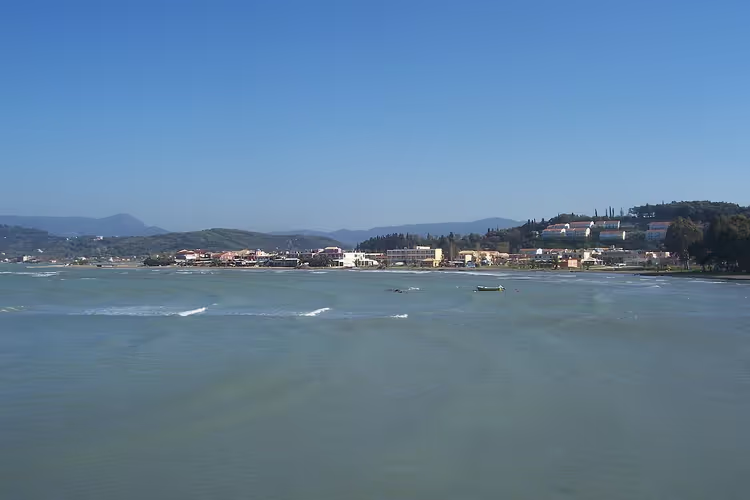
A winding road through green hills leads to the popular resort of Sidari in the north of the island. It is a lively place: along the coast runs a street with snack bars, bars, nightclubs, and taverns. Olive groves, oak forests, and cypress-lined avenues grow all around.
The main reason to come here is the bays with white sand and turquoise water. The shore is framed by high sandstone headlands, and wind and water have carved grottoes and whimsical shapes into the soft rock.
The cliffs extend into the sea as narrow spits and form a channel between them. The beach has all the resort amenities, and available activities include water sports, boat trips, and diving.
 © Enrique Íñiguez Rodríguez ( Qoan ) · CC BY-SAPhoto: Enrique Íñiguez Rodríguez ( Qoan ), CC BY-SA (https://creativecommons.org/licenses/by-sa/3.0), Wikimedia Commons
8. Paleokastritsa
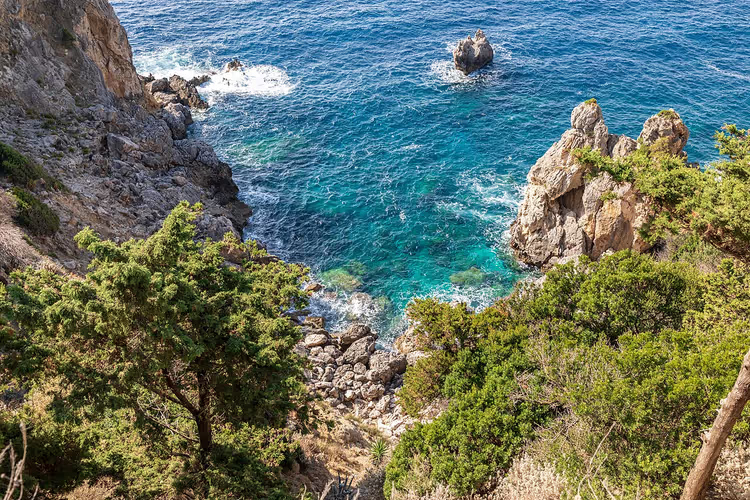
Paleokastritsa on the west of the island is considered one of the most beautiful spots on Corfu. Sheer cliffs descend to turquoise coves and form a cascade of cozy bays with golden sand. The mountain slopes are covered with dense coniferous vegetation.
The resort is well developed: there are many hotels, restaurants, and taverns serving traditional Greek cuisine. From the waterfront, excursion boats depart along the rocky coast, so you can also see the bays from the water.
On one of the hills stands the active Theotokos Monastery, founded in the 13th century. The monastery has an exhibition of icons and church utensils. From the observation deck in the monastery garden there is a view of the sea and the cliffs.
 © Dietmar Rabich · CC BY-SAPhoto: Dietmar Rabich, CC BY-SA (https://creativecommons.org/licenses/by-sa/4.0), Wikimedia Commons
9. Lakones
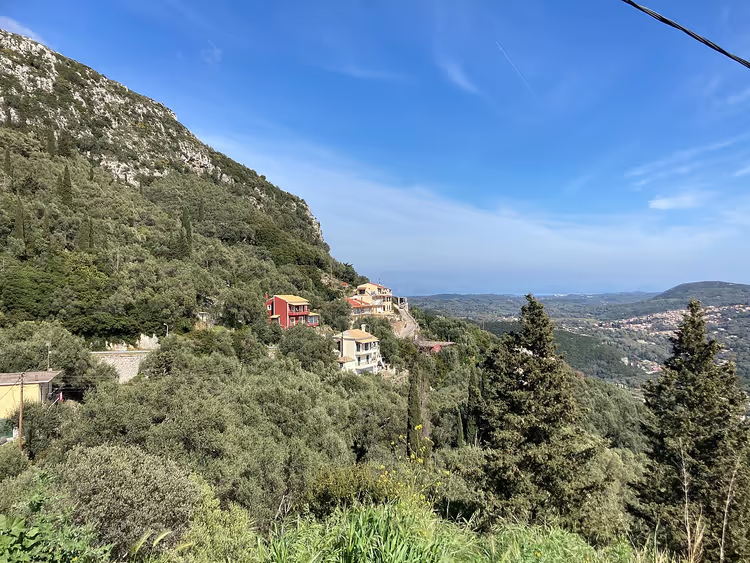
From Paleokastritsa you can walk to the village of Lakones on a high hill. The path goes through olive groves, flowering gardens, wooded slopes, and a rocky gorge. In the village itself, mazes of narrow lanes and old houses scattered along the slope await you.
The houses here were built in the 18th and 19th centuries. The streets lead to the central square, and the main treasure of Lakones is its viewpoint. From the top you get a panorama of the bay with rocky coves and the Paleokastritsa monastery in the green hills.
A road leads to Lakones, so you can also get there by car. The walking trail from Paleokastritsa suits those who are ready for a climb. If you go on foot, bring water: the uphill walk in the heat is not for everyone.
10. Angelokastro
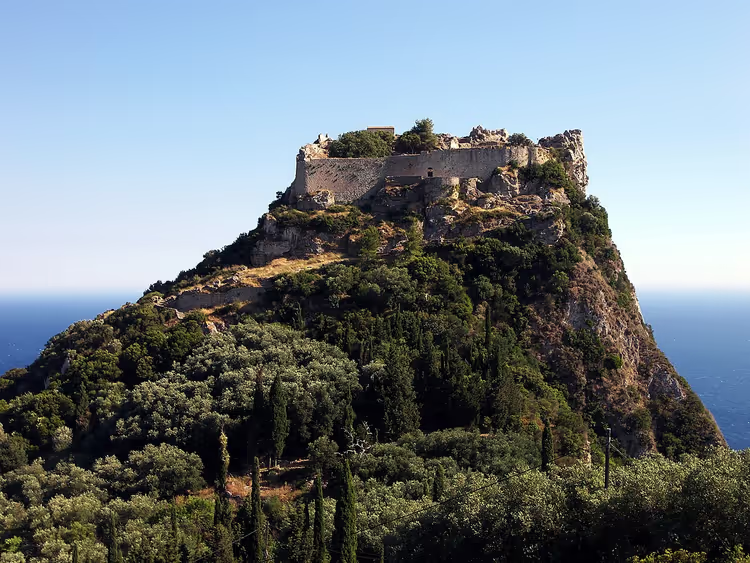
On a sheer cliff above Paleokastritsa stands the Byzantine castle of Angelokastro. The fortress was built in the 13th century and for centuries protected the island from pirate raids. The fortification was impressive: massive walls, arrow slits, towers, and underground passages (as of 09/2026, Corfu castles).
Today the castle is partially ruined, but a walk through it is worth the time. On the grounds you can see water cisterns, tower ruins, and two old chapels with frescoes and icons. The walls offer sweeping views of the turquoise sea and green hills.
- Getting there: by car along a narrow winding road; there is parking at the foot of the cliff. From there, a gently sloping stone staircase leads through olive groves to the main gate.
 © Dr.K. · CC BY-SAPhoto: Dr.K., CC BY-SA (https://creativecommons.org/licenses/by-sa/3.0), Wikimedia Commons
11. Agios Georgios (west)
The resort of Agios Georgios occupies the northwestern part of the island. There are no major attractions or loud clubs here, so people choose it for a quiet seaside vacation. The coast is covered with soft golden sand.
The beach is surrounded by green hills and pine groves. The water in the bay is clear, the entry into the sea is gentle, and the bottom is sandy and free of rocks. Sunbeds and umbrellas are available on the shore, and water attractions operate here.
Those seeking quiet head to the "wild" stretches of shore without beach amenities. Nearby tavernas and cafes offer a place to escape the midday heat.
 © maczopikczu · CC BYPhoto: maczopikczu, CC BY (https://creativecommons.org/licenses/by/3.0), Wikimedia Commons
12. Afionas
The village of Afionas sits on the edge of a rocky cape in the northwest of the island. The houses are built so that the scenery opens up from all sides: the azure bay, green hills, and cliffs.
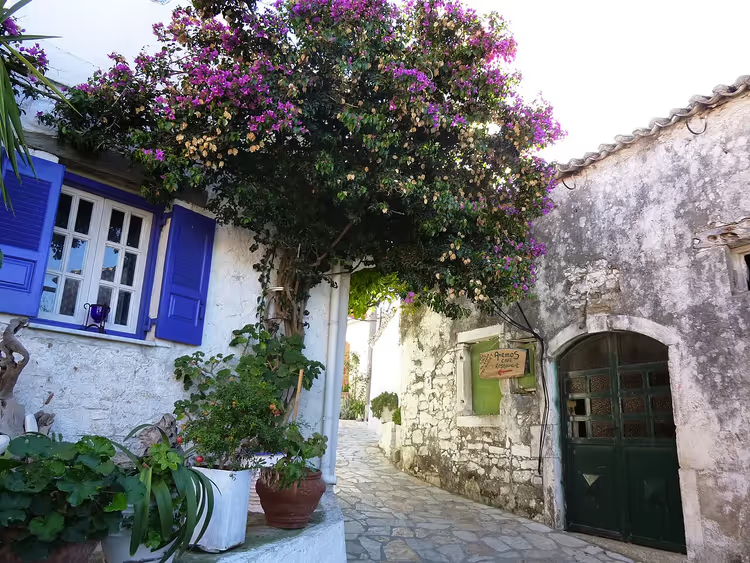
Afionas greets visitors with a maze of narrow streets and courtyards overflowing with flowers. The white facades of old stone houses are decorated with blue shutters and doors. A small chapel stands on the main square.
One of the paths leads to a double bay with turquoise water. At sunset, the panorama opens onto both bays at once, and that is one reason to stay here until evening.
 © Rosa-Maria Rinkl · CC BY-SAPhoto: Rosa-Maria Rinkl, CC BY-SA (https://creativecommons.org/licenses/by-sa/3.0), Wikimedia Commons
13. Benitses
The town of Benitses is surrounded by mountains covered in dense greenery. People come here for a relaxed vacation and a pleasant promenade. Shops, restaurants, and supermarkets line the streets, while hotels and guesthouses stretch along the sea.
The local pebble beach has been awarded the Blue Flag for clean water. The shore is equipped with loungers, umbrellas, and changing rooms. The village has a maritime museum with a collection of shells, corals, and fossils, and nearby are the ruins of 3rd-century Roman baths.
In the vicinity of Benitses stands the Achilleion palace complex in the village of Gastouri, about ten kilometers south of Corfu Town (as of 09/2026, Achilleion). The palace was built for Empress Elisabeth of Bavaria, and later Kaiser Wilhelm II spent summers here. The halls display paintings and sculptures on themes from the myths of Achilles, painted ceilings, vases, and Doric columns. Tickets are purchased at the entrance; check opening hours and prices on the museum's page.
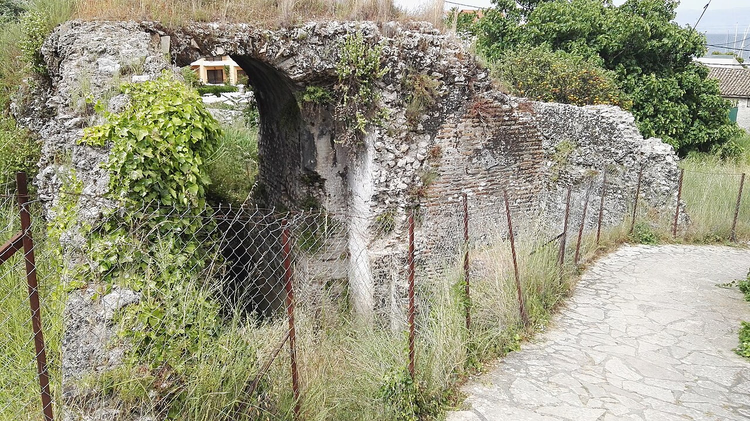 © Z thomas · CC BY-SAPhoto: Z thomas, CC BY-SA (https://creativecommons.org/licenses/by-sa/3.0), Wikimedia Commons
14. Messonghi
Messonghi occupies a plain dotted with olive groves and Mediterranean plants. It is a quiet resort with everything you need for a vacation: hotels, bars, tavernas, and shops. The village's main asset is a wide sandy beach, also awarded the Blue Flag.
The shallows extend far from the shore, and the entry into the water is gentle. These conditions are convenient for families with children. Available activities include water skiing, catamarans, banana boat rides, boat trips, and diving.
About four kilometers from Messonghi lie the ruins of the Byzantine fortress of Gardiki. The octagonal structure with powerful fortifications dates to the 13th century. The remains of the citadel and a stone chapel have survived.
The resort is a convenient base for a day: the beach, tavernas, and water activities are nearby, and the ruins of Gardiki are easy to reach by car. By evening the promenade remains calm; there are no loud parties here.
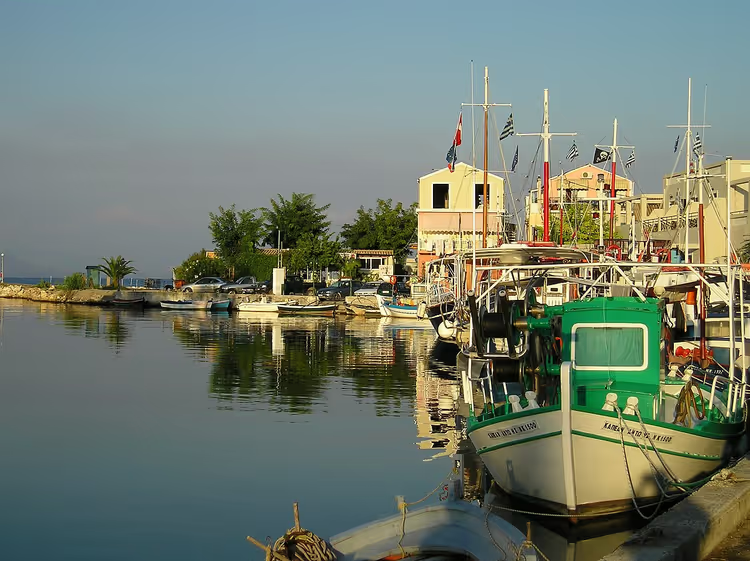 © Effrosyni Moschoudi · CC BY-SAPhoto: Effrosyni Moschoudi, CC BY-SA (https://creativecommons.org/licenses/by-sa/4.0), Wikimedia Commons
15. Lefkimmi
Lefkimmi is a fertile lowland part of southern Corfu. A trip here reveals the traditional Greek way of life: old stone houses, narrow quiet streets, and ancient churches. Cedar forests and olive groves provide coolness even in the heat.
A narrow canal runs through the town, connecting the lake with the Ionian Sea. Tavernas serving home-style cooking line its banks, so lunch is best planned here.
Among the churches, the Church of Agioi Anargyri with its two tall bell towers and the shrine of Agios Arsenios with its orange dome stand out. Both are worth seeing along the way; it is a short stop.
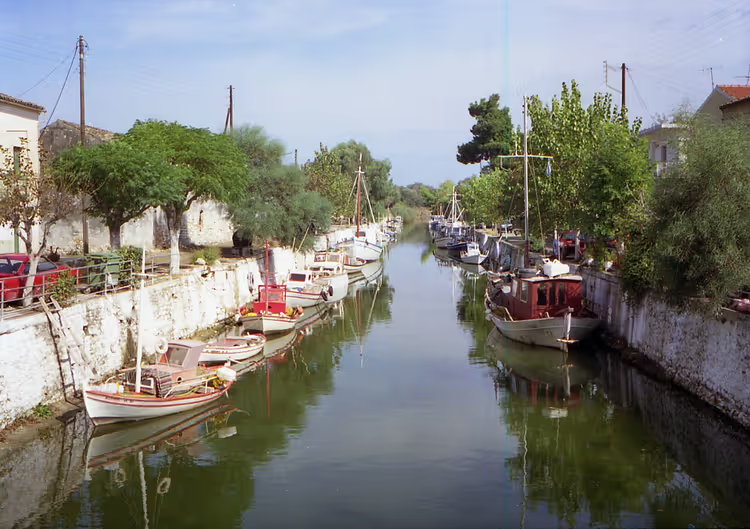 © Barry Lewis · CC BYPhoto: Barry Lewis, CC BY (https://creativecommons.org/licenses/by/2.0), Wikimedia Commons
16. Kavos
Kavos is located at the southern tip of the island. It is the liveliest resort on Corfu: numerous clubs, bars, restaurants, and discos, with well-known DJs performing at local venues. There are no historical attractions here.
Kavos's main asset is a long, narrow stretch of sand. It extends for several hundred meters and ends in wild coves. Water attractions operate in the central part of the beach.
The bay at Kavos is warm and shallow, so swimming is comfortable even for beginners. Come in the morning while the central beach is uncrowded, and return in the evening for the nightlife.
 © Dietmar Rabich · CC BY-SAPhoto: Dietmar Rabich, CC BY-SA (https://creativecommons.org/licenses/by-sa/4.0), Wikimedia Commons
17. Agios Georgios (south)
South Agios Georgios sits between two rocky headlands, about thirty kilometers south of Corfu. The village is known for its wide beach with velvety sand, which is why families with children and couples choose it.
There are many hotels of different levels, bars, tavernas, and shops here. The shore has been awarded the Blue Flag. The beach has sun loungers, umbrellas, changing rooms, showers, and water attractions.
After swimming in the aquamarine bay, it is worth staying for lunch at one of the local tavernas. The sunset on this stretch of coast is also worth staying longer for.
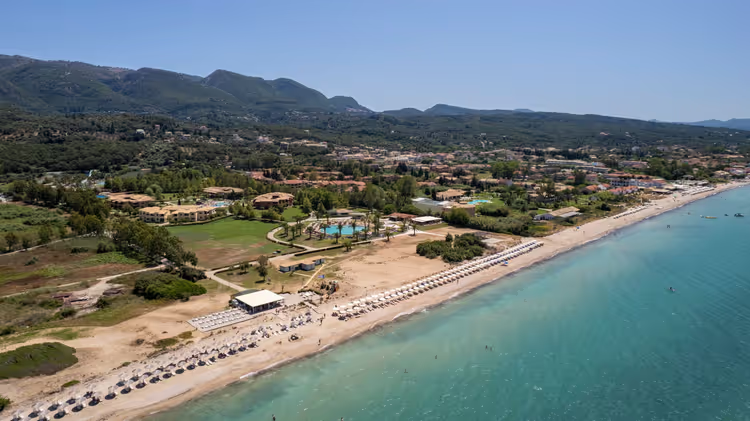
18. Lake Korission
Lake Korission in the southwest of the island is worth adding to your itinerary. The freshwater lake is separated from the sea by a narrow strip of sand and, together with its surroundings, forms a distinct ecosystem.
The lake shores are covered with cedar and juniper forests, dense grasses, and shrubs. White herons, pink flamingos, ibises, ducks, turtles, and lizards live here, so people also come for birdwatching.
On the sandbar between the sea and the lake there is a beach area. Swimming is allowed only in the sea: water activities are prohibited in the lake. It is quiet here, so bring water and an umbrella with you.
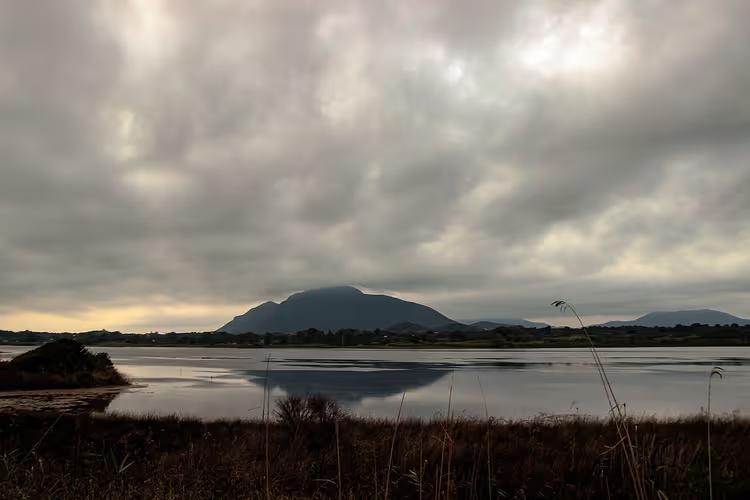 © TasosFokas · CC BY-SAPhoto: TasosFokas, CC BY-SA (https://creativecommons.org/licenses/by-sa/4.0), Wikimedia Commons
19. Agios Matheos
The mountain village of Agios Matheos has an atmosphere of old times. The village sits on a hillside in a dense forest, and time seems to have stopped here. Narrow streets are tightly lined with old houses, and above them rises the tall bell tower of the local church.
Residents sell products of their own making: jams, honey, dried fruit, preserves, olive oil, and homemade canned goods. These purchases also support local families.
Below the village there is a calm beach with soft white sand and a gentle entry into the water. There are no crowds here. Stay on the shore until sunset: the sun paints the surroundings in pink hues.
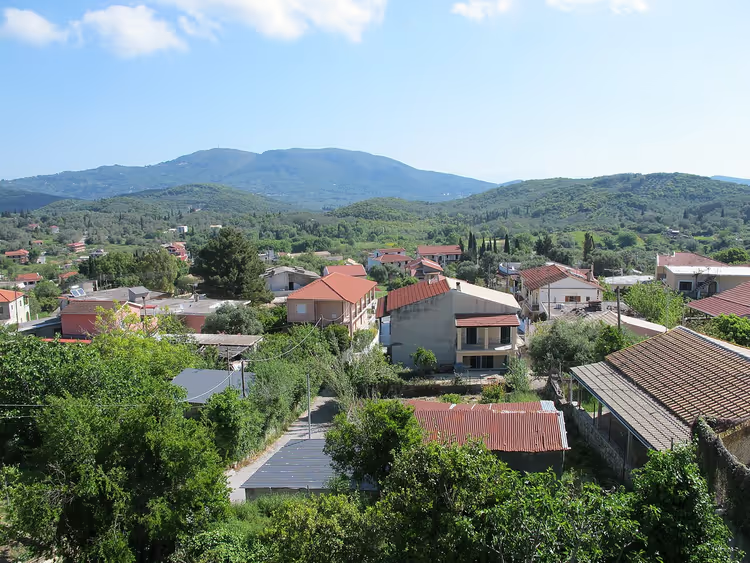 © Xopolino · CC BY-SAPhoto: Xopolino, CC BY-SA (https://creativecommons.org/licenses/by-sa/4.0), Wikimedia Commons
20. Pelekas
The village of Pelekas sits on a high green hill in the center of the island. There are no historical landmarks here, but there is local character: white paths, narrow streets, old stone houses, and small chapels.
The main reason to come up here is the Kaiser's Throne viewpoint. It was the favorite spot of German Emperor Wilhelm II: he came here to climb the rock and admire the panorama of Corfu. From the hill you can see both the east and west coasts at once.
Come for sunset: the viewpoint is small, so it is better to look for parking in advance rather than at the last moment.
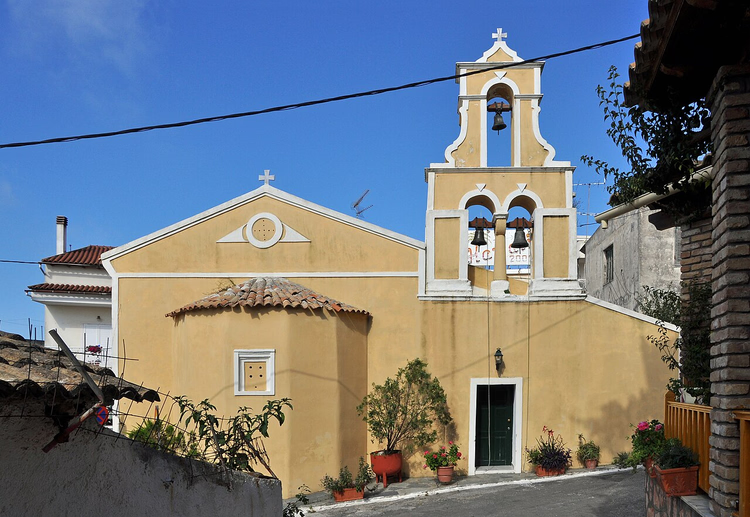 © Marc Ryckaert ( MJJR ) · CC BYPhoto: Marc Ryckaert ( MJJR ), CC BY (https://creativecommons.org/licenses/by/3.0), Wikimedia Commons
Corfu driving route on the map
The whole trip fits into one loop. Start from Corfu Town and go clockwise: east coast, north, west, south. This way you avoid extra kilometers and make it to the west side of the island in time for sunset.
The historic center of Corfu Town itself is a UNESCO World Heritage Site (as of 09/2026, Corfu), so the capital deserves a separate day. Below is a map with the points from this article: open it on your phone and check off what you have covered.
Corfu driving route
Places on the map
- 1Gouvia Venetian shipyard and marina on the east coast
- 2Ipsos Pebble-and-sand Blue Flag beach along the main road
- 3Kalami Quiet amphitheatre bay in the north among relict pines
- 4Acharavi Long sandy beach, base for trips around the north
- 5Pantokrator Island's highest point at 906 m, panorama over Corfu and Albania
- 6Old Perithia Half-abandoned 14th-century village, a refuge from pirates
- 7Sidari Coves with sandstone caves and turquoise water
- 8Paleokastritsa Cascade of coves with golden sand and the Theotokos monastery
- 9Lakones Hilltop village above Paleokastritsa with a viewpoint
- 10Angelokastro 13th-century Byzantine castle on a sheer cliff
- 11Agios Georgios (West) Quiet beach with golden sand in the northwest
- 12Afionas Village on a rocky headland with a double bay
- 13Benitses Maritime museum and ruins of Roman baths on the waterfront
- 14Messonghi Blue Flag sandy beach, next to Gardiki fortress
- 15Lefkimmi Flat southern town with a canal and old churches
- 16Kavos The island's liveliest resort, with clubs and a long beach
- 17Agios Georgios (South) Wide beach between rocky headlands in the south
- 18Lake Korission Freshwater lagoon with flamingos, separated from the sea by a spit
- 19Agios Mattheos Mountain village with homemade produce and a quiet beach
- 20Pelekas "Kaiser's Throne" viewpoint with views of both coasts
If you drive the loop, it makes sense to leave the western bays for the second half of the day: the sun sets behind the cliffs there, and the view from Lakones or Pelekas is at its best. For overnight stays along the route, the east side is convenient, since it is equally close to both the north and the south.
Tours and tickets in Corfu
Guided tours, skip-the-line tickets and activities — most offers can be cancelled free of charge.
See offers on GetYourGuideThe widget loads once you give your consent.
⁉️🤔 Frequently asked questions
Is driving on Corfu difficult?
Not difficult if you take it easy. The roads are narrow, with switchbacks and sharp turns, but the surface is fine. Allow half an hour to an hour for each drive and do not plan more than four stops a day. Beginners will find it easier to start with the east coast, where the roads are wider.
How many days should I set aside for the whole island?
Three to four days are enough for the main points on this route. In one day you can realistically cover the east coast from Gouvia to Kavos, or the north with Mount Pantokrator. To see both the western bays and the south without rushing, split the trip into two stages and stay overnight in two different places.
Where can I watch the sunset on Corfu?
On the west coast: from the Lakones viewpoint above Paleokastritsa, from the village of Pelekas at the Kaiser's Throne, and from Afionas on the rocky cape. Arrive an hour before sunset so you can find parking and walk to the viewpoint without stress.
Is a car really necessary?
For this route, yes. Buses mostly connect the major resorts and Corfu Town, while mountain villages and quiet beaches on the west coast are easier to reach with your own car. If you do not want to drive, pick one resort and explore around it on foot.
When is the best time to visit Corfu?
From April to October. In May and September it is warm, but without the July heat and crowds. In summer, book your car and accommodation in advance; in winter, some tavernas and boat trips are closed.
Find hotels
Compare prices across booking sites and filter for rooms with free cancellation.
Compare prices on Discover CarsThe widget loads once you give your consent.
In short: what to book
If you have three days, base yourself on the east side: Gouvia or Ipsos. Spend the first day in Corfu Town, on the second go up to Pantokrator, and dedicate the third to the western bays and Pelekas.
If you have a week, add the north with Kalami and Acharavi, as well as the south with Kavos and Lake Korission. Rent the car for the entire period: drives between points take longer than they look on the map.
If you are traveling with children, choose Agios Georgios, Messonghi, and Sidari: they have sandy bottoms and gently sloping entries into the water. In summer, car availability is limited, so it is better to book your car in advance.

A small editorial team writing guides for independent travel. We travel ourselves, but we haven’t been everywhere, so we check prices, opening hours and how to get there against official sources.