








Tbilisi in 3 days: a walking route with prices and opening hours
Tbilisi can be covered on foot in three days. The Old Town is compact: from Freedom Square to the sulfur baths you can walk in half an hour. Over these days you will see the funicular to Mtatsminda, the cable car to Narikala, and a waterfall right in the city center.
The challenge is not the distances but the order. Without a plan, you will spend a day on climbs and end up back at the same point. So below is a three-day route: what to see, how much transport costs, and where entry is free.
A metro or bus ride costs 1 GEL, and the ticket is valid for 90 minutes with transfers (as of 09/2026, TTC fares). That is enough to connect all three days. A Metromoney card is convenient for payment. You buy a Metromoney card in the metro and bank branches, and it stays with you for your whole vacation.
Ad: this article contains affiliate links, we earn a commission if you book through them, at no extra cost to you.
Day 1: Old town, funicular and Shavteli
💡 In short:
- The first day is dedicated to a walking tour of the old part: Freedom Square, the funicular, the Pantheon, Mtatsminda Park, the Gabriadze Theater and Shavteli Street.
- Take the funicular up in the morning, and walk down past the Pantheon.
- You will cover several kilometers of climbs during the day, so wear comfortable shoes.
- Transport fares and opening hours: 09/2026, checked on the carrier's official website.
The Georgian capital stands on the banks of the Kura River. The city is lively and multifaceted, where East and West meet. Start getting to know Tbilisi from the old part.
Freedom square and Pushkin square
The city's main square lies at the junction of three districts. It used to be the gardens of the local nobility, but in the 19th century they were cut down and the old ravine was filled in. In those years the square was called Erivansky.
Alexander Pushkin lived in one of the houses on the square for two months in 1829. The nearby square bears his name. After the revolution, the square changed its name several times, bore the names of Lenin and Beria, and today it is called Freedom Square.
Government buildings, the central branch of the national bank, hotels, shops and numerous souvenir stalls stand here. In Pushkin Square you can rest on benches by the fountain, and a tourist information center operates nearby. Book sellers often gather here, so you will find used book stalls right in the city center.
Behind the park is the Museum of Arts. This building used to house the theological seminary where Joseph Dzhugashvili studied. The square has repeatedly been the center of dramatic events in the country's history, and today people still arrange meetings here and stroll in the evenings.
Tbilisi Funicular
 © David1010 · CC BY-SAPhoto: David1010, CC BY-SA (https://creativecommons.org/licenses/by-sa/4.0), Wikimedia Commons
The funicular takes you up Mount Mtatsminda. The lower station is at 22 Chonkadze Street, in the city center. The track is 501 meters long, the ascent takes about five minutes, and the upper point lies at an altitude of 727 meters (according to the Georgian tourism office).
The funicular has three stops. If you get off at the second one, you will reach the Church of St. David and the Pantheon. The third stop is the terminus: Mtatsminda Park.
You pay separately for each direction. The cabin runs all year round, but in summer the ticket line is longer (according to the official tourism portal of Georgia).
Pantheon
 © James Emery from Douglasville, United States · CC BYPhoto: James Emery from Douglasville, United States, CC BY (https://creativecommons.org/licenses/by/2.0), Wikimedia Commons
The Pantheon is located on Mount Mtatsminda, by the Church of St. David. The church was built on the site of the destroyed cave of St. David. According to legend, in the 5th century the ascetic David lived here in a cave and came down to the city only on Thursdays.
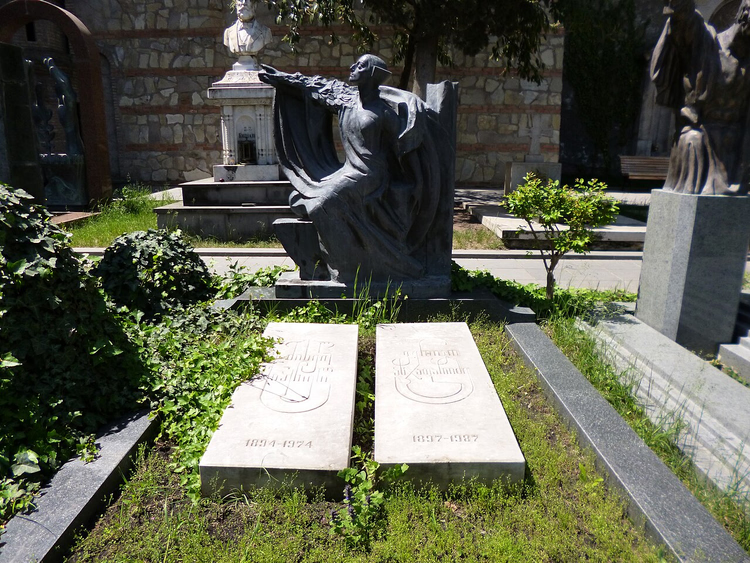
A necropolis was established by the church walls, where prominent figures of Georgian culture are buried. The history begins in 1829: on the initiative of Princess Nino Chavchavadze, her husband, the poet Alexander Griboyedov, was buried here. The Pantheon was opened in 1929, on the centenary of his death.
The graves of Nino Chavchavadze herself, the poet Vazha Pshavela, the actress Veriko Anjaparidze, Ilia Chavchavadze and the dancer Vakhtang Chabukiani are also here. There is a plaque for the artist Niko Pirosmani, but his grave is not here: the burial place remains unknown.
Entry is free. Nearby, by the crevice of St. David's cave, there is a holy spring.
Mtatsminda Park and the observation deck
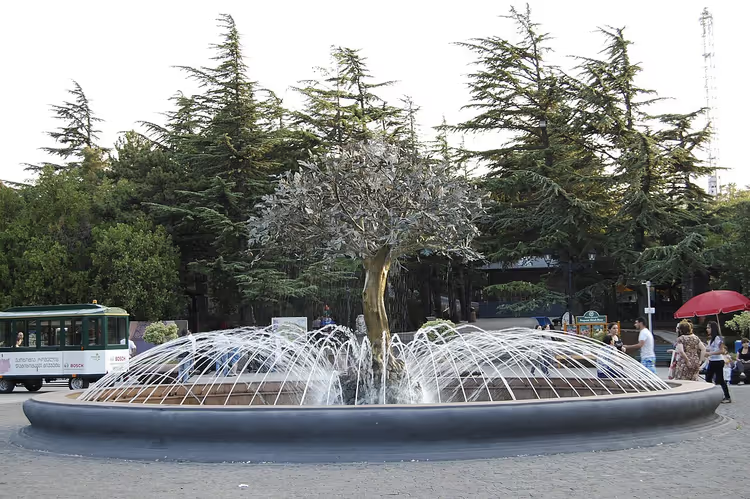 © Andrzej Wójtowicz from Poznań, Poland · CC BY-SAPhoto: Andrzej Wójtowicz from Poznań, Poland, CC BY-SA (https://creativecommons.org/licenses/by-sa/2.0), Wikimedia Commons
As early as the 19th century, Tbilisi residents went up to Mtatsminda for picnics in summer. The mountain's name translates as "Holy Mountain". Gradually it became a favorite recreation spot for city dwellers, and restaurants and cafes appeared here.
In the 1930s the slopes were planted with trees, and since then the mountain has turned into a large park. There are rides for children and adults, a water park, a dinosaur park and a large Ferris wheel.
The observation deck lies next to the upper funicular station. Go up here at sunset: the whole of Tbilisi opens up, especially the old part, and the Kura glitters below. Rides for children operate nearby, so families usually stay here until evening.
Rezo Gabriadze Marionette Theater
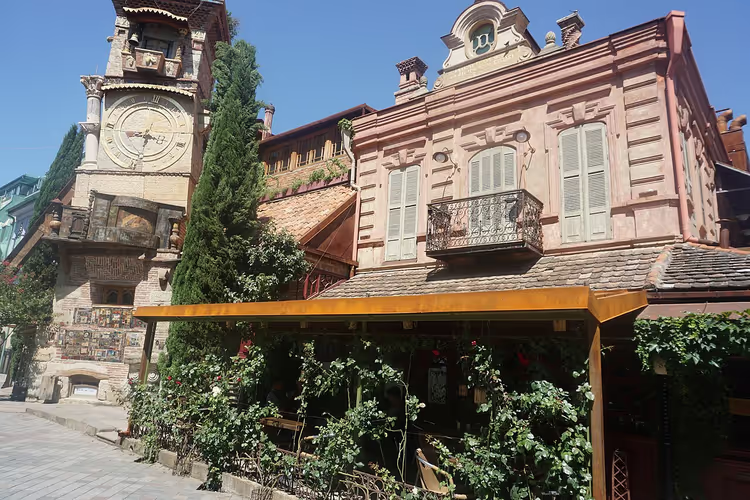 © Andrew Milligan sumo · CC BYPhoto: Andrew Milligan sumo, CC BY (https://creativecommons.org/licenses/by/2.0), Wikimedia Commons
On Shavteli Street stands the Rezo Gabriadze Marionette Theater, one of the city's main landmarks. Its performances are known far beyond Georgia, and tickets need to be bought in advance. The program has only four shows, and the puppets and plays were all created by the artist himself.
The theater building was built in 1981. It is adorned with a clock tower: every hour a small door opens, and an angel strikes a bell with a hammer. Twice a day, at noon and at seven in the evening, a mini performance called "The Cycle of Life" is staged here.
The tower's facade is decorated with tiles made by Gabriadze himself, and a pomegranate tree grows on its roof. On the building's pediment is written: "May our tears come only from onions."
Next to the theater there is a cafe whose interiors were painted by the artist. It was once the size of a small room and was called "Don't Grieve!", but gradually expanded and took the name of its founder. The tables and chairs are painted with scenes and lines from films where Gabriadze worked as a screenwriter: "Mimino," "Kin-dza-dza," and others.
Shavteli Street
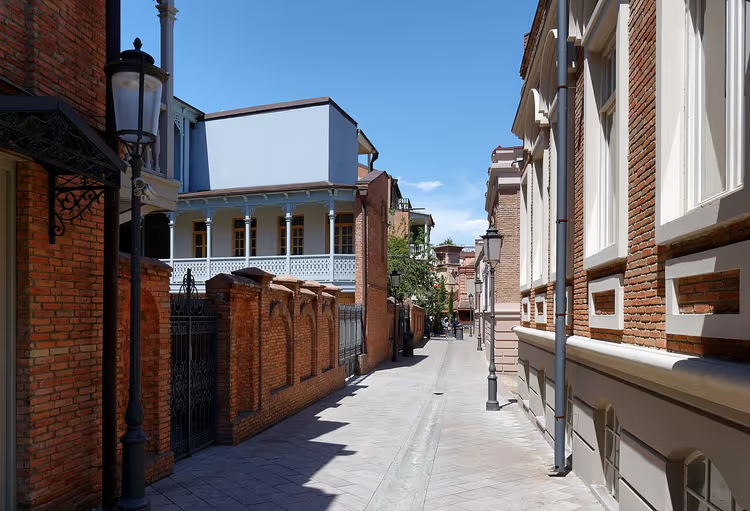 © Alexxx1979 · CC BY-SAPhoto: Alexxx1979, CC BY-SA (https://creativecommons.org/licenses/by-sa/4.0), Wikimedia Commons
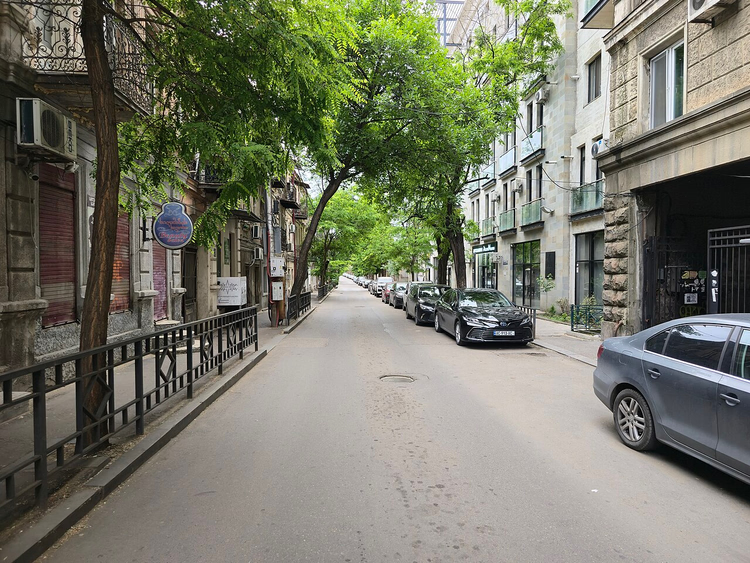
Shavteli, another pedestrian street in the old town, is named after the medieval poet Ioane Shavteli. He lived during the time of Queen Tamar. Once the royal palace and the main palace square stood here, and the area was considered prestigious.
The palace and square were completely destroyed in 1795 during the invasion of the Persian Khan Agha Mohammad. Almost nothing remains of the old buildings. Today the buildings of the Georgian Patriarchate stand here, and inside there is an active convent of the Holy Virgin.
Across from it stands the Church of St. George, which served as the main court church from the 17th century. A little further on, in the park, there is a small fountain, a gift to the city from Paris.
Day 2: Tsminda Sameba, Metekhi and the sulfur baths
On the second day, it's worth adding a touch of modernity. You'll ride the cable car, relax in the hot sulfur springs and see the city's natural riches.
Holy trinity cathedral, or Tsminda Sameba
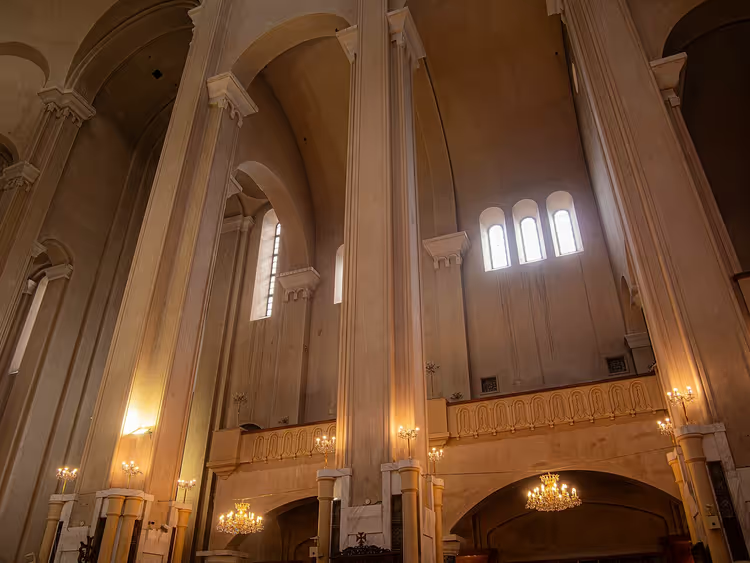 © SayaAndy · CC BYPhoto: SayaAndy, CC BY (https://creativecommons.org/licenses/by/4.0), Wikimedia Commons
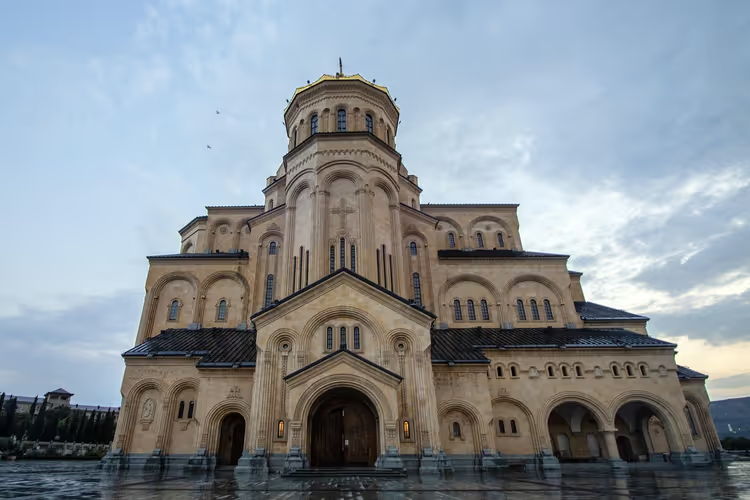
The cathedral of the Georgian Orthodox Church is visible from anywhere in the city. It stands on the hill of Saint Elijah on the bank of the Kura River and is considered the tallest church in Georgia.
The decision to build it was made in the late eighties, to mark the two-thousandth anniversary of Christianity. Work was postponed because of the civil war and only began in the mid-nineties. The first service was held in the early two-thousands, and the cathedral was consecrated after construction was completed.
The complex includes nine chapels, a bell tower, a theological academy and the residence of the Catholicos. Most of the chapels are located underground. Inside, the walls are covered with frescoes created by Georgia's best artists under the direction of Amiran Goglidze.
Several icons for the cathedral were painted by Patriarch Ilia II himself. The cross of Saint Nino, which was erected to mark the baptism of Georgia, is kept here.
People say the cathedral was built literally on bones: an old Armenian cemetery used to stand on this site. Its destruction began in the thirties, and the remains were not reburied during construction. The gravestones and monuments disappeared in the process.
A panorama of the city opens up from the square by the cathedral as well. The church is visible from any point in Tbilisi, and in the evening it is illuminated and serves as a landmark during walks.
Metekhi Church
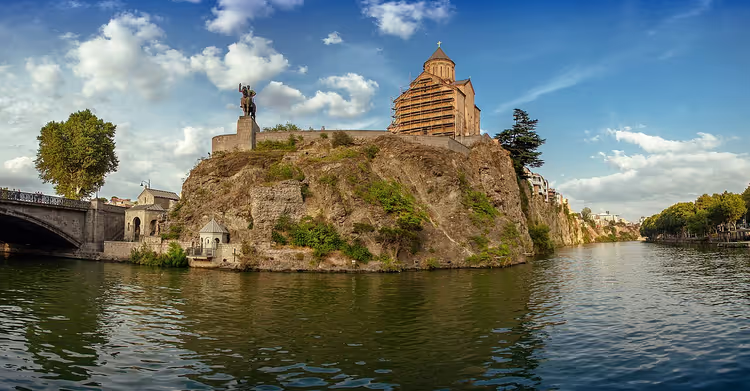 © Zysko serhii · CC BY-SAPhoto: Zysko serhii, CC BY-SA (https://creativecommons.org/licenses/by-sa/4.0), Wikimedia Commons
Metekhi Church, or the Church of the Nativity of the Mother of God, stands on a cliff above the Kura River and is considered one of the symbols of Tbilisi. It was built in the 12th century next to the royal palace.
Over its long history, the church was repeatedly destroyed and restored. It survived Mongol and Persian invasions, housed a Cossack regiment in the 19th century, and in the twenties of the last century it was turned into NKVD dungeons.
In 1937, the church was slated for demolition, but public figures spoke out against it. The artist Dmitry Shevardnadze paid with his life to save the monument, and these events formed the basis of the film "Repentance".
Only here have examples of Georgian stone carving from the 13th to 15th centuries survived. A portico with a grapevine ornament is attached to the northern wall. Nearby stands a monument to King Vakhtang Gorgasali, the founder of the city.
Europe square and Rike park
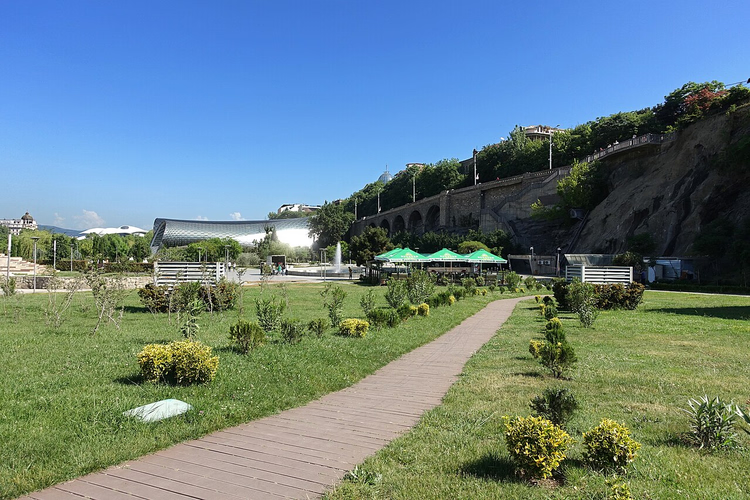 © Tiia Monto · CC BY-SAPhoto: Tiia Monto, CC BY-SA (https://creativecommons.org/licenses/by-sa/3.0), Wikimedia Commons
Rike Park lies next to Europe Square. It was laid out a few years ago but has already become a favorite spot for Tbilisi's young people. It's a good place to visit both during the day and in the evening.
In the park you'll find a piano in the bushes, a giant chessboard and a bench with Ronald Reagan. The park sculptures here are varied and not without humor. In the evening, the dancing fountains light up.
The Bridge of Peace spans the Kura River, and Tbilisi residents immediately gave it a nickname. The lights on the bridge don't burn randomly: in Morse code they transmit the names of the chemical elements that make up the human body. The architects' idea was about the unity and equality of people.
From the park you get a good view of the presidential palace on the other bank of the Kura and the old town.
Cable car
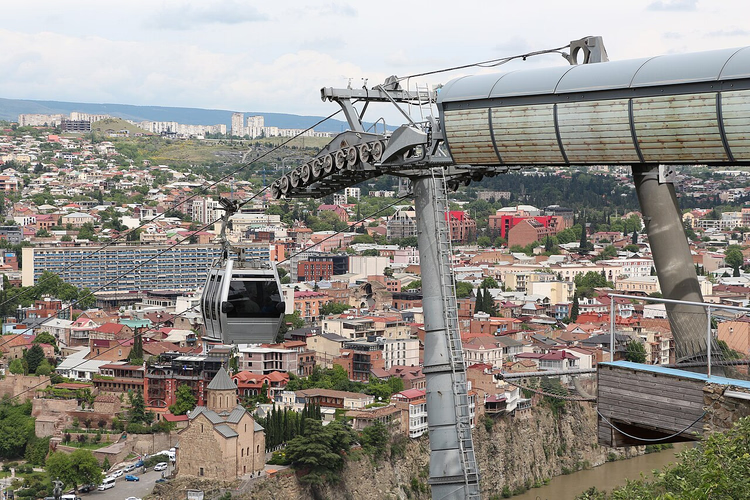 © Bernard Gagnon · CC BYPhoto: Bernard Gagnon, CC BY (https://creativecommons.org/licenses/by/4.0), Wikimedia Commons
The lower cable car station stands by Rike Park, next to the Bridge of Peace. The cabins fly over the city center, and you'll notice them right away. For Tbilisi residents this is ordinary public transport, so the fare is paid with a Metromoney card.
The line was launched in 2012. Seven capsules with panoramic windows hold eight people each and move quickly and smoothly.
At the upper, final stop there is an observation deck. From here you can look out over the city and choose a new route. Nearby stands the Mother of Kartli monument, and opposite you can see Narikala Fortress.
Mother of Kartli statue
 © Mostafameraji · CC BY-SAPhoto: Mostafameraji, CC BY-SA (https://creativecommons.org/licenses/by-sa/4.0), Wikimedia Commons
Next to the observation deck stands the twenty-meter statue of Mother of Kartli, or "Mother Georgia". It is a symbol of the Georgian nation: in one hand she holds a bowl of wine for friends, in the other a sword for enemies.
The statue was erected in 1958 and was originally made of wood. A few years later it was replaced with an aluminum version. In the nineties the sculpture was slightly updated: a headscarf was added and the dress was lengthened.
Narikala Fortress
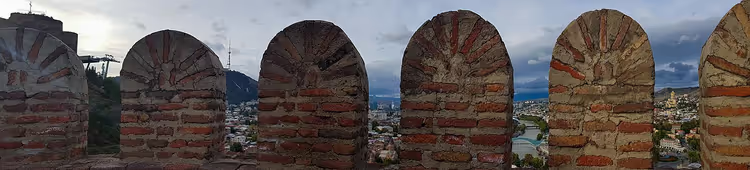 © Amir Hossein Eslami · CC BY-SAPhoto: Amir Hossein Eslami, CC BY-SA (https://creativecommons.org/licenses/by-sa/4.0), Wikimedia Commons
Narikala Fortress occupies the hill of the same name above the old town. The first fortifications here began to be built as early as the 5th century. There were no royal residences or main churches here; the fortress served a purely defensive purpose.
It was stormed many times, expanded and rebuilt. The fortress suffered heavy damage in the earthquake of 1827. Of the walls themselves, only the gates and fragments of masonry with characteristic Georgian decoration survived.
In the 12th century, the Church of Saint Nicholas was built inside. Only the foundation remains of the ancient building, and the church was restored on it in the nineties. The name of the fortress comes from the Persian words "nari" (younger) and "kala" (fortress).
Sulfur baths
 © Henri MOREAU · CC BY-SAPhoto: Henri MOREAU, CC BY-SA (https://creativecommons.org/licenses/by-sa/4.0), Wikimedia Commons
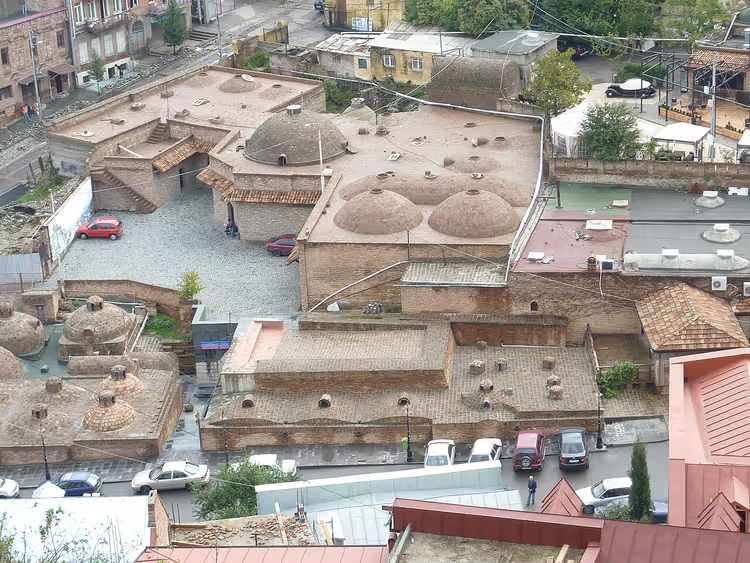
The sulfur baths are part of Tbilisi culture. The water is supplied from sulfur springs, of which there are many in and around the city. The water, rich in hydrogen sulfide, has healing properties.
According to legend, King Vakhtang noticed that a wounded pheasant drank water from a spring and immediately recovered. He ordered a city to be founded on that spot, and it was named "Warm City". Since then, the pheasant has become one of the symbols of Tbilisi.
At first the baths were carved directly into the rocks, then separate little houses were built around them. Today the city has several bathhouses where you can steam and book a massage. It's best to come in the evening, after long walks around the city, when your legs are tired.
Many historic bath complexes are concentrated in the Abanotubani district. For more modern options with better service, look at Lisi Lake. Bring a towel and allow at least an hour for the procedure.
Legvta Khevi canyon with waterfall
 © Valen1988 · CC BY-SAPhoto: Valen1988, CC BY-SA (https://creativecommons.org/licenses/by-sa/4.0), Wikimedia Commons
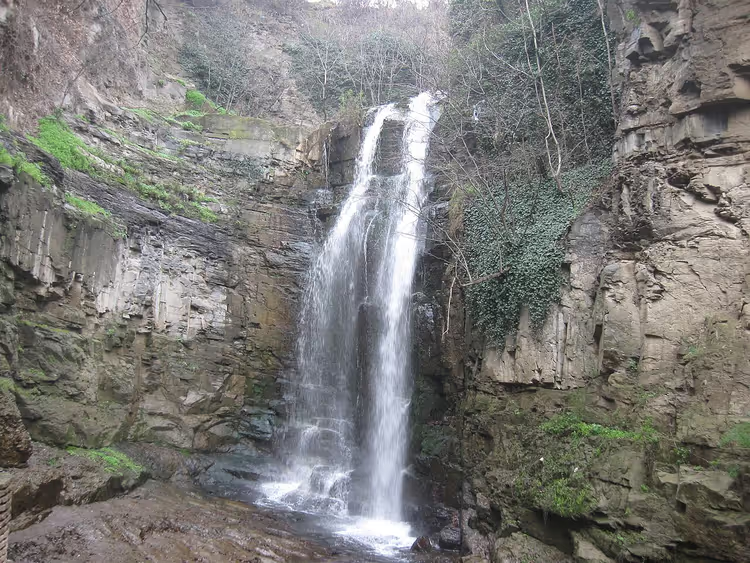
The Legvta Khevi waterfall is hidden right in the city center, behind the sulfur baths. A walk along the gorge leads to it.
On the slopes of the gorge stand tiny houses with carved balconies. They hang over the cliff in colorful clusters. At the end of the path the waterfall itself opens up, and the stream of water falls down with a loud roar.
This is where the city's origins lie. It's worth walking to the end of the gorge to find yourself in a realm of coolness and shade.
Day 3: Turtle lake, dry bridge, and shardeni
Spend your third day on the places locals themselves love.
Turtle Lake
 © Nino Ozbetelashvili from Georgia · CC BYPhoto: Nino Ozbetelashvili from Georgia, CC BY (https://creativecommons.org/licenses/by/2.0), Wikimedia Commons
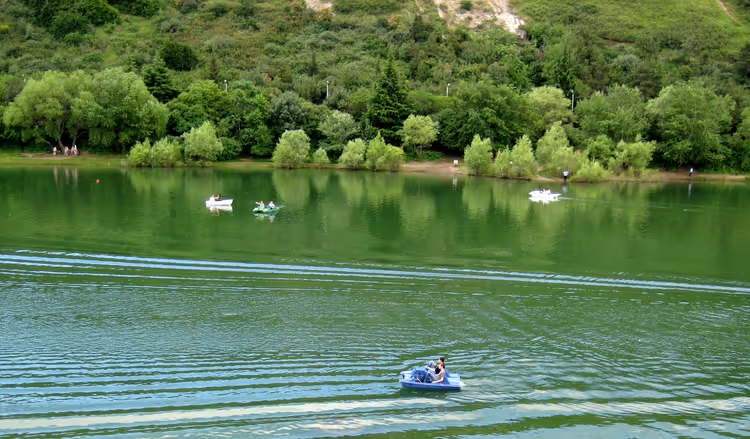
Turtle Lake is considered one of Tbilisi residents' favorite recreation spots. There are two versions of how it got its name: according to one, turtles lived in its clear water; according to the other, the lake is shaped like a turtle when viewed from above.
You can reach the lake by the second cable car, the longest in Tbilisi. The final stop is called exactly that, "Turtle Lake." Along the way you'll enjoy views of the park, the city's newer districts, and the lake itself.
A recreation area surrounds the lake. There are rides, trampolines, and inflatable slides for kids, plus cozy cafes and restaurants. Sports enthusiasts will find outdoor gym equipment and running paths.
The lake is also popular with hikers. Two trails cross a low mountain ridge, and you can also walk up here from Vake Park. In summer, concerts and parties are held on the shore.
Dry Bridge flea market
 © Alexkom000 · CC BYPhoto: Alexkom000, CC BY (https://creativecommons.org/licenses/by/4.0), Wikimedia Commons
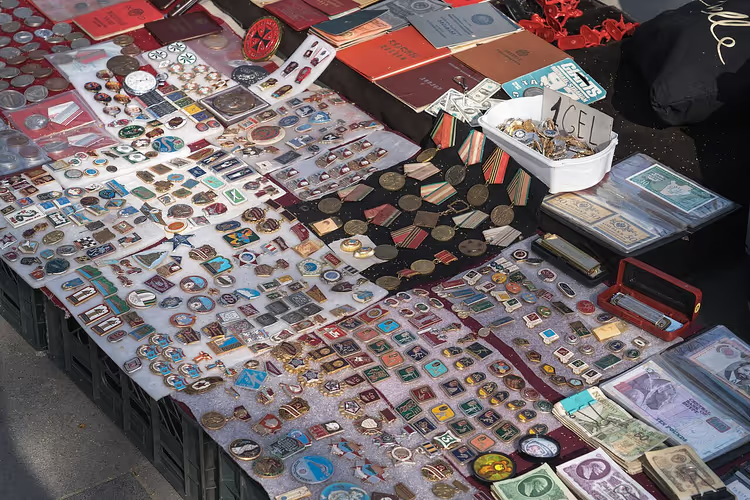
From Freedom Square it's easy to reach Tbilisi's most famous flea market on the Dry Bridge. It sprang up organically in the nineties, when selling household items was the only source of income for many people.
Here you'll find souvenirs for every taste. Right out in the open air, vendors sell handmade crafts and antiques, and local artists display their paintings.
The market sells old books, ceramics, Soviet-era items, vinyl records, cameras, and handmade carpets. Come here for genuine Tbilisi character and the city's atmosphere.
Shardeni Street
 © David1010 · CC BY-SAPhoto: David1010, CC BY-SA (https://creativecommons.org/licenses/by-sa/4.0), Wikimedia Commons
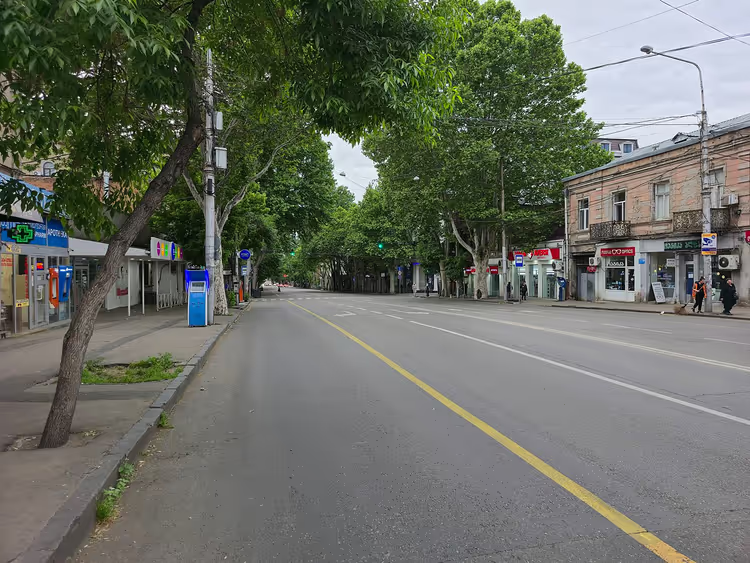
The old town's most musical pedestrian street resembles the picturesque lanes of Paris. The name sounds French, and that's no accident: the street is named after the French writer Jean Chardin, who visited Georgia on a mission in the 18th century and left behind enthusiastic notes.
Today it's a favorite spot for both tourists and locals. It's packed with cafes, restaurants, and sculptural compositions: the monument to Sergei Parajanov in flight, the famous "Tamada," and the "Passenger" by a restaurant.
The street is flooded with light and music. It's no coincidence that the main part of Tbilisoba, the city's day celebration, takes place right here. Sit in a cafe and look at the monument to actress Sofiko Chiaureli, which stands in a small square.
Meidan Square
 © David1010 · CC BY-SAPhoto: David1010, CC BY-SA (https://creativecommons.org/licenses/by-sa/4.0), Wikimedia Commons
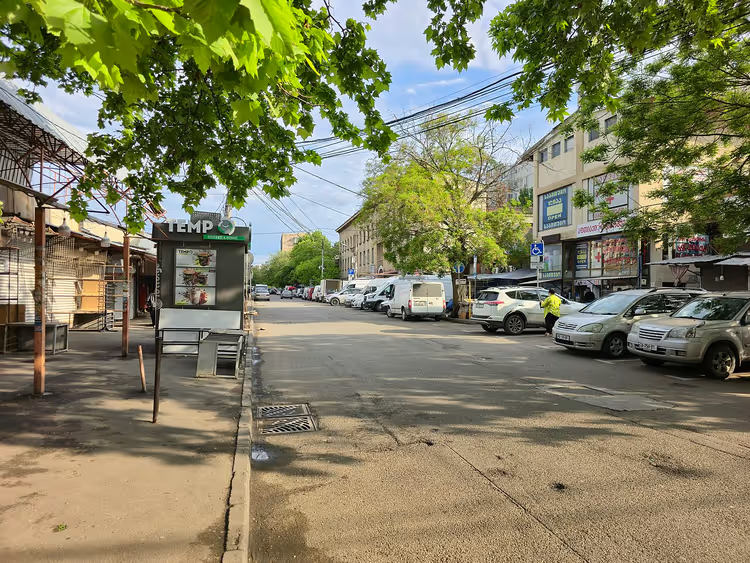
Tbilisi's oldest square used to be called Tatar Meidan. Today it's Vakhtang Gorgasali Square. A market once bustled here, and merchant caravans passed through the square.
During the era of Persian conquests, a Shia mosque stood on Meidan, and some traditions survived until the beginning of the century. The mosque was demolished on Beria's orders; only a few tiles were saved.
The square remembers many great people. They say artist Niko Pirosmani sold milk on one of the nearby lanes, and poet Sayat-Nova recited his verses here. Today a synagogue, the oldest Orthodox Sioni Cathedral, and a Georgian-Armenian church stand nearby, and mosque minarets are visible.
If you'd like to take a guided tour of these places, check out options on GetYourGuide.
Tours and tickets in Tbilisi
Guided tours, skip-the-line tickets and activities — most offers can be cancelled free of charge.
See offers on GetYourGuideThe widget loads once you give your consent.
Tbilisi 3-day itinerary on the map
All three days are marked on the map: the old town, Mtatsminda, Narikala, the sulfur baths, Turtle Lake, and the Dry Bridge. Open it on your phone and follow the points.
Day one's points are compact, so you'll walk between them. For Mtatsminda and Narikala, it's easier to go up by transport and walk back down. A separate cable car leads to Turtle Lake, so it's best to start day three from Vake Park.
If you're staying in the old town, you'll hardly need a car. A taxi is only useful for getting to the airport or out of town; around the center you can easily get by on foot and by metro.
What to see in Tbilisi in 3 days
Places on the map
- Freedom Square The city's main square, called Erivan Square in the 19th century
- Tbilisi Funicular Takes you up Mount Mtatsminda in five minutes
- Pantheon A necropolis by the Church of St David on Mount Mtatsminda
- Mtatsminda Park A park on the mountain top with an observation deck and rides
- Rezo Gabriadze Marionette Theatre A puppet theatre on Shavteli Street, tickets should be bought in advance
- Shavteli Street A pedestrian street of the old town
- Holy Trinity Cathedral Georgia's tallest cathedral, known as Sameba
- Metekhi The Church of the Nativity of the Virgin on a cliff over the Kura
- Europe Square A square by Rike Park with a view of the Bridge of Peace
- Rike Park A park with fountains and sculptures by the Bridge of Peace
- Mother of Georgia statue A 20-metre symbol of Tbilisi on a hill above the city
- Narikala A fortress above the old town, first fortifications from the 5th century
- Abanotubani Sulphur Baths Baths on sulphur springs in the historic district
- Turtle Lake A lake with a recreation area, reachable by the second cable car
- Dry Bridge Flea Market A market for antiques and handmade souvenirs
- Shardeni Street A musical pedestrian street of the old town
- Maidan Square The city's oldest square, now Vakhtang Gorgasali Square
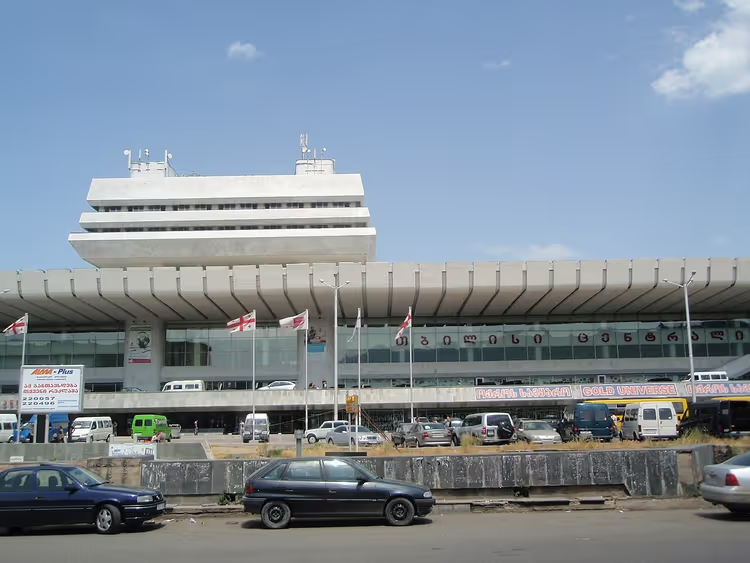
How to get from Tbilisi airport
The international airport is in the eastern part of the city. There are several ways to get downtown from here, and you can choose based on budget and time.
- A taxi to the center will cost a few dozen lari, and the ride takes about twenty-five minutes. In high season, that can stretch to an hour.
- Bus No. 337 goes straight into the city; the fare is 1 GEL (as of 09/2026, Tbilisi Transport Company website). The stop is a few meters from the arrivals area, with BUS written in large letters on the pavement.
- Buses run from seven in the morning until half past eleven at night every fifteen to twenty minutes. You'll reach Avlabari metro station in forty minutes and the railway station in an hour. The bus is convenient if you're traveling without kids and without a mountain of suitcases.
- If you need a transfer to another city, book it in advance. The trip to Batumi will cost noticeably more than to the center, and a trip to the mountains takes longer.
Buses also leave the airport for Batumi, Kutaisi, and the ski resorts. A private transfer costs more than the bus, but the car waits for you right at the exit.
If you don't want to deal with taxis on the spot, compare transfer options in advance.
Tours and tickets in Tbilisi
Guided tours, skip-the-line tickets and activities — most offers can be cancelled free of charge.
See offers on KiwitaxiThe widget loads once you give your consent.
Prices depend on the season and car class, so confirm them when booking.
⁉️🤔 Frequently asked questions
How many days do you need in Tbilisi?
Three days is enough for the classic old town itinerary. In that time you'll go up to Mtatsminda and Narikala, visit the sulfur baths and Turtle Lake. If you want to add day trips to Mtskheta or Kakheti, plan for five days.
How do you pay for a ride on Tbilisi public transport?
You can pay with a bank card or a Metromoney card. The funicular is paid separately in each direction.
Which should you choose: the funicular or the cable car?
The funicular goes up to Mtatsminda, where you'll find the park, the Ferris wheel, and the Pantheon. The cable car runs from Rike Park to Narikala Fortress and the Mother of Kartli statue. If time is limited, start with the cable car: the ride up is short, and views of the old town open up right away.
What should you buy at the Dry Bridge flea market?
Prices are quoted with room to negotiate, so bargaining is expected. Come in the morning on weekends, when the selection is better.
In short: what to book
Three days in Tbilisi are easiest to build around the old town. If it's your first visit, pick a hotel near Freedom Square or Avlabari.
- If you're short on time, stay in the old town and take the funicular up in the morning.
- If you're traveling with kids, add Turtle Lake and Mtatsminda Park.
- If you want guided tours, check out options on GetYourGuide.
Book a central hotel in advance: in high season prices are higher and availability is lower. Compare Tbilisi hotels on Trip.com.

A small editorial team writing guides for independent travel. We travel ourselves, but we haven’t been everywhere, so we check prices, opening hours and how to get there against official sources.