
















20 Ski resorts in Austria: where to ski in the 2026/27 season
Austria remains one of the world's leading ski countries. The snow season here runs from December through April, and neighboring resorts are linked by shared ski passes. Choosing from twenty strong destinations is not easy: each has its own slopes, its own pace, and its own crowd.
We have put together the twenty best ski resorts in Austria, from the glaciers of Tyrol to the thermal valleys of Salzburg. For each one you will find the character of the slopes, the route from the airport, and a guide to hotels. That way you can quickly figure out which resort is worth your vacation.
Ad: this article contains affiliate links. We earn a commission if you book through them, at no extra cost to you.
How to choose a ski resort in Austria
💡 In short:
- Look at the altitude: high-altitude resorts hold snow from December through April, while valley resorts depend on the weather.
- Compare ski passes: the combined SuperSkiCard is valid at 88 resorts in Austria and Bavaria and covers 2,840 km of slopes (as of 09/2026, Kitzbüheler Alpen).
- Prices and season: 09/2026, verified on the official Ski Arlberg website).
The choice depends on three things: your skiing level, your budget, and what you expect from the evening. Large resorts offer the most slopes, but prices there are also higher. Small villages are cheaper, but the slopes are short, and an experienced skier quickly gets bored with them.
For families, ski schools and easy blue runs matter more; for groups, nightlife and off-piste skiing matter more. The table below gives a quick guide to all twenty resorts.
Resort | Region | Who it's for |
|---|---|---|
Sölden | Tyrol | fans of long routes and glaciers |
Obergurgl | Tyrol | couples and confident skiers |
Ischgl | Tyrol | experienced skiers and party lovers |
Kitzbühel | Tyrol | those who want a town and history |
Mayrhofen | Tyrol | off-piste skiers and fans of challenging terrain |
Serfaus | Tyrol | families with children |
Innsbruck | Tyrol | those who combine city and skiing |
Seefeld | Tyrol | beginners and cross-country skiers |
Igls | Tyrol | beginners and those seeking peace and quiet |
St. Anton | Tyrol | strong skiers and pros |
Lech | Vorarlberg | those who value service and off-piste skiing |
Bad Gastein | Salzburg | fans of thermal spas and long runs |
Bad Hofgastein | Salzburg | families and fans of thermal pools |
Saalbach | Salzburg | those who want many slopes at once |
Zell am See | Salzburg | those combining skiing and the lake |
Kaprun | Salzburg | beginners and glacier fans |
Obertauern | Salzburg | those looking for snow from autumn |
Bad Kleinkirchheim | Carinthia | fans of thermal spas and easy runs |
Schladming | Styria | all-rounders and families |
Hippach | Tyrol | those who want quiet and views |
1. Sölden
Sölden lies in the Ötztal valley between ridges that protect the village from the wind. The resort has two glaciers, so snow on the upper slopes is reliable from autumn to spring. The middle section of the slopes suits skiers of any level, and long routes stretch across open terrain.
Experienced athletes ski at Gaislachkogl mountain, which has a speed slope and a separate snow park with jumps and rails. In the village, traditional Tyrolean houses sit alongside modern chalets. In the evening, bars, restaurants, and nightclubs are open, and nearby there is a sports complex with pools, saunas, and a spa.
The journey from Innsbruck Airport takes several hours: the bus travels along the valley past the slopes. In winter, the schedule is adjusted to match the arrival of most flights.
- Who it's for: intermediate skiers and anyone who loves long descents.
- How to get there: bus from Innsbruck Airport, the journey takes several hours.
- Sölden hotels: check prices on Trip.com.
2. Obergurgl
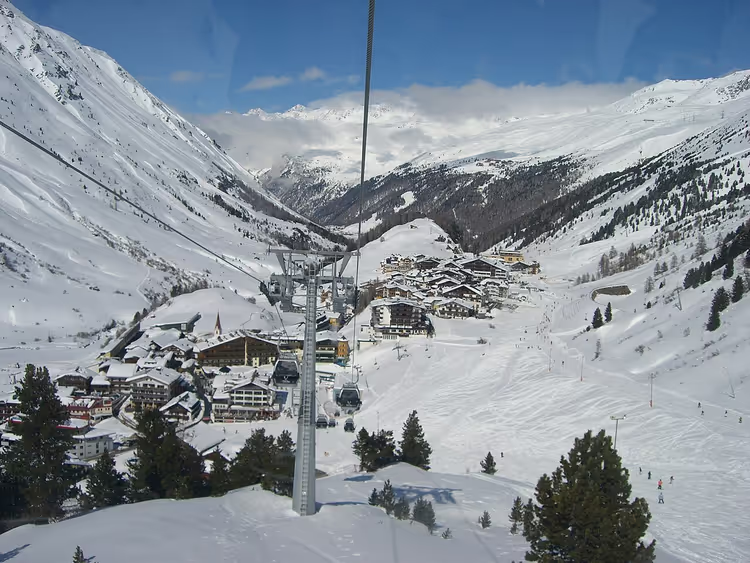
Obergurgl sits at almost two thousand meters, above the tree line. It is one of the snowiest resorts in Tyrol: well-groomed slopes lie on open terrain with no vegetation. Hotels here are expensive; the village has historically catered to a clientele willing to pay for service.
The slopes are evenly divided. Wide blue sections suit beginners, while winding red and black runs stretch out for confident skiers. The gentle descents are long, so learning here is comfortable. Snowboarders and off-piste skiers head to the neighboring peak and to a long toboggan run with banked turns.
A bus runs here from Innsbruck Airport, and the journey takes about two hours. The schedule is convenient for those arriving on morning flights.
- Who it's for: beginners and confident skiers who need reliable snow.
- Obergurgl hotels: choose a hotel in Obergurgl.
3. Ischgl

Ischgl lies in the Paznaun valley near the Swiss border. The resort is known for its long season and the Silvretta Arena ski area, so the slopes are designed primarily for experienced skiers. More than two hundred kilometers of runs alternate wide, gentle sections with narrow turns, gullies, and passes.
The upper stations rise to almost three thousand meters, where red and black routes run. The village is lively and loud: bars stay open until morning, and the hotels are mostly upscale, with pools and spas.
Innsbruck Airport is about a hundred kilometers away, and the bus takes about two hours.
- Who it's for: experienced skiers and those who love nightlife.
- Note: beginners will find it crowded here, and there are few gentle slopes.
- Ischgl hotels: hotel prices in Ischgl.
4. Kitzbühel
 © osmplus_org · CC BY-SAPhoto: osmplus_org, CC BY-SA (https://creativecommons.org/licenses/by-sa/4.0), Wikimedia Commons
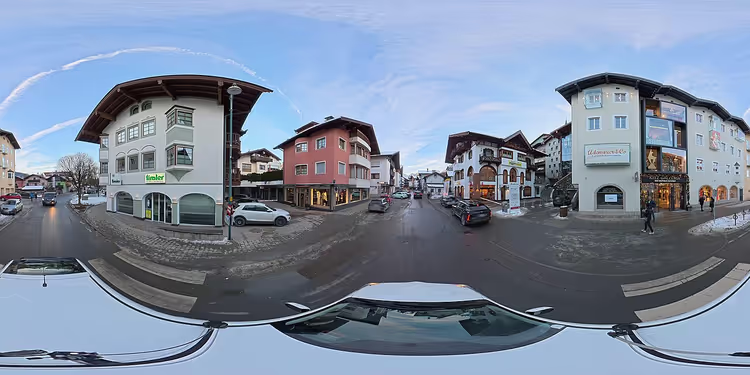
Kitzbühel has kept its medieval center with cobblestone streets and old houses. It is the most urban resort in Tyrol: hotels, guesthouses, boutiques, and restaurants are clustered inside the historic ring. There are about two hundred kilometers of slopes here, from blue to black.
The main local landmark is the Streif downhill, where skiers reach dangerous speeds. Beginners get the Kitzbühel Horn sector with gentle, wide runs. Nearby there is a luge track, a snowpark, and a large leisure area with pools and saunas.
You can get there by train from Salzburg, Innsbruck, or Munich: the station is a kilometer from the center.
- Who it's for: those who want to combine skiing, history, and a city dinner.
- Kitzbühel hotels: find a hotel in Kitzbühel.
5. Mayrhofen
 © Itto Ogami · CC BYPhoto: Itto Ogami, CC BY (https://creativecommons.org/licenses/by/3.0), Wikimedia Commons
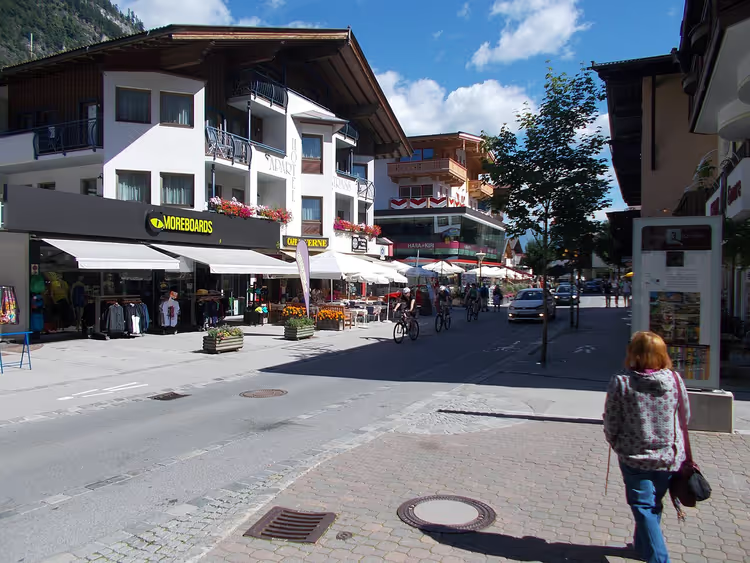
Mayrhofen spreads across the Zillertal valley at an altitude of about six hundred meters. The resort stretches along the road, but the cable car network quickly takes you to the slopes of the Ahorn and Penken mountains. The runs vary: from wide, gentle blues to bumpy intermediate reds.
The main local legend is the Harakiri run on Penken mountain with a 78% gradient. The Hintertux glacier operates year-round and sits above three thousand meters. For relaxation there are pools, fitness centers, tennis courts, and an ice rink.
The nearest airports are Innsbruck and Munich; the trip takes several hours with transfers.
- Who it's for: freeriders, fans of challenging descents and glacier skiing.
- Mayrhofen hotels: Mayrhofen hotels on Trip.com.
6. Serfaus
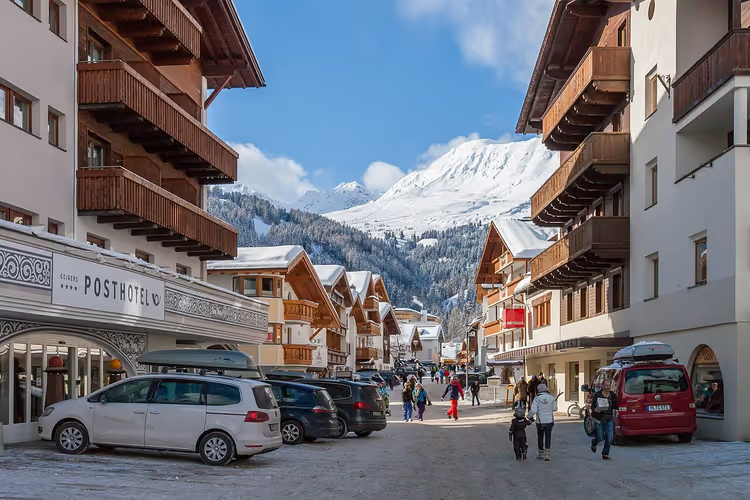 © Dmitry A. Mottl · CC BY-SAPhoto: Dmitry A. Mottl, CC BY-SA (https://creativecommons.org/licenses/by-sa/3.0), Wikimedia Commons
Serfaus occupies a high plateau at about one thousand four hundred meters. The resort is linked with Fiss and Ladis into one ski area, so the choice of runs here is large. The local infrastructure for children is especially strong: snow parks, playgrounds, ice rinks, and short learning slopes.
Adults are offered routes with a decent vertical drop. Confident skiers head to the steep descents of the Komperdell and Schönjoch peaks, while snowboarders have jumps and obstacles waiting for them. Long, flat cross-country trails run through the forest.
Getting there from Innsbruck airport: train to Landeck station, then a bus.
- Who it's for: families with children and confident skiers.
- Serfaus hotels: Serfaus hotels on Trip.com.
7. Innsbruck
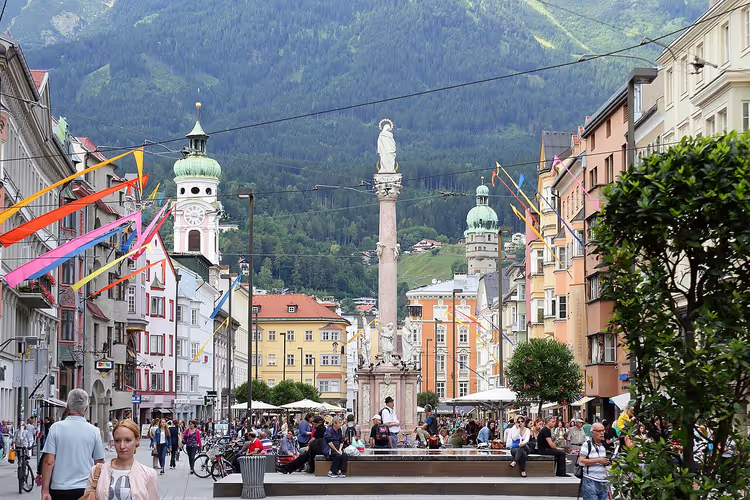 © Michael aus Halle · CC BY-SAPhoto: Michael aus Halle, CC BY-SA (https://creativecommons.org/licenses/by-sa/3.0), Wikimedia Commons
Innsbruck combines the roles of Tyrol's capital and a major ski center. From the city center, a cable car reaches the ski areas in just a few minutes. A single ski pass opens up eight areas with runs of varying difficulty, from green to black.
Historic palaces, cathedrals, and museums fill the center, so skiing here is easy to combine with walks and sightseeing. The airport is just a few kilometers from the city. The resorts also have an Olympic bobsled track and an ice rink.
The city is convenient for those who come for a few days without a car: everything is nearby, and there is plenty to do in the evening.
- Who it's for: those who want to combine city life and skiing.
- Innsbruck hotels: compare Innsbruck hotels.
8. Seefeld
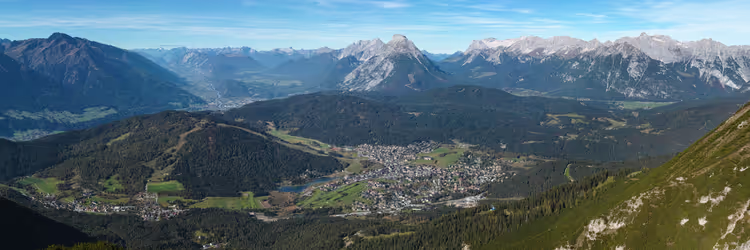 © Robert F. Tobler · CC BY-SAPhoto: Robert F. Tobler, CC BY-SA (https://creativecommons.org/licenses/by-sa/4.0), Wikimedia Commons
Seefeld lies on a wooded plateau at about twelve hundred meters. There is plenty of sun and few steep walls, so the resort is popular with beginners and cross-country skiers. The village is considered expensive: prices for accommodation and dinner in restaurants are above the Tyrol average.
The slopes are mostly easy, wide blue and red runs. The lifts go up to about twenty-one hundred meters, and the most challenging sections stretch for several kilometers with a noticeable vertical drop. Those looking for extremely difficult descents will find it boring here: there are few difficult runs and they are short. On the other hand, there is a toboggan run, a bobsled track, and an ice rink, and flat cross-country ski routes run along the plateau.
From Innsbruck airport, the bus takes about half an hour.
- Who it's for: beginners and cross-country skiers.
- Seefeld hotels: Seefeld hotels on Trip.com.
9. Igls
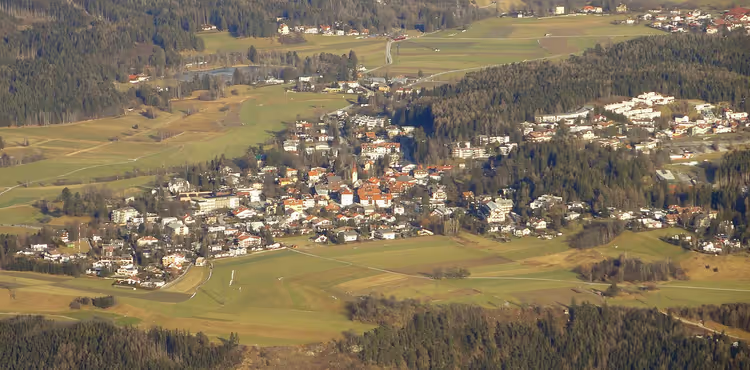 © Svíčková · CC BY-SAPhoto: Svíčková, CC BY-SA (https://creativecommons.org/licenses/by-sa/3.0), Wikimedia Commons
Igls spreads out at the foot of a mountain above Innsbruck. It is a quiet village with two-story Tyrolean-style houses, where it is easy to escape the city bustle. A funicular climbs to about two thousand meters, to well-groomed slopes for beginners and confident skiers.
The total length of the slopes here is small, and most runs are marked blue and green. An experienced skier runs out of terrain here within a couple of days, so many people come for the peace and short sessions. The village has a sports center, pools, and a spa.
From Innsbruck you can get there by car or tram in about fifteen minutes. Such a short approach makes Igls a convenient base: in the morning you ski on the slope, and after lunch you stroll around the Tyrolean capital.
- Who it's for: beginners and those seeking peace away from the crowds.
- Igls hotels: choose a hotel in Igls.
10. St. Anton
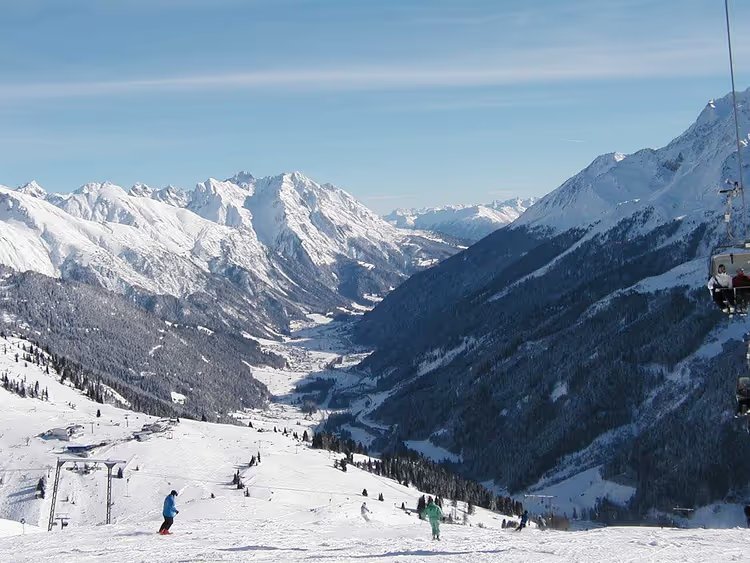
St. Anton is considered the cradle of Austrian alpine skiing. The resort sits in the Arlberg valley and is known for technical runs and a strong skiing level. The Ski Arlberg pass opens up more than 300 km of descents and about 85 lifts (as of 09/2026, Ski Arlberg).
The slopes of the Valluga and Schindler massifs rise above twenty-five hundred meters: gentle blue sections sit alongside steep red ones here. The famous black run Karl Schranz starts from an altitude above two thousand meters. The resort's longest run stretches for several kilometers with a vertical drop of more than a thousand meters, so experienced skiers can ski here all day. On Rendl mountain there is a snow park with jumps, rails, and a half-pipe.
The journey from Innsbruck airport is more convenient by train. Hotels, restaurants, and shops line the main street.
- Who it's for: strong skiers and pros who want long, steep descents.
- Hotels in St. Anton: St. Anton hotel prices.
11. Lech
 © Florian Lindner · CC BYPhoto: Florian Lindner, CC BY (https://creativecommons.org/licenses/by/2.5), Wikimedia Commons
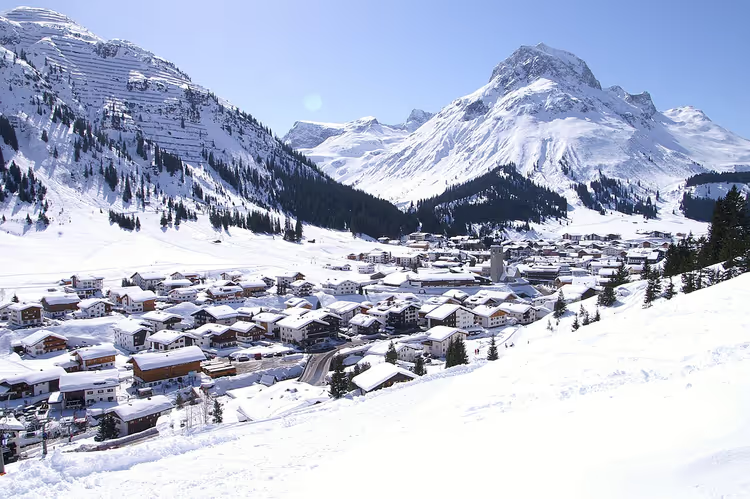
Lech is one of Austria's prestigious resorts. A high level of service, wide-open snowfields, and classic chalets create the feel of a traditional Alpine village. There are plenty of high-end hotels and restaurants here, and the prices match.
The slopes run down the faces of Rufikopf, Zuger Hochlicht, and Saloberkopf: wide blue and red sections alternate with winding turns. Freeride enthusiasts have access to expansive off-piste fields. In the evening, a sports center, cinema, and concert hall are open.
You can get there from Innsbruck by bus or train; the trip takes a little over an hour.
- Who it's for: those who value service, wide slopes, and freeride.
- Hotels in Lech: find a hotel in Lech.
12. Bad Gastein
 © Ștefan Jurcă from Munich, Germany · CC BYPhoto: Ștefan Jurcă from Munich, Germany, CC BY (https://creativecommons.org/licenses/by/2.0), Wikimedia Commons
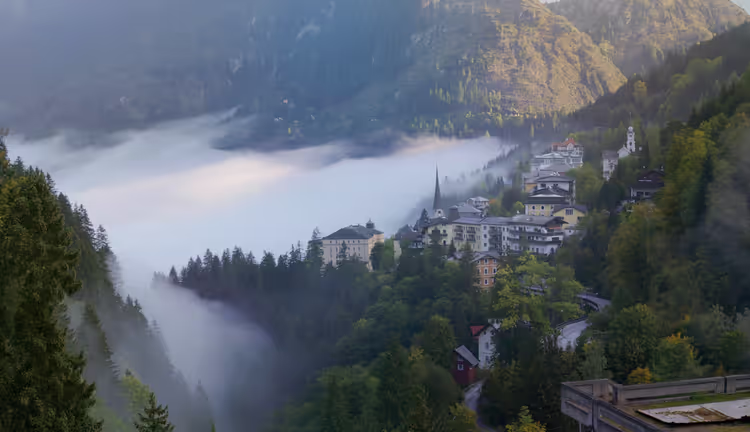
Bad Gastein sits in a horseshoe shape around mountain ranges at an altitude of about one thousand meters. The resort is known for its thermal springs and historic architecture. A railway runs through the valley, so it's easy to arrive by train from any Austrian city.
The ski area is divided into several sectors, from wooded slopes to high ridges. The Stubnerkogel sector rises above 2,200 meters, Schlossalm and Graukogel are slightly lower, and Sportgastein stretches the farthest and stays open longer than the others. This layout lets you choose a relaxed route or a long, fast descent. Easy blue runs give way to long, high-speed red and black sections, which suits experienced skiers and snowboarders. A significant portion of the runs passes through dense forest.
The most convenient route is from Salzburg Airport; the drive takes about an hour and a half. The village has a wellness complex with thermal pools, a fitness center, bars, and restaurants.
- Who it's for: fans of thermal spas and long, fast runs.
- Hotels in Bad Gastein: Bad Gastein hotels on Trip.com.
13. Bad Hofgastein
 © Arne Müseler · CC BY-SAPhoto: Arne Müseler, CC BY-SA (https://creativecommons.org/licenses/by-sa/3.0/de/deed.en), Wikimedia Commons
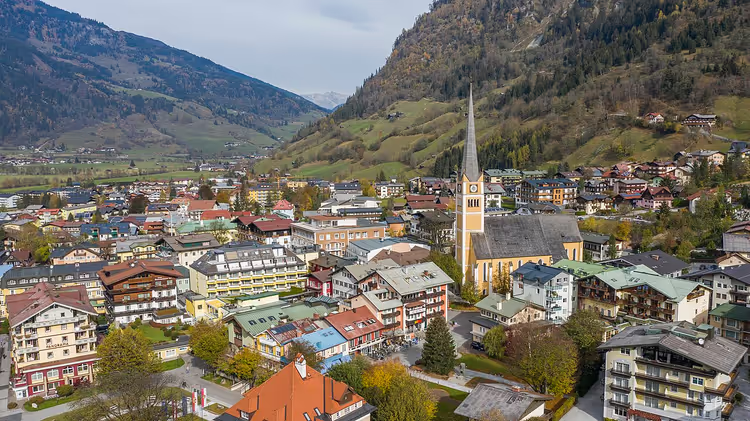
Bad Hofgastein occupies the sunniest spot in the Gastein Valley. Narrow cobblestone streets and old low-rise houses give it the look of a quiet Alpine town. The resort is known for its thermal springs and moderate prices for lodging and dining.
The slopes rise from just over eight hundred meters to nearly 2,500, so the runs suit both beginners and confident skiers. The vertical drop is substantial, so you can start the day on an easy blue run and finish on a steep red descent. The Sportgastein, Graukogel, and Stubnerkogel-Schlossalm ski areas are linked by a network of lifts. The total length of blue and red runs reaches nearly eighty kilometers.
Besides skiing, there are thermal water pools, hiking trails, snowmobile rides, and sledding. Salzburg Airport is about ninety kilometers from the resort, and the drive takes roughly an hour and a half.
- Who it's for: families and fans of thermal pools.
- Hotels in Bad Hofgastein: choose a hotel in Bad Hofgastein.
14. Saalbach
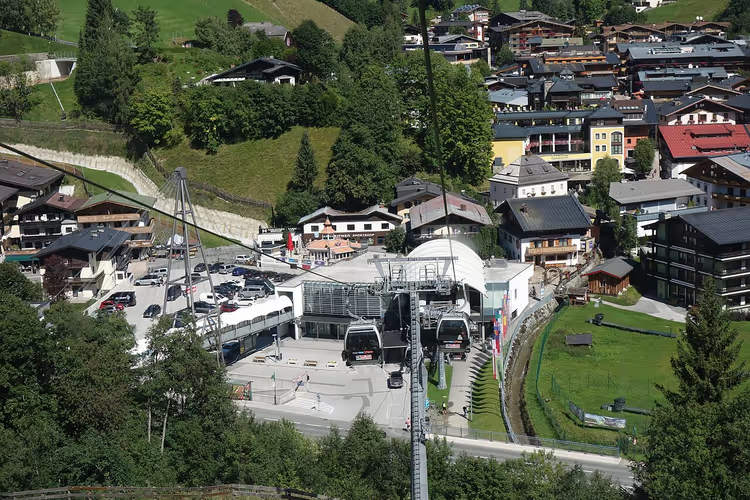 © Bybbisch94, Christian Gebhardt · CC BY-SAPhoto: Bybbisch94, Christian Gebhardt, CC BY-SA (https://creativecommons.org/licenses/by-sa/4.0), Wikimedia Commons
Saalbach stretches for several kilometers through the high-mountain Glemmtal valley. Because of the variety of runs, the village is called Austria's ski circus. Sunny and shaded slopes form a whole amphitheater of routes.
Beginners and experienced skiers alike choose the descents on Spieleckkogel and Schattberg-West. The total length of runs approaches three hundred kilometers, all linked by a modern network of cable cars. There are gentle, wide sections as well as steep, hair-raising descents. The Schattberg sector stands out with its long runs and valley panoramas, and the connection between different zones lets you ski new slopes every day.
Salzburg Airport is about ninety kilometers from Saalbach, with regular bus service. The village has hotels, sports complexes with pools and saunas, restaurants, and taverns.
- Who it's for: those who want to ski many different runs in a single trip.
- Hotels in Saalbach: Saalbach hotel prices.
15. Zell am See
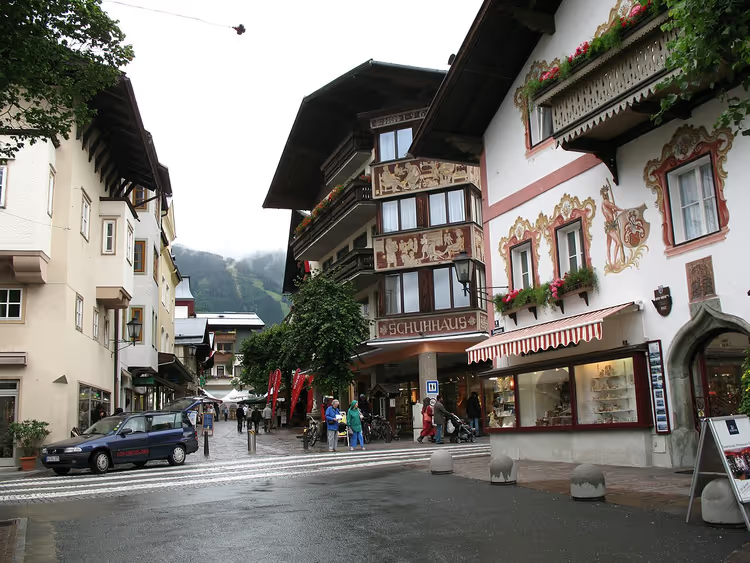 © Andrew Bossi · CC BY-SAPhoto: Andrew Bossi, CC BY-SA (https://creativecommons.org/licenses/by-sa/2.5), Wikimedia Commons
Zell am See sits on the shore of Lake Zell at the foot of the mountains. The resort offers a wide choice of hotels, from budget guesthouses to five-star complexes. Historic buildings and pedestrian alleys give the town a special character.
From the top of Schmittenhöhe, easy blue and challenging red and black runs fan out in all directions. Many routes follow terrain with sharp drops and gentle run-outs into the valley. Skiers should also head up to the Kitzsteinhorn glacier, where there are plenty of gentle, wide sections.
The combined Ski ALPIN CARD covers 408 km of runs and more than a hundred lifts (as of 09/2026, Zell am See-Kaprun). Zell am See has its own train station, with direct trains from Salzburg taking about an hour and a half. Schmittenhöhe rises to roughly two thousand meters, and the Kitzsteinhorn glacier operates almost year-round, so the season here is long.
- Who it's for: those who want to combine skiing with a relaxed lakeside stay.
- Zell am See hotels: Zell am See hotels on Trip.com.
16. Kaprun
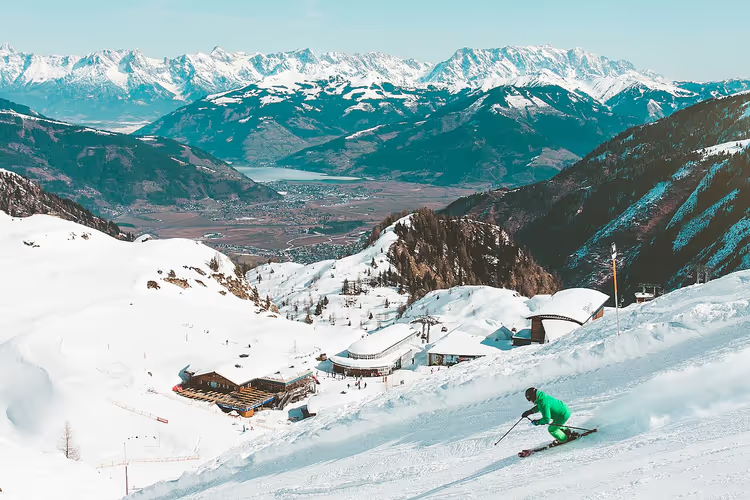
Kaprun lies about ten kilometers from Zell am See, at the foot of the Kitzsteinhorn glacier and the Maiskogel massif. It is a quiet village in the state of Salzburg with a rustic feel. The compact ski area consists of well-groomed runs of varying difficulty.
Beginners will enjoy the wide blue and green sections with gentle, safe terrain. More advanced skiers can take on bumpy, fast descents. Snowboarders have a dedicated area with jumps and a natural halfpipe.
Toboggan runs, mountain hikes, rock climbing, and snow rafting add variety to your time off the slopes. The village has an indoor pool, a ski school, and a sports center with tennis and squash courts. The bus from Zell am See takes about half an hour.
- Who it's for: beginners and fans of glacier skiing.
- Kaprun hotels: find a hotel in Kaprun.
17. Obertauern
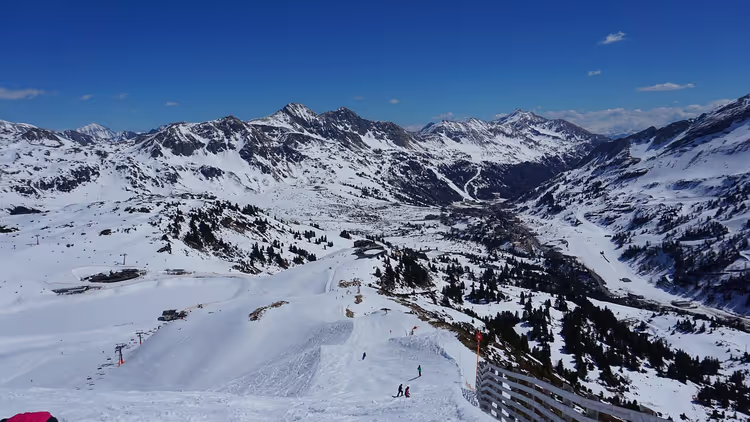
Obertauern sits high in the mountains among forests and open slopes. It gets plenty of sun and snow, so the season usually starts earlier than in the valleys. The ski area lies at altitudes from roughly sixteen hundred to twenty-three hundred meters.
Guests stay in modern chalets and hotels, with restaurants, bars, and nightclubs, plus a sports complex. The runs are geared toward intermediate skiers and snowboarders. Long, gentle blue sections through the trees sit alongside red runs with turns and a noticeable pitch.
Fast, bumpy black descents drop from Gamsleiten hill and appeal to experienced thrill-seekers. For children, there are parks with slides and play areas. Salzburg is about ninety kilometers from the resort, with shuttle buses running there.
- Who it's for: those looking for snow from autumn onward and an intermediate level of skiing.
- Obertauern hotels: compare Obertauern hotels.
18. Bad Kleinkirchheim
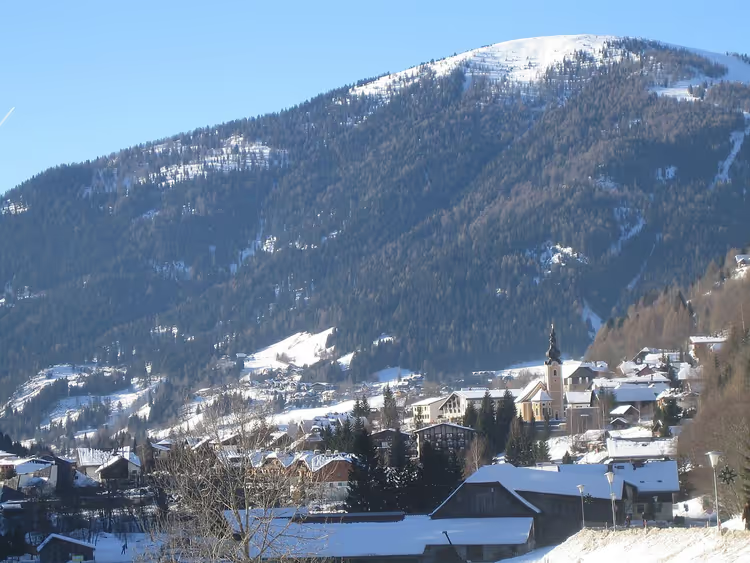
Bad Kleinkirchheim is one of Carinthia's small mountain spa resorts, sitting at an altitude of over a thousand meters. It successfully combines slope skiing with soaking in thermal springs. Cozy wooden chalets and cottages with pools create comfortable conditions for a holiday.
 © User:Popie · CC BY-SAPhoto: User:Popie, CC BY-SA (http://creativecommons.org/licenses/by-sa/3.0/), Wikimedia Commons
The resort is known for runs of varying difficulty. Winding and gentle sections suit both beginners and experienced skiers. The FIS K 70 Franz Klammer speed course, about four kilometers long, draws particular interest.
Snowboarders and freestylers have a separate area with jumps and obstacles. Visitors can enjoy thermal centers, ski schools, restaurants, spas, and a children's park. A direct bus runs from Salzburg, with the journey taking about four hours.
- Who it's for: fans of thermal spas and easy runs.
- Bad Kleinkirchheim hotels: Bad Kleinkirchheim hotels on Trip.com.
19. Schladming
 © C.Stadler/Bwag · CC BY-SAPhoto: C.Stadler/Bwag, CC BY-SA (https://creativecommons.org/licenses/by-sa/4.0), Wikimedia Commons
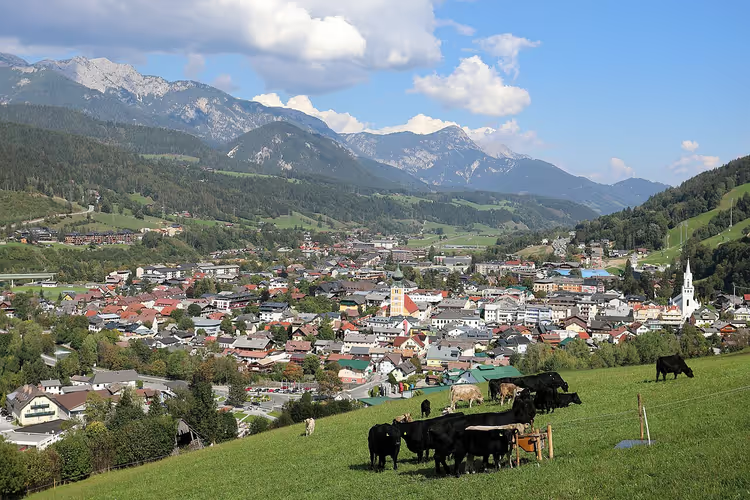
Schladming is one of the world's well-known ski centers. The resort offers wide, forested slopes on four mountains linked by a shared lift network. The main ski area stretches from just over seven hundred meters to almost two thousand seven hundred.
The variety of runs is impressive: from blue-green to red-black. Long, wide, scenic routes are well suited for improving your technique. The most popular slopes are on Planai and Hochwurzen.
After skiing, guests head to the ice rink, pool, and fitness center, play tennis, or relax in the spa. In the evening, restaurants, taverns, and bars are open. Visitors stay in guesthouses and pensions. The easiest way to get there from Salzburg is by train; the journey takes about two hours.
- Who it's for: all-rounders and families who want to ski all day.
- Schladming hotels: Schladming hotel prices.
20. Hippach
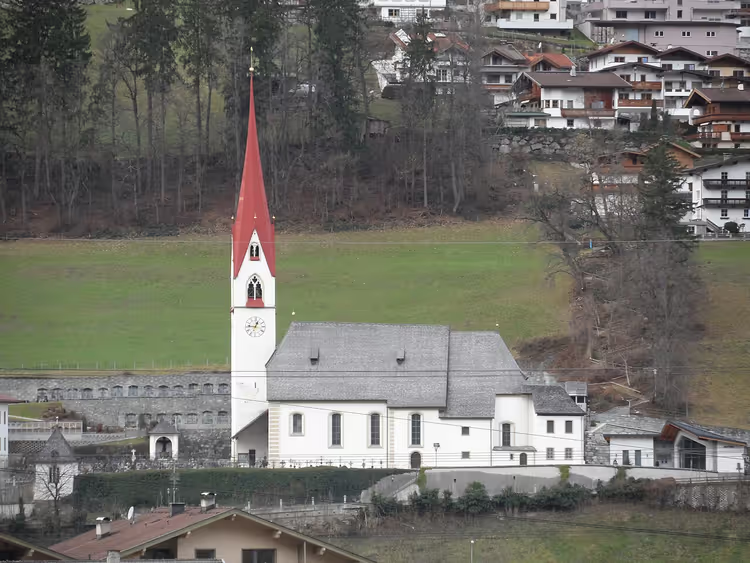
Hippach is one of Tyrol's distinctive villages. People come here for the unhurried atmosphere of rural life. The village shares a single ski area with Mayrhofen, so it has just as many slopes as its larger neighbor.
The valley has around one hundred forty kilometers of first-class runs, suitable for both beginners and experts. Gentle green and fast red-black routes are served by an extensive network of cable cars.
In Hippach you can go climbing, take a hot-air balloon ride, go sledding, or swim in the pool. Views of snow-covered peaks open up on a walk through untouched snow. Guests stay in small mini-hotels.
- Who it's for: those who want quiet, views, and a shared slope with Mayrhofen.
- Hippach hotels: choose a hotel in Hippach.
⁉️🤔 Frequently asked questions
When is the best time to go skiing in Austria?
The most reliable snow lasts from January to March, and high-altitude glaciers are already open in autumn. In December there is often little snow in the valleys, but accommodation is cheaper. In April, skiing is mostly on glaciers, and some runs are already closed. Before your trip, check the opening dates for your specific resort.
How much does a ski pass cost in Austria?
The price depends on the resort and season. The combined SuperSkiCard is valid at 88 resorts in Austria and Bavaria and covers 2,840 km of runs (as of 09/2026, official Kitzbüheler Alpen website). Buy a day ticket online: it costs more at the ticket office and there is a queue. For a single resort, a local multi-day pass is a better deal.
How do you get to the resorts without a car?
The main gateway for Tyrol is Innsbruck Airport. For Salzburg and Styria, Salzburg Airport is closer. From there, trains and buses run to the valleys, and then local shuttles and lifts take over. Buy train tickets in advance: on winter weekends the carriages are full. Airport transfers are best booked to meet your arrival.
Is Austria suitable for beginner skiers?
Yes, there are plenty of easy resorts for beginners here. Saalbach, Seefeld, Serfaus, and Bad Hofgastein offer wide blue runs, children's parks, and ski schools. At large resorts like St. Anton, a beginner will find it harder: red and black descents dominate there. Take a lesson with an instructor on your first day.
What can you do at a resort if you don't ski?
You won't be bored. Bad Gastein and Bad Hofgastein have thermal pools, and Innsbruck has an old town with museums nearby. Many resorts have toboggan runs, ice rinks, snowmobile tours, and walking trails through untouched snow. That way you can spend the day at your own pace while your companions ski.
Austrian ski resorts on the map
To plan a route across several resorts, look at their locations on the map. You'll immediately see which valleys are close to each other and which transfers are realistic for a single trip.
Ski resorts of Austria
Places on the map
- 1Sölden Ötztal valley with three glaciers and reliable snow from autumn
- 2Obergurgl Almost two thousand metres up, above the tree line
- 3Ischgl Paznaun valley, Silvretta Arena network, loud nightlife
- 4Kitzbühel Medieval centre and the Streif downhill run
- 5Mayrhofen Zillertal valley, the Harakiri run and the Hintertux glacier
- 6Serfaus Plateau at 1,400 m, linked with Fiss and Ladis, great for kids
- 7Innsbruck Capital of Tyrol, cable car from downtown to the slopes
- 8Seefeld Wooded plateau, easy runs and cross-country skiing
- 9Igls Quiet village near Innsbruck, short runs for beginners
- 10St. Anton am Arlberg Cradle of Austrian skiing, the Arlberg valley
- 11Lech Prestigious resort with wide slopes and freeride terrain
- 12Bad Gastein Thermal springs and the Sportgastein sector
- 13Bad Hofgastein Sunniest spot in the Gasteinertal valley, thermal baths
- 14Saalbach Austria's ski circus, about 300 km of runs
- 15Zell am See Lake at the foot of the mountains and the Kitzsteinhorn glacier
- 16Kaprun Quiet village by the Kitzsteinhorn glacier and Maiskogel massif
- 17Obertauern High-altitude resort, season starts earlier than others
- 18Bad Kleinkirchheim Mountain thermal resort in Carinthia, the FIS K 70 run
- 19Schladming Four mountain slopes, popular Planai and Hochwurzen
- 20Hippach Tyrolean village, shared ski area with Mayrhofen
In short: what to book
If you are going for the first time and want relaxed skiing, choose Seefeld or Serfaus. For strong skiing and long descents, St. Anton, Lech, and Ischgl are good options. Families with children will find Serfaus and Bad Hofgastein more convenient, while those who want to combine skiing with a city should look at Innsbruck and Kitzbühel.
Selection matrix:
- Learning to ski: Saalbach, Seefeld, Kaprun.
- Looking for challenging descents: St. Anton, Ischgl, Mayrhofen.
- Want thermal spas and long runs: Bad Gastein, Bad Hofgastein, Bad Kleinkirchheim.
- Combining skiing and a lake: Zell am See, Kaprun.
You can compare accommodation across all resorts on Trip.com: hotels in Austria and tours near the resorts help you plan your trip in advance.

A small editorial team writing guides for independent travel. We travel ourselves, but we haven’t been everywhere, so we check prices, opening hours and how to get there against official sources.