
















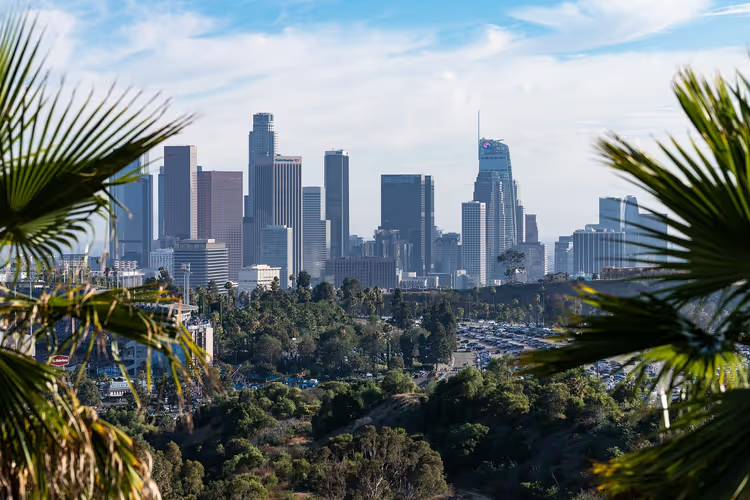
What to see in Los Angeles in 1 day: 20 places, tickets and opening hours
Los Angeles stretches for dozens of miles, and you can’t cover it on foot. Cars sit in traffic here, and parking near Hollywood Boulevard eats up time and nerves.
In one day you can hit the highlights if you pick two areas and don’t bounce around the city. Spend the morning in Hollywood, then head down to the ocean or downtown after lunch. Griffith Observatory is free and stays open late into the evening (as of 09/2026, official site).
Below are 20 places with photos, tickets, and hours. Some cost money, some are free, and that matters when planning your day.
Ad: this article contains affiliate links, we earn a commission if you book through them, at no extra cost to you.
One-day Los Angeles itinerary
💡 In short:
- Morning: Hollywood Boulevard, the Egyptian Theatre, TCL Chinese Theatre, and the Walk of Fame are all within a five-minute walk of each other (per the map).
- Afternoon: Griffith Observatory with free admission and a panoramic view of the city.
- Evening: Wilshire Boulevard, Miracle Mile, or head down to the ocean at Venice Beach.
- Budget half a day for a studio tour: Warner Bros. and Universal Studios run on timed sessions and close in the afternoon.
- Prices and hours: 09/2026, verified on the official Griffith Observatory site.
The day’s logic is simple: in the morning you walk the pedestrian part of Hollywood, in the afternoon you see the city from above or go to a studio, and in the evening you give the ocean or downtown your time. That way you don’t burn two hours on transfers. It’s better to skip the car for this day and get around by metro, DASH buses, and short taxi rides.
Time | Area | Main thing | On foot |
|---|---|---|---|
9:00-12:00 | Hollywood | Walk of Fame, both theaters, museum | 2-3 km (per the map) |
12:00-15:00 | Hollywood or Burbank | observatory or studio tour | drive |
15:00-18:00 | Miracle Mile | museums and Wilshire Boulevard | 3-4 km (per the map) |
18:00-21:00 | Venice Beach or downtown | ocean, sunset, Downtown | drive |
1. Grauman’s Egyptian Theatre
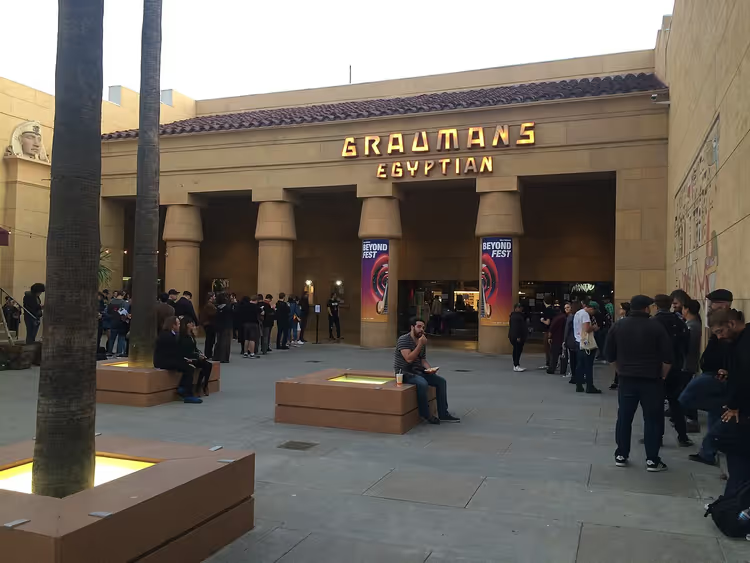
The Egyptian Theatre opened on Hollywood Boulevard in 1922. The idea came from entrepreneur Sid Grauman, who built movie theaters across the country and wanted this one to outshine his previous work. The facade and auditorium echo motifs of ancient Egypt: columns, hieroglyphs, murals with pyramids and Theban scenes.
The first film shown was the premiere of Robin Hood starring Douglas Fairbanks. The building fell into disrepair over time, but after restoration it once again hosts screenings and premieres. In summer, the line for an evening show lasts longer than the movie itself.
Check the schedule: tickets for retrospectives are cheaper than for premieres, and you’ll see the same interiors. Palm trees grow out front, and it’s a convenient place to start your walk along the boulevard.
2. TCL Chinese Theatre
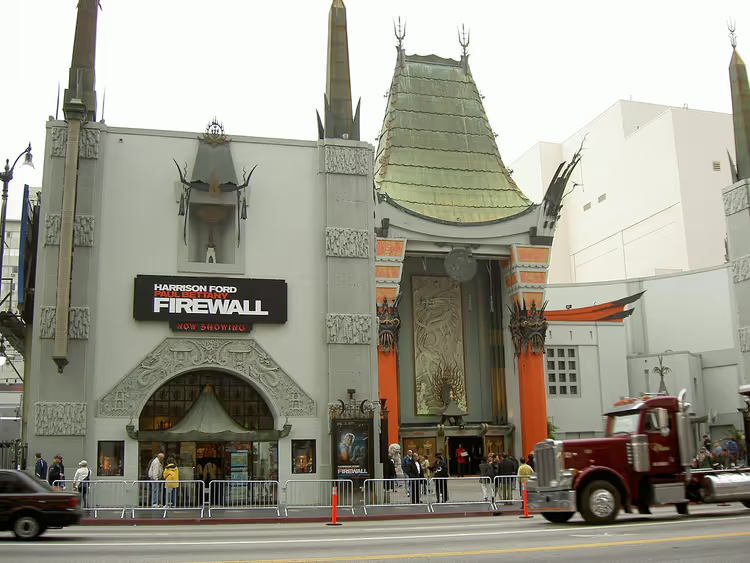 © Mr Bullitt · CC BYPhoto: Mr Bullitt, CC BY (https://creativecommons.org/licenses/by/2.5), Wikimedia Commons
Grauman’s second theater on the same boulevard is known as the Chinese Theatre, and it carries the TCL name from its sponsor. The building opened in 1927 and seats more than a thousand people. Hollywood premieres are held here, and the street gets shut down for the red carpet.
The theater is easy to recognize by its pagoda and stone lions at the entrance. It has appeared on screen more than once: it was filmed in Rush Hour and Iron Man 3. A new owner bought the building in 2007 and preserved its historic look.
If you want to get inside, buy a tour ticket. On premiere days the auditoriums are closed, but the lobby is open to the public.
3. Dolby Theatre
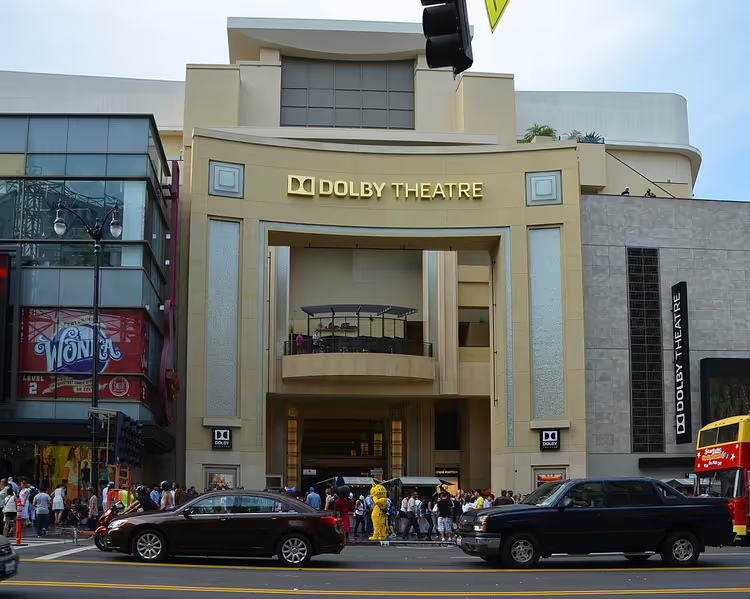 © File:Dolby_Theatre.jpg : Adam Fagen from Washington, DC, USA derivative work: Jullit31 · CC BY-SAPhoto: File:Dolby_Theatre.jpg : Adam Fagen from Washington, DC, USA derivative work: Jullit31, CC BY-SA (https://creativecommons.org/licenses/by-sa/2.0), Wikimedia Commons
This is where the Oscars are handed out. The theater’s former name, "Kodak," is remembered by longtime locals: Kodak poured tens of millions of dollars into the construction. It opened in 2001, and the auditorium seats more than three thousand people.
On other days the stage hosts concerts, shows, and festivals, and the space is rented out for weddings. On the tour you’ll walk the red carpet and climb the spiral staircase connecting five lobby levels.
Tours run on a schedule, and on ceremony day there are no tickets. If you plan to go inside, book a slot in advance: walk-up availability at the ticket office is rare.
4. Hollywood Museum
 © Jllm06 · CC BY-SAPhoto: Jllm06, CC BY-SA (https://creativecommons.org/licenses/by-sa/4.0), Wikimedia Commons
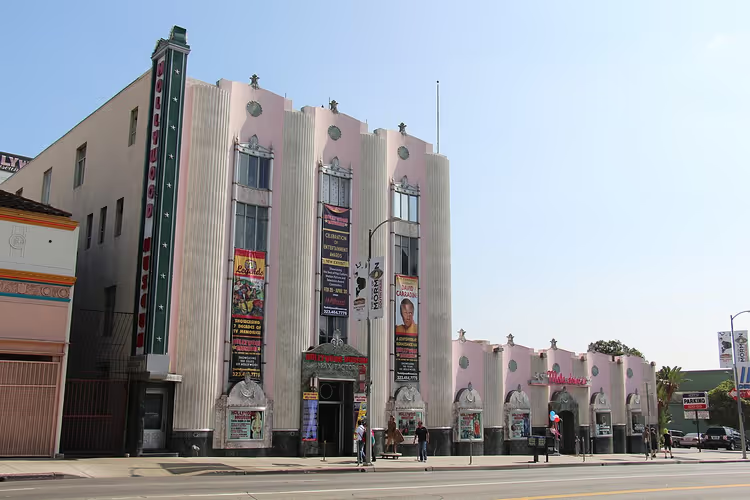
On Highland Avenue, across the street from the Chinese Theatre, there’s a museum of film history. The collection includes more than ten thousand items: props, costumes, posters, and awards. A separate room is dedicated to the work of makeup artist Max Factor.
Marilyn Monroe’s costumes and old posters look better in person than in photos. The fourth floor is given over to horror films: there’s a prison corridor, masks, and mummies, and this section makes a strong impression on kids.
The museum’s schedule has changed over time, so check the hours before your trip. You can grab a bite at the restaurant next door, which is convenient after two hours in the galleries.
5. Walk of Fame
 © Another Believer · CC BY-SAPhoto: Another Believer, CC BY-SA (https://creativecommons.org/licenses/by-sa/4.0), Wikimedia Commons
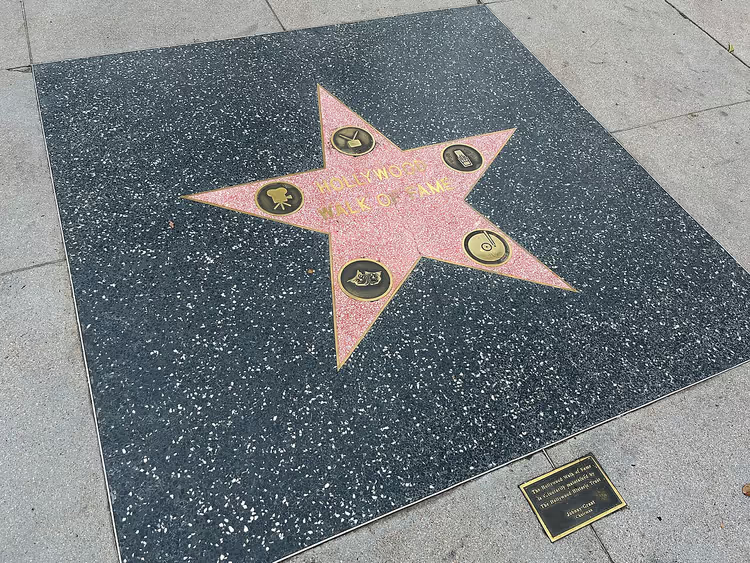
The Walk of Fame runs along Hollywood Boulevard and starts near the Chinese Theatre. Thousands of stars are set into the sidewalk: names, emblems, and dates marking contributions to film, music, or theater.
A special part of the walk is the courtyard with handprints and footprints. Legend has it that it all started by accident: actress Norma Talmadge stepped on fresh cement outside Grauman’s theater. Now the area holds prints from Charlie Chaplin, Marilyn Monroe, Arnold Schwarzenegger, and many others, including the dog Rin Tin Tin.
Look for plaques on the side streets too: some stars are set away from the main path, and there are almost no tourists there. Walk a couple of blocks over and you’ll find names without a line for photos.
6. Griffith Observatory

Griffith Observatory is free to visit and sits in a park on the southern slope of Mount Hollywood (as of 09/2026, observatory visit page). The grounds and roads are open daily from 5:00 AM to 10:30 PM, while the building itself is closed on Mondays.
Inside you will find a planetarium, a telescope, and a hall on the history of the universe. There is always a line to take a photo with the Einstein statue, and the observation deck offers views of both the city and the Hollywood sign on the hillside. It gets hot here during the day, but in the evening the panorama of lights opens up.
Free admission does not mean free parking at the observatory. Arrive at opening time or after sunset: on weekends and in summer the lot gets crowded.
7. Warner Bros. Studios
 © Alek Leckszas · CC BY-SAPhoto: Alek Leckszas, CC BY-SA (https://creativecommons.org/licenses/by-sa/4.0), Wikimedia Commons
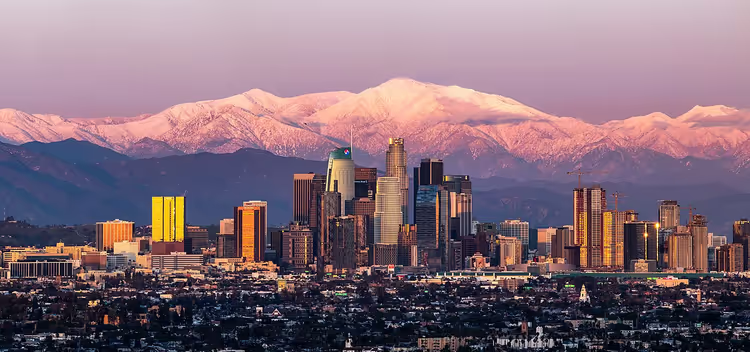
The Warner Bros. Studio Tour takes place in Burbank and lasts several hours. The site operates from morning until midday (as of 09/2026, studio website), and tickets are best purchased in advance.
The property is huge, so groups are driven around in a minibus with stops. First you watch a short film about the studio's history, then the actual tour of soundstages and outdoor sets begins. Photography is allowed, video and flash are prohibited, and this rule is strictly enforced here.
You will see costumes and props from Harry Potter, cars from movies, and a mountain of submitted scripts. Weekend slots sell out first, so book Warner Bros. Studio tours in Burbank in advance.
8. Universal Studios
 © © Pierre André · CC BY-SAPhoto: © Pierre André, CC BY-SA (https://creativecommons.org/licenses/by-sa/4.0), Wikimedia Commons
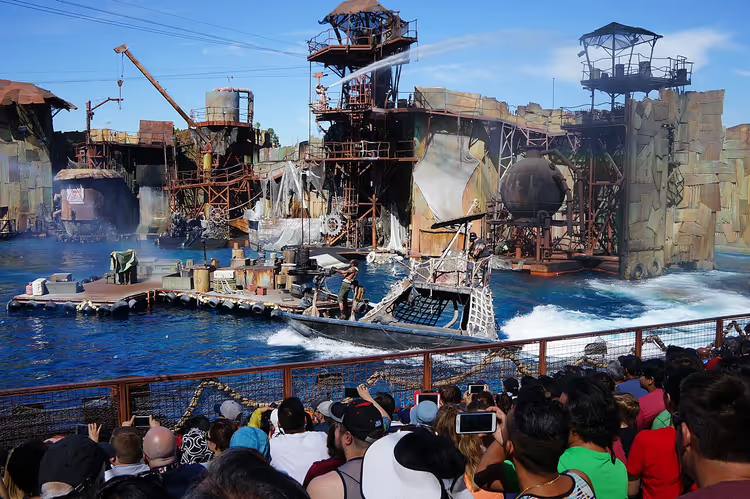
Universal Studios Hollywood combines a theme park and a working film studio, so it is easy to spend an entire day here. A one-day ticket starts in the triple digits when purchased online (as of 09/2026, park website), and the price depends on the date.
The studio tour lasts about an hour: the tram passes through backlot sets and soundstages while the guide explains what was filmed where. After that come the rides: the Waterworld show, The Walking Dead, and the river raft ride in Jurassic Park. The board at the entrance shows wait times, and in the morning the lines for popular attractions are shorter.
Universal Studios Hollywood tickets are easier to buy with a fixed date. If the park is the main goal of your trip, give it the whole day.
9. Rodeo Drive
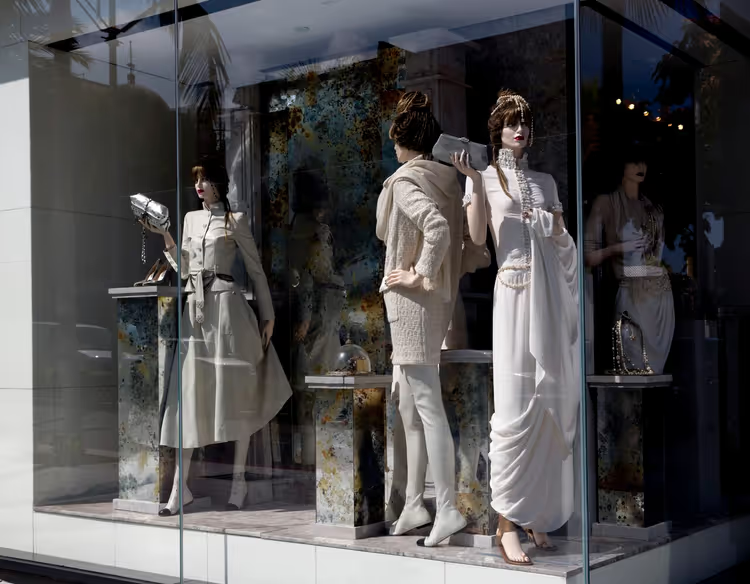
Rodeo Drive is a street of boutiques in Beverly Hills, where shop windows and cars look at each other. Prices here are such that a T-shirt costs as much as a good dinner for the whole family, but window shopping is free.
Retro cars and models cruise along the sidewalks, and their owners are happy to show them off. Taking photos of them is not prohibited. You'll spot celebrities here more often than on the boulevard: they hide their faces behind sunglasses and try not to linger near shop windows.
If you want a peek behind the gates, take an open-top car tour, and the route will pass by actors' homes. On foot, the neighborhood takes half an hour, and that's enough for a first look.
10. Venice Beach
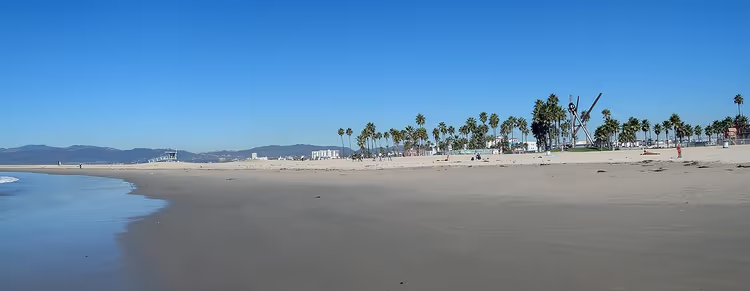
Venice Beach is a beach and boardwalk in the western part of the city, where people go for the ocean after the city's museums. Along the Ocean Front Walk promenade, people stroll, listen to street musicians, and commission a portrait from an artist. There are plenty of salons, boutiques, and eateries here.
The sand is fine and soft, and there are sports courts, but the Pacific Ocean water is often murky and the waves are strong. It's better to swim near lifeguard stations. According to legend, Charlie Chaplin once stayed at a nearby hotel, and the building's rooftop offered a view of the coastline.
Come at sunset: the light falls on the water at its best, and the wind picks up after midday. The drive from Hollywood takes about an hour (according to the map).
11. Wilshire Boulevard
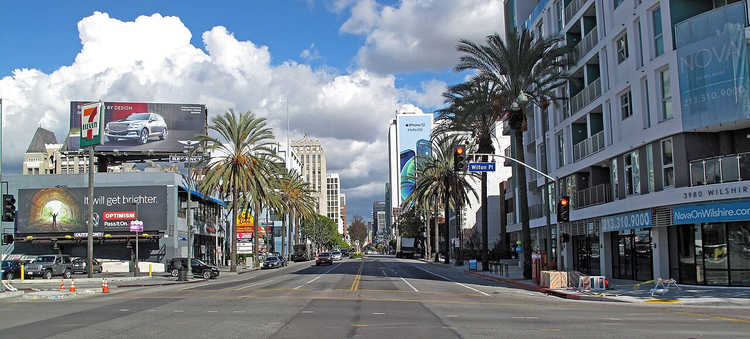
Wilshire Boulevard starts at Grand Avenue and stretches west through downtown. Taking a taxi here is a bad idea: this is exactly the stretch where the longest traffic jams build up, and you can sit in them longer than it would take to walk.
 © Downtowngal · CC BY-SAPhoto: Downtowngal, CC BY-SA (https://creativecommons.org/licenses/by-sa/4.0), Wikimedia Commons
The skyscrapers along the boulevard began to be built in the middle of the last century, and today they alternate with shops, restaurants, and museums. Stop by the Art Museum and the paleontology museum on Miracle Mile: they're located in the western part of the street.
Walk and count the blocks: in an hour and a half you'll cover downtown, see the storefronts, and won't spend the whole day on getting around.
12. Miracle Mile
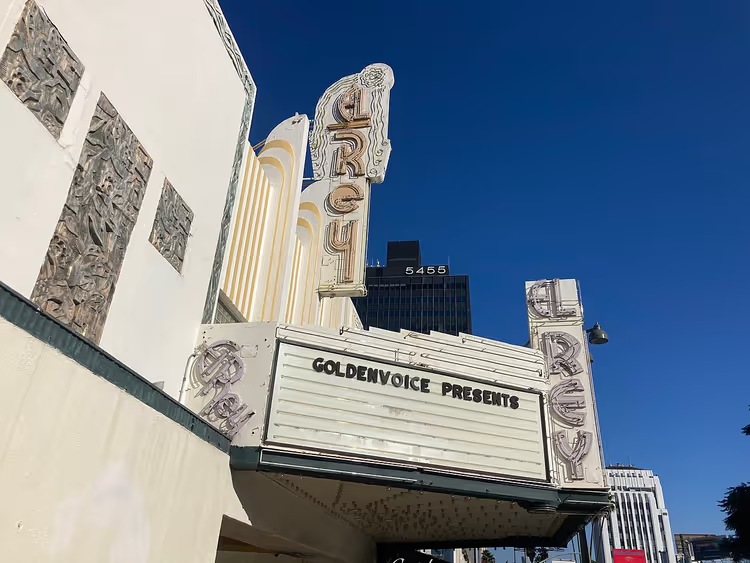
Miracle Mile is a stretch of Wilshire Boulevard that was once a dirt road leading to farms. Later, streetcar tracks were laid here, and in the 1920s a shopping district grew up. Developers were given conditions: keep buildings on a single line, build parking lots, and make signs readable from a car window.
The length of the shopping section is just over two kilometers (according to the map). Today, shops are concentrated here, and museums stand in the western part. The County Art Museum shows a collection spanning from old masters to contemporary art, and it deserves a separate visit.
Nearby are the George C. Page Museum with remains of ancient animals and the Automotive Museum with vintage cars of movie stars. Allow at least two hours for each museum: in one hour you'll only have time for the coat check.
13. Los Angeles Memorial Coliseum
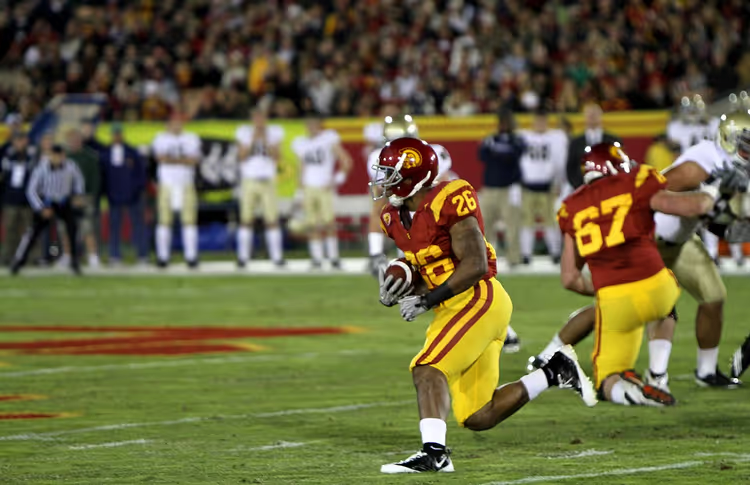 © Neon Tommy · CC BY-SAPhoto: Neon Tommy, CC BY-SA (https://creativecommons.org/licenses/by-sa/2.0), Wikimedia Commons
The Memorial Coliseum is tied to the city's Olympic history. The Games were held here twice, and a third is scheduled for 2028. The project by father and son Parkinsons was conceived as a memorial to World War I veterans, and the stadium opened in 1923.
Over time, the stands were expanded, and today the arena ranks among the country's largest sports venues. US presidents have spoken here, including Kennedy, Nixon, and Reagan, and summer sports have hosted several Olympics.
Tickets are required for games and tours, and the area is closed off on competition days. Sports fans should arrive early: parking fills up fast, and you risk being late for the start.
14. Madame Tussauds Museum
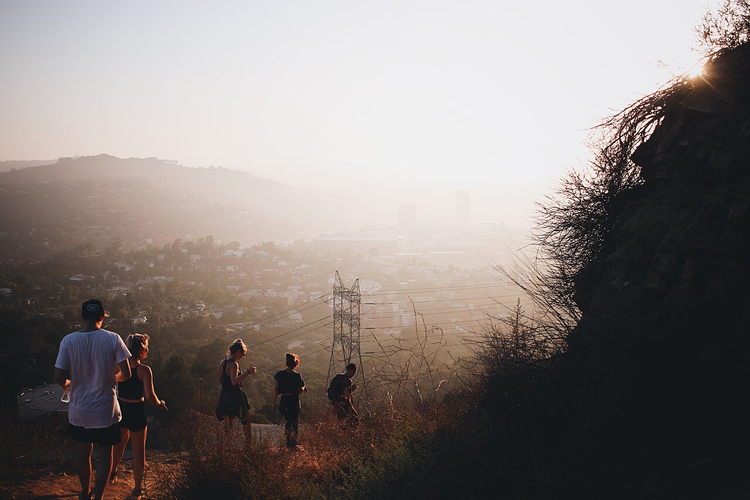
Madame Tussauds on Hollywood Boulevard is a branch of the London wax museum. Next door is the Hollywood Wax Museum, created by Spoony Singh, and both have plenty of visitors.
The figures are made life-size, so familiar faces often surprise you: on-screen idols seem taller. You can take a photo next to a replica of Marilyn Monroe or Charlie Chaplin, and kids usually look for modern actors. From the windows of the upper halls, you can see the "Hollywood" sign on the mountainside.
Tickets from $32 when purchased online (as of 09/2026, museum website). The price depends on the date and time, so compare weekday slots.
15. Downtown
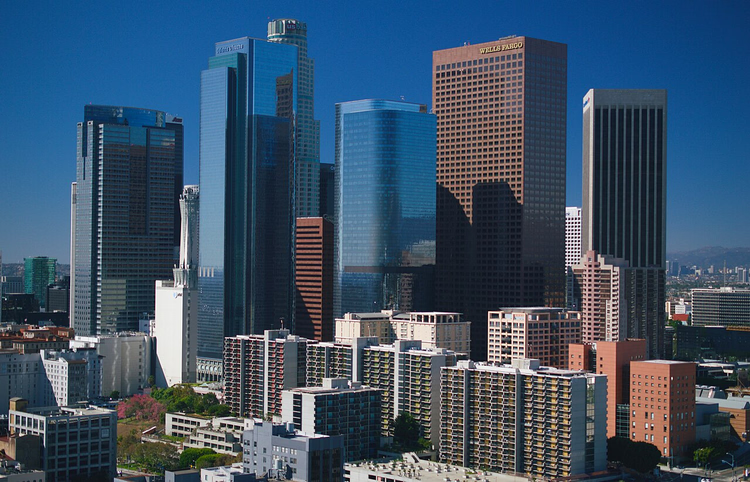 © Levi Clancy · CC BY-SAPhoto: Levi Clancy, CC BY-SA (https://creativecommons.org/licenses/by-sa/4.0), Wikimedia Commons
Downtown begins with Pershing Square, laid out at the beginning of the last century. The design has changed several times, and now the square symbolizes the new city. Homeless people also gather here, so in the evening stick to well-lit streets.
A lot of skyscrapers fit into a small area: the towers stand like a wall, with offices, hotels, and entertainment centers operating between them. Stop by the L.A. Live complex and look at the Metropolis towers, where four high-rises form their own block.
The area is easy to take in from a cafe on the upper floors. You'll spend an hour here if you skip the museums and don't wait for the elevator to the observation deck.
16. Walt Disney Concert Hall
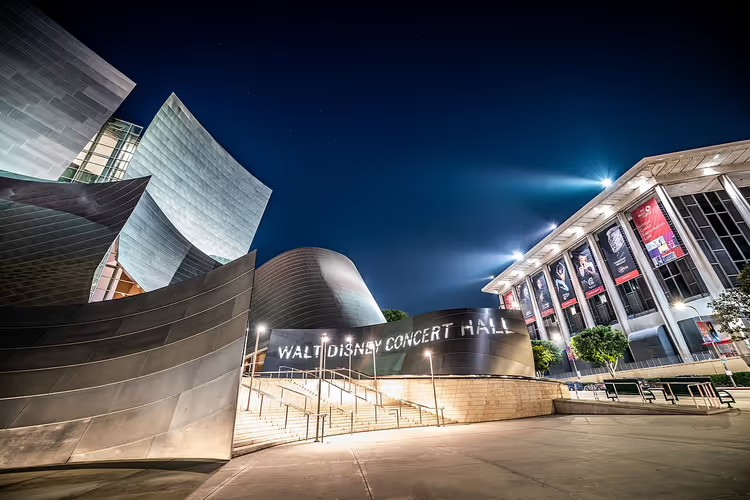 © morrisonbrett · CC BYPhoto: morrisonbrett, CC BY (https://creativecommons.org/licenses/by/2.0), Wikimedia Commons
Walt Disney Concert Hall came to be thanks to his widow: in the late 1980s she proposed the project to the city and donated a large sum toward it. The costs ended up several times higher than planned, and construction dragged on for years. The architect was Frank Gehry, and the hall opened in the early 2000s.
The Los Angeles Philharmonic performs on stage, and the facade is clad in steel panels that reflected sunlight.
The reflections heated the asphalt, and the heat reached neighboring buildings, so the problem had to be fixed after the opening.
The hall seats several thousand people, and tickets for symphony evenings are cheaper than for premieres. Check the schedule in advance: popular programs sell out months ahead.
17. Angels Flight funicular
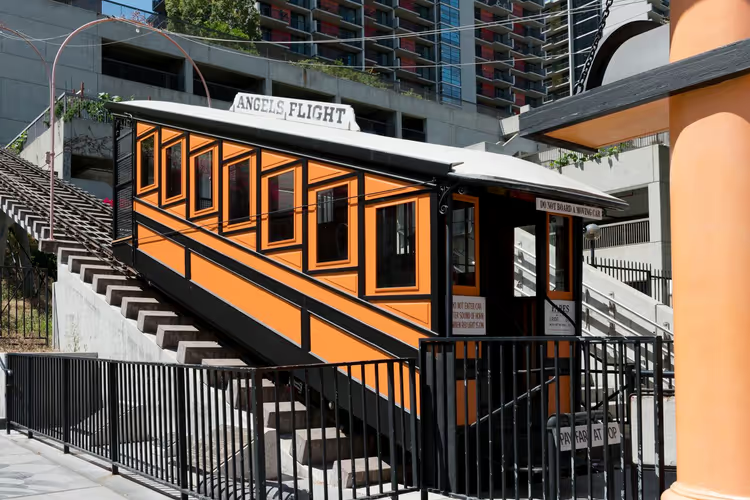
Angels Flight funicular is a short cable railway between Hill Street and California Plaza downtown. The cars remain wooden and are painted orange-red, and the track itself is shorter than a hundred meters. The railway opened in 1901 and has survived demolition, reassembly along a different route, and a long closure after an accident.
The funicular now runs daily from 6:45 AM to 10:00 PM, a one-way ride costs $1.50 and a round trip costs $3.00 (as of 09/2026, funicular website). The ride takes about a minute.
If you don't want to wait in line, climb the steps next to it: the view of downtown is the same. In its first half-century of operation, the railway carried more than a hundred million passengers and became a city landmark.
18. U.S. Bank Tower
 © Selvingarcia · CC BY-SAPhoto: Selvingarcia, CC BY-SA (https://creativecommons.org/licenses/by-sa/3.0), Wikimedia Commons
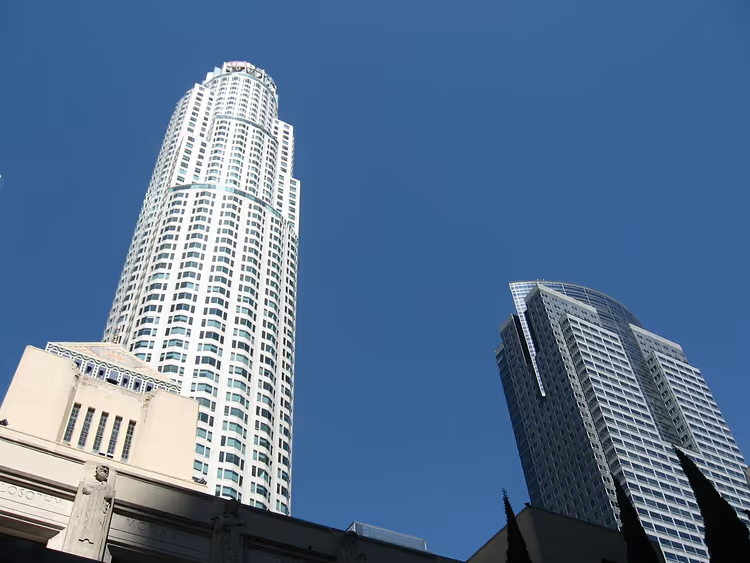
U.S. Bank Tower stands out even among the neighboring high-rises. Construction was completed in 1989, and a helipad was installed on the roof. Architect Henry Cobb designed the building to withstand the strong earthquakes that are not uncommon in California.
The facade turned out light-colored and stepped, so the tower is visible from several parts of the city. Inside there is a business center with marble floors and huge windows, but tourists are not allowed in: entry is by badge only.
You'll have to view the building from the street or from nearby cafes. For photos, it's better to come in the evening, when the lighting is turned on.
19. Zoo
 © The original uploader was Geographer at English Wikipedia . · CC BYPhoto: The original uploader was Geographer at English Wikipedia ., CC BY (https://creativecommons.org/licenses/by/1.0), Wikimedia Commons
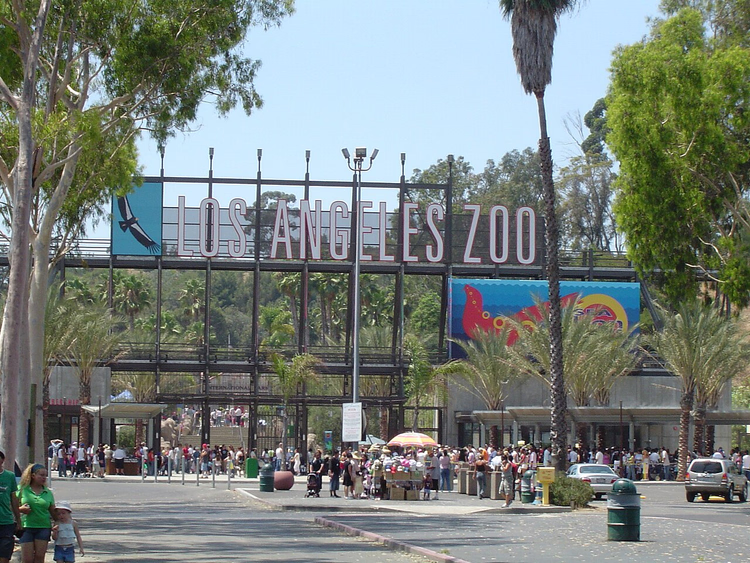
The Los Angeles Zoo occupies a large area in Griffith Park, and seeing it all takes half a day. The enclosures replicate natural habitats, so the animals and birds feel at ease. Part of the collection consists of rare species threatened with extinction: California condors are bred here.
The plants are chosen to recreate landscapes from different countries, and some look unusual even to botanists. The animals are well cared for and readily interact with visitors.
Kids enjoy it here the most, and you should bring water and arrive at opening time: by midday it gets hot, and there is little shade on the paths.
20. Hollywood Forever Cemetery
 © MikeJiroch · CC BY-SAPhoto: MikeJiroch, CC BY-SA (https://creativecommons.org/licenses/by-sa/3.0), Wikimedia Commons
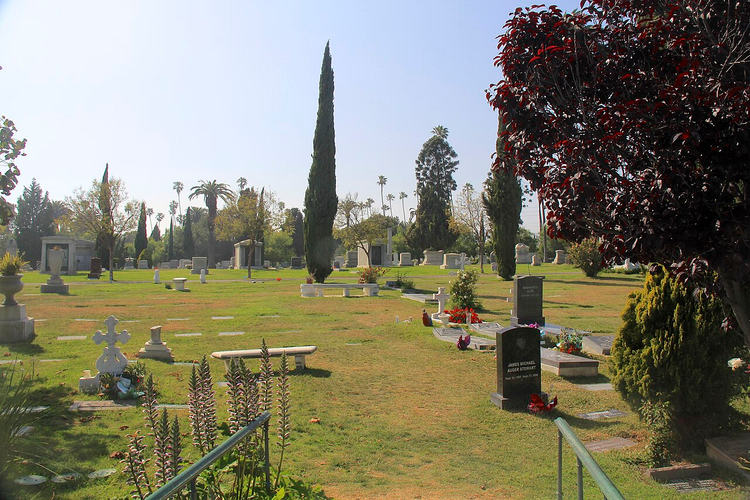
Hollywood Forever Cemetery sits on Santa Monica Boulevard and was established in the late 19th century. Actors, directors, and screenwriters are buried here, and one of the gravestones belongs to Soviet actor Oleg Vidov, whose coffin is sealed into a stone wall.
There is a lake with swans in the center, and peacocks roam the lawns, so the place feels like a park. In summer, the lawn hosts movie screenings and concerts, and tickets for the open-air sessions sell out in advance.
Come during the day and keep quiet: this is an active cemetery, not an attraction. Without a plot map, finding specific graves is difficult, so plan your route ahead of time.
Tickets and hours: what to book in advance
Some places are free to enter, while for the rest it is better to buy tickets online: the box office can be more expensive, and time slots go fast.
Place | Admission | Hours | Book in advance |
|---|---|---|---|
Griffith Observatory | free | daily 5:00-22:30, building closed on Mondays (as of 09/2026, hours) | not needed |
Angels Flight | $1.50 one way (as of 09/2026, official site) | daily 6:45-22:00 | not needed |
Madame Tussauds | from $32 online (as of 09/2026, official site) | daily, hours vary by date | yes, cheaper online |
Warner Bros. Studio Tour | by session (as of 09/2026, official site) | 8:30 to 15:30 | yes, several days ahead |
Universal Studios Hollywood | from a three-figure sum (as of 09/2026, official site) | per park calendar | yes, required |
Studio tours are sold in time slots with a specific start time. If you plan to visit both studios, split them across different days: you will not have time for either Warner Bros. or Universal in a single day.
If you want to compare insurance options before your trip, check out the choices on EKTA. Medical costs in the US are expensive, and insurance is arranged before you fly.
Tours and tickets in Los Angeles
Guided tours, skip-the-line tickets and activities — most offers can be cancelled free of charge.
See offers on TiqetsThe widget loads once you give your consent.
Getting around and where to stay
From LAX airport to downtown, people take a taxi or shuttle, because the metro does not reach the terminals. The ride takes from half an hour outside rush hour, and doubles in traffic. The city does have a metro, but the lines cover only some neighborhoods, so you cannot get by without a car or taxi.
It is more convenient to stay in Hollywood or downtown. From Hollywood you can walk to the main sights of the first day, and from downtown you will get to Miracle Mile and Venice Beach faster.
Los Angeles hotels on Trip.com should be searched by neighborhood, not across the whole city: the spread of addresses here is huge, and saving on a hotel easily turns into hours on the road.
Tours and tickets in Los Angeles
Guided tours, skip-the-line tickets and activities — most offers can be cancelled free of charge.
See offers on KiwitaxiThe widget loads once you give your consent.
⁉️🤔 Frequently asked questions
Can you see Los Angeles in one day?
Yes, if you pick two neighboring areas and do not try to cover the whole city. Walk through Hollywood in the morning, head up to Griffith Observatory in the afternoon, and leave the evening for Venice Beach or downtown. Studio tours do not fit into this plan; they need a separate day.
What can you see here for free?
Griffith Observatory, the Walk of Fame, Rodeo Drive, the Venice Beach boardwalk, and Hollywood Forever Cemetery are free to visit. You will have to pay for parking at the observatory and for individual planetarium shows. For a budget trip this is a good option: you will see the city's main sights without tickets.
Do you need a car in Los Angeles?
A car is not mandatory, but without one not everything is easy. The metro covers only some neighborhoods, and DASH buses and taxis will get you to Hollywood and downtown. Rent a car if you plan to do Venice Beach, the zoo, and the studios in one trip.
How much do studio and museum tickets cost?
Universal Studios Hollywood sells tickets by date, so the price depends on the day of your visit. Warner Bros. operates by session, and Madame Tussauds gives a discount when you buy online. Check exact prices on the official sites before buying; weekend slots go first.
Where should you stay for one or two days?
The most convenient options are Hollywood or downtown. From Hollywood you can walk to the theaters, the Walk of Fame, and the museum, and from downtown you will get to Miracle Mile and the funicular faster. Choose hotels by neighborhood: the city is spread out, and a cheap address may turn out to be an hour away.
In short: what to book
If you have one day, start with Hollywood, head up to the observatory or a studio in the afternoon, and give the evening to the ocean. That way you will see the highlights without extra driving and make it in time for sunset.
- If it is your first time in Los Angeles: Hollywood Boulevard, the Walk of Fame, and Griffith Observatory.
- If you are traveling with kids: Universal Studios Hollywood and the zoo.
- If you love movies: Warner Bros. Studio Tour and the Hollywood Museum.
- If you are on a budget: the observatory, the Walk of Fame, Rodeo Drive, and Venice Beach are free.
- If you want some quiet: Hollywood Forever Cemetery and Miracle Mile with its museums.
Tickets for studios and parks sell out in advance, so it is better to lock in your slots before the trip: tickets for studios and parks in Los Angeles. Choose a hotel by neighborhood and book before you fly: see hotels in Los Angeles on Trip.com.

A small editorial team writing guides for independent travel. We travel ourselves, but we haven’t been everywhere, so we check prices, opening hours and how to get there against official sources.