
















Where to ski in Italy in winter: 20 resorts for beginners and pros
Winter Italy surprises those who know it only for its summer beaches. The Dolomites alone bring together 12 ski areas and more than 1,200 km of slopes (as of 09/2026, Dolomiti Superski).
This roundup covers 20 resorts for the 2026/27 season. It includes high-altitude glaciers for confident skiers and wooded valleys for families. We've organized them by skiing style, elevation, and slope difficulty. That way you can quickly figure out which one is right for you.
All slope, elevation, and season data was checked against official resort websites and tourist offices in September 2026.
Ad: this article contains affiliate links. We earn a commission if you book through them, at no extra cost to you.
1. Bormio
💡 In short:
- Beginners will do well in Alta Badia, Val di Fiemme, and the Monte Pana plateau in Val Gardena.
- Experienced skiers will enjoy Arabba, Courmayeur, and the black runs of Kronplatz.
- For the longest season, head to Livigno; for summer skiing, go to Cervinia.
- Slope and elevation data: 09/2026, verified on official resort websites.
 © Sauro Sisti · CC BY-SAPhoto: Sauro Sisti, CC BY-SA (https://creativecommons.org/licenses/by-sa/4.0), Wikimedia Commons
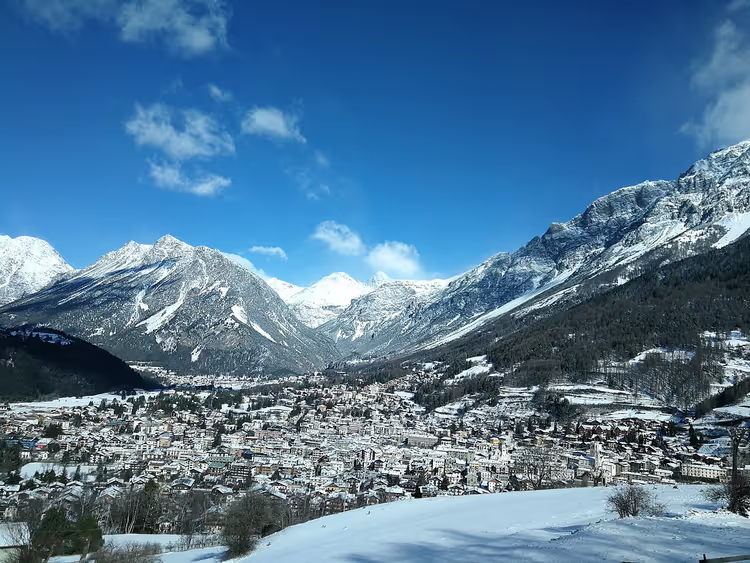
Bormio sits in the Lombard Alps, in the province of Sondrio. It combines thermal springs, an old town, and descents straight from the high mountains. In February 2026, the men's speed events of the Winter Olympics were held on its slopes, so the runs are groomed with particular care.
The ski area is compact: about 50 km of slopes and a vertical drop of up to 1,800 meters (as of 09/2026, official Bormio website). The top station sits at 3,000 meters, the bottom at 1,225 meters. Most of the descents run through forest, so windy days are easier to handle.
Down below, a thermal center and restaurants on the pedestrian street await. There's plenty to do in the evening if you're tired of the slopes.
- Who it's for: intermediate and advanced skiers who want a town at the foot of the mountain.
- Where to stay: hotels in Bormio on Trip.com.
2. Livigno
 © qwesy qwesy · CC BYPhoto: qwesy qwesy, CC BY (https://creativecommons.org/licenses/by/3.0), Wikimedia Commons
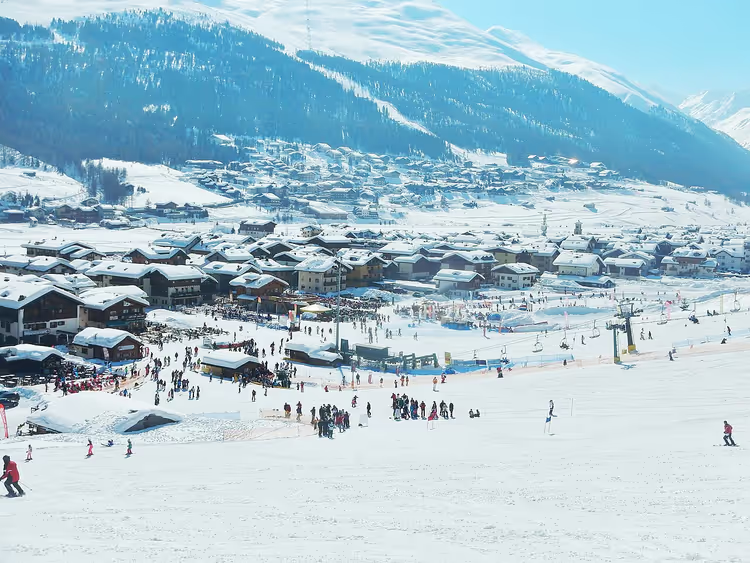
Livigno lies near the Swiss border and is surrounded by high ridges. It's a duty-free zone, so electronics, watches, and alcohol are cheaper here. The village is considered one of the snowiest places in Italy.
Skiing is spread across two slopes, with a free bus shuttling you between them. The total length of runs is about 115 km at elevations from 1,800 to 2,900 meters (as of 09/2026, official Livigno website). The season starts in late November and often runs until early May, longer than almost anywhere else in the Alps.
Snowboarders should check out the local snow parks with jumps and an airbag. For non-skiers, there are walks, sledding, and spas.
- Who it's for: families and freeriders who value a long season and good prices.
- The catch: most routes are geared toward experienced skiers; easy runs are few.
- Where to stay: hotels in Livigno on Trip.com.
3. Val di Fassa
 © This Photo was taken by Wolfgang Moroder . Feel free to use my photos, but please mention me as the author and send me a · CC BY-SAPhoto: This Photo was taken by Wolfgang Moroder . Feel free to use my photos, but please mention me as the author and send me a, CC BY-SA (https://creativecommons.org/licenses/by-sa/3.0), Wikimedia Commons
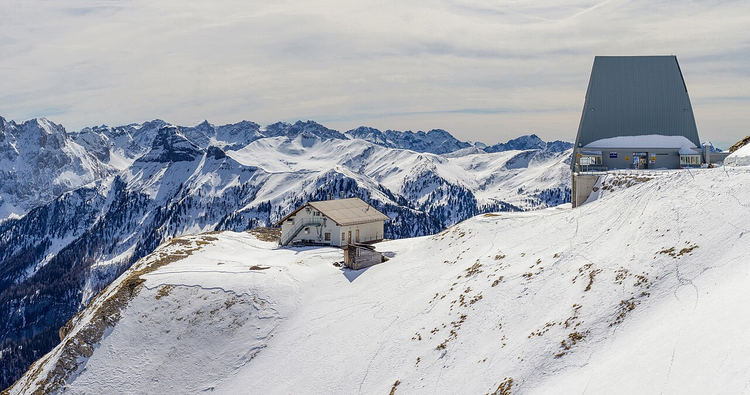
The Val di Fassa valley lies in the heart of the Dolomites and brings together several small towns. Hotels here are built in the traditional Tyrolean style, and prices are more moderate than in neighboring Cortina.
This is one of the largest ski areas in the region: more than 200 km of slopes with a vertical drop from 1,190 to 2,638 meters (as of 09/2026, Dolomiti Superski website). Most of the runs are marked blue and red, so the valley works well for intermediate skiers. The area's signature route is the circular Sella Ronda, 40 km long, around the Sella massif.
In every village you'll find a sports complex with a pool. Extreme skiers head for untouched off-piste terrain, while families choose wide, gentle slopes.
- Who it's for: intermediate skiers and groups who want easy access to several different towns.
- Where to stay: hotels in Val di Fassa on Trip.com.
4. Cortina d'Ampezzo
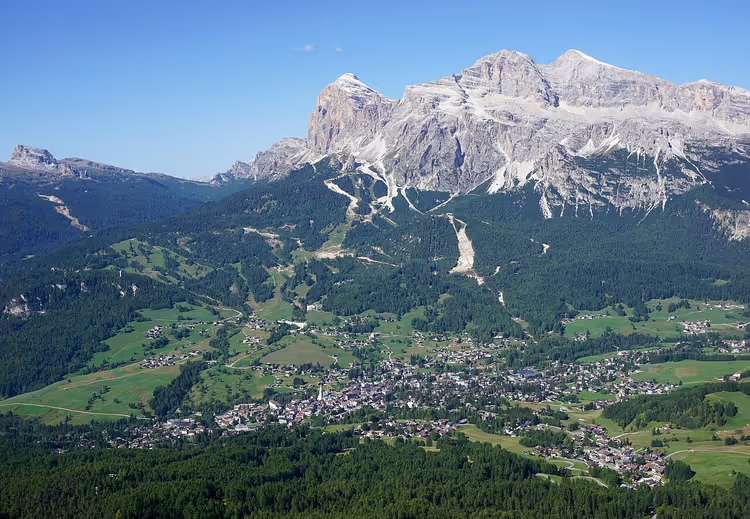 © kallerna · CC BY-SAPhoto: kallerna, CC BY-SA (https://creativecommons.org/licenses/by-sa/4.0), Wikimedia Commons
Cortina d'Ampezzo is surrounded by rocky Dolomite ridges and holds a reputation as the country's most glamorous resort. In February 2026, the town hosted the Winter Olympics together with Milan.
The total length of green, blue, and red runs here is about 115 km, with altitudes reaching 3,000 meters (as of 09/2026, Dolomiti Superski data). Some slopes are not served by lifts; a ski bus takes you to them. Beginners most often choose the wide slopes of Tofana.
Besides skiing, you can try bobsledding, snow rafting, and snow biking. At the Olympic-size ice palace, you can watch a hockey game between local teams.
- Who it's for: intermediate skiers and anyone who wants the atmosphere of a big resort.
- The catch: accommodation and dinner prices here are higher than at other resorts in this list.
- Where to stay: hotels in Cortina d'Ampezzo on Trip.com.
5. Madonna di Campiglio
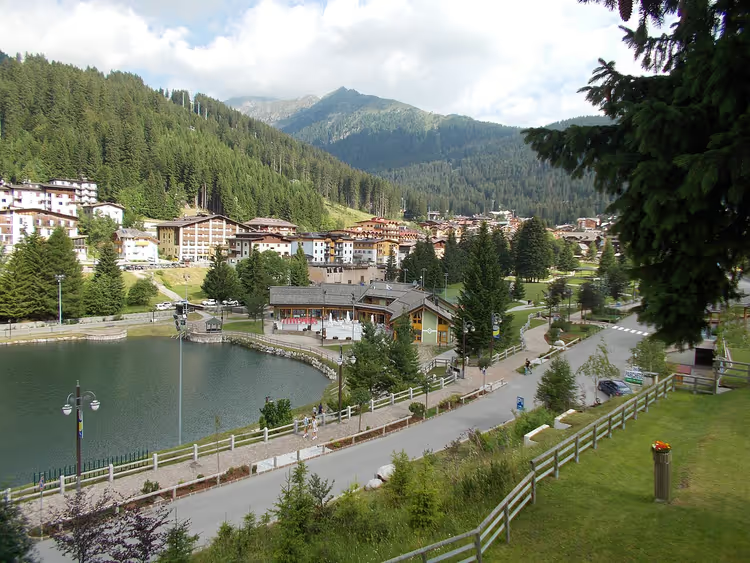 © Itto Ogami · CC BYPhoto: Itto Ogami, CC BY (https://creativecommons.org/licenses/by/3.0), Wikimedia Commons
Madonna di Campiglio hides among peaks that turn pink at sunrise and sunset. The resort is cozy and not cheap, with a wide choice of hotels and chalets.
The ski area rises to considerable altitudes, and the slopes are linked by a modern network of cable cars. Most of the routes are designed for less confident skiers: wide, even blue sections. Experienced skiers ride the winding red runs.
Snowboarders should check out the local snow park with jumps. The town has an ice rink, a pool, and boutiques of well-known brands, so you'll have plenty to do in the evening.
- Who it's for: couples and families who care about both sports and shopping.
- Where to stay: hotels in Madonna di Campiglio on Trip.com.
6. Cervinia
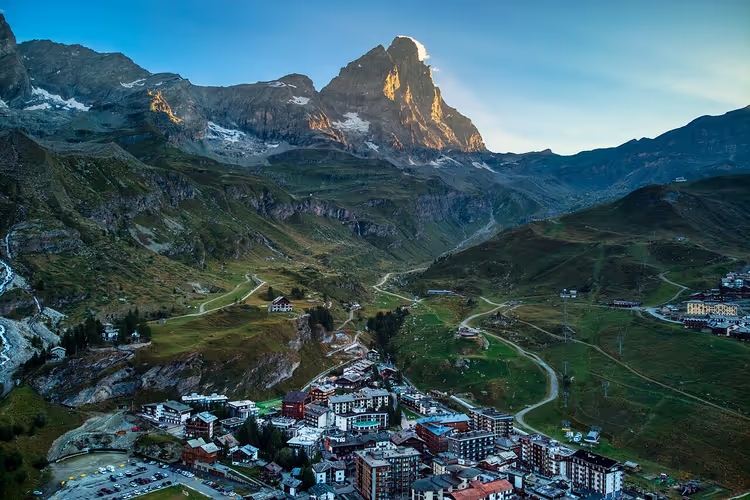 © Hagai Agmon-Snir حچاي اچمون-سنير חגי אגמון-שניר · CC BY-SAPhoto: Hagai Agmon-Snir حچاي اچمون-سنير חגי אגמון-שניר, CC BY-SA (https://creativecommons.org/licenses/by-sa/4.0), Wikimedia Commons
Cervinia (Breuil-Cervinia) lies at the foot of the Matterhorn. It is one of the highest-altitude resorts in Europe, and snow here lasts almost all year round.
The lower station already sits at 2,050 meters, and the skiing reaches up toward the glacier at nearly 3,900 meters (as of 09/2026, official Cervinia website). In summer, skiers cross over to Swiss Zermatt, with lifts running without interruption. You'll find long descents with more than a kilometer of vertical drop.
Down in the village, bars, restaurants, and equipment rental shops are all open. In the evening, life centers on the town center, where you'll easily find a spot to your liking.
- Who it's for: intermediate and advanced skiers who want to ski almost year-round.
- Not for: beginners won't find enough wide, easy slopes.
- Where to stay: hotels in Cervinia on Trip.com.
7. Courmayeur
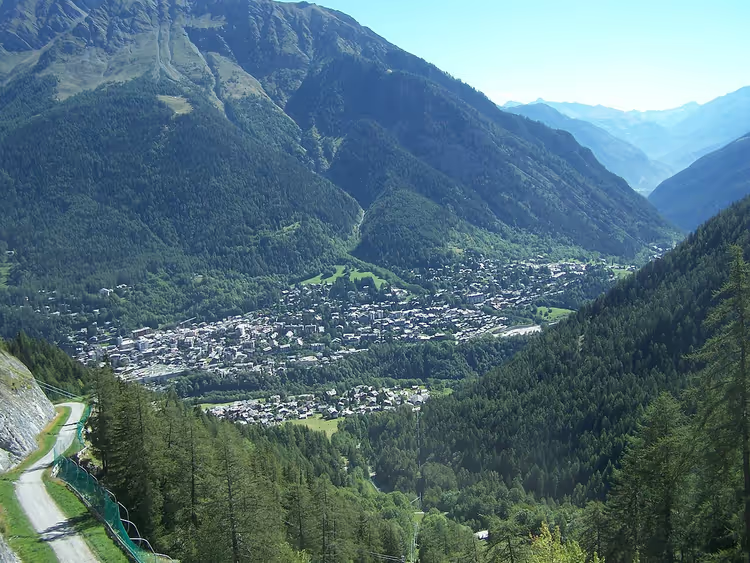 © X-Weinzar · CC BY-SAPhoto: X-Weinzar, CC BY-SA (https://creativecommons.org/licenses/by-sa/3.0), Wikimedia Commons
Courmayeur sits at the foot of Mont Blanc and has a reputation as the most aristocratic resort in the Aosta Valley. Carnivals and high-society parties are a regular occurrence here.
The ski area has about 100 km of impeccably groomed runs (as of 09/2026, Aosta Valley tourist office). Red and black descents await you on the slopes of Checrouit and Val Veny. Between them, well-maintained routes wind through coniferous forest.
The town offers views of the Mont Blanc glaciers. Down below, there are plenty of fashionable boutiques and restaurants, so you won't be bored in the evening.
- Who it's for: intermediate skiers and lovers of beautiful scenery.
- The catch: there are fewer gentle beginner slopes here than in neighboring valleys.
- Where to stay: hotels in Courmayeur on Trip.com.
8. La Thuile
 © Krzysztof Golik · CC BY-SAPhoto: Krzysztof Golik, CC BY-SA (https://creativecommons.org/licenses/by-sa/4.0), Wikimedia Commons
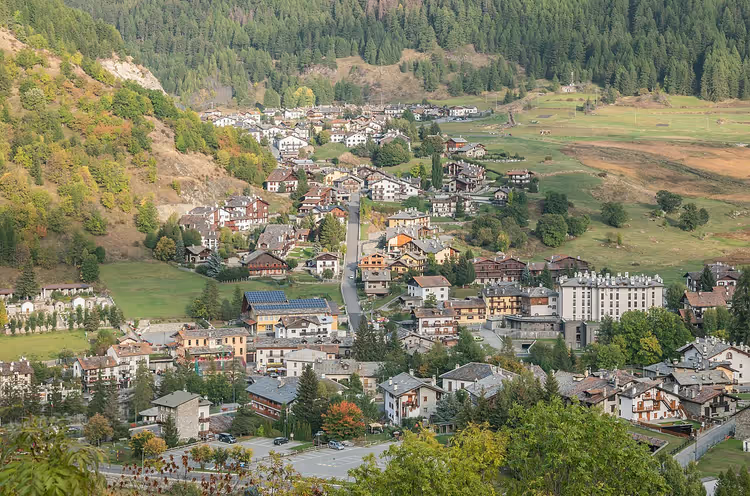
La Thuile is tucked among the peaks of the Mont Blanc massif and the Rutor glacier. Old wooden and stone houses here sit side by side with modern chalets.
The resort is part of the Espace San Bernardo area, which it shares with the French La Rosière. The total length of runs in this area is about 150 km (as of 09/2026, official Aosta Valley website). The slopes stretch from 1,441 to 2,641 meters in elevation, and most of them suit beginners.
Experienced skiers will enjoy the descent from the top of Les Suches. The village has bars, restaurants, and pizzerias, and the atmosphere is calm and rustic.
- Who it's for: beginners and intermediate skiers looking for peace and quiet.
- Where to stay: hotels in La Thuile on Trip.com.
9. Pila
Pila sits tucked away in a bowl-shaped valley and sees almost no mass tourism. It's mostly residents of Northern Italy who come here, so the atmosphere is homey and welcoming.
The town is right by the cable car, and the slopes fan out across an amphitheater at elevations from 1,800 to 2,752 meters (as of 09/2026, Aosta Valley tourist office). There are about 30 red runs, four blue, and four black. The longest route stretches 6 km.
Experienced skiers love the Grimondet and Chamolé descents. Down below, you'll find a pool, bowling, and restaurants serving Italian cuisine.
- Who it's for: confident skiers and families who want to avoid lift lines.
- Where to stay: hotels in Pila on Trip.com.
10. Monte Rosa
 © Carsten Steger · CC BY-SAPhoto: Carsten Steger, CC BY-SA (https://creativecommons.org/licenses/by-sa/4.0), Wikimedia Commons
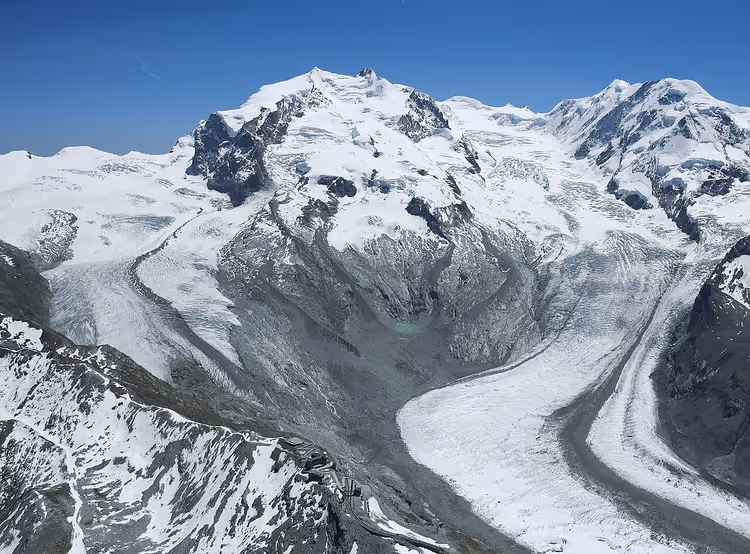
Monte Rosa is named after the massive peak visible from several valleys. The area includes Antagnod, Alagna, Champoluc, Brusson, and Gressoney.
The Monterosa Ski area links several valleys with a network of lifts (as of 09/2026, Aosta Valley tourist office website). The descents start high up and suit both dedicated athletes and those who want to take in the scenery at a relaxed pace. Snow holds on the wide slopes for almost the entire season.
Beyond skiing, freeriding and ski touring are popular here. Evenings in the valleys are quiet, with life centered around the hotels and chalets.
- Who it's for: skiers who value peace and long descents.
- Where to stay: hotels in Monte Rosa on Trip.com.
11. Val Gardena
 © This Photo was taken by Wolfgang Moroder . Feel free to use my photos, but please mention me as the author and send me a · CC BY-SAPhoto: This Photo was taken by Wolfgang Moroder . Feel free to use my photos, but please mention me as the author and send me a, CC BY-SA (https://creativecommons.org/licenses/by-sa/3.0), Wikimedia Commons
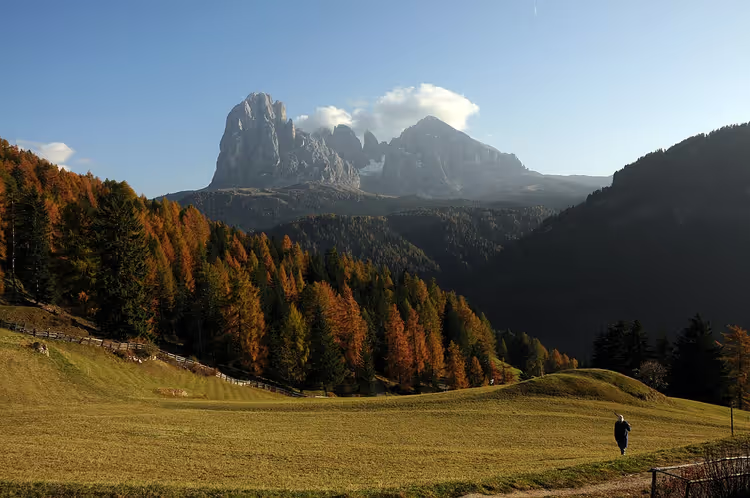
Val Gardena lies at the foot of the Sassolungo massif and brings together three villages at different elevations: Ortisei, Santa Cristina, and Selva di Val Gardena.
This is one of the most decorated areas in the Dolomites. It's part of Dolomiti Superski, a single ski pass (as of 09/2026). From here you can easily head up to the Monte Pana plateau with its gentle, short runs for beginners.
Experienced skiers will find fast, tree-lined slopes from the Ciampinoi and Seceda peaks. Freeriders head for untouched snow above the tree line, while snowboarders seek out the local snow parks. All three villages are connected by buses covered by the same ski pass.
- Who it's for: groups with mixed skiing levels.
- Where to stay: hotels in Val Gardena on Trip.com.
12. Kronplatz
 © Zefram · CC BYPhoto: Zefram, CC BY (https://creativecommons.org/licenses/by/2.0/de/deed.en), Wikimedia Commons
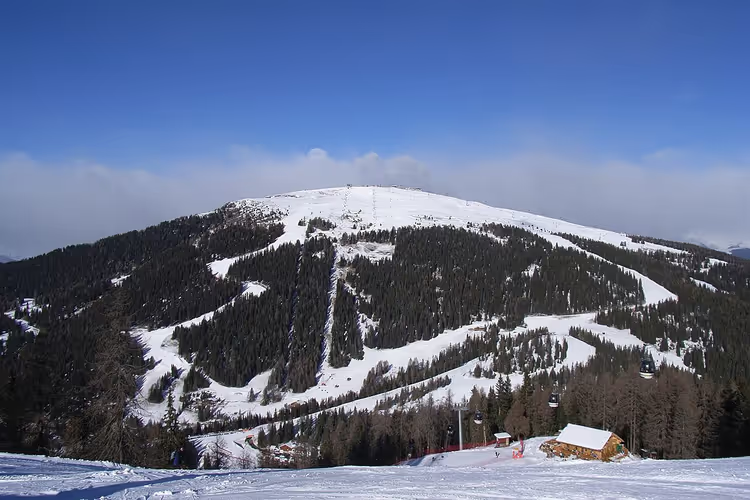
Kronplatz (Plan de Corones) in South Tyrol brings together more than ten towns. The most popular of them are San Vigilio, Riscone, and Brunico.
The resort area is centered around the wooded mountain of the same name and rises to 2,275 meters (as of 09/2026, Dolomiti Superski network). From the summit, the runs fan out in all directions. Wide, gentle sections sit right next to fast, winding trails, so there is enough for both beginners and experienced skiers.
Kronplatz is especially rich in entertainment: pools, ice rinks, cinemas, and nightclubs. That makes it convenient for a mixed group where some people ski and others relax.
- Who it's for: mixed groups and families who value infrastructure.
- Where to stay: hotels in Kronplatz on Trip.com.
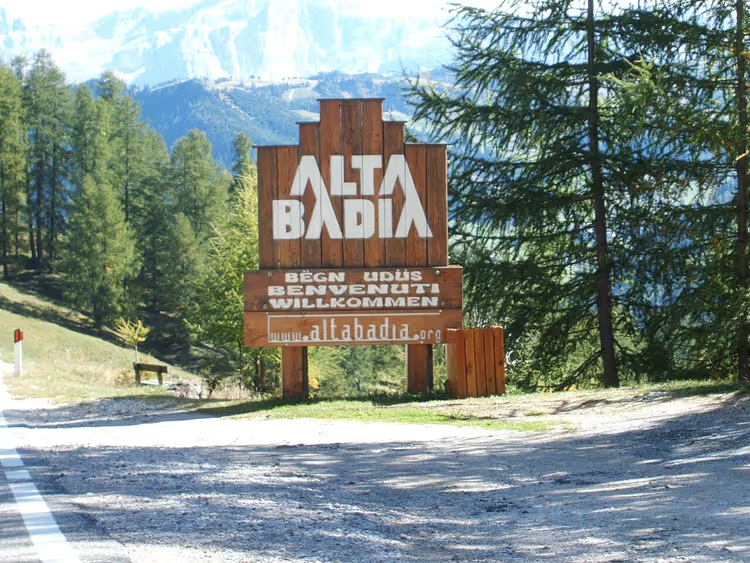
13. Alta Badia
 © Llorenzi at Italian Wikipedia · CC BY-SAPhoto: Llorenzi at Italian Wikipedia, CC BY-SA (http://creativecommons.org/licenses/by-sa/3.0/), Wikimedia Commons
Alta Badia occupies the northwest of the Dolomites and consists of several connected villages. Sheer cliffs with sharp peaks turn red at sunset.
The total length of runs here is about 130 km, and the snow cover is considered exemplary (as of 09/2026, Dolomites resort website). Most routes are designed for beginners: wide, gentle blue sections among coniferous forests.
Experienced skiers get narrow red and black descents with sharp turns. After skiing, you can enjoy spas, a pool, tennis, and children's parks with sledding hills.
- Who it's for: beginners and families who want gentle slopes.
- Where to stay: hotels in Alta Badia on Trip.com.
14. Val di Fiemme
 © VitVit · CC BY-SAPhoto: VitVit, CC BY-SA (https://creativecommons.org/licenses/by-sa/4.0), Wikimedia Commons
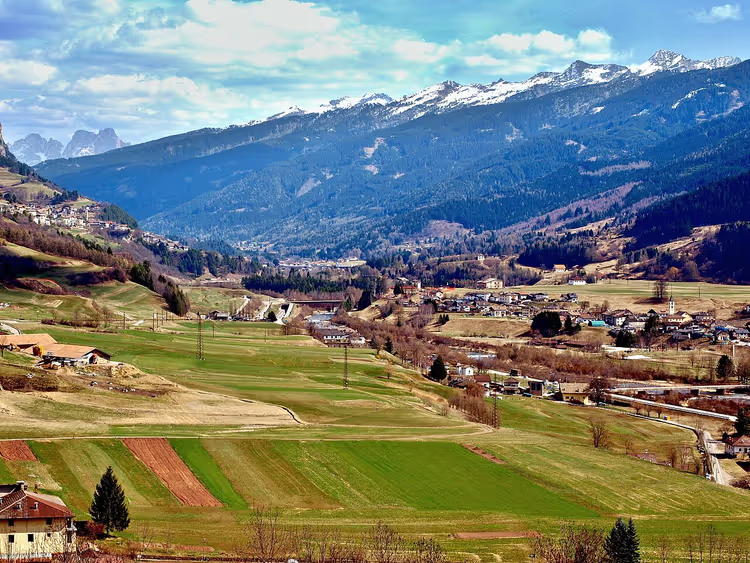
Val di Fiemme lies in the province of Trentino beneath the rocky peaks of Latemar. The valley is known for two towns, Predazzo and Cavalese.
The ski area spreads across elevations from 1,280 to 2,600 meters (as of 09/2026, official Dolomites website). It has more than a hundred kilometers of groomed, marked runs, and most of them are suited to relaxed family skiing.
Experienced skiers will find the narrow five-kilometer Alpe Cermis descent with its intricate switchbacks interesting. The valley also has cross-country skiing and snowshoeing routes.
- Who it's for: beginners and intermediate skiers.
- Where to stay: hotels in Val di Fiemme on Trip.com.
15. Arabba
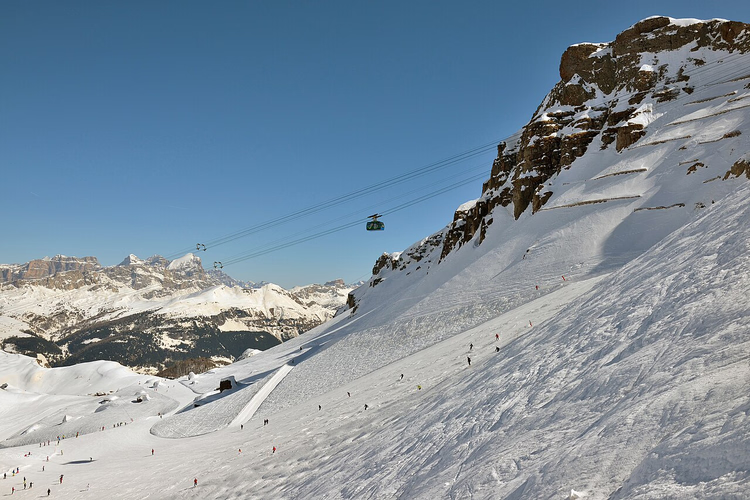
Arabba sits at the center of the Sella Ronda massif, around which the closed Dolomites route runs. It's a quiet place without the hustle.
 © This Photo was taken by Wolfgang Moroder . Feel free to use my photos, but please mention me as the author and send me a · CC BY-SAPhoto: This Photo was taken by Wolfgang Moroder . Feel free to use my photos, but please mention me as the author and send me a, CC BY-SA (https://creativecommons.org/licenses/by-sa/3.0), Wikimedia Commons
Arabba's main trump card is direct access to the Marmolada glacier at 3,340 meters (as of 09/2026, Dolomiti Superski data). Red and black high-speed descents with steep terrain run down from the glacier.
These routes demand focus and solid technique, so Arabba attracts confident skiers. You can mix up your trip with sledding, snowshoeing, and climbing.
- Who it's for: experienced skiers looking for challenging descents.
- Accommodation: hotels in Arabba on Trip.com.
16. Sestriere
 © Lucas130999 · CC BY-SAPhoto: Lucas130999, CC BY-SA (https://creativecommons.org/licenses/by-sa/4.0), Wikimedia Commons
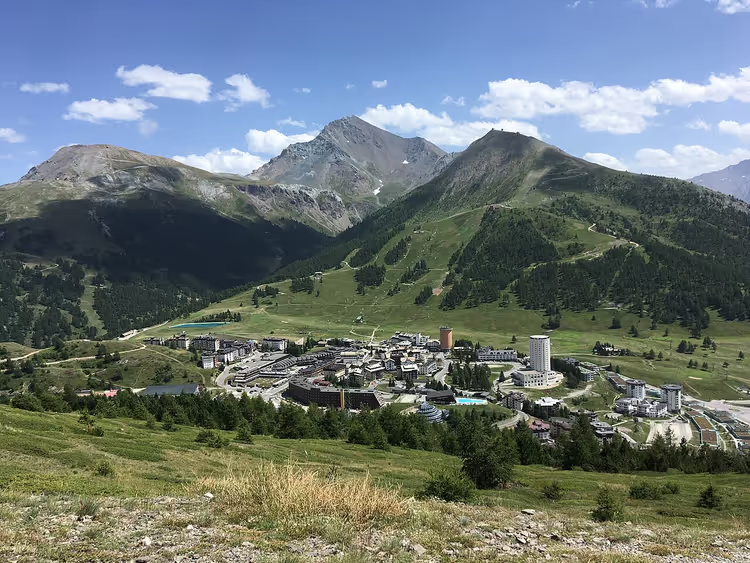
Sestriere is considered the highest town in Italy. It gained worldwide fame from the 2006 Winter Olympics, which were held right here.
Sestriere is part of the Via Lattea area, which has about 400 km of slopes and 70 lifts (as of 09/2026, Via Lattea). The town was founded in 1937 and sits at 2,035 meters, with snow holding up to 2,789 meters.
Professionals are drawn to the nine-kilometer Rio Nero run and the Olympic Kandahar descent. Beginners will find plenty of blue runs and wide, even fields. Bars and restaurants in town stay open late into the night.
- Who it's for: skiers of any level who want Olympic runs under their feet.
- Accommodation: hotels in Sestriere on Trip.com.
17. Limone Piemonte
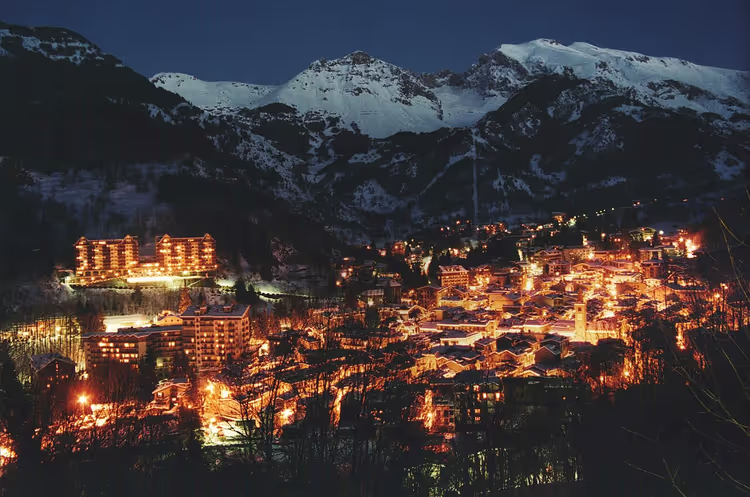 © Andrea Levico · CC BYPhoto: Andrea Levico, CC BY (https://creativecommons.org/licenses/by/3.0), Wikimedia Commons
Limone Piemonte, one of Italy's oldest resorts, hides among the hills of the Maritime Alps. Medieval streets give the town a distinctive historic feel.
Slopes of varying difficulty spread across the surrounding hillsides. Beginners will appreciate the wide, gentle trails, while experienced skiers get high-speed descents with sharp turns and drops. Long, straight routes let you quietly take in the panoramas of the southwestern Alps.
For kids, there's a park with safe slides and trampolines. After skiing, a spa, pool, and sauna await, plus a stroll through the historic center.
- Who it's for: families with kids and intermediate skiers.
- Accommodation: hotels in Limone Piemonte on Trip.com.
18. Bardonecchia
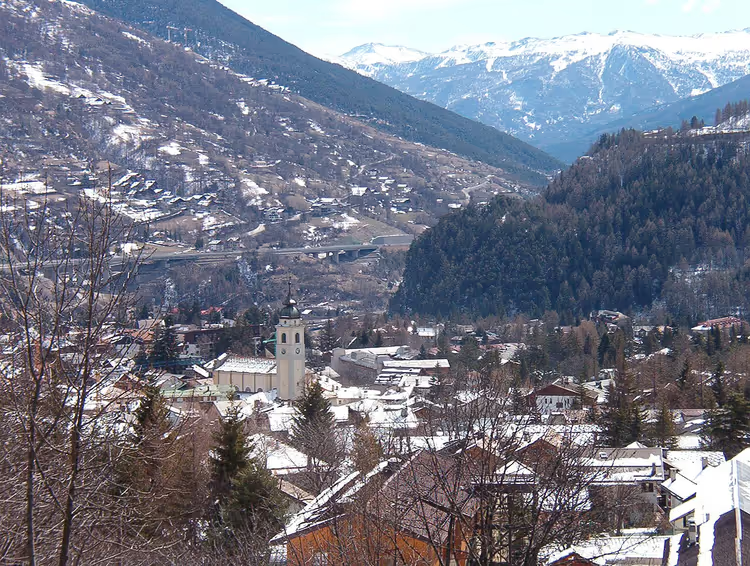
Bardonecchia in western Piedmont lies in a valley between mountains. Here, a high level of service combines with Olympic runs.
The ski area is divided into two zones. The first is three wooded slopes with blue, red, and black runs. The second zone is the Jafferau area with snow-covered alpine fields, reached by lifts.
Snowboarders are drawn to the themed Olympic park with a large halfpipe. The town has a sports center with pools, plus soccer, volleyball, and tennis courts.
- Who it's for: snowboarders and skiers who care about Olympic slopes.
- Lodging: hotels in Bardonecchia on Trip.com.
19. Trentino
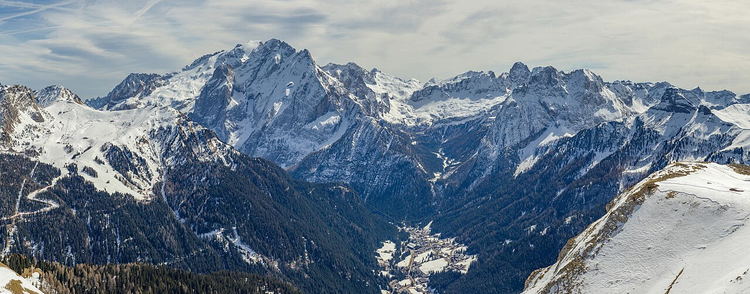 © This Photo was taken by Wolfgang Moroder . Feel free to use my photos, but please mention me as the author and send me a · CC BY-SAPhoto: This Photo was taken by Wolfgang Moroder . Feel free to use my photos, but please mention me as the author and send me a, CC BY-SA (https://creativecommons.org/licenses/by-sa/3.0), Wikimedia Commons
Trentino, an autonomous region on the border with Austria and Switzerland. Its Dolomite slopes are very popular with families with children.
The region's slopes are part of the Dolomites area, which has more than 1,200 km of runs (as of 09/2026, official Dolomites website (Superski)). The high-altitude towns of Val di Fassa and Madonna di Campiglio are especially popular. The gentle descents here are ideal for first steps on skis.
A network of cross-country ski trails runs through the valleys. Thrill-seekers will find the long, fast Paradiso slope, which starts from a glacial basin.
- Who it's for: families and skiers who want to combine different valleys.
- Lodging: hotels in Trentino on Trip.com.
20. Passo Tonale
 © Zoran Kurelić Rabko · CC BY-SAPhoto: Zoran Kurelić Rabko, CC BY-SA (https://creativecommons.org/licenses/by-sa/3.0), Wikimedia Commons
Passo Tonale sits in a natural amphitheater between high Alpine peaks. It's a convenient base for both beginners and extreme skiers.
The resort consists of multi-story buildings with modern architecture. Easy blue runs and gentle slopes are concentrated on a wide plateau, which is ideal for first steps. Experienced skiers get the black runs on the Presena glacier and the terrain sections in the pine forest.
Special attention here goes to toboggan runs, snowshoeing, and cross-country skiing. Down below, hotels, pizzerias, a sports complex, and an ice rink await you.
- Who it's for: families and confident skiers who want to ski on a glacier.
- Accommodation: hotels in Passo Tonale on Trip.com.
Ski resorts in Italy on the map
We've put all the resorts from this selection on one map. This way you can immediately see how they're positioned relative to each other and where to look for the nearest airport.
Ski resorts of Italy
Places on the map
- 1Bormio Lombard Alps, 2026 Olympic runs and a thermal spa
- 2Livigno Duty-free zone near the Swiss border, the longest season
- 3Val di Fassa Valley in the heart of the Dolomites, the Sella Ronda circuit
- 4Cortina d'Ampezzo Glamorous resort, hosted the 2026 Olympics with Milan
- 5Madonna di Campiglio Resort with a wide choice of hotels and a cable-car network
- 6Cervinia At the foot of the Matterhorn, snow lasts almost year-round
- 7Courmayeur At the foot of Mont Blanc, about 100 km of groomed runs
- 8La Thuile Espace San Bernardo area, mostly beginner runs
- 9Pila Basin without mass tourism, amphitheatre-shaped runs
- 10Monte Rosa Monterosa Ski area, links several valleys
- 11Val Gardena Three villages by the Sassolungo ridge, Monte Pana plateau for beginners
- 12Kronplatz Over ten villages around a wooded mountain, rich in activities
- 13Alta Badia Northwest Dolomites, wide gentle runs for beginners
- 14Val di Fiemme Valley in Trentino, over a hundred km of family runs
- 15Arabba Centre of the Sella Ronda, access to the Marmolada glacier
- 16Sestriere Italy's highest town, hosted the 2006 Olympics
- 17Limone Piemonte One of the oldest resorts, medieval lanes
- 18Bardonecchia Western Piedmont, Olympic park with a halfpipe
- 19Trentino Autonomous region with the Val di Fassa and Madonna di Campiglio valleys
- 20Passo Tonale Amphitheatre between peaks, skiing on the Presena glacier
⁉️🤔 Frequently asked questions
Which resort in Italy should a beginner choose?
For first steps, Alta Badia, Val di Fiemme, and Passo Tonale are good options. They have plenty of wide, gentle blue runs and ski schools. Another option is the Monte Pana plateau in Val Gardena, where the slopes are short and even. Start with three to four days to get used to the altitude.
Where in Italy can you ski in summer?
Summer skiing is possible on glaciers. In Cervinia, a cable car takes you up to the glacier at almost 3,900 meters, and from there you can cross over to Zermatt in Switzerland. In Passo Tonale, the Presena glacier operates in summer. Bring sunscreen and sunglasses, UV radiation is much stronger at altitude.
What is Sella Ronda and is it worth doing?
Sella Ronda is a circular route about 40 km long around the Sella massif. It passes through four Dolomite valleys and is accessible to intermediate skiers. Start early in the morning to make it before the lifts close. In one day you'll ride through different resorts, including Arabba and Val di Fassa, so the day is well spent.
Which Italian resorts are good for families with children?
Trentino, Val di Fiemme, and Passo Tonale are good for families. They have gentle slopes, toboggan runs, children's parks, and ski schools. In Cortina and Madonna di Campiglio, you'll also find pools and ice rinks. Check in advance whether your hotel offers a shuttle to the lift.
Where is the longest ski season in Italy?
Snow lasts longest in Livigno: the season starts in late November and often runs until early May. The high valley and its favorable location keep the snow even during warm weeks. Most Dolomite resorts close as early as April. You'll find exact dates on the resort's official website.
In short: what to book
Italy has more resorts than you can visit in one winter, so choose based on your experience. If you're just starting out, go for Alta Badia or Val di Fiemme. For confident skiing, Arabba, Courmayeur, and Sestriere are good choices. For a long season, head to Livigno, and for summer skiing, go to Cervinia.
If you have a week and want to see the Dolomites: base yourself in Val di Fassa and set aside a day for Sella Ronda.
If you're traveling with a group of mixed abilities: choose Kronplatz or Val Gardena, where there are enough runs and activities for everyone.
Rooms in high season get booked months in advance, so compare Dolomites hotels on Trip.com early.

A small editorial team writing guides for independent travel. We travel ourselves, but we haven’t been everywhere, so we check prices, opening hours and how to get there against official sources.