
















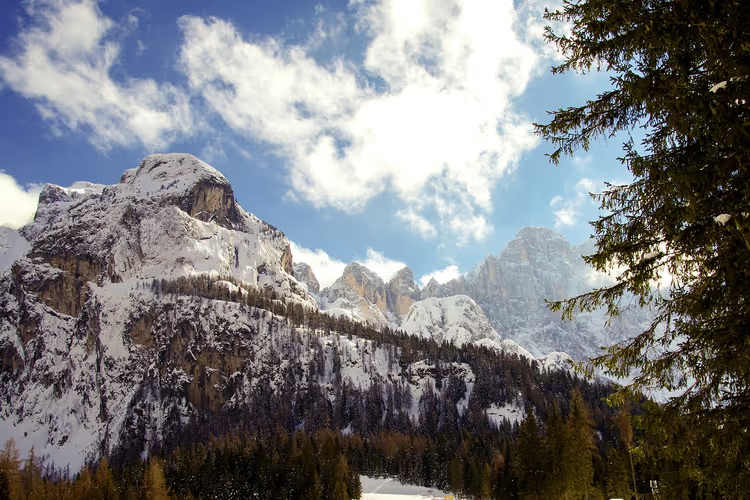
Where to ski in the Dolomites: 11 resorts on one ski pass
Dolomiti Superski is 1,200 km of slopes and 450 lifts across 12 ski areas (as of 09/2026, official website). One ski pass opens all of them, so you can easily switch valleys and resorts during a single trip.
In the Dolomites, it's easy to get confused by the names of the areas. Some suit beginners and families, others are made for freeride and black slopes. We've put together 11 resorts and broken them down by elevation, slopes, and distance from the airport.
Below you'll find where to ski and how to get there. For each resort, we've listed the slopes, logistics, and nearby hotels.
Ad: this article contains affiliate links, we earn a commission if you book through them, at no extra cost to you.
How the Dolomiti Superski single ski pass works
💡 In short:
- The Dolomiti Superski pass is valid in all 12 areas of the network.
- It pays off if you ski for three days or more, or switch resorts every day.
- Season and ski pass prices: as of 09/2026, verified on the official Dolomiti Superski website.
The resorts are connected by a shared network of runs, so moving from one valley to another doesn't require a new ticket. Every resort below operates on a single ski pass.
The ski pass is sold for one day, several days, or a full season. Before buying, compare the rate on the official website, because the price depends on the date and the number of ski days.
1. Val di Fassa
 © Kritzolina · CC BY-SAPhoto: Kritzolina, CC BY-SA (https://creativecommons.org/licenses/by-sa/4.0), Wikimedia Commons
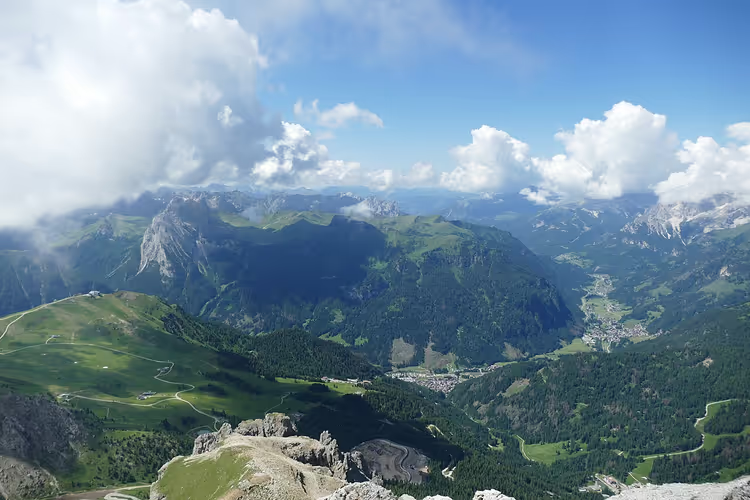
Val di Fassa is an Italian valley in the western part of the Dolomites and one of the areas in the Dolomiti Superski network. The region consists of several tourist towns connected by lifts. Snow-covered ridges and pine forests sit alongside modern infrastructure here, and hotels, chalets, and guesthouses cover every budget.
The skiing suits intermediate level. The mountain saddle area is home to wide blue and red slopes. On both sides of the Belvedere summit, long gentle sections stretch out, ideal for building technique. Experienced skiers go for the fast Ciampac descent, while snowboarders find park zones with jumps.
You can mix up your days with ice skating and swimming. The resort towns have ice rinks, sports clubs, bars, pizzerias, and restaurants. For active recreation, snowmobiles, dog sledding, and paragliding flights are available.
In the evening, it's pleasant to stroll through the narrow streets of an Alpine village. The easiest way to get there is from the airports of Bolzano and Innsbruck.
- Slopes: blue and red for intermediate level, plus the black Ciampac descent
- Getting there: Bolzano and Innsbruck airports
- Who it's for: intermediate skiers, snowboarders, and families
- Hotels: Val di Fassa hotels on Trip.com
2. Val Gardena
 © This Photo was taken by Wolfgang Moroder . Feel free to use my photos, but please mention me as the author and send me a · CC BY-SAPhoto: This Photo was taken by Wolfgang Moroder . Feel free to use my photos, but please mention me as the author and send me a, CC BY-SA (https://creativecommons.org/licenses/by-sa/3.0), Wikimedia Commons
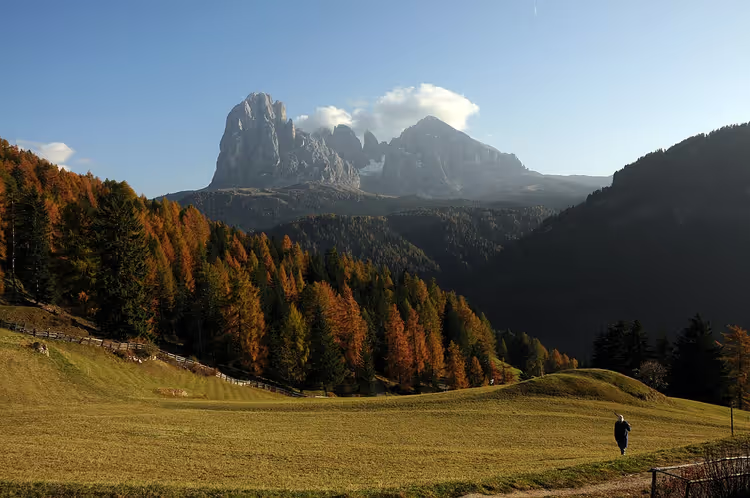
Val Gardena brings together three high-altitude villages: Ortisei, Santa Cristina, and Selva di Val Gardena. All three are connected by an extensive network of lifts. The nearest international airports are in Bolzano and Verona, with bus services from there to the valley.
The area is considered one of the largest in the network. It's covered by 175 km of runs and 79 lifts (as of 09/2026, Val Gardena website). Beginners are well served by the wide, gentle slopes on the Monte Pana plateau. Experienced skiers head for long, winding routes with forest sections and rocks, and descend from the Ciampinoi summit on challenging black runs.
The range of accommodation is broad: from budget guesthouses to chalets with spas and pools. Ortisei, Santa Cristina, and Selva di Val Gardena sit at different elevations, so snow holds up consistently all season.
In the villages, you'll find sports centers, ice arenas, night bars, and boutiques. The valley's restaurants serve Tyrolean cuisine. It's a convenient starting point for the Sella Ronda and for moving to neighboring areas on a single ski pass.
- Slopes: 175 km of runs for all levels, from green to black
- Getting there: Bolzano and Verona airports
- Who it's for: beginners, intermediate skiers, and advanced skiers
- Hotels: Val Gardena hotel prices
3. Alta Badia
 © Llorenzi at Italian Wikipedia · CC BY-SAPhoto: Llorenzi at Italian Wikipedia, CC BY-SA (http://creativecommons.org/licenses/by-sa/3.0/), Wikimedia Commons
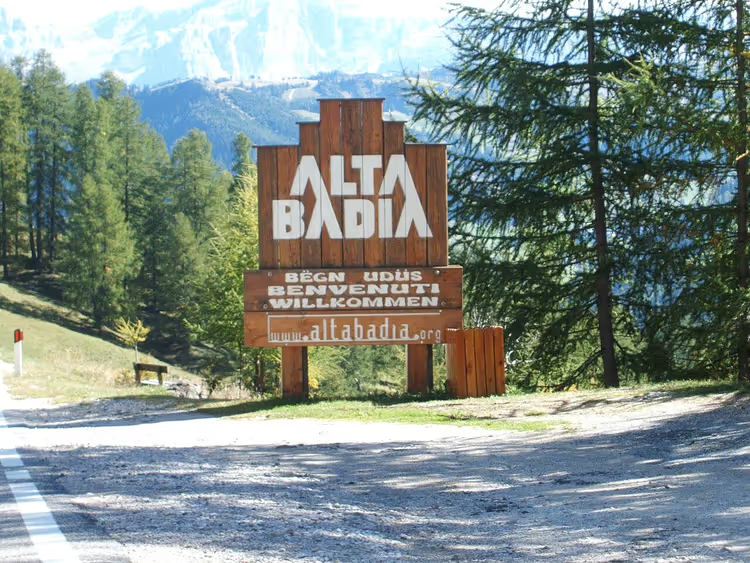
Alta Badia is a region in the northwestern Dolomites. It brings together several resort villages connected by a modern network of cable cars. Pine forests and high ridges surround the area, and the ski zone itself sits at elevations from 1,300 to 2,800 meters (as of 09/2026, official Alta Badia website).
The slopes suit every level. Most of the wide blue runs head toward Corvara. Experienced skiers take on winding red sections with significant vertical drop. The black Gran Risa run at La Villa, which hosts a World Cup stage, deserves special attention.
The region has 130 km of runs and 53 lifts (as of 09/2026, official Alta Badia website). Separate cross-country routes run through the valley.
Dozens of hotels and chalets sit at altitude, from budget guesthouses to family complexes. After skiing, you can swim in a pool, visit a spa, or play bowling or tennis. Kids have learning areas, and thrill-seekers can try climbing and sledding.
- Slopes: 130 km, blue, red, and the black Gran Risa
- Getting there: buses from Bolzano and Verona
- Who it's for: all levels and cross-country skiing enthusiasts
- Hotels: see hotels in Alta Badia
4. Tre Valli
The name Tre Valli translates as "three valleys." The resort brings together the town of Moena and the Passo San Pellegrino pass. Every year more skiers and fans of a quiet getaway come to Moena.
The skiing here is more modest than at the big resorts. In return, you get dedicated beginner runs and relaxed red descents. Black sections are reserved for experts. You take a bus to the lifts because they sit outside town. Snowboard zones and kids' areas are available.
At the Passo San Pellegrino pass, hotels sit right at the slopes. At sunset the mountains here turn pink, which makes evening walks especially popular.
You can go ice skating, race across untouched snow on a snowmobile, or have a snowball fight. In summer, hiking routes start here, and guests visit World War I monuments. For those who love quiet, this is a calm alternative to the big resorts.
- Slopes: beginner runs, plus red and black descents
- Getting there: buses from Bolzano or Verona to Moena
- Who it's for: beginners, families, and those who love quiet
- The catch: lifts are outside town, you take a bus to reach them
- Hotels: hotel prices in Tre Valli
5. Val di Fiemme
 © Niccolò Caranti · CC BY-SAPhoto: Niccolò Caranti, CC BY-SA (https://creativecommons.org/licenses/by-sa/3.0), Wikimedia Commons
Val di Fiemme is a valley in the western part of the Italian Alps, crowned by the Latemar massif. The ski centers of Cavalese, Predazzo, Bellamonte, and Alpe Cermis welcome guests.
The slopes here are steady and comfortable. On Latemar and Bellamonte you'll find gentle, wide blue sections and easy red descents with modest vertical drop. Experienced skiers choose the long, fast Olympia run, which starts from a high peak.
The valley has routes for cross-country skiing and snowshoe walks. Three quarters of the descents run through pine forest, so skiing feels cozy even on overcast days.
For downtime, there are indoor sports complexes with pools, ice rinks, shops, and restaurants. Several ski centers welcome guests, with shuttles running between them. You can get there from Verona and Bolzano on ski shuttles.
- Slopes: gentle blue and red runs, plus the fast Olympia run
- Getting there: ski shuttles from Verona and Bolzano
- Who it's for: families and those who like relaxed skiing
- The catch: most runs are designed for easygoing skiing
- Hotels: see hotels in Val di Fiemme
6. Cortina d'Ampezzo
 © kallerna · CC BY-SAPhoto: kallerna, CC BY-SA (https://creativecommons.org/licenses/by-sa/4.0), Wikimedia Commons
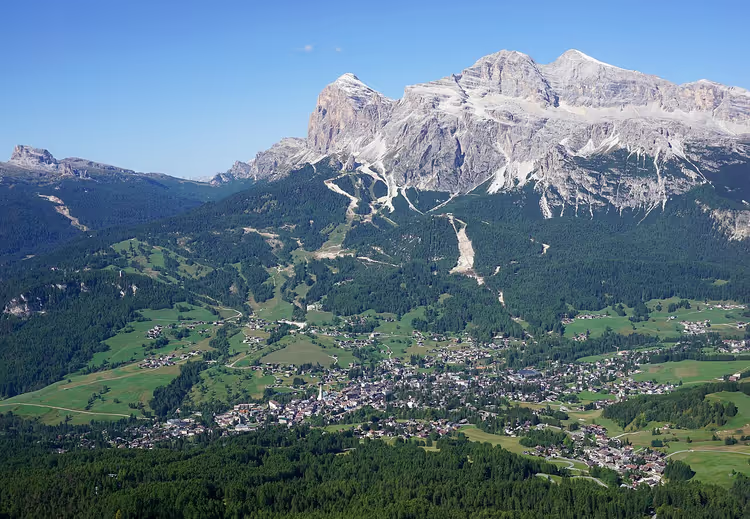
Cortina d'Ampezzo is considered one of the most prestigious ski resorts in Italy. The valley is surrounded by the rocky walls of the Dolomites, and its main street is lined with hotels, restaurants, galleries, and shops. People come here for both nature and active recreation.
The area suits every level. Beginners will like the long, gentle slopes in Socrepes. Intermediate skiers should head up to the top of Tofana, which has wide, short sections. Advanced skiers can take on the high-speed runs from the peaks of Ra Valles and Forcella Staunies.
According to the tourist office, Cortina has about 120 km of slopes and 36 lifts (as of 09/2026, official website).
The surrounding areas are built up with mansions and villas. The town has an ice palace, tennis courts, an amusement park, and a hockey arena. You'll enjoy a snowshoe walk or a ride in a horse-drawn sleigh. You can get there by bus from Venice, Mestre, and Treviso.
- Slopes: about 120 km, from gentle runs to high-speed descents
- Getting there: buses from Venice, Mestre, and Treviso
- Who it's for: all levels and those who like town amenities
- Hotels: hotels in Cortina d'Ampezzo on Trip.com
7. Kronplatz
 © Zefram · CC BYPhoto: Zefram, CC BY (https://creativecommons.org/licenses/by/2.0/de/deed.en), Wikimedia Commons
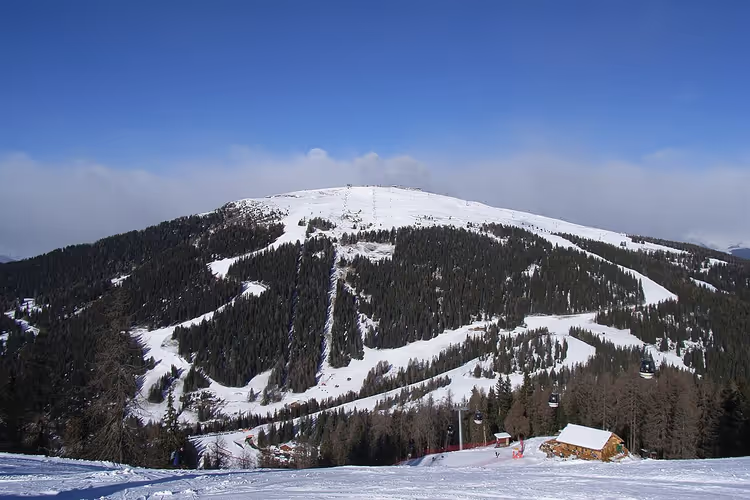
Kronplatz is a ski region in South Tyrol that brings together more than a dozen villages around a mountain massif. The area is well suited to a family winter vacation. The administrative center and largest town in the valley is Bruneck, and the nearest airport is in Bolzano.
From the top of the spacious plateau, red and blue runs fan out down the mountain. Wide, gentle slopes here combine with fast, winding sections, so both beginners and experienced skiers feel comfortable. A few black runs will appeal to confident skiers.
Bruneck has hotels of various star ratings, chalets, and guesthouses, as well as architectural landmarks. The neighboring villages keep their Alpine atmosphere and offer entertainment for every taste. Separate routes are set aside for cross-country skiing, sledding, and horseback rides.
Beyond skiing, there are aquatic centers, ice rinks, gyms, spas, cinemas, and bars. Ski schools with practice areas are open for children and adults. In the evening you'll easily find something to do.
- Slopes: red and blue runs plus a few black ones, from gentle to fast
- Getting there: Bolzano airport, then a bus
- Who it's for: families and skiers of all levels
- Hotels: hotel prices in Kronplatz
8. Arabba-Marmolada
 © Giorgio Galeotti · CC BYPhoto: Giorgio Galeotti, CC BY (https://creativecommons.org/licenses/by/4.0), Wikimedia Commons
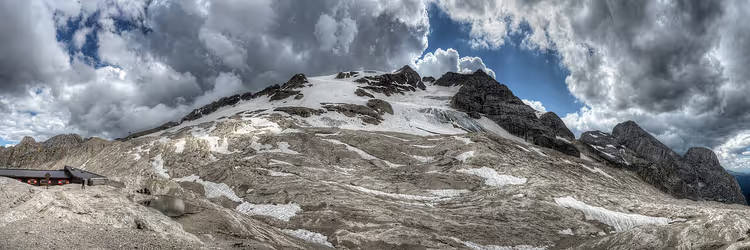
Arabba-Marmolada is an area for experienced skiers. It is known for steep descents and direct access to the Marmolada glacier. The village itself is small: a few hotels and guesthouses with pools, saunas, and fitness rooms.
There is little in the way of entertainment here. The resort attracts skiers who want to sharpen their technique on the red and black slopes of Mount Porta Vescovo and the glacier. Winding, high-speed sections with a steep pitch demand confident technique.
Despite the challenging terrain, beginners will find a few short blue runs near Passo di Campolongo. You'll have access to sledding runs, paragliding launch sites, snow parks, and ice rinks. After skiing, pubs, pizzerias, and restaurants are open, and buses run from Bolzano, Venice, and Innsbruck.
- Slopes: red and black runs, plus short blue ones near Passo di Campolongo
- Getting there: buses from Bolzano, Venice, and Innsbruck
- Who it's for: experienced skiers and freeriders
- The catch: almost no evening entertainment
- Hotels: see hotels in Arabba-Marmolada
9. Valle Isarco
 © Jonas Bubel · CC BY-SAPhoto: Jonas Bubel, CC BY-SA (https://creativecommons.org/licenses/by-sa/3.0), Wikimedia Commons
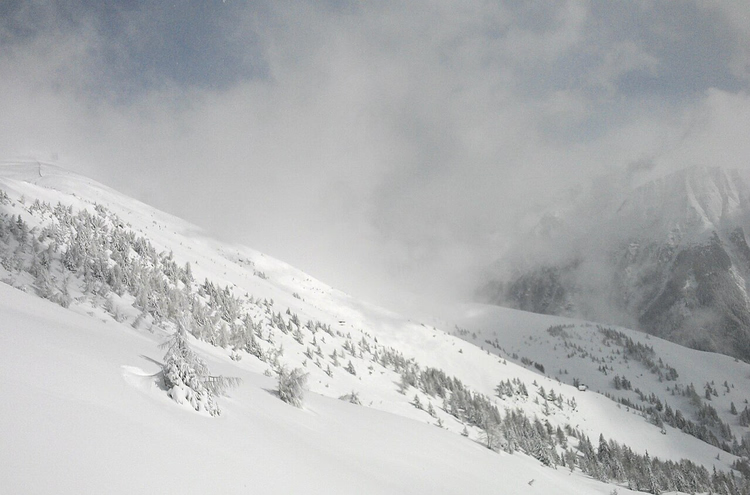
Valle Isarco is a valley in South Tyrol and a popular destination for skiers. The area is covered by a dense network of slopes and lifts and includes a dozen high-altitude villages. Guests are welcomed by the historic town of Bressanone, surrounded by mountain ridges.
Bressanone has a wide choice of hotels, plus sports centers, wine restaurants, and shops. You can reach the valley by public transport from Bolzano and Innsbruck. Skiing is split across three ski centers: Plose, Jochtal, and Gitschberg-Maranza.
The runs suit both beginners and experienced skiers. There are gentle sections with safe terrain and steep slopes with winding turns. Experienced skiers can look forward to a long route with a big vertical drop, while thrill-seekers have off-piste descents. Separate areas are set aside for snowboarders, sledding, and skating. The terraces offer panoramas of the Dolomites.
Children can learn on practice areas, while adults relax after skiing at the aquatic center, in a jacuzzi, or with a massage. Snowshoe hikes through the foothills are also available.
- Slopes: three resorts, gentle and steep runs, off-piste
- Getting there: public transport from Bolzano and Innsbruck
- Who it's for: skiers of any level and families with children
- Hotels: hotel prices in Valle Isarco
10. Arabba
 © This Photo was taken by Wolfgang Moroder . Feel free to use my photos, but please mention me as the author and send me a · CC BY-SAPhoto: This Photo was taken by Wolfgang Moroder . Feel free to use my photos, but please mention me as the author and send me a, CC BY-SA (https://creativecommons.org/licenses/by-sa/3.0), Wikimedia Commons
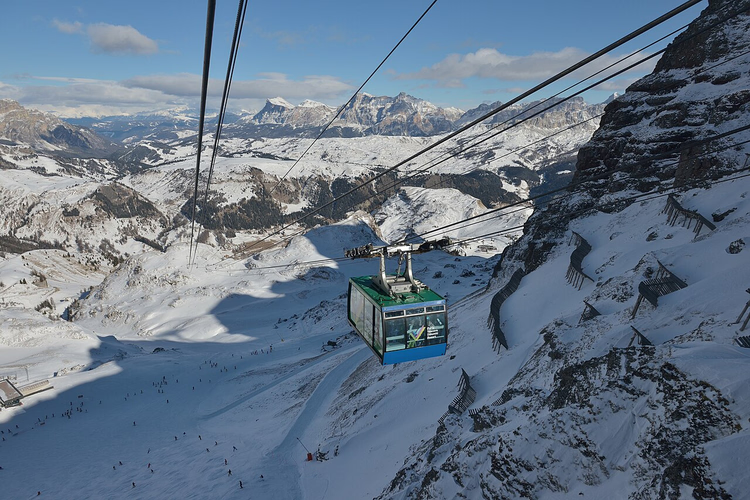
Arabba is a small village surrounded by the Sella massif. Reliable snow cover, crisp air and sculpted slopes have made it one of Italy's popular ski destinations. Experienced skiers come here because the resort is packed with challenging descents.
Arabba has several hotels with pools, restaurants and fitness centers. A network of lifts takes you up to the resort's highest points. Red and black runs descend from the peaks of Punta Rocca and Porta Vescovo. The area offers strong freeride potential, with vast off-piste zones covered in soft snow. Cross-country skiers will enjoy the well-groomed flat trails.
Activities include paragliding, snowmobile rides and mountain walks. After a full day in Arabba, you can explore architectural landmarks, castle ruins and local museums. If you're after lively parties, you'll find it quiet here: only a few pizzerias, bars and shops are open. You can get there by bus from the airports of Bolzano, Milan, Verona and Treviso.
- Slopes: red and black, plus off-piste terrain for freeriding
- Getting there: buses from Bolzano, Milan, Verona and Treviso
- Who it's for: experienced skiers and freeriders
- The catch: almost no evening entertainment
- Hotels: hotels in Arabba on Trip.com
11. Civetta
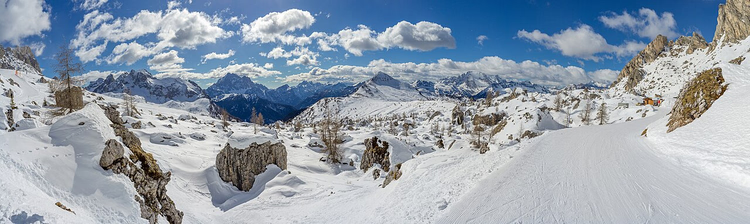
Civetta is a ski area in the northwestern part of the Veneto region. It connects the villages of Alleghe, Selva di Cadore, Zoldo and Palafavera, where there are plenty of hotels for every need. Well-groomed runs of varying difficulty are linked by a modern lift network.
 © This Photo was taken by Wolfgang Moroder . Feel free to use my photos, but please mention me as the author and send me a · CC BY-SAPhoto: This Photo was taken by Wolfgang Moroder . Feel free to use my photos, but please mention me as the author and send me a, CC BY-SA (https://creativecommons.org/licenses/by-sa/3.0), Wikimedia Commons
Both gentle blue slopes and winding red runs that snake through spruce forests are well set up here. Most of the trails are aimed at intermediate skiers. Civetta's main attraction is the long black run Val Zoldana. The terrain here is rocky, so off-piste skiing requires caution. Snowboarders can head to the slopes of Mount Fertazza, which have a dedicated area with jumps.
For children, there's the Piani di Pezze park with attractions and entertainers. After skiing, you can swim in a pool, hit the sauna, visit the ice arena, and in the evening choose a wine bar, restaurant or disco. Buses connect the area with major Italian cities; the nearest airports are in Bolzano and Treviso.
- Slopes: blue, red and the black run Val Zoldana
- Getting there: buses, nearest airports in Bolzano and Treviso
- Who it's for: intermediate skiers, snowboarders and families with children
- The catch: rocky terrain makes off-piste skiing risky
- Hotels: hotel prices in Civetta
Sella Ronda ski circuit
 © Schwiebi · CC BY-SAPhoto: Schwiebi, CC BY-SA (https://creativecommons.org/licenses/by-sa/3.0), Wikimedia Commons
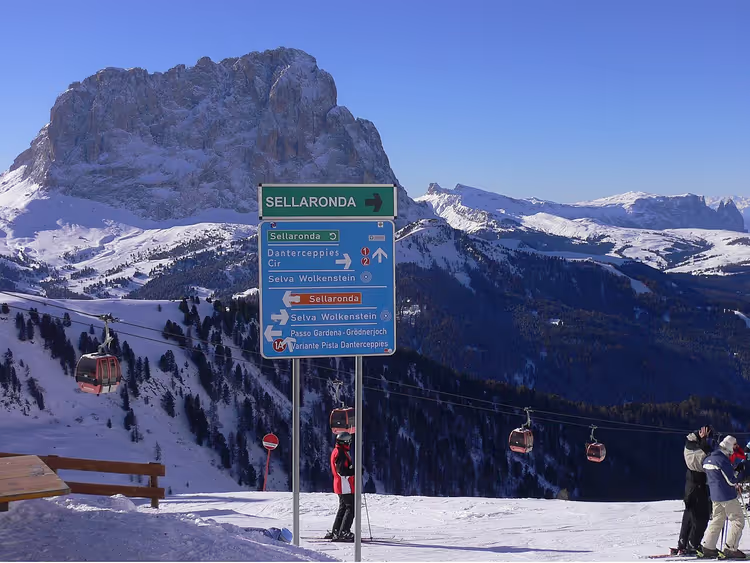
Sella Ronda is a circular route around the Sella massif. It's called a "carousel" and a "round-the-world trip." In one day you loop around the massif, alternating between lifts and descents. The route works even for beginners, as long as you're confident on blue slopes.
The route can be done in two directions. The green one goes counterclockwise, the orange one clockwise. According to Dolomiti Superski, the loop stretches 44 km: 23 km on skis and 21 km on lifts (as of 09/2026, official website). The route is long and requires stamina.
The green option is easier for beginners. Signs are close together and the difficulty is minimal. It takes half a day at a relaxed pace. The views along the way are panoramic, so bring a camera.
The orange option is for experienced skiers and snowboarders. Navigation is trickier here, signs are farther apart, and the pace is faster. Both loops pass through the same passes: Passo Campolongo, Passo Pordoi, Passo Sella, and Passo Gardena.
You can start the loop from any of the four valleys: Alta Badia, Arabba, Val Gardena, and Val di Fassa. Before heading out, grab a map and pinpoint your current location, then look for markers in the color you need. Signs lead from lift to descent, so it's hard to get lost. If you're unsure about your stamina, keep a relaxed pace and take frequent breaks.
Along the way you constantly see new panoramas of the Sella massif. Stop at viewpoints and mountain huts, where the food is hearty. Keep in mind that it's easy to miss the last lift, so watch the closing times of the cable cars.
In winter, the resorts run from December to April; in summer, people hike and bike here. Fall is quieter and cheaper, and spring brings lots of sun. Many people come specifically for Sella Ronda and stay for several days.
- Length: 44 km, of which 23 km on skis
- Directions: green counterclockwise, orange clockwise
- Getting there: start from Val di Fassa, Arabba, Val Gardena, or Alta Badia
- Who it's for: beginners (green loop) and experienced skiers (orange)
- Hotels: find a hotel near Sella Ronda
Dolomites resorts on the map
The map shows all the resorts and areas from the list. You can open it and plan your transfers between valleys in advance.
Ski resorts of the Dolomites
Places on the map
- 1Val di Fassa Italian valley, blue and red slopes for intermediate level
- 2Val Gardena Three villages, 175 km of slopes for all levels
- 3Alta Badia 130 km of slopes, the Gran Risa black run near La Villa
- 4Tre Valli Towns of Moena and Passo San Pellegrino, beginner slopes
- 5Val di Fiemme Gentle slopes by the Latemar massif, the Olympia run
- 6Cortina d'Ampezzo Prestigious resort, about 120 km of slopes for all levels
- 7Kronplatz Ski region of South Tyrol, red and blue runs
- 8Arabba-Marmolada Steep slopes and the Marmolada glacier for experienced skiers
- 9Valle Isarco Three ski centers: Plose, Jochtal and Gitschberg-Maranza
- 10Arabba Village by the Sella massif, difficult red and black descents
- 11Civetta Base in northwest Veneto, the Val Zoldana black descent
⁉️🤔 Frequently asked questions
When is the best season for skiing in the Dolomites?
The season usually runs from December to April, and high-altitude areas and the Marmolada glacier stay open longer. February has the most snow, but also the most tourists. If you care about sun and short lift lines, go in March. Check exact opening dates on the Dolomiti Superski website.
How much does a ski pass cost and what does it cover?
A single Dolomiti Superski pass gives you access to all 12 areas in the network. The price depends on the number of days and the season. It's cheaper to buy online several days in advance. The ski pass is convenient if you want to switch resorts every day.
Can a beginner do Sella Ronda?
Yes, the green loop goes counterclockwise and works for beginners. The difficulty is minimal and signs are close together. Allow half a day and start in the morning so you don't have to rush. If you're not confident on red slopes, choose the green option and don't cut across to the orange one.
Where should I stay close to the slopes?
In Alta Badia and near Sella Ronda, hotels are often right at the lifts. In Valle Isarco and Cortina d'Ampezzo there's more choice, but you take a bus to the slopes. Arabba has limited lodging, so book early. Compare prices and availability several months ahead.
Do I need a car at the Dolomites resorts?
No, buses run between resorts, and lifts connect the areas into a single network. Many valleys are easy to reach from Bolzano, Verona, or Innsbruck airports by transfer. A car is useful if you're staying far from the lifts. In winter, some mountain roads are closed, so check bus schedules in advance.
In short: what to book
There's a resort for every level in the Dolomites. Beginners will like Kronplatz and Tre Valli, intermediates Val di Fassa and Alta Badia, advanced skiers Arabba-Marmolada and Arabba. If you want a town with infrastructure, go for Cortina d'Ampezzo, and for quiet skiing head to Val di Fiemme.
Plan your transfers around a single ski pass: that way you can cover several valleys in one trip. Hotels near the lifts sell out first, so book early. Find a hotel in the Dolomites on Trip.com

A small editorial team writing guides for independent travel. We travel ourselves, but we haven’t been everywhere, so we check prices, opening hours and how to get there against official sources.