
















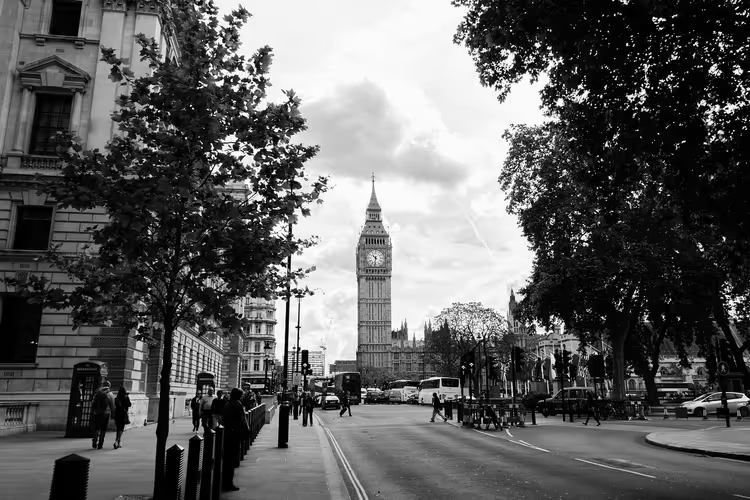
London in three days: 20 places from Big Ben to Greenwich
London seems enormous. In reality, half of its landmarks stand along a single river.
Big Ben, the Tower of London, Westminster Abbey, and Greenwich are connected by a direct Tube line and a short walk along the embankment (as of 09/2026, official London tourism portal). Getting to each of the 20 places takes 20 to 40 minutes.
We have put together twenty places worth seeing this year: towers, palaces, markets, museums, and ships. For each spot you will find what sets it apart from its neighbors on the list and how to get there. We checked hours and prices against official websites.
Ad: this article contains affiliate links, we earn a commission if you book through them, at no extra cost to you.
1. Big Ben and the palace of Westminster
💡 In short:
- Main spots: Big Ben, the Tower, the Abbey, and Greenwich
- Free places: Thames Barrier, Borough Market, Saatchi Gallery
- Buy tickets to the Tower, the Abbey, and Madame Tussauds online
- Prices and opening hours: 09/2026, verified on the official website
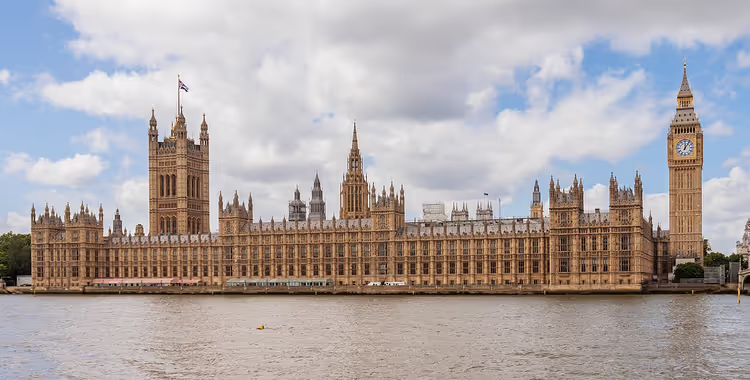 © Terry Ott from Washington, DC Metro Area, United States of America · CC BYPhoto: Terry Ott from Washington, DC Metro Area, United States of America, CC BY (https://creativecommons.org/licenses/by/2.0), Wikimedia Commons
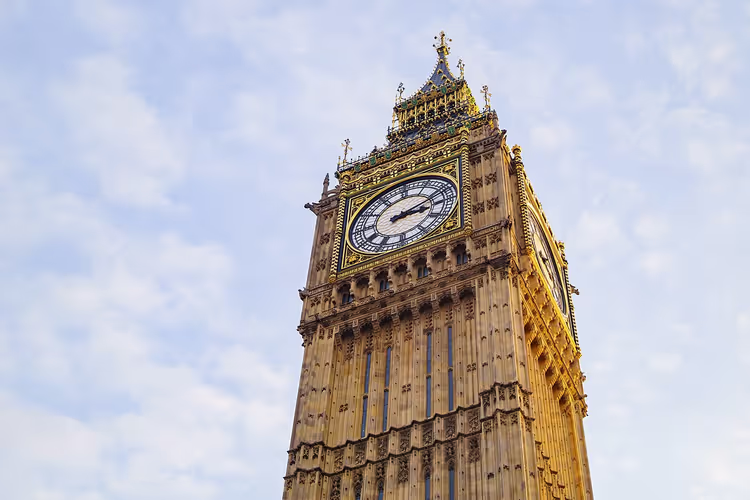
A common misconception is tied to Big Ben. The name is used for the tower, the main clock, and the great bell inside the mechanism. Officially the tower is named Elizabeth Tower and rises 96 meters above the palace (as of 09/2026, UK Parliament).
There are four clock faces, each made of opal glass. You can see the hands, nearly three meters long, from the other bank of the Thames. The clock mechanism weighs about five tons, which is why the tower keeps some of the most accurate time in the city. The concrete foundation goes down fifteen meters, and the walls are faced with colored limestone. The Big Ben bell weighs over thirteen tons, and its chime can be heard across the center.
The tower was built after a fire destroyed the old parliament. The work was led by architect Charles Barry, with neo-Gothic details added by Augustus Pugin.
Tourists are not allowed inside. You can view the tower from Westminster Bridge or Parliament Square. The best light for photos is in the morning, before the sun moves behind the palace.
- The catch: you cannot go inside the tower, only view it from outside.
2. The tower of London and the crown jewels
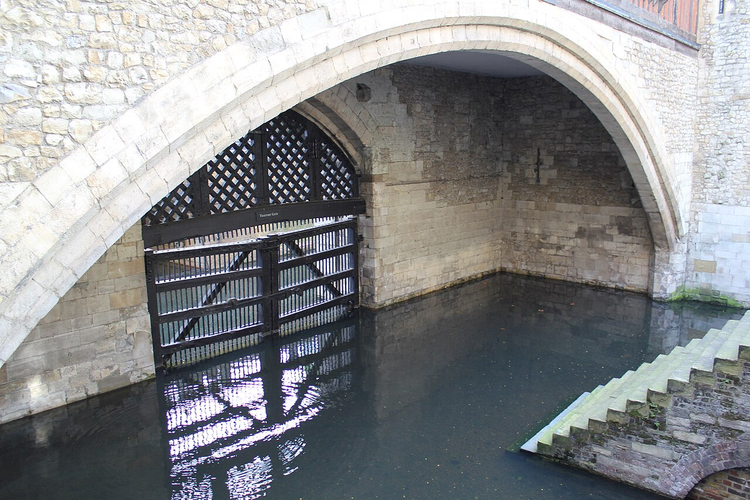 © Richard Nevell · CC BY-SAPhoto: Richard Nevell, CC BY-SA (https://creativecommons.org/licenses/by-sa/3.0), Wikimedia Commons
The fortress on the north bank of the Thames served as a palace, a prison, and a storehouse. The oldest walls date back to the 11th century (as of 09/2026, Historic Royal Palaces). Seven people from the royal circle were executed here, including two of Henry VIII's wives: Anne Boleyn and Catherine Howard.
Over nine centuries, the fortress's purpose changed. It has been a mint, an arsenal, a zoo, and a royal treasury. Today, tours are led by guards in Victorian uniforms, and on holidays they wear Tudor costumes.
Get skip-the-line Tower of London tickets on GetYourGuide in advance. The fortress opens at 9:00, last entry is at 16:30, and the buildings close at 17:30 (as of 09/2026, official Tower of London website). You'll have time to see both the walls and the arms exhibition.
- The catch: a full visit takes two to three hours, you won't manage it in one.
3. London Eye over the Thames
The London Eye is a 135-meter Ferris wheel on the south bank of the Thames (as of 09/2026, London Eye). It opened for the year 2000 as a temporary five-year project, but the attraction stuck around.
The project was conceived by architects David Marks and Julia Barfield for a Millennium competition. The jury rejected it, but the authors found investors. The finished sections were transported along the Thames on barges and assembled over the water.
Three dozen glass capsules hold several hundred people at a time. A full rotation takes about half an hour. During that time you'll see the entire center: from Parliament to St. Paul's Cathedral.
The capsules move slowly, so nobody blocks your view. Timed slots are shorter than the regular queue, so get your London Eye ticket in advance. Go up around sunset, when the panorama is especially good.
- The catch: the ticket isn't cheap, and the rotation itself is short, about half an hour.
4. Chinatown in Soho
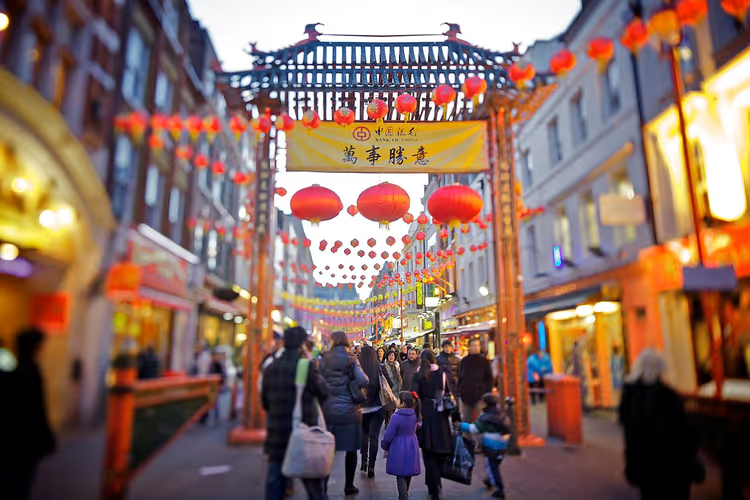 © Aurelien Guichard from London, United Kingdom · CC BY-SAPhoto: Aurelien Guichard from London, United Kingdom, CC BY-SA (https://creativecommons.org/licenses/by-sa/2.0), Wikimedia Commons
Chinatown occupies a couple of blocks around Gerrard Street in Soho. The neighborhood grew up on the edge of a rough area where Huguenots, Hong Kong Chinese, and interned Italians settled.
The old English buildings took on an Asian look: signs, lanterns, and gates. There are almost no permanent residents, but dozens of cafes and shops operate here. You can buy Tibetan herbs, spices, and exotic alcohol.
The streets of the neighborhood are narrow, and by evening queues form outside the restaurants. Entry to the area is free, you only pay for food (as of 09/2026, Visit London guide).
- The catch: the area is tiny, you'll walk around it twice in half an hour.
5. London zoo in Regent's park
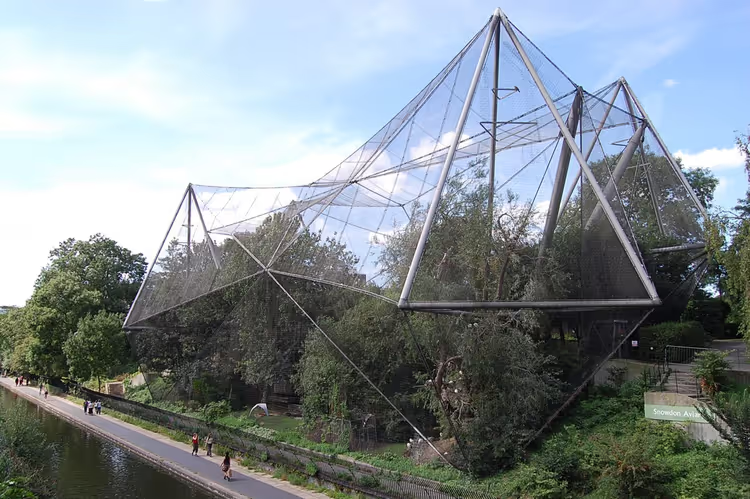 © heena_mistry · CC BYPhoto: heena_mistry, CC BY (https://creativecommons.org/licenses/by/2.0), Wikimedia Commons
The zoo opened in 1828 in Regent's Park and became the world's first scientific zoo (as of 09/2026, London Zoo). It was the first in the world to have a reptile house, an aquarium, and an insect house open to visitors.
The zoo was conceived as a scientific center, not just entertainment. Animals are studied here, and the collection itself is largely supported by donors.
The aquarium has three halls with sea and ocean life. The reptile house holds reptiles from tiny snakes to large species, and the Gorilla House is built in Art Nouveau style. A separate pavilion is dedicated to tropical butterflies. The sections are connected by paths through the park, and between them you can rest by the pond.
Peacocks roam freely along the paths, and ducks gather by the water. Allow at least two to three hours for your visit. London Zoo tickets online are cheaper than at the ticket office, and you won't have to wait in line.
- The catch: admission is paid, and covering all the pavilions takes a lot of time.
6. Thames barrier and royal docks park
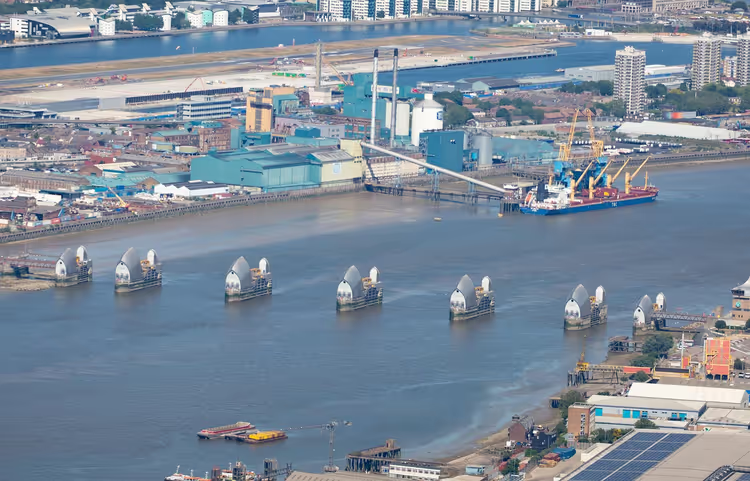
The Thames Barrier is both a flood defense dam across the river and a park on the site of the old docks. The barrier opened in 1984 and holds back floods and tidal surges (as of 09/2026, Wikipedia).
This was once the Royal Docks, which polluted the riverbank for decades. The industrial zone was turned into a recreation area and the city's green lungs. The barrier's main job is simple: hold back the water during high tides and storms.
The park covers more than twenty acres. Dozens of fountains shoot up at the entrance, and yew and honeysuckle line the paths. There are playgrounds, basketball courts, bridges, and picnic spots. The park is also home to a memorial pavilion honoring those who died in World War II.
From the embankment you get a view of the river and the lights of east London. Admission is free, so come here at sunset.
- The catch: the park is far from the center, in the east of the city.
7. Spencer House and the Spencer collections
Spencer House was built in the 18th century for the Earls Spencer (as of 09/2026, Spencer House). The neoclassical palace is considered one of the first buildings of its kind in London.
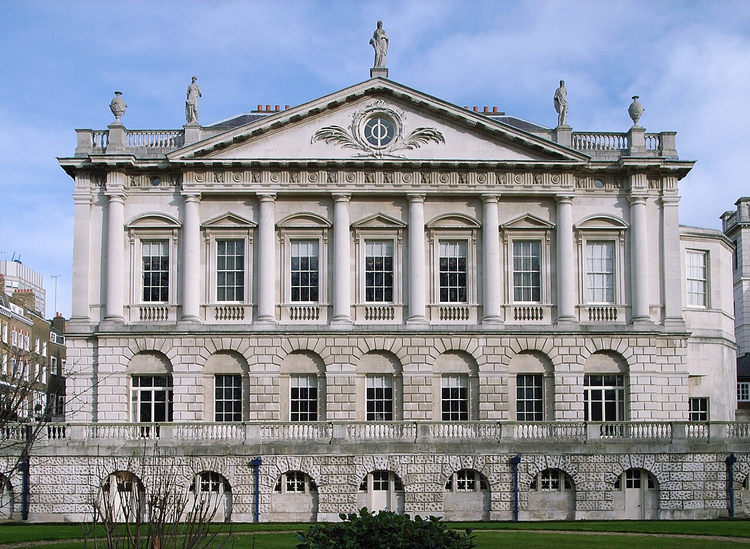 © Steve Cadman · CC BY-SAPhoto: Steve Cadman, CC BY-SA (https://creativecommons.org/licenses/by-sa/2.0), Wikimedia Commons
As far back as the late nineteenth century, the Spencer family rented the house out. The palace hosted receptions attended by the highest nobility. After the war, the building was restored and its treasures were returned.
After Princess Diana's death, interest in the house grew. Now tourists can visit eleven rooms on a guided tour. Inside you'll see marble sculptures and golden palm trees wrapping around columns. The only way to get inside is on Sundays, except in January and August, in groups of up to 20 people (as of 09/2026, Spencer House website).
- The catch: there is no self-guided entry, only a Sunday tour.
8. Marshalsea prison and Borough High street
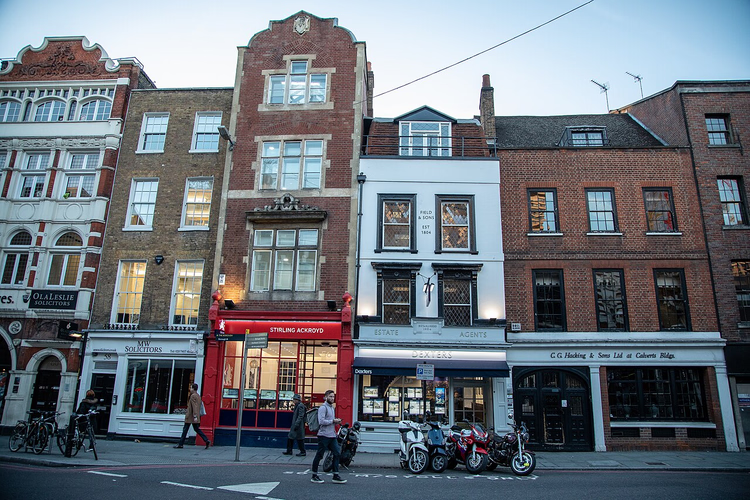 © Jwslubbock · CC BY-SAPhoto: Jwslubbock, CC BY-SA (https://creativecommons.org/licenses/by-sa/4.0), Wikimedia Commons
Marshalsea Prison was made famous by Dickens. His father was imprisoned here for debt, and the prison itself became the setting for the novel Little Dorrit.
Whole families served time in the prison, and life here followed its own rules. A teenage Dickens worked at a blacking factory.
Almost nothing remains of the debtors' prison. A wall about four meters high survives on Borough High Street, with two barred arches that served as gates. The wall is overgrown with moss and ivy.
Nearby stands St George the Martyr church, which also appears in the novel, and one of the stained glass windows depicts a girl (as of 09/2026, Wikipedia). It's a quiet spot just steps from the bustling Borough Market.
- The catch: there is almost nothing to see except the wall and two arches.
9. The Coliseum theatre on St Martin's lane
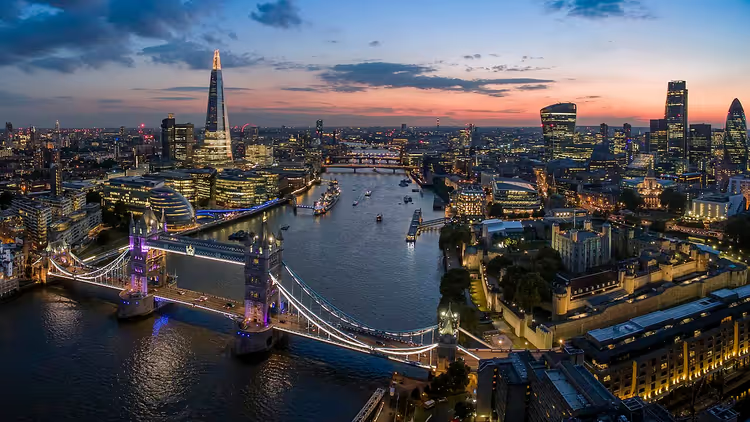 © Ilya Grigorik · CC BY-SAPhoto: Ilya Grigorik, CC BY-SA (https://creativecommons.org/licenses/by-sa/3.0), Wikimedia Commons
The Coliseum Theatre opened in 1904 (as of 09/2026, Wikipedia). The auditorium seats 2,358 people, making it the largest theatre in the city.
The first variety show was staged here in the early twentieth century. The building was designed by architect Frank Matcham, and its facade quickly became a model of theatre architecture.
The facade is decorated with columns and sculptures, and the dome is topped with a globe bearing the theatre's name. Inside, the auditorium features a velvet curtain and gilded cupids. Operas and musicals are performed here by leading singers, and premieres are often attended by members of the royal family. There are two restaurants, and champagne with snacks can be brought to your box on request.
Check the programme and tickets in advance on the theatre's official website. The hall's acoustics are renowned across the city, so tickets for opera evenings sell out quickly.
- The catch: the theatre does not admit visitors inside outside of performances.
10. Westminster Abbey
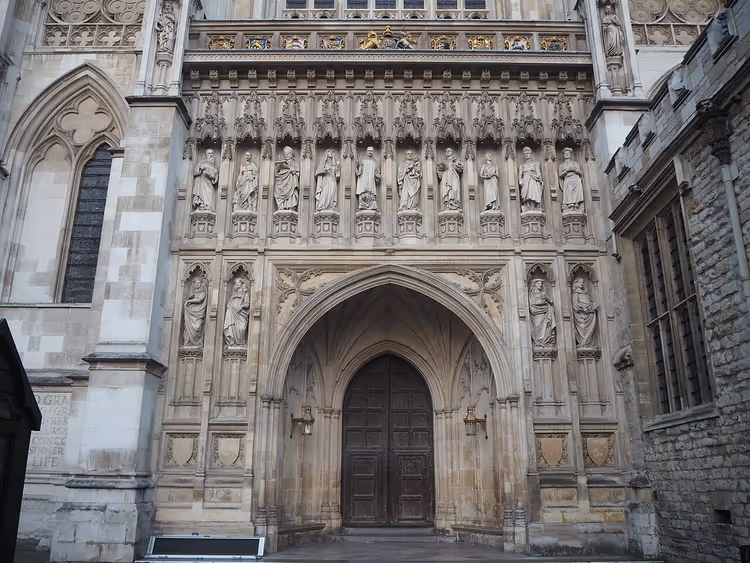 © Alicank · CC BY-SAPhoto: Alicank, CC BY-SA (https://creativecommons.org/licenses/by-sa/4.0), Wikimedia Commons
Westminster Abbey was added to the UNESCO list in 1987 (as of 09/2026, Westminster Abbey). English monarchs have been crowned here, and scientists, poets, and members of royal families are buried here.
The first church on this site was built as early as the seventh century. Under Edward the Confessor, the church was rebuilt, and the king was buried there. Since then, the abbey has been the coronation site for English monarchs.
Later, Prince William and Kate Middleton were married here. The ceremony was watched around the world. The coronation throne survives inside, and among those buried here are Isaac Newton and Charles Darwin. The abbey remains a working church, with services held here in the morning.
A visit takes over an hour, but the audio guide explains everything as you go. On Sundays, only worshippers are admitted. Book a Westminster Abbey ticket with audio guide in advance, and you will skip the hour-long queue.
- The catch: tourists are not admitted inside on Sundays.
11. Madame Tussauds near Baker street
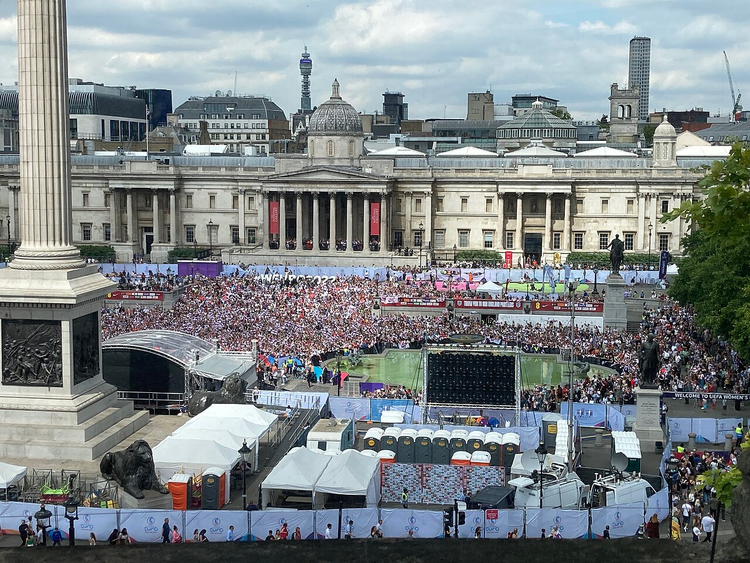 © Matt Brown · CC BYPhoto: Matt Brown, CC BY (https://creativecommons.org/licenses/by/2.0), Wikimedia Commons
Madame Tussauds opened in 1835 and has operated in the same area for nearly two centuries (as of 09/2026, Madame Tussauds). Today the halls contain hundreds of wax figures, from the royal family to sports stars.
At the entrance, visitors are greeted by a figure of Madame Tussaud herself in a black dress and white cap. Modern technology makes realistic eyes and nails possible, and some figures move and speak.
A separate attraction, the Spirit of London, takes visitors through scenes of the past in miniature taxis. The figures move and react to you.
The queue moves quickly here, but tickets should be bought in advance. A Madame Tussauds ticket is cheaper to buy online.
- The catch: opening hours vary, so check the website before your visit.
12. Saatchi gallery on King's road
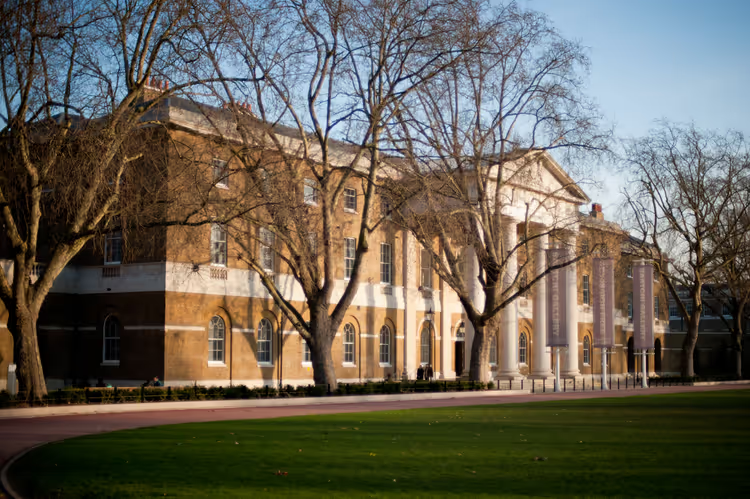
The Saatchi Gallery is a contemporary art museum in a former barracks on King's Road. It was founded by collector Charles Saatchi.
 © Jack Gavigan · CC BY-SAPhoto: Jack Gavigan, CC BY-SA (https://creativecommons.org/licenses/by-sa/3.0), Wikimedia Commons
The founder collected paintings, prints, and installations by contemporary artists. Some of the exhibits, such as a car impaled on a metal pipe, still spark debate.
Four floors are devoted to rotating exhibitions: installations, sculptures, photography. Half of the display consists of works by young artists, so expect plenty of surprises.
Admission to the main area is free; you only pay for individual exhibitions (as of 09/2026, Saatchi Gallery).
- The catch: some exhibitions are paid, and there is almost no permanent collection.
13. Eltham Palace and Gardens
 © Tom Parnell from Dunfermline, Scotland · CC BY-SAPhoto: Tom Parnell from Dunfermline, Scotland, CC BY-SA (https://creativecommons.org/licenses/by-sa/2.0), Wikimedia Commons
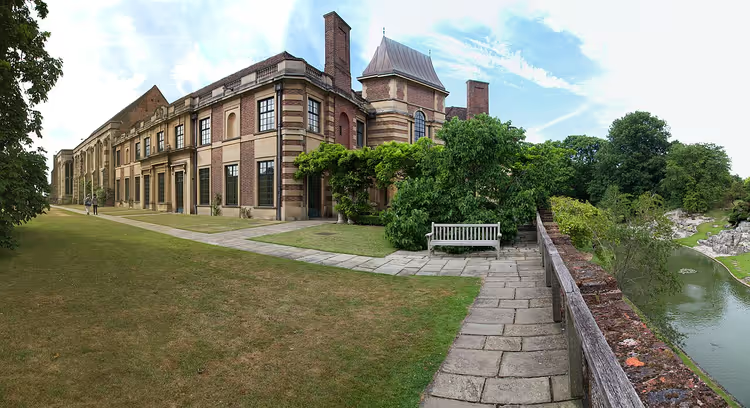
Eltham Palace brings together two eras. The medieval great hall built under Edward IV survives, and next to it stands a 1930s Art Deco house (as of 09/2026, English Heritage).
Henry VIII's royal palace had fallen almost to ruin by the early twentieth century. The Courtaulds bought the site and combined the surviving fragments with a new house.
The walls are clad in lacquered panels of fine wood, and a painted mural hangs in the hall. The dining room was designed with ancient Greek motifs, and the bathroom in Renaissance style. The interiors were created by well-known designers of the 1930s. Two guard figures, a Roman and a Varangian, stand at the main entrance.
The surrounding gardens were laid out in the same period, and roses bloom here in summer. The easiest way to get there is by train from London Bridge; the journey takes about 25 minutes and gets you there without changes. London tours on GetYourGuide help you combine the palace with other sights.
- The catch: the palace is far from the center, and you cannot get there without taking the train.
14. Kensington Palace and Gardens
 © Steve Cadman from London, U.K. · CC BY-SAPhoto: Steve Cadman from London, U.K., CC BY-SA (https://creativecommons.org/licenses/by-sa/2.0), Wikimedia Commons
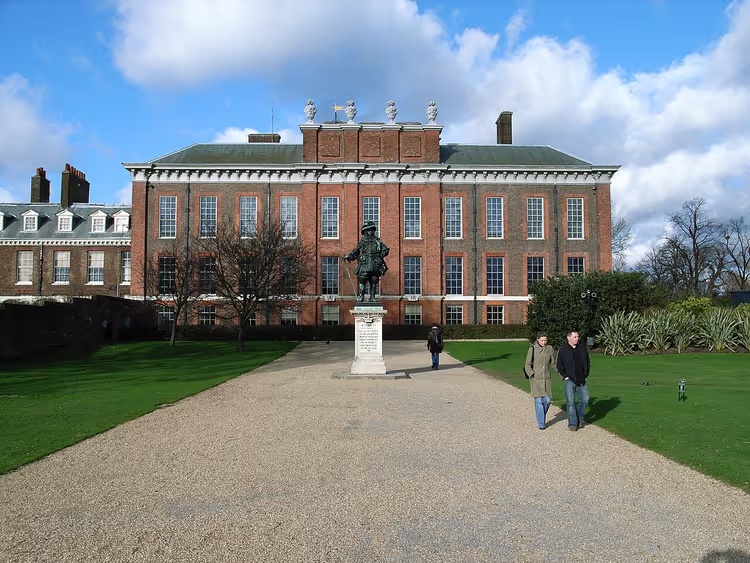
Kensington Palace has served as a royal residence since the 17th century (as of 09/2026, Kensington Palace website). Queen Victoria was born here, and Princess Diana lived here with her children for sixteen years.
Part of the state rooms are open to the public, while Prince William's family lives in the other half. The Sunken Garden, with fountains and flower beds, was created in the Diana Garden. Inside, there is an exhibition of the princess's wardrobe, and a statue of Queen Victoria stands at the entrance.
Nearby lies Kensington Gardens with a pond and a statue of Peter Pan. The palace is open Wednesday through Sunday. Tickets to Kensington Palace are best booked for a specific time, so you will not have to wait in line.
- The catch: the palace is closed on Mondays and Tuesdays.
15. Borough market and street food
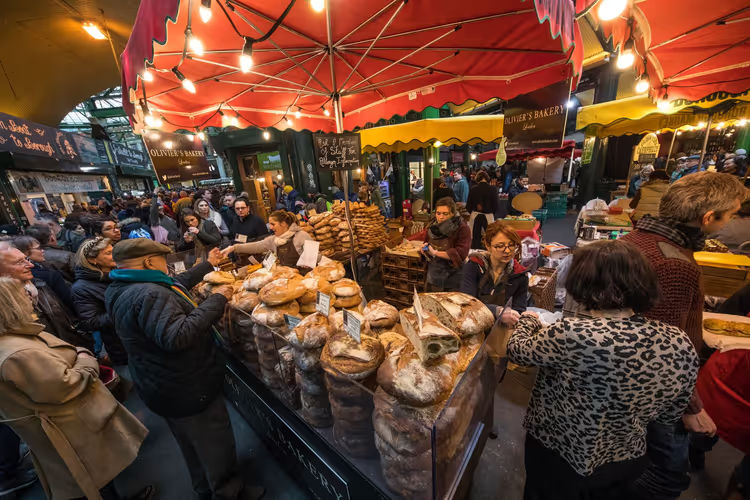
Borough Market on Southwark Street has been operating since the Middle Ages (as of 09/2026, Borough Market). It sells meat, cheese, seafood, and prepared food, and on Saturdays the stalls are impossible to navigate because of the crowds.
The market received a royal charter and over time absorbed neighboring trading rows. It was moved to its current location when the former street could no longer accommodate the flow of shoppers.
In addition to fruit and vegetables, it sells sausages made from venison and wild boar. Cheeses and dairy products are checked by expert panels. The displays are styled with care, and the market itself has appeared in British films.
At the stalls you can grab a quick bite and pick up food for the road. Admission is free; come in the morning, and you will be able to take everything in at your leisure.
- The catch: on Saturdays the stalls are packed with shoppers.
16. The London dungeon and horror theater
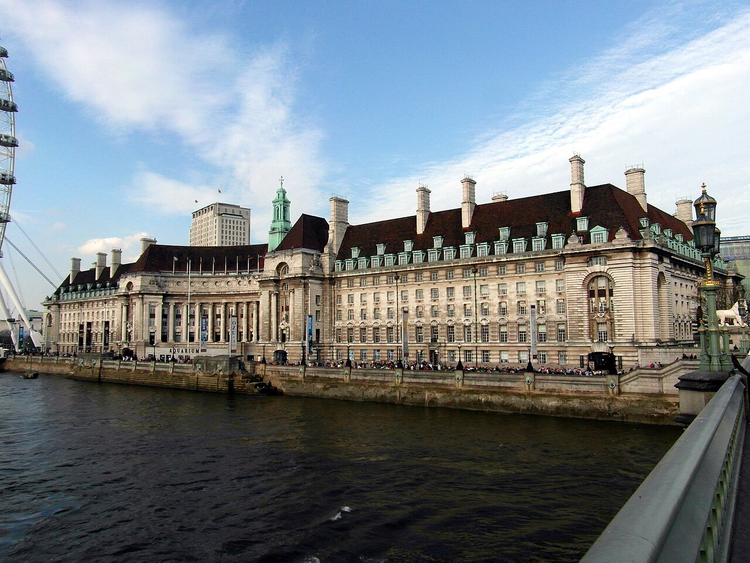 © Reading Tom from Reading, UK · CC BYPhoto: Reading Tom from Reading, UK, CC BY (https://creativecommons.org/licenses/by/2.0), Wikimedia Commons
The London Dungeon is a horror theater with live actors, not a typical museum. Under County Hall opposite Big Ben, grim medieval scenes are recreated.
Guests walk through a mirror maze and meet Henry VIII and Jack the Ripper. Among the characters is also Sweeney Todd, the barber who killed his clients. Light and sound are set up to startle you without warning.
At the end, guests are "sentenced" to descend into the underworld. The attraction is designed for horror fans. Tickets to The London Dungeon are best booked with a timed entry (as of 09/2026, The London Dungeon).
- The catch: the scenes are frightening, so it will be tough with small children.
17. The Sherlock Holmes Museum on Baker Street
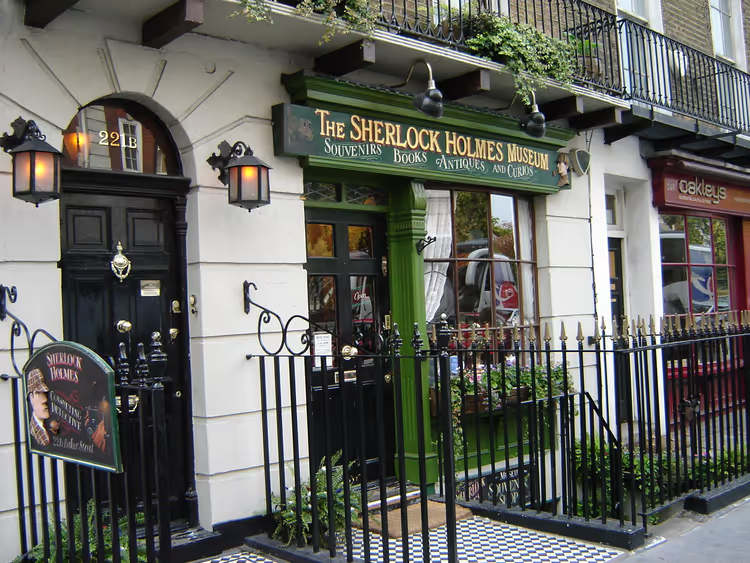
The Sherlock Holmes Museum opened in 1990 at 221b Baker Street (as of 09/2026, The Sherlock Holmes Museum). Four floors recreate the detective's apartment as Conan Doyle described it.
The ground floor houses the ticket office and gift shop. The guides are dressed as Victorian-era maids, and the entrance is guarded by a policeman in a nineteenth-century uniform.
The study has an armchair by the fireplace, a violin, and a pipe. On the mantelpiece lies the very pipe written about in the books. The shelves hold flasks, test tubes, Watson's revolver, and letters. The third floor is given over to Mrs. Hudson's rooms, and the fourth displays a wax collection of literary characters. Among the figures is the head of the Hound of the Baskervilles.
The house is small, so in high season it is best to arrive at opening time. Tickets to the Sherlock Holmes Museum are sold at the door and online.
- The catch: the house is tiny, and in high season the line stretches outside.
18. The Golden Hinde in Southwark
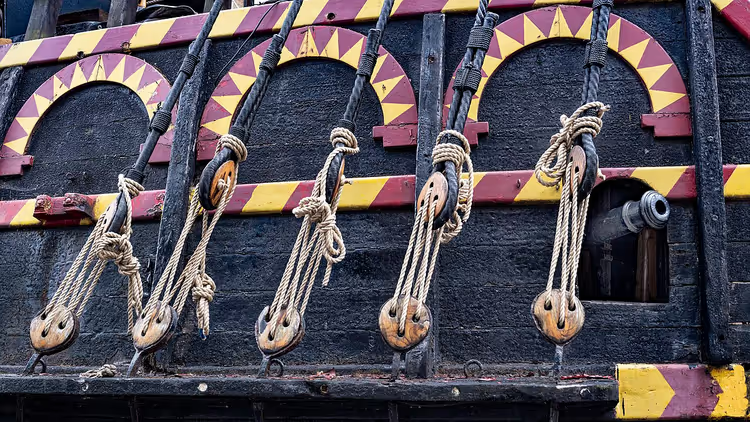 © Garth Weals · CC BY-SAPhoto: Garth Weals, CC BY-SA (https://creativecommons.org/licenses/by-sa/4.0), Wikimedia Commons
The Golden Hinde is an exact replica of Francis Drake's galleon at a pier in Southwark (as of 09/2026, The Golden Hinde). On a ship like this, the explorer circumnavigated the globe in 1577-1580, when the vessel was called the Pelican.
Drake renamed the ship before entering the Strait of Magellan, taking the new name from the coat of arms of the voyage's sponsor. The replica was built in the 1970s and also sent around the world, nearly a quarter of a million kilometers.
The ship has appeared in three films, and today its deck hosts school lessons on the history of seafaring. Inside, visitors are shown the hold and told about the crew's life. The deck offers a view of Tower Bridge and the old port. A ticket to the Golden Hinde is valid throughout the day.
- The catch: the vessel is small, and a visit takes less than an hour.
19. Wellington Arch at Green park
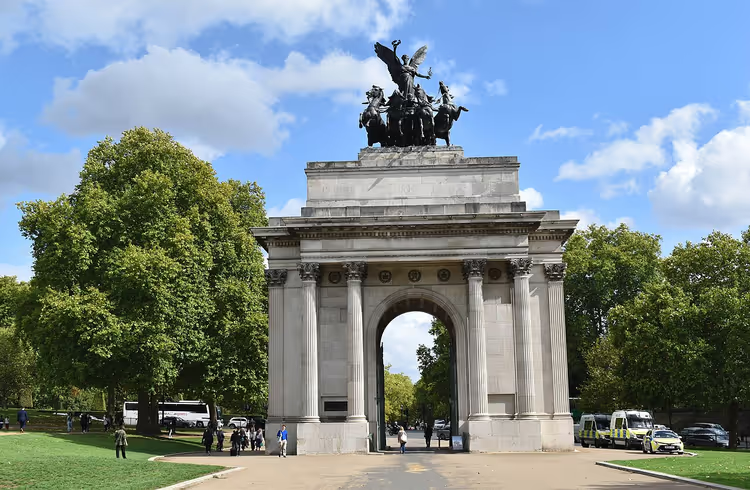 © Canaan · CC BY-SAPhoto: Canaan, CC BY-SA (https://creativecommons.org/licenses/by-sa/4.0), Wikimedia Commons
Wellington Arch at Green Park was erected to commemorate victories over Napoleon. Atop it stands a bronze quadriga driven by a figure of the angel of peace.
The arch was built by order of King George IV. It was originally crowned by a statue of the Duke of Wellington over eight meters tall, but it was removed when the arch was moved to its current location.
The arch once housed a tiny police station. The rooms were later turned into a museum with an exhibition on the monument's history. The interior spans three floors, and some of the space serves as a ventilation shaft for the Underground.
From here it is a stone's throw to Hyde Park and Buckingham Palace. Against the greenery, the arch looks especially striking (as of 09/2026, English Heritage website).
- The catch: the exhibition inside is tiny, and half an hour is enough to see it.
20. The Royal Observatory Greenwich and the meridian
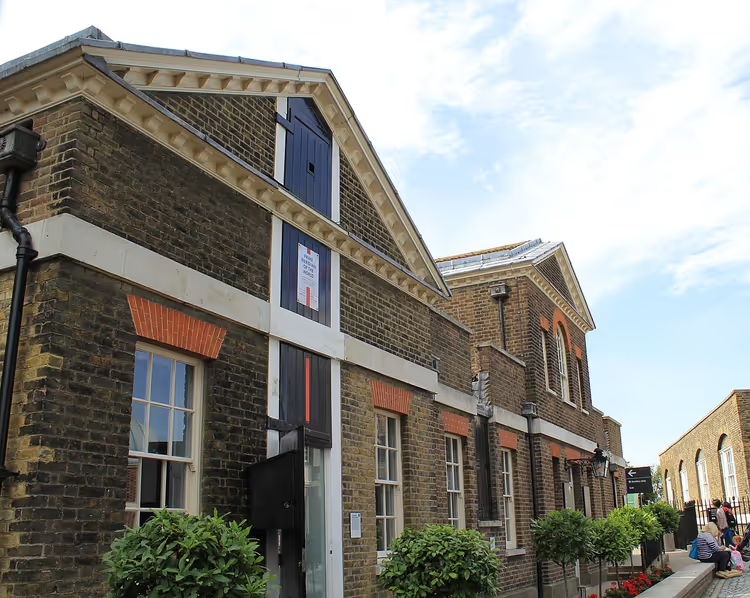 © Katie Chan · CC BY-SAPhoto: Katie Chan, CC BY-SA (https://creativecommons.org/licenses/by-sa/3.0), Wikimedia Commons
The Royal Observatory Greenwich stands on a hill above the Thames, where the prime meridian runs. The observatory was founded in 1675 under Charles II so that sailors could determine longitude at sea (as of 09/2026, Royal Museums Greenwich).
The prime meridian was fixed here in 1884 at an international conference (as of 09/2026, Royal Museums Greenwich). Today the old buildings house a museum of astronomical instruments and clocks. It also displays antique marine chronometers that sailors used to keep time at sea.
From the pier to the observatory, the path climbs uphill and takes about ten minutes on foot. There is a planetarium nearby, and on weekends families come here in droves. You will see all of Greenwich and the Thames from up here.
- The catch: the walk from the pier to the museum goes uphill.
Tours and tickets in London
Guided tours, skip-the-line tickets and activities — most offers can be cancelled free of charge.
See offers on GetYourGuideThe widget loads once you give your consent.
⁉️🤔 Frequently asked questions
How much money do you need for tickets in London?
Tickets to the Tower, the Abbey, and Madame Tussauds cost the most. Three paid attractions in one day will run you about the price of dinner for two in the center. Several places on the list are free, so you can cut your budget significantly (as of 09/2026, London tourist office).
Which of these places are free?
You can visit the Thames Barrier, Borough Market, the Saatchi Gallery, and Chinatown for free. The Abbey, the Tower, the zoo, and Madame Tussauds require a ticket. Parks and the embankment are free, and you can walk around them all day (as of 09/2026, Visit London website).
How many days does it take to see all the spots?
Twenty places are enough for three full days. Give the first day to Westminster and the embankment, the second to the Tower and the City, the third to Greenwich and the southeast. If you are short on time, pick five or six main spots and move along the Thames (as of 09/2026, city tourist office).
When is the city least crowded with tourists?
Early in the morning and after 4:00 pm, the main landmarks are noticeably quieter. For the Tower, they recommend arriving after midday, and for the Abbey it is best not to try to get in on a Sunday. Weekdays outside school holidays are calmer than weekends (as of 09/2026, Historic Royal Palaces website).
How to get to the Royal Observatory Greenwich?
From the center, the easiest way is to take a train to Greenwich station; the ride from London Bridge takes about ten minutes. From there you walk uphill through the park to the observatory. Another option is a Thames boat to Greenwich Pier (as of 09/2026, official observatory website).
In short: what to book
Plan your day so that paid attractions are scheduled, while walks stay flexible. It is better to book the main tickets in advance and for a specific time slot.
If you have | Get |
|---|---|
A day for royal history | The Tower and Westminster Abbey |
A trip with kids | London Zoo and Madame Tussauds |
Little time | Big Ben, the embankment, and the London Eye |
A love of contemporary art | The Saatchi Gallery and Chinatown |
Hotels in the center on Trip.com are best booked together with tickets: areas around Westminster and Southwark save you travel time. And tickets with time slots on GetYourGuide spare you the lines at the entrance.

A small editorial team writing guides for independent travel. We travel ourselves, but we haven’t been everywhere, so we check prices, opening hours and how to get there against official sources.