
















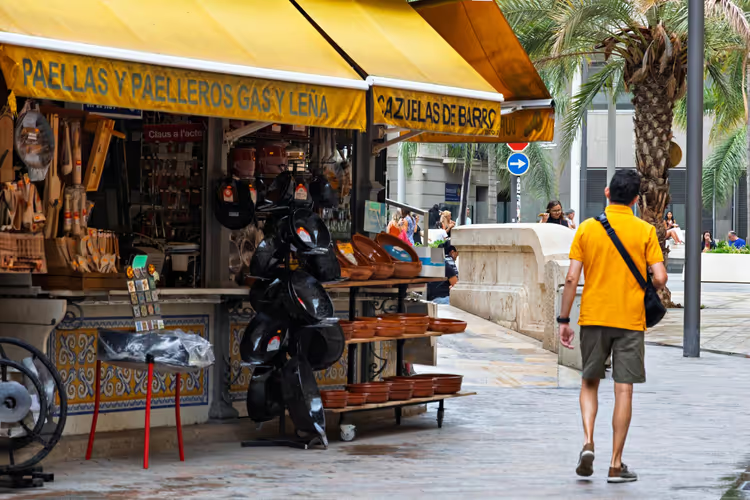
What to bring from Barcelona: 20 souvenirs that won't end up in a drawer
Generic souvenir magnets and keychains end up in a drawer and are forgotten within a month. Bringing home something that says nothing about Barcelona is a shame.
The city has a huge selection of souvenirs, and in tourist shops it's easy to overpay for a trinket made in another country. We've put together 20 purchases from Catalonia and other regions of Spain: food, wine, crafts, and traditions.
We checked sale dates, store addresses, and protected names on official websites on 09/14/2026. Two types of turrón are protected by the IGP mark, and the city's oldest confectionery, La Colmena, has been operating since 1849 (as of 09/2026, official website).
Ad: this article contains affiliate links, we earn a commission if you book through them, at no extra cost to you.
How to choose souvenirs in Barcelona
Buy edible souvenirs where they're made and sold to locals: at markets and specialty shops. At the airport and on La Rambla, the selection is the same but the price is higher.
💡 In short:
- Buy food and wine at gourmet shops and markets, not at souvenir kiosks.
- Clothing and shoes are best bought during sale season: from July 1 in summer, from early January in winter.
- Pack fragile items (porrón, ceramics, oil) in checked luggage and wrap them in soft fabric.
- Sale dates and store addresses: 09/14/2026, verified on the official Barcelona tourism office website.
Browse by category below to quickly find your way around the shops.
Category | What to look for | Where to look |
|---|---|---|
Food | jamón, turrón, cheese, olive oil | markets and gourmet shops |
Drinks | wine, cava, coffee, herbal tea | wine shops and coffee shops |
Clothing and shoes | espadrilles, items from local brands | El Born district and shopping streets |
Traditions | caganer, castanets, porrón | souvenir shops and markets |
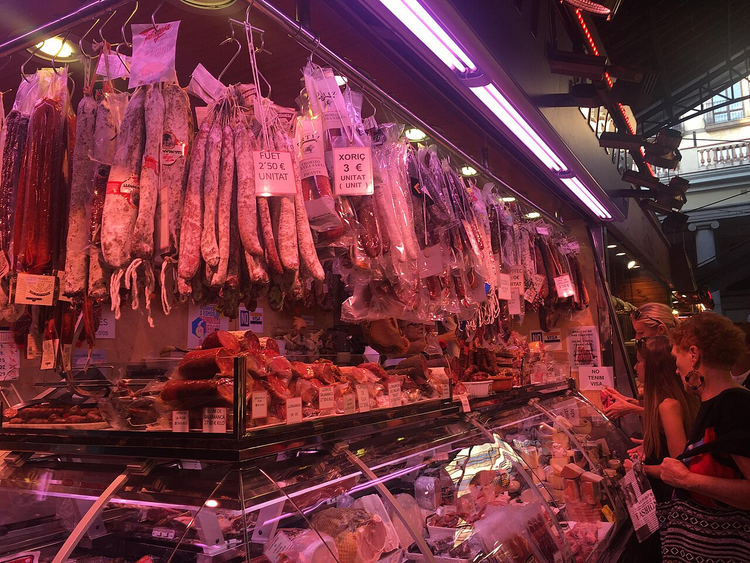
1. Fuet: Catalan sausage with mold
 © Carla Tena · CC BY-SAPhoto: Carla Tena, CC BY-SA (https://creativecommons.org/licenses/by-sa/4.0), Wikimedia Commons
Fuet is a thin dry-cured pork sausage covered in noble white mold. The name translates as "whip": the sausage is indeed flexible and thin. Inside is finely chopped meat, fat, pepper, and garlic, and the sausage matures hanging for several weeks.
Fuet has a light aroma with a mushroom note. The taste is dense but not tough. Checking quality is simple. Touch the sausage: dry mold is normal, while wet and slimy means poor storage.
- How to eat: slice thinly and serve with red wine, cheese, and tomatoes.
- Where to buy: sausage shops and markets, not kiosks near La Rambla.
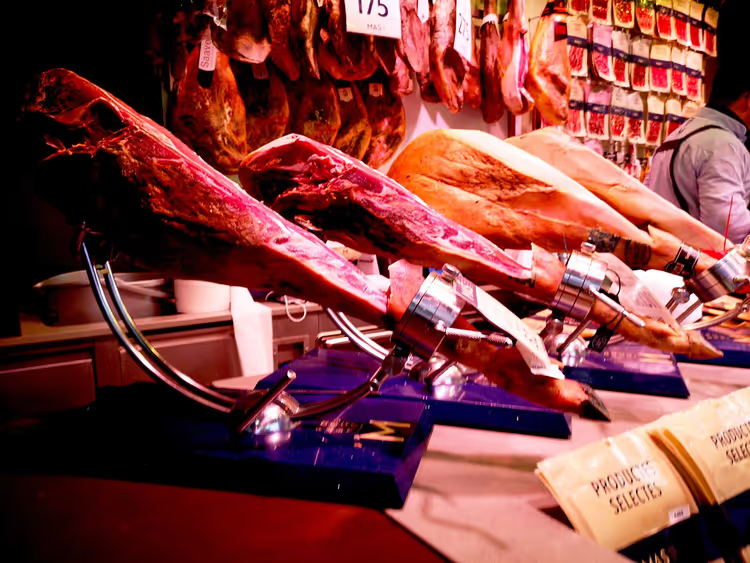
2. Jamón: the main meat souvenir
 © Biser Todorov · CC BY-SAPhoto: Biser Todorov, CC BY-SA (https://creativecommons.org/licenses/by-sa/4.0), Wikimedia Commons
Jamón is dry-cured hind legs of pigs, and in Spain it's almost a national symbol. The difference between grades comes down to the breed and diet of the animal. Budget jamón serrano is made from white pigs on industrial feed. Premium ibérico comes from black Iberian pigs that graze on grass and acorns; its meat is marbled and dark red.
The meat is tough, so it's sliced very thin. It's served with red wine and olives, often on bread rubbed with olive oil. Budget varieties are sold in supermarkets, but it's worth trying them before buying. You can do that at a jamonería: stop by Enrique Tomás at Carrer de Pelai, 18.
- Who it's for: those who want to bring home a delicacy that won't spoil in transit.
- How to transport: get vacuum-sealed packaging and put it in checked luggage.
3. Chorizo: smoked paprika and tapas
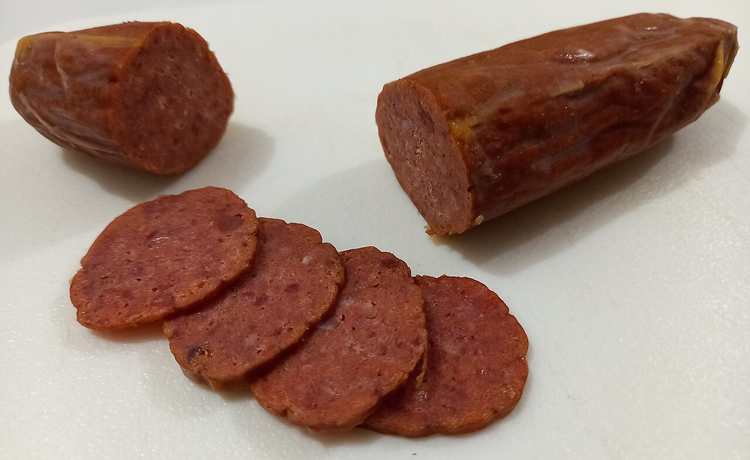
Chorizo is a spicy pork sausage made throughout the country and far beyond. Its smoky flavor comes from paprika dried over oak chips. The flavor is at its best on the Iberian Peninsula, where the sausage is cured according to local recipes.
Chorizo is tied to the history of tapas. King Alfonso X the Wise required taverns to serve bread with a piece of sausage alongside wine, and the habit of small bites stuck. Chorizo is served with olives, cheese, and sun-dried tomatoes, often pan-fried or added to local dishes.
- How to eat: in slices, with wine or beer, alongside cheese.
- Where to buy: gourmet shops and markets.
4. Wine and cava from Catalonia
 © unicron1bot · CC BYPhoto: unicron1bot, CC BY (https://creativecommons.org/licenses/by/2.0), Wikimedia Commons
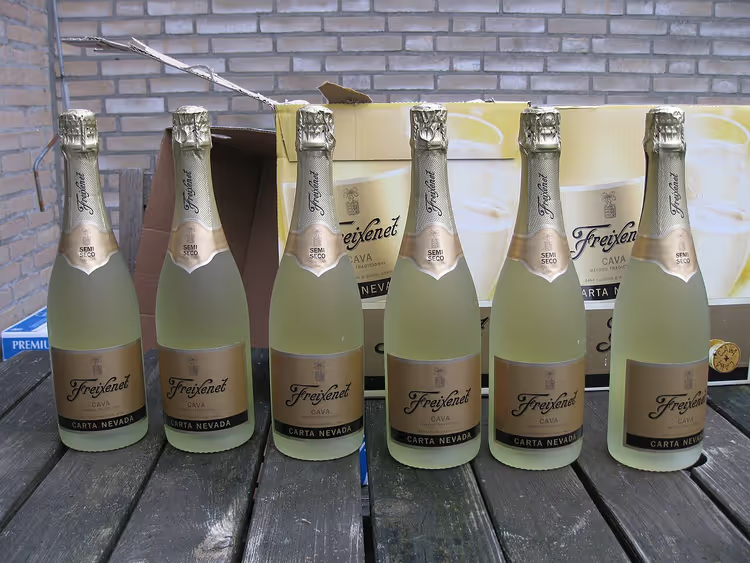
Spanish wine is worth bringing home if only for the unusual grape varieties that rarely appear in stores outside the country. Catalonia produces cava, a sparkling wine made using the classic method, as in Champagne. Local producers often featured in selections include Gramona, Jean Leon, Agustí Torelló Mata, and Castell del Remei.
The country classifies wines by aging and by region, so it's easy to get confused at the shelf. Ask the seller about the crianza or reserva category if you want an aged wine. Red pairs well with jamón and aged cheese, while white goes with fish and seafood.
- How to transport: you can take one bottle in your carry-on, pack the rest in checked luggage.
- Where to buy: wine shops and markets.
5. Chocolate and cocoa from Villajoyosa
 © Diego Delso · CC BY-SAPhoto: Diego Delso, CC BY-SA (https://creativecommons.org/licenses/by-sa/4.0), Wikimedia Commons
Cocoa was brought to Spain back in the Age of Discovery. Columbus was the first to bring the beans to court, but hot chocolate became fashionable later, after Cortés's campaigns. Since then, chocolate has been a local treat, first for the nobility and then for everyone.
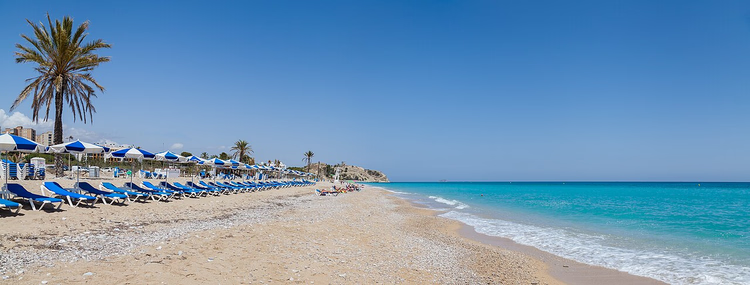
Today Spain is one of the major chocolate producers. Valor founded its production in Villajoyosa in the late 19th century and still keeps traditional recipes. Alongside the classics, they make an unusual green chocolate with vitamins and seaweed.
- What to get: Valor bars and chocolate for hot drinks.
- What to pair it with: churros dipped in thick chocolate.
6. Turrón: almond sweet from Jijona
 © Juan Emilio Prades Bel · CC BYPhoto: Juan Emilio Prades Bel, CC BY (https://creativecommons.org/licenses/by/4.0), Wikimedia Commons
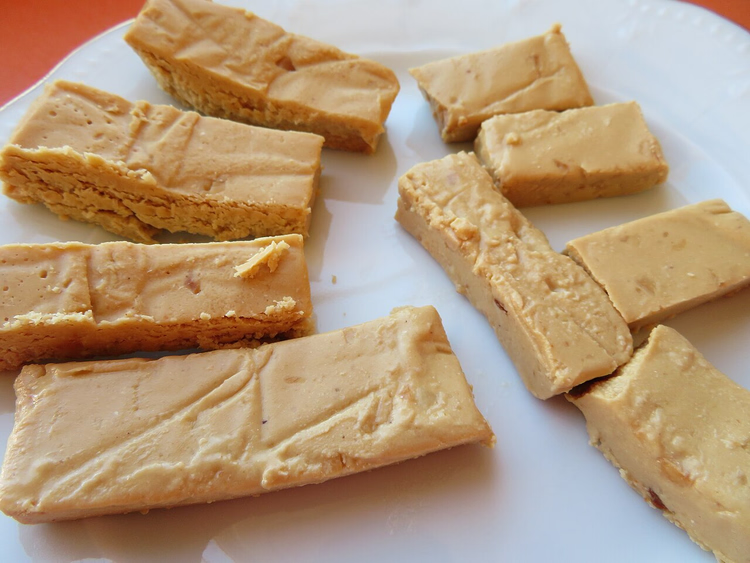
Turrón is a Spanish halva made from almonds, honey, sugar, and egg white. Soft turrón from Jijona and hard turrón from Alicante are protected by an IGP label: they are made only according to regulations and in a specific area (as of Consejo Regulador). Turrón is a must on the Christmas table.
Classic turrón is made in Jijona, and from there it spreads across the country. Chocolate, popcorn, or dried fruit are sometimes added to the almonds, but the base is always the same. The taste is sweet, so a small piece is enough with tea.
- What to get: turrón from Jijona in a gift box.
- Who it's for: those bringing gifts to colleagues and family.
7. Carquinyolis cookies for coffee
 © Mcapdevila · CC BY-SAPhoto: Mcapdevila, CC BY-SA (https://creativecommons.org/licenses/by-sa/3.0), Wikimedia Commons
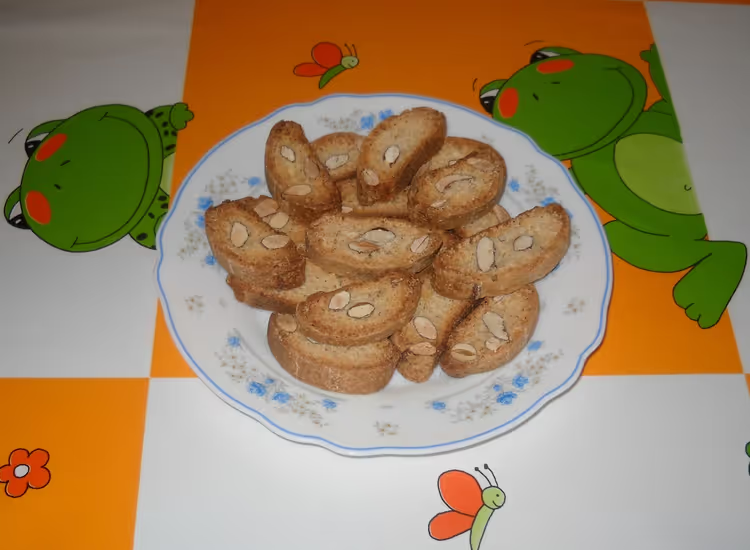
Carquinyolis are Catalan cookies that look like rusks. They are made from flour, sugar, and eggs, and almonds are a mandatory ingredient here. The shape is elongated and dry, which makes the cookies easy to dip into a drink. They are eaten with coffee, tea, or sweet wine, usually for breakfast or an afternoon snack.
Get real carquinyolis at old pastry shops. La Colmena pastry shop at Plaça de l'Àngel, 12 has been operating since 1849, and people buy traditional Catalan sweets here (La Colmena website). Another option: Triomf at Rambla del Poblenou, 41.
- What to get: a bag of carquinyolis for coffee.
- Where to buy: old pastry shops and markets.
8. Manchego, tetilla, and cabrales cheese
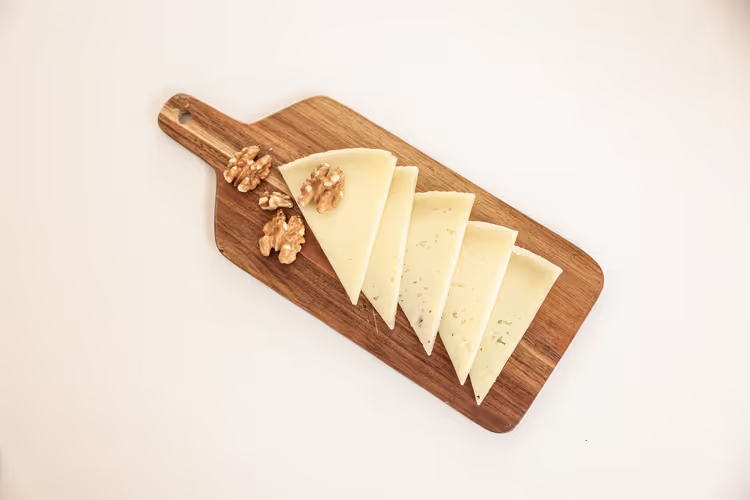
Spain makes hundreds of cheese varieties, and several dozen of them are protected by a designation of origin. Cheeses are made from goat's, sheep's, and cow's milk, and the aging period can reach a year. Some varieties are aged in oil or wine, with spices and truffle added.
The most famous variety, manchego, comes from Don Quixote's homeland and is even mentioned by Cervantes. Tetilla from Galicia is semi-hard, with a lemony, herbaceous flavor and a cone shape. Cabrales from Asturias is a sharp blue cheese that matures in limestone caves under noble mold.
- What to get: a small piece of manchego and tetilla.
- The catch: soft cheeses don't travel well over long distances.
9. Aioli, romesco and brava sauces
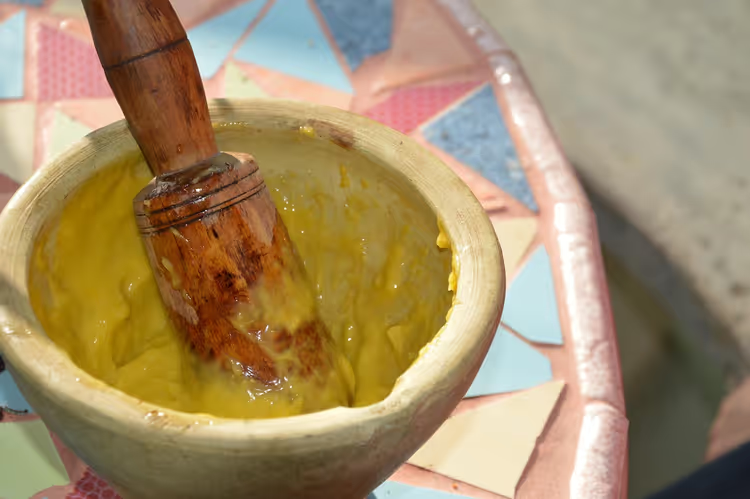
The local cuisine is all about sauces, and a jar of a good sauce makes an unusual gift. The most recognizable one, aioli, is made from oil and garlic, sometimes with egg, mustard and fruit added. It goes well with grilled meat, fish and seafood.
Romesco is made from tomatoes, olive oil, nuts and garlic, and the tomatoes are not boiled but roasted on a baking sheet. It is served with white meat, vegetables and fish. Spicy brava is made from chili peppers, tomatoes, oil and vinegar. The ancient garum with fish, vinegar, honey and olives dates back to Roman times.
- What to buy: aioli and romesco in glass jars.
- How to transport: pack glass in checked luggage and wrap it in fabric.
10. Spices and saffron from markets
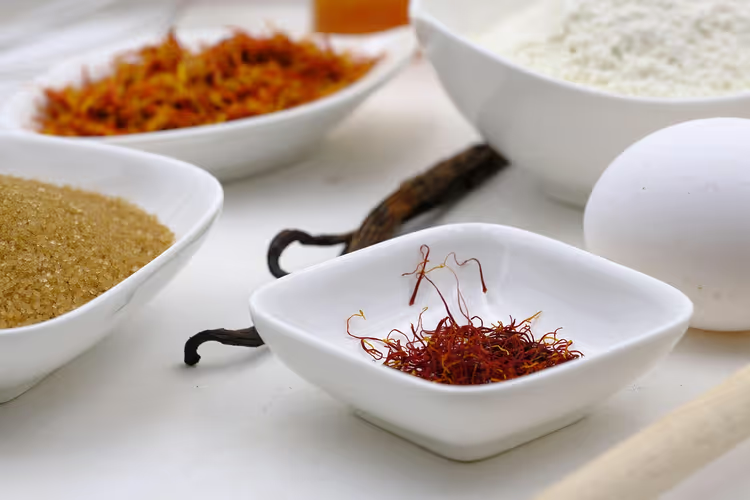
Spices are best chosen at city markets, where everything is sold by weight. Chili peppers, which arrived in the country from the New World, are added to stews, sauces and sausages. Paprika comes in sweet and hot varieties, and people happily bring it home for everyday cooking.
Saffron is a purchase all its own here. The precious spice is made only from stigmas, and a single kilogram requires an enormous number of flowers. Saffron is what gives paella its color and aroma. Among herbs, people most often buy fennel, coriander, parsley and cilantro.
For food tours of markets and tastings, see GetYourGuide.
- What to buy: saffron, smoked paprika and sealed herb blends.
- Where to buy: Mercat de la Boqueria and neighborhood markets (tourist office).
11. Tea and herbal blends
This coffee-loving country also drinks herbal beverages, and they are nothing like the usual store-bought blends. The classic set is mint, chamomile, linden, thyme, hibiscus, cornflower and verbena. Olive leaves are also added, and sometimes bergamot.
The tea-drinking tradition came from the south along with Arab influence, which is why cities have teterías. These are small tea houses with dozens of varieties. For a gift, premium tea is the better choice: it has a delicate flavor and attractive packaging.
- What to buy: herbal blends and green tea.
- Who it's for: those who appreciate unusual-tasting drinks.
12. Coffee and coffee culture

Spain does not grow coffee, but it roasts and packages it on an industrial scale. People here love drinking it from morning to night, and coffee shops are everywhere. The ritual is unhurried: a cup of coffee easily turns into an hour-long conversation.
You can bring home locally roasted beans or ready-made blends for home use. If you want to understand the local taste, try coffee with milk, which is served strong here.
- What to buy: freshly roasted beans in vacuum-sealed packaging.
- Where to buy: coffee shops and markets.
13. Porrón wine pitcher
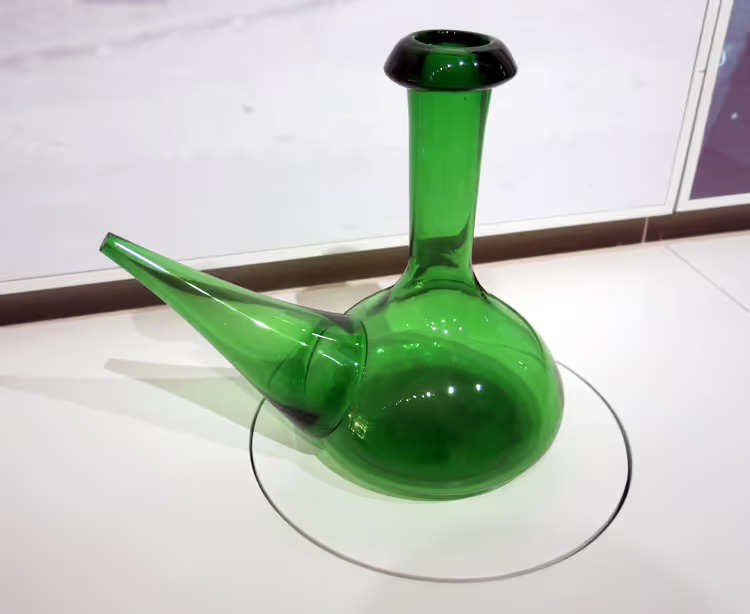 © Enfo · CC BY-SAPhoto: Enfo, CC BY-SA (https://creativecommons.org/licenses/by-sa/3.0), Wikimedia Commons
A porrón is a glass pitcher with a long spout, used for drinking wine. The stream goes straight into the mouth, so the vessel never touches the lips, and a whole group can drink from one pitcher. Spaniards have been using this pitcher since the 14th century.
The volume is usually about a liter, and it is made of glass. People rarely use it for its intended purpose, but as a souvenir the porrón wins: it decorates a shelf and reminds you of the trip. It also works fine for pouring wine.
- How to use: tilt the pitcher and direct the stream into your mouth without touching the spout with your lips.
- How to transport: pack glass in checked luggage with several layers of soft padding.
14. Clothing: the Born district and sales
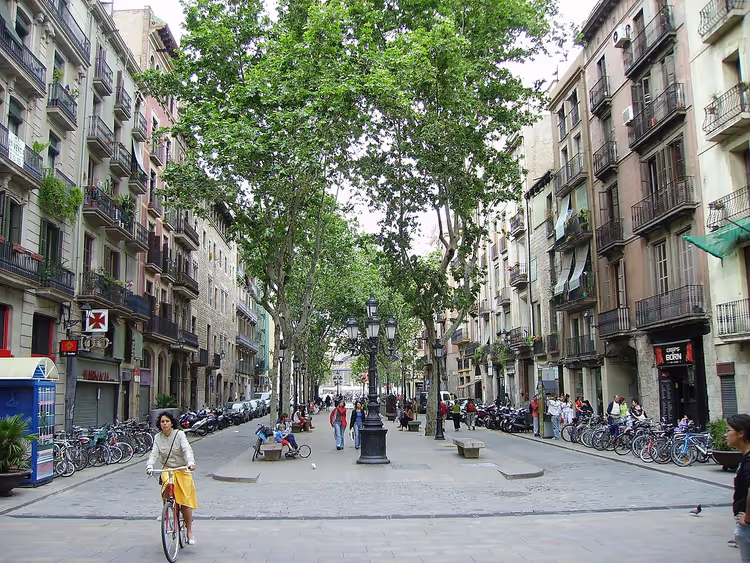 © 1997 · CC BY-SAPhoto: 1997, CC BY-SA (http://creativecommons.org/licenses/by-sa/3.0/), Wikimedia Commons
For fashion in Barcelona, people head to the Born district, home to boutiques and showrooms of local designers. The selection is huge, and prices in the country are noticeably lower than in many parts of Western Europe.
The best deals happen during sale season. Summer discounts run from July 1 to August 31, and winter sales start in early January (as of 09/2026, sales calendar). During these weeks, grab what was sitting unsold at the start of the season: less choice, but bigger discounts.
- What to buy: items from local brands and leather shoes.
- When: from July 1 and from early January.
15. Espadrilles: jute shoes
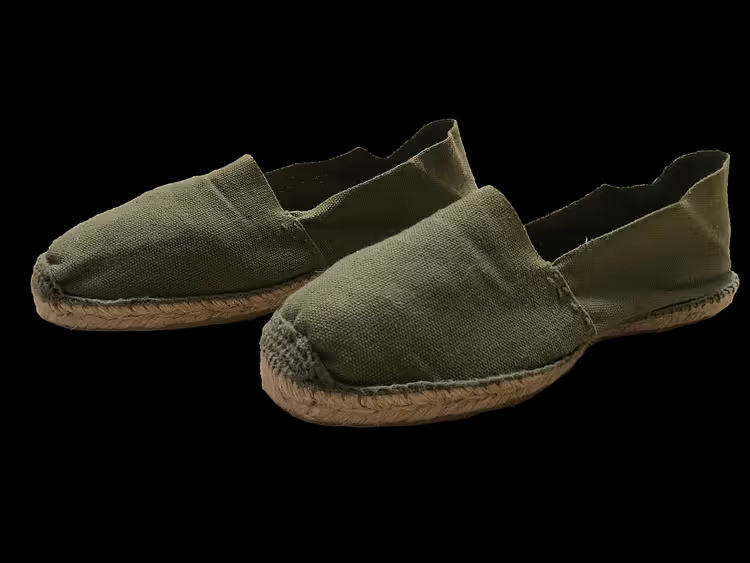
Espadrilles are lightweight shoes with soles made of natural materials. Jute, rope or cord is most commonly used, and the upper can be anything. In a hot climate, such a sole breathes, which is why almost everyone wears espadrilles here.
The range of styles is wide: flat soles, wedges, platforms, woven toes, lace-ups and ties. They are worn barefoot, and the natural materials provide good ventilation. The only limitation is dry weather: the woven sole is ruined by rain.
- What to buy: a classic jute model.
- The catch: the shoes are not for rain.
16. Castanets for flamenco
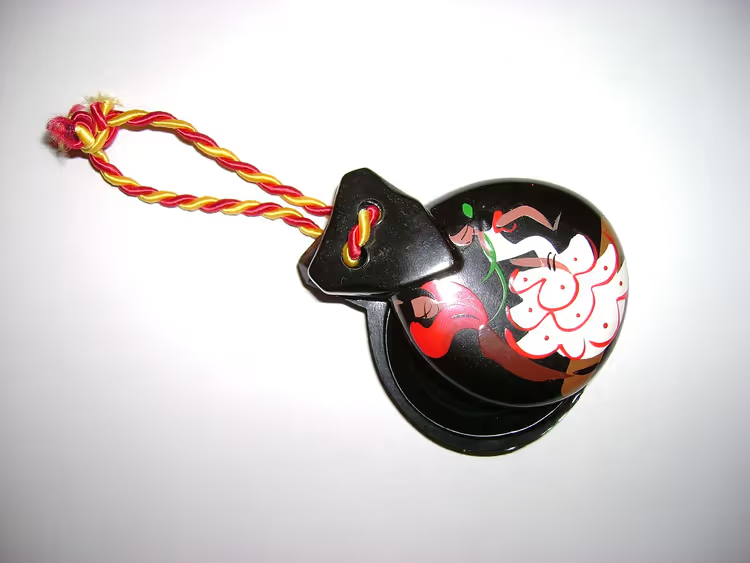
Castanets are a simple percussion instrument that flamenco is hard to imagine without. According to one version, they were brought over from the New World and later became a symbol of the country. For many people, castanets are also a reminder of a senorita dancing in a scarlet skirt.
The instrument for the right and left hand is different. The left castanet is larger and produces a low tone, while the right one taps out a more complex rhythm and even trills. They are played as a set of several pieces, so for a gift, get a pair right away.
- What to get: a pair of palisander castanets.
- Who it's for: people who are into music and dance.
17. Extra virgin olive oil
 © Jorgegdphoto.com · CC BY-SAPhoto: Jorgegdphoto.com, CC BY-SA (https://creativecommons.org/licenses/by-sa/4.0), Wikimedia Commons
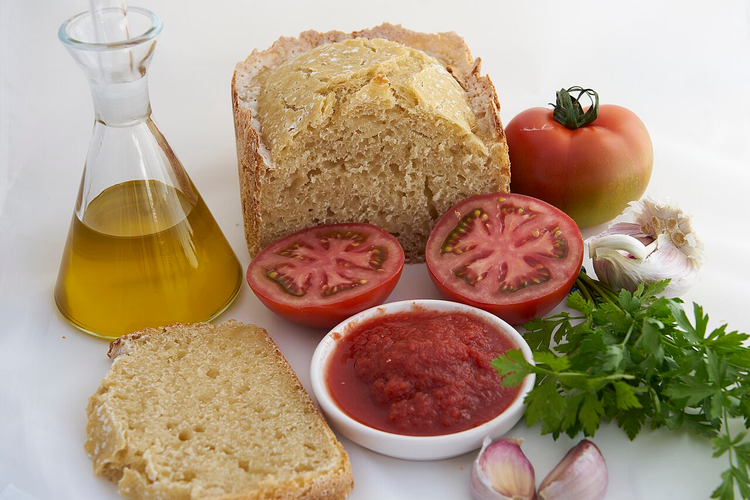
Olive oil is called liquid gold, and Spain is the world's leading producer here: by the end of the 2024/2025 season, the country had produced about 1.4 million tons (as of 09/2026, Forbes). Local varieties are considered the benchmark, and production is controlled at every stage.
The olive harvest runs from September to December. The main quality secret is simple: as little time as possible passes between picking and pressing, so the freshest top-grade oil often stays in the country. Out of dozens of olive varieties, only a small portion is used for oil. Look for bottles from Knolive Oils, Almazaras de la Subbetica, and Venta del Barón.
- What to get: cold-pressed extra virgin oil in a dark bottle.
- How to transport it: wrap the bottle tightly and pack it in checked luggage.
18. Natural cosmetics
 © Matarrania · CC BY-SAPhoto: Matarrania, CC BY-SA (https://creativecommons.org/licenses/by-sa/4.0), Wikimedia Commons
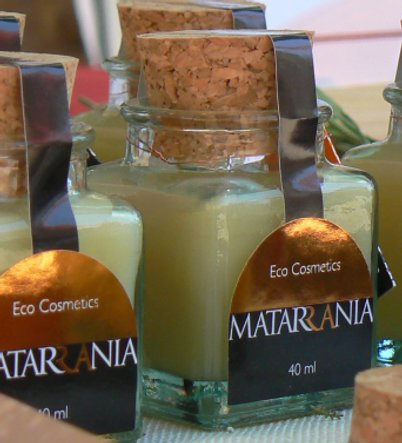
Local cosmetics are often made with natural ingredients, and you can see this on the packaging from eco or bio labels. A producer gets this certification only when most of the formula is genuinely natural. Many brands are almost unknown outside the country, but locals love them.
- What to get: creams and oils with olive oil in the formula.
- Who it's for: people who love natural skincare and small local brands.
19. Caganer figurine
 © Pietro Zuco · CC BY-SAPhoto: Pietro Zuco, CC BY-SA (https://creativecommons.org/licenses/by-sa/2.0), Wikimedia Commons
The caganer is a small figurine of a little man that people in Catalonia give as a Christmas gift. Its meaning is serious: the figurine is a reminder that all people are equal. According to legend, it is a peasant who fell behind the Magi on their way to Bethlehem.
In the past, the caganer was hidden in the Christmas nativity scene, and whoever found the figurine got a year of good luck. Today it is given as a keepsake and simply as a joke. Choose painted ceramics from a specialty shop rather than cheap plastic.
- What to get: a painted ceramic figurine.
- Who it's for: friends with a sense of humor.
20. FC Barcelona merchandise
 © Kolforn ( Kolforn ) I'd appreciate if you could mail me (Kolforn@gmail.com) if you want to use this picture out of the W · CC BY-SAPhoto: Kolforn ( Kolforn ) I'd appreciate if you could mail me (Kolforn@gmail.com) if you want to use this picture out of the W, CC BY-SA (https://creativecommons.org/licenses/by-sa/4.0), Wikimedia Commons
FC Barcelona is known even to people who are far from sports, so club merchandise makes a reliable gift for a fan. The city has official stores selling jerseys, scarves, balls, towels, and backpacks with the club crest.
Official products cost more, but their quality is predictable, while fakes in tourist shops can easily turn out to be defective. Before buying a jersey, check the size and verify the club hologram.
- What to get: a scarf or jersey with the crest.
- Who it's for: fans and collectors of sports merchandise.
How to get souvenirs home
Liquids from Barcelona go in checked luggage. You can only take a small amount in your carry-on, so pack oil, wine, and sauces in your suitcase. Wrap each glass bottle in soft fabric and place it in the center, between layers of clothing.
Buy cured meats in vacuum-sealed packaging: that way jamón and sausages travel well. Within the EU, you can bring products for personal consumption, but check the import rules for countries outside the union in advance.
Getting from the airport is easier with a hotel transfer: it gets you there comfortably with your luggage.
⁉️🤔 Frequently asked questions
What to bring from Barcelona that's inexpensive?
Start with food and small items: fuet, turrón, chocolate, spices, and carquinyolis cost little but say a lot about Spain. Skip cheap magnets: they're mass-produced and quickly lose their look. For bigger gifts, head to the Born district or the markets.
Where to buy souvenirs in the city center?
The most convenient spots are the Mercat de la Boqueria, the gourmet shops around La Rambla, and the Born district. For Catalan sweets, stop by La Colmena at Plaça de l'Àngel, 12: the confectionery has been operating since 1849. For jamón, check out Enrique Tomás at Carrer de Pelai, 18.
When are the sales in Barcelona?
Summer sales run from July 1 to August 31, and winter sales start in early January and last several weeks. Exact dates vary slightly by province and store chain. On the first day of sales, the selection is largest, and by the end of the season, discounts are deeper.
Can you bring jamón, wine, and oil?
Buy jamón and sausages in vacuum-sealed packaging, and they'll travel fine. Put wine and olive oil in checked luggage: only a small amount of liquid is allowed in carry-on. Check import rules for destinations outside the EU in advance, as they vary by country.
What to bring as gifts for coworkers?
Small sets work well for the office: turrón in a gift box, a bar of Valor chocolate, a pack of carquinyolis, or a jar of romesco sauce. They're all inexpensive and easy to split into portions. Give a caganer only to those with a sense of humor.
In short: what's worth booking
Souvenirs from Barcelona fall into three groups: food, things, and traditions. For food, go to markets and gourmet shops; buy clothes and shoes during sale season; and for ceramics and city traditions, head to the Born district and souvenir stores.
If you're short on suitcase space: go for turrón, saffron, and olive oil. If you need a gift with personality: jamón, a caganer, and castanets. If it's for a sports fan: a scarf or jersey with the club crest.
Check airport transfers on Kiwitaxi so you don't waste time when you arrive.

A small editorial team writing guides for independent travel. We travel ourselves, but we haven’t been everywhere, so we check prices, opening hours and how to get there against official sources.