
















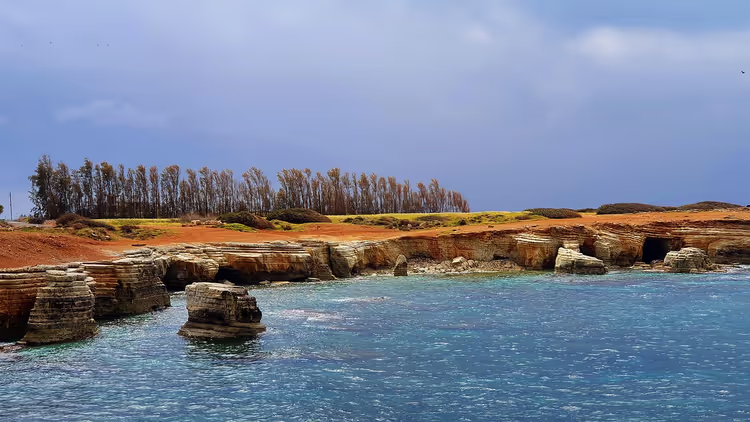
Beaches of Cyprus: 25 swimming spots from Protaras to Paphos
Cyprus is known to many for three beaches: Nissi Beach, Fig Tree Bay, and Finikoudes Beach. In reality, Blue Flag beaches stretch from Protaras to Paphos, and in the west you'll find pebbles, wild coves, and turtle nesting sites. The difference between beaches isn't in beauty but in the details: how you enter the water, where the shade is, how much a sunbed costs, and how far you walk from the parking lot.
We've put together 25 beaches across five regions of Cyprus, from Protaras to Paphos, and broken them down for you. You'll see where it's easy to take a child swimming, where you can sit quietly with a book, and where there's no infrastructure at all. Check sunbed prices and lifeguard hours on site: rates change every season.
Ad: this article contains affiliate links, we earn a commission if you book through them, at no extra cost to you.
How to choose a beach in Cyprus
💡 In short:
- With kids, head to the east coast: Golden Coast Beach and Nissi Beach offer a gradual entry and an even bottom.
- Without a car, look at city beaches: Finikoudes Beach in Larnaca and Akti Olympion Beach in Limassol sit right next to hotels.
- For quiet and snorkeling, go west: Lara Bay and Petra tou Romiou are barely developed.
- Infrastructure and Blue Flags: 09/2026, verified using Visit Cyprus data.
All beaches in Cyprus are free, nobody sells access to the shore. You only pay for services: an umbrella, a sunbed, a shower, and a changing cabin. Municipal sections are cleaned daily, and part of the shoreline is managed by hotels but also open to everyone.
Region | Shore and water | Who it suits |
|---|---|---|
Protaras | soft sand, coves, shallow water | families with kids and first-time swimmers |
Ayia Napa | white sand, bars and clubs nearby | groups, couples, and nightlife lovers |
Larnaca | city beaches along the promenade | those staying downtown without a car |
Limassol | sand mixed with pebbles, long shoreline | surfers and long-walk enthusiasts |
Paphos | pebbles, rocks, and wild stretches | snorkeling and a quiet getaway |
1. Golden coast beach, Protaras
Golden Coast Beach occupies the southeastern edge of Protaras and is considered one of the calmest spots in the resort. The shoreline stretches about 400 meters, and the bay itself is sheltered by a headland, so there are almost no waves here. The sand is fine and soft, the bottom is even, and the depth increases slowly. It's hard to find a more convenient spot for a child's first swim.
Lifeguards keep an eye on safety, and sunbed and umbrella rental stations operate nearby. Boats and water-skiing enthusiasts head to the neighboring Paralimni bay, so they won't bother you. Hotels rated 3 and 4 stars with open restaurants line the shore.
- Getting there: about 1 km from the center of Protaras, roughly a 15-minute walk on the map.
- Who it's for: families with toddlers and anyone who likes swimming in calm water.
- Not for: if you want waves and windsurfing, look at the west coast.
2. Fig tree bay, Protaras
 © Catauggie · CC BY-SAPhoto: Catauggie, CC BY-SA (https://creativecommons.org/licenses/by-sa/4.0), Wikimedia Commons
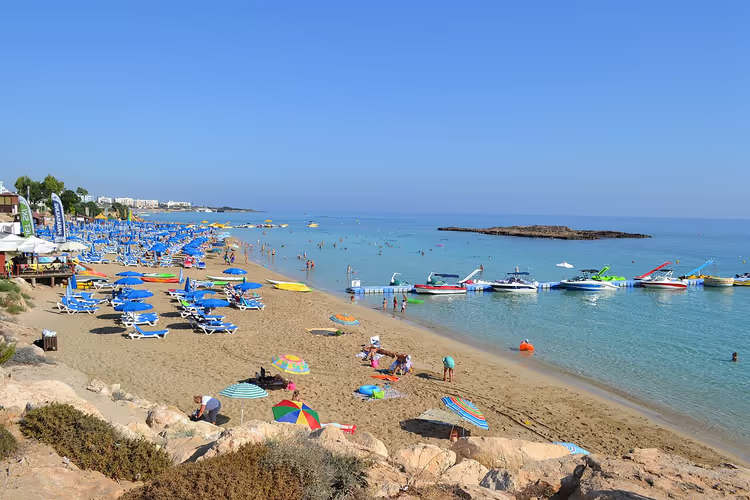
Fig Tree Bay lies in the central part of Protaras and consistently ranks among the best beaches on the east coast of Cyprus. The sand here is bright yellow and soft. A dedicated access route from the parking lot straight to the sunbeds is set up for people with disabilities.
The entry into the sea is gradual and the bottom is sandy, so you can swim comfortably with kids. A small rocky islet sits in the water, and fig trees grow along the shore. Water-skiing and wakeboarding schools operate on either side of the swimming area, and you can also ride a banana boat or jet ski here. You can have lunch right on the beach at a restaurant or bar.
- Getting there: about a 5-minute walk from the bus stop in central Protaras, on the map.
- Who it's for: families, couples, and anyone who values a full set of amenities by the water.
3. Konnos Bay, Protaras
 © Georgy Papantoniou · CC BYPhoto: Georgy Papantoniou, CC BY (https://creativecommons.org/licenses/by/3.0), Wikimedia Commons
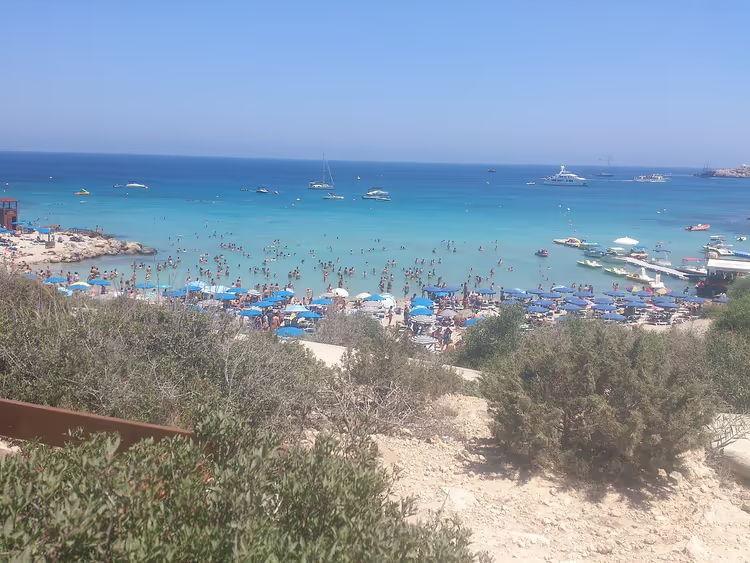
Konnos Bay hides 2 km from Protaras, right at Cape Greco National Park, beneath cliffs covered in pine forest. You descend to the water from the plateau along a walking path with viewpoints and benches. The shoreline here is short, about 200 meters, with soft light-gray sand and shallow water near the shore.
A rock juts out of the sea on the left, and that's a great spot for snorkeling. The beach holds a Blue Flag, and the Mike Watersports center organizes catamaran, scooter, and water-skiing trips. The cafe and snack bar under the pines serve hot dishes and cold drinks.
- Getting there: about 2 km from Protaras on the map, by bus or car to the parking lot at the plateau.
- Who it's for: those who combine swimming with a walk through Cape Greco, and snorkeling fans.
- The catch: you walk down and back up a slope, so it'll be tough with a stroller or a heavy bag.
4. Sirena Bay, Protaras
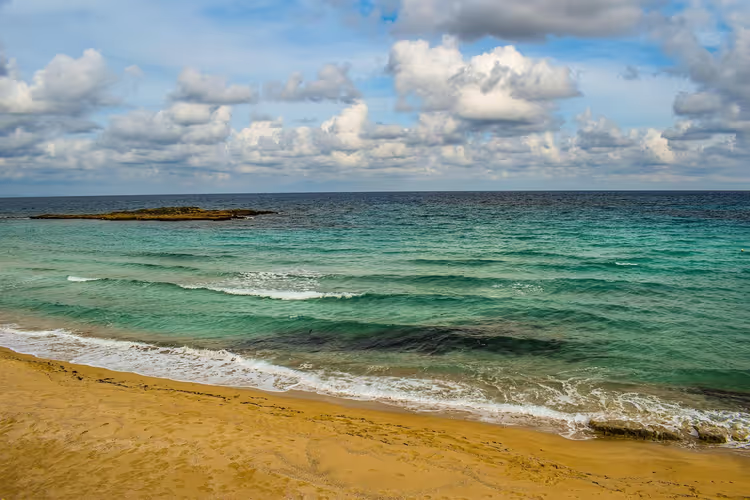
Sirena Bay is a tiny cove in the Agia Triada area, sheltered from the winds. The name comes from the Sirena cafe near the shore, and the beach itself is shaded by dense tropical trees. The stretch is quite small, about 50 meters long, with yellow sand and a gentle entry into the water.
Tourists hardly ever make it here, but Cypriots come with their families and little ones. You can only rent an umbrella and a sunbed.
- Getting there: about 5 km from Protaras on the map, easiest by car.
- Who it's for: parents with small children and anyone looking for quiet near Protaras.
- The catch: there are no bars or restaurants, so bring your own water and food.
If you want to stay near this shore, check out hotels in Protaras on Trip.com.
5. Ammos tou kambouri, Ayia Napa
Ammos tou Kambouri is tucked into a rocky bay away from the busy Ayia Napa. It's a short strip of light sand surrounded by low rocky hills. The beach is quite small, about 40 meters, and the water is so clear you can see the sandy path between the stones. The beach has earned a Blue Flag for cleanliness and swimming conditions.
In season, a lifeguard and a first-aid station operate here, and there's a shower, toilet, changing rooms, and equipment rental. The water is great for snorkeling and learning to dive. A gazebo stands under the single sprawling tree, and the Lovers' Bridge passes near the shore.
- Getting there: about 3 km from the center of Ayia Napa on the map.
- Who it's for: those who want to combine swimming with snorkeling.
- The catch: a rocky bottom and a short stretch of shore. It gets crowded in season.
6. Pantachou beach, Ayia Napa
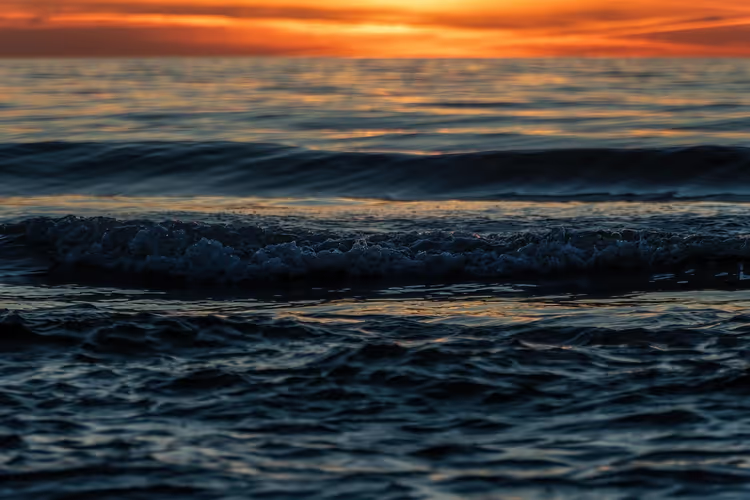
Pantachou Beach runs along the southeastern side of Ayia Napa for over a kilometer. Palm trees and acacias line the shore and provide shade, and the beach itself is covered in golden sand. On the right, umbrellas and sunbeds stand in dense rows; on the left, there are noticeably fewer. Between them there's a free strip where you can just lie on a towel.
The entry into the sea is gentle and the bottom is sandy, so Pantachou Beach suits visitors of any age. Lifeguard stations, umbrella and sunbed rentals, changing rooms, and sanitary facilities are all available. The beach holds a Blue Flag, and cafes, snack bars, and small shops line the shore.
- Getting there: on foot from the center of Ayia Napa, less than 10 minutes on the map.
- Who it's for: families and those who want everything they need within walking distance.
- The catch: on the right side of the beach, umbrellas are packed very tightly, so look for a free spot further left.
7. Nissi beach, Ayia Napa
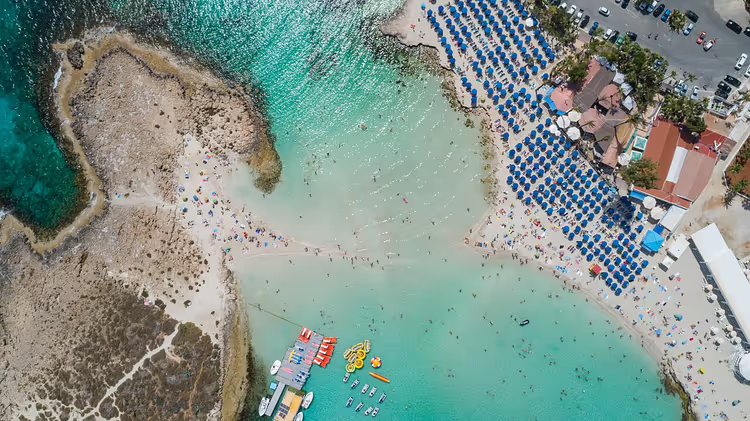 © dronepicr · CC BYPhoto: dronepicr, CC BY (https://creativecommons.org/licenses/by/2.0), Wikimedia Commons
Nissi Beach lies 2 km from Ayia Napa, in the eastern part of Nissi Bay. A snow-white sand strip stretches about 230 meters from the rocky shore to the Nissi tavern, and the soft white sand is cleaned every morning. The bottom is flat and sandy, there are almost no waves, as they are dampened by a natural island on the western side.
The beach holds a Blue Flag, but some of the infrastructure here is paid: showers, changing cabins, and restrooms. Bright buoys mark off the safe zone from underwater rocks. On the shore there are kiosks with covered terraces where you can grab a bite and quench your thirst.
- How to get there: about 2 km from the center of Ayia Napa on the map, by bus or car.
- Who it's for: those who want classic white sand and a postcard view.
- The catch: showers and changing cabins are paid. In the evening, the club area of Ayia Napa is noisy nearby.
8. Makronissos beach, Ayia Napa
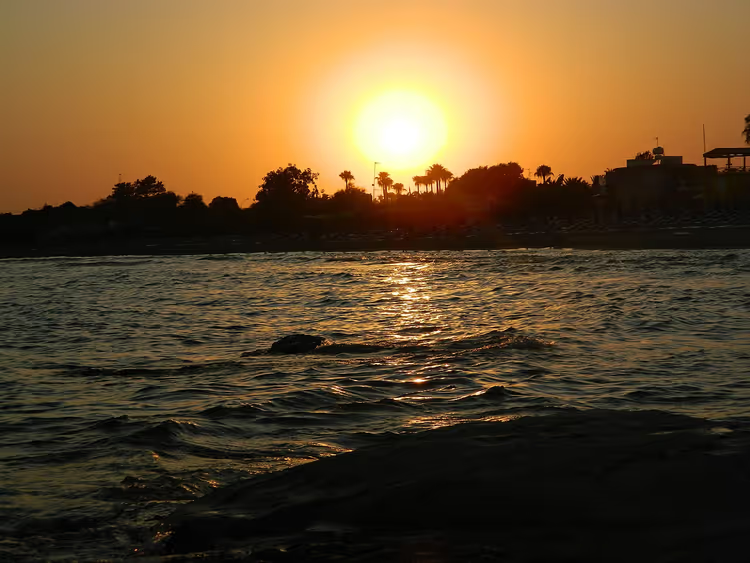 © ant0ni0c · CC BY-SAPhoto: ant0ni0c, CC BY-SA (https://creativecommons.org/licenses/by-sa/3.0), Wikimedia Commons
Makronissos Beach stretches along a cape shaped like a mermaid's tail, 6 km west of central Ayia Napa. It has excellent white sand, and the sea stays clean and calm unless an east wind picks up. The sandy strip runs for about 200 meters, wider in the middle of the cape and narrowing toward the edges.
The entry into the water is gradual and sandy, with depth starting only after 20 meters, so it's comfortable with kids. The beach is municipal and holds a Blue Flag, although it's serviced by a hotel on the shoreline. From May to October, lifeguards are on duty, and showers, changing rooms, restrooms, and drinking fountains are available. Sunbeds, umbrellas, and gazebos with tables can be rented.
- How to get there: about 6 km from Ayia Napa on the map, by car or bus.
- Who it's for: families and those who want a spacious sandy beach with amenities.
- The catch: near the edges of the cape, there are rocks on the bottom. Enter the water in the middle section.
9. Agia Thekla Beach, Ayia Napa
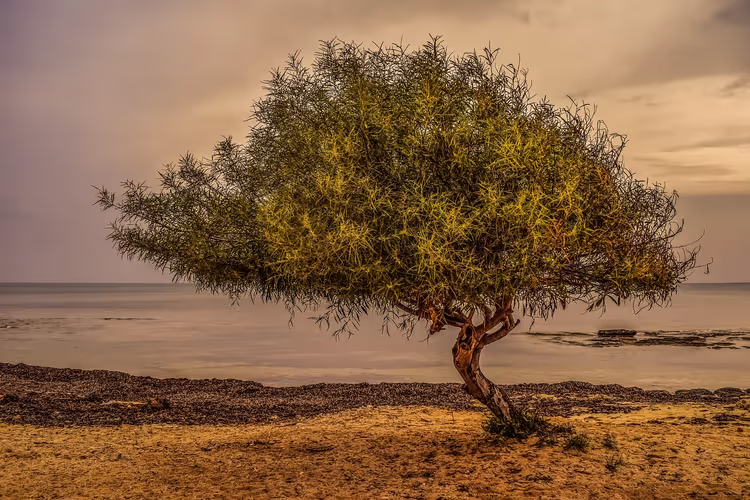
Agia Thekla Beach occupies the wide shore of a picturesque bay 6 km west of Ayia Napa. There's plenty of room for sunbathing, shoreline walks, and games. The area stretches roughly 300 meters in length, with a row of palm trees along the golden sand.
The sea is transparent, and the depth increases gradually. A sandy islet is visible near the shore, serving as a natural breakwater. Sunbathers love it there. Lifeguards and a first-aid station handle safety, and a small bar operates near the shore. On the eastern side, the Church of Saint Thekla adorns the cliff, with a holy spring nearby.
- How to get there: about 6 km from Ayia Napa on the map, by car or bus.
- Who it's for: those who love open space and want to combine the beach with a cliffside church.
- The catch: all services and water activities are paid, and free amenities are scarce.
10. Finikoudes Beach, Larnaca
 © Georgy Papantoniou · CC BYPhoto: Georgy Papantoniou, CC BY (https://creativecommons.org/licenses/by/3.0), Wikimedia Commons
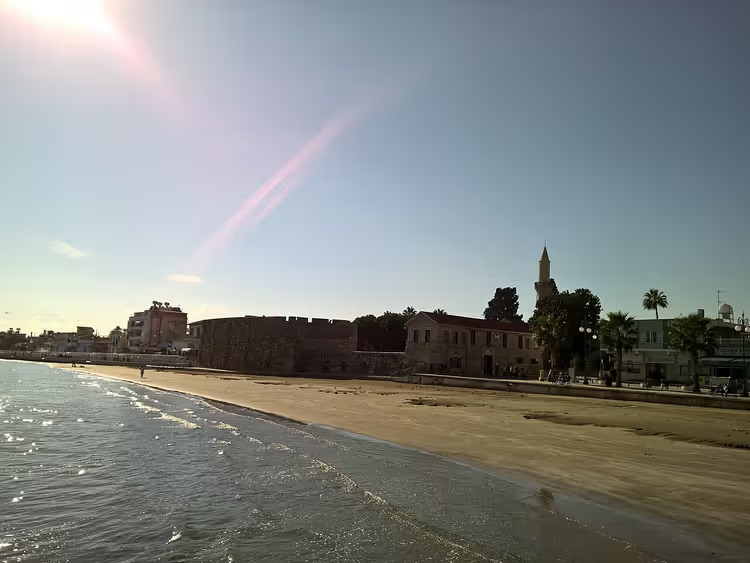
Finikoudes Beach runs along the Larnaca coastline for about half a kilometer. Its width varies from 30 to 100 meters, and a promenade with an avenue of date palms separates the beach from the city bustle. The sand here is fine and gray, indicating volcanic origin.
The entry into the water is even and shallow, the bottom is sandy, and rocks are rare. The beach holds a Blue Flag and offers equipment rental, sanitary facilities, a freshwater shower, and ramps for people with disabilities. You can lie not only on a sunbed but also on your own towel. In the evening, the area comes alive: clubs, discos, and bars stay open late. A distinctive feature of the beach is a marble winged lion with an open book in its paw.
- How to get there: in central Larnaca, less than 5 minutes on the map from the promenade.
- Who it's for: those staying in the city without a car who want to swim near their hotel.
- The catch: bars and clubs are noisy nearby at night, so choose a hotel farther from the promenade.
11. Mackenzie Beach, Larnaca
 © Georgy Papantoniou · CC BYPhoto: Georgy Papantoniou, CC BY (https://creativecommons.org/licenses/by/3.0), Wikimedia Commons
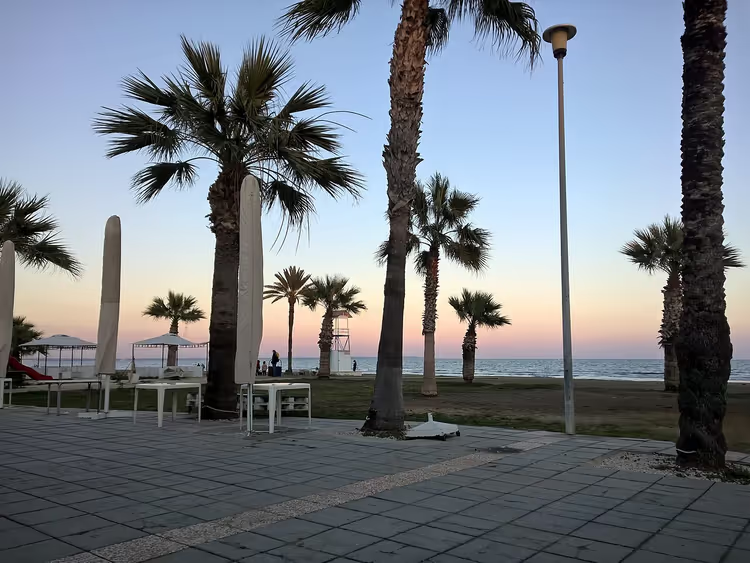
Mackenzie Beach is a spacious sandy beach up to 40 meters wide, stretching for about a kilometer near Larnaca. You can walk there from the city. The fine, pleasant sand is kept immaculately clean, and palm trees and umbrellas create cozy shade.
The sea near the shore is calm, warm, and transparent, with a gradual deepening. The waters are used for windsurfing, kitesurfing, diving, and water skiing. For adrenaline lovers, there are jet skis, parasailing, and banana boat rides. Locals often come here for picnics. The beach holds a Blue Flag alongside Finikoudes Beach.
- How to get there: about a 15-minute walk on the map from central Larnaca.
- Who it's for: families and those who want to combine swimming with water sports.
- The catch: the beach fills up with tourists quickly in the morning, so look for a quiet spot away from the cafes.
If you want to stay near this shore, check out hotels in Larnaca on Trip.com.
12. Malindi Beach, Limassol
 © Carole Raddato from FRANKFURT, Germany · CC BY-SAPhoto: Carole Raddato from FRANKFURT, Germany, CC BY-SA (https://creativecommons.org/licenses/by-sa/2.0), Wikimedia Commons
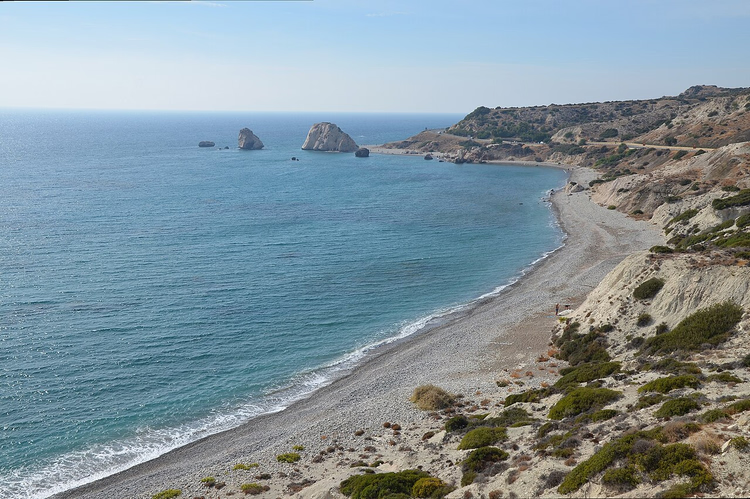
Malindi Beach occupies the central part of the Parekklisia shoreline, about 400 meters opposite the Malindi Beach Bar & Restaurant. In terms of service, it's one of the best beaches in Limassol. Among its neighbors, it stands out for its snow-white sun umbrellas.
The shore is covered with fine light-gray sand, and the sea is shallow with a gentle entry. The waters are open to the sea swell, and when waves come in, the water sometimes reaches the sunbeds. Showers, changing cabins, toilets, and drinking fountains are styled to match the restaurant. Nearby there's free Wi-Fi, a volleyball court, a football field, and a water sports center.
- How to get there: about 10 km on the map from central Limassol, easier by car.
- Who it's for: those who want a well-equipped beach with a restaurant and sports nearby.
- The catch: the beach is open to waves. On windy days, swimming will be uncomfortable.
13. Aphrodite Beach, Limassol
Aphrodite Beach stretches along the eastern shore of Limassol for about 650 meters, from the Four Seasons hotel to the PUESTA Oyster Bar & Grill. The sand is gray, with fine pebbles in places, but it's kept in exemplary cleanliness. The bottom is mostly sandy, with occasional rocky patches.
Breakwaters protect the beach from waves, so the water near the shore is calm. Subtropical trees, palms, and flowering shrubs separate the shore from city streets. Lifeguards watch over swimmers from three towers, and beachfront hotels provide access to showers, changing rooms, restrooms, cafes, and bars. A sports center offers wakeboarding, windsurfing, and flyboarding.
- How to get there: about 15 minutes on the map from central Limassol by car.
- Who it's for: those who value calm water and greenery along the shore.
- The catch: part of the shore is reserved for hotels, so bring your own towel to the free sections.
14. Dasoudi Beach, Limassol
 © altgiperon · CC BYPhoto: altgiperon, CC BY (https://creativecommons.org/licenses/by/3.0), Wikimedia Commons
Dasoudi Beach is a city beach in Limassol with an even shoreline of about 1.5 km. The sand is grayish and volcanic, somewhat coarse to the touch in places, but the clean azure water makes up for it. The entry into the sea is convenient, with a sandy bottom and gradually increasing depth.
A eucalyptus park borders the coast, filling the air with fragrance. Artificial breakwaters protect the open section from waves. The beach is roughly divided into three zones: the center has lots of greenery but no amenities, while the edges have hotels, lifeguard towers, sunbeds with umbrellas, showers, restrooms, and cafes. This is the most convenient place to swim if you're staying in central Limassol.
- How to get there: about 10 minutes on the map from central Limassol.
- Who it's for: families with children and those who want to swim within the city limits.
- The catch: in strong winds, it's better not to enter the sea. The sand is coarse in places.
15. Paramali Beach, Limassol
Paramali Beach spreads out near the village of the same name, and you reach the shore by driving through citrus groves. The beach is spacious, extending about 30 meters inland from the coast. The shore and bottom consist of volcanic sand mixed with pebbles. The entry into the water is convenient, but the depth increases quickly.
A protruding rock divides the coast into two parts: a small one to the east and a long one to the west. Tourists jump into the water from the rock ledges. The main feature is the wind, which drives waves and attracts windsurfers and kiteboarders: in season, two mobile schools with equipment rental operate here. There is no infrastructure at all. Two species of turtles live nearby and lay eggs in summer, so keep your distance from them.
- How to get there: about 25 km on the map from Limassol, by car only.
- Who it's for: windsurfers, kiteboarders, and camping enthusiasts.
- The catch: there are no cafes or tavernas, and because of the quickly increasing depth, swimming with children is risky.
16. Ladies mile beach, Limassol
Ladies Mile Beach is considered one of the most scenic spots in Limassol for a seaside getaway. The coastline stretches for almost 5 km and is loosely divided into several sections. Most of the shore is covered with soft golden sand, but closer to the port pebbles appear, and the sea drops off quickly here.
The shore is not protected by breakwaters, so when the wind picks up, big waves roll in and windsurfers flock here. The main area has few amenities, and the most popular spot is the Captain's Cabin beach. There you can rent beach equipment, use sanitary facilities, and sit at wooden tables with benches under umbrellas. During the day, an inflatable water park with slides opens on the water, and a restaurant with a bar operates on the shore.
- How to get there: check the distance from central Limassol on the map.
- Who it's for: fans of long walks along the water and windsurfing.
- The catch: amenities are concentrated only around the Captain's Cabin area; beyond that, the shore is empty.
17. Akti olympion beach, Limassol
 © Tech bro · CC BY-SAPhoto: Tech bro, CC BY-SA (https://creativecommons.org/licenses/by-sa/3.0), Wikimedia Commons
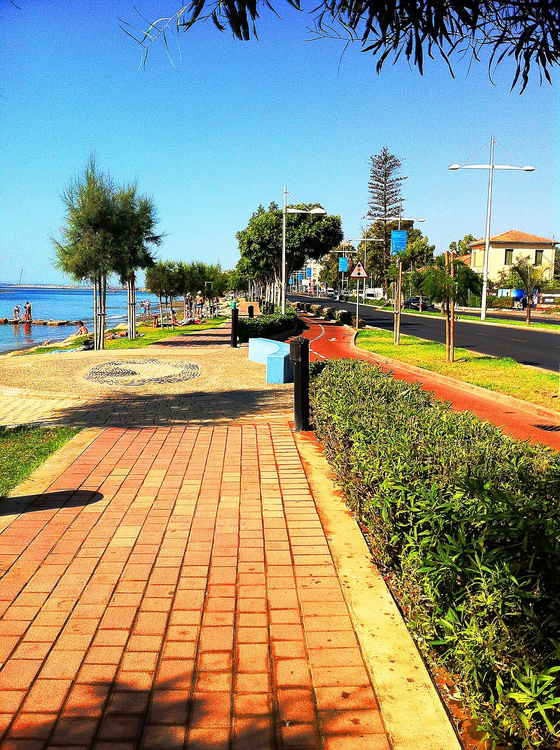
Akti Olympion Beach stretches through central Limassol, from the Molos promenade to the Crowne Plaza hotel. It stands out for its facilities and cleanliness. The total length is about 2 km, with the beach divided into Alpha and Vita sections separated by a gap of roughly 500 meters and the Enaerios pier. Both sections are covered with fine dark-gray sand, firm enough for runs by the sea.
The water entry is gradual and shallow, safe for children to swim, and breakwaters keep the sea calm. There is free Wi-Fi, plenty of showers, restrooms, changing rooms, and lounger and umbrella rentals. A doctor and lifeguards are on duty from morning to evening, and people with disabilities can access the water via ramps. A string of cafes, bars, and restaurants runs behind the beach.
- How to get there: in central Limassol, a 5-10 minute walk from the promenade on the map.
- Who it's for: families, runners, and those staying in the center without a car.
- The catch: the Limassol municipality did not apply for a Blue Flag in 2026, so the beach does not have one.
18. Pissouri Bay, Limassol
 © Rüdiger Stehn from Kiel, Deutschland · CC BY-SAPhoto: Rüdiger Stehn from Kiel, Deutschland, CC BY-SA (https://creativecommons.org/licenses/by-sa/2.0), Wikimedia Commons
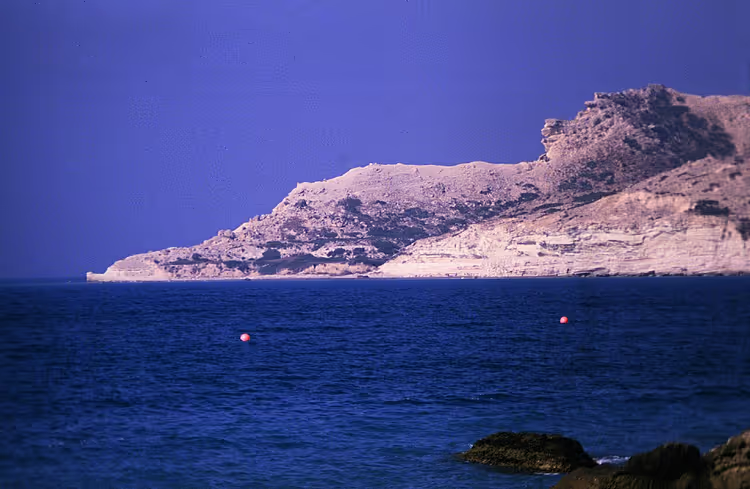
Pissouri Bay occupies a cove on the south coast, at Cape Aspro near the village of Pissouri, where the character of old Cyprus has been preserved. Cliffs border the area on both sides, protecting the shore from the north wind. As a result, the sea here is calm, warm, and clean, and the surface is partly pebbly or pebble-and-sand.
The entry into the water is gradual, but there are spots where it gets deep just 4-5 meters out. The bottom is sandy with rocks, and the beach is cleaned regularly. There are changing cabins, a toilet, a shower, and foot-rinse taps. The water sports center offers banana boat rides, kayaks, and jet skis, as well as diving and SUP workshops. Restaurants, tavernas, and hotels line the shore, and the beach holds a Blue Flag.
- How to get there: about 30 km from Limassol on the map, by car or bus.
- Who it's for: those who want to combine the beach with a stroll through an old village.
- The catch: the surface is partly pebbly. The depth increases sharply just a few meters from the shore.
19. Kourion Beach, Limassol
 © Radosław Botev · CC BYPhoto: Radosław Botev, CC BY (https://creativecommons.org/licenses/by/3.0/pl/deed.en), Wikimedia Commons
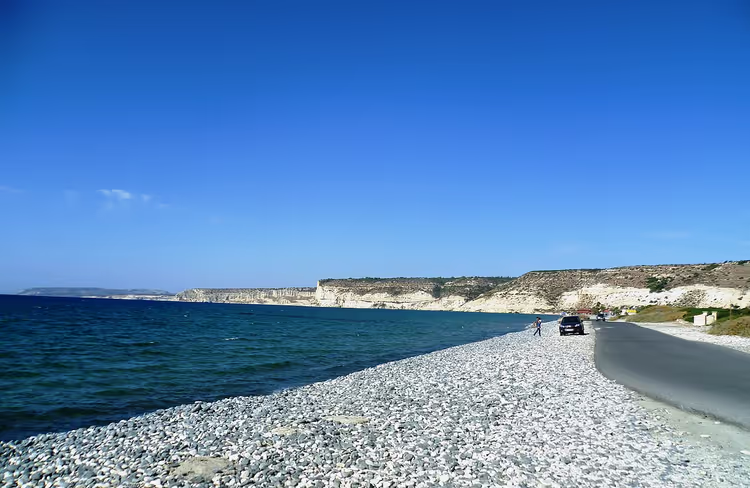
Kourion Beach lies on the western side of the Akrotiri peninsula, about 19 km from Limassol, in Episkopi Bay. It is a serene spot with minimal entertainment. The shore spans just under a kilometer, with sandy sections alternating with fine pebbles. On the land side, the beach is backed by bushes and trees, and high rocky cliffs surround it on both sides.
The sea is shallow with a gentle entry, but the depth picks up just 30 meters from the water's edge. On windy days, strong waves roll in from the sea; in calm weather, swimming is comfortable. The shore has sanitary facilities and amenities, and cafes, a bar, and a restaurant with terraces operate along it, renting out loungers with mattresses. The main bonus is the proximity to the Kourion archaeological park with the remains of an ancient city.
- How to get there: about 19 km from Limassol on the map, by car or bus.
- Who it's for: those who want to combine the beach with ancient ruins.
- The catch: there is no sports equipment rental; bring your own board and mask.
If you plan to stay overnight in Limassol, check out hotels in Limassol on Trip.com.
20. Geroskipou Beach, Paphos
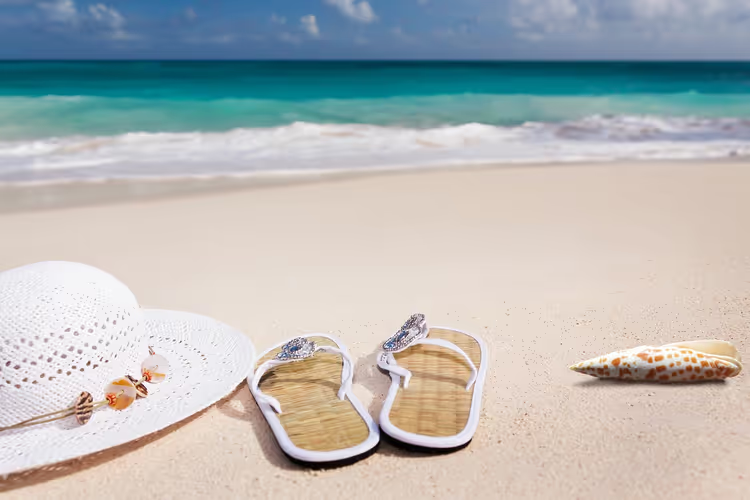
Geroskipou Beach, which locals call Atlantis, lies on the shore of a bay surrounded by gardens and flowers. The beach suits both relaxed lounging and water sports. Its strip stretches for about 1,350 meters, with a sand-and-pebble surface. The entry from the water's edge is easy, the depth increases gradually, and there are also very shallow areas for children to swim.
Several artificial breakwaters protect the shore from big waves. A lifeguard team handles safety, while a rental point, changing rooms, and equipped sanitary facilities handle comfort. Several cafes and bars operate on the shore, and for younger visitors there is the Malibu La Playa Beach Bar center with water activities, tennis courts, fitness, and evening discos. You will find something to do all day.
- How to get there: about 4 km from central Paphos on the map.
- Who it's for: families and those who want a beach with all-day entertainment.
- The catch: in high season the central zone gets crowded; it is quieter at the edges of the bay.
21. Coral Bay, Paphos
 © greglaskiewicz · CC BYPhoto: greglaskiewicz, CC BY (https://creativecommons.org/licenses/by/3.0), Wikimedia Commons
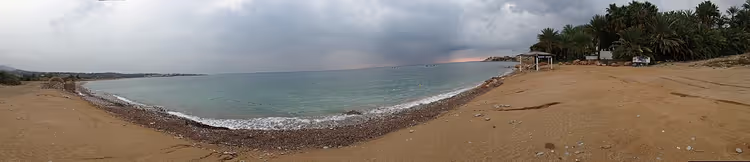
Coral Bay is located 12 km north of Paphos, near the resort town of Peyia. The bay is framed by the rocky slopes of the Maa-Paleokastro peninsula and a cape that juts far into the sea. The coast is covered with soft, clean sand of a pale yellow color with a reddish tint, which sets it apart from the sand-and-pebble beaches of Paphos. The shoreline runs for about 1,000 meters with a width of 10 to 40 meters.
The most comfortable section, about 600 meters long, is packed with beachgoers. The bottom here is sandy, and the large rocks at the water's surface are safe. The depth increases gradually, so swimming with children is easy. There is beach equipment rental, changing rooms, foot-washing stations, showers, and restrooms, and a lifeguard team is on duty during the day. In 2026, Coral Bay is on the Blue Flag list along with Alykes Beach and Kourion Beach.
- How to get there: about 12 km from Paphos on the map, by car or bus.
- Who it's for: families and those who want a sandy beach near Paphos.
- The catch: the central section is overcrowded in season; it is freer at the edges of the bay.
22. Petra tou Romiou, Paphos
 © Diego Delso · CC BY-SAPhoto: Diego Delso, CC BY-SA (https://creativecommons.org/licenses/by-sa/4.0), Wikimedia Commons
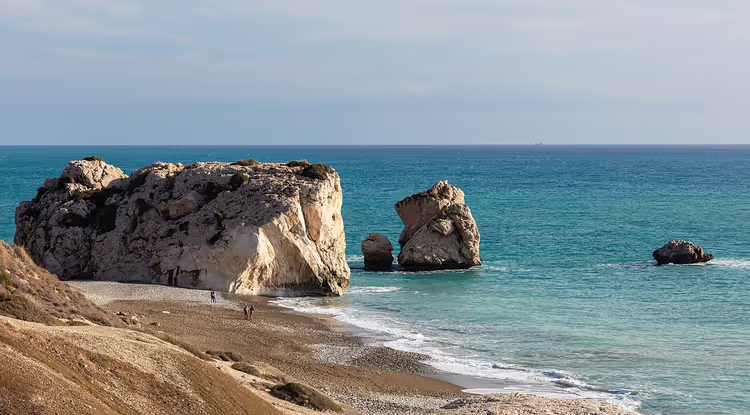
Petra tou Romiou, or Aphrodite's Beach, lies on the southwestern coast of the island about 25 km from Paphos. According to legend, this is where the goddess of beauty emerged from the sea foam, which is why both the majestic rock and the dark stone to its left are named after her. The coast is pebbly, and among the stones tourists search for heart-shaped pebbles.
The seabed here is coarse pebbles with large underwater rocks, and the depth increases quickly on entry. Underwater currents are typical for this sea, which keeps the water cool even in the heat. Waves often rise, so only a few brave souls swim, while most visitors come for photos. There is no infrastructure; you sunbathe on your own towel, but the shore is cleaned daily.
- How to get there: about 25 km from Paphos on the map, by car or bus.
- Who it's for: those who come for the views and photos rather than a long swim.
- The catch: strong currents and a rapid drop-off. It is best not to enter the water with children.
23. Lara Bay, Paphos
 © Dm Bsg · CC BYPhoto: Dm Bsg, CC BY (https://creativecommons.org/licenses/by/3.0), Wikimedia Commons
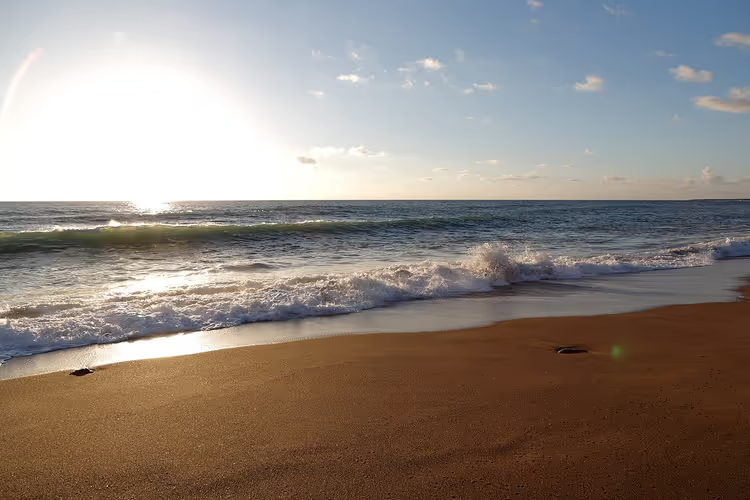
Lara Bay lies on the Akamas Peninsula, covered in fragrant juniper, away from busy Paphos. The beach's second name is Turtle Beach: green turtles lay their eggs in the warm sand. The bay is sheltered from strong waves, so the water here is usually calmer and slightly warmer than at other Paphos beaches.
The entry into the water is gradual and safe for children. Near the rocks at the edge of the cape, the water is especially clear, making it a good spot for snorkeling. The area is a protected nature reserve and almost wild: there are no showers or toilets, no equipment rentals, cafes, or hotels. Bring your own drinking water and food. By law, umbrellas and tents are not allowed in the reserve area.
- How to get there: about 20 km from Paphos on the map, only by car or with a tour.
- Who it's for: those looking for a wild beach, quiet, and turtle nests.
- The catch: no facilities, and umbrellas and tents are prohibited here.
24. Alykes Beach, Paphos
 © Fry72, Karel Frydrýšek · CC BY-SAPhoto: Fry72, Karel Frydrýšek, CC BY-SA (https://creativecommons.org/licenses/by-sa/4.0), Wikimedia Commons
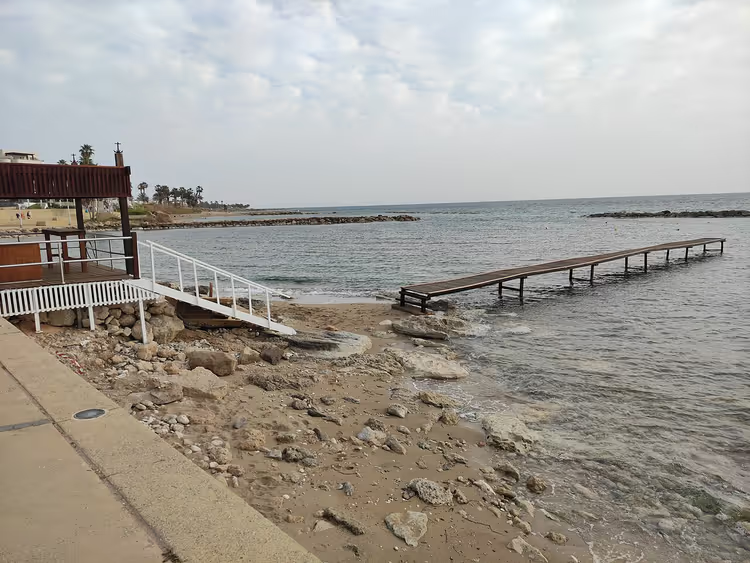
Alykes Beach covers about 200 meters of shoreline in a small cove in Paphos. The beach is conveniently located: a bus stop, several hotels, and cafes are nearby. The promenade is lined with beautiful palm trees, and the path to the sea starts with a paved walkway. The beach strip is sandy and belongs to two hotels.
Right at the water's edge the shore becomes rocky, but there are several staircases with railings and a wooden pontoon for comfortable access. Breakwaters protect the swimming area from waves. In high season, lifeguards are on duty daily, umbrella and sunbed rentals and water sports equipment are available, and the municipal sections have showers, changing rooms, and toilets. On the south side, boats, sailboats, and water skis are rented out. In 2026, Alykes Beach is on the Blue Flag list.
- How to get there: about 3 km from central Paphos on the map, by bus or on foot.
- Who it's for: those staying in Paphos who want to swim close to their hotel.
- The catch: the water's edge is rocky, so it's best to enter via the staircases or pontoon.
25. St George Beach, Paphos
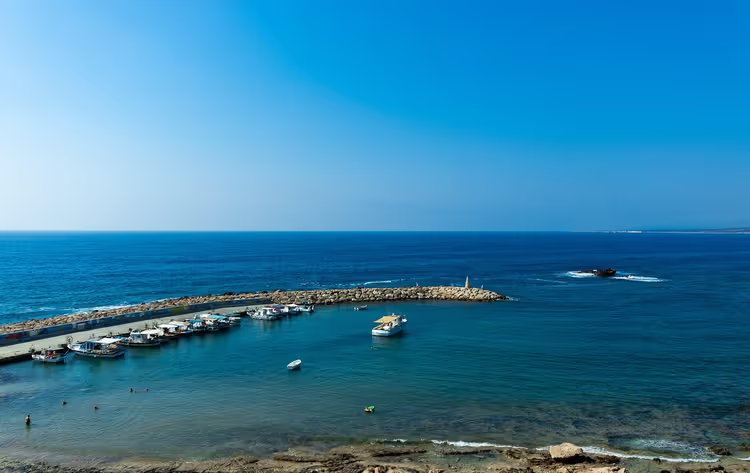
St George Beach sits in a small cove enclosed by massive boulders. Guests from neighboring hotels usually sunbathe and swim here, but access is open to everyone and free. The surrounding area is strikingly beautiful in a Mediterranean way. The shoreline is about 70 meters long and mostly rocky, with a clean sandy stretch of only about 50 meters.
Where the entry is rocky, special staircases are installed. Breakwaters make swimming comfortable, and the clear water with diverse underwater fauna is suitable for diving and snorkeling. Sunbeds and umbrellas can be rented, but you're also allowed to sunbathe on your own towel. Visitors have access to a shower, changing room, and toilet, and there's a beachfront cafe for a snack. Water attractions operate during the day, and discos take place in the evenings.
- How to get there: about 5 km from central Paphos on the map.
- Who it's for: snorkeling enthusiasts and those looking for a cozy cove near their hotel.
- The catch: the shore is mostly rocky, with little sand.
If you want to stay on the west side of the island, check out hotels in Paphos on Trip.com.
⁉️🤔 Frequently asked questions
Which beach in Cyprus has the easiest water entry for a child?
For a first swim, Golden Coast Beach, Nissi Beach, and Pantachou Beach in the east are the best options. They have sandy bottoms, shallow water near the shore, and a gradual entry with no sudden drops. On the west side of the island, Coral Bay and Geroskipou Beach have shallow bottoms, while Petra tou Romiou and Paramali Beach are not suitable for children.
Where in Cyprus can you swim if you want to avoid sunbeds and crowds?
Look at Sirena Bay and Lara Bay. Sirena Bay is a tiny cove shaded by trees near Protaras, and Lara Bay is a wild protected beach on Akamas. Infrastructure there is minimal, but you won't hear music from bars.
Which beaches in Cyprus have a Blue Flag in 2026?
In the east, the flag is held by Konnos Bay, Ammos tou Kambouri, Pantachou Beach, Nissi Beach, Makronissos Beach, and Agia Thekla Beach; in Larnaca, Finikoudes Beach and Mackenzie Beach; in the west, Pissouri Bay, Kourion Beach, Coral Bay, and Alykes Beach (according to POLITIS, 17.07.2026). The municipalities of Limassol and Amathus did not apply in 2026, so Dasoudi Beach and Akti Olympion Beach are not on the list.
Do you have to pay to enter beaches in Cyprus?
Entry to all beaches is free; you only pay for services: an umbrella, sunbed, shower, and changing cabin. Some infrastructure is paid at Nissi Beach and Agia Thekla Beach, while at municipal beaches in Larnaca and Limassol, showers are often free. Check the final price on site.
Where in Cyprus can you snorkel and dive from the shore?
The best spots are Konnos Bay with its rocky outcrop near the shore, St George Beach with clear water and underwater fauna, and Ammos tou Kambouri with a rocky bottom and a sandy path between the rocks. Diving masterclasses are held at Pissouri Bay and at the Malibu La Playa Beach Bar center.
In short: what's worth booking
Beaches in Cyprus are free, so what you should book is not the shore but a hotel near it and a sunbed in season.
- If you're traveling with small children, choose Golden Coast Beach in Protaras or Nissi Beach in Ayia Napa: gentle entry and an even bottom.
- If you want a city without a car, pick Finikoudes Beach in Larnaca or Akti Olympion Beach in Limassol.
- If you're looking for quiet, head for Lara Bay and Sirena Bay.
- If you plan to surf, look at Ladies Mile Beach and Paramali Beach.
Hotels near the east and west coasts get booked up as early as May, so plan your dates in advance. You can see options near your chosen beach on Trip.com.

A small editorial team writing guides for independent travel. We travel ourselves, but we haven’t been everywhere, so we check prices, opening hours and how to get there against official sources.