
















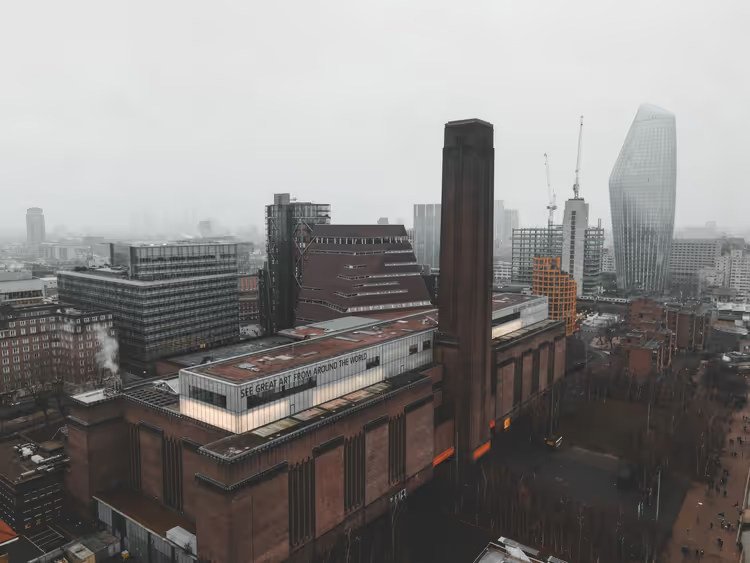
Where to go in London: 33 museums, free entry and timed tickets
London runs the most generous museum program in Europe. The permanent collections of the British Museum, the Victoria and Albert Museum, the Natural History Museum, and the Science Museum are free year-round (as of 09/2026, British Museum official website).
The problem lies elsewhere. Paid museums sell timed entry slots, and several collections have moved or closed in recent years. We put together 33 museums and galleries in London with addresses, opening hours, and notes on what has changed by 2026.
You can visit more than half of the list without a ticket. For paid venues, book your time slot in advance: on weekends, slots sell out several days ahead (as of 09/2026, Madame Tussauds official website).
Ad: this article contains affiliate links, we earn a commission if you book through them, at no extra cost to you.
1. British Museum
 © Jules Verne Times Two · CC BY-SAPhoto: Jules Verne Times Two, CC BY-SA (https://creativecommons.org/licenses/by-sa/4.0), Wikimedia Commons
💡 In short:
- The list covers 33 museums and galleries: what to see, where the entrance is, and how much it costs.
- More than half of the collections are free; paid tickets are cheaper to buy online.
- Prices and opening hours: 09/2026, verified on the British Museum official website.
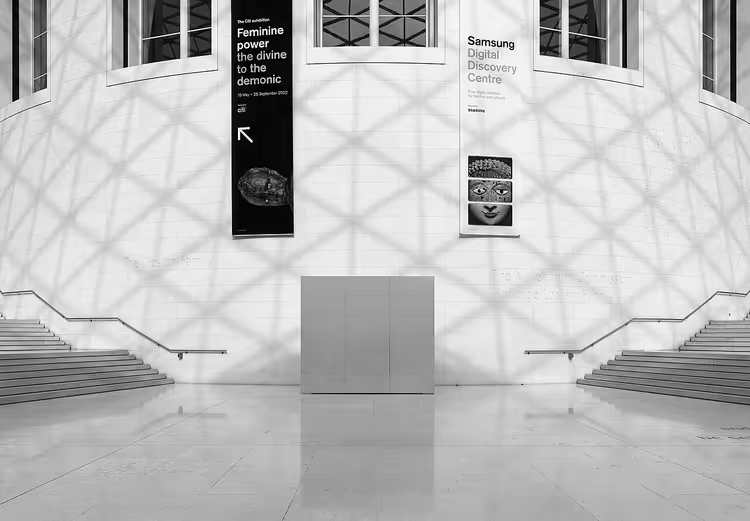
The British Museum opens this selection with the largest collection. In the Egyptian halls you will see mummies and the Rosetta Stone, in the Greek halls stand the Parthenon friezes, and a separate gallery is devoted to Assyrian reliefs. The debate over returning these artifacts to Greece and Egypt has been going on for years.
Admission to the permanent collection is free, and opening hours are confirmed on the official website: daily from 10:00 to 17:00, Fridays until 20:30 (as of 09/2026, britishmuseum.org). Tickets for temporary exhibitions are sold separately on the same site.
Address: Great Russell Street. The most convenient route is from Tottenham Court Road tube station. Start with Egypt and Greece if you only have two hours: those halls give the fullest sense of the collection. Leave the rest for a second visit, because covering the whole museum in one go is difficult.
2. Sherlock Holmes Museum
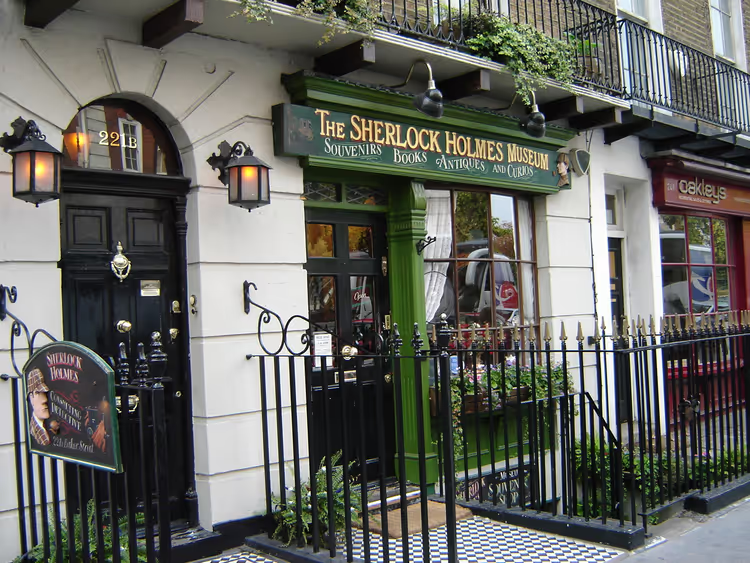
The Sherlock Holmes Museum occupies a four-story Victorian house on Baker Street. The interiors were restored according to Conan Doyle's descriptions: the sitting room with the fireplace and the detective's armchair, Watson's bedroom, and Mrs. Hudson's rooms.
Technically, the address 221b does not match the actual house number, and attentive visitors notice this. Every room is furnished with small details: pipes, letters, surgical instruments, wax figures of the characters. The visit takes about an hour, so no time slots are needed.
An adult ticket costs about £19, a child ticket about £14 (as of 09/2026, museum official website). The museum welcomes visitors from 9:30 to 18:00, tickets are sold at the door, and on weekends a line forms outside. Arrive at opening time if you want to get in without waiting. The museum opened in 1990, although the books are set in the 19th century (as of 09/2026, museum page at sherlock-holmes.co.uk). The ground floor houses the ticket office and shop, the second floor is given over to Holmes's quarters, and the third floor holds the rooms of Watson and Mrs. Hudson. She is the one who greets guests and leads them through her domain, just as Conan Doyle described.
The fourth floor has nothing to do with the detective: it displays busts and sculptures of characters from the writer's other works. At the entrance on Baker Street stands a bronze statue of Sherlock Holmes, and someone is almost always taking a photo next to it. From Baker Street tube station you can walk there in two minutes, and after the museum you can stroll through Regent's Park. The museum's only day off is December 25; on all other days it operates without breaks. Tickets are not tied to a specific time, you enter in order of arrival, and in winter it is cold at the entrance, so bring a jacket.
3. Saatchi Gallery
 © Jack Gavigan · CC BY-SAPhoto: Jack Gavigan, CC BY-SA (https://creativecommons.org/licenses/by-sa/3.0), Wikimedia Commons
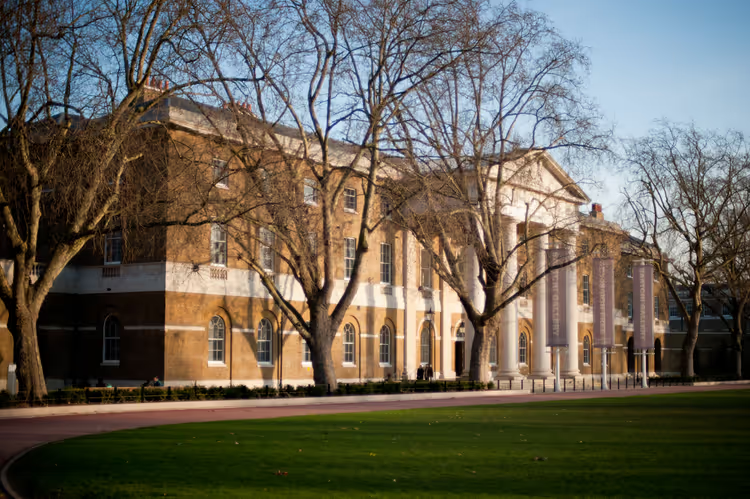
The Saatchi Gallery is housed in the former barracks at Duke of York's HQ near King's Road. Its founder, art dealer Charles Saatchi, opened his contemporary art collection to the public, and since then the venue has become one of the city's leading exhibition spaces.
It shows temporary projects that often spark debate among critics. In the past, the halls displayed works by Marc Quinn and Damien Hirst; today the lineup changes every few months. You cannot predict in advance what you will find on the day of your visit, so check the program on the website.
Admission to the main exhibitions is free, and the gallery is open daily from 10:00 to 18:00 (as of 09/2026, saatchigallery.com). Tickets for certain major projects are sold separately. You will spend about an hour here if you do not linger at the installations. The gallery moved to Duke of York's HQ in 2008, and the building itself was constructed in 1801 as a military school for soldiers' children (as of 09/2026, Saatchi Gallery website). Today, several thousand square meters across two floors are used for exhibitions.
On the way to the gallery, you will walk along King's Road with its shops and cafes. The ticket office closes half an hour before the galleries, which is worth keeping in mind if you arrive in the evening.
4. Tate Britain
 © Carlos Cunha · CC BY-SAPhoto: Carlos Cunha, CC BY-SA (https://creativecommons.org/licenses/by-sa/3.0), Wikimedia Commons
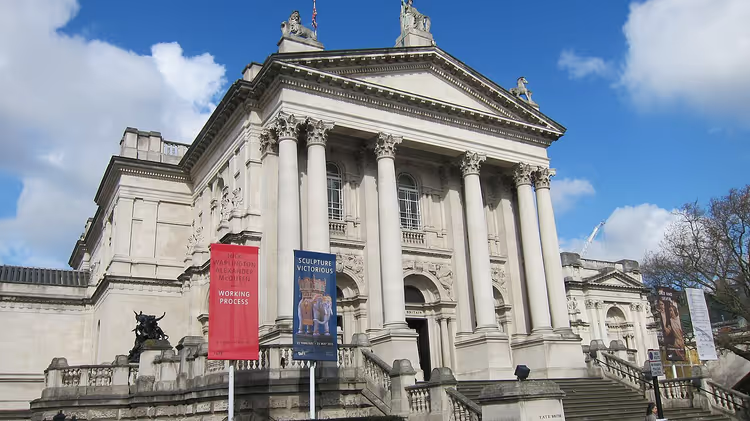
Tate Britain on Millbank shows British art from the 16th century to the present day. The collection is arranged chronologically, so you can easily trace how portraiture, landscape, and everyday scenes changed over time. Turner is given special prominence: a separate block of rooms is devoted to his work.
Admission is free, and opening hours are confirmed on the official website: daily from 10:00 to 18:00 (as of 09/2026, tate.org.uk). The collection is so large that it is split across two buildings. The second, Tate Modern, stands on the other bank of the Thames and is dedicated to 20th and 21st century art.
A riverboat runs between the two galleries, and it is the most pleasant way to connect both locations. Choose a weekday morning: the rooms are quieter, and tour groups start gathering by midday. Allow at least two hours for a full visit. The gallery was founded by the industrialist Henry Tate in 1897, and the Tate Modern branch opened in 2000 in a former power station on the other bank (as of 09/2026, gallery history on tate.org.uk). After that, the collection was divided by period.
There is a cafe and a cloakroom on the ground floor, so you can leave heavy bags at the entrance. Some exhibitions stay open later than the main galleries; check the website for the current schedule.
5. Charles Dickens Museum
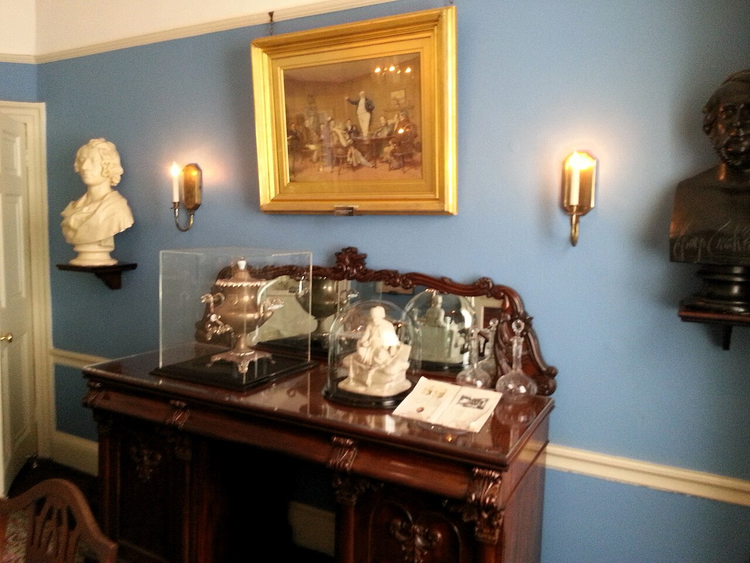
The Charles Dickens Museum is located on Doughty Street, where the writer lived in the late 1830s. The ground floor recreates the dining room, drawing room, kitchen, and bedroom with a four-poster bed. The china on the table is decorated with portraits of Dickens himself and his friends.
 © Ijon · CC BY-SAPhoto: Ijon, CC BY-SA (https://creativecommons.org/licenses/by-sa/4.0), Wikimedia Commons
The second floor is given over to the study. Here stand the desk and chair at which Oliver Twist and David Copperfield were written, along with first editions and manuscripts. The walls are covered with paintings of old London, and the atmosphere of the house comes through more strongly than in larger museums.
The museum is open from 10:00 to 17:00, tickets are sold until 16:00, and the exhibition is closed on public holidays (as of 09/2026, dickensmuseum.com). Admission is paid; you will find the exact price on the museum's website. Allow about an hour: the house is small but packed with interest.
6. Amours of London Museum
 © Ilya Grigorik · CC BY-SAPhoto: Ilya Grigorik, CC BY-SA (https://creativecommons.org/licenses/by-sa/3.0), Wikimedia Commons
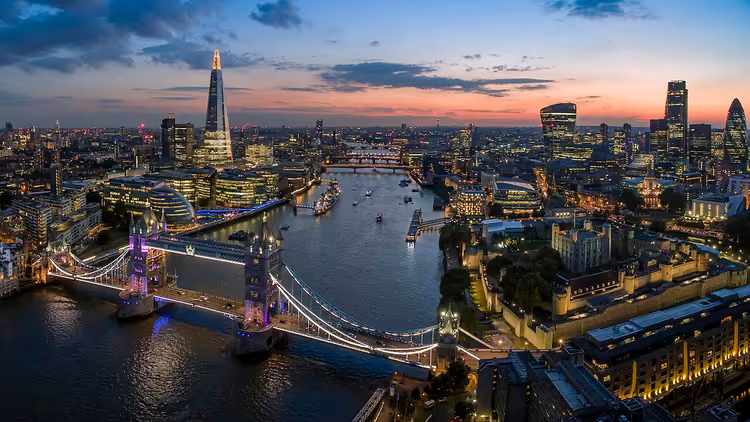
The Amours of London Museum operates near Piccadilly, in a building on Coventry Street. The exhibition opened in 2007 and is dedicated to erotica, sex, and love. Red lighting, touchscreens, and multimedia installations set the mood better than any explanations.
In addition to paintings and interactive displays, guests linger in the bar with aphrodisiac cocktails. For an additional fee, you can get a consultation with a sex therapist here. The audience is adults only; children are not brought here, and this is worth keeping in mind when planning your route.
The museum is open until late in the evening; check the official website for the exact schedule and prices before your visit. You will spend about an hour and a half here. Piccadilly Circus and Leicester Square are nearby, so the visit is easy to combine with a walk through the center.
7. Westminster Abbey Museum
 © TimothyBarkerJr · CC BY-SAPhoto: TimothyBarkerJr, CC BY-SA (https://creativecommons.org/licenses/by-sa/4.0), Wikimedia Commons
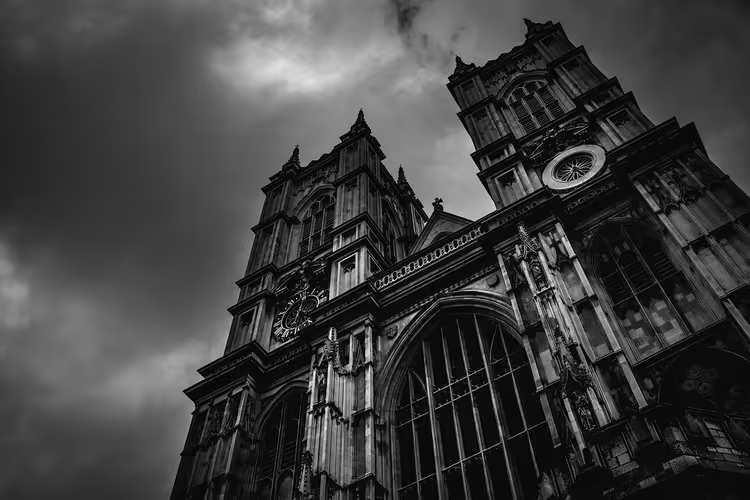
Westminster Abbey serves as both a working church and the country's main coronation cathedral. The Gothic interior has witnessed the coronations of English monarchs, and Poets' Corner is the burial place of writers and scholars. The site's second name, the Collegiate Church of St Peter, still appears in documents today.
The Abbey is open to visitors on weekdays and Saturdays; on Sundays, entry is available only to worshippers attending services. Opening hours change due to services and state ceremonies, so check the schedule in advance. An adult ticket costs around £30, with the audio guide included (as of 09/2026, official website).
A timed-entry ticket is easy to book online: Westminster Abbey ticket with audio guide on GetYourGuide. Arrive at opening time and you will get in without a long wait. Tube: Westminster, exit towards Parliament. The Abbey has been under construction since the 13th century, and English monarchs have been crowned here since 1066 (as of 09/2026, westminster-abbey.org). Poets' Corner is the burial place of Geoffrey Chaucer, Charles Dickens and Rudyard Kipling, and the Henry VII Chapel is known for its fan vaulting.
A visit takes about an hour and a half, and the audio guide helps you keep track of the dates and names. Visitor entry closes one hour before the end of the day, so do not leave your visit until the evening. Address: Deans Yard. On Saturdays the Abbey closes earlier than on weekdays, and this is worth checking on the website before your trip. The Palace of Westminster and Big Ben are nearby, so you can continue your walk along the river without changing transport.
8. Victoria and Albert Museum
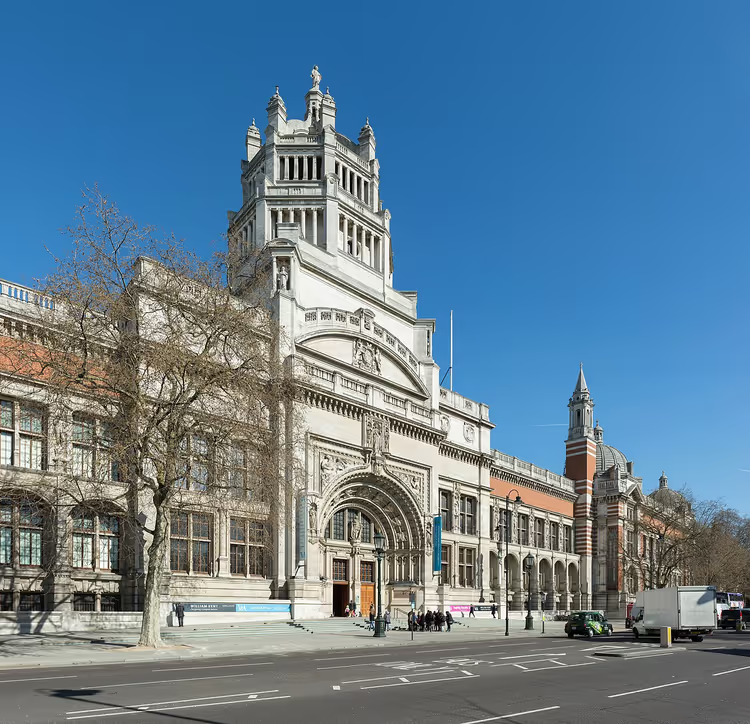 © Diliff · CC BY-SAPhoto: Diliff, CC BY-SA (https://creativecommons.org/licenses/by-sa/3.0), Wikimedia Commons
The Victoria and Albert Museum is dedicated to decorative arts from around the world. It opened in 1851 with the involvement of Queen Victoria and Prince Albert, who purchased exhibits at his own expense. Today, more than two million objects are displayed across 145 galleries, from ancient ceramics to contemporary design (as of 09/2026, vam.ac.uk).
The collection is divided into departments: architecture, Asia, books, fashion, theatre. Raphael's cartoons hang in a dedicated room, and plaster casts of monuments fill the Cast Courts with enormous gypsum replicas. In the fashion department you will see dresses from different decades, and it is one of the most visited parts of the museum.
Admission is free, hours: daily from 10:00 to 17:45, on Fridays until 22:00 (as of 09/2026, museum's official website). Museum tours are also free, a one-hour overview walk starts in the lobby. It is unrealistic to cover all the galleries in one visit, so pick two or three departments and take your time.
9. Design Museum
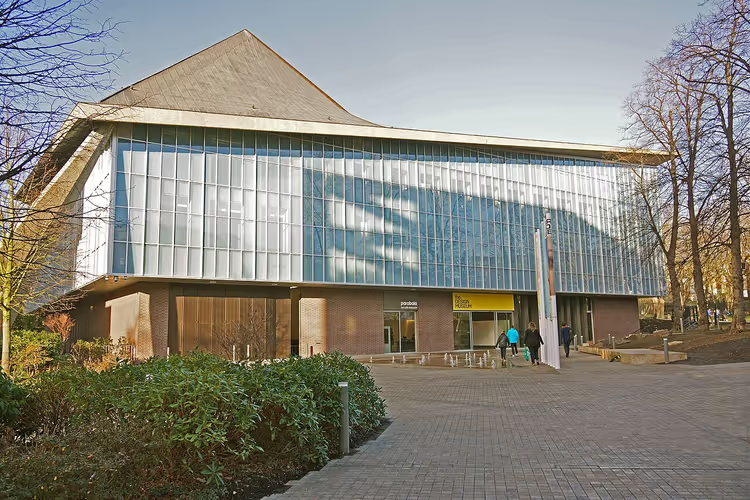 © Anthony O'Neil · CC BY-SAPhoto: Anthony O'Neil, CC BY-SA (https://creativecommons.org/licenses/by-sa/2.0), Wikimedia Commons
The Design Museum moved from Shad Thames to the former Commonwealth Institute building on Kensington High Street. The glass roof and open plan make the building itself part of the exhibition. The permanent project Designer Maker User shows how objects go from idea to production and then to the consumer.
The second and third floors host temporary exhibitions: architecture, graphics, industrial design, fashion. The museum also runs conferences, seminars and children's activities, so on weekends the galleries are noisy with tours.
Admission to the permanent collection is free, hours: daily from 10:00 to 18:00 (as of 09/2026, designmuseum.org). You will spend about an hour, and allow two for a major temporary exhibition.
10. Natural History Museum
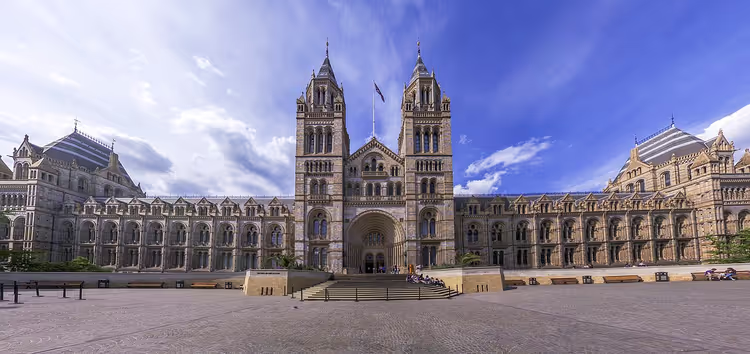 © Poidabro · CC BY-SAPhoto: Poidabro, CC BY-SA (https://creativecommons.org/licenses/by-sa/4.0), Wikimedia Commons
The Natural History Museum stands on Cromwell Road next to the Victoria and Albert Museum. The exhibition area looks like a film set, although no films were shot here. The galleries are color-coded: the blue zone has dinosaur skeletons, the green zone displays birds, insects and plants, and the red zone simulates an earthquake and a volcanic eruption every day.
A separate section is dedicated to Darwin and his work, and in the research wing scientists continue scientific projects. In the laboratories children take part in simple experiments, and on weekends there is a queue to get in. Visitors with children should logically start with the blue zone while the galleries are empty.
Admission is free, hours: daily from 10:00 to 17:50 (as of 09/2026, nhm.ac.uk). On special evenings the museum stays open late, check the schedule on the website. Allow at least two hours, otherwise you will miss half the zones.
11. Cutty Sark ship museum
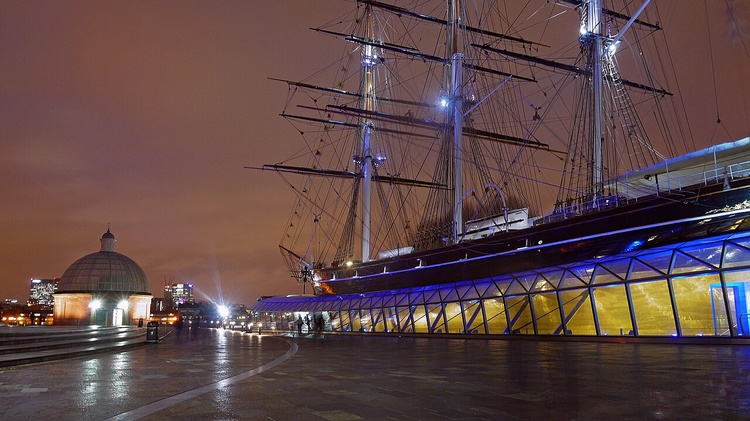
The Cutty Sark carried tea from China to Europe and remains the world's last tea clipper. The ship was named after the heroine of Robert Burns' poem, and sailors long considered the name unlucky. In 2007 a fire broke out on board, and restoration work was completed by 2012.
 © Donnchadh H · CC BYPhoto: Donnchadh H, CC BY (https://creativecommons.org/licenses/by/2.0), Wikimedia Commons
Today you can walk the decks, go down into the holds and look into the underwater part of the hull. It is the lower section that makes the strongest impression: a glass gallery runs beneath the ship with the copper rudder and hull plating. The nearby cafe serves lunch with a view of the Thames.
An adult ticket costs about £18, children are cheaper (as of 09/2026, rmg.co.uk). The easiest way to get there is by water: a Thames cruise from Westminster to Greenwich runs along the main embankments and ends at Greenwich Pier.
12. London Transport Museum
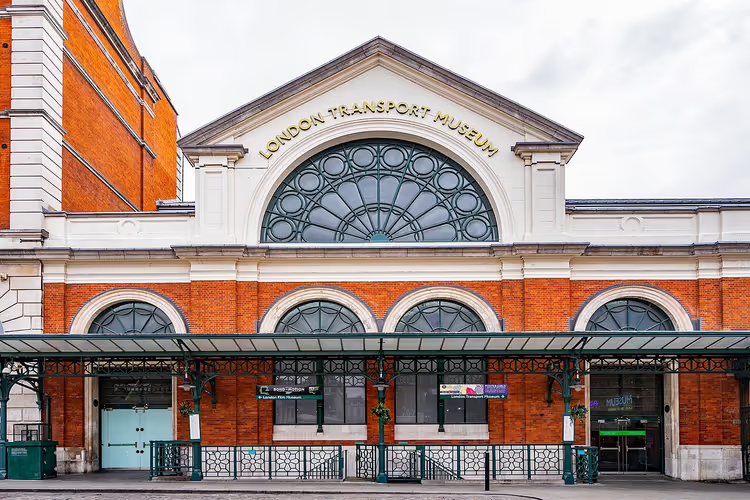 © Wei-Te Wong from Taipei City, Taiwan, Republic of China · CC BY-SAPhoto: Wei-Te Wong from Taipei City, Taiwan, Republic of China, CC BY-SA (https://creativecommons.org/licenses/by-sa/2.0), Wikimedia Commons
The London Transport Museum occupies a three-story building in Covent Garden. The exhibition explains how the world's first underground railway appeared in London, how tunnels were dug by hand and how the line map changed. The second floor is entirely devoted to the Tube, the third shows surface transport from horse-drawn carriages to double-decker buses.
The models and interactive displays can be touched, so the museum is well suited for families. Some galleries work as a play area where children try themselves as train drivers. Allow one and a half to two hours for the visit.
Admission is paid, but a child ticket is usually free, and an adult ticket works as an annual pass (as of 09/2026, ltmuseum.co.uk). If you enjoy looking at the city from above, add a hop-on hop-off bus tour and retrace the routes in real life. The first underground line opened in 1863, and it was the Metropolitan Railway (as of 09/2026, transport museum website). The underground halls feature restored old carriages and the shields used to dig tunnels beneath the city.
The museum is right on Covent Garden square, so it is easy to stop by between the theaters and the market. Part of the exhibition is being updated, so check the hall schedule on the website. A visit with kids will take longer than you planned: the play areas do not let you go.
13. Madame Tussauds
 © mwanasimba from La Réunion · CC BY-SAPhoto: mwanasimba from La Réunion, CC BY-SA (https://creativecommons.org/licenses/by-sa/2.0), Wikimedia Commons
Madame Tussauds near Baker Street station remains one of the most visited attractions in London. The building is easy to recognize by its green dome. The collection is divided into themed halls: the royal family, film and music stars, athletes, politicians, and historical figures.
You are allowed to take photos with the figures and touch them. The level of detail is impressive, and some halls are designed as attractions with special effects. The line at the entrance depends on your time slot, so it is better to book in advance.
Tickets on the official website start from £29, and you can check opening hours there as well (as of 09/2026, madametussauds.com). An online ticket is cheaper than at the box office, so you will save not only money but also time. If you want guaranteed entry, get a Madame Tussauds ticket on GetYourGuide.
14. National Gallery
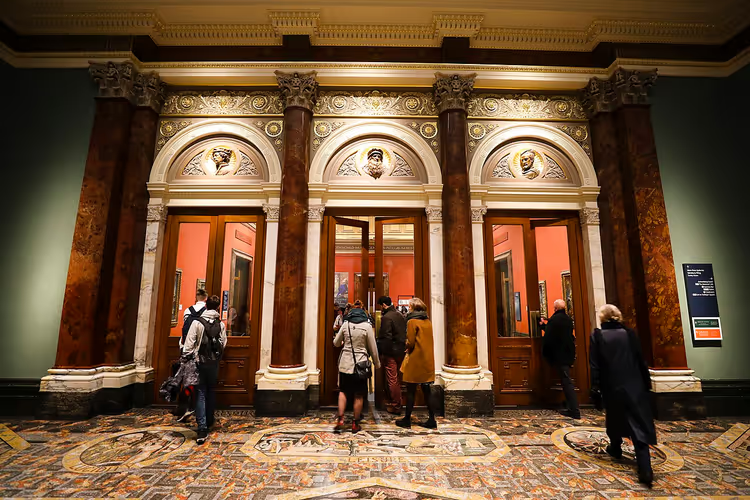 © https://www.flickr.com/photos/bryansjs · CC BY-SAPhoto: https://www.flickr.com/photos/bryansjs, CC BY-SA (https://creativecommons.org/licenses/by-sa/2.0), Wikimedia Commons
The National Gallery stands on Trafalgar Square in a building with columns and a dome. The collection holds more than two thousand paintings created from the 13th century onward. You can trace how painting evolved from icons and the early Renaissance to Impressionism.
Among the key works here are portraits and landscapes by Leonardo da Vinci, Raphael, Titian, Rembrandt, and Van Gogh. A separate section is devoted to Orthodox icons of the Byzantine and Greek schools. The rooms are grouped by era, so you can plan your route without a map.
Admission is free, hours: daily from 10:00 to 18:00, Fridays until 21:00 (as of 09/2026, nationalgallery.org.uk). On Friday evenings there is a program with music and lectures, and the ticket line is shorter. Allow two hours for a quick visit.
15. Tate Modern
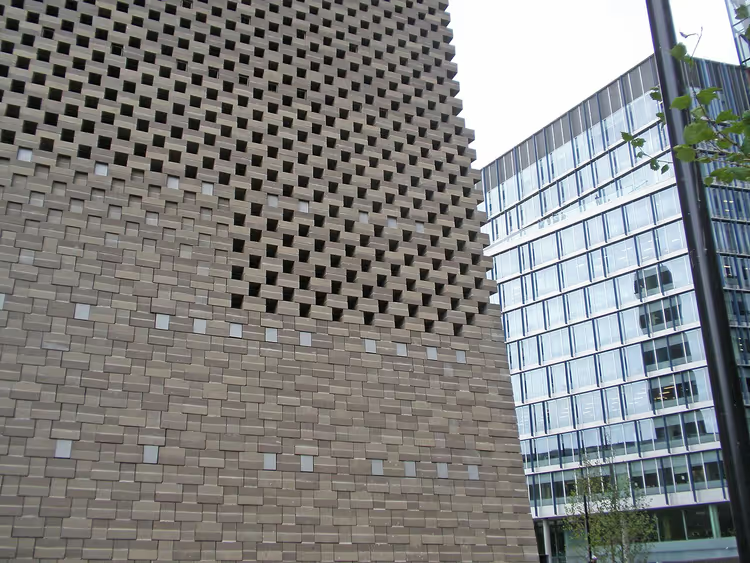 © Amanda Slater from Coventry, West Midlands, UK · CC BY-SAPhoto: Amanda Slater from Coventry, West Midlands, UK, CC BY-SA (https://creativecommons.org/licenses/by-sa/2.0), Wikimedia Commons
Tate Modern occupies a former power station on the south bank of the Thames. The building with its chimney about a hundred meters tall is recognizable from afar, and inside there is the Turbine Hall, where large-scale installations are shown. The dark-brick galleries display painting, photography, sculpture, and video.
The collection spans more than 70,000 works, including Picasso, Monet, Malevich, and Warhol. Some exhibits are baffling, and that is normal: the gallery presents 20th- and 21st-century art without catering to conventional taste. The roof offers a view of St Paul's Cathedral.
Admission is free, hours: daily from 10:00 to 18:00, longer on Fridays and Saturdays (as of 09/2026, tate.org.uk). Tickets for paid exhibitions are bought separately on the website. Walk across the Millennium Bridge from St Paul's Cathedral: the route takes about ten minutes.
16. Institute of Contemporary Arts
The Institute of Contemporary Arts has operated on The Mall since 1946. It was founded by collectors, writers, and critics who wanted a venue outside academic standards. Today it shows avant-garde paintings, sculptures, performances, and video installations.
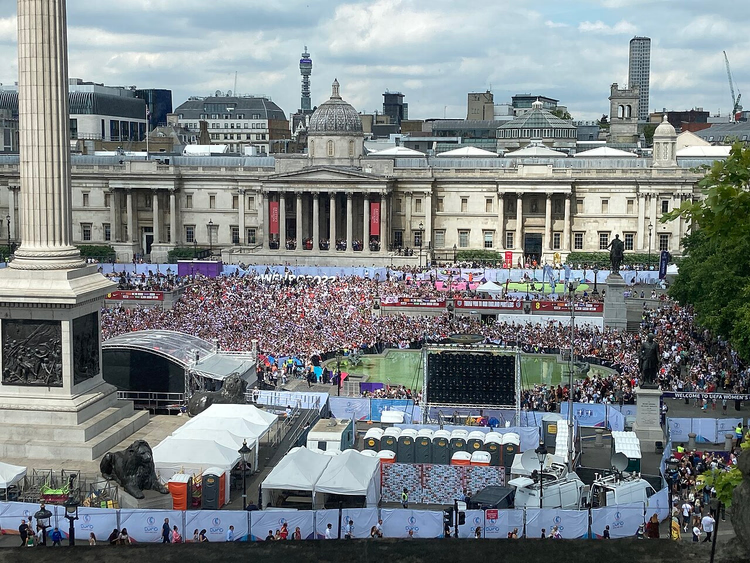 © Matt Brown · CC BYPhoto: Matt Brown, CC BY (https://creativecommons.org/licenses/by/2.0), Wikimedia Commons
In addition to the gallery, the building houses a cinema, a bookshop, and a bar. Concerts and screenings are held in the evenings, so the program changes almost every week. Check the schedule if you want to attend a specific event.
Gallery admission is free; check the official website for hours, as they depend on exhibitions (as of 09/2026, ica.art). It is a convenient place to pause between the National Gallery and a walk through St James's Park.
17. Wallace Collection
 © Peter Clarke · CC BY-SAPhoto: Peter Clarke, CC BY-SA (https://creativecommons.org/licenses/by-sa/3.0), Wikimedia Commons
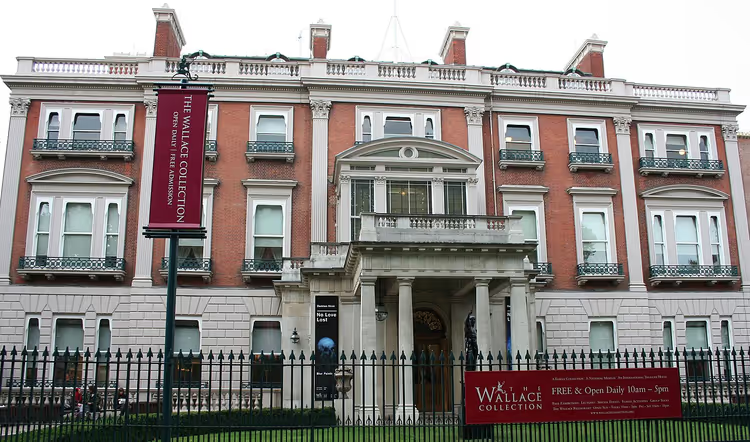
The Wallace Collection is housed in Hertford House on Manchester Square. The core of the collection was established by the Marquess Richard Wallace, who bequeathed his possessions to the British nation. In 25 rooms you will see paintings, medieval arms and armor, sculpture, furniture, and porcelain.
Among the paintings are works by Rembrandt, Rubens, Titian, Van Dyck, and Canaletto. The armor and 17th-century carved furniture deserve special attention. The interiors have preserved the spirit of an aristocratic home, so the visit feels like calling on a collector.
Admission is free, hours: daily from 10:00 to 17:00 (as of 09/2026, wallacecollection.org). You will spend about an hour and a half. The museum cafe is cozy, and it is worth stopping in after a long walk through the center.
18. Harry Potter Museum
 © Karen Roe · CC BYPhoto: Karen Roe, CC BY (https://creativecommons.org/licenses/by/3.0), Wikimedia Commons
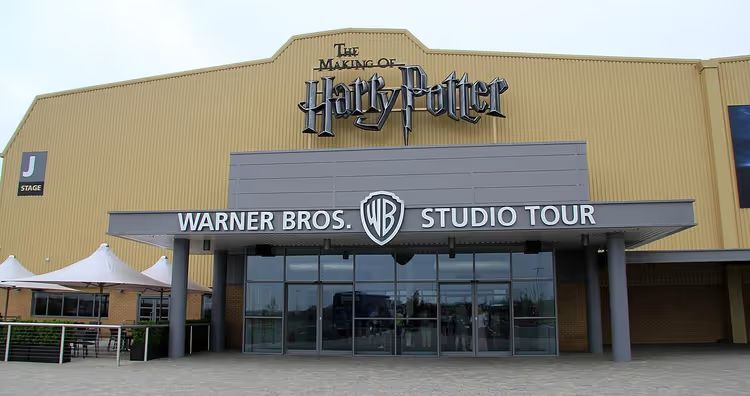
The Warner Bros. studio near Watford, known as the Harry Potter museum, is outside the city, but almost every fan of the films makes the trip here. The huge pavilions house sets, costumes, and props: the Hogwarts classrooms, Dumbledore's office, Platform 9 3/4, and Diagon Alley.
The exhibition shows how the special effects and filmed scenes were created. Some of the halls are interactive, so a visit easily takes three to four hours. Tickets are sold on the official website, and weekend slots sell out in advance.
Adult ticket prices start at £50 (as of 09/2026, wbstudiotour.co.uk). You can get there by train to Watford Junction and then take the free shuttle. If you don't want to deal with the journey, book a Warner Bros. studio tour with transfer from London.
19. Museum of the Home
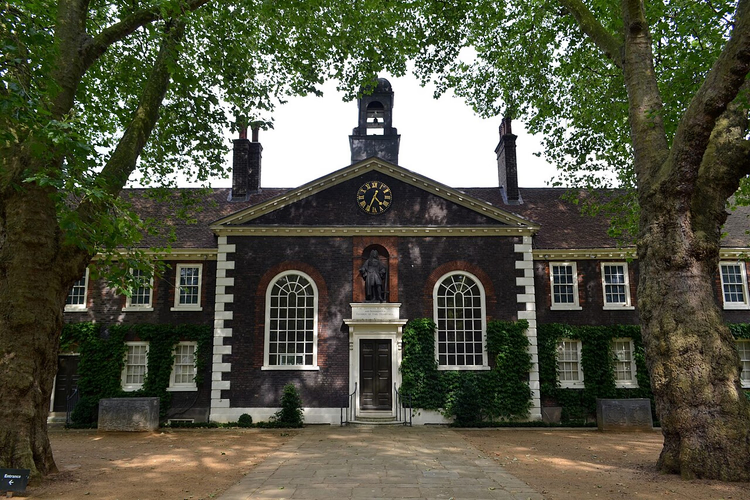
The former Geffrye Museum has been called the Museum of the Home since 2018 and occupies an old almshouse on Kingsland Road in Hoxton. The exhibition explains how British middle-class housing has changed. Eleven rooms recreate interiors from different eras, starting in 1600.
 © Cmglee · CC BY-SAPhoto: Cmglee, CC BY-SA (https://creativecommons.org/licenses/by-sa/4.0), Wikimedia Commons
You'll find carved furniture, fireplaces, wallpaper, tableware, candlesticks, and textiles. The walls and ceilings are decorated with original ornaments and oak paneling. The collection shows how people's tastes shaped the layout of the home, not just fashion.
Admission is free, opening hours: Tuesday to Sunday from 10:00 to 17:00 (as of 09/2026, museumofthehome.org.uk). Closed on Mondays. A garden adjoins the museum, a pleasant place to rest after exploring the rooms.
20. Imperial War Museum
 © Ввласенко · CC BY-SAPhoto: Ввласенко, CC BY-SA (https://creativecommons.org/licenses/by-sa/3.0), Wikimedia Commons
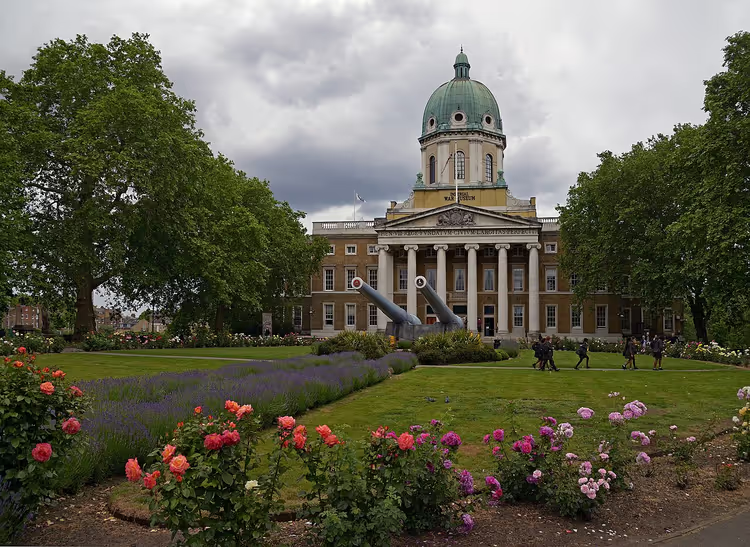
The Imperial War Museum stands in a building with a massive dome on Lambeth Road. Until 1936, this was the Royal Bethlem psychiatric hospital. The collection is dedicated to the 20th-century military conflicts in which the British army took part.
The pavilions display tanks, aircraft, missiles, and small arms from different countries. Skillfully recreated trenches, dugouts, and command posts transport you into the atmosphere of wartime. Separate sections cover intelligence and the Holocaust, and these deserve extra time.
Admission is free, opening hours: daily from 10:00 to 18:00 (as of 09/2026, iwm.org.uk). The museum is large, and it's hard to see all the galleries in one visit. Arrive at opening time if you want to get into a temporary exhibition without queuing.
21. Museum of London
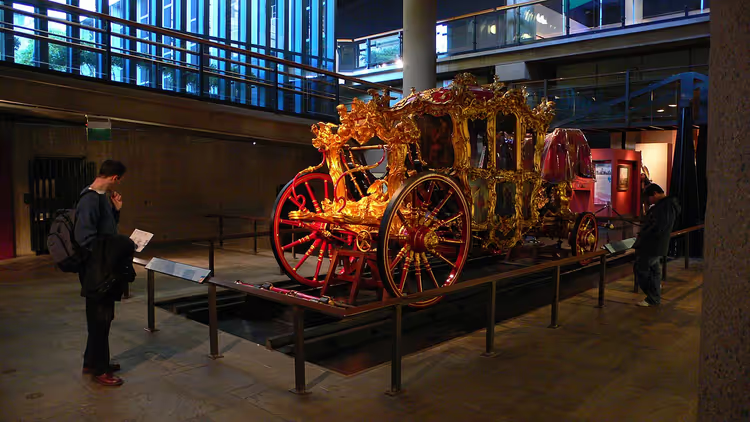 © Justinc · CC BY-SAPhoto: Justinc, CC BY-SA (https://creativecommons.org/licenses/by-sa/2.0), Wikimedia Commons
The Museum of London in Cripplegate closed in December 2022, and it's important to know this before your trip. The collection moved to the Smithfield area, where the updated London Museum is preparing to open. The opening date and visitor information are listed on the official website, so check them before your visit (as of 09/2026, museumoflondon.org.uk).
The historical collection remains the same: archaeological finds from the Stone Age to the present day, objects belonging to Roman legionaries, weapons, jewelry, costumes, and everyday items. The gilded lord mayor's coach, made in 1757, deserves special attention.
While the new location is being prepared, some exhibits are shown at other venues around the city. We're keeping this entry in the list because the city's history remains an important part of London's museum program. Follow the updates on the website if you're planning a visit in advance.
22. Science Museum
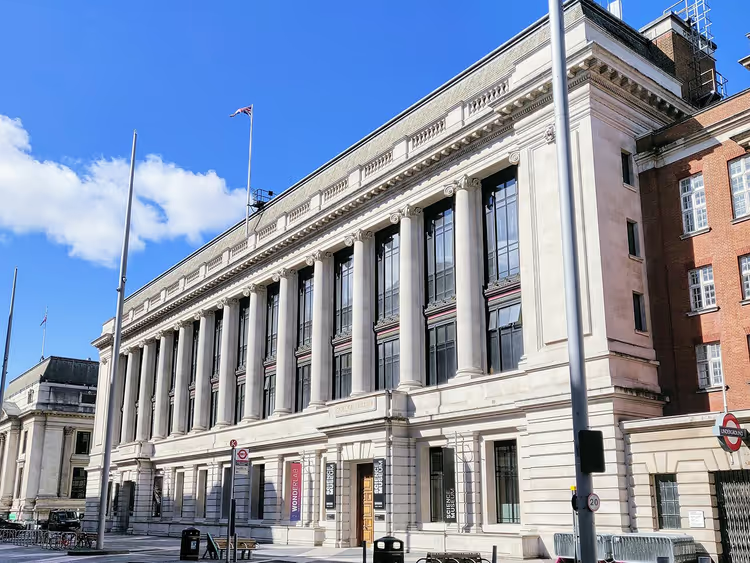 © Shadowssettle · CC BY-SAPhoto: Shadowssettle, CC BY-SA (https://creativecommons.org/licenses/by-sa/4.0), Wikimedia Commons
The Science Museum on Exhibition Road showcases achievements in technology, medicine, space, and chemistry. Across five floors, it houses more than 300,000 exhibits: steam engines, motors, aircraft, computers, rockets, and household appliances. Many of the models are full-scale.
Separate galleries are devoted to medicine of past centuries and modern diagnostics. In the interactive zones, you can run simple experiments and test your own body's capabilities. Virtual reality technology lets you feel like an astronaut on a space station.
Admission to the main exhibition is free, opening hours: daily from 10:00 to 18:00 (as of 09/2026, sciencemuseum.org.uk). Interactive labs and some temporary exhibitions are paid, and tickets for them are booked online. Allow at least two hours.
23. The London Dungeon
The London Dungeon combines a museum, an escape room, and a theatrical performance. Actors in historical costumes lead groups through grim scenes: medieval torture, the plague epidemic, the Great Fire of 1666, and the cases of Jack the Ripper. Sound effects, smells, and set design heighten the experience.
You become a participant in the show, not just a spectator. In the dungeon's labyrinths you'll encounter executioners, wandering corpses, and serial killers, and the finale ends with a sudden drop down a shaft. No one gets hurt, but the impressions stay with you.
The museum is open daily, with shorter hours on weekdays than on weekends (as of 09/2026, thedungeons.com). Online tickets are cheaper than at the door, and you choose your entry time when purchasing. Be cautious with younger children: the scenes are designed for an adult audience. The attraction is located in County Hall on the south bank of the Thames, next to the Ferris wheel. The route through the scenes takes about an hour and a half, and groups go one after another according to scheduled time slots.
The actors improvise and interact with guests, so you won't be able to pass through quietly and unnoticed. If you don't handle sudden loud sounds and complete darkness well, pick another item on this list.
24. Wellington Museum
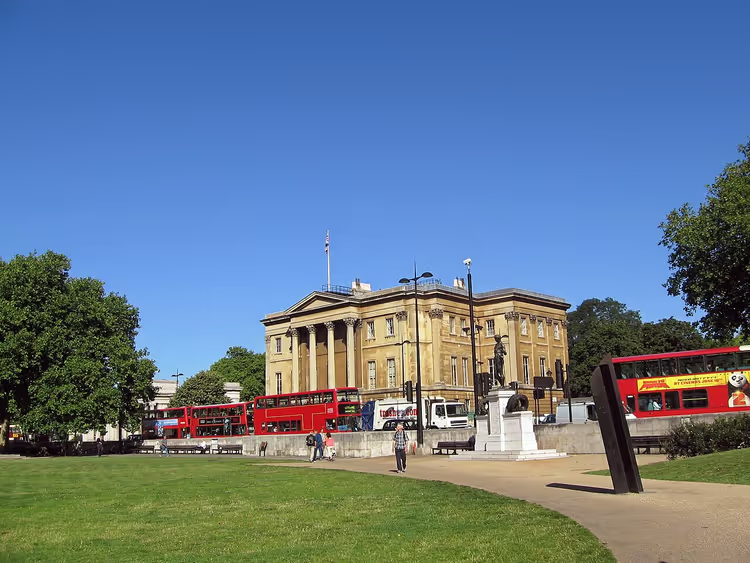 © Natalia Semenova · CC BYPhoto: Natalia Semenova, CC BY (https://creativecommons.org/licenses/by/3.0), Wikimedia Commons
The Wellington Museum occupies Apsley House near Hyde Park. This was the home of the Duke of Wellington, the victor of the Battle of Waterloo. The classical facade with its Corinthian portico is hard to miss if you're walking along Piccadilly.
The rooms display trophy paintings the Duke brought back from his military campaigns against the French. Works by Rubens, Velazquez, Van Dyck, Caravaggio, and Goya hang in aristocratic interiors. Besides paintings, you'll see furniture, porcelain, silver, weapons, and medals.
At the entrance, guests are greeted by a three-meter statue of Napoleon by Antonio Canova. The museum is open Wednesday through Sunday, with longer hours in summer than in winter (as of 09/2026, english-heritage.org.uk). An adult ticket costs around £12; check the website for exact prices and hours (as of 09/2026, english-heritage.org.uk).
25. The clink prison museum
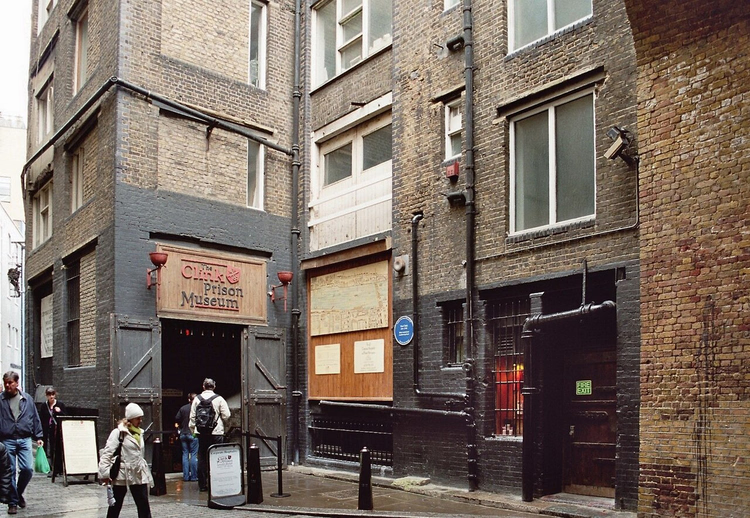 © Sir James · CC BY-SAPhoto: Sir James, CC BY-SA (https://creativecommons.org/licenses/by-sa/3.0), Wikimedia Commons
The former Clink Prison operated from the 12th century until 1780, and today a themed museum is open in its cellars. Its founder is considered to be the Bishop of Winchester, known for his cruelty to prisoners. Debtors, drunkards, thieves, and innocent people ended up behind bars.
The cell interiors are recreated in detail: torture instruments, wax figures of convicts, audio recordings of moans. Jailers extorted money from prisoners for food, candles, and bedding, and this part of the exhibition explains how the bribery system worked.
The museum welcomes visitors daily, with longer hours in summer and until 6:00 PM in winter (as of 09/2026, clink.co.uk). An adult ticket costs in the low double digits; check the official website for the exact price. The visit takes about an hour, and the faint of heart should think twice before going.
26. Bank of England Museum
The Bank of England Museum operates in a classical 18th-century building in the City. The exhibition tells the story of how the country's financial system was formed. You'll see banknotes, royal mint coins, gold bars, engravings, and promissory notes.
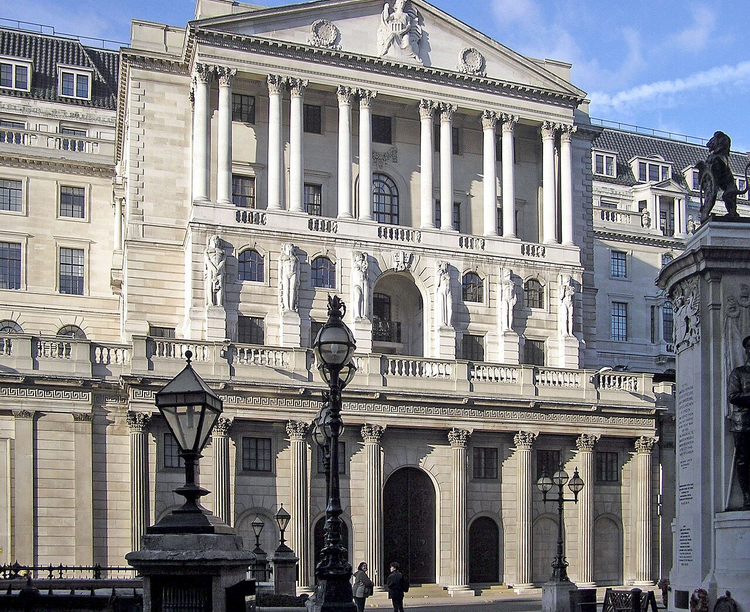
Among the rare items here are muskets and pikes used to guard the bank, as well as a large iron chest that served as a safe. A separate reconstruction shows an old office with wax figures in historical clothing. One of the gold bars can be lifted by hand to feel its weight.
Admission is free, and the museum is open on weekdays from 10:00 AM to 5:00 PM (as of 09/2026, bankofengland.co.uk). It's closed on weekends, so plan your visit for a working day. From here it's an easy walk to the Tower: if you want to go inside the fortress, get a skip-the-line ticket to the Tower of London.
27. Churchill Museum
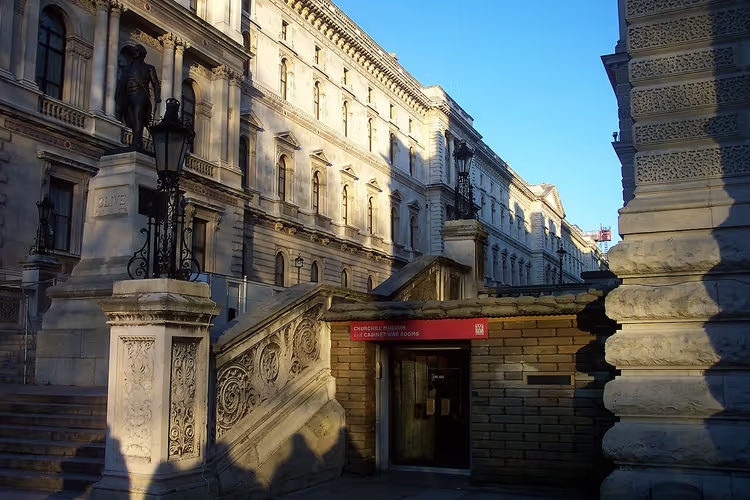 © en:User:Jdhowens90 · CC BY-SAPhoto: en:User:Jdhowens90, CC BY-SA (https://creativecommons.org/licenses/by-sa/3.0), Wikimedia Commons
The Churchill Museum, known as Churchill War Rooms, is located beneath the Treasury building next to St James's Park. At a depth of about five meters, Winston Churchill held cabinet meetings during the German bombing raids. Since 1984, the bunker has operated as a museum.
The interiors of the headquarters look austere and practical. Steel blocks under the ceiling protected the shelter from shells, and the rooms preserve desks, beds, and communications equipment. Wax figures convincingly recreate the staff at work.
You will see the prime minister's personal belongings: cigars, a walking stick, a top hat, and a polka-dot bow tie. A notable exhibit in the complex, an interactive fifteen-meter table, presents details of his biography. The museum is open daily from 9:30 to 18:00, and an adult ticket costs around £35 (as of 09/2026, iwm.org.uk).
28. Tea and coffee museum
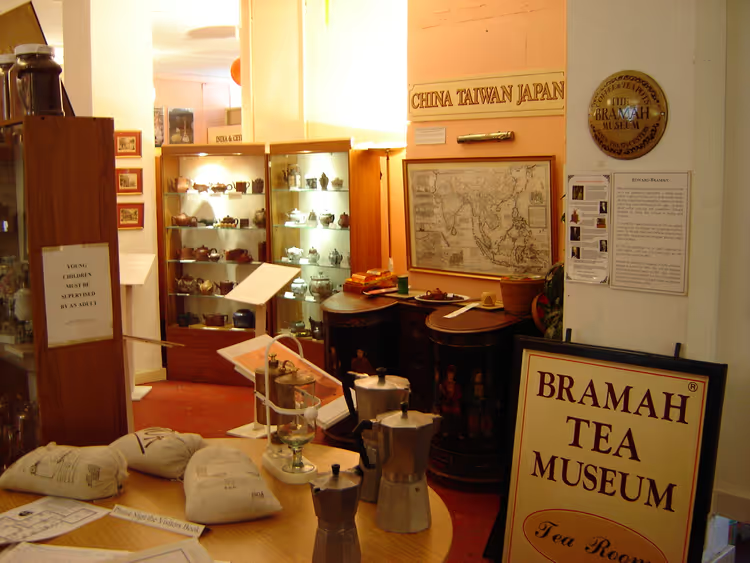
The Bramah Tea and Coffee Museum, opened in 1992 near Borough Market, has been closed for many years. Its collection of Chinese porcelain, Japanese tea bowls, teapots, and Russian samovars is no longer on display. We keep this entry on the list as a warning: old guidebooks still lead tourists here.
Nevertheless, the area around Borough Market remains the best place in London for tea and coffee. The market stalls sell beans and loose-leaf tea, and nearby coffee shops roast on site. A walk through the market takes about an hour and pairs well with a visit to the Clink Prison Museum.
Before traveling, check the status of the venue on its official website if you come across it in old lists. Exhibitions devoted to beverages periodically appear at other museums in the city, and schedules for such shows are published on their pages.
29. Pollock's Toy Museum
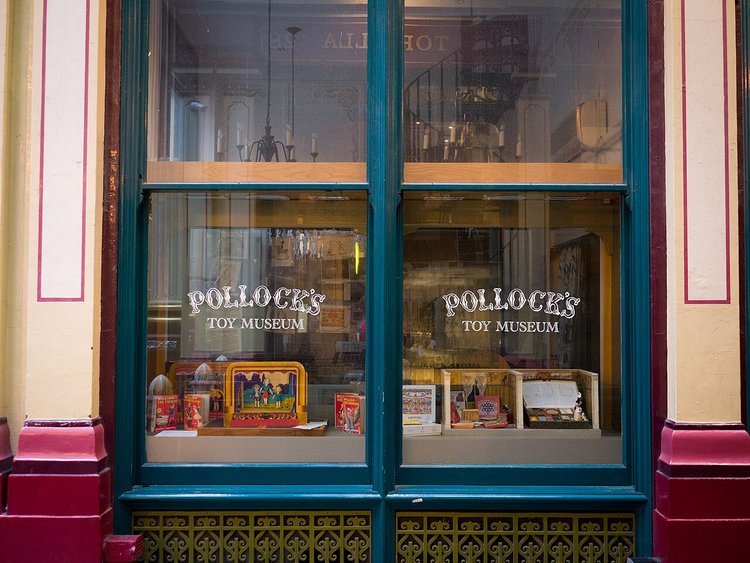 © Tom Page · CC BY-SAPhoto: Tom Page, CC BY-SA (https://creativecommons.org/licenses/by-sa/2.0), Wikimedia Commons
Pollock's Toy Museum, the oldest in the country, has closed its doors on Scala Street in Fitzrovia. The collection of dolls, construction sets, toy soldiers, marionettes, and mechanical trinkets has gone into storage, and the museum needs funds to reopen. This is reported on the official website (as of 09/2026, pollockstoymuseum.co.uk).
The history of the collection is linked to Benjamin Pollock, a maker of toys and theatrical scenery in the Victorian era. The holdings included wax, porcelain, wooden, and paper toys, dollhouses with furniture and tableware, and a collection of teddy bears.
From time to time the museum shows the collection at temporary venues and festivals, so keep an eye on announcements. If you are traveling to London with children, swap this stop for another toy venue on the list, such as Young V&A.
30. Museum of Childhood
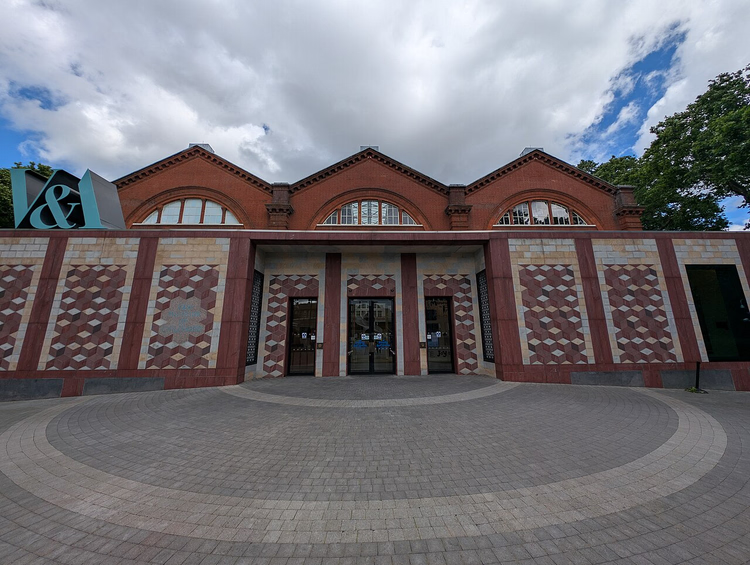
The Museum of Childhood in Bethnal Green has operated under the name Young V&A since 2023. The galleries of the two-story pavilion house a collection of toys from around the world: dolls, marionettes, toy soldiers, robots, board games, teddy bears, and wooden horses. The project is aimed at families with children, but adults get drawn in here too.
A particular pride of the museum is its dollhouses behind glass display cases. Many models are open, so you can examine the miniature furniture, tableware, and interiors. The cups in the toy tea sets are no more than five centimeters in diameter, and the patterns are painted by hand.
The museum also displays children's dresses and suits from the 18th and 19th centuries, mechanical trains, dancing ballerinas, and walking robots. Admission is free, opening hours: daily from 10:00 to 17:45 (as of 09/2026, vam.ac.uk). Allow an hour and a half.
31. Sir John Soane's Museum
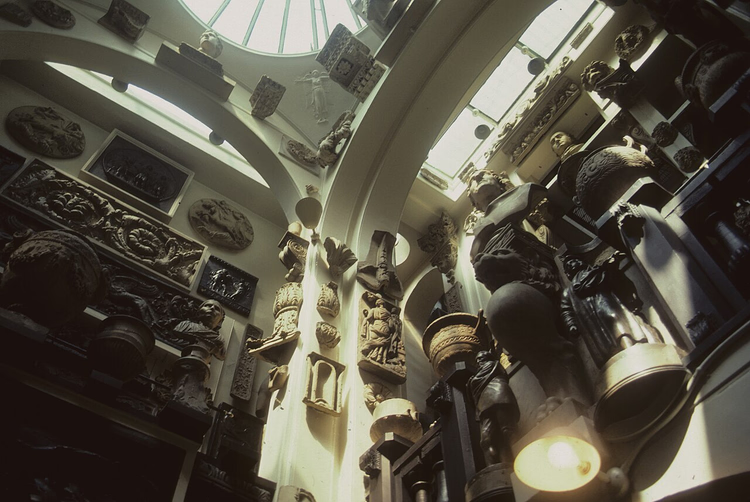 © Acroterion · CC BY-SAPhoto: Acroterion, CC BY-SA (https://creativecommons.org/licenses/by-sa/4.0), Wikimedia Commons
Sir John Soane's Museum occupies the architect's house on Lincoln's Inn Fields. The apartments are packed with antiques: fragments of architectural monuments, marble frescoes, archaeological finds, sculptures, vases, and engravings. Soane assembled the collection haphazardly, without chronology or division by culture.
In the picture room, paintings hang on movable panels that lift up to reveal new layers. This allowed hundreds of paintings to fit in a small room, including works by Piranesi, Hogarth, and Canaletto. Convex mirrors and colored glass create a theatrical feel.
Admission is free, and the museum welcomes guests from Wednesday to Sunday from 10:00 to 17:00 (as of 09/2026, soane.org). In the evenings, candlelit tours are held here; check the website for the schedule. A visit takes about an hour, and this is one of the most unusual addresses on the list.
32. Whitechapel Gallery
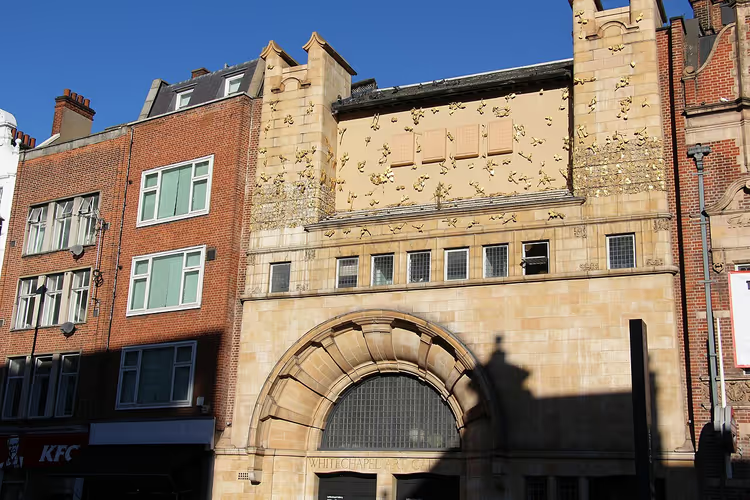 © Fred Romero from Paris, France · CC BYPhoto: Fred Romero from Paris, France, CC BY (https://creativecommons.org/licenses/by/2.0), Wikimedia Commons
Whitechapel Gallery opened in 1901 and became one of the first publicly funded art venues in the country. It is known for showing Picasso, Rothko, Frida Kahlo, and Jackson Pollock long before those names made it into textbooks.
Today the galleries host temporary contemporary art exhibitions: sculpture, photography, painting, and performance. The program often touches on social themes, so the lineup changes every few months. Check the schedule if you want to catch a specific project.
Admission is free, and the gallery is open from 11:00 to 18:00 every day except Monday (as of 09/2026, whitechapelgallery.org). The neighborhood is tied to the history of Jack the Ripper, so a walk through the surrounding streets is worth combining with a visit to the galleries.
33. Jack the Ripper Museum
The Jack the Ripper Museum occupies a Victorian building on Cable Street in Whitechapel. The exhibition is dedicated to the series of murders in 1888, which remain unsolved to this day. You will see materials about the victims, the suspects, and the course of the investigation.
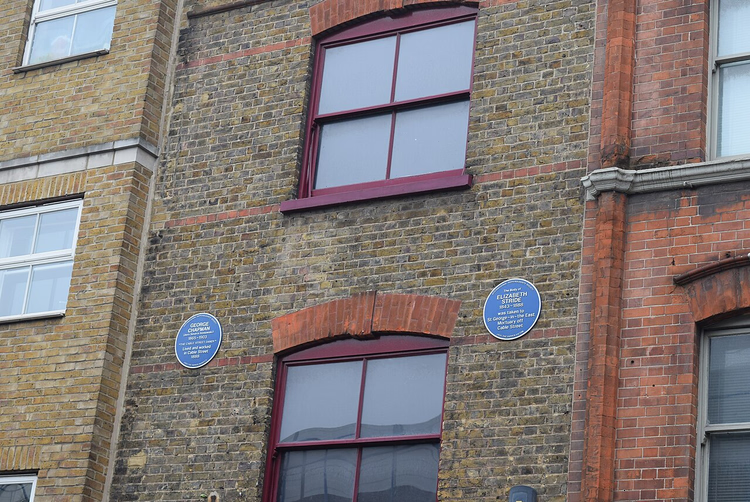 © Haydn Blackey · CC BY-SAPhoto: Haydn Blackey, CC BY-SA (https://creativecommons.org/licenses/by-sa/2.0), Wikimedia Commons
The walls are covered with newspaper clippings, photographs, and paintings that describe the circumstances of the crimes. Visitors pass through a room where, according to the creators, a suspect may have lived. Surgical instruments, medical bottles, and period clothing are on display here.
The museum has been repeatedly criticized for its controversial approach to the subject, and that is worth keeping in mind. It is open daily from 9:30 to 18:30, and an adult ticket costs around £12 (as of 09/2026, jacktherippermuseum.com). Whitechapel Gallery is nearby, so both are easy to see in one day.
London museums on the map
All the addresses in this selection are easy to open on a map and plan a route by neighborhood. Some museums stand close together in the center: the British Museum, the National Gallery, and the Institute of Contemporary Arts. Others are clustered in South Kensington, where you will also find the Victoria and Albert Museum, the Science Museum, and the Natural History Museum.
Before heading out, check the opening hours on the official websites, because schedules change due to exhibitions and services. If you are traveling with children, plan two sights per day: any more will be hard without exhaustion.
Museums of London
Places on the map
- 1British Museum The Rosetta Stone, Parthenon friezes and Assyrian reliefs, free entry
- 2Sherlock Holmes Museum Four floors of a Victorian house on Baker Street, tickets around 19 pounds
- 3Saatchi Gallery Contemporary art in a former barracks near King's Road, main exhibitions free
- 4Tate Britain British art from the 16th century to the present, a separate wing of Turner rooms
- 5Charles Dickens Museum A house on Doughty Street where Oliver Twist and David Copperfield were written
- 6Amora - Museum of Love London An exhibition about erotica and love near Piccadilly, adult audience, about an hour and a half
- 7Westminster Abbey The coronation church with Poets' Corner, tickets around 30 pounds including audio guide
- 8Victoria and Albert Museum Over two million objects in 145 galleries, free entry and tours
- 9Design Museum The former Commonwealth Institute on Kensington High Street, the permanent exhibition is free
- 10Natural History Museum The Blue Zone with dinosaurs, the Red Zone with an earthquake simulation, free entry
- 11Cutty Sark The world's last tea clipper in Greenwich, a glass gallery beneath the hull, around 18 pounds
- 12London Transport Museum Covent Garden: the history of the world's first underground, adult tickets valid for a year
- 13Madame Tussauds Wax figures near Baker Street, tickets from 29 pounds, entry time booked in advance
- 14National Gallery Over two thousand paintings from the 13th century on Trafalgar Square, free entry
- 15Tate Modern A former power station on the South Bank, the Turbine Hall and a rooftop view, free entry
- 16Institute of Contemporary Arts Avant-garde art on The Mall since 1946, the gallery has a cinema, bookshop and bar
- 17Wallace Collection Hertford House on Manchester Square, 25 rooms of painting and armour, free entry
- 18Warner Bros. Studio Tour - The Making of Harry Potter Film sets and props near Watford, tickets from 50 pounds, a visit takes three to four hours
- 19Museum of the Home An old almshouse on Kingsland Road, eleven rooms from different eras since 1600
- 20Imperial War Museum 20th-century vehicles and weapons on Lambeth Road, free entry, the museum is large
- 21Science Museum Over 300,000 exhibits on Exhibition Road, the main exhibition is free
- 22The London Dungeon A live show at County Hall about torture, the plague and Jack the Ripper, about an hour and a half
- 23Wellington Museum The duke's mansion by Hyde Park with trophy paintings, tickets around 12 pounds
- 24The Clink Prison Museum The basements of a prison that operated from the 12th century to 1780, a visit takes about an hour
- 25Bank of England Museum Banknotes, coins and a gold bar you can lift, open weekdays 10:00-17:00
- 26Churchill War Rooms A bunker beneath the Treasury with preserved decor, tickets around 35 pounds
- 27Young V&A The former Museum of Childhood in Bethnal Green: toys from around the world and dollhouses, free entry
- 28Sir John Soane's Museum The architect's house on Lincoln's Inn Fields with paintings on movable panels, free entry
- 29Whitechapel Gallery A venue since 1901, temporary exhibitions of contemporary art, closed Mondays
- 30Jack the Ripper Museum A Victorian building on Cable Street about the 1888 murders, tickets around 12 pounds
⁉️🤔 Frequently asked questions
How many museums on the list are free?
More than half. The permanent collections of the British Museum, the National Gallery, the Victoria and Albert Museum, Tate, Tate Modern, the Science Museum, the Natural History Museum, the Wallace Collection, and Sir John Soane's Museum are open without a ticket (as of 09/2026, list of free London museums). Paid attractions include Madame Tussauds, Westminster Abbey, Churchill War Rooms, the Wellington Museum, and several others.
Is the London Pass worth buying?
The pass pays off if you plan to visit at least three paid attractions in a row. Westminster Abbey, the Tower, and a Thames cruise are included, but it does not improve anything for museums with free admission. Do the math for your own route and buy online in advance, which gets you a lower price than at the ticket office.
How do I buy tickets to Warner Bros. Studio?
Directly on the studio's official website. Weekend slots sell out several weeks ahead, so book your date in advance. Arrange transport separately: a train to Watford Junction and the free shuttle, or a ready-made tour with transfer from London (as of 09/2026, Warner Bros. Studio tickets).
Which museum should I choose if I have one day?
Start with the British Museum: it is free and centrally located. From there, walk to the National Gallery on Trafalgar Square. If you still have energy, add Westminster Abbey, but get your ticket online in advance, otherwise you risk not getting inside.
Can I visit Westminster Abbey on a Sunday?
Only for a service, as a worshipper. Tourist entry is closed on Sundays, so plan your visit for a weekday or Saturday. Opening hours change due to ceremonies, so check the schedule on the abbey's official website before your trip (as of 09/2026, abbey opening hours).
Tours and tickets in London
Guided tours, skip-the-line tickets and activities — most offers can be cancelled free of charge.
See offers on TiqetsThe widget loads once you give your consent.
In short: what is worth booking
If you have one day, start with the free British Museum and National Gallery. If you are traveling with children, choose the Science Museum and the Transport Museum. If you love palaces and ceremonies, plan Westminster Abbey and Churchill War Rooms. Film fans should book a Warner Bros. Studio ticket in advance.
The London Pass on GetYourGuide is worthwhile for anyone planning to see three or more paid attractions: it includes Westminster Abbey, the Tower, and a Thames cruise. Check the current inclusions and prices on the website before buying.

A small editorial team writing guides for independent travel. We travel ourselves, but we haven’t been everywhere, so we check prices, opening hours and how to get there against official sources.