
















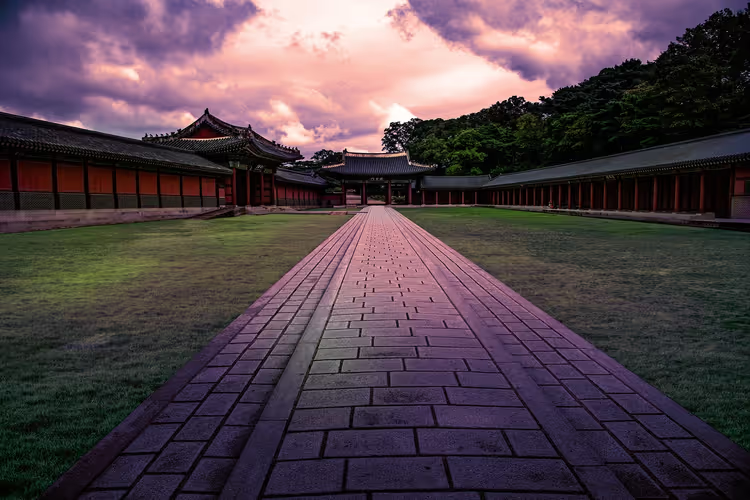
Seoul attractions: 30 places worth seeing
Seoul surprises you from day one. Palaces stand next to the country's tallest skyscraper, and between them a stream runs where admission is free. It is impossible to see everything in one trip: the sights are scattered across the city, and getting around eats up more time than the sightseeing itself.
We picked 30 places that are truly worth your time. For most of them you will find the admission price, the closing day, or how to get there. We checked prices and opening hours in September 2026 against the official Korea tourism portal.
Ad: this article contains affiliate links, we earn a commission if you book through them, at no extra cost to you.
What to see in Seoul: the essentials
💡 In short:
- Palace admission is cheaper than dinner downtown: Gyeongbokgung costs 3,000 won for adults, and a combined ticket for five palaces costs 10,000 won (as of 09/2026, Korea Tourism Organization on palace tickets).
- Changdeokgung, Deoksugung, and most museums are closed on Mondays, while Gyeongbokgung and Jongmyo are closed on Tuesdays.
- Free admission applies to Cheonggyecheon stream, Namsan hanok village, Naksan Park, Seoullo 7017, and the gates of Olympic Park.
- Tickets and opening hours: 09/2026, verified on the official Korea tourism portal.
Below is a table of the main sites so you can see the price and closing day at a glance. Full descriptions follow in order.
Site | Admission | Closed |
|---|---|---|
Gyeongbokgung | 3,000 won | Tuesday |
Changdeokgung and Deoksugung | Paid | Monday |
Jongmyo | Paid | Tuesday |
National Museum of Korea | Free | Check the museum website |
War Memorial of Korea | Free | Monday |
Cheonggyecheon, Naksan, Seoullo 7017, hanok village | Free | 24/7 or seasonal |
Prices and closing days in the table: 09/2026, according to Visit Korea and Korea Tourism Organization.
1. Cheonggyecheon stream
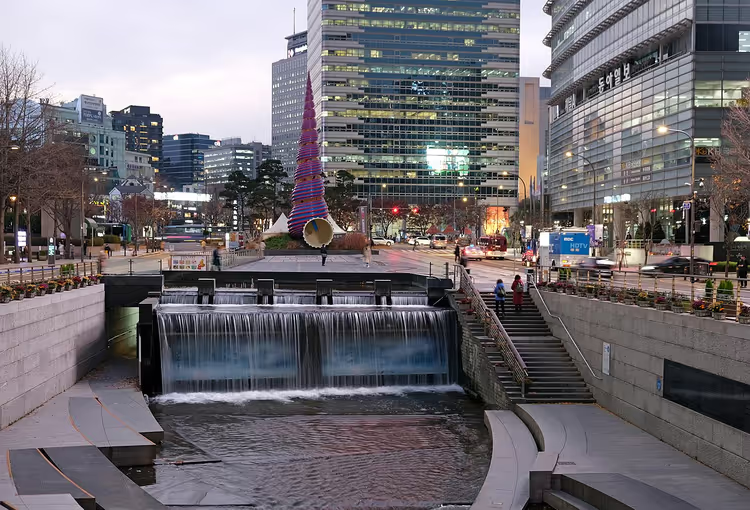 © kallerna This photo was taken with Fujifilm X-T30 · CC BY-SAPhoto: kallerna This photo was taken with Fujifilm X-T30, CC BY-SA (https://creativecommons.org/licenses/by-sa/4.0), Wikimedia Commons
Cheonggyecheon runs for almost eleven kilometers through the city center, from Gwanghwamun Square to the Dongdaemun area. The first bridges over the stream were built 600 years ago, and in the 1970s it was buried under a highway. The highway was demolished, and in 2005 a pedestrian zone opened in its place (as of 09/2026, Visit Korea: Cheonggyecheon stream).
You descend several meters below street level, and the city noise fades on its own. Admission is free around the clock, so it is convenient to come here even in the evening. The full walking route takes about two hours, but the stretch from Gwanghwamun to Gwangtonggyo Bridge is enough (as of 09/2026, Korea Tourism Organization: Cheonggyecheon stream).
2. Gyeongbokgung
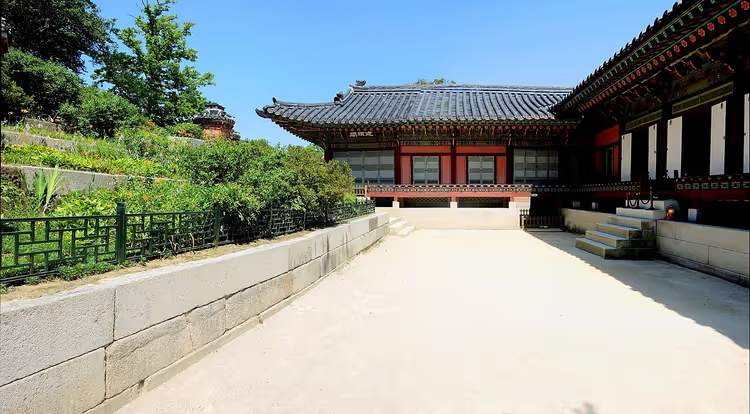 © Schölla Schwarz · CC BYPhoto: Schölla Schwarz, CC BY (https://creativecommons.org/licenses/by/3.0), Wikimedia Commons
Gyeongbokgung was built in 1395, at the same time the capital was moved to Seoul. Today the palace remains the largest of the city's five royal residences: the Geunjeongjeon throne hall, the Gyeonghoeru pavilion on the lake, and the gates with the changing of the guard. Adult admission costs 3,000 won, and a combined ticket for all five palaces costs 10,000 won (as of 09/2026, Visit Korea: Gyeongbokgung Palace). Entry is free if you wear a hanbok.
Plan your visit around the closing day: the palace complex is closed on Tuesdays. It's cheaper to buy tickets online, and the changing of the guard takes place at 10:00 or 14:00 at the main gate. The Gyeonghoeru pavilion is especially beautiful during lotus season, and the National Folk Museum of Korea operates in a neighboring building (as of 09/2026, Korea Tourism Organization: Gyeongbokgung Palace).
3. Banpo Bridge
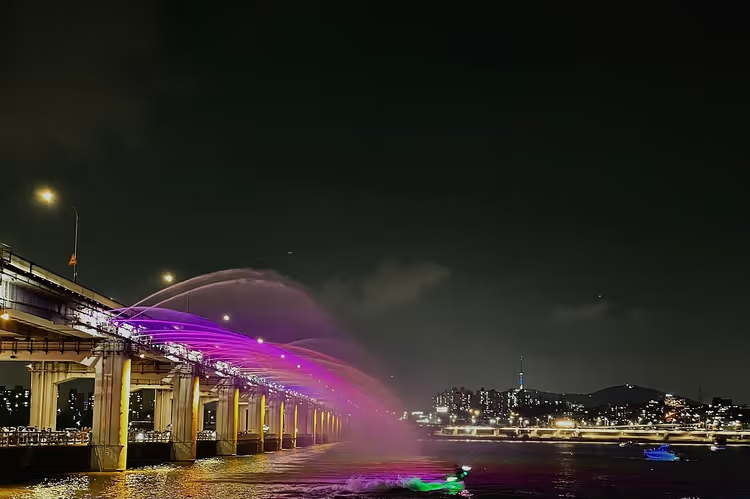 © Cookinu · CC BY-SAPhoto: Cookinu, CC BY-SA (https://creativecommons.org/licenses/by-sa/4.0), Wikimedia Commons
Banpo Bridge is over a kilometer long, and its Moonlight Rainbow Fountain is considered the longest bridge fountain in the world. The fountain opened in 2009 and is powered by 38 pumps. Every minute, about 190 tons of water from the Han River passes through its filters, and the jets shoot 20 to 40 meters into the air (as of 09/2026, Visit Korea: Banpo Bridge).
The best place to watch the show is from the riverside park near the bridge: from there you can see the entire line of the fountain. Shows don't run year-round, only seasonally, so check the exact times on Korea Tourism Organization: Banpo Bridge. During the day the structure works as a water treatment facility, and in the evening the lighting turns the jets into a rainbow.
4. Mapo Bridge
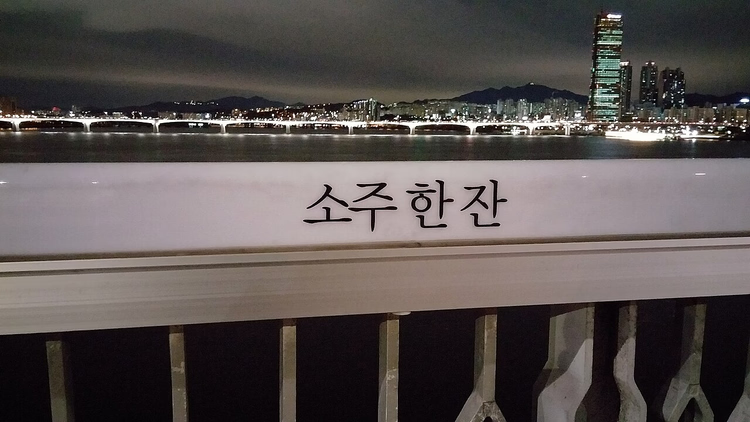
Mapo Bridge across the Han River opened in the 1970s. After some difficult years, city authorities renamed it the "Bridge of Life" and installed mirrors, warm messages, and sculptures along the parapet. Maintaining the rescue personnel assigned to the bridge costs up to 2 million dollars a year (as of 09/2026, Visit Korea: Mapo Bridge).
 © Christian Bolz · CC BY-SAPhoto: Christian Bolz, CC BY-SA (https://creativecommons.org/licenses/by-sa/4.0), Wikimedia Commons
Today the bridge serves more as a place for a quiet stroll than for photo shoots. The pedestrian walkway offers views of the Han River and the Yeouido business district. The walk is easy to combine with the park on Yeouido Island: it takes about twenty minutes to get there (based on the map; as of 09/2026, Korea Tourism Organization: Mapo Bridge).
5. Bukhansan National Park
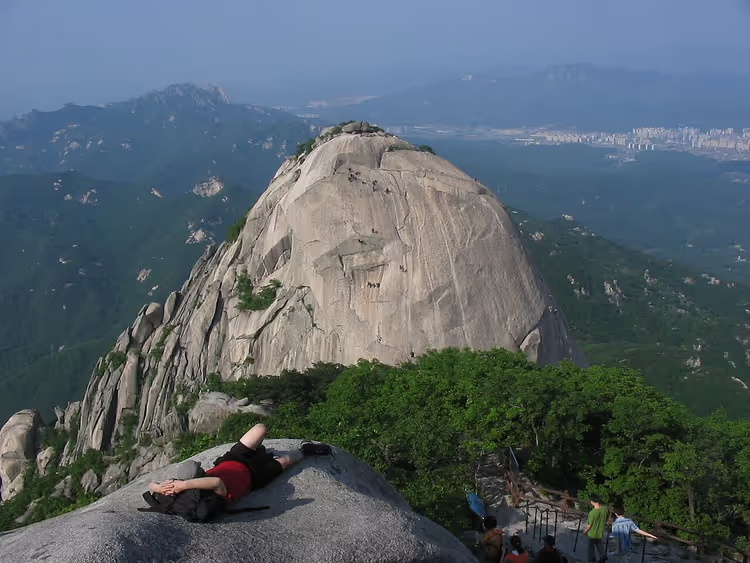
Bukhansan covers about 80 square kilometers on the northern edge of the city and partly extends into the neighboring province. It is the most visited national park in the world: about 5 million guests a year (as of 09/2026, Visit Korea: Bukhansan). The park spans three peaks, and nearly 2,500 species of plants and animals grow and live on its slopes.
Fragments of a fortress wall about 2,000 years old and dozens of Buddhist temples remain inside the park. Trails are marked by difficulty, so you can choose a route that matches your fitness level. Wear comfortable shoes: the climb to the main peak takes several hours (as of 09/2026, Korea Tourism Organization: Bukhansan).
The most convenient starting points are the terminal metro stations at the foot of the mountain. The trails suit different ages, and there are also short walks along streams. Bring water with you: on long routes, drinking water points are rare (according to Korea Tourism Organization on Bukhansan trails, 09/2026).
6. Trick Eye Museum
 © Republic of Korea from Seoul, Republic of Korea · CC BY-SAPhoto: Republic of Korea from Seoul, Republic of Korea, CC BY-SA (https://creativecommons.org/licenses/by-sa/2.0), Wikimedia Commons
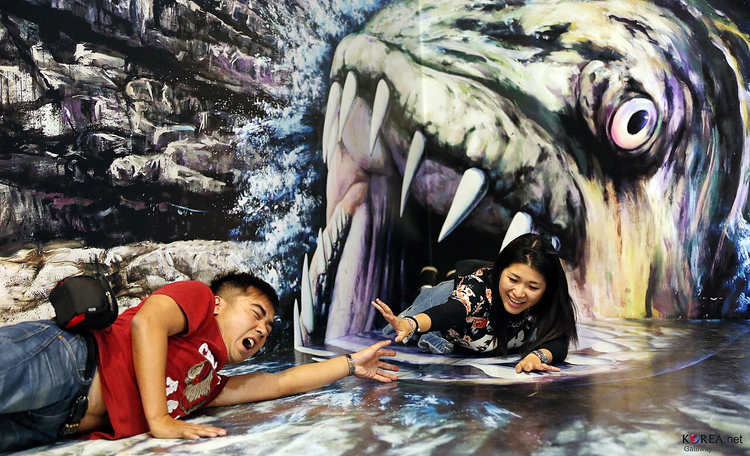
The name Trick Eye comes from English and means "optical illusion." Here you can touch everything, and the painted scenes come alive in photos. The museum welcomes about 300,000 guests a year (as of 09/2026, Visit Korea: Trick Eye Museum). The exhibition is made up of themed rooms: history, world art, romance, mirrors, everyday life.
Part of the complex is adults-only: teenagers are not allowed in the Love Museum. The Ice Museum is open to all ages, and the chain has branches outside Seoul as well. Buy your ticket online to avoid waiting at the ticket office on weekends (as of 09/2026, Korea Tourism Organization: Trick Eye Museum).
7. Namsan cable car
 © Korail2012 · CC BY-SAPhoto: Korail2012, CC BY-SA (https://creativecommons.org/licenses/by-sa/3.0), Wikimedia Commons
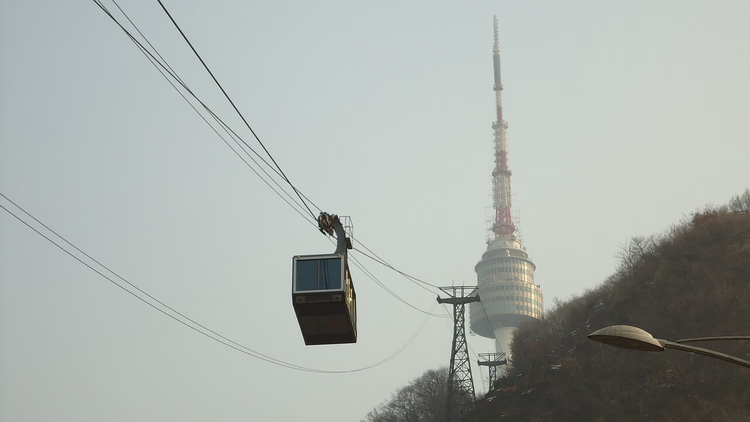
The cable car up Namsan Mountain has been operating since the 1960s and carries passengers to the Seoul Tower. It transports about 50,000 people a month (as of 09/2026, Visit Korea: Namsan cable car). The cabin holds up to 48 passengers, and its transparent walls open up views of the city even on the way up.
The boarding line is longer on weekends, so morning is better than evening. If you are willing to walk, go up by the stairs and come down along the promenade. Authorities are discussing replacing the cable car with lower-capacity elevators, so the route may change (as of 09/2026, Korea Tourism Organization: Namsan cable car).
8. Seoul Tower
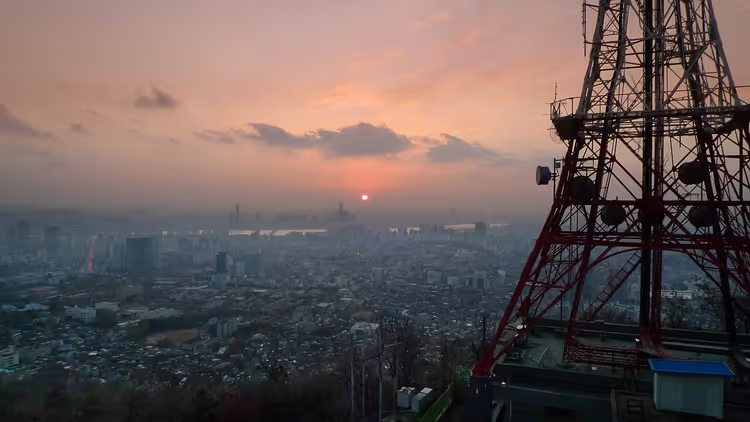 © Kristoffer Trolle from Copenhagen, Denmark · CC BYPhoto: Kristoffer Trolle from Copenhagen, Denmark, CC BY (https://creativecommons.org/licenses/by/2.0), Wikimedia Commons
The tower has several names: YTN Seoul Tower, N Tower, and Namsan Tower. It is 236 meters tall (as of 09/2026, official N Seoul Tower website). It became the country's first such structure in the 1970s, and today it remains the city's most popular observation deck and its symbol.
Inside there are three levels: souvenirs, ticket offices, and a museum at the bottom, cafes and shops above, and observation decks and a revolving restaurant at the top. The ticket costs more than a palace ticket, so check the price and hours on the operator's website. You can get to the tower by cable car or by bus up the slope.
9. Namsangol Hanok Village
Namsangol Hanok Village opened in 1998 in the city center, between skyscrapers. On a site of about one hectare, five traditional houses, pavilions, gazebos, and a garden with a pond were brought together (as of 09/2026, Visit Korea: Namsan Hanok Village). The houses once belonged to aristocrats and officials, while the household items inside represent different social classes.
Admission is free, and the complex is open year-round. It hosts folk craft workshops and ceremonial events, including traditional weddings. Come in the morning: by midday, tour groups gather around the pavilions (as of 09/2026, Korea Tourism Organization: Namsan Hanok Village).
10. Lotte World Tower
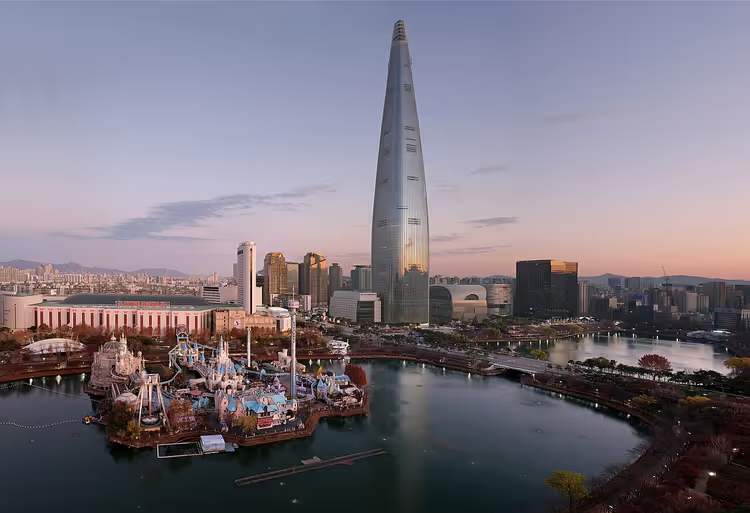 © kallerna · CC BY-SAPhoto: kallerna, CC BY-SA (https://creativecommons.org/licenses/by-sa/4.0), Wikimedia Commons
Lotte World Tower has 123 floors and rises 555 meters. It is the tallest building in Korea (as of 09/2026, Visit Korea: Lotte World Tower). Construction took nine years, while the permit for the tower took fifteen years to secure. At 500 meters, there is an observation deck with a glass floor, and on the 85th floor there is a swimming pool.
The tower stands in the Lotte World complex in the Jamsil district, next to a subway station. Many visitors first head to Seokchon Lake and only then go up. Inside there are offices, shops, restaurants, and a ten-story shopping mall, so you should set aside half a day for the visit (as of 09/2026, Korea Tourism Organization: Lotte World Tower).
11. War Memorial of Korea
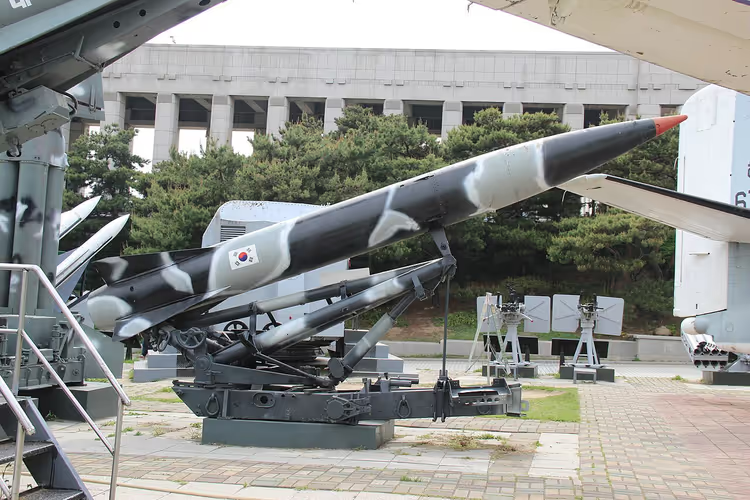
The War Memorial of Korea opened in 1994 on the site of the army headquarters in the Yongsan district. The complex covers about 20,000 square meters, and admission is free (as of 09/2026, Visit Korea: War Memorial of Korea). The museum is closed on Mondays, so plan your visit for another day of the week.
On the central plaza stands the Statue of Brothers, a symbol of the divided country. Inside, there are documents, weapons, and personal belongings of soldiers, while the outdoor areas display aircraft, tanks, and ships. The visit takes two to three hours, and you can reach the entrance from Samgakji subway station in five minutes (per the map; as of 09/2026, Korea Tourism Organization: War Memorial).
12. Gwanghwamun Square
Gwanghwamun Square was redesigned in 2009 on the site of an old traffic interchange. About 40,000 people pass through every day, and on holidays the flow doubles (as of 09/2026, Visit Korea: Gwanghwamun Square). The square stretches nearly 560 meters between Gwanghwamun Gate and the city hall building.
The square's details carry meaning: the number of fountain jets recalls naval victories, and dates from the city's history are engraved on the stones. Gyeongbokgung Palace begins right behind the gate, so the square is convenient to see on the way to the palace. The best photos are taken at the statue of King Sejong (as of 09/2026, Korea Tourism Organization: Gwanghwamun Square).
13. Olympic Park
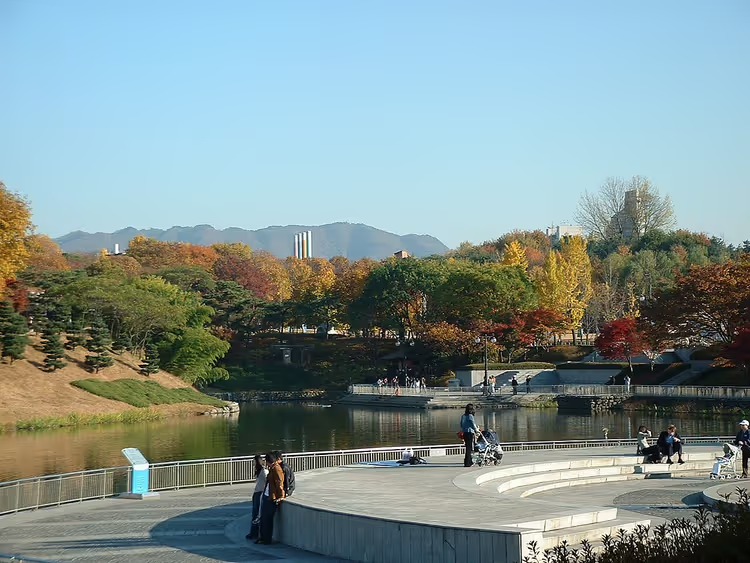 © by nagyman (a flickr user) · CC BY-SAPhoto: by nagyman (a flickr user), CC BY-SA (https://creativecommons.org/licenses/by-sa/2.0), Wikimedia Commons
Olympic Park opened in 1986 ahead of the 1988 Games. More than a square kilometer is set aside for sports facilities: stadiums, a swimming pool, a velodrome, and the Olympic Museum (as of 09/2026, Visit Korea: Olympic Park). The park remains the largest in the city, and people come here for more than just sports.
The park's symbol is the 24-meter-high World Peace Gate, decorated with a dragon mosaic. Nearby there is a sculpture garden, and the grounds still contain the walls of the ancient Mongchontoseong fortress. A leisurely walk through the park can easily take half a day, so bring water and comfortable shoes (as of 09/2026, Korea Tourism Organization: Olympic Park).
14. Changdeokgung
 © Republic of Korea from Seoul, Republic of Korea · CC BY-SAPhoto: Republic of Korea from Seoul, Republic of Korea, CC BY-SA (https://creativecommons.org/licenses/by-sa/2.0), Wikimedia Commons
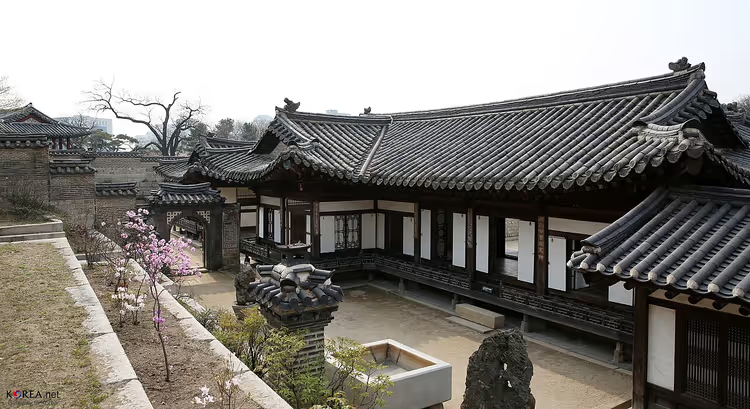
Changdeokgung was built in 1405, and since then the palace has survived fires and invasions while keeping its original layout. Since 1997 the complex has been a UNESCO World Heritage site (as of 09/2026, Visit Korea: Changdeokgung). Today it has 13 main structures: a throne hall, the royal bedchamber, and the oldest stone bridge.
A separate reason to come: the Huwon Secret Garden with 300-year-old trees and ponds. The garden is accessible only on a scheduled tour, so book tickets in advance. The palace is closed on Mondays (as of 09/2026, Korea Tourism Organization: Changdeokgung).
15. Seodaemun Prison
 © Noh Mun Duek · CC BY-SAPhoto: Noh Mun Duek, CC BY-SA (https://creativecommons.org/licenses/by-sa/4.0), Wikimedia Commons
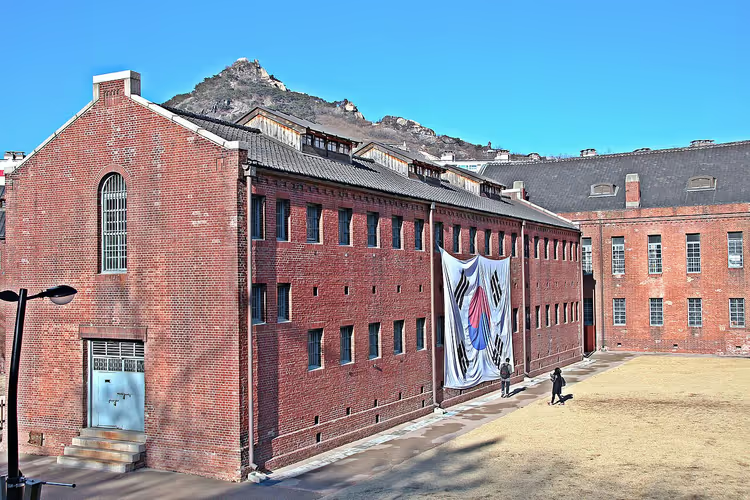
Seodaemun was built in 1908, when Japan controlled the country. Until the 1980s it was a working prison that held independence activists and political prisoners. Today the building houses a museum with a restored watchtower, cells, and a torture room (as of 09/2026, Visit Korea: Seodaemun Prison).
The exhibition covers the years of Japanese occupation, so allow two hours for your visit. The museum is closed on Mondays, and the ticket costs a few thousand won. The easiest way to get there is from Dongnimmun subway station, then a five-minute walk (map; as of 09/2026, Korea Tourism Organization: Seodaemun Prison).
16. Leeum Museum of Art
 © takato marui · CC BY-SAPhoto: takato marui, CC BY-SA (https://creativecommons.org/licenses/by-sa/2.0), Wikimedia Commons
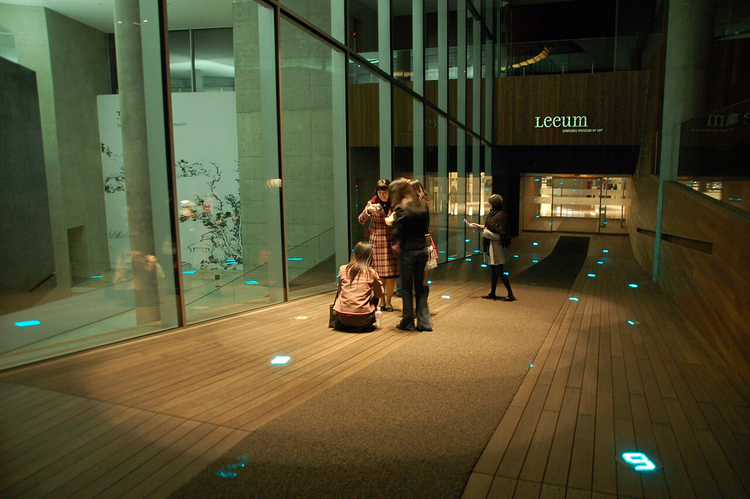
Leeum Museum of Art operates with support from Samsung and occupies two exhibition buildings and a children's center. One gallery was built in the style of a medieval Asian fortress, the other in a futuristic spirit (as of 09/2026, Visit Korea: Leeum Museum). It shows both old Korean painting and works by contemporary artists.
You can see almost the entire collection in one visit, which takes about two hours. Some exhibitions are paid, some are free, so check the program on Korea Tourism Organization: Leeum Museum. The museum sits on a hill in Itaewon, and the quiet streets around it are pleasant for a stroll.
17. Myeongdong Cathedral
 © kallerna · CC BY-SAPhoto: kallerna, CC BY-SA (https://creativecommons.org/licenses/by-sa/4.0), Wikimedia Commons
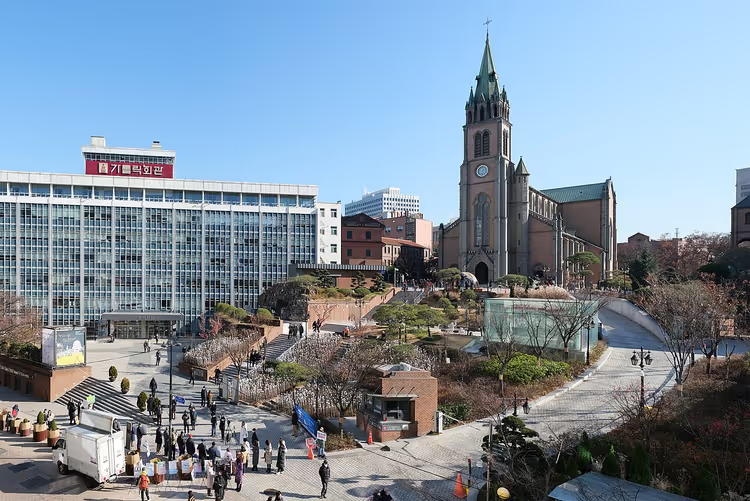
Myeongdong Cathedral was built in the late 19th century in the neo-Gothic style, and in the early 20th century it was the tallest building in the city. Gray stone walls, stained glass, and a tall clock spire make it look like a European church (as of 09/2026, Visit Korea: Myeongdong Cathedral). The cathedral is dedicated to the Immaculate Conception of the Virgin Mary.
Inside are the burial sites of martyrs who died during the Joseon dynasty. Admission is free, but on Sundays services get in the way, so pick a weekday. The cathedral is near Myeongdong subway station, and the main shopping street starts right next to it (as of 09/2026, Korea Tourism Organization: Myeongdong Cathedral).
18. Dongdaemun Gate
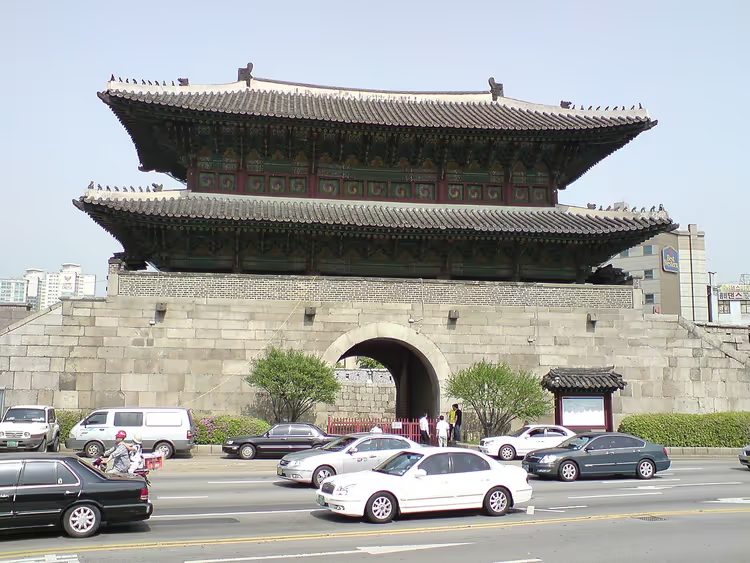 © Karl Baron · CC BY-SAPhoto: Karl Baron, CC BY-SA (https://creativecommons.org/licenses/by-sa/2.0), Wikimedia Commons
Dongdaemun was built in the late 14th century to protect the eastern entrance to the city. "Dongdaemun" translates as "great east gate," and its second name, Heunginjimun, means "place where kindness rises" (as of 09/2026, Visit Korea: Dongdaemun Gate). The stone base and wooden tower have survived to this day, and the gate itself is recognized as a national treasure.
The Dongdaemun market buzzes nearby, so you can easily combine history with shopping. The gate is open around the clock and free to view from outside (as of 09/2026, Korea Tourism Organization: Dongdaemun Gate). In the evening, lights come on, and the stone arch is visible from the other end of the street.
19. Dongdaemun Market
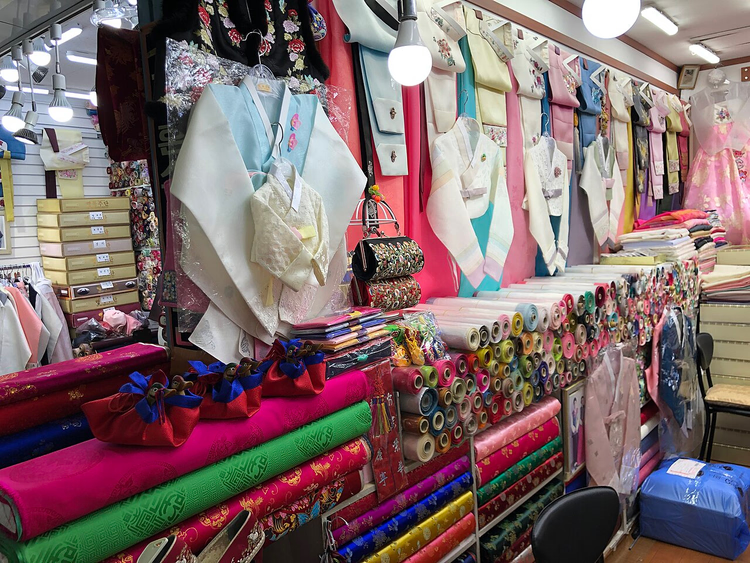
The Dongdaemun Market opened in the early 20th century near the gates of the same name. After the Korean War it lay in ruins, but it was rebuilt, and today the market remains the country's largest wholesale and retail trading hub (as of 09/2026, Visit Korea: Dongdaemun Market). More than 150,000 people work here, and part of the staff are professional designers.
The market specializes in clothing: some pavilions trade wholesale at night, while others are open during the day for regular shoppers. Bargaining is appropriate at small stalls; in large stores, prices are not negotiated (as of 09/2026, Korea Tourism Organization: Dongdaemun Market). The Dongdaemun and Dongdaemun History & Culture Park subway stations are right at the entrance (according to the map).
20. Deoksugung Palace
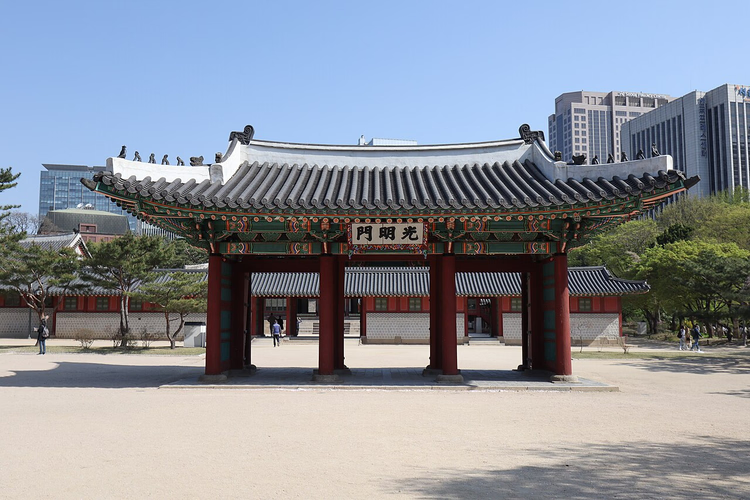 © Mobius6 · CC BYPhoto: Mobius6, CC BY (https://creativecommons.org/licenses/by/4.0), Wikimedia Commons
Deoksugung dates back to the 15th century and is one of Seoul's five main palaces, though it is smaller in area than the others. Its main feature is the mix of styles: Korean halls stand next to buildings with European forms (as of 09/2026, Visit Korea: Deoksugung Palace). The complex now covers more than 60,000 square meters.
Some of the buildings burned down in wars, but the stone wall, garden, and secret passages have been restored. The palace is closed on Mondays, and in the evening the lighting is turned on, so it is convenient to stop by after a walk through the center (as of 09/2026, Korea Tourism Organization: Deoksugung Palace). It is about a fifteen-minute walk from Gwanghwamun Square (according to the map).
21. National Museum of Korea
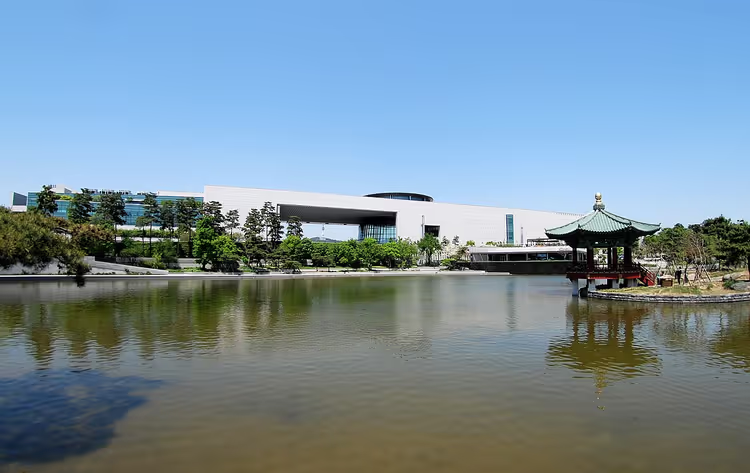 © Jinah78 · CC BY-SAPhoto: Jinah78, CC BY-SA (https://creativecommons.org/licenses/by-sa/3.0), Wikimedia Commons
The National Museum of Korea in Yongsan covers about 137,000 square meters and is among the most visited museums in the world. The permanent galleries hold more than 220,000 relics, from the Stone Age to the present day (as of 09/2026, official museum website). Admission to the main exhibitions is free.
The museum opened in 1945, and in the 21st century a new building resembling a medieval fortress was built for the collection. Inside there are galleries, lecture halls, children's areas, cafes, and restaurants. Allow at least three hours for your visit, and check the exact opening hours on the museum website.
22. Bongeunsa Temple
 © kallerna · CC BY-SAPhoto: kallerna, CC BY-SA (https://creativecommons.org/licenses/by-sa/4.0), Wikimedia Commons
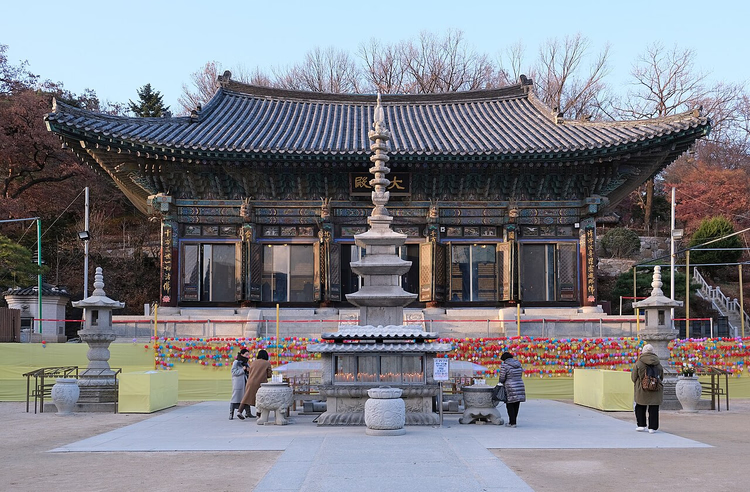
Bongeunsa was founded in 794, so the shrine is now more than 1,200 years old. Over that time the temple changed location, and the distance between the old and new sites is about one kilometer (as of 09/2026, Visit Korea: Bongeunsa Temple). Today it is not only a place of prayer: the temple also operates as a cultural center and introduces visitors to Korean traditions.
The temple's main relic is a 23-meter stone statue of Maitreya Buddha. Bongeunsa stands in the upscale Gangnam district, but inside it is quiet, and the first service begins at dawn. The temple runs a Temple Stay program where you can spend the night and try monastic food (as of 09/2026, Korea Tourism Organization: Bongeunsa Temple).
23. Bank of Korea Money Museum
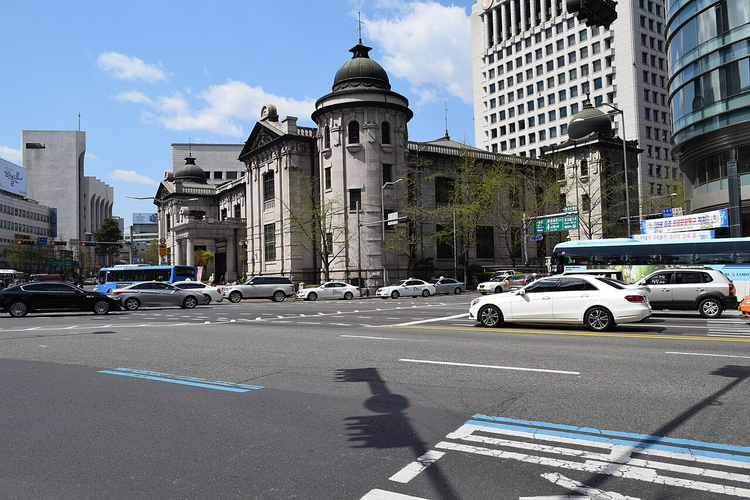
The Bank of Korea Money Museum opened in the bank's head office on June 13, 2001. The exhibition covers not only numismatics but also the country's economic history, and the total gallery area exceeds 8,000 square meters (as of 09/2026, Visit Korea: Bank of Korea Money Museum). It houses ancient coins, banknotes, and documents.
 © ::::=UT=:::: · CC BY-SAPhoto: ::::=UT=::::, CC BY-SA (https://creativecommons.org/licenses/by-sa/3.0), Wikimedia Commons
The building itself was built in the early 20th century and was quickly restored after the Korean War. Its architecture stands out from the typical Asian style, so the museum is interesting even for people who don't care about money. Admission is usually free, but check the exact hours on Korea Tourism Organization: money museum.
24. Naksan Park
 © Choism97 · CC BY-SAPhoto: Choism97, CC BY-SA (https://creativecommons.org/licenses/by-sa/4.0), Wikimedia Commons
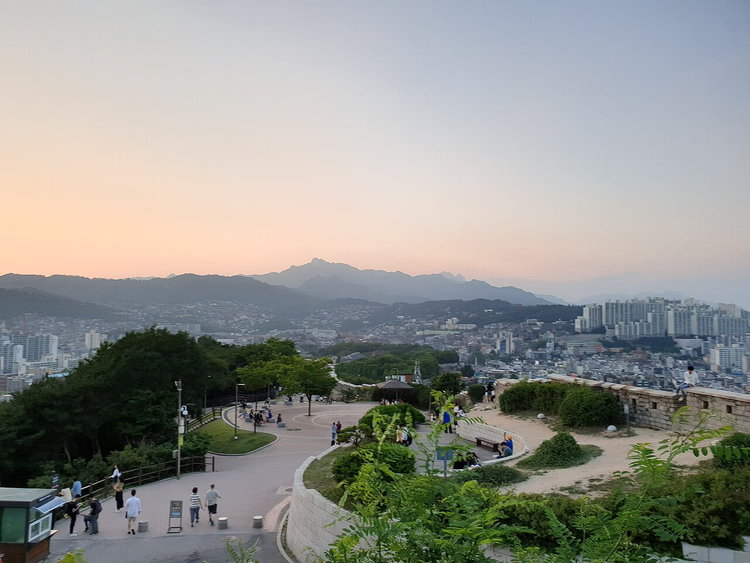
The name Naksan translates as "camel mountain." The park opened in the early 21st century, but the trees on its slopes are much older and remember the Joseon dynasty (as of 09/2026, Visit Korea: Naksan Park). The summit is not high, so even someone with no athletic training can climb it.
The main route runs along the ancient fortress wall, which miraculously survived the Japanese occupation. Admission is free, and the park is designed for quiet walks, not attractions. The trail from Hansung University Station to the summit takes about twenty minutes (according to the map; as of 09/2026, Korea Tourism Organization: Naksan Park).
25. Jongmyo Shrine
Jongmyo was built in the late 14th century, and the shrine took on its current appearance about 300 years later. Since 1995, the shrine has been a UNESCO World Heritage Site and is tied to the history of the Joseon dynasty (as of 09/2026, Visit Korea: Jongmyo Shrine). The shrine is considered the oldest Confucian royal shrine in Korea.
Inside there are 19 halls where the spirits of kings and queens are worshipped. The decor is austere because the building serves only for memorial rites. The southern gate is closed to visitors; it is reserved for the spirits of the royal family. The shrine is closed on Tuesdays (as of 09/2026, Korea Tourism Organization: Jongmyo Shrine).
26. Seoullo 7017 Skygarden
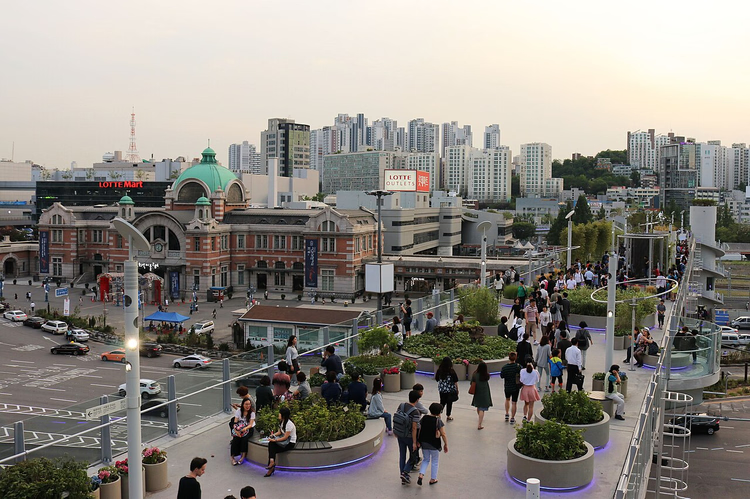
Seoullo 7017 appeared on the site of an old highway overpass that was slated for demolition. In 2017, the overpass was turned into a pedestrian park about a kilometer long with more than 24,000 plants (as of 09/2026, Visit Korea: Seoullo 7017). Admission is free, and the area is open around the clock.
 © 분당선M · CC BY-SAPhoto: 분당선M, CC BY-SA (https://creativecommons.org/licenses/by-sa/3.0), Wikimedia Commons
Additional walkways connect the park to hotels, shopping centers, and entertainment venues, so it's easy to explore on foot without a car. The name links the year the overpass was built and the year it was turned into a park. The park starts right at Seoul Station, so you can easily reach it from Seoul Station subway stop (as of 09/2026, Korea Tourism Organization: Seoullo 7017).
27. Starfield Library
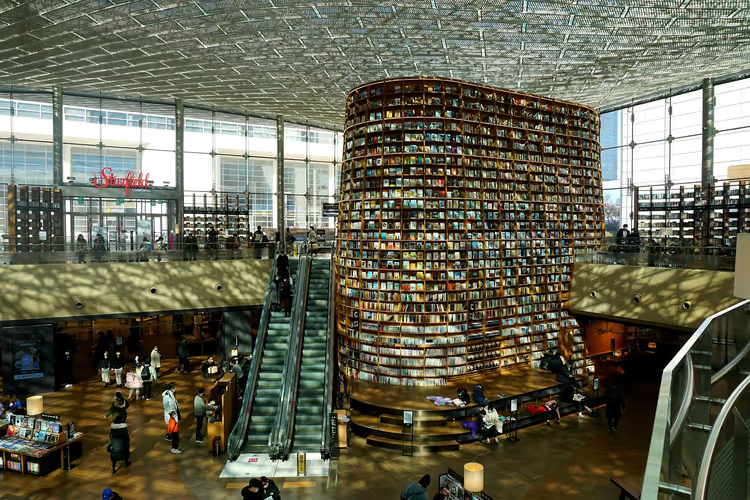
Starfield Library opened in the COEX mall and within a few years became one of the most photographed spots in the city. The library's collection exceeds 50,000 books, and the hall covers more than 2,000 square meters (as of 09/2026, Visit Korea: Starfield Library). The 13-meter-high shelves rise up to a glass ceiling.
There is an e-book section, foreign periodicals, and a reading room with 200 seats. Admission is free, and in the evenings the library hosts lectures, concerts, and author talks (as of 09/2026, Korea Tourism Organization: Starfield Library). Come on a weekday morning: by evening there is a line for photos at the shelves.
28. COEX Aquarium
 © Wpcpey · CC BY-SAPhoto: Wpcpey, CC BY-SA (https://creativecommons.org/licenses/by-sa/4.0), Wikimedia Commons
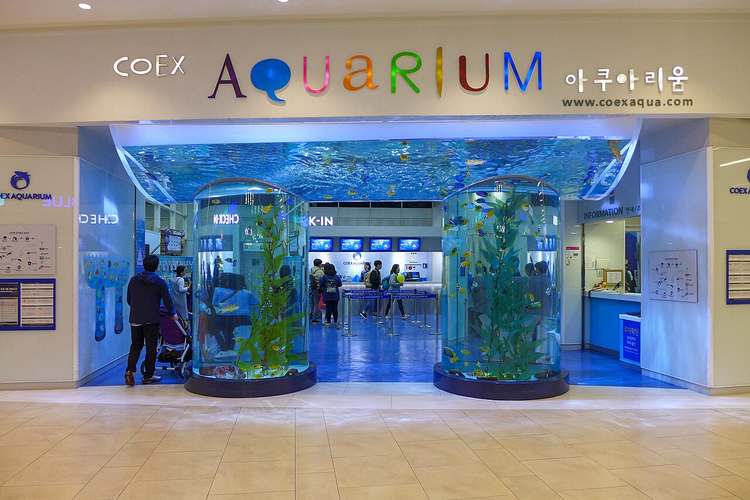
COEX Aquarium opened in 2000 on the underground level of the mall of the same name. It is the largest aquarium in Korea: six themed zones, about 90 tanks, and around 40,000 animals (as of 09/2026, Visit Korea: COEX Aquarium). It is home to sharks, rays, sea turtles, and crocodiles.
Tickets are paid and cost more than museum admission, so buy them online and check the feeding schedule in advance. Some programs are designed for children, and a children's museum operates nearby. The aquarium is easy to combine with Starfield Library: they are in the same complex (as of 09/2026, Korea Tourism Organization: COEX Aquarium).
29. Seoul Central Mosque
 © Republic of Korea from Seoul, Republic of Korea · CC BY-SAPhoto: Republic of Korea from Seoul, Republic of Korea, CC BY-SA (https://creativecommons.org/licenses/by-sa/2.0), Wikimedia Commons
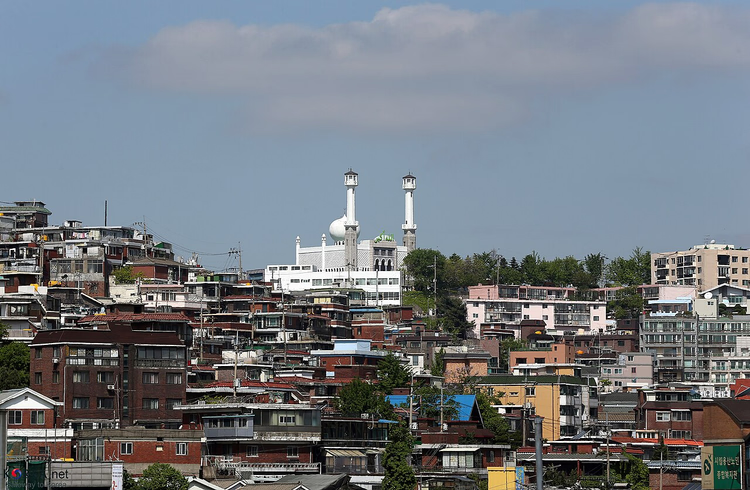
Seoul Central Mosque was built in 1976 in the Itaewon district. It became the center of Islamic culture in a country where most residents practice Buddhism (as of 09/2026, Visit Korea: Seoul Central Mosque). Today Korea has eight mosques and about 200,000 Muslims.
The building is interesting as a monument of Islamic architecture, and lectures here follow Muslim traditions. The surrounding area has many cafes and shops with Middle Eastern cuisine. Admission is free, but dress modestly and stay quiet during prayer (as of 09/2026, Korea Tourism Organization: Central Mosque).
30. Unhyeongung Palace
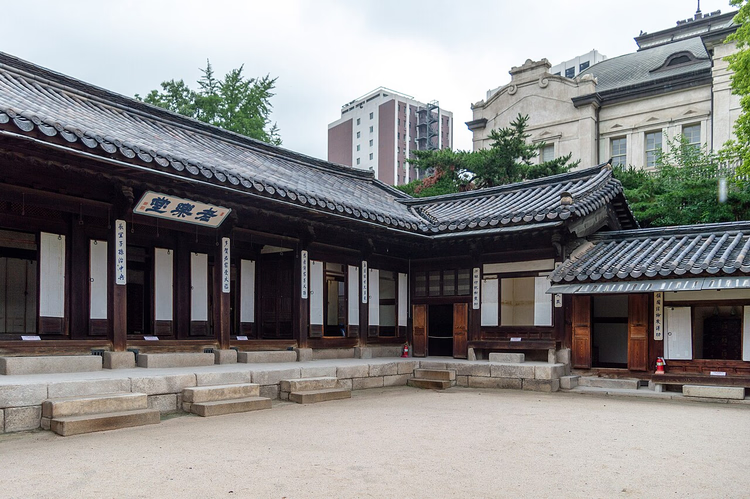
Unhyeongung was built in the 19th century, though historians debate the exact date because the building was destroyed more than once. During the Japanese occupation in the last century, the layout and facade were altered, but restorers returned the palace to its historical appearance (as of 09/2026, Visit Korea: Unhyeongung Palace). The Yanggwan building resembles an Italian villa, while the rest of the palace structures are Korean in style.
 © Tristan Surtel · CC BY-SAPhoto: Tristan Surtel, CC BY-SA (https://creativecommons.org/licenses/by-sa/4.0), Wikimedia Commons
The halls retain ceremonial rooms that now host exhibitions. Admission is free, and the palace is closed on Mondays (as of 09/2026, Korea Tourism Organization: Unhyeongung Palace). The palace runs educational programs for women and children, and it sits in a quiet neighborhood near Anguk Station (per the map).
Seoul attractions on the map
All 30 sites are easy to plan in advance. Mark them by district so you don't have to crisscross the city, and group visits along a single subway line.
Sights of Seoul
Places on the map
- 1Cheonggyecheon Stream Eleven kilometres of a promenade in the centre, free entry
- 2Gyeongbokgung The largest palace, 3,000 won, closed on Tuesdays, changing of the guard at 10:00
- 3Banpo Bridge The Moonlight Rainbow Fountain, the world's longest, shows in season
- 4Mapo Bridge A bridge of life over the Han River, a view of the Yeouido business district
- 5Bukhansan National Park Three peaks and fragments of a wall about 2,000 years old
- 6Trick Eye Museum Everything can be touched, there's an ice room, buy tickets online
- 7Namsan Cable Car A climb to the tower dating from the 1960s, a queue on weekends
- 8N Seoul Tower 236 metres, observation decks and a revolving restaurant on top
- 9Namsan Hanok Village Five traditional houses and a garden with a pond, free entry
- 10Lotte World Tower 555 metres, a glass-floor viewing deck at a height of 500 metres
- 11War Memorial of Korea Free entry, closed on Mondays, equipment on open-air grounds
- 12Gwanghwamun Square 560 metres between the gate and city hall, a statue of King Sejong
- 13Olympic Park The Gate of Peace, a sculpture garden and walls of the Mongchontoseong fortress
- 14Changdeokgung A UNESCO site, the Huwon Secret Garden only with a booked tour
- 15Seodaemun Prison A museum in a 1908 prison building, closed on Mondays
- 16Leeum Museum of Art Two buildings on a hill in Itaewon, some exhibits are free
- 17Myeongdong Cathedral Late-19th-century neo-Gothic, free entry, service on Sundays
- 18Dongdaemun Gate A 14th-century eastern gate, open around the clock, lit up in the evening
- 19Dongdaemun Market The country's largest wholesale and retail market, clothes day and night
- 20Deoksugung Palace A mix of Korean and European forms, closed on Mondays
- 21National Museum of Korea Over 220,000 relics, entry to the main halls is free
- 22Bongeunsa Temple Founded in 794, a 28-metre statue of the Maitreya Buddha, Temple Stay
- 23Bank of Korea Money Museum Coins, banknotes and economic history, entry usually free
- 24Naksan Park A route along the ancient fortress wall, a climb of about 20 minutes
- 25Jongmyo Shrine The oldest Confucian shrine, a UNESCO site, closed on Tuesdays
- 26Seoullo 7017 Skygarden A kilometre-long pedestrian park by the station, over 24,000 plants
- 27Starfield Library 13-metre bookshelves in the centre of COEX, free entry
- 28COEX Aquarium Korea's largest aquarium, around 90 tanks
- 29Seoul Central Mosque A centre of Islamic culture in Itaewon, free entry
- 30Unhyeongung Palace Free entry, closed on Mondays, near Anguk metro station
Before your trip, check the closing days for palaces and museums: some sites are closed on Mondays or Tuesdays. Open the map in a separate window is convenient if you're planning your route from your phone.
⁉️🤔 Frequently asked questions
How many days do you need for Seoul's attractions?
Three to four days is enough for the main sights. One day goes to the palaces and Gwanghwamun Square, the second to Namsan with the tower and the hanok village, the third to the museums in Yongsan and Gangnam. If you add Bukhansan and Dongdaemun Market, plan for five days (as of 09/2026, Visit Korea on trip planning).
What can you see in Seoul for free?
Cheonggyecheon Stream, Namsan Hanok Village, Naksan Park, Seoullo 7017, Olympic Park, and the Starfield Library are free to enter. The National Museum of Korea and the War Memorial also have free admission, and Gyeongbokgung lets you in without a ticket if you wear a hanbok (as of 09/2026, Korea Tourism Organization on free places).
What day are Seoul's palaces and museums closed?
Gyeongbokgung and Jongmyo are closed on Tuesdays, while Changdeokgung, Deoksugung, and most museums are closed on Mondays. Check the hours on official websites before your trip, because schedules change by season (as of 09/2026, Visit Korea on closing days).
How do you get to Namsan Tower?
A cable car runs from Myeongdong or Chungmuro subway station, and buses and shuttles go up the slope. Walking up takes about forty minutes. Buy your observatory ticket online so you don't have to wait at the ticket office (as of 09/2026, N Seoul Tower: how to get up).
When does the Banpo Bridge fountain turn on?
The "Moonlight Rainbow" shows run from April to October, usually several times a day, and the exact time depends on the season and weather. Check the schedule the day before on the Seoul tourism website. The evening lighting makes the show noticeably more impressive (as of 09/2026, Korea Tourism Organization on the fountain).
In short: what to book
Seoul is easy to organize by district. If you have three days, take the center for palaces, Namsan for the evening, and Gangnam for museums.
- If you're going for history: Gyeongbokgung in the morning, Changdeokgung in the afternoon.
- If you're going with kids: the COEX Aquarium, the Trick Eye Museum, and the Namsan cable car.
- If you're short on time: Namsan Tower in the evening and Cheonggyecheon Stream in an hour.
Tickets for most attractions are cheaper online, and guided tours of the palaces are worth booking in advance during high season.
Seoul tours and tickets on GetYourGuide and Seoul hotels on Trip.com will help you put the trip together without extra steps.
Tours and tickets in Seoul
Guided tours, skip-the-line tickets and activities — most offers can be cancelled free of charge.
See offers on GetYourGuideThe widget loads once you give your consent.

A small editorial team writing guides for independent travel. We travel ourselves, but we haven’t been everywhere, so we check prices, opening hours and how to get there against official sources.