
















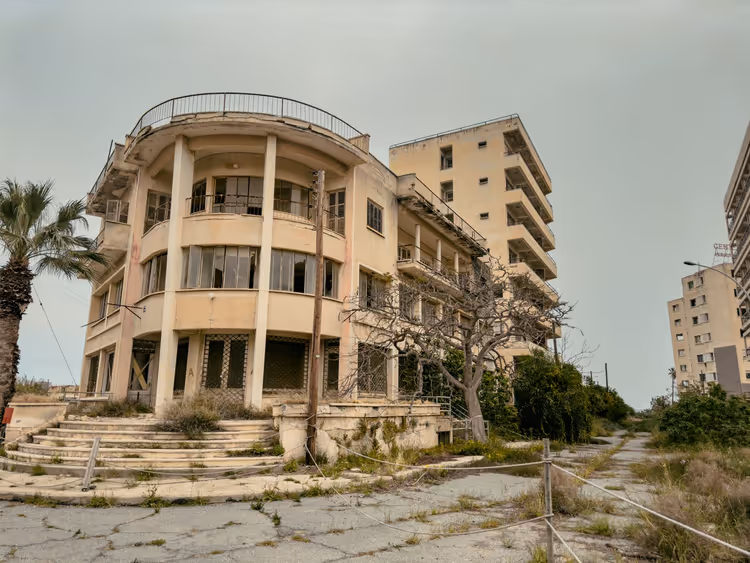
Gunkanjima: how to get to the ghost island in Japan and how much a ticket costs
Gunkanjima is unlike other ghost towns. It was emptied not by a disaster or an epidemic, but by the closure of a coal mine. The last resident left the island in 1974 (according to the Nagasaki tourism office). Since 2015, the island has been a UNESCO World Heritage Site (UNESCO) as part of the "Sites of Japan's Meiji Industrial Revolution". Today you can only get here by boat and only with a guide. Landing is permitted only on the restored walkway; everything else you view from behind a barrier and from the water. Below is the island's history, its condition today, and practical information for visiting, with prices and departure times. You can compare it with other abandoned towns in our overview of the 10 most popular ghost towns.
Ad: this article contains affiliate links. We earn a commission if you book through them, at no extra cost to you.
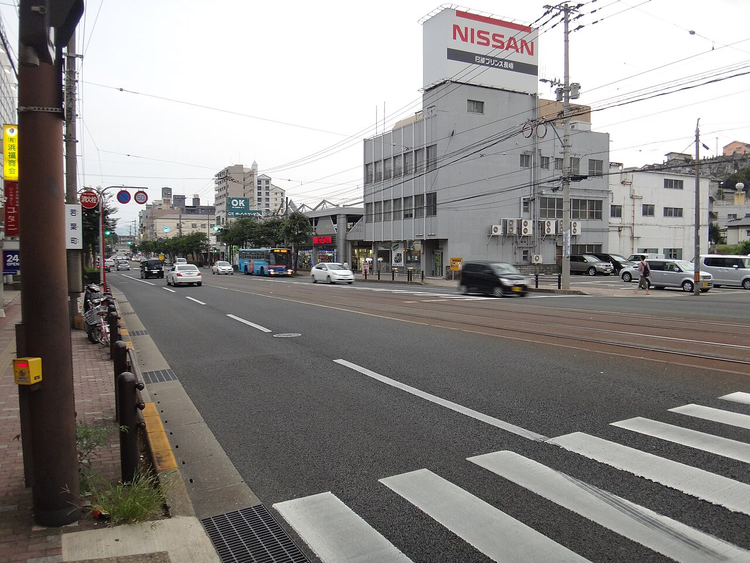
A ship off the coast of Nagasaki
💡 In short:
- You can only reach the island with a licensed operator and only by reservation.
- Departures from Nagasaki port leave at 9:00 and 13:00, and the trip takes about 2.5 hours (departure schedule).
- An adult ticket costs 4,500 ¥ plus a 650 ¥ city entry fee (as of 09/2026, Yamasa Shipping).
- Prices and opening hours: 09/2026, verified on the operator's official website.
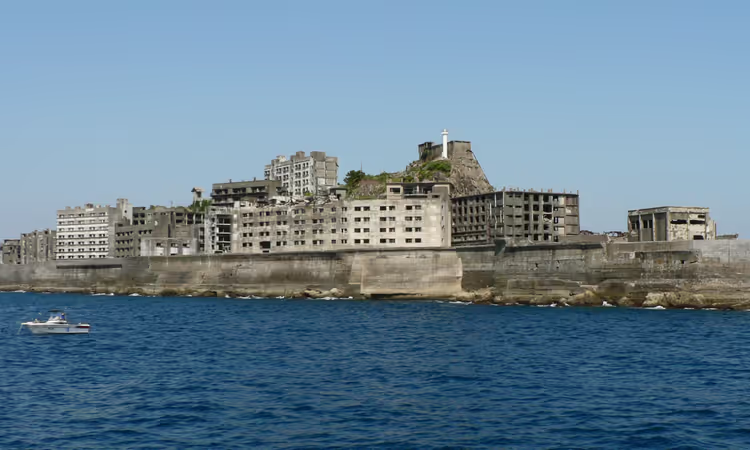
Hashima Island is known by the nickname Gunkanjima, which translates as "battleship". The silhouette of concrete walls and high-rise buildings really does resemble a destroyer anchored in the open sea. The island lies about 15 km from the coast of Nagasaki (according to the official tourism portal). Residents once looked out from their balconies at the big city on the mainland. Now only the empty windows of the buildings look back at that city.
 © Masoud Akbari · CC BY-SAPhoto: Masoud Akbari, CC BY-SA (https://creativecommons.org/licenses/by-sa/3.0), Wikimedia Commons
You approach the island by boat, and the first thing you see is a massive wall as tall as a house. It protected residents from waves and typhoons. There is no beach between the wall and the water: the island rises from the sea as a sheer cliff. From the water it looks almost intact. Up close you notice cracks, collapsed balconies, and holes in the floors.
It is this image that has made Gunkanjima one of the most recognizable abandoned places in Asia. Tourists from all over the world come here for a short walk through the ruins and rare photo opportunities.
History: coal, Mitsubishi, and emptiness
Coal decided the island's fate. Deposits were found here in the early 19th century, and a struggle for mining rights unfolded on this scrap of land. Mitsubishi won. It was the company that built a town on the reef, with a mine, residential buildings, and all the infrastructure. The number of workers kept growing, so the island was expanded with artificial embankments. In this way, the small reef gradually turned into a densely built-up district in the middle of the sea.
 © Hisagi ( 氷鷺 ) · CC BY-SAPhoto: Hisagi ( 氷鷺 ), CC BY-SA (https://creativecommons.org/licenses/by-sa/3.0), Wikimedia Commons
The perimeter was enclosed by a thick concrete wall that protected the buildings from tsunamis. Housing was built from reinforced concrete, which is why many structures still stand today, decades later, without any repairs. At its peak, several thousand people lived here in an area smaller than a city block. There was room for everyone: a school, a hospital, and shops all operated right on the island.
Then demand for coal fell: the country was shifting to oil. The mine's economics stopped adding up, and people began to leave. The mine closed in 1974, and the island emptied within a matter of months (according to the Discover Nagasaki website). That is how the name "ghost town" came about. If you are interested in industrial history, the details of this place will tell you more than any textbook.
What you will see on the island today
Today nobody lives on Gunkanjima, and that is the main thing you feel from the first minute. The tour takes you along viewing platforms in the restored part of the island. From there you see multi-story residential blocks, staircases, and the wall on the seaward side.
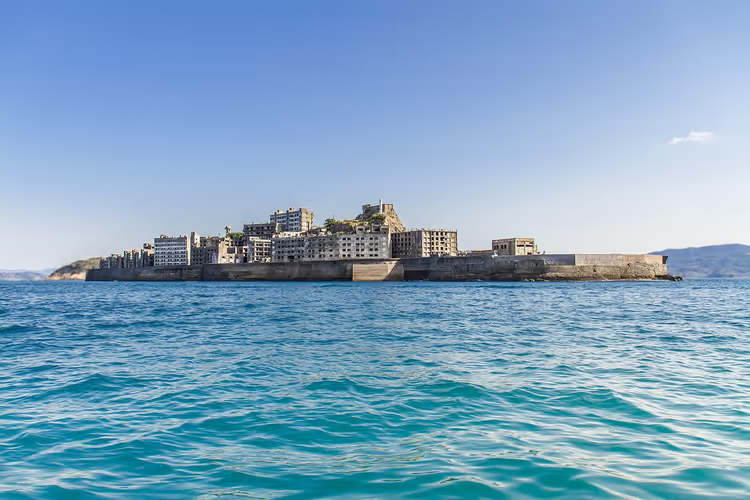
Nature is slowly reclaiming the concrete: trees have grown on rooftops, and grass is sprouting in window openings. No building is being restored, so the picture changes with every passing year.
There is no free access to the island. The authorities explain the ban by the risk of collapse: the structures lost their strength long ago.
Japan has discussed turning Gunkanjima into an open-air museum. The idea comes down to money: almost all the buildings are in critical condition, and restoration is expensive. For now, tourists are only shown a safe section. Unauthorized landing ends in a fine, so it is not worth the risk.
Tours and tickets (as of 09/2026)
You can only get to the island with a licensed operator; independent landing is prohibited. Access to the pier is blocked if waves are higher than half a meter or wind is stronger than 5 m/s (sea departure rules). Departures leave from Nagasaki Port at 9:00 and 13:00, and the trip lasts about 2.5 hours (according to the operator's website).
An adult ticket costs 4,500 ¥ plus a 650 ¥ city entry fee (as of 09/2026, Yamasa price list). Landing depends on the weather: successful days happen roughly 100 times a year. If docking is not possible, the cruise turns into a 110-minute sea tour, and part of your money is refunded.
You need to book in advance, and at the pier you sign a safety agreement. An English- or Chinese-speaking guide is provided free of charge on certain days. Bring motion sickness medication: the open sea is rough even in calm weather.
 © Masoud Akbari · CC BY-SAPhoto: Masoud Akbari, CC BY-SA (https://creativecommons.org/licenses/by-sa/3.0), Wikimedia Commons
It is convenient to compare options and check schedules in advance: tours on GetYourGuide bring everything together in one place.
Tours and tickets in Nagasaki
Guided tours, skip-the-line tickets and activities — most offers can be cancelled free of charge.
See offers on GetYourGuideThe widget loads once you give your consent.
How to get there from Nagasaki
A logical route starts from Nagasaki. From Tokyo or Osaka you take a domestic flight, and a bus runs from the airport to the city. Next you need the port: that is where the boats to the island depart from.
The trip across the water takes about 30 minutes one way (according to the cruise operator). From the deck you watch the silhouette of the "ship" grow and turn into a wall. You can only go ashore with a guide and on the cruise schedule.
 © Nesnad · CC BYPhoto: Nesnad, CC BY (https://creativecommons.org/licenses/by/4.0), Wikimedia Commons
It is easier to open the island on a map in advance. Use the port of Nagasaki as your reference point, since all cruises to the island depart from there.
Gunkanjima (Hashima) on the map
Places on the map
- Gunkanjima (Hashima) Ghost island, UNESCO World Heritage Site since 2015
- Port of Nagasaki Boats to the island depart from here at 9:00 and 13:00
Gunkanjima (Hashima) on the map
⁉️🤔 Frequently asked questions
Can you visit Gunkanjima on your own?
No. The landing conditions are described in the "Tours and tickets" section. Approaching the pier on your own is prohibited by law, and the waters around the island are patrolled by water police. Violators face a fine, so all tours are organized.
How much does a ticket to the island cost?
The ticket consists of the boat fare and a city landing fee (as of 09/2026, operator rates). Adult prices are listed in the "Tours and tickets" section. Children pay less. You confirm the exact amount when booking with your chosen operator.
What time of year is best to go?
Landing depends on waves and wind, details in the "Tours and tickets" section (according to the cruise operator). Most often these are calm months with smaller waves. In winter and during typhoon season, cruises are canceled more often, and you get a boat trip without going ashore.
Why is the island closed to free access?
There are two reasons. The structures have been collapsing for a long time, and being among them is life-threatening. The authorities also restrict access so the island is not looted by artifact hunters. Tourists can only access the restored section with safe viewing platforms.
Where is Gunkanjima located?
The island is located in the sea off the western coast of Japan, near Nagasaki (according to the Nagasaki tourism office). The exact distance is given in the "A ship off the coast of Nagasaki" section. The nearest major city and departure port is Nagasaki. From there the boat takes about 30 minutes.
In short: what to book
If you have one free day in Nagasaki, take the morning cruise: the sea is calmer before noon, and landing is more likely. If you are traveling with small children, they stay on board while you go ashore. If industrial history matters to you, add other Meiji heritage sites in the region to your trip.
Book your spot in advance and keep an eye on the wave forecast. Remember: the weather decides whether you land, not your ticket.

A small editorial team writing guides for independent travel. We travel ourselves, but we haven’t been everywhere, so we check prices, opening hours and how to get there against official sources.