
















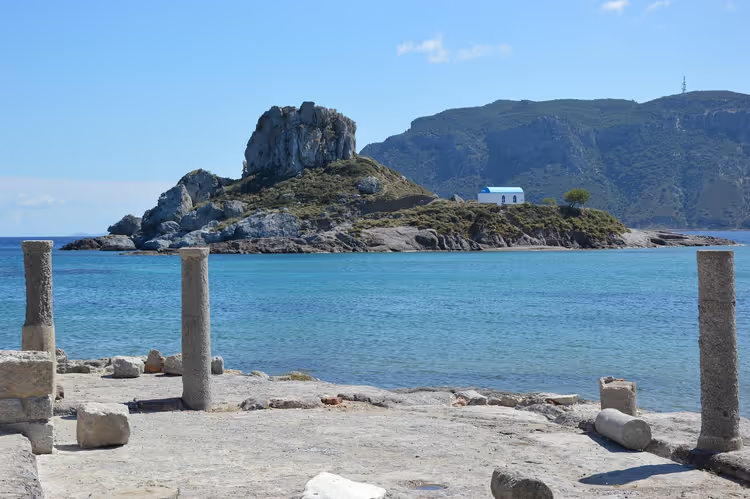
10 Places on Kos: Asclepieion, Hippocrates plane tree and old town
On Kos, three cultures stand side by side: ancient Greece, Rome, and the Ottoman Empire. Here Hippocrates taught medicine under an old plane tree, and the Knights Hospitaller built the Castle of Neratzia.
The island's ten main attractions are scattered across the town and its surroundings: from the ancient Asclepieion to the mosques of the old town and neighboring Kalymnos. Some sites are free, while others are covered by a single combined ticket.
We've put together what's worth seeing first, and added prices and opening hours for 2026.
Ad: this article contains affiliate links, we earn a commission if you book through them, at no extra cost to you.
Kos attractions: what to see
💡 In short:
- Start with the Asclepieion, the main monument of Kos.
- The other sites in the center, from the plane tree to the Odeon, can be covered on foot in half a day.
- Prices and opening hours: 09/2026, verified on the Kos tourist office website.
Kos is small, and the historic center is compact. The Asclepieion and Paleo Pyli lie outside the town, and Kalymnos is reached by ferry. Taxis and buses here are inexpensive, but you'll see most sites on foot. Plan your day so you get to the Asclepieion in the morning, before it gets hot.
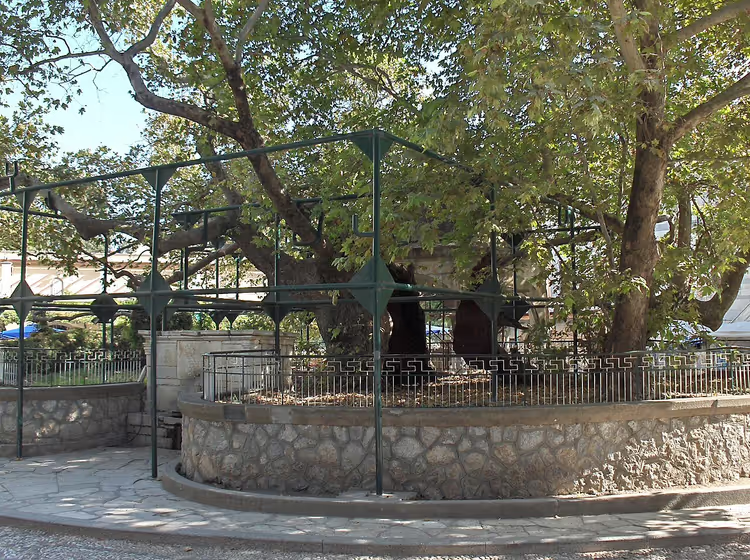
Plane tree of Hippocrates
The plane tree grows on Hippocrates Square, directly opposite the Castle of Neratzia. According to legend, Hippocrates received patients and taught his students under this tree. The branches rest on metal supports, and the trunk has long been held together only by its bark.
 © Steven Fruitsmaak · CC BY-SAPhoto: Steven Fruitsmaak, CC BY-SA (http://creativecommons.org/licenses/by-sa/3.0/), Wikimedia Commons
The tree's age is a matter of debate. Some sources say the plane tree is over 2,000 years old, while others are certain that what you see is a descendant of the original tree. Cuttings from here were carried around the world for centuries, and such plane trees now grow at medical schools in various countries.
- Where: Hippocrates Square, about 300 m from the port (on the map).
- Cost: free to view.
Asclepieion
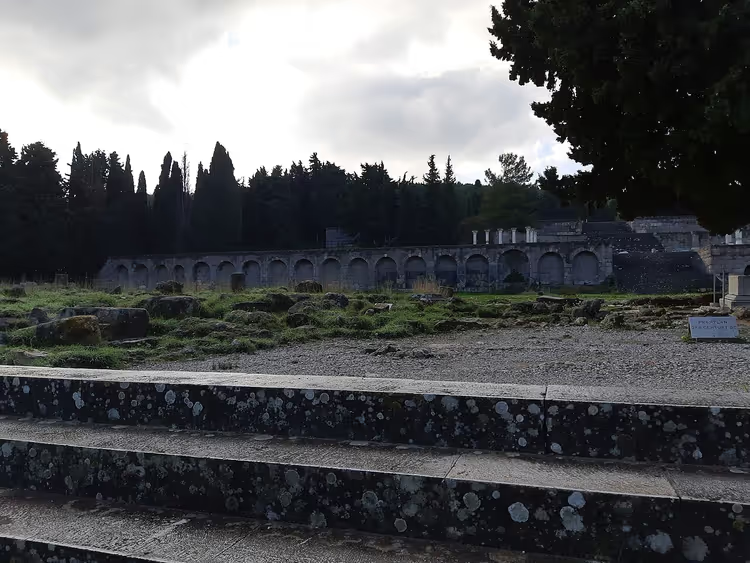
The Asclepieion is one of the most famous sanctuaries of antiquity and is considered the main monument of Kos. According to tradition, this is where Hippocrates founded his medical school. The complex was built on a hillside, on three terraces, and looks directly out to sea.
The temple was dedicated to Asclepius, the god of medicine. The sick came here for healing: they spent the night in the sanctuary, and in the morning told the priest their dreams. Treatment was prescribed based on those dreams. Ruins survive, but even they give a sense of what the complex looked like: an altar, the temple of Asclepius, and a small temple of Apollo with seven restored columns.
Admission to the Asclepieion costs €15 (as of: 09/2026, official Asclepieion page). The ticket is combined: it also covers the Archaeological Museum of Kos and Casa Romana, according to the Greek Ministry of Culture. In summer the complex is open from 8:00 to 20:00, with the last entry at 19:30.
 © Rikki Mitterer · CC BY-SAPhoto: Rikki Mitterer, CC BY-SA (https://creativecommons.org/licenses/by-sa/4.0), Wikimedia Commons
- How to get there: 3.4 km southwest of Kos town center, by car, motorcycle, or bicycle (according to the tourist office).
- Cost: €15, a single ticket for all three sites.
Panellenion on Eleftherias Square
Panellenion is a complex of buildings on Eleftherias Square. It was built by the Knights and later rebuilt by Italian architects. The 1933 earthquake turned part of the buildings into ruins. A new structure appeared on the site of the ancient remains, and today the complex looks like a natural part of the local architecture.
Panellenion stands on Eleftherias Square, next to the Agora market. Here you can buy fresh fruit, souvenirs, and household goods. From the square it is easy to walk to the Ancient Agora and the old town.
- Where: Eleftherias Square, next to the market (on the map).
- Cost: viewing from outside is free.
Ancient Agora
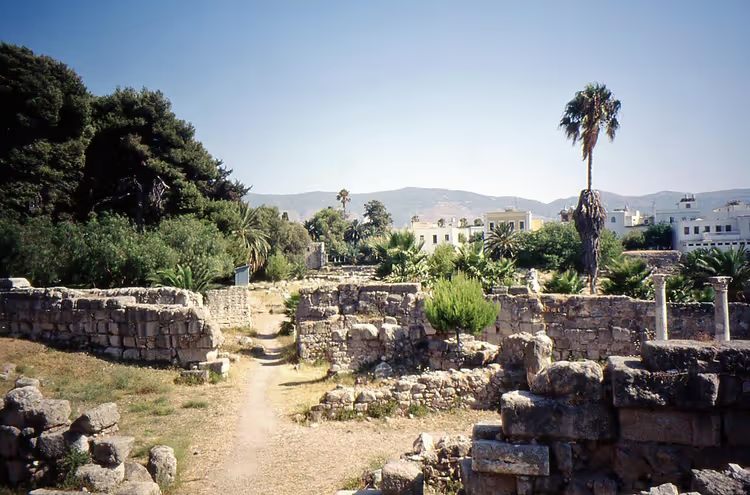
The Ancient Agora lies almost in the center of town, between the port and Eleftherias Square. The ruins were discovered after the earthquake. In antiquity, the largest market on Kos operated here, and today only scattered fragments of buildings survive.
Inside the former market you will see the remains of the Temple of Hercules, the Temple of Aphrodite, and a Christian basilica. Theaters and baths were also part of the Agora. Some monuments have been reconstructed and are open for viewing again.
 © Hihawai · CC BY-SAPhoto: Hihawai, CC BY-SA (https://creativecommons.org/licenses/by-sa/2.5), Wikimedia Commons
- Where: between the port and Eleftherias Square (on the map).
Kalymnos Island
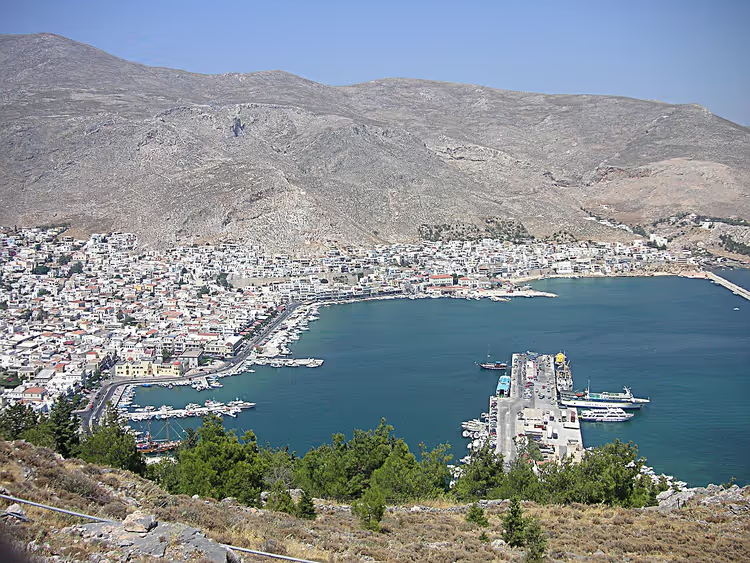
Kalymnos lies a half-hour ferry ride from Kos, and there are enough sights here to fill a whole day. The main attraction is the Maritime Museum, opened in 1994, a private gallery run by the Valsamidis brothers with rare finds from the seabed.
The island's second symbol is tied to sponges. In the past, locals dove for them without equipment, relying only on the experience of their ancestors. Today a school on Kalymnos teaches sponge diving. The rocky outcrops along the coast are popular with divers and rock climbers.
The ferry from Kos port takes about 35 minutes, and tickets start at €5 (according to Ferryhopper, 09/2026). The crossing from Mastichari is shorter and takes about 25 minutes.
 © Unknown author · CC BY-SAPhoto: Unknown author, CC BY-SA (http://creativecommons.org/licenses/by-sa/3.0/), Wikimedia Commons
- How to get there: ferry from Kos port or Mastichari, 25-35 minutes.
Paleo Pyli
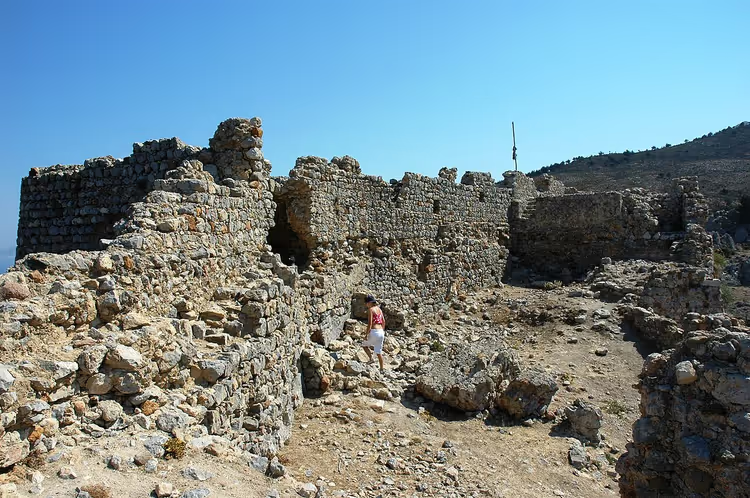
Paleo Pyli is located on a mountainside in the island's interior. The fortress was built in the Middle Ages. Later, cholera drove the residents away, and they moved down to the coast. Today only walls and ruins remain of the settlement. From the top there is a view of the mountains and the sea.
The ascent follows a stone staircase carved into the rock. It is not for everyone. You will need about an hour for the climb and the visit.
 © ich selbst · CC BY-SAPhoto: ich selbst, CC BY-SA (https://creativecommons.org/licenses/by-sa/3.0), Wikimedia Commons
Near the fortress stands the Church of Ypapanti (the Presentation of the Lord). It has welcomed pilgrims for nine centuries, and a spring flows nearby. Below lie ancient Greek burial sites and underground crypts, and one enterprising Greek has opened a taverna here: after the long climb, lunch is welcome.
- Important: bring water and comfortable shoes; the uphill climb takes about an hour.
Defterdar Mosque
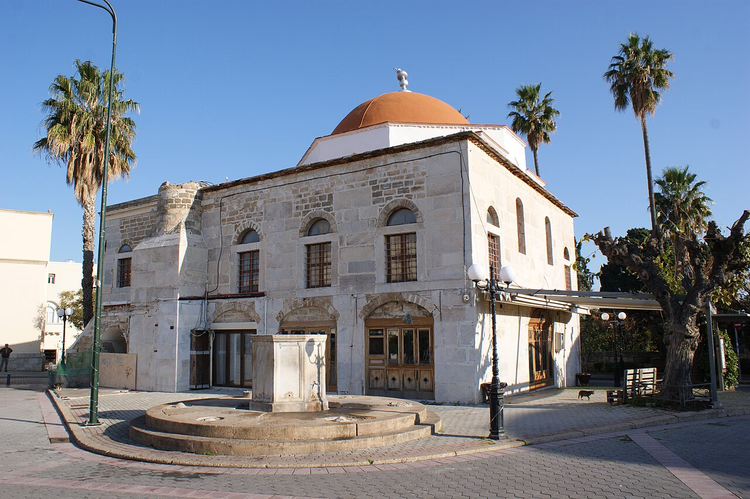
Defterdar Mosque stands in the central part of the old town. The mosque makes a strong impression at first sight. It is less well known than the Hadji Hassan Mosque, but it has its own regular worshippers.
 © Asurnipal · CC BY-SAPhoto: Asurnipal, CC BY-SA (https://creativecommons.org/licenses/by-sa/4.0), Wikimedia Commons
The mosque was built in Ottoman times, when Kos was under Ottoman rule. A market operates nearby: you can walk through the stalls and buy sweets or spices. Inside, the ornate decoration has survived to this day.
- Where: old town, next to the market (on the map).
Hadji Hassan Mosque
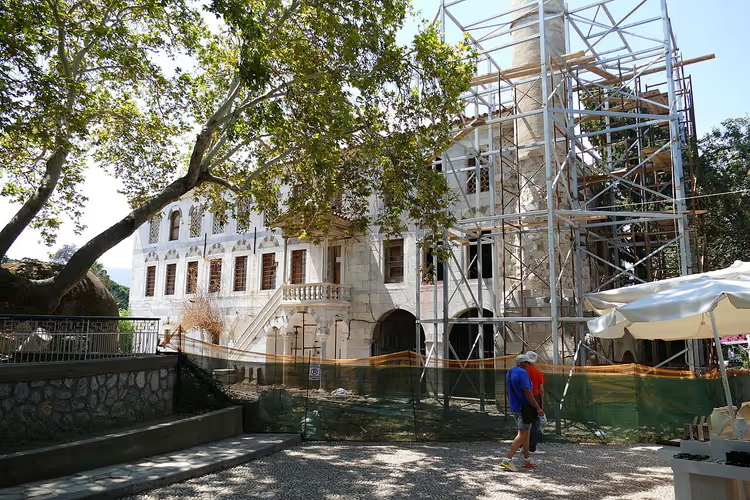
Hadji Hassan Mosque has preserved its appearance, and tourists come to its walls to see how different cultures came together on Kos. The island is generally interesting for its mix of temples, mosques, and castles.
Souvenirs are sold near the mosque. After dark, the building is lit with soft lights, and it is a pleasant stop during an evening stroll. You will find both quiet and beautiful shots for evening photos here.
 © Bukvoed · CC BYPhoto: Bukvoed, CC BY (https://creativecommons.org/licenses/by/4.0), Wikimedia Commons
Ancient Roman Odeon
The Odeon was once one of the main public buildings on Kos. It was not only used for musical performances: the City Council also met in the Odeon. It was built in the classical style, with a semicircular shape like an ancient amphitheater.
A domed roof once rose above the Odeon, but it collapsed over time. A space for the orchestra was provided below. Excavations here uncovered many sculptures, including a statue of Hippocrates, which was moved to the Archaeological Museum.
Today the Odeon serves as a stage again. Every summer it hosts symphony concerts, and you can attend one of the performances.
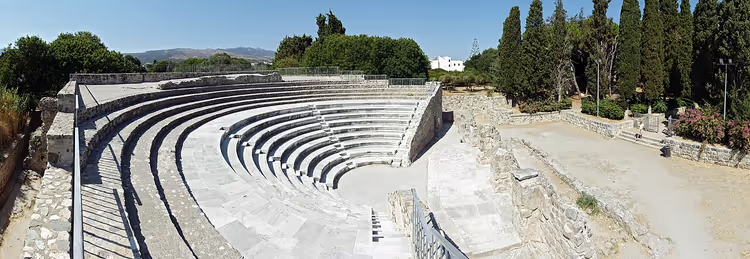 © kallerna · CC BY-SAPhoto: kallerna, CC BY-SA (https://creativecommons.org/licenses/by-sa/3.0), Wikimedia Commons
Roman House
The Roman House (Casa Romana) is one of the most impressive monuments on Kos. The villa belonged to an aristocratic family and has 36 rooms and three inner courtyards with atriums (according to the Casa Romana page on kos.gr). In the center of the courtyard stands a fountain with a panther catching its prey.
The villa's floors are covered with mosaics featuring marine motifs. Among the images you can make out real and imaginary sea creatures. The earthquake severely damaged the villa, but a long restoration brought the building back to life.
You can enter the Roman House with the same ticket as the Asklepion.
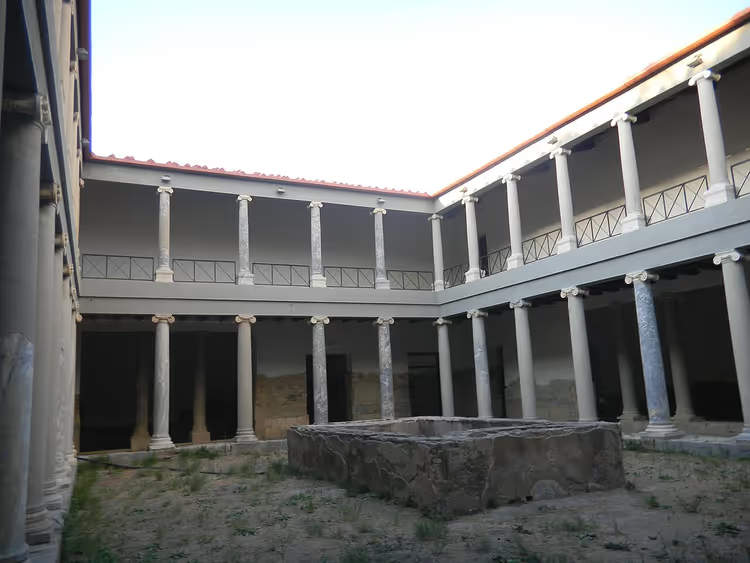 © Elisa Triolo · CC BY-SAPhoto: Elisa Triolo, CC BY-SA (https://creativecommons.org/licenses/by-sa/2.0), Wikimedia Commons
Kos attractions on the map
All the points are easy to see on a single map. The Plane Tree, the Agora, the mosques, and the Odeon are in the city center, while the Asclepeion and Paleo Pyli lie outside it.
Attractions of Kos Island
Places on the map
- 1Hippocrates Plane Tree Tree on Hippocrates Square, where legend says Hippocrates taught
- 2Asclepion Temple Kos's main ancient monument, a sanctuary on three terraces
- 3Ancient Agora Ruins of Kos's largest market, remains of the temples of Heracles and Aphrodite
- 4Kalymnos Neighboring island half an hour away by ferry, Maritime Museum and a sponge-diving school
- 5Defterdar Mosque Mosque in the old town with Arabic frescoes on white walls
- 6Ancient Roman Odeon Ancient council building, today a stage for summer concerts
- 7Roman House Villa with 36 rooms and mosaics of sea themes
Tickets for Kos attractions in summer are best booked in advance: popular time slots fill up quickly.
Tours and tickets in Kos
Guided tours, skip-the-line tickets and activities — most offers can be cancelled free of charge.
See offers on TiqetsThe widget loads once you give your consent.
⁉️🤔 Frequently asked questions
What does the Kos combined ticket include?
The combined ticket for €15 covers three sites: the Asklepion, the Archaeological Museum of Kos, and the Roman House (Casa Romana). The ticket is valid from the date of purchase, as of the Greek Ministry of Culture (09/2026). Visiting the plane tree, the Agora, and the mosques in the center is usually free, but check the conditions right at the entrance.
How do I get to the Asklepion from the center?
The Asklepion is 3.4 km southwest of the center of Kos (as of the tourist office). The easiest way to get there is by car, motorcycle, or bicycle, and there is free parking nearby. On foot, the walk takes about 40 minutes uphill, so it is better not to go at midday.
How much time should I allow for the center of Kos?
The plane tree, the Agora, the Odeon, the Panellenion, and both mosques will take you about half a day. All the sites are a short walk from each other, so you can cover them on foot. If you also want to visit the Asklepion, add 2-3 hours.
Is Kalymnos worth a day trip?
Yes, Kalymnos is easy to visit for a day. On the island, see the Maritime Museum and the old sponge factory. Check the return ferry schedule in advance, especially in the off-season.
When is the best time to visit Kos?
The center of Kos is pleasant to visit in spring and autumn, when there is no intense heat. In summer, go up to the Asklepion and Paleo Pili in the morning, close to opening time. Bring water and a hat: open areas get hot during the day.
In short: what to book
If you have one day, put the Asklepion in the morning and walk around the center. If you are drawn to antiquity, get the combined ticket and be sure to visit the Roman House with its mosaics. If you want the sea and a change of scenery, plan a ferry to Kalymnos.
Tours and tickets around the island are easy to book in advance: find Kos tours on GetYourGuide.

A small editorial team writing guides for independent travel. We travel ourselves, but we haven’t been everywhere, so we check prices, opening hours and how to get there against official sources.