
















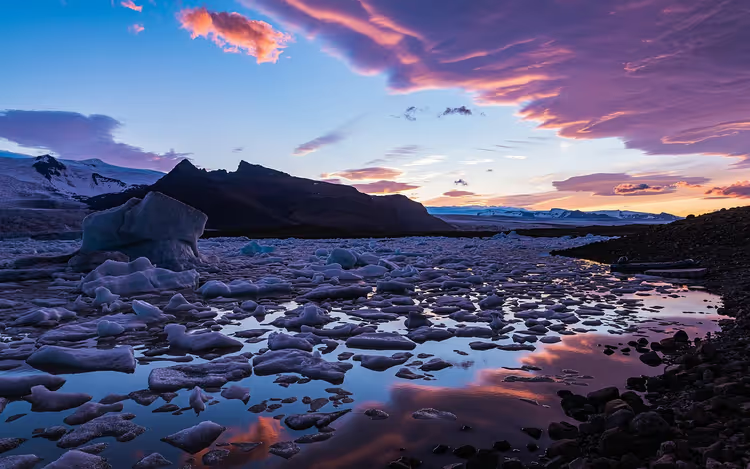
Jokulsarlon glacier lagoon: boat tickets, road and best season
Jökulsárlón Lagoon lies right off Route 1 in the southeast of Iceland. Icebergs drift just steps from the roadside here, and seals rest on the icy outcrops.
The nearest towns are far away, so the lagoon is usually visited along the way around the south coast.
Ad: this article contains affiliate links, we earn a commission if you book through them, at no extra cost to you.
Jökulsárlón glacier lagoon
💡 In short:
- Access to the lagoon is free and open around the clock.
- Boats run from early May through October, adult ticket 7,100 króna (as of 09/2026, operator).
- The drive from Reykjavík takes about five hours one way.
- Prices and opening hours: 09/2026, checked on the official website.
Jökulsárlón translates as "glacial river lagoon." It is Iceland's largest and most active glacial lake, lying at the foot of Vatnajökull (about the lagoon's origins). The ice here never stays put: it constantly calves from the glacier, drifts toward the sea, and gets stuck near the shore.
Getting to the water is easy. The lagoon is visible right from the roadside between Höfn and Skaftafell, with parking nearby. You can spend hours watching the ice chunks in two shades, milky white and bright blue. The shade depends on the air trapped inside the ice.
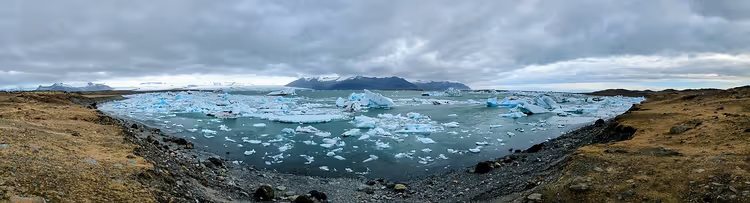 © Manticorp · CC BYPhoto: Manticorp, CC BY (https://creativecommons.org/licenses/by/4.0), Wikimedia Commons
Where the lagoon is located
The lagoon sits in southeast Iceland, right on Route 1. The nearest landmarks on the map are Vík to the west and Höfn to the east. Here are the distances and driving times without stops, so you can plan your day in advance.
From | Distance | Driving time |
|---|---|---|
Reykjavík | 379 km | about 5 hours |
Vík | 190 km | about 2.5 hours |
Skaftafell | 55 km | about 45 minutes |
Höfn | 79 km | about 1 hour |
As of 09/2026, lagoon guide.
Coordinates for your GPS: 64.0484° N, 16.1794° W (coordinates and route). There are few settlements around, so services are concentrated in Vík, near Skaftafell, and in Höfn. Fill up on fuel before you head out onto the empty stretch of road.
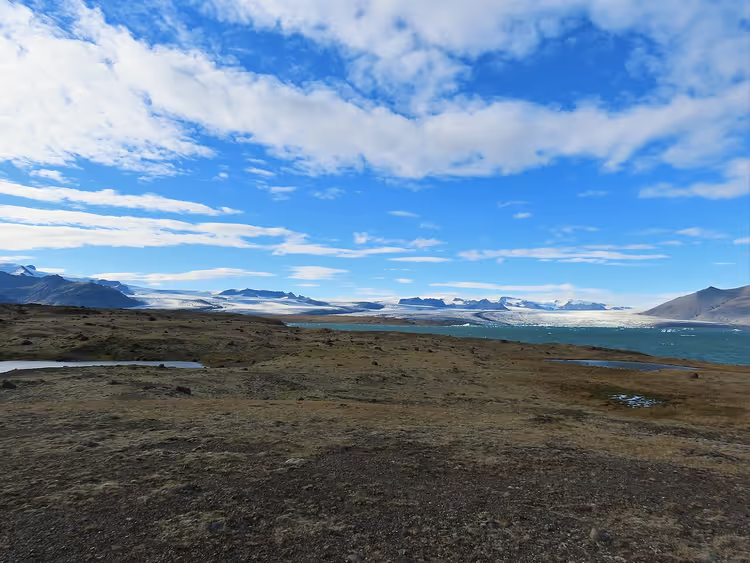
The lagoon runs up against the glacier and looks like a lake with floating mountains. On a clear day, the ice reflects the sky and seems almost transparent. Dark streaks of ash are visible between the blocks.
Across the road from the lagoon lies Diamond Beach. Waves carry ice chunks out of the lagoon and roll them onto the black sand (beach by the lagoon).
How the lagoon formed
The lagoon appeared within the lifetime of several generations. The glacier began retreating back in the late 19th century, and the lake started forming in 1934-1935 (data on the lake's formation). As late as 1903, according to descriptions from that time, the glacier stood no less than 200 meters from the seashore.
The area is growing fast. In 1975 the lake covered about 8 sq km, and today it is already around 25 sq km (lake area and depth). By depth, Jokulsarlon is considered the deepest lake in Iceland: in places the depth exceeds 284 meters.
 © Rémih · CC BY-SAPhoto: Rémih, CC BY-SA (https://creativecommons.org/licenses/by-sa/4.0), Wikimedia Commons
The first settlers arrived in Iceland around 870. At that time the glacier tongue lay almost 20 km north of its current edge (first settlers of Iceland). Historians call the cold period from 1600 to 1900 the Little Ice Age. During that time the glacier advanced in places by almost a kilometer toward the shore.
From 1920 to 1965 temperatures rose, the ice retreated quickly, and left behind a depression that filled with meltwater. That is how the lake appeared on the map, along with the ice blocks you see today.
Ice chunks break off from the glacier edge, and individual icebergs reach up to 30 meters in height (height of ice chunks). Then currents and wind slowly carry them toward the narrow outlet to the ocean. The passage to the sea is shallow, so large blocks linger near the shore almost until the following summer.
Seals and birds by the icy water
The lagoon sits on the boundary between fresh and salt water. It lies at the lowest point of the area, so during tides salt water flows into the lake. This mix attracts both marine and freshwater life.
Fish come in with the tide, and seals gather at the lagoon's mouth. They usually hunt here in winter, and in summer they rest on the ice chunks (lagoon wildlife). Birds also come for the fish: terns, skuas, gulls. In summer, Arctic tern and skua nests appear right on the sandy shores.
Seals are used to people and let you get close. Keep a distance of several meters and stay quiet: that way you can watch them longer. The best spot for watching wildlife is the narrow outlet from the lagoon to the sea.
Best time to visit
In summer the ice flows down the river to the sea, the passage is open, and icebergs drift out to the ocean. In winter the channel freezes, ice chunks accumulate in the lagoon and drift slowly.
If you want boat tours and blue ice, plan your trip for June through September. In July and August the icy shores get especially crowded, so arrive at opening time or closer to evening.
The cafe by the lagoon is open year-round, except December 24-26 and December 31-January 2. Opening hours depend on the season: in summer from 9:00 to 19:00, in winter from 9:00 to 17:00 (cafe opening hours). You can warm up and have lunch right by the water.
The light here deserves a special mention. At dawn the first rays touch the icebergs, and at sunset the lagoon turns pink and gold. Photographers pitch tents on the shore and wait for hours for the right shot.
In winter the picture is different. The glacier does not release the blocks into the sea, and they densely fill the lagoon. In those months you will see classic icebergs up to 30 meters high.
Boat tours: tickets and season
Lagoon tours come in two types. The amphibious boat has wheels: it drives into the water right from the shore and carries many people. It moves calmly, so it suits families with children. The fast Zodiac glides across the water as an inflatable boat and gets closer to the ice walls.
Tour | Adult | Child |
|---|---|---|
Amphibious boat | 7,100 kronur | 3,500 kronur (6-12 years) |
Zodiac | 16,600 kronur | 8,300 kronur (10-12 years) |
Prices are valid for 2026 (as of 09/2026, operator's price list).
Children under six ride the amphibian boat for free. On the Zodiac they take passengers only from age ten (tour prices). Book ahead: in July and August spots sell out quickly.
Tours and tickets in Iceland
Guided tours, skip-the-line tickets and activities — most offers can be cancelled free of charge.
See offers on GetYourGuideThe widget loads once you give your consent.
If you want to compare boat tours in advance, keep ice lagoon boat tickets handy. Boats depart from the bay right next to the parking lot, so there is no walking involved. Bring a warm jacket and waterproof shoes.
Where to stay nearby
The closest overnight options are clustered in two spots. Near Skaftafell to the west you will be closer to the morning light over the lagoon. Hofn to the east is convenient if you are continuing along the ring road: it is 79 km from the lagoon (distance to Hofn).
There are few hotels around, so it is better to book a room in advance, especially in July and August. Both Hofn and the Skaftafell area have guesthouses and larger hotels. There are gas stations in both spots, so you can plan your route without worry.
⁉️🤔 Frequently asked questions
How much does it cost to enter the Jökulsárlón lagoon?
The lagoon itself is free to visit; you only pay for a boat tour. An adult ticket for the amphibian boat costs 7,100 króna, and for the Zodiac 16,600 króna (as of 09/2026, lagoon price list). There is a café near the shore.
When is the best time to go to see icebergs?
Boats operate from early May through October (boat season). In summer, ice flows down the river to the sea; in winter, the channel freezes and blocks accumulate in the lagoon. Come in winter for large icebergs.
Can you see seals?
Yes, seals stay near the lagoon mouth and hunt here in winter (seals near the shore). In summer they rest on ice floes. The animals are used to people, but keep your distance and stay quiet so you don't scare them off.
How long is the drive from Reykjavík?
About 379 km and five hours one way (road guide). The return trip takes just as long, so a day trip is exhausting. It's more convenient to stay overnight near Skaftafell or in Höfn.
Do boats run in winter?
No, tours usually run from early May through October and depend on weather and ice conditions (tour schedule). In winter the lagoon is open for viewing, but boats do not go out. The café by the water is open year-round.
In short: what to book
If you're traveling with kids, take the amphibian boat: it's cheaper and calmer. If you're after the perfect shot, choose the Zodiac and arrive at dawn. If you're driving the Ring Road, stay overnight in Höfn.
One last tip: book your boat tour in advance, as spots fill up fast in the height of summer.

A small editorial team writing guides for independent travel. We travel ourselves, but we haven’t been everywhere, so we check prices, opening hours and how to get there against official sources.