
















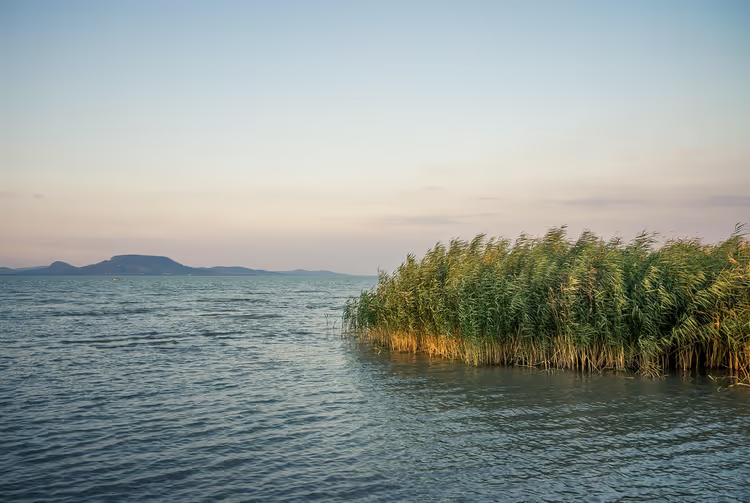
Balaton: why the water seems murky and where it is safe to swim
Balaton only seems a bit murky at first glance. The green-blue tint of the water does not mean it is dirty: that is how shallow water works. The area of Balaton is 594 km² with an average depth of 3.25 m (as of 09/2026, Balaton fact sheet). The lake is larger than Lake Geneva and Lake Constance, yet many times shallower. The shallow depth warms the water quickly: in summer it reaches 30 °C (as of 09/2026, Wikipedia: Balaton). You can swim almost anywhere along its shore.
Official services in Hungary test the water every year and give Balaton high marks. Below we have gathered verified data: how clean the water is, where it is safe to swim, and how quickly the lake renews itself.
Ad: this article contains affiliate links, we earn a commission if you book through them, at no extra cost to you.
Why the water in Balaton looks murky
💡 In short:
- The murky tint comes from silt and lime sediment stirred up by wind, not from pollution.
- Official tests rate Balaton's swimming areas as good or excellent.
- Water quality and swimming: as of 09/2026, according to the Ungarn Heute (NNGYK) summary.
 © Christo · CC BY-SAPhoto: Christo, CC BY-SA (https://creativecommons.org/licenses/by-sa/4.0), Wikimedia Commons
The water color in Balaton is compared to milk glass. The reason is not runoff but fine silt and lime sediment. The lake is shallow, so wind easily stirs them up from the bottom. The sediment scatters sunlight, and the water looks milky. The shallower the area, the stronger the effect. On a calm day the surface shimmers green or blue; in wind the murk is more noticeable.
This tint is not harmful to your health. The bottom is sandy and silty, with no sharp rocks, so even children can stand safely near the shore. Visibility is low, but the water is soft. Those used to crystal-clear alpine lakes may find Balaton milky, but it does not affect the quality of swimming.
What water quality measurements show
Hungary assesses bathing waters using the European Union methodology: at least 16 samples over four years. According to 2021-2024 data, 96.5% of the country's tested natural bathing sites received a "good" or "excellent" rating (as of 09/2026, Ungarn Heute summary). In the 2024 season, out of 288 bathing sites, 193 were rated excellent and 58 good. The shores of Balaton, Lake Velence, and the Tisza are among the best in water quality.
The overall picture in Europe is also strong. In the 2025 season, 85% of all EU bathing waters received an "excellent" rating (checked 09/12/2026, European Commission).
The rating is based on the number of intestinal bacteria in samples. An excellent rating means a very low risk of catching an infection. Swimming is safe only at designated beaches: there the water is tested regularly. At unofficial spots not listed in the registry, no samples are taken. In that case you risk an intestinal infection or eye inflammation, which is especially dangerous for children.
Water temperature and swimming season
Balaton warms up earlier than many Alpine lakes. Its average depth of 3.25 m does not hold the cold, and the water responds quickly to heat. In July and August, temperatures near the southern shore stay around 24-27 °C, and on some days exceed 30 °C (as of 09/2026, Wikipedia: Balaton). The swimming season usually runs from late May to mid-September.
If you are traveling with children, choose the southern shore: it is shallower and warmer. Siofok, Zamardi, and Fonyod are located here. The northern shore near Tihany and Badacsony is deeper and cooler, but the water is cleaner and there are fewer people. Wind can build up waves within minutes, so check the forecast before every time you head out on the water. Mornings are calmer, while afternoons bring waves to open areas.
Depth, currents, and water exchange
The lake is shallow, but its water does not stagnate. The main inflow, the 138 km long Zala River, enters the lake near Keszthely (as of 09/2026, information about the Zala). In addition, the lake is fed by about 30 permanent and 20 seasonal streams. The only outflow is through the Sio Canal at Siofok, and this canal carries excess water to the Danube while also keeping the lake level stable.
Lake Balaton parameters
Parameter | Value |
|---|---|
Area | 594 km² |
Length | 79 km |
Average depth | 3.25 m |
Maximum depth | 12.5 m |
Summer water temperature | up to 30 °C |
Largest inflow | Zala River |
Only outflow | Sio Canal |
The deepest point lies near the Tihany Peninsula, where the lake narrows to 1.3 km (as of 09/2026, Wikipedia: Balaton). A car ferry crosses this narrow section, connecting the two shores. In summer heat, some water evaporates, the level drops slightly, and the beach strip becomes wider. If the water rises above the 110 cm mark, the lock at Siofok is opened (as of 09/2026, Wikipedia: Balaton).
Where swimming is safe
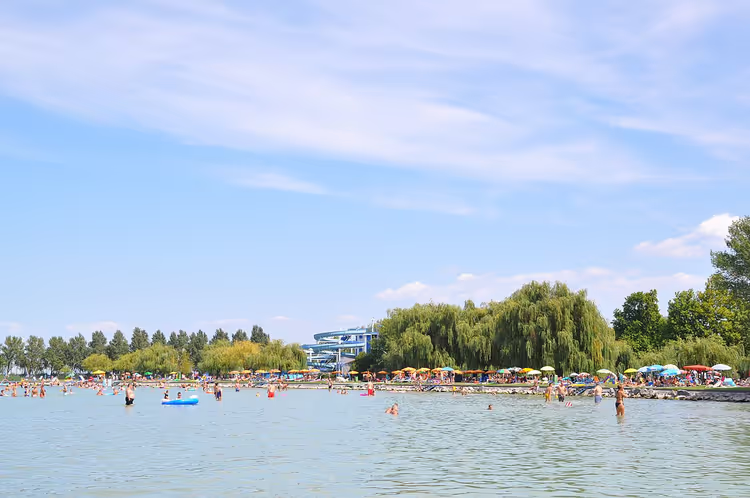
Swim only at official beaches. These areas are listed in the Hungarian registry, and water samples are taken there regularly (as of 09/2026, Ungarn Heute). Signs mark them with a wave icon. Most Balaton beaches are free, though some charge for parking.
Developed shorelines offer basic comfort: during the season, lifeguards are on duty, and there are showers, toilets, and changing rooms. Wild stretches between towns attract with their quiet, but there is no water monitoring or lifeguards there. You should not swim in reed-filled bays: the water there warms up more and refreshes less. If a shore is not developed or marked, nobody takes samples.
Motorboats and nature protection
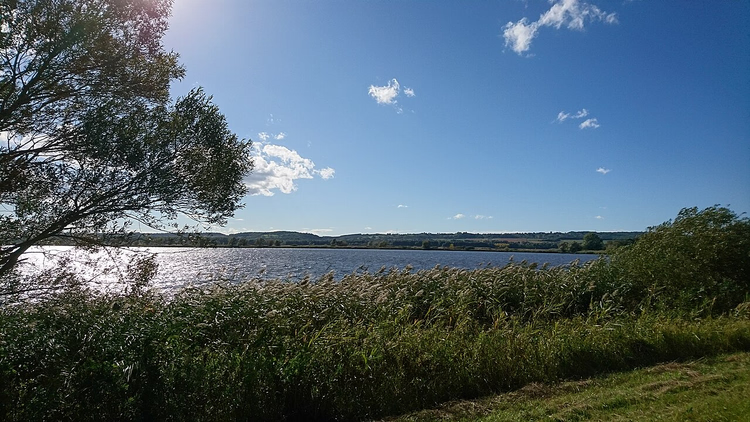
You cannot speed around Balaton on motorboats. Authorities have banned them across most of the lake to protect the water. The western corner of the lake is occupied by Kis-Balaton, a marshy reed zone. It works as a natural filter and cleans the water coming from the Zala (as of 09/2026, Balaton inflows).
 © ModriDirkac · CC BY-SAPhoto: ModriDirkac, CC BY-SA (https://creativecommons.org/licenses/by-sa/4.0), Wikimedia Commons
The reserve is protected for birds and rare reptiles. Because motorized transport is banned, the water stays calm and the bottom is not stirred up by propellers. This benefits you directly: less exhaust and oil in the water, cleaner swimming. Sightseeing boats run on schedules, and their routes are laid out away from swimming areas.
⁉️🤔 Frequently asked questions
Can you swim in Balaton?
Yes, at developed beaches: the water there is tested regularly. Swimming at wild spots without quality control is not recommended.
Why is the water in Balaton murky?
The murkiness comes from silt and lime sediment that wind stirs up in shallow areas. This is not pollution; water quality is rated highly.
What is the water temperature in summer?
In July and August, the water warms to 24-27 °C, and on hot days it exceeds 30 °C (as of 09/2026, Wikipedia: Balaton). In spring and autumn, the water cools quickly.
Is it safe to swim with children?
Yes, if you choose developed beaches with lifeguards and a gentle entry. The shallow southern shore near Siofok and Zamardi warms up earlier.
How quickly does the water in Balaton refresh?
Water enters through the Zala River in the west and leaves through the Sio Canal into the Danube in the east. Thanks to this flow, the water does not stagnate.
In short: what to book
Balaton suits both families and active water recreation. What matters more to you determines which shore you choose.
With children: southern shore, Siofok and Zamardi, gentle entry.
For views: northern shore, Tihany and Badacsony, vineyards and depth.
For quiet: small towns on the western shore.
Hotels on the side of the river you need get booked up in advance, and prices rise during the season. It is easier to find accommodation on your preferred side through the hotel search on Trip.com.

A small editorial team writing guides for independent travel. We travel ourselves, but we haven’t been everywhere, so we check prices, opening hours and how to get there against official sources.