
















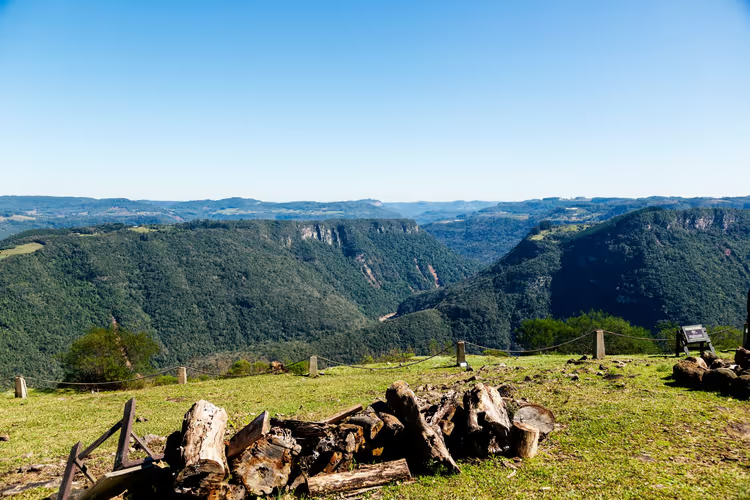
São Francisco do Sul: colonial center, beaches and maritime museum of Brazil
São Francisco do Sul sits on an island in the south of Brazil, in the state of Santa Catarina. The town is one of the oldest settlements in the country. A major seaport still operates here, so the island doesn't live on tourism alone.
About 54,000 people live on the island, and the municipality covers 540 km² (Wikipedia data). In summer the population grows noticeably: people come for the white sand, the calm bay waters, and the seafood. For comparison, check out our Rio de Janeiro guide.
In short: you'll find a compact colonial center on the shores of Babitonga Bay and long ocean beaches. Below we'll cover how to get there, when to go, and what to see.
Ad: this article contains affiliate links. We earn a commission if you book through them, at no extra cost to you.
São Francisco do Sul: the island at a glance
💡 In short:
- The island lies at the entrance to Babitonga Bay and is connected to the mainland by a small bridge.
- The historic center, museums, and church are walkable, while the fort and beaches are easier to cover by car.
- Site descriptions and museum collections: 09/2026, verified on the official prefecture website.
 © Eduardo Marquetti from Itajai, Brazil · CC BY-SAPhoto: Eduardo Marquetti from Itajai, Brazil, CC BY-SA (https://creativecommons.org/licenses/by-sa/2.0), Wikimedia Commons
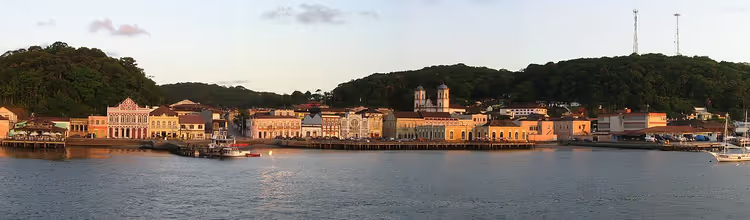
São Francisco do Sul occupies the northern tip of the island at the entrance to Babitonga Bay. The town grew up around the port and the old pier, and its historic center has preserved Portuguese-era buildings. Today it's a quiet tourist corner with far fewer visitors than Rio de Janeiro.
Sandy beaches stretch along the ocean side of the island, while inland there are mangroves, lagoons, and a stretch of Atlantic forest. The largest nature reserve, Parque Estadual do Acaraí, covers 6,667 hectares (as of: Wikipedia). Here you'll find both wild beaches and calm bays for swimming.
How to get to the island
The fastest way to reach São Francisco do Sul is to fly via Joinville: the flight from São Paulo takes about an hour. Tickets on this route are usually more expensive than to other cities in the state, so compare dates in advance.
It's cheaper to fly into Navegantes, Curitiba, or the state capital Florianópolis. From there you can continue by bus or rental car. Florianópolis is worth a separate visit: its oysters are considered the best in Brazil.
The island itself is connected to the mainland by a bridge, so a car solves almost everything. Public transport here is weak, and taxis are expensive and scarce. Rent a car in advance if you want to cover the beaches and the fort in one trip.
When to go
São Francisco do Sul is open for travel year-round, but the seasons in the Southern Hemisphere are reversed. In the Brazilian winter, from June to August, the center is cool and uncrowded: this is the best time for museums and colonial architecture. Swimming is more comfortable in the Brazilian summer, from December to March.
The most rain falls in January and February (as of: Wikipedia). If you want peace and quiet, don't plan your trip around Brazilian Carnival: many vacationers come to the island during those days.
The beaches are divided into ocean and bay beaches. The ocean side offers waves and open space, while Babitonga Bay is calm and warm, so it works well for swimming with children.
 © Stanglavine · CC BY-SAPhoto: Stanglavine, CC BY-SA (https://creativecommons.org/licenses/by-sa/4.0), Wikimedia Commons
Where to stay on the island
Choose your accommodation based on the purpose of your trip. If you want museums, restaurants, and colonial streets within easy reach, stay in the historic center. If the ocean and sunbathing are your priority, look for hotels on the beach side of the island.
For a large group, renting a house is more cost-effective: there are few hotels on the island, and they get booked up quickly in season. It's easier to book accommodation in advance on Trip.com.
What to see on the island
All the main sights on the island are concentrated in two areas: the historic center sits around the Babitonga waterfront, while the natural attractions are scattered across the hills and the ocean shore. Start with the center, then add the fort and the trail.
Sight | What makes it interesting | Where to find it |
|---|---|---|
Historic center | colonial houses and the waterfront | shore of Babitonga Bay |
Museu Nacional do Mar | boats and maritime trades | same place, on the waterfront |
Ecological park | trails and viewpoints | hill above the center |
City history museum | daily life in a colonial town | historic center |
Forte Marechal Luz | artillery and ocean views | ocean headland |
Igreja matriz nossa senhora da graça | the city's main church | historic center |
Morro da Cruz | panoramic view of the whole island | the city's highest point |
Boat tour | islands and mangroves of the bay | pier in the center |
Historic center
 © Rosicler Ceschin · CC BY-SAPhoto: Rosicler Ceschin, CC BY-SA (https://creativecommons.org/licenses/by-sa/4.0), Wikimedia Commons
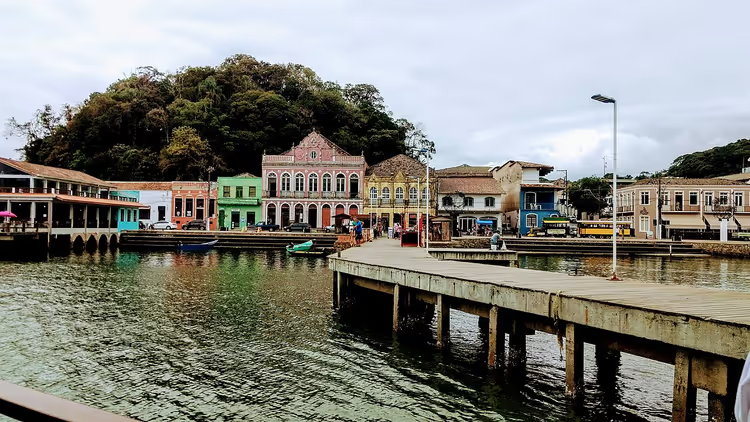
The historic center of São Francisco do Sul consists of several blocks of colonial buildings on the shore of Babitonga Bay. Stone houses and churches from the Portuguese period survive here, and a waterfront promenade runs along the water with views of the bay. The best shots are near the pier.
- How to get there: on foot from the bus station; you can walk the entire center in an hour.
- Who it's for: those who want to see Brazil's Portuguese heritage without tourist crowds.
Museu Nacional do Mar
 © FernandoKnebel · CC BY-SAPhoto: FernandoKnebel, CC BY-SA (https://creativecommons.org/licenses/by-sa/4.0), Wikimedia Commons
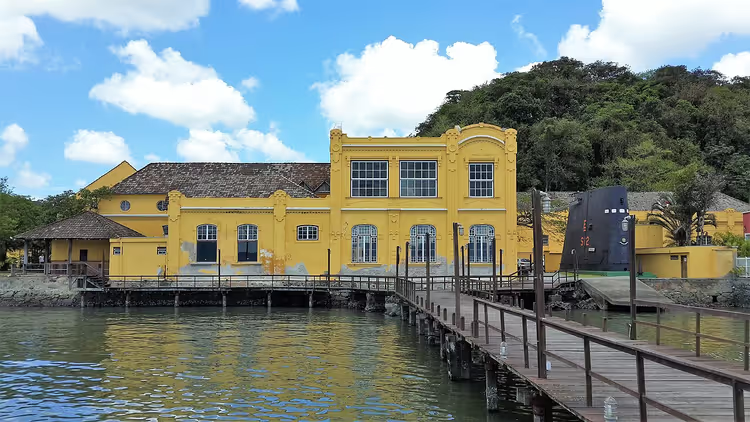
The Museu Nacional do Mar operates on the same waterfront. The museum opened in 1993 in the old warehouses of the Hoepcke company, and today it is one of the largest maritime museums in Latin America. The halls contain more than 60 full-size boats and about 200 models and items of maritime trades (as of Wikipedia). The exhibition is divided into 15 themed halls.
- Hours: the schedule changes by season, check the prefecture website.
- Who it's for: families and anyone interested in the history of seafaring.
Ecological park
 © Stanglavine · CC BY-SAPhoto: Stanglavine, CC BY-SA (https://creativecommons.org/licenses/by-sa/4.0), Wikimedia Commons
A green hill with an ecological park rises above the center. Walking trails have been laid out here, and the viewpoints offer a view of the entire historic center and the bay. At the top stand the ruins of the old São José chapel. The climb is short, but bring water and comfortable shoes.
- Who it's for: those who want to combine a walk with panoramic photos.
City history museum
 © Stanglavine · CC BY-SAPhoto: Stanglavine, CC BY-SA (https://creativecommons.org/licenses/by-sa/4.0), Wikimedia Commons
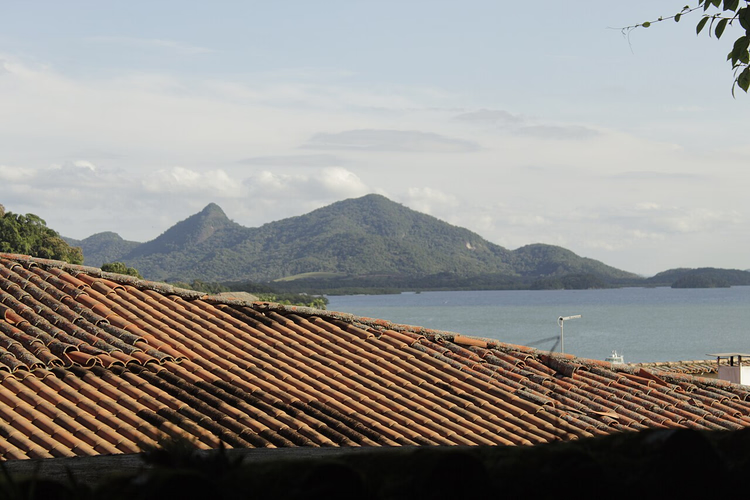
The city history museum occupies one of the oldest buildings in São Francisco do Sul, which previously housed the town hall and the city jail. The exhibition tells the story of the island's colonial past, and some of the items were donated by the Franciscan community. Stop by if you want to understand the daily life of townspeople in past centuries.
Forte Marechal Luz
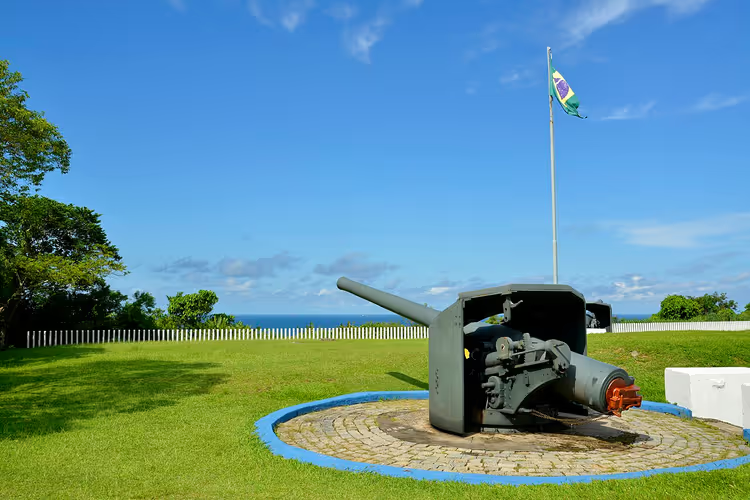
Forte Marechal Luz stands on an ocean headland away from the center. This is a military site that has been opened to visitors: you will see an artillery battery with cannons, trenches, and ammunition bunkers. The site offers a wide view of the Atlantic Ocean.
- How to get there: by car only; there is no public transport here.
- Who it's for: those who love forts and ocean panoramas.
Igreja matriz nossa senhora da graça
 © Stanglavine · CC BY-SAPhoto: Stanglavine, CC BY-SA (https://creativecommons.org/licenses/by-sa/4.0), Wikimedia Commons
The city's main church, Igreja Matriz Nossa Senhora da Graça, stands on a square in the historic center. The church was built during the colonial period and later restored, and inside it houses a wooden figure of Our Lady brought here by the Portuguese. Pay attention to the altar and the ceiling paintings.
Morro da Cruz
 © Stanglavine · CC BY-SAPhoto: Stanglavine, CC BY-SA (https://creativecommons.org/licenses/by-sa/4.0), Wikimedia Commons
The Morro da Cruz trail leads to the highest point of the city. The climb is steep, but at the top there is a large cross, and from it you get a panorama of the entire island and the ocean. Start the ascent in the morning before it gets hot, and bring water.
- The catch: the trail is steep, you need proper footwear.
Boat tour
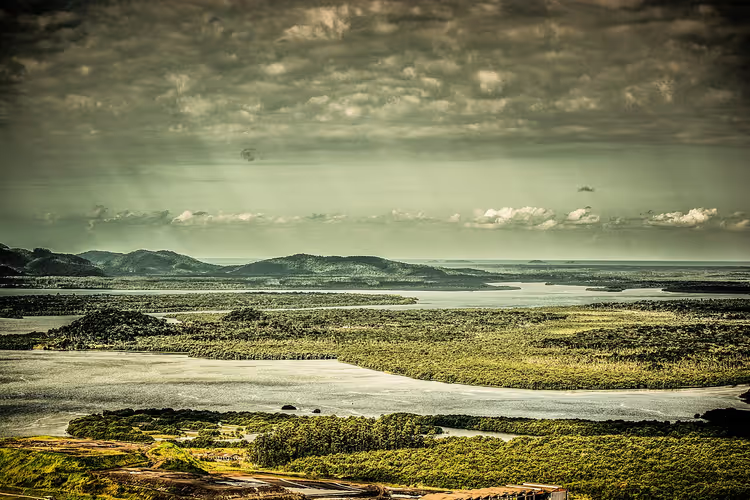
A boat tour of Baía da Babitonga bay deserves a day of its own. The bay is dotted with islands, but some of them are privately owned and closed to visitors. Boats depart from the pier in the center, the trip takes a few hours and often includes a stop at the mangroves.
 © Chrisporto · CC BY-SAPhoto: Chrisporto, CC BY-SA (https://creativecommons.org/licenses/by-sa/3.0), Wikimedia Commons
Tours and tickets
Guided tours, skip-the-line tickets and activities — most offers can be cancelled free of charge.
See offers on GetYourGuideThe widget loads once you give your consent.
Where to eat on the island
Seafood is prepared in every restaurant on the island. The menu includes octopus, shrimp, langoustines, and squid, served simply and fresh. Be sure to try the local conger eel fish.

Brazilians often add heart of palm to dishes, so don't be surprised by that ingredient. For restaurants with a water view, look in the historic center near the pier: there are several there, and in season it's best to book a table in advance.
⁉️🤔 Frequently asked questions
How many days do you need for São Francisco do Sul?
For the center, museums, and the church, one day is enough. Set aside a second day for the fort, beaches, and a boat trip around the bay. If you want to add the Morro da Cruz trail, leave another day.
When is the best time to visit the island?
For swimming, choose the Brazilian summer, when the ocean is warm. For museums and walks around the center, the Brazilian winter, from June to August, works well: fewer people and mild weather.
Are there beaches on the island for swimming with kids?
Yes, the bay side will suit you. The waters of Babitonga Bay are calmer than the ocean side, and the entry into the water is gentle. Save the ocean beaches for surfing and waves, not for calm swimming.
How do you get to the island without your own car?
Fly to Joinville, Florianópolis, Navegantes, or Curitiba, then continue by bus. Public transport on the island itself is limited, so renting a car or booking a transfer will make the trip noticeably easier.
What can you see for free?
The historic center, the waterfront, and the ecological park are open to everyone. This is the best option if you're on a budget. Check museum and fort ticket prices on the city's official portal: prices and opening hours are updated there.
In short: what's worth booking
São Francisco do Sul is great for a relaxed two- or three-day trip: the colonial center, seafood, and ocean beaches are all close by. Plan your accommodation in advance, and before you go, check the museum opening hours.
- If you have a car: book a hotel on the beach side and explore the whole island.
- If you don't have a car: stay in the historic center, everything important will be within walking distance.
- If you have one day: focus on the center, the waterfront, and the maritime museum.
You can compare tours and activities on the island on GetYourGuide.

A small editorial team writing guides for independent travel. We travel ourselves, but we haven’t been everywhere, so we check prices, opening hours and how to get there against official sources.