
















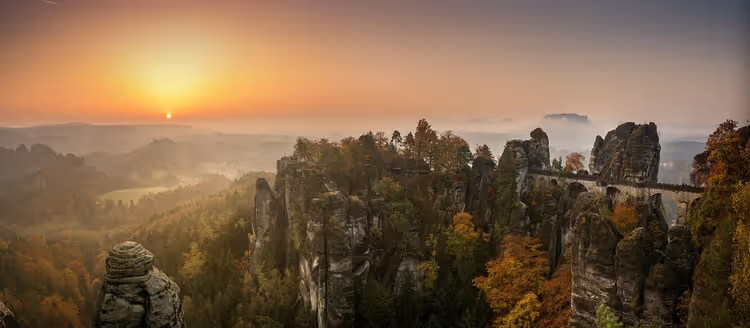
Saxon Switzerland near Dresden: Bastei, fortress and waterfall
Saxon Switzerland starts 30 km from Dresden. Here the Elbe cuts through sandstone cliffs and disappears into gorges. Most tourists head to Bavaria's Neuschwanstein, even though Saxony's nature park is just as impressive and costs less.
That leaves two questions: how to get there from Dresden and Prague, and what to see in the park. You'll find prices and opening hours for September 2026, plus the names of the main sights.
Ad: this article contains affiliate links, we earn a commission if you book through them, at no extra cost to you.
What Saxon Switzerland is
💡 In short:
- The park lies on the border between Germany and the Czech Republic, 30 km from Dresden (as of 09/2026, regional tourist office).
- An S-Bahn train runs from Dresden to Bad Schandau.
- Main sights: Bastei, Königstein Fortress, Lichtenhain Waterfall, Kuhstall, the rock theater in Rathen, and the Painters' Trail.
- Prices and opening hours: 09/2026, verified on the fortress's official website.
Saxon Switzerland is a national park covering about 93 km² in southern Saxony. Its foundation is sandstone cliffs. For centuries, building stone for Dresden was quarried from them. There are no snow-capped peaks here, but stone towers, walls, and gorges rise above the Elbe. The landscape feels like an open-air sculpture gallery.
Protected status doesn't get in the way of outdoor activities. The park has hundreds of kilometers of hiking trails and dozens of cycling routes. Climbers find routes of every difficulty level. Families with kids also have short walks: you can take a bus to the Bastei bridge and a heritage tram to the waterfall.
How to get there
The park's entry points are the resort towns on the Elbe: Bad Schandau and Rathen. Both sit on the railway line between Dresden and Prague. You reach them without transfers, then use buses, ferries, and a historic tram.
From Dresden
From Dresden, the route is the shortest. The S-Bahn S1 runs from the main station to Bad Schandau station in 45 minutes, with trains every half hour (as of 09/2026, regional tourist office website).
Book train tickets in advance: during high season, morning trains get crowded. Dresden - Bad Schandau train tickets are sold online and at station ticket machines.
To Rathen, the train takes about half an hour. From the station, you cross the Elbe by ferry and then follow signs to the cliffs.
From Prague
From Prague, the journey is longer, but it passes through Czech Switzerland. Trains to the border area depart from the main station, and the trip takes 2 to 3 hours. Check schedules and tickets with České dráhy.
The park points closest to Prague are Rathen and Bad Schandau. From Bad Schandau, the historic Kirnitzschtalbahn tram runs to the waterfall. It also works for a short walk through the gorge.
By car
By car, you get there from Dresden faster than by train if you avoid rush hour. Parking at the main sights is paid. Renting a car costs more than a train ticket, but it gives you freedom in the remote gorges and small villages.
- The catch: on weekends, parking lots at Bastei and the waterfall fill up early, and some roads in the park are closed to cars.
What to see
The park covers almost any interest: cliffs, a waterfall, a fortress, a theater, and multi-day trekking. Below are the sights that are easy to reach from the towns on the Elbe.
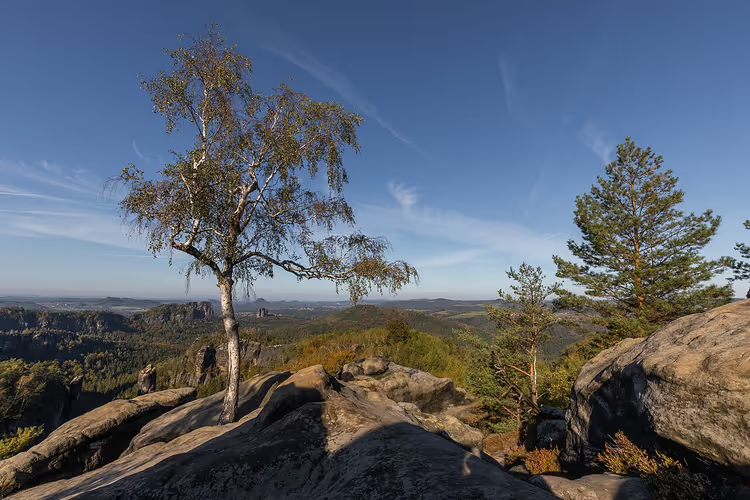 © Markus Trienke · CC BY-SAPhoto: Markus Trienke, CC BY-SA (https://creativecommons.org/licenses/by-sa/2.0), Wikimedia Commons
Lichtenhain Waterfall
The waterfall sits in the Kirnitzschtal gorge and is the first stop on the route from Bad Schandau. A historic tram, the Kirnitzschtalbahn, takes you there. The line has operated since 1898, is 8 km long, gets part of its power from the sun, and in summer the cars run every half hour (as of 09/2026, line description).
The waterfall itself is not high. But the flow is boosted manually: a dam is opened upstream, and the modest stream turns into a roaring torrent. The dam was built more than a century ago for the same tourists.
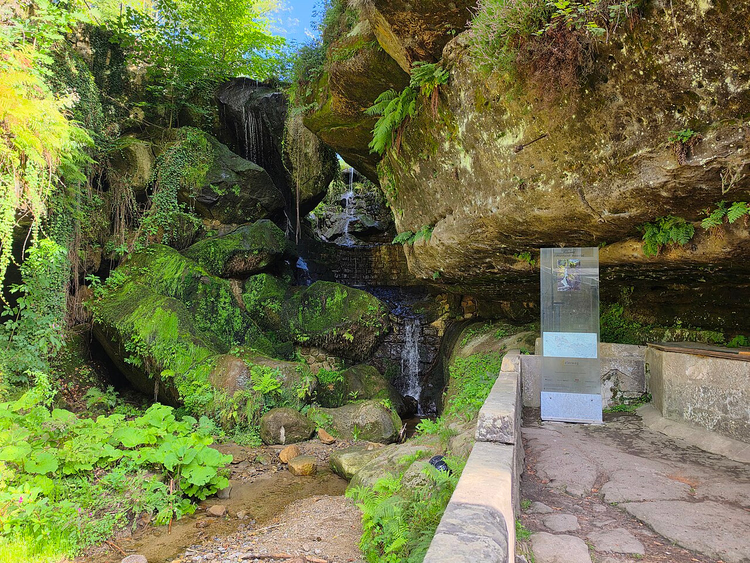
You walk through the gorge along the tram tracks. From the final stop, trails lead to the neighboring rocks and to the Kuhstall.
- How to get there: Kirnitzschtalbahn tram from the Kurpark stop in Bad Schandau (as of 09/2026, tram schedule).
- Who it's for: families with children and anyone who wants a short walk without climbing.
- The catch: the waterfall itself is not high, it's no Niagara.
Bastei
Bastei is considered the most recognizable spot in the park. Its sandstone rocks rise above the Elbe, and a 19th-century stone bridge with seven arches spans between them.
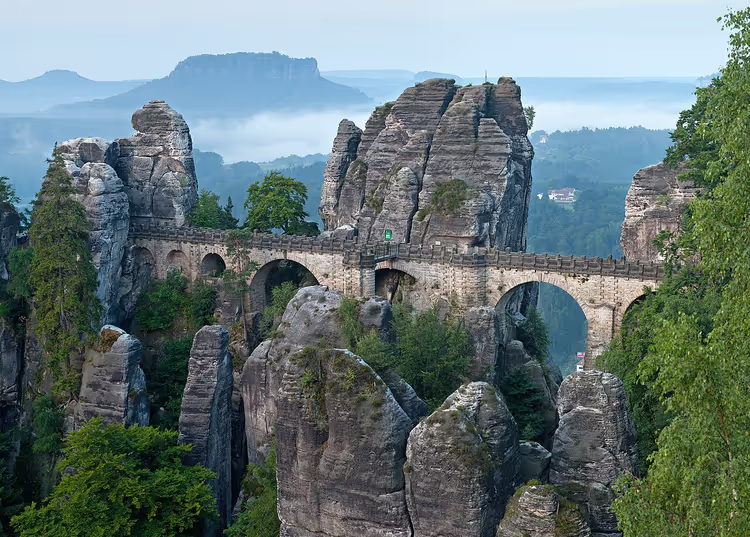 © Thomas Wolf , www.foto-tw.de · CC BY-SAPhoto: Thomas Wolf , www.foto-tw.de, CC BY-SA (https://creativecommons.org/licenses/by-sa/3.0/de/deed.en), Wikimedia Commons
Stairs and viewing platforms lead to the bridge. The climb takes less than an hour, but some sections of the trail are narrow. The Berghotel Bastei and a restaurant are nearby: a convenient place to have lunch with a view of the valley.
- How to get there: train to Kurort Rathen station, then a ferry across the Elbe and a climb following the signs.
- The catch: in summer, by midday the bridge and platforms are crowded. Come in the morning or closer to evening.
Königstein Fortress
Königstein Fortress is considered the largest hilltop fortress in Saxony. Its walls, as tall as a ten-story building, rise directly out of the sandstone. In eight centuries, the fortress was never taken.
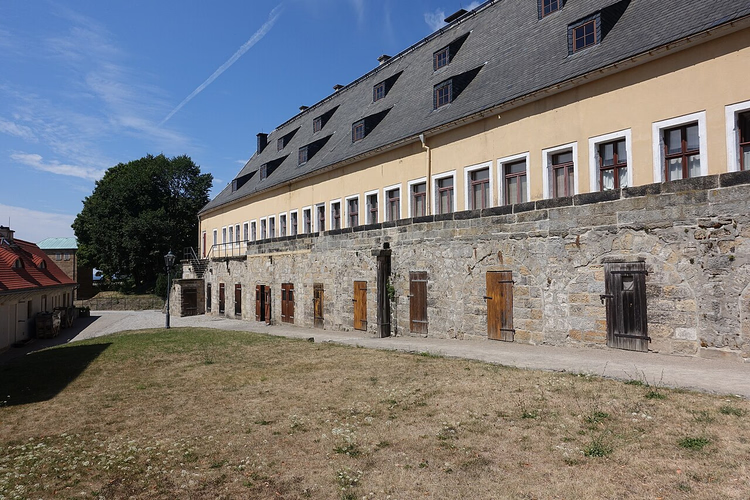
In the 18th century, the barrel war unfolded here. Saxon Elector Augustus II bet the Palatine ruler over whose wine barrel was bigger. The Saxons won and placed a 238,000-liter barrel in the fortress (as of 09/2026, official fortress website). The original has not survived, but the rival's barrel still stands in Heidelberg.
Another story involves the alchemist Johann Friedrich Böttger. He languished in the fortress and, in his search for gold, became the first in Europe to produce white porcelain. That is how Meissen porcelain came to be.
- Price: €17 in the summer season, €15 in winter (as of 09/2026, official source).
- The catch: admission is paid, and touring the fortress takes several hours.
Kuhstall
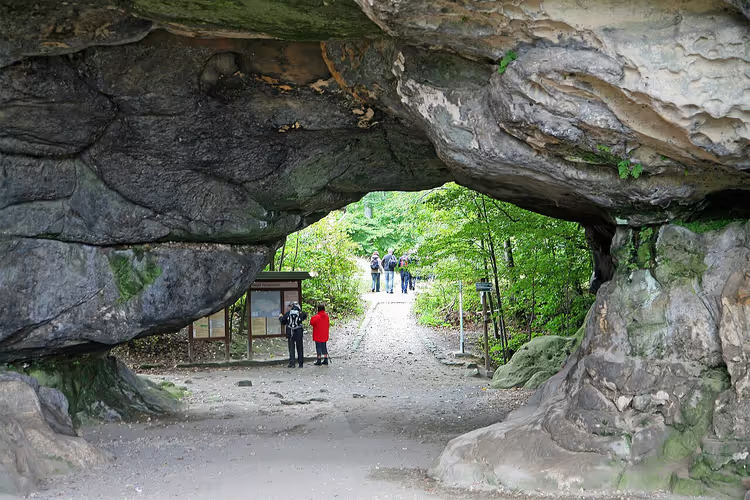
The Kuhstall is a rock arch in the sandstone. The wide arch stands on the trail between the waterfall and the Kleine Lichtensteiner rocks. Nature created it on its own, without human involvement.
 © W. Bulach · CC BY-SAPhoto: W. Bulach, CC BY-SA (https://creativecommons.org/licenses/by-sa/4.0), Wikimedia Commons
According to legend, peasants hid their cows here during the Thirty Years' War. That is where the name comes from: Kuhstall translates as "cow barn."
- How to get there: from the Lichtenhainer Wasserfall stop, head up through the gorge, then follow the marked trail.
- The catch: the climb to the arch goes uphill, and you can't do it with a stroller.
Rathen Rock Theater
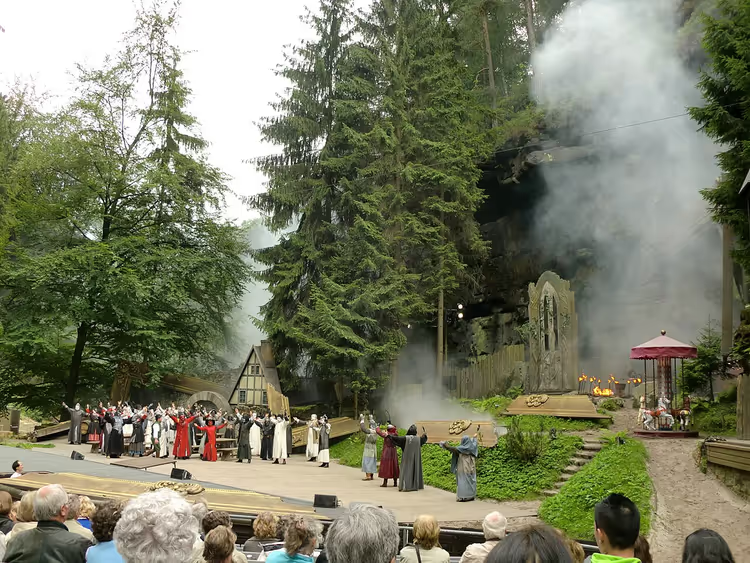
The rock theater in Rathen has operated in the open air for almost a hundred years. The stage is built directly into the sandstone walls, which serve as natural scenery.
 © Derbrauni · CC BY-SAPhoto: Derbrauni, CC BY-SA (https://creativecommons.org/licenses/by-sa/4.0), Wikimedia Commons
The repertoire includes fairy tales by the Brothers Grimm, stories by Wilhelm Hauff, and westerns. Performances run from May through September, almost every day. Tickets are priced in the low double digits; for exact prices and dates, see the Landesbühnen Sachsen schedule.
- The catch: the season is short: the theater is closed from October through April.
Artists' trail
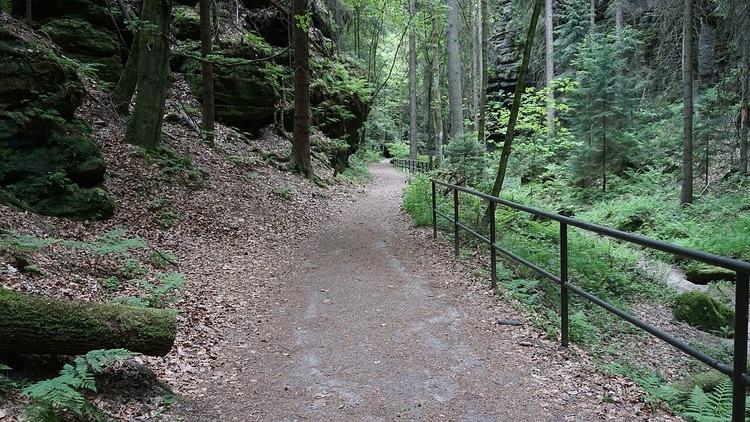
The Artists' Trail (Malerweg) is considered the longest route in the park. It runs for 115 km and is divided into eight stages (as of 09/2026, official Malerweg guide). The trail markings are simple: look for the letter M on rocks and tree trunks.
 © Michal Klajban · CC BY-SAPhoto: Michal Klajban, CC BY-SA (https://creativecommons.org/licenses/by-sa/4.0), Wikimedia Commons
The route was named after the 18th-century artists Adrian Zingg and Anton Graff. They depicted the local rock formations in their paintings and gave the region its name. It's convenient to start from Pirna, but you can also join the trail in other villages.
- The catch: you can't cover 115 km in one day; the route is divided into stages (as of 09/2026, stage plan on the tourist office website).
Tickets and opening hours
Some parts of the park are free, others require a ticket. The fortress changes its schedule by season, so check the hours before your trip. Below is a summary table for September 2026.
Site | Cost | Hours and season |
|---|---|---|
Königstein Fortress | €17 in summer, €15 in winter (as of 09/2026, Schlösserland Sachsen) | daily 9:00-18:00 until November 1, winter 9:00-17:00 |
Rathen Rock Theater | tickets in the low double digits (as of 09/2026, Landesbühnen Sachsen) | performances from May to September |
Kirnitzschtalbahn tram | special fare (as of 09/2026, RVSOE carrier fares) | every 30 minutes in summer |
Bastei and Lichtenhain Waterfall | free entry (as of 09/2026, tourist office) | open year-round |
Fortress tickets are sold online and at the entrance (as of 09/2026, official fortress website). You save time at the ticket office if you book a slot in advance. In winter, some exhibitions close for maintenance, and the ticket price drops.
Don't want to plan the route yourself? Take a ready-made Saxon Switzerland tour: guides run trips to the Bastei from Dresden and Prague.
Tours and tickets
Guided tours, skip-the-line tickets and activities — most offers can be cancelled free of charge.
See offers on GetYourGuideThe widget loads once you give your consent.
Important: the park has protected status. Stay on marked trails, don't light fires, and take your trash with you.
⁉️🤔 Frequently asked questions
How many days do you need for Saxon Switzerland?
One day from Dresden is enough for the Bastei and Königstein Fortress. Give the second day to the Kirnitzschtal gorge with the waterfall, the Kuhstall, and the Rathen Rock Theater. Plan a separate trip for the Painters' Way: its 115 km are divided into eight stages, one per day.
Can you get there from Dresden without a car?
Yes. The S-Bahn S1 runs from the main station to Bad Schandau without transfers. Inside the park, buses, ferries, and the historic Kirnitzschtalbahn tram get you around. A car is only needed for remote gorges and small villages.
How much does Königstein Fortress cost?
A summer ticket costs €17, winter €15 (as of 09/2026). Tickets are sold online and at the entrance. Children and families get discounts under separate rates, which you can find on the official website.
When does the Rathen Rock Theater operate?
Performances run from May to September, almost every day. The stage is built directly into the sandstone walls, so rain can cancel a show. Tickets are in the low double digits; check the Landesbühnen Sachsen schedule for exact dates and prices.
What to see with kids?
Take the Kirnitzschtalbahn tram to the Lichtenhain Waterfall: short route, few climbs. Teenagers will enjoy the hike up to the Bastei and the Kuhstall. If you're heading to the Kuhstall with a stroller, note that the last section goes uphill on steps.
In short: what's worth booking
If you're traveling as a family, start with the Kirnitzschtalbahn tram and the Lichtenhain Waterfall, then add the Kuhstall after lunch. Book rock theater tickets in advance: open-air summer shows sell out quickly.
If you came for hiking, plan stages of the Malerweg or base yourself in Bad Schandau and do day hikes from there.
A car helps if you want to cover several gorges in one day: car rental in Dresden costs more than a ticket, but gives you flexibility with time.

A small editorial team writing guides for independent travel. We travel ourselves, but we haven’t been everywhere, so we check prices, opening hours and how to get there against official sources.