
















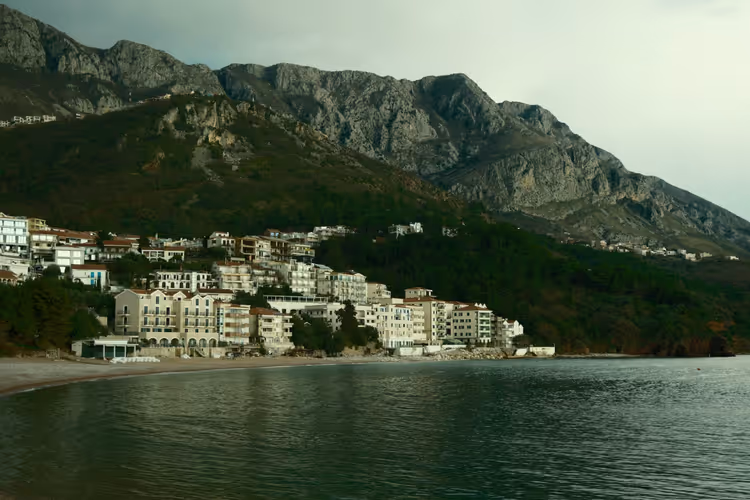
Bulgaria or Montenegro: comparing beaches, prices and season 2026
Bulgaria and Montenegro are among Europe's affordable seaside destinations. Both countries welcome visitors from Germany, Austria, and Switzerland without a visa. Bulgaria is usually cheaper, while Montenegro gets more expensive at the height of the season. Beyond price, the choice depends on what kind of vacation suits you better: wide sandy beaches and water parks, or pebbles, mountains, and old towns above the water.
One rule changed very recently. On January 1, 2026, Bulgaria adopted the euro (European Commission). Now you pay with the same currency in both countries, and you no longer need to worry about exchange rates.
Ad: this article contains affiliate links, we earn a commission if you book through them, at no extra cost to you.
Bulgaria or Montenegro: the essentials in brief
The difference between the two countries is clear from just a few points: getting there, entry, season, beaches, and prices. Start with a quick overview, then read the section that matters most to you.
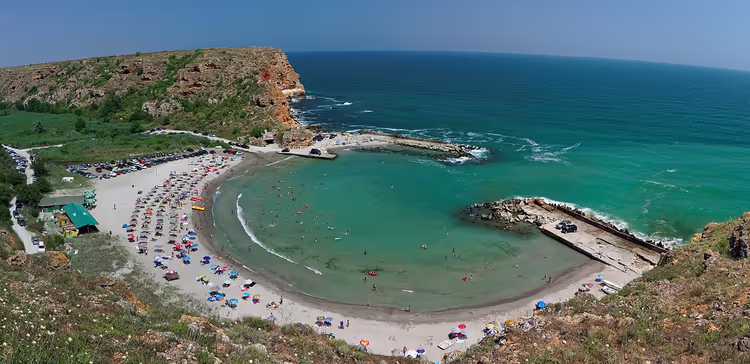 © Dimitar Bachvarov from Bulgaria · CC BY-SAPhoto: Dimitar Bachvarov from Bulgaria, CC BY-SA (https://creativecommons.org/licenses/by-sa/2.0), Wikimedia Commons
💡 In short:
- Bulgaria: sandy beaches, many three- and four-star hotels, full Schengen membership since January 1, 2025 (EU decision on Schengen).
- Montenegro: pebbles and rocks, the Bay of Kotor, no visa required, an ID card is enough (German Federal Foreign Office).
- Entry and currency: verified on 13.09.2026 on the official European Commission website.
Parameter | Bulgaria | Montenegro |
|---|---|---|
Sea | Black Sea, sand on most resorts | Adriatic, pebbles and rocks |
Swimming season | late May - late September | early May - late October |
Currency | euro since January 2026 | euro |
Entry for EU citizens | Schengen, an ID card is enough | no visa required, an ID card is enough |
Hotels | many three- and four-star hotels, inexpensive | more five-star hotels, pricier at the height of the season |
Landscape | flat coastline, water parks | mountains, bay, old towns |
How to get there from Germany and Austria
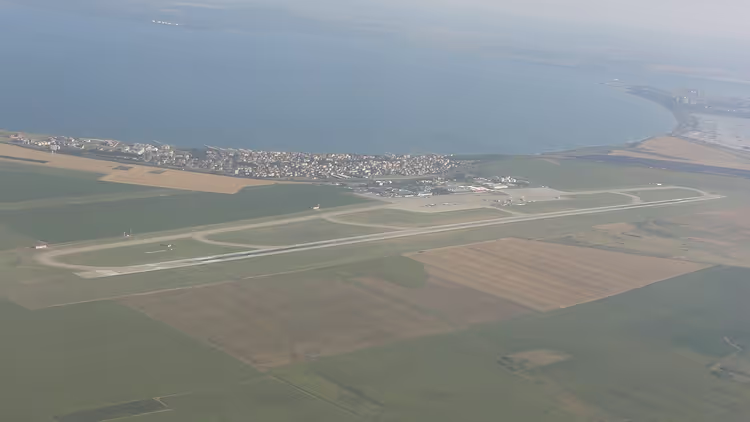 © Roman Toldy · CC BY-SAPhoto: Roman Toldy, CC BY-SA (https://creativecommons.org/licenses/by-sa/3.0), Wikimedia Commons
In season, direct flights to Burgas and Varna depart almost daily from Frankfurt, Munich, Dusseldorf, Vienna, and Zurich. Flights to Montenegro's Tivat and Podgorica from the same cities are shorter, so your journey to the Adriatic will take less time.
Bulgaria has two seaside airports, and the choice depends on your resort. Burgas serves the southern coast: Sunny Beach, Nessebar, Sozopol, Pomorie, and Ravda. Varna handles the north: Golden Sands, Albena, and St. Constantine.
Burgas Airport is 30 km from Sunny Beach, and the drive takes about half an hour (according to the map). From Tivat Airport you can reach Budva in about 25 minutes (according to the map). Buses, taxis, and shared transfers are waiting right outside the terminal.
Tickets in high season get expensive quickly, so it's best to lock in your dates early: compare flights on Kiwi.com. Early booking works just as well here as it does for hotels.
Entry and documents in 2026
Bulgaria is in both the European Union and the Schengen Area. Since January 1, 2025, the country has been a full Schengen member, so internal border controls have been lifted (Council of the EU). Citizens of Germany, Austria, and Switzerland do not need a visa; an ID card is sufficient for the trip.
Montenegro is in neither the EU nor Schengen, but the rules for you are simple. A tourist stay of up to 90 days does not require a visa, and an ID card works as a travel document (according to Auswärtiges Amt).
The country uses the euro as its national currency, although it is not formally part of the eurozone. Customs rules are relaxed: you only need to declare large amounts of cash, and exporting art and historical items is restricted. You can bring alcohol and tobacco within the usual personal-use limits.
Before your trip, get medical insurance: compare insurance options. This is especially important if you are traveling with children or planning active recreation.
When to go
The beach season in Bulgaria opens in late May and closes in late September. The sea warms up by early June; before that, you can sunbathe on the shore and go on excursions. The ski season in Bansko, Borovets, and Vitosha is short and runs roughly from January to March.
Montenegro gives you a longer season. You can swim on the Adriatic coast from the first ten days of May until late October. The water stays warm for the whole six months, and there is little rain in autumn, so October here is often more pleasant than July.
Month | Bulgaria | Montenegro |
|---|---|---|
May | sea still cool | season already open |
June-August | peak season, warm | peak season, hot |
September | velvet season | warm sea, fewer people |
October | season closed | swimming until the end of the month |
That is how the choice looks by season. If you want warm water in autumn, you lean toward Montenegro. If ski weekends in winter matter, pick Bulgaria. The shoulder season in both countries works well for excursions and walks without the summer heat.
Popular resorts
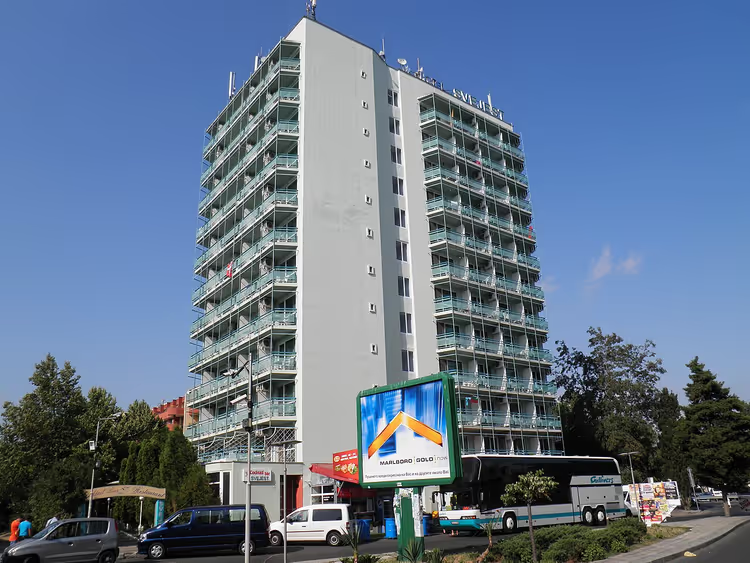 © Mister No · CC BYPhoto: Mister No, CC BY (https://creativecommons.org/licenses/by/3.0), Wikimedia Commons
Beach resorts in Bulgaria keep prices lower, and the hotel selection is wider. Golden Sands, St. Constantine, and Albena have the most developed infrastructure. For clubs, bars, and attractions, you head to Sunny Beach, while a relaxed family holiday awaits you in Ravda, Sveti Vlas, and Elenite.
Golden Sands and Albena are large complexes with water parks and wide beaches. Sunny Beach holds a reputation as the country's liveliest resort: bars and clubs stay open until morning. For excursions and old towns, you go to Sozopol and Nessebar.
Montenegro is compact: you can drive the entire coast in one day. The Budva Riviera is home to Budva, Becici, Sveti Stefan, Petrovac, Rafailovici, and Milocer. The Ulcinj Riviera is known for Ulcinj and the island of Ada Bojana.
On the Herceg Novi Riviera, Herceg Novi stands out, while Tivat sits on the shore of the Bay of Kotor. Przno on the Budva Riviera gives you secluded coves five minutes from Budva (on the map). Both countries work well for a first seaside holiday. You just need to decide what matters more: a long sandy stretch or a rocky shore with mountain views.
Entertainment and festivals
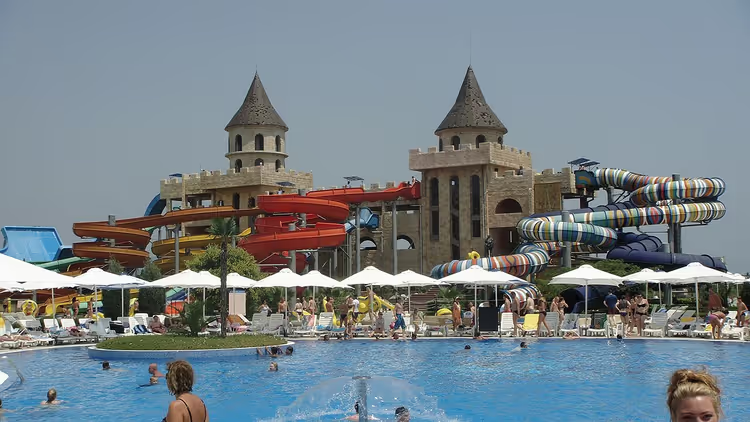 © ARKADIUSZ MARKIEWICZ · CC BY-SAPhoto: ARKADIUSZ MARKIEWICZ, CC BY-SA (https://creativecommons.org/licenses/by-sa/3.0), Wikimedia Commons
A summer holiday in Bulgaria means beach plus water activities. The country has large water parks: Aqualand in Plovdiv, Aqua Paradise in Nessebar, Aqua Planet in Primorsko, Action on Sunny Beach, Aquamania in Albena, and Aquapolis in Golden Sands. They open in late May and close in mid-September.
For adrenaline, you head to Kokolandia park in Sofia, and with kids, stop by the capital's zoo and the Happy Land family park near Varna. Bulgarians love holidays and celebrate them in a big way: the May Rose Festival, the Day of Bulgarian Enlightenment in late May, and the Day of the People's Awakeners in early November.
Montenegro answers with diving, wine, and gastronomic tourism. There are just as many festivals: the blueberry festival in Plav, the film festival in Herceg Novi, the honey festival in Berane, and the gastronomic celebration in the village of Njegusi. In late August, the farewell to summer takes place in Petrovac, along with the Kotor Carnival.
Excursions and sights
 © Alexander Murvanidze · CC BY-SAPhoto: Alexander Murvanidze, CC BY-SA (https://creativecommons.org/licenses/by-sa/3.0), Wikimedia Commons
In Bulgaria, sightseeing tours of Sofia, Plovdiv, and Burgas await you. A photo walk through old Nessebar and a trip to Sozopol deserve a separate day. Nature lovers head to the Strandzha Nature Reserve, home to the so-called "kissing" stones and waterfalls.
Some routes take a full day, so bring comfortable shoes and extra water. It is easier to book tickets and a guide in advance: find excursions on GetYourGuide.
Montenegro is richer in sights, and there are more routes here. A walk through the old town in Budva, a trip to Lake Skadar, and a visit to Lovcen National Park are musts. Do not miss the Bay of Kotor, Ostrog Monastery, Cetinje, and the "maritime" capital of Kotor.
Add to that list Zeta Athos, the Cetinje Monastery, and Dajbabe, as well as the country's wine roads and a boat trip from Bar. That way you cover both history and nature in a single trip.
Hotels and prices per night
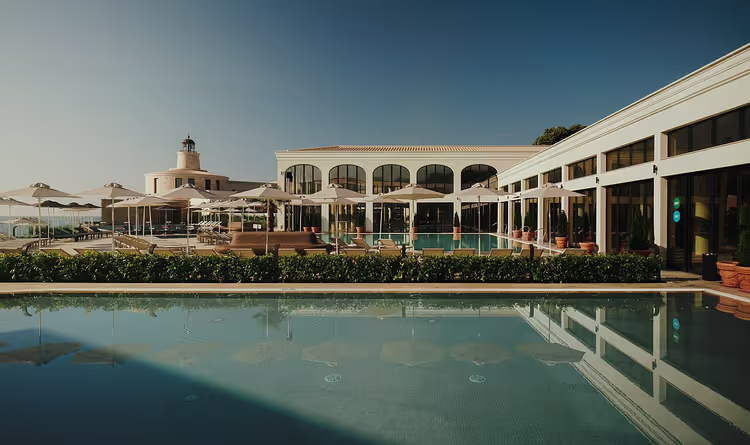
Most Bulgarian hotels were built in the second half of the last century, but they are now being actively renovated. Many hotels get a cosmetic refresh before the start of the season.
The bulk of the stock consists of three- and four-star hotels with breakfast, while five-star hotels at the resorts are still fewer in number. New high-category hotels open in the country every year because the number of affluent guests is growing. Sanatoriums deserve special attention: the most famous ones are located near Burgas and Pomorie. In Sofia you can also stay at a budget hostel.
In Montenegro you have a wider choice of five-star hotels, especially in Sveti Stefan, Budva and Kotor. You will find budget-friendly stays in Ulcinj, and instead of a hotel you can always rent a villa or an apartment. Owners offer discounts for long-term bookings.
Prices per night here are noticeably lower than in Western Europe, but they rise in July and August. It is convenient to compare options across both countries on Trip.com: compare hotels in Bulgaria and Montenegro on Trip.com. Enter your dates in advance, otherwise in peak season you will only see what is left.
Service and comfort level
In Bulgarian hotels you get a consistent European standard without luxury. The room has everything you need, including a safe, while a minibar is found only in expensive hotels. Tipping is customary here, but you decide the amount yourself based on the quality of service. Staff in Bulgaria are geared toward foreign guests, so you will hear English or German almost everywhere.
Tourist service in Montenegro lags behind in places. This applies to room amenities, the list of services and the upkeep of the grounds. Four stars here and in Western Europe mean different things. On the other hand, a clean room, courteous service and a good buffet are guaranteed in any case.
Tipping in Montenegro is appreciated, but remains at your discretion.
Tour prices
By Western European standards, a vacation in both countries remains budget-friendly.
The trip costs the most at the height of the beach season and during the Christmas holidays. Last-minute tours and early booking will help you save.
Food: breakfast or all inclusive
Both Bulgaria and Montenegro are characterized by the bed-and-breakfast model. This option is convenient if you combine the beach with excursions: there is no problem finding food here, and restaurants, cafes and supermarkets are everywhere.
Families with children sometimes choose half board or an apartment with a kitchen so they can cook for themselves. There are few hotels with an all-inclusive plan in either country, but you can find a suitable one if you want. It is worth comparing what works better for you: dinner at the hotel or dinner in town.
Beaches: sand versus pebbles
Bulgaria's main resorts maintain well-equipped free beaches, so the shore gets crowded in season. Many beaches are marked with the Blue Flag, the European sign of clean water. In 2025, 30 beaches and marinas on the Bulgarian coast received the designation (Blue Flag).
Beach | Features |
|---|---|
Sunny Beach | The longest on the coast. Fine yellow sand, gentle entry. Suitable for children, but noisy in summer. |
Albena Beach | The widest on the Bulgarian Black Sea coast. Soft sand, clean shoreline, shallow water. |
Golden Sands Beach | Depth increases quickly. A young crowd, less suitable for children. |
Tsarevo and Ahtopol beaches | Clean, sandy, uncrowded. Quiet relaxation, fewer entertainment options. |
Obzor Beach | Well maintained, warm sea, gradual entry. Affordable infrastructure prices. |
Montenegro's coastline stretches for 295 km, of which 72 km are beaches (according to Visit Montenegro). Here you will find sandy and pebbly, wide and narrow, wild and public beaches.
Beach | Features |
|---|---|
Guvance, Budva | Pebbly, with a sandy entry. Tiny, known for picturesque sunsets. |
Mogren, Budva | Fine pebbles, one of the most romantic beaches in the country. Private, a small fee is charged in season. |
Sveti Nikola, Budva | Warm clean sea, rocky shore. Full resort infrastructure. |
Jaz, Budva | Long sandy beach, gentle entry, azure water. There is a nudist area. |
Slovenska Beach, Budva | Pebbly, the most crowded and noisy. Plenty of entertainment for children and adults. |
Herceg Novi Riviera beaches | Rocky and stony, very picturesque. Sea urchins can be found. |
Red Beach, Bar | A mix of sand and coral, unusual scenery. Health tourism. |
Ulcinj Riviera beaches | Gray basalt sand with healing properties. |
Ada Bojana Beach | Fine shell and coral sand, picturesque landscapes. |
In Bulgaria beaches are free and well equipped, so you will find loungers and umbrellas almost everywhere. In Montenegro the shore is often rocky, and water shoes are worth bringing. Many Adriatic beaches are separated from each other by rocks, with stairs leading down to them, which is worth keeping in mind if you have a stroller.
This is the main difference. Sand with a gentle entry is more convenient for children, while pebbles and rocks give you cleaner water and beautiful views.
Vacation with children
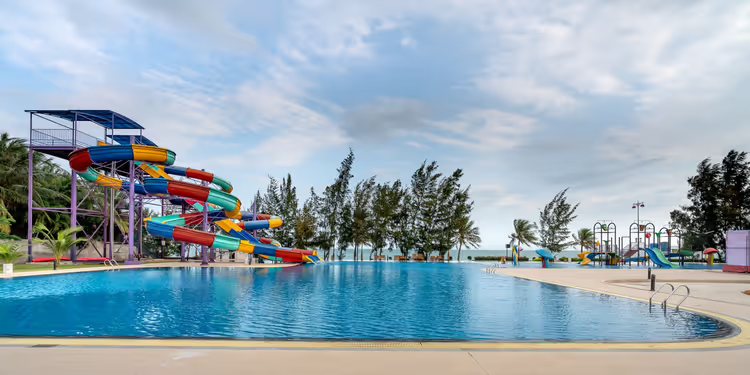
Bulgaria is one of the most popular destinations for an affordable family vacation. The beaches have water attractions, children's and sports playgrounds, cafes and snack bars. Water parks operate only in high season. Hotels will provide a crib, and restaurants a high chair.
Children's menus are far from universal, so many parents book apartments with a kitchen. In Montenegro children are also comfortable: most beaches are suitable for swimming, and the infrastructure is adapted for families. The best place for a family vacation is considered to be Petrovac, with its wide clean beach, long promenade and convenient hotels.
Shopping and souvenirs
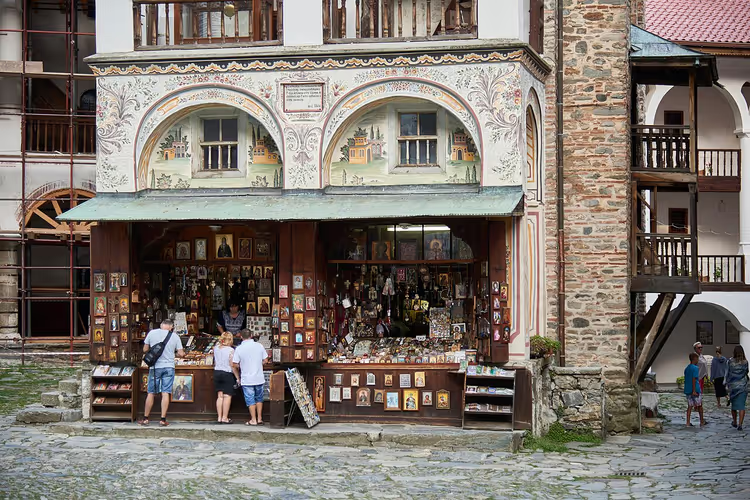 © Wouter Hagens · CC BY-SAPhoto: Wouter Hagens, CC BY-SA (https://creativecommons.org/licenses/by-sa/4.0), Wikimedia Commons
Most shops and shopping centers in Bulgaria are open seven days a week, but some places still close on Saturday and Sunday in the old style. Popular food souvenirs include rakia, rose liqueur, anise-flavored mastika, Turkish delight and dry-cured lukanka sausage. For practical items, you can bring back rose oil, Bulgarian cosmetics, ceramics and leather shoes. Prices for leather, silver and ceramics are lower than in Western Europe, especially during major sales.
Well-known shops are concentrated on Vitosha Boulevard and Pirotska Street in Sofia, on the main shopping promenade in Varna and on Knyaz Alexander Street in central Plovdiv. You can easily combine shopping with sightseeing in the old town if you do not want to spend a separate day on it.
In Montenegro shops open early in the morning and close late in the evening, and 24-hour grocery stores are available in all cities. People bring home resort-themed clothing, woven goods, Vranac wine, pršut and olive oil. Prices for wine and oil here are lower than in Germany and Austria.
The best shopping awaits you in Bar. New collections of clothing, shoes and jewelry are brought there by ferry directly from Italy, and they cost less than in Italian retail. It is convenient to compare prices on the spot: retail in Ulcinj and Bar is cheaper than in Budva and Kotor.
Resorts on the map
Both countries are compact, so it is convenient to view the resorts on a single map. Mark the points that interest you and plan your route between them in advance. That way you will not spend a day traveling between two distant cities.
Resorts of Bulgaria and Montenegro
Places on the map
- Burgas Airport Southern coast, 30 km to Sunny Beach
- Varna Airport Serves the north: Golden Sands, Albena, St. Constantine
- Tivat Airport About 25 minutes by car to Budva
- Podgorica Airport Montenegro's second airport, flights from Germany and Austria
- Golden Sands Large complex with a water park, the depth increases quickly
- St. Constantine and Helena Resort with developed infrastructure north of Varna
- Albena The widest beach on the Bulgarian Black Sea coast, Aquamania water park
- Sunny Beach The country's liveliest resort, bars and clubs until morning
- Ravda Relaxed family holidays near Nessebar
- Sveti Vlas A quiet resort for a family holiday
- Elenite Gated resort village for a peaceful stay
- Sozopol Old town in the south, a day trip from Burgas
- Nessebar Old town for a photo walk, near Aqua Paradise water park
- Budva Centre of the Budva Riviera, the old town and main beaches
- Bečići Budva Riviera resort a couple of kilometres from Budva
- Sveti Stefan Islet-hotel, a choice of five-star hotels here
- Petrovac Best place for a family holiday: a wide beach and promenade
- Rafailovići Fishing village on the Budva Riviera
- Miločer Resort next to Sveti Stefan
- Pržno Secluded coves five minutes from Budva
- Ulcinj The cheapest holiday in the country, basalt sand
- Ada Bojana Fine shell and coral sand, picturesque landscapes
- Herceg Novi Herceg Novi Riviera, home to a film festival
- Tivat Herceg Novi Riviera resort near the airport
- Aqua Paradise Water Park Large water park near Nessebar
- Aqua Planet Water Park Water park in Primorsko on the southern coast
- Action Water Park Water park at Sunny Beach
- Aquamania Water Park Water park at the Albena resort
- Aquapolis Water Park Water park at Golden Sands
- Kokolandia Park Rope park in Sofia for those seeking adrenaline
- Sofia Zoo The capital's zoo, an option for a trip with children
- Strandzha Nature Park Kissing rocks and waterfalls, a full-day route
- Lake Skadar A must-do day trip from Budva or Podgorica
- Lovćen National Park Mountain park above Kotor and Budva
- Bay of Kotor The country's main scenery, old towns line the bay
- Ostrog Monastery A monastery built into a cliff, one of Montenegro's main shrines
- Cetinje The country's historical capital
- Cetinje Monastery Monastery in the historical capital
- Kotor The country's maritime capital, old town deep in the bay
- Tsarevo Clean sandy beaches with few people, fewer amenities
- Ahtopol Quiet sandy shore in southern Bulgaria
- Obzor Beach Well-kept beach with a gentle entry and affordable prices
- Guvanche Budva's miniature pebble beach, known for its sunsets
- Mogren Fine pebbles, one of the country's most romantic beaches
- Jaz Long sandy beach with a shallow entry and a nudist area
- Slavyanski Beach Budva's busiest beach, plenty of entertainment
- Red Beach A mix of sand and coral in Bar, wellness tourism
⁉️🤔 Frequently asked questions
Where is it cheaper to fly from Germany, Bulgaria or Montenegro?
Bulgaria is usually cheaper. There are more direct flights to Burgas and Varna, and hotels cost less. Montenegro is more expensive in high season, especially in Budva and Kotor. If you lock in your dates early and fly outside of July, the price difference for you will shrink.
Do I need a visa for Bulgaria and Montenegro?
Citizens of Germany, Austria, and Switzerland do not need a visa for either country. You enter Bulgaria with a national ID card because the country is in Schengen. For Montenegro, a national ID card is also enough, and the visa-free stay is limited to ninety days (according to Auswärtiges Amt).
Where is the water warmer for swimming in the fall?
In Montenegro. The Adriatic coast welcomes you from early May to late October, and the water stays warm throughout that period. In Bulgaria, the season closes at the end of September, so you won't be swimming there in October. For the shoulder season, the Adriatic is the better fit.
Where are the beaches better suited for children?
Bulgaria has many sandy beaches with a gentle slope into the water, such as Sunny Beach and Albena Beach. In Montenegro, Petrovac handles family vacations with its wide beach and promenade. For toddlers, sand is usually more convenient than pebbles, while pebbles give adults clearer water.
What is cheaper: a hotel in Bulgaria or an apartment in Montenegro?
A three- or four-star hotel in Bulgaria is often cheaper. Apartments in Montenegro are a good deal if you're traveling as a family or for a longer stay. Hosts give discounts for long bookings, and having your own kitchen cuts food costs for the whole family. Calculate the total trip cost, not the nightly rate.
In short: what to book
If you're traveling with kids, go for Bulgaria's sandy resorts: Sunny Beach or Albena. If you want the sea to stay warm until late October and a short trip, choose Montenegro and the Budva Riviera. If you want to save money, fly to Bulgaria in June or September and book your accommodation early. In both countries you pay in euros, which simplifies things.

A small editorial team writing guides for independent travel. We travel ourselves, but we haven’t been everywhere, so we check prices, opening hours and how to get there against official sources.