
















Beach holidays in Tunisia: 4 resorts and swimming season
Four resorts in Tunisia offer four different ways to enjoy a seaside vacation.
Hammamet suits diving and a younger crowd, Sousse stays up late, Mahdia offers quiet and a white fortress, and on Djerba the swimming season lasts the longest. The coastline here stretches for hundreds of kilometers along the Mediterranean, so the climate varies noticeably from one resort to another.
The swimming season runs from June through October: in August the water warms up to 27 °C (as of 2026, Tunisia's tourism portal). Two things determine your choice of resort: the month of your trip and what you want to do by the sea.
Below we break down the swimming season by month and four resorts with prices, beaches, and honest catches.
Ad: this article contains affiliate links. We earn a commission if you book through them, at no extra cost to you.
Swimming season: when to go to Tunisia
💡 In short:
- Plan your trip for June or September: the sea is warm, while crowds and prices are lower.
- You can swim from June through October, and from July through September the water stays above 25 °C.
- Rain is rare on the resort coast; most of it falls from October through March.
Tunisia is divided into three climate zones. The northern coast near Tunis resembles the typical Mediterranean with rainy winters. The resort coast, which includes Hammamet, Sousse, and Djerba, is warmer and drier, and further south the Sahara begins.
Rain is rare on the resort coast: the Sousse area gets about 335 mm of precipitation per year, while Djerba gets only about 200 mm. Most of it falls between October and March.
For the beach, water matters more than air. The sea remains suitable for swimming from June through October, and from July through September it stays above 25 °C.
Month | Daytime air | Sea | Crowds and prices |
|---|---|---|---|
April | 22 °C | 16 °C | off-season, good rates |
May | 25 °C | 19 °C | sea still cool |
June | 29 °C | 23 °C | demand rising |
July | 32 °C | 26 °C | peak, expensive |
August | 33 °C | 27 °C | hottest and busiest |
September | 30 °C | 27 °C | warm sea, fewer people |
October | 26 °C | 24 °C | end of swimming season |
November | 22 °C | 21 °C | cheap and quiet |
Figures are for the coast of Hammamet and Sousse, as of 09/2026, monthly temperature table.
If you want a compromise between weather and price, choose June or September. In these months the water is warm, and hotels cost noticeably less than at the August peak.
1. Hammamet: diving and nightlife
Hammamet sits on the Cap Bon peninsula, about an hour's drive from the capital. People come here for two things: diving and nightlife.
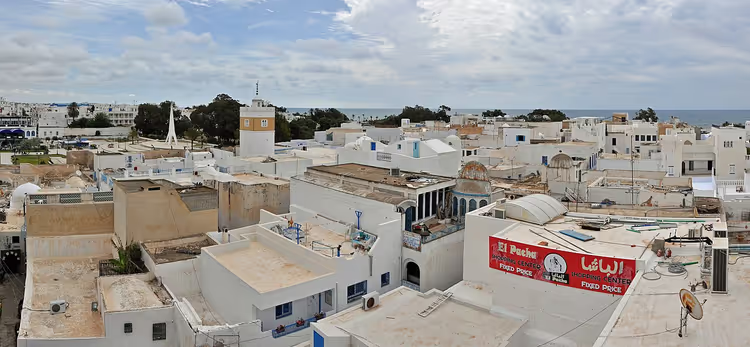 © Marc Ryckaert ( MJJR ) · CC BYPhoto: Marc Ryckaert ( MJJR ), CC BY (https://creativecommons.org/licenses/by/3.0), Wikimedia Commons
The seabed off Hammamet consists of sandbanks, small reefs, and several shipwrecks. Dive centers at Port Yasmine marina take beginners on introductory dives (as of 09/2026, diving-tunisia.com). Experienced divers find the wrecks more interesting.
In the evening, life shifts to Yasmine Hammamet: restaurants, bars, and the waterfront promenade. Hotels in the area sit close to the beach, so you don't need transport.
- Who it's for: younger travelers and couples who want diving and evening bars.
- The catch: Hammamet is known as a youth resort; evenings near the marina are noisy.
- find a hotel in Hammamet on Trip.com
2. Sousse: the coast's main resort
Sousse is the country's most popular resort. It has more hotels and restaurants than anywhere else on the coast, and prices suit both budget and premium vacations.
The beach in Sousse is long and sandy, with most hotels lined up along it. The old town is walled: inside you'll find the ribat and the Great Mosque of Sousse.
The catch: in late summer, jellyfish drift onto the beaches of Sousse and Monastir. Ask about this at reception in advance.
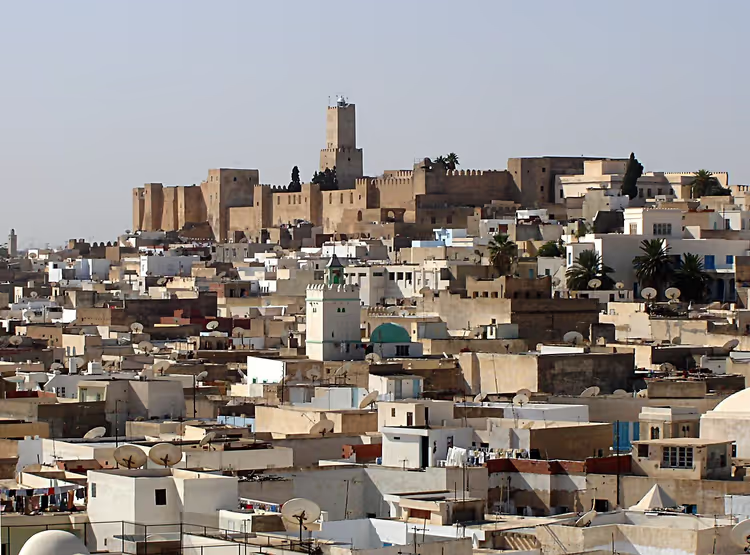 © BishkekRocks 15:01, 29 December 2005 (UTC) · CC BY-SAPhoto: BishkekRocks 15:01, 29 December 2005 (UTC), CC BY-SA (http://creativecommons.org/licenses/by-sa/3.0/), Wikimedia Commons
Who it's for: families and couples who want a wide choice of hotels and a lively waterfront. Not for: those looking for a secluded beach far from other people.
3. Mahdia: a quiet town with history
Mahdia sits on a narrow peninsula that juts into the Mediterranean Sea. In the 10th century the city was the capital of the Fatimid state (as of 09/2026, etunisie.net).
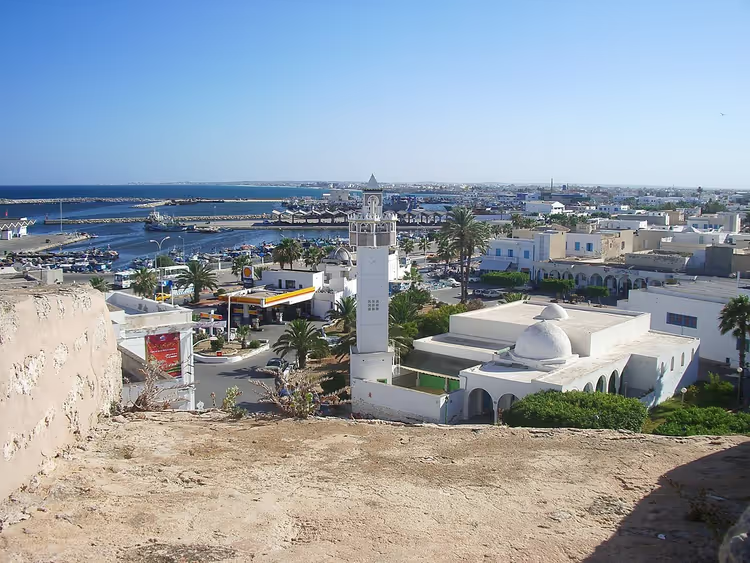 © Jaume Ollé · CC BYPhoto: Jaume Ollé, CC BY (https://creativecommons.org/licenses/by/3.0), Wikimedia Commons
The old town is entered through a single land gate, Skifa el Kahla. Beyond it begin narrow white streets that end at the Borj el-Kebir fortress. Nearby rises the Great Mosque of Mahdia.
Mahdia's beaches are considered some of the best in the country: white sand, turquoise water, and few people. The tourist zone is well developed, so it's easy to come here with children.
- Who it's for: a quiet getaway, couples, and families with children.
- The catch: there's little entertainment, and for nightlife you'll have to go to Sousse.
- Mahdia hotels on Trip.com
4. Djerba: an island with a warm sea
Djerba is a separate island in the south of the country with direct charter flights. The sea here is 1-2 °C warmer than in the north, so the swimming season lasts longer.
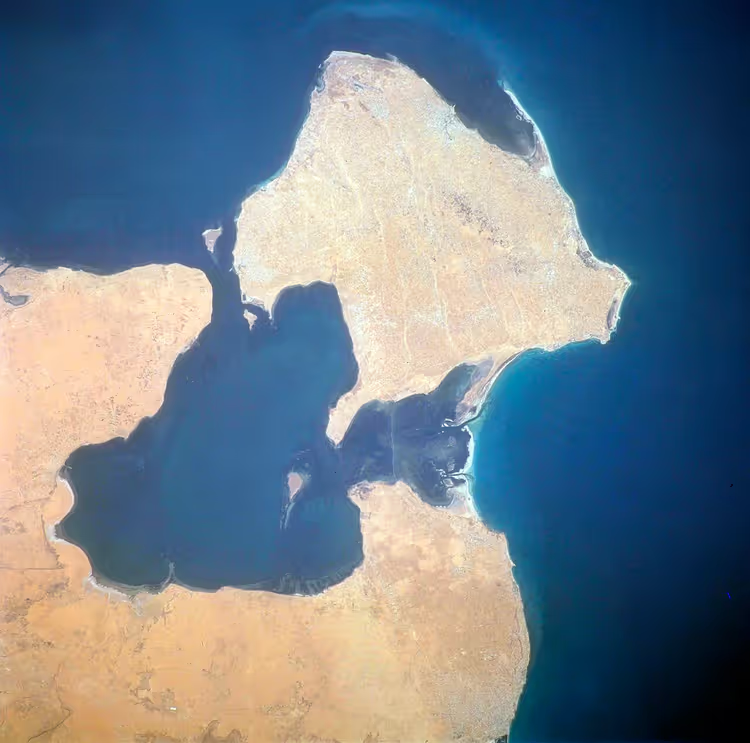
The island's history is visible in its buildings. The El Ghriba synagogue is considered one of the oldest in the world (as of 09/2026, description of the El Ghriba synagogue), and the Hafsid fort Borj El Kebir was built in 1432. In the village of Guellala they make pottery, and at the Houmt Souk market they sell carpets.
The island has the driest and sunniest climate in the country: there's sun here even in winter, and rain is rare.
- Who it's for: those who want to swim longer and add some history to their beach time.
- The catch: in winter the sea is still cool, just like everywhere else in the country.
- find accommodation on Djerba on Trip.com
How to get to Tunisia's resorts
The main gateway to the resorts is Enfidha-Hammamet Airport (NBE) on the A1 highway. According to carthagemagazine.com, it lies about 40 km from Hammamet, 50-60 km from Sousse, and about 85 km from Monastir (as of 09/2026).
Djerba has its own airport, Djerba-Zarzis. For Mahdia and Sousse, Monastir Habib Bourguiba is convenient, and Tunis-Carthage works for the northern areas.
The easiest way to reach your hotel is with a pre-booked transfer at a fixed price or a taxi from the airport. There are almost no regular buses right at the terminal, so don't count on public transport with a suitcase.
⁉️🤔 Frequently asked questions
When does the beach season start in Tunisia?
Swimming is comfortable from June through October, with peak warmth in August, when the sea heats up to 27 °C. In May and November the water is cooler, but you can still sunbathe. If both weather and price matter to you, choose June or September.
Where is the warmest sea in Tunisia?
Further south, on Djerba and around Zarzis: the water there is 1-2 °C warmer than off Hammamet or Sousse. That's why the swimming season on the island feels longer, and winter is milder than on the northern coast. For a warm sea in the shoulder season, Djerba is the best choice.
Which resort to choose for a vacation with kids?
For a quiet vacation, Mahdia is a good fit: white sand, a gentle entry into the water, and little noise. Sousse is more convenient because it has more hotels and entertainment within walking distance.
Which resort to choose for diving?
Hammamet, where dive centers operate in the Port Yasmine marina. A trial dive usually takes half a day; check the schedule and price at the center itself.
Can you swim in Tunisia in winter?
No, in winter the sea cools to 15-16 °C, and only the hardy go swimming. The air, however, stays around 17-18 °C, which works well for walks and excursions. Accommodation is cheaper in winter, but some beach hotels scale back their services.
In short: what to book
Tunisia suits almost any scenario; the only question is the resort and the month.
- If it's your first trip: choose Sousse, where hotels and logistics are easiest.
- If you're going for diving: choose Hammamet.
- If you're traveling with family and want quiet: choose Mahdia.
- If you want a longer swimming season: choose Djerba.
Book your hotel in advance: in July and August demand and prices peak, and good beachfront options get snapped up as early as winter. see hotels on the Tunisian coast

A small editorial team writing guides for independent travel. We travel ourselves, but we haven’t been everywhere, so we check prices, opening hours and how to get there against official sources.