
















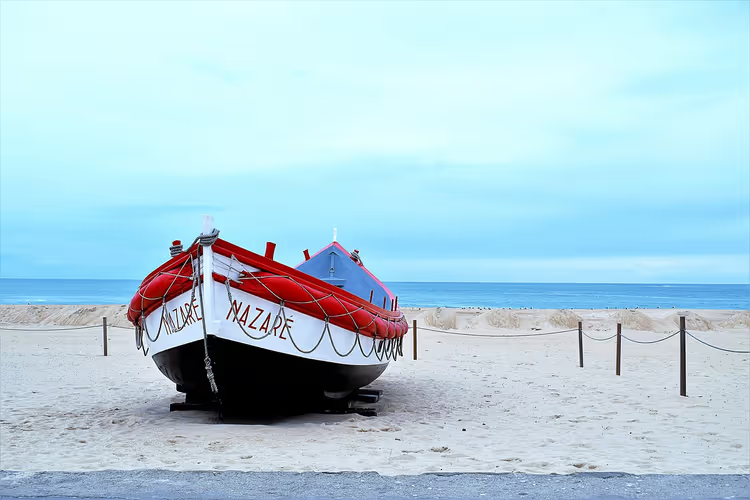
Portugal by month: when to go for beaches, surfing and cities
Portugal is small, but the climate varies noticeably within the country. The north is cooler and rainier, the south is warmer and drier.
On average, there are about 3,000 hours of sunshine per year, and winters are mild (according to Portugal's official tourism portal). Most of the rain falls in late fall and winter (according to the Portuguese Institute for Sea and Atmosphere, IPMA).
The short answer for your trip: late April, May, September, and the first half of October. During these months there is no exhausting heat, rain is rare, and the vineyards and cities look their best.
Ad: this article contains affiliate links, we earn a commission if you book through them, at no extra cost to you.
Best time to visit Portugal
💡 In short:
- Late April, May, September, and the first half of October work well for trips across the whole country.
- For a beach vacation in the south, go in July or August, but the water stays cool: around +20-21 °C (according to the IPMA sea surface temperature map).
- Surfing for beginners: from April to October. Experienced surfers will find winter waves more interesting, from November to March.
- Climate and seasonality: 09/2026, checked against the Visit Portugal climate page.
Late spring and early fall offer the best balance of weather and crowds. The heat has not yet reached the inland areas, the ocean is as warm as it gets, and the lines at viewpoints are shorter than in summer.
In May, the vineyards turn green: this is one of the main attractions of the local landscapes. By October, the foliage turns crimson, and the Douro River valley looks even more striking. If you are coming for photos, plan your trip around these weeks.
 © Jules Verne Times Two · CC BY-SAPhoto: Jules Verne Times Two, CC BY-SA (https://creativecommons.org/licenses/by-sa/4.0), Wikimedia Commons
Late spring and early fall are also convenient for walking around authentic Portuguese towns. You will be comfortable taking in both the mountain ridges with their scenic landscapes and the sunset over the ocean. There are almost no crowds at this time.
Weather by region: north, center, and south
In the north and center, summer is milder: temperatures stay around +25 °C, it is often windy, and there is occasional drizzle (according to the Visit Portugal regional weather summary). In winter, it is cool and rainy here, and the Serra da Estrela mountains have snow: this is the highest point in mainland Portugal.
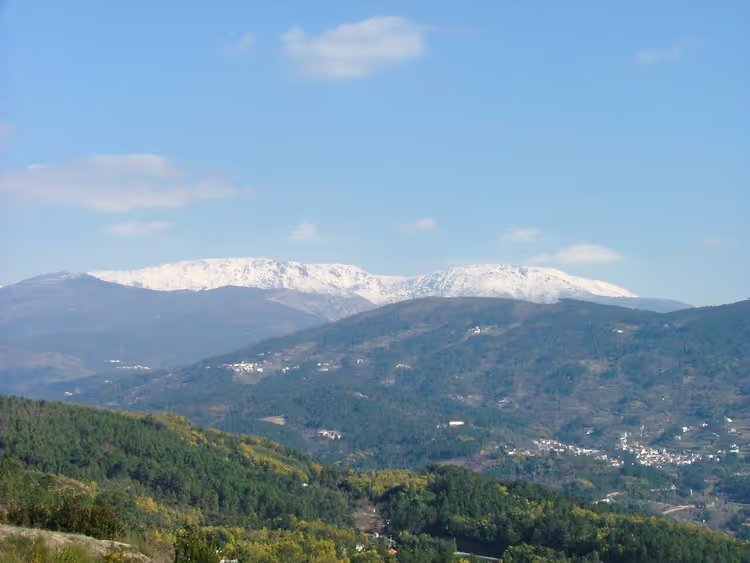 © pt:Usuário:Marco.veloso · CC BY-SAPhoto: pt:Usuário:Marco.veloso, CC BY-SA (http://creativecommons.org/licenses/by-sa/3.0/), Wikimedia Commons
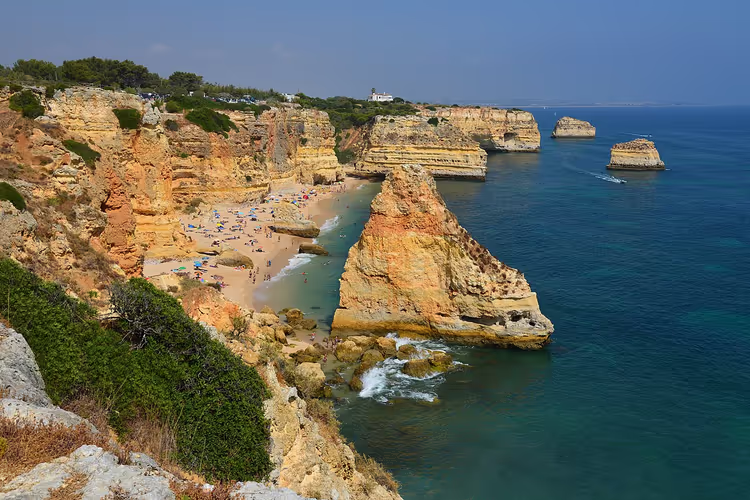
In the south, in the Algarve and Alentejo, it is dry and hot: around +30 °C during the day, the sky is almost always clear, and rain in summer is a real rarity (according to IPMA climate normals). This is where you will go for beaches. We have put together the best beaches in the Algarve in a separate guide.
Inland, the heat is harder to bear. In the center of the country, for example in Mangualde, summers are stuffy and it can go weeks without rain. Rivers, lakes, and natural pools, of which there are plenty here, come to the rescue.
Madeira is mild all year round: around +24 °C in summer and +19 °C in winter. On the Azores, the air and water are also comfortable all year, but rain falls more often (according to the island climate overview from Visit Portugal).
If your vacation falls in summer
The ocean off the Portuguese coast is cold all year round. Even in July and August, the water from Lisbon southward warms only to +20 °C (according to IPMA water temperature data). Cooling off in the heat is pleasant, but you will not be able to splash around for hours like in a warm sea.
 © Tobi 87 · CC BY-SAPhoto: Tobi 87, CC BY-SA (https://creativecommons.org/licenses/by-sa/3.0), Wikimedia Commons
Near the ocean, the air is more humid, so the heat is easier to bear.
North of Lisbon, and especially near Porto, the Atlantic is even colder, and the beaches are better suited for surfing than for swimming. For those who do not handle heat well, the weather here is comfortable.
Near Porto, by Aveiro, there is a long coastline with sandy beaches: we have a separate guide about this city and its surroundings. Lisbon and Porto are full of people all year round, regardless of the season.
In summer, excursions and boat trips get booked up in advance, especially in the Algarve. Check available slots ahead of time: tours and tickets on GetYourGuide.
Swimming or surfing: the water in the Atlantic
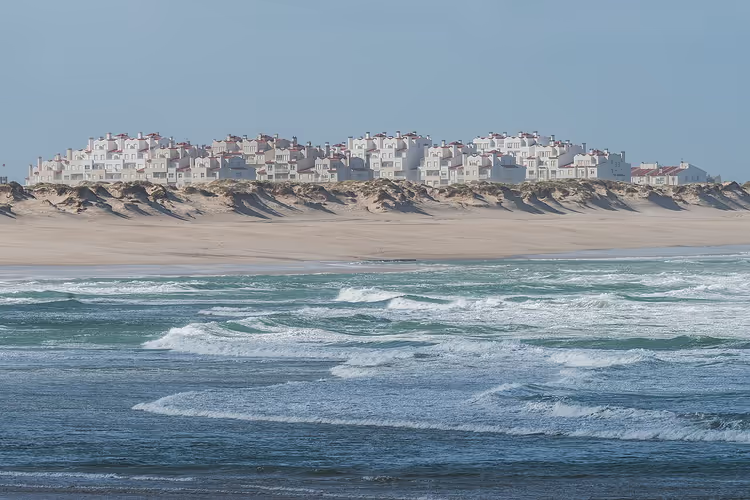
Surfing in Portugal is possible all year round, but conditions depend on the season. Beginners are more comfortable from April to October: the waves are gentler, the water is warmer, and schools operate at all popular spots. Experienced surfers find it more interesting from November to March, when powerful Atlantic swells arrive. A selection of spots is available in the article about the best places for surfing.
 © Bengt Nyman · CC BY-SAPhoto: Bengt Nyman, CC BY-SA (https://creativecommons.org/licenses/by-sa/4.0), Wikimedia Commons
Factor in the wind: on the west coast it picks up in the afternoon, so take lessons in the morning. A wetsuit is needed almost year-round; without one, the water is cold even in August. For calm swimming, choose sheltered bays in the south, protected from the ocean.
Is it worth going outside the tourist season
November and December are considered the rainiest months (according to IPMA weather observations). The weather within the country varies greatly: while it rains for weeks in the center, the south is sunny and warm, and the rains are short.
 © Sergei Gussev · CC BYPhoto: Sergei Gussev, CC BY (https://creativecommons.org/licenses/by/2.0), Wikimedia Commons
In January and February it gets cooler, and snow lies in the mountains (according to the Visit Portugal guide to Serra da Estrela). Many homes have no central heating: people get by with space heaters and fireplaces, which can be found even in apartments. So when booking, check whether the accommodation has heating.
On the plus side, there are almost no tourists. You arrive at places that are packed in summer and walk around alone. During the day on sunny days in the south it is warm, but in the evening you need a warm jacket. In March comes the warming, in April nature wakes up, and in May a new season begins.
Seasonality, climate, and water data were checked on 03.09.2026 on the official Visit Portugal portal. In the low season, the choice of accommodation is wider: available rooms on Trip.com.
⁉️🤔 Frequently asked questions
When is the best time to go to Portugal if you want both the beach and sightseeing?
Choose September and the first half of October. The heat has subsided, the water is the warmest of the year, around +20 °C, and the lines at museums and viewpoints are shorter than in August. May offers almost the same weather, but not everyone will be able to swim in the ocean in May: the water only warms up by July.
Can you swim in Portugal in winter?
You can swim, but the water is cold, so it is only comfortable in a wetsuit. In winter, you will meet surfers in the ocean, not vacationers. If you need a warm season all year round, look at Madeira: in winter the air stays around +19 °C there (according to the climate guide to Madeira).
Which month is the rainiest in Portugal?
November and December: they account for most of the annual precipitation (according to IPMA precipitation data). But the difference between regions is large. If you are going in these months, plan for the south: in the Algarve, rains are short, and there are noticeably more sunny days than in the center.
Do you need warm clothes in summer?
On the coast north of Lisbon, evenings are windy and cool, so a light windbreaker will come in handy even in July. In the south, evenings are warm. If you are going to the mountains or the center of the country, bring a sweater: nights there are colder than on the coast.
Is it worth going to Portugal in August?
Yes, if you want the beach and consistent heat. Keep in mind that August is the busiest month. Accommodation is more expensive, and you need to book in advance.
In short: what to book
- If you have two weeks and want everything at once: September, based in Lisbon.
- If the main goal is swimming: July or August, the Algarve.
- If you do not like heat: May or October, the north and center.
- If you want to see the country without crowds: November in the south or February.
Book accommodation in the high season in advance: hotel rooms in Lisbon and Porto on Trip.com.
Book museum and observation deck tickets online so you don't have to stand in line on a rainy day. Traveling between Lisbon and Porto is easy by train: schedules and tickets on Trip.com.

A small editorial team writing guides for independent travel. We travel ourselves, but we haven’t been everywhere, so we check prices, opening hours and how to get there against official sources.