
















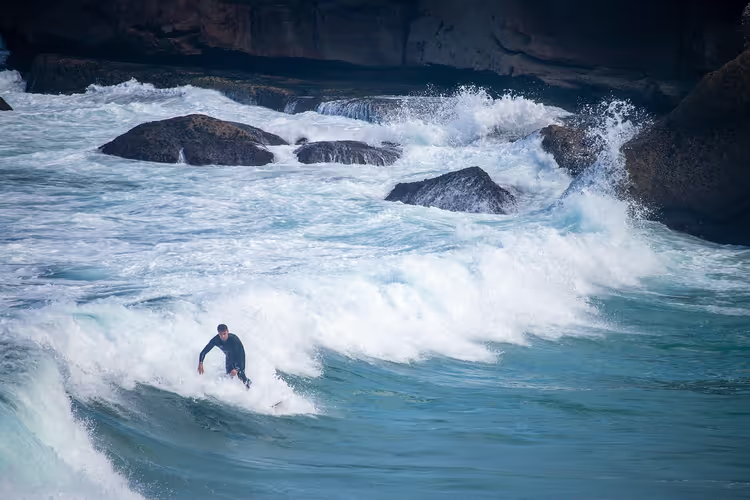
Where to go for waves: 6 surf spots from Bali to Peru
Surfing has long stopped being a sport for the chosen few. Today people catch waves in Europe, Asia, and on the coast of South America. From Denpasar airport to Kuta Beach it's a 15-20 minute drive (on the map), and a board rental costs less than a single excursion. It's realistic to start during any trip to the ocean.
The key to a surf trip: hit the right season and choose a spot that matches your level. Ocean waves hold their shape for months, but each region has its own window. A beginner needs a soft sandy bank, while an experienced surfer needs a powerful wave over a reef.
Below are six destinations where there's a wave almost year-round: Bali, Nazare in Portugal, the North Shore of Oahu, the Gold Coast in Australia, Jeffreys Bay in South Africa, and Chicama in Peru. For each spot you'll find the wave type, season, difficulty level, and infrastructure tips.
1. Kuta and Balangan in Bali
💡 In short:
- The season matters more than the flight distance: each ocean has its own wave window.
- Beginners suit sandy banks, while experienced surfers need reefs and big waves.
- Spot calendar and geography: 09/2026, verified with data from World Surf League.
 © cloud.shepherd · CC BYPhoto: cloud.shepherd, CC BY (https://creativecommons.org/licenses/by/2.0), Wikimedia Commons
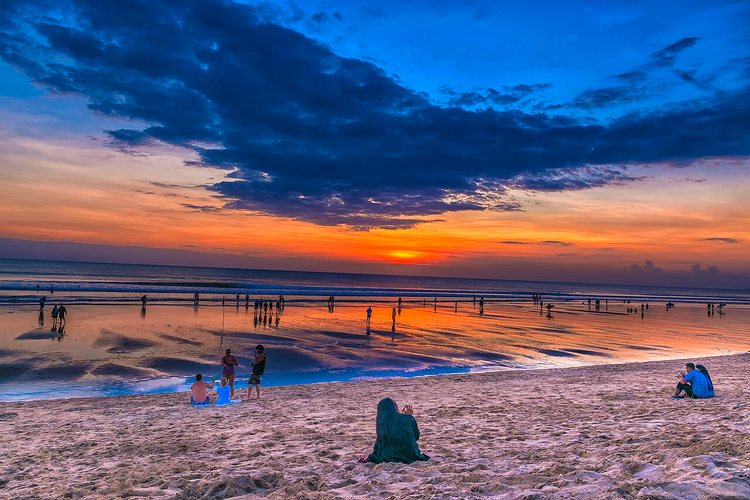
Bali has long held a top spot among Asian surfers. The island is washed by the Indian Ocean and the Bali Sea, and the water stays warm year-round, so no wetsuit is needed here.
 © Jakub Hałun · CC BY-SAPhoto: Jakub Hałun, CC BY-SA (https://creativecommons.org/licenses/by-sa/4.0), Wikimedia Commons
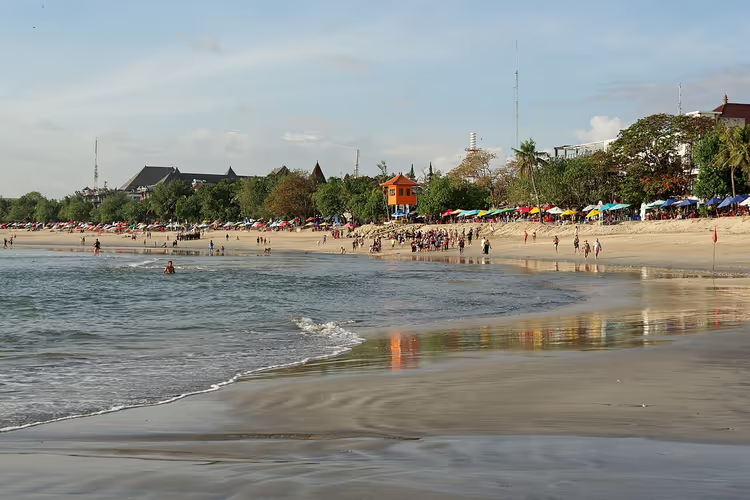
On the south of the island lies Kuta Beach. This is a beginner spot: an even sandy bottom with no rocks or coral, low tides, and almost no big waves. Several schools operate along the shore, where they'll get you up on a board from scratch. Lessons are held near the shore on a soft wave.
For more experience, people head to Balangan, about 15 km from Kuta (on the map). The drive takes 30-40 minutes. The waves here are noticeably higher, sometimes head-high, and the tide pulls a long ride along the point. The best window is from April to August. In other months the water is warm, but the wave is less consistent.
- Who it's for: beginners and families getting on a board for the first time.
- Not for: experienced surfers, the wave at Kuta is small and soft.
- How to get there: south coast of Bali, Kuta area, Balangan is a 30-40 minute drive.
2. Nazare in Portugal
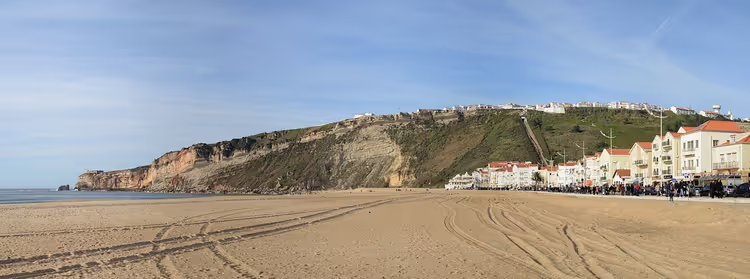
Portugal attracts with its mild climate and well-equipped beaches. Hostels here have long operated as surf camps, so beginners have somewhere to stay. The country's main spot is in Nazare: Praia do Norte beach, about 120 km north of Lisbon (on the map).
 © Alvesgaspar · CC BY-SAPhoto: Alvesgaspar, CC BY-SA (https://creativecommons.org/licenses/by-sa/3.0), Wikimedia Commons
Wave heights here reach up to 30 meters (as of 09/2026, Nazare tourist office). This scale is created by the Nazare submarine canyon, which channels and amplifies Atlantic storms straight toward the shore. The peak runs from October to March, when the world's best big-wave surfers gather here.
- Who it's for: professionals and spectators of big-wave competitions.
- Not for: beginners, the waves here are deadly dangerous.
- The catch: all the spectacle is concentrated in winter, in summer the wave near the shore is modest.
3. North shore of Oahu in Hawaii
Hawaii is considered the birthplace of surfing. "Point Break" was filmed here, and local kids learn to ride as naturally as they learn to swim. There are no sharp temperature swings on the islands, so waves are accessible year-round.
The main surfing hub is on the island of Oahu and its North Shore. In winter, large waves arrive from the northern Pacific, and the entire coast turns into an arena. The season used to be tied together by the Triple Crown tournament, and now the professional tour opens its season at Pipeline.
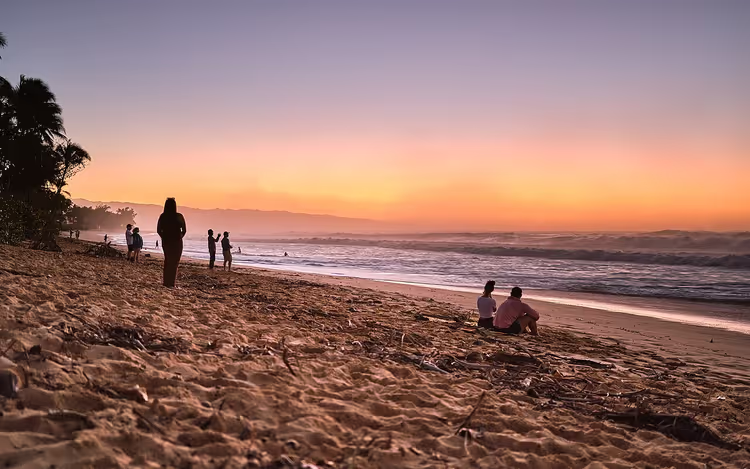 © Chris Rycroft from Madison, Wisconsin, United States · CC BYPhoto: Chris Rycroft from Madison, Wisconsin, United States, CC BY (https://creativecommons.org/licenses/by/2.0), Wikimedia Commons
Pipeline is called the queen of waves. It's recognized as one of the most difficult and injury-prone waves on the planet because it breaks over a coral reef. But even this wave can be conquered by a person without sight: Brazilian Derek Rabelo was born blind, still paddled out at Pipeline, and a film called Beyond Sight was made about it (SurferToday).
- Who it's for: intermediate and advanced surfers.
- Not for: beginners, the reef and powerful wave don't forgive mistakes.
- The catch: in winter the North Shore spots are crowded, and you have to wait for a board in the water.
4. Gold Coast in Australia
Surfers love Australia for its consistency. The continent is washed by two oceans, and currents form waves along almost the entire east coast. The water stays warm year-round, so the season here never really closes.
Beaches are protected from sharks with special nets, and no attacks on people have been recorded at the Gold Coast for decades. For a region where large sharks are common, that's an important detail.
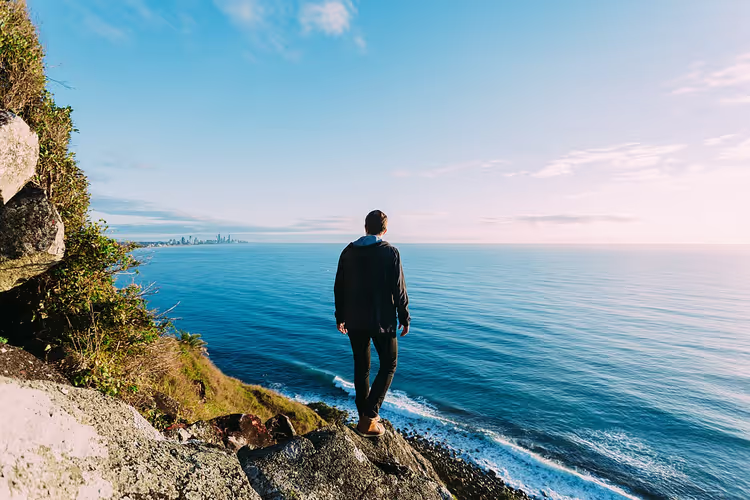
The main spot is located on the Gold Coast. Along the beaches runs the Superbank, one of the longest right-hand waves in the world. It starts at Snapper Rocks. A single ride here lasts unusually long, and the wave holds its shape for months.
- Who it's for: intermediate level surfers who want a long ride on a wave.
- The catch: the place is very popular with both surfers and tourists, so the water gets crowded.
5. Jeffreys bay in South Africa
In South Africa, people head to Jeffreys Bay, about 700 km from Cape Town (on the map). The special wave here is created by warm Indian Ocean currents mixing with cold Atlantic ones. This makes the wave long and orderly.
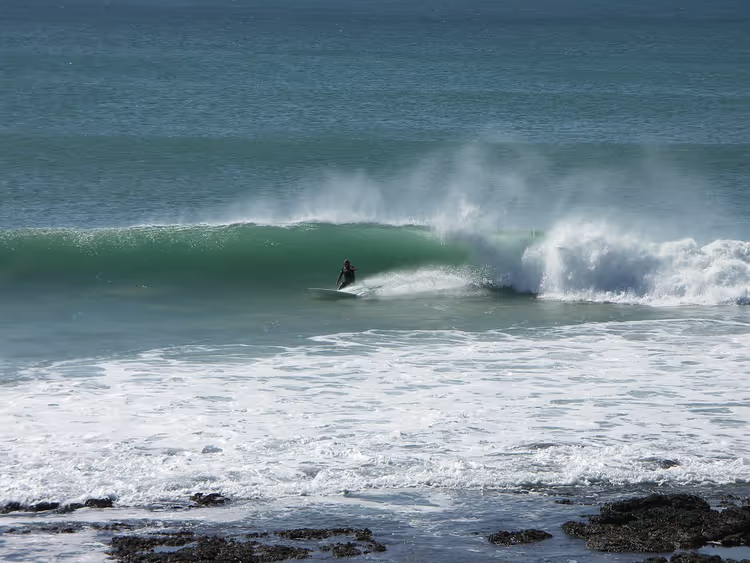 © NJR ZA · CC BY-SAPhoto: NJR ZA, CC BY-SA (https://creativecommons.org/licenses/by-sa/3.0), Wikimedia Commons
For beginners and intermediate surfers, the window from May to August works well, when it's winter in the southern hemisphere. But in July the location is taken over by professionals: the world tour comes here, and there's almost no free water left.
- Who it's for: intermediate level and those who want to watch the pros.
- Not for: in July, those who aren't ready to share the wave with athletes.
6. Chicama in Peru
Peru hasn't yet become a surfer pilgrimage site, and that's a plus: there are enough waves for everyone. In the northwestern part of the country, about 600 km from Lima (on the map), stands the small town of Puerto Malabrigo.
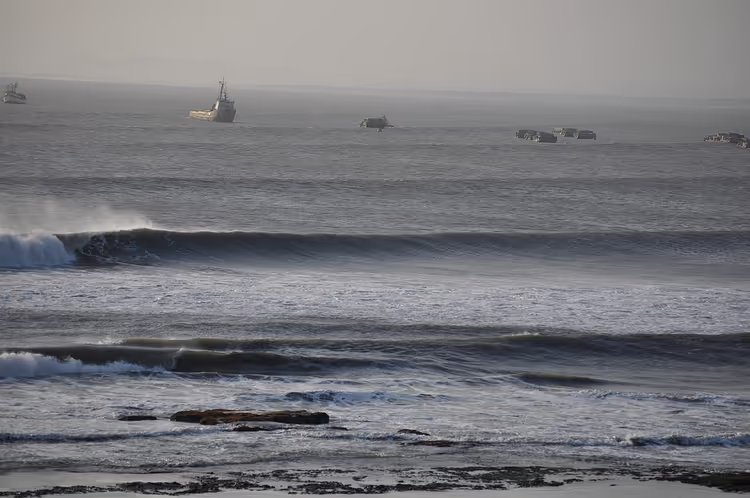 © Henry__Spencer · CC BYPhoto: Henry__Spencer, CC BY (https://creativecommons.org/licenses/by/2.0), Wikimedia Commons
Nearby breaks Chicama, the longest left-hand wave in the world. On a single ride here you can travel more than two kilometers (as of 09/2026, SurferToday). Local authorities even passed a law protecting the wave from coastal development.
You can surf year-round, but the best time is from March to October, during the southern winter. The water here is cold due to the Humboldt Current, so you need a wetsuit. The lineup, however, is short. For comparison, Nazare and Pipeline draw hundreds of people to the shore.
Another argument for Peru: the achievement of a local athlete. Sofia Mulanovich became the first South American world tour surfing champion. Her victory showed that the local wave is within reach of world-class athletes.
- Who it's for: those who want a long ride without a lineup.
- How to get there: from Lima it's easiest to fly to Trujillo, then continue to Puerto Malabrigo by ground transport.
⁉️🤔 Frequently asked questions
When is the best time to go on a surf trip?
The optimal time depends on the hemisphere. In Bali the best season is from April to August, in Peru from March to October. In South Africa the window is from May to August, and in Australia the wave is consistent year-round. For big-wave surfing, choose winter in Nazare or at Pipeline. Before the trip, check the wave forecast and competition calendar so you don't end up at a crowded spot.
Is surfing suitable for complete beginners?
Yes, if you choose the right spot. Kuta Beach in Bali and the Gold Coast in Australia have soft sandy bottoms, and schools operate nearby. First lessons take place near the shore on a gentle wave. After a few lessons you'll get up on the board and learn to read the ocean.
Do I need to bring my own equipment?
Not for the first time. You can rent a board and wetsuit right at the spot, in Kuta and on the Gold Coast rentals are literally everywhere. People bring their own board when their level grows and they develop personal preferences for shape and length. In Bali's warm water a wetsuit is often unnecessary. In Peru the water is cold due to the Humboldt Current, so a wetsuit is needed.
Where are the biggest waves in the world?
In Nazare at Praia do Norte beach, where the wave reaches up to 30 meters. The second most difficult spot is at Pipeline, where the wave is lower but breaks over a reef. Both spots are only for experienced surfers, beginners should not go there.
Can I combine surfing with a regular vacation?
Yes. Kuta, the Gold Coast, and Jeffreys Bay are surrounded by hotels, cafes, and calm swimming beaches, so you surf in the morning and relax in the afternoon. In Peru, the wave comes with deserts and ancient monuments near Trujillo. Surfing takes a couple of hours, leaving the rest of the time for family and excursions.
In short: what to book
If you're just starting out, choose Kuta in Bali or the Gold Coast in Australia, where the wave is soft, schools are nearby, and the entry into the water is gentle, so your first lessons go smoothly. If you're confident on the board, look at Balangan, Chicama, and Jeffreys Bay. For adrenaline and spectacle, head to Nazare and Pipeline, but only with big-wave experience.
Plan your trip around the season, not around your vacation: for Nazare that's winter, for Bali April-August, for Peru March-October. Check the wave forecast a couple of weeks ahead and book accommodation near the spot in advance. That way you'll catch your wave instead of finding closed spots.

A small editorial team writing guides for independent travel. We travel ourselves, but we haven’t been everywhere, so we check prices, opening hours and how to get there against official sources.