
















Sigiriya in Sri Lanka: how to climb Lion Rock and what to see
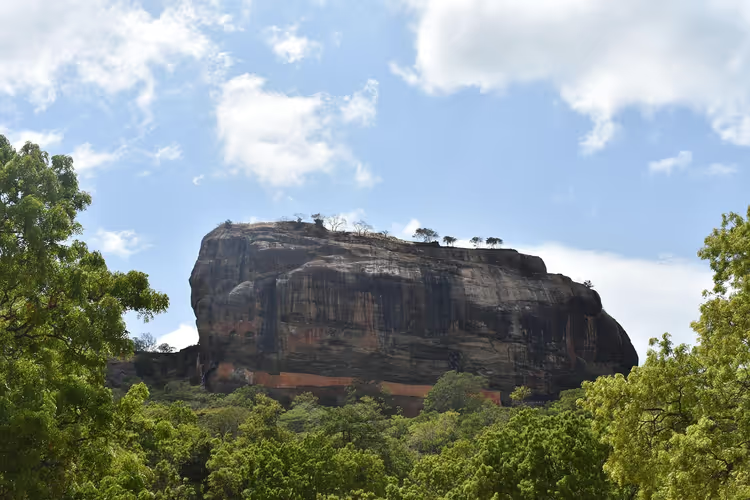
Lion Rock rises above the jungles of Sri Lanka's Central Province. The name "Sigiriya" translates as "Lion Rock" and gave its name to the entire palace complex. This is the ancient capital of King Kashyapa and one of the island's most famous monuments.
The complex is open daily from 5:00 AM to 6:30 PM, and the ticket includes admission to the Sigiriya Museum (as of 09/2026, reserve website). Foreign tourists pay an entrance fee, and it's best to check the price in advance. In this guide, we show what to see, how to climb the rock, and how much time it takes.
Ad: this article contains affiliate links, we earn a commission if you book through them, at no extra cost to you.
History of the fortress
💡 In short:
- An ancient palace fortress on a granite rock in Matale District.
- The climb and sightseeing take several hours, bring water and comfortable shoes.
- The complex is a UNESCO World Heritage Site.
- Hours and tickets: 09/2026, verified on the official website.
Sigiriya emerged from a bloody family drama. King Kashyapa ruled the island from 477 to 495 AD and moved the capital from Anuradhapura to the top of the rock (as of: reserve website). He took the throne after murdering his father, King Dhatusena. His half-brother Moggallana fled to South India, where he gathered an army for revenge.
 © Wimukthi Bandara · CC BY-SAPhoto: Wimukthi Bandara, CC BY-SA (https://creativecommons.org/licenses/by-sa/4.0), Wikimedia Commons
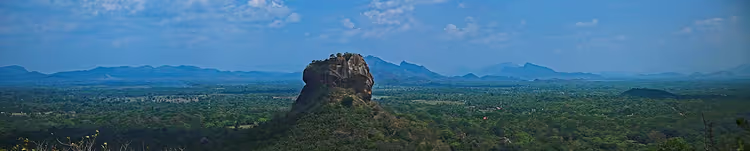
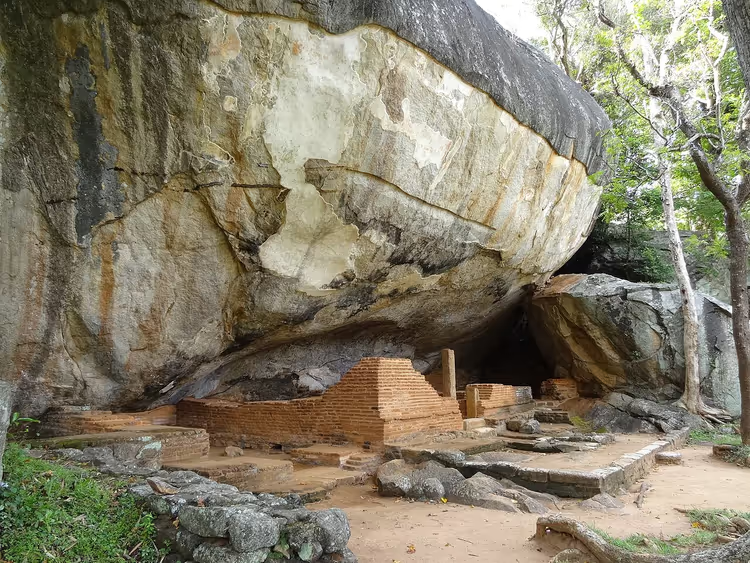
The rock attracted people long before Kashyapa. Buddhist monks lived in its caves from the first centuries BC, and inscriptions about gifts to monasteries survive on the stones (according to the article on Sigiriya). The king chose this place as a refuge: the high granite and sheer walls made the fortress nearly impregnable.
Moggallana returned with an army, and Kashyapa's troops dispersed to their homes. According to one legend, even the king's war elephant turned around and left the battlefield. Left alone, Kashyapa took his own life, and the capital was returned to Anuradhapura. There is no exact evidence about the final battle, and versions differ.
The story has a second version as well. Some chronicles name Dhatusena as the builder, with Kashyapa merely completing his father's project. Other texts describe the king as a lover of entertainment who kept a pleasure palace on the rock. Historians also debate the cause of his death: both suicide and poisoning are mentioned.
After the king's death, the rock became a Buddhist monastery and served as one for several centuries. In 1982, the complex was inscribed on the UNESCO World Heritage List (as of: UNESCO). Archaeologists have been studying Sigiriya since the late 19th century, and excavations continue. Today, about a million people visit each year (according to the article on Sigiriya). You'll see palace ruins, terraces, gardens, and a panorama of the jungle.
The Sigiriya complex as an architectural monument
The ruins of the Upper Palace survive on the rock's summit plateau. The layout is still legible: terraces, staircases, water cisterns, and the foundation of the royal chambers. The rock itself rises about 180 meters above the plain (as of: reserve website).
The main entrance to the upper section passed through the Lion Gate. All that remains of the giant lion are two carved stone paws and the steps between them. From these paws, you'll understand the architects' intent: the staircase led straight into the lion's mouth. The sculpture was found during excavations in the late 19th century; time and people destroyed the rest.
Next you walk past the Sigiriya frescoes. The paintings survive on the western wall and depict women in dress and jewelry. The painted surface once covered almost the entire rock, but only about twenty figures have survived to this day (as of: reserve website).
Nearby is the Mirror Wall. It was polished so carefully that the surface reflected light, and ancient visitors' poems have been preserved on it. Below lay the Lower Palace, canals, fountains, and gardens. Only the palace foundations remain, but the scale of the structures is felt even in the ruins.
Water gardens of Sigiriya
The water gardens occupy the central part of the complex and are considered among the oldest formal gardens in the world (according to UNESCO). The first garden resembles an island surrounded by water, connected to the shore by causeways. The second consists of two long pools on either side of the path. You'll feel like you're walking through a park rather than ancient ruins.
The fountains were fed by underground springs. After rains, some of them work again, and you can see water in the old channels. The entire system was connected by an underground water supply to the outer moat, which in turn drew water from a large artificial lake. This is how engineers supplied the palace complex with water year-round.
Summer palaces stood on two large islands. Higher up was an octagonal pool fed by water channels. Everything worked as a single mechanism, and you'll appreciate the skill of the ancient builders.
Boulder gardens
The boulder gardens spread out at the foot of the rock from the northern slopes to the southern ones. Narrow paths wind between the boulders, and on top of one of them stood the Royal Audience Hall. All that remains of it is a massive granite throne carved from a single block of stone.
 © Cherubino · CC BY-SAPhoto: Cherubino, CC BY-SA (https://creativecommons.org/licenses/by-sa/3.0), Wikimedia Commons
Climbing the rock takes several hours and requires stamina. You'll face steep staircases, winding mountain paths, and a section across a suspension bridge. Each path has a name: Elephant Path, Lion Path, and Cobra Path. The last one was named after a rock that resembles a snake.
From the summit you'll see a panorama of jungle and reservoirs stretching to the horizon. For this view, tourists get up before dawn and walk to the rock in the dark. The fatigue after the climb is quickly forgotten, and you'll feel it yourself.
- How to get there: the entrance is at the foot, and from the parking lot to the stairs you walk through the gardens.
- Who it's for: those ready for a long walk and wanting to see the frescoes and the panorama.
- Not for: those who find it hard to climb hundreds of steps under the open sun.
- The catch: there is almost no shade on the open sections, and the heat intensifies at midday.
Tickets and opening hours
The complex opens daily at 7:00 (as of: 09/2026, ticket page). The ticket includes admission to the Sigiriya Museum, where finds from the excavations are displayed. For foreign tourists the price is higher than for locals, so check the exact amount on the official website before your trip.
- Opening hours: daily from 5:00 to 18:30.
- Ticket: includes the Sigiriya Museum, check the price on the official website.
- Tip: if you want to see the frescoes without crowds, go in the first hour after opening.
Below is a selection of tours that are booked in advance.
Tours and tickets in Sigiriya
Guided tours, skip-the-line tickets and activities — most offers can be cancelled free of charge.
See offers on GetYourGuideThe widget loads once you give your consent.
How to get to Sigiriya
Sigiriya is located in the Cultural Triangle, about 170 km from Colombo and about 150 km from Bandaranaike Airport (as of: 09/2026, reserve website). By car the journey takes 3-4 hours. The nearest railway station is called Habarana, and from there you travel by tuk-tuk.
- By car or taxi: 170 km from Colombo, 3-4 hours on the road.
- By train: to Habarana station, then a tuk-tuk to the entrance.
- By bus: there is no direct service, the route involves a transfer in Habarana.
From Dambulla you can reach the rock by tuk-tuk in a short time, and many people hire a driver for the whole day. If you fly into Colombo, it's better to book a transfer with a driver in advance so you don't have to look for a car on the spot.
Tours and tickets in Sigiriya
Guided tours, skip-the-line tickets and activities — most offers can be cancelled free of charge.
See offers on KiwitaxiThe widget loads once you give your consent.
Sigiriya fortress on the map
The exact coordinates will help you plan your day and calculate travel time. The rock is located in Matale District, between Dambulla and Habarana, near the main roads of the Cultural Triangle. Below is a map showing the monument's location.
⁉️🤔 Frequently asked questions
How long does the climb up Sigiriya take?
The climb up and back down takes a few hours, and with the gardens and frescoes you'll spend half a day on the site. Bring water with you. Don't plan two more major sights for the same day. Morning and evening work better than the hot midday.
How much does Sigiriya cost for foreign tourists?
The ticket is paid, and for foreign visitors the price is higher than for locals. The cost includes entry to the Sigiriya Museum. Check the exact amount on the official website, it changes from time to time. It's cheaper to buy a ticket online in advance and not waste time in line at the ticket office.
When is the best time to visit Lion Rock?
Come early in the morning, right after opening. At seven in the morning it's still cool, and there are almost no people at the frescoes and on the stairs. After midday the open sections heat up a lot, and the climb gets harder. Evening is also quieter, but the light for photos is softer by then.
Is Sigiriya suitable for children and older people?
The climb goes up steep stairs and open walkways, so children need help from adults. People with heart or knee problems are better off sticking to the gardens at the base. The museum, water gardens, and rock gardens are accessible without climbing. Decide based on how you feel and allow enough time.
How do you get to Sigiriya from Dambulla or Colombo?
From Colombo it takes several hours by car to reach the rock, while from Dambulla a short tuk-tuk ride is enough. Buses go with a transfer in Habarana, and the train only gets you as far as Habarana station. If you value your time, book a transfer with a driver in advance.
In short: what's worth booking
If you're heading to the Cultural Triangle for one day, start with Sigiriya and go in the morning. If you want a guide and a ready-made itinerary from Dambulla, choose ready-made tours on GetYourGuide. If you're traveling independently and flying into Colombo, plan the route in advance: there's no direct train to the rock. Arrive at opening time: early morning gives you cooler weather, fewer people, and better light on the frescoes.

A small editorial team writing guides for independent travel. We travel ourselves, but we haven’t been everywhere, so we check prices, opening hours and how to get there against official sources.