

















25 Ideas from Bulgaria: from rose oil to homemade lutenitsa
Bulgaria knows how to surprise even a seasoned traveler. Beyond the beaches and monasteries, the country holds a whole warehouse of distinctive things. Tourist stalls are packed with magnets and plates, but the real souvenirs hide deeper: in workshops, markets, and ordinary supermarkets. We've put together 25 categories of gifts worth bringing home. For each one, we explain what to look for and what not to waste money on.
Bulgaria remains the world's largest producer of rose oil (according to the Bulgarian Chamber of Commerce and Industry). It's used to make cosmetics, jam, and even medicine. Food and alcohol are best bought in supermarkets, while craft items are best found in workshops and markets. That way you won't overpay for a souvenir or run into a fake.
Ad: this article contains affiliate links, we earn a commission if you book through them, at no extra cost to you.
1. Rose oil cosmetics
💡 In short:
- Set a budget in advance and don't buy souvenirs on the first day.
- Buy food and alcohol in supermarkets.
- Buy cosmetics only in brand stores and pharmacies.
- Souvenir prices and selection: 09/2026, verified on the official tourism portal of Bulgaria.
 © Lyudmil Buyukliev · CC BY-SAPhoto: Lyudmil Buyukliev, CC BY-SA (https://creativecommons.org/licenses/by-sa/4.0), Wikimedia Commons
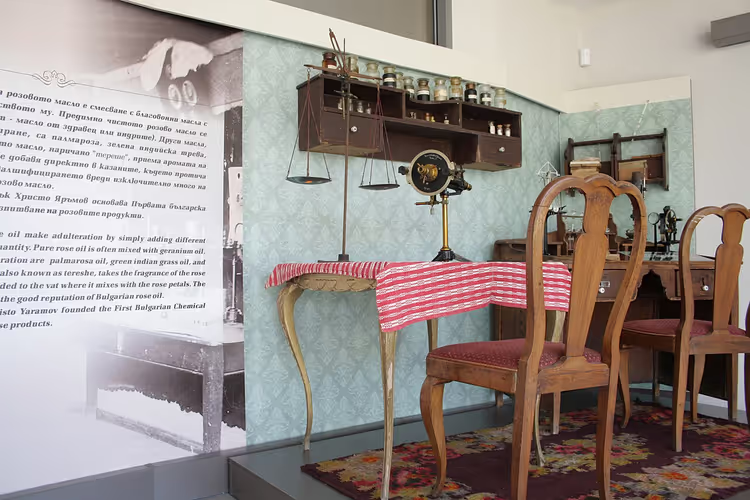
Rose oil cosmetics are sold everywhere in Bulgaria. The scent follows you both at the airport and in the pharmacy. This is the souvenir people bring home most often. Quality varies widely, though. In street stalls it's easy to buy a fake or a product with a minimal share of oil. Only buy from brand stores and pharmacies. A good manufacturer has a short ingredient list, and the rose oil percentage is stated on the packaging. Check the expiration date right in the store.
- Who it's for: an easy gift for colleagues and friends.
- Not for: anyone allergic to essential oils.
- The catch: tourist stalls sell fakes under the guise of the original.
2. Deo Perfume Candy
These unusual candies from Alpi solve two problems at once: what to give and what to replace deodorant with. It's a low-calorie treat that makes your skin smell pleasant afterward. The fragrance comes not only from your mouth but from your body. It lasts for several hours. The source of the scent is geraniol, the main component of rose oil. The manufacturer recommends limiting yourself to a couple of candies at a time. A packet of these candies won't sit around at home for long.
3. Herbal teas
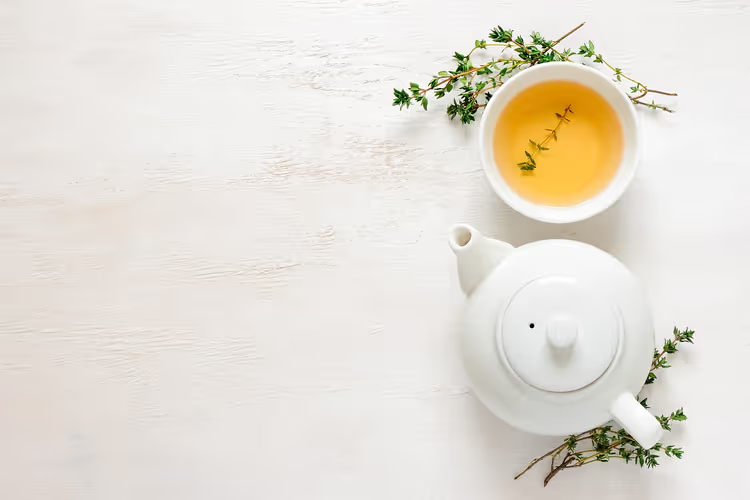
Black tea isn't widely consumed in Bulgaria, but herbal blends are held in high regard here. The most famous is Mursala tea, also known as Pirin tea. It's made from the plant Sideritis scardica, which grows only on the southern slopes of Pirin. The plant is rare and protected by law. Harvesting it from the wild is prohibited, even for personal use. So buy tea only in factory packaging in stores. Herbs sold by hand may have been picked by poachers.
A beautiful legend is tied to this drink. The ancient Greek singer Orpheus searched for his Eurydice and wept on the slopes of Pirin. Where his tears fell, a healing herb grew. Bulgarians believe the drink tones the body, strengthens the immune system, and calms the nervous system. It's even called a male remedy for potency. There are no verified clinical proofs for these properties, so treat them as tradition.
4. Handmade clothing and shoes

There's no point looking for outfits from famous European brands in Bulgaria: the selection in large shopping malls is similar to anywhere else. The value here is in handmade items. On the streets of resort towns, knitting craftswomen sit and sell their creations right there. Sweaters, vests, and hats made of natural wool cost less than store-bought ones. Even more authentic is a national costume with embroidery. It makes a striking gift and a decoration for the home.
Shoes are a different story. Local craftsmen sew sturdy, high-quality leather footwear. Major Italian and Spanish brands trust them with leather tanning and dyeing. When choosing boots, look for a mark indicating they were made in Bulgaria. A pair like that lasts for years.
5. Silver jewelry
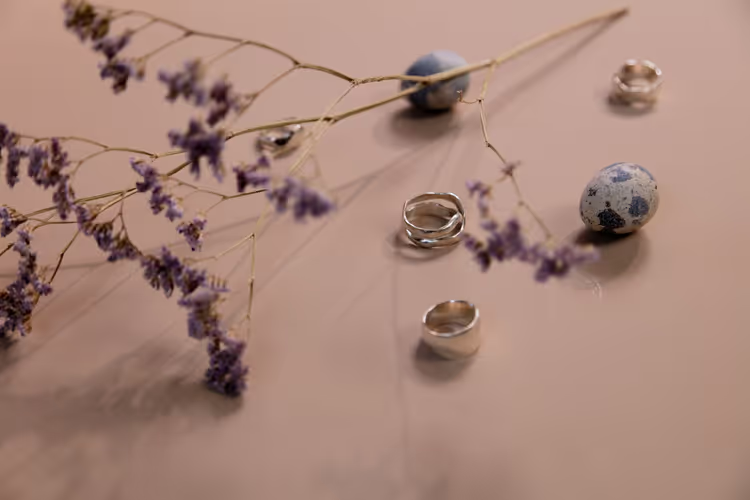
Gold jewelry and pieces with precious stones aren't worth buying in Bulgaria: the selection and prices are similar to other European countries. Silver, however, is a good deal here. Fakes are almost impossible to come across, prices are pleasant, and the designs are unusual. Local costume jewelry and delicate filigree pieces are especially good. Resorts sell sea-themed items and copper trinkets. Many of them can easily be personalized. Ask the seller to stamp your name on a bracelet or pendant, and you'll get a one-of-a-kind item.
6. Ceramics
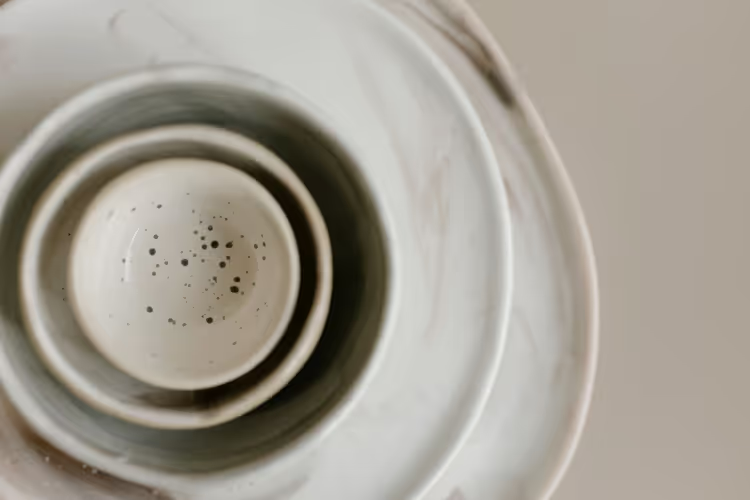
Ceramic tableware is a practical souvenir, not just decor. It can be washed in the dishwasher, put in the oven and microwave. Bulgarian ceramics are sturdy, so plates and pots will last a long time. They're recognizable by their original painting style.
The artisan applies drops of paint in a specific order, then carefully mixes them or lets them run down the sides. The result is a pattern you won't find in other countries. The colors are traditionally bright: red, blue, white, green, yellow. When buying, it's important not to get a fake. All pieces are made by hand, so they can't be cheap. If a plate looks like it's about to fall apart in your hands, it's better to pass on it.
7. Textiles
 © Ivan Ivanov · CC BY-SAPhoto: Ivan Ivanov, CC BY-SA (https://creativecommons.org/licenses/by-sa/3.0), Wikimedia Commons
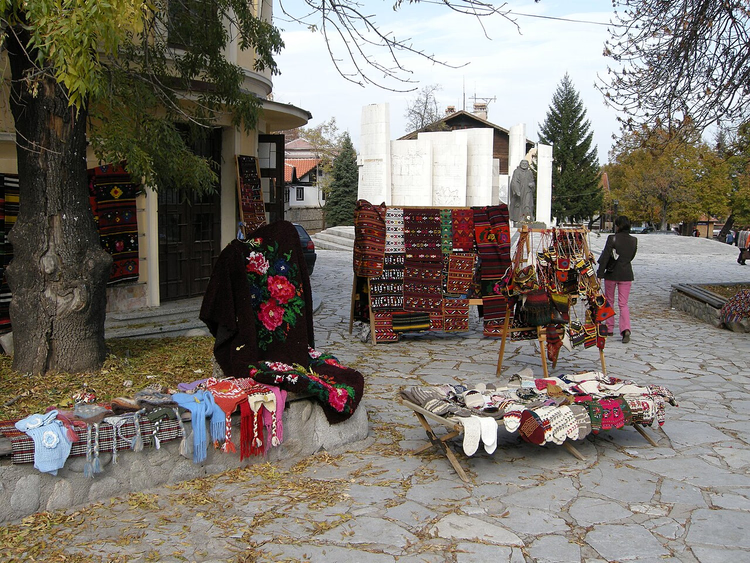
On tourist routes you will come across shops selling local textiles. Blankets, bedspreads and bed linen are especially good here. They are high quality, durable and reasonably priced. Look separately for linen towels, napkins and tablecloths with national embroidery. In small towns and villages, craftswomen weave wool rugs.
The most interesting are the so-called shaggy rugs. They are made from woolen threads or natural sheep's wool, and one rug takes a craftswoman several months to weave. A gift like this will bring coziness to a home for a long time. There is no single national style: each area has its own patterns and colors. This is especially noticeable in the "cherga" fabric, whose ornament changes from village to village.
8. Paintings by street artists
 © Apostoloff · CC BY-SAPhoto: Apostoloff, CC BY-SA (https://creativecommons.org/licenses/by-sa/3.0), Wikimedia Commons
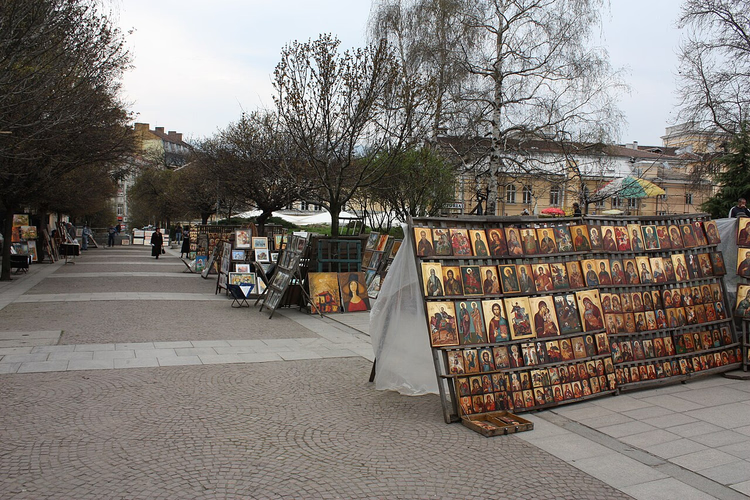
No resort town is complete without street artists. They paint landscapes, sea views and old streets that will remind you of your trip. You can also commission your own portrait from life or from a photograph. A small canvas takes up little space in a suitcase and easily survives the journey.
9. Copperware
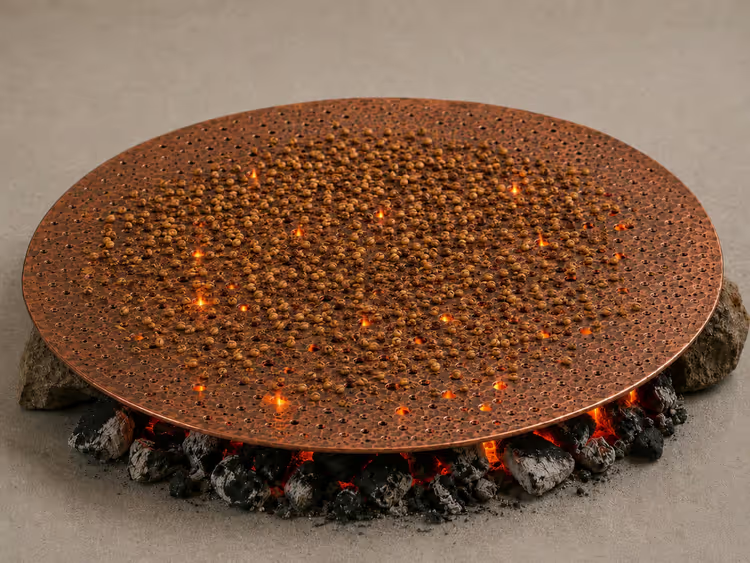
Set aside a day for a leisurely walk through the market: they sell copper items of astonishing beauty there. Copper ranks second in popularity after silver. Local blacksmiths turn it into a work of art. You can simply watch a master at work, or you can join in. Many artisans let you make a souvenir with your own hands. For a small extra charge, they will engrave a name or any other text on the item. Copper water vessels are especially good, they will decorate your kitchen. For a man, you can take an ashtray or a cezve, and a woman will like an elegant tray.
10. Leather goods
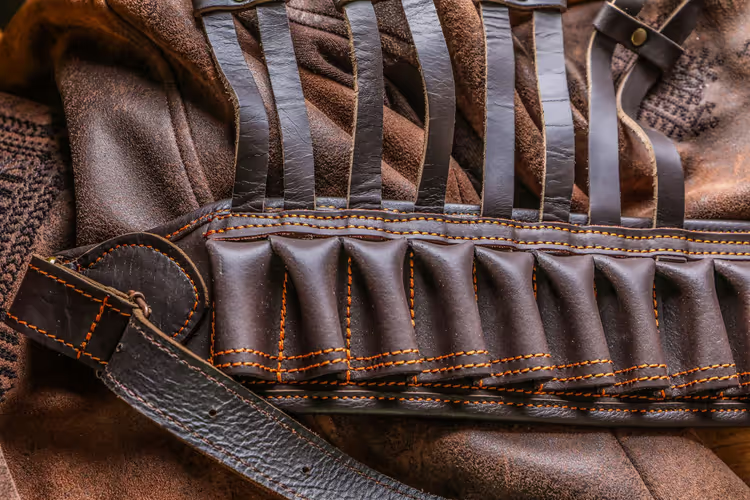
Leather goods are among the most popular souvenirs. Local craftsmen know the secrets of high-quality tanning. Most tourists take home sturdy belts, bags, wallets and gloves. Among original gifts, the national leather vest stands out: it adds an ethnic touch to any outfit. For small presents, leather coin purses work well, often shaped like fruits or little animals. Leather jewelry also catches the eye: bracelets, pendants, hair clips, boxes.
11. Icons
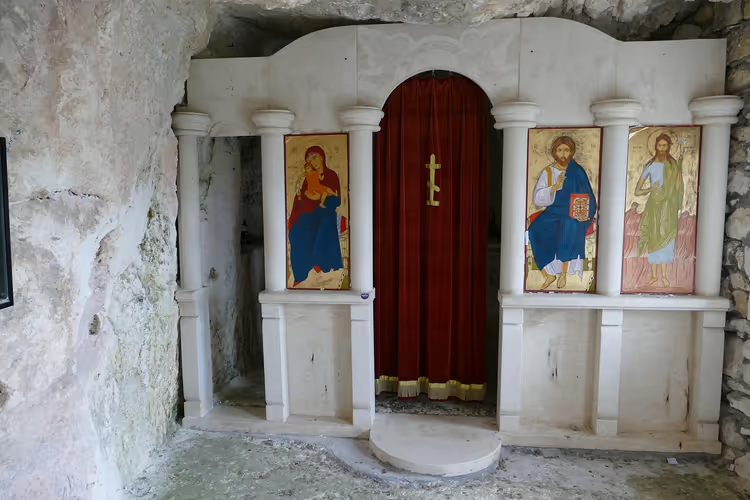
Icon painting in Bulgaria has been developing for more than a thousand years, since the arrival of Christianity. Masters still work according to ancient traditions. They use boards of linden or cypress as a base, cover them with primer, and then paint. Paints are mixed with natural egg yolk so they last longer. Cheaper icons are reproductions in wooden or metal frames. It is worth taking a closer look at handmade crosses and candles with rose oil. Wooden prayer beads are also good. Religious souvenirs are best bought in monasteries and church shops: there are fewer fakes and prices are calmer.
12. Kuker masks
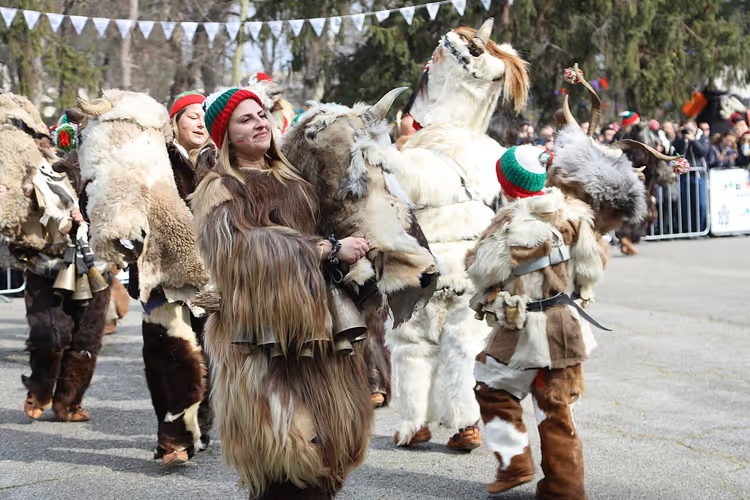 © Krasimira Gercheva · CC BY-SAPhoto: Krasimira Gercheva, CC BY-SA (https://creativecommons.org/licenses/by-sa/4.0), Wikimedia Commons
Kuker masks are tied to one of the most interesting local traditions, the lively send-off of winter. During these days, street festivals and carnivals take over, and residents in festive clothing welcome spring. The main participants in the ritual are called kukeri. They are men who dress up as animals or folk characters. They cover their faces with masks and hang bells from their belts.
Each kuker makes his own mask and never shows the process to anyone. The base is carved from wood and then decorated with sequins, pieces of mirror, and scraps of fabric. The goal is simple: make the mask as frightening as possible to scare away evil spirits. According to belief, the ringing of the bells finishes the job. No two masks are ever alike. This is the most unusual souvenir, and its origin is connected to a curious tradition.
13. Medicine
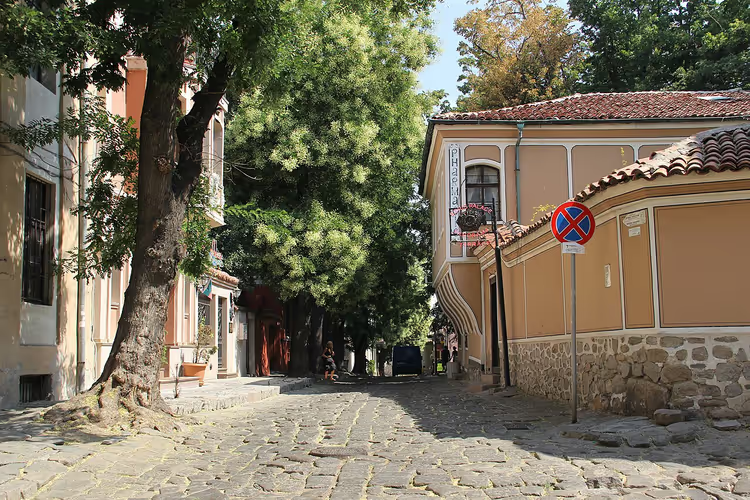 © BrankaVV · CC BY-SAPhoto: BrankaVV, CC BY-SA (https://creativecommons.org/licenses/by-sa/4.0), Wikimedia Commons
Bulgaria is a major producer of pharmaceuticals. The selection is wide, and prices are lower than in Western Europe. Finding a pharmacy is easy: look for the sign "Аптека" in Cyrillic. Some cities still have pharmacy museums where you will feel like you are in the 19th century. One of them, the Hippocrates Pharmacy, is in Plovdiv. A pharmacist, who has a degree in the field, can help you make sense of the local drug names. Most medications are sold without a prescription, but antibiotics require one.
14. Bulgarian peppers
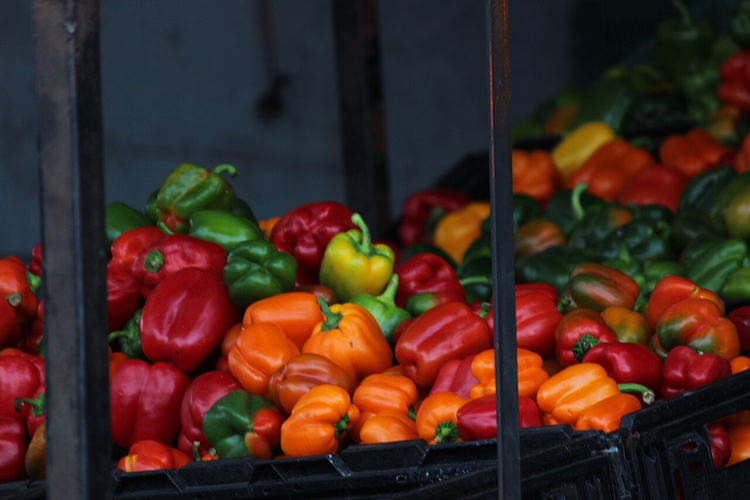 © Almudena DS · CC BY-SAPhoto: Almudena DS, CC BY-SA (https://creativecommons.org/licenses/by-sa/4.0), Wikimedia Commons
The pepper originated in the Americas. After the discovery of the New World, it first made its way to Portugal, then to Turkey, and from there to Bulgaria. At markets, the vegetable is available from July to mid-November. At the market, ask for peppers using the words "chushka" or "piperka," with the stress on the first syllable. Local cuisine is unthinkable without peppers. They are eaten raw, stewed, preserved, and baked with stuffing.
15. Lutenitsa
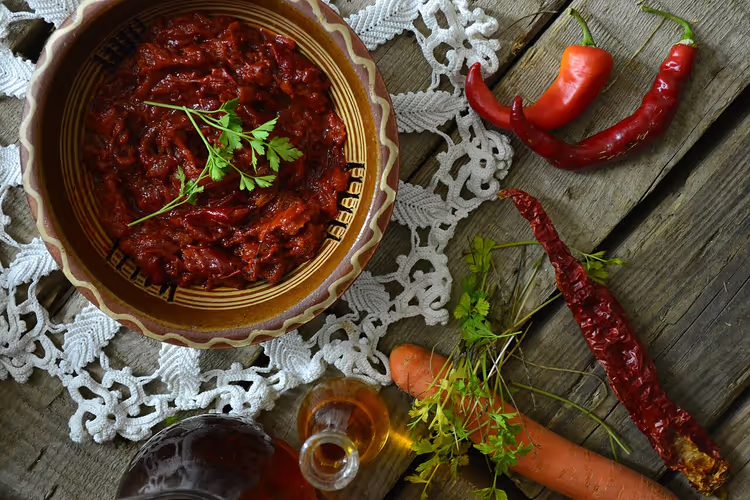 © Чакаровска · CC BY-SAPhoto: Чакаровска, CC BY-SA (https://creativecommons.org/licenses/by-sa/4.0), Wikimedia Commons
Lutenitsa is considered the universal local preserve. It is a thick sauce or paste made from slow-cooked vegetables. The ingredients include sweet peppers, zucchini, and tomatoes, sometimes potatoes, white cheese, and eggplant. Garlic is often added. The name comes from the Bulgarian word "lyut," meaning "spicy," but lutenitsa's heat varies. With meat and fish, it works as a sauce. On bread, it makes an excellent snack to go with strong alcohol. In pizza, lutenitsa replaces ketchup. It adds a kick to soup. At the market, buy the homemade kind: it is more aromatic, while the factory-made version is also good and keeps longer.
16. Rose petal jam
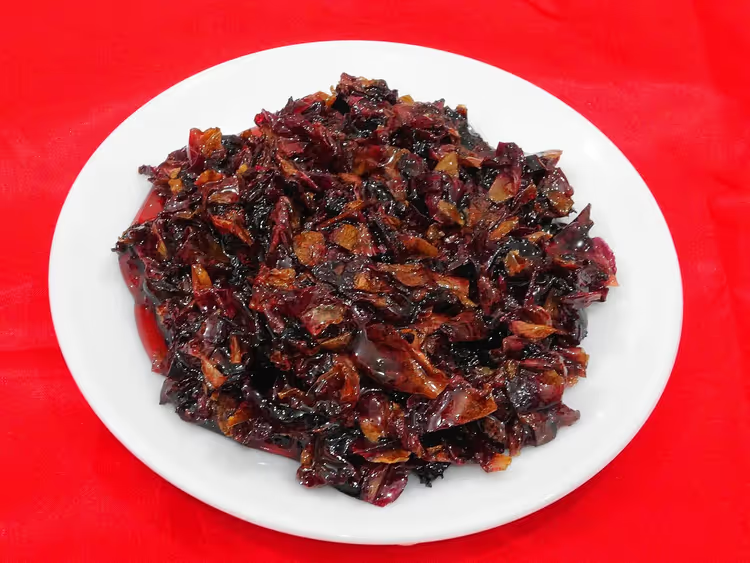
Rose petal jam is considered a calling card of Bulgarian cuisine. In appearance, it is closer to jelly. There are two versions available: with petals and without. It is made from Damask roses, and the recipe is passed down from generation to generation. The flavor is delicate and subtle. You can find the jam in any supermarket. It makes a lovely gift for a colleague or a friend: the pink jars look nice and don't take up much room in a suitcase.
17. Honey
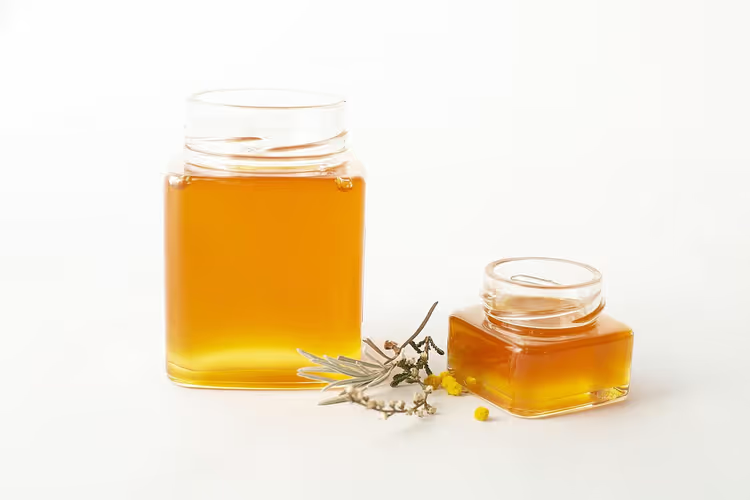 © AnnaMayak · CC BY-SAPhoto: AnnaMayak, CC BY-SA (https://creativecommons.org/licenses/by-sa/4.0), Wikimedia Commons
Bulgaria has a healthy environment and many nectar-producing plants. As a result, honey is abundant here, and honey fairs are held regularly in major cities. There you can taste different varieties before buying. Acacia honey appears in May and June. It is fragrant, light golden, and stays liquid for a very long time. Lavender honey is harvested in Dobrudzha: it has an interesting aroma and a pinkish tint.
Sunflower honey crystallizes quickly, so it is best eaten within the first few weeks after purchase. Creamed honey is popular at fairs: any variety is whipped to a smooth, thick consistency, making it easy to spread on toast. Among the most exotic varieties is dark honeydew honey. It is almost black, with a bitter-sour aftertaste, and is considered medicinal. For this honey, bees collect not nectar but the sweet secretion of aphids. At home, keep the jar in a dark place: honey spoils faster in the light. At the fair, honey is poured straight from large cans, and you get to taste it before buying.
18. Tulumbichki
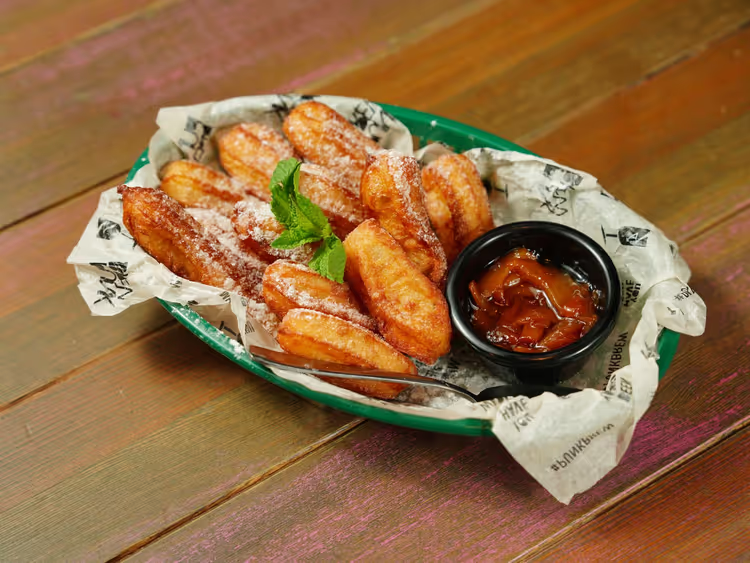
Getting to know the country is best started with food. Tulumbichki are among the most common local sweets. The name translates as "little tubes." They are elongated pieces of dough soaked in syrup. The treat will appeal to those who love very sweet desserts, while others may find it cloying. Tulumbichki are most often served in cafes and restaurants, but local home cooks also make them at home using their own signature recipes. In supermarkets, the dessert is in the sweets section. Take a package home and serve them with tea among friends.
19. Spices
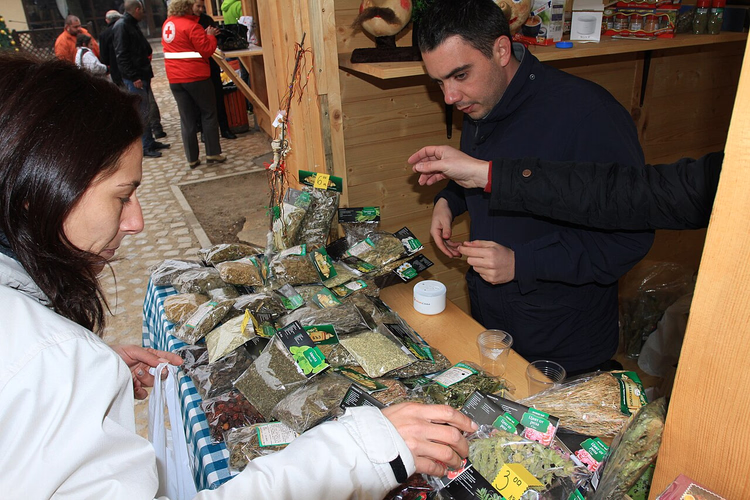 © Biser Todorov · CC BY-SAPhoto: Biser Todorov, CC BY-SA (https://creativecommons.org/licenses/by-sa/4.0), Wikimedia Commons
Bulgarian cuisine is not particularly spicy, but seasonings give it a recognizable flavor. Here they are called "podpravki." It's easy to get overwhelmed at the market, so remember the main names. Savory, or chubritsa, is added to a huge number of dishes. It is one of the symbols of the country. The "sharena sol" mix is universal: it goes with meat, fish, soups, and side dishes. It contains savory, paprika, salt, corn flour, and fenugreek. Sometimes the producer adds garlic, hot pepper, or pumpkin seeds.
Thyme, or mashtherka, has a bright aroma, so add it carefully. It is good with eggs and meat, and occasionally it is put into sweets. Fenugreek, or smiduh, enhances meat and vegetable dishes and often goes into soups. Look for cinnamon in the baking section: it is sold ground, often with sugar, and in sticks. Nutmeg adds flavor to meat pates and Christmas baked goods. A set of seasonings makes a practical gift: it takes up little space but conveys the taste of Bulgarian cuisine.
20. Sweets
For those with a sweet tooth, the main souvenirs are Turkish delight and fruit pastila. Try them even if you are indifferent to confectionery. The most famous varieties of Turkish delight get a delicate taste and aroma from rose oil and petals. The product is made from natural ingredients. Pastila, a dense sweet made from boiled-down fruits and berries, is often made with nuts. Sweets are sold by weight and in gift boxes, so you can put together a gift for any budget. Children will be especially happy with such a present.
21. Cheese
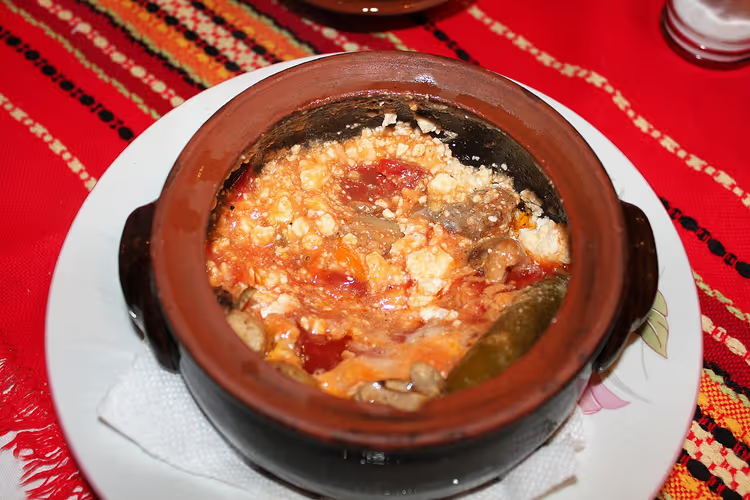 © Bin im Garten · CC BY-SAPhoto: Bin im Garten, CC BY-SA (https://creativecommons.org/licenses/by-sa/3.0), Wikimedia Commons
Extensive pastures make it possible to produce a lot of dairy products. Cheeses hold a place of honor among them. Sirene, or white brine cheese, is a soft, salty white cheese. It is made from the milk of cows, sheep, and even buffalo, and sirene is the basis of many national dishes. In the store, check the price: if you don't want a product with vegetable fats, choose pricier varieties.
Yellow cheese kashkaval is made from cow's, sheep's, or mixed milk. It is loved throughout the Balkan Peninsula, added to meat and vegetable dishes, and even fried. Cream cheese is made from cottage cheese: it tastes lightly salted and resembles cream cheese. For processed cheese, go by the ingredients, not the price. Blue cheese is considered the king of local cheeses: it is not cheap, but it is very good. It is sold by weight and in portioned blocks. Vacuum packaging is more convenient for travel. Add a couple of kashkaval varieties to the sirene: together they make a good gift set.
22. Lukanka sausage
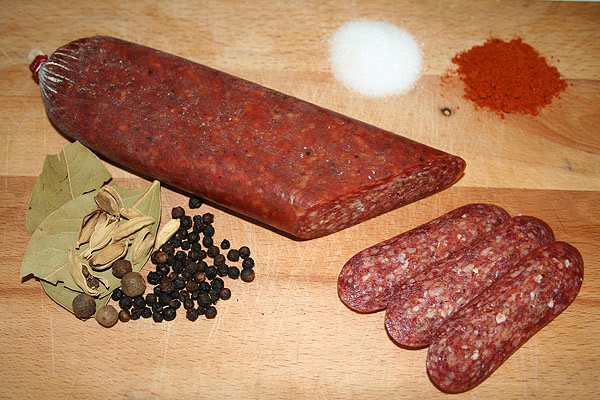 © Ikonact · CC BY-SAPhoto: Ikonact, CC BY-SA (http://creativecommons.org/licenses/by-sa/3.0/), Wikimedia Commons
Among meat delicacies, pay attention to the dry-cured lukanka sausage. It is made from pork, so the sausage turns out quite fatty. After production, the product must dry and mature for a month. During this time, a noble mold appears on the surface. A lot of spices are added to the meat, so the delicacy is very aromatic. Lukanka is convenient to transport: it keeps for a long time.
The name is often associated with onions, but it goes back to the Latin lucanica. That is what the ancient Romans called sausage from the region of Lucania. An old tradition is connected with this delicacy. When a young man came of age, friends and relatives held a celebration. The young man was offered Shumensko beer, and the snack was a large platter of sliced lukanka. After eating the treat, he was considered an adult. In some areas, the custom is still alive today. Lukanka is sliced into thin pieces to go with beer and rakia.
- Who it's for: lovers of dry-cured sausages.
- The catch: the sausage is fatty, you can't eat much of it.
23. Wine
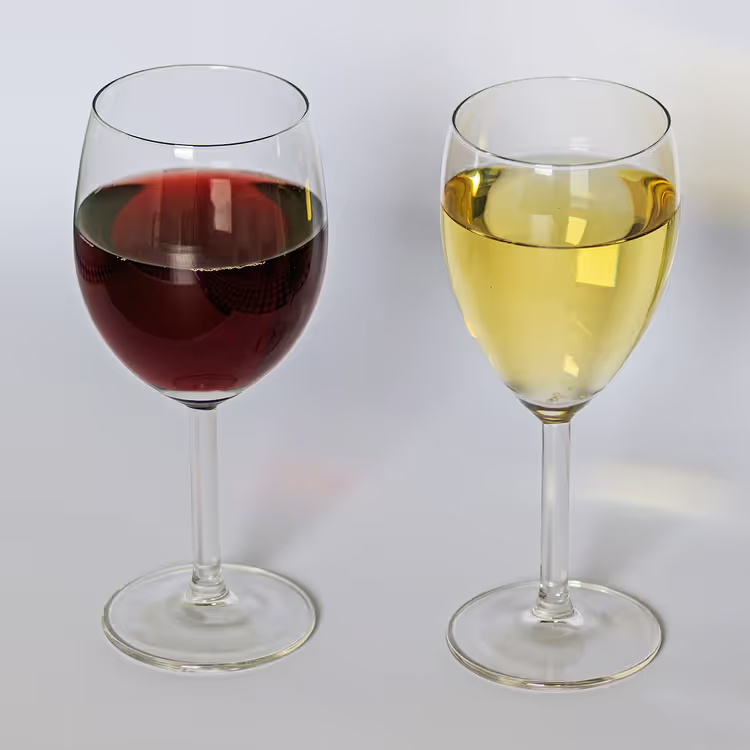 © A.Savin · CC BY-SAPhoto: A.Savin, CC BY-SA (https://creativecommons.org/licenses/by-sa/3.0), Wikimedia Commons
Winemaking in Bulgaria has a long history. The law defines special zones for wine production, and the taste of the drink differs in each one. The Danube Plain produces excellent dry whites, sparkling wines, and reds with fruity notes. The Black Sea coast grows international grape varieties: Chardonnay, Sauvignon, and Muscat. Local white wines are known for their delicate, refined taste. They are served with fish and seafood, while the rich reds from Thrace pair well with meat.
The Thracian Lowland has long been famous for its full-bodied red wines. The Valley of Roses produces white wines that are light and fresh with fruity aromas. The Struma River region yields luxurious, rich reds. The climate and soils vary everywhere, so the wines are impossible to confuse. In February, the vibrant festival of Trifon Zarezan takes place in honor of Saint Trifon, the patron saint of winemakers. There you can taste and buy a wide variety of drinks.
Sweet wine is rare in Bulgaria. If you find yourself in Balchik, stop by the local Botanical Garden. There is a winery there that sells drinks with a surprisingly sweet taste: the secret is that honey is added to the wine. You can also taste the local pride, "Snow Wine." It got its name from the harvest time: the grapes are picked after the first snow. It is a sweet drink with a delicate taste and aroma. Prices at the winery are high, but the drinks are worth it.
24. Rakia
Now on to strong spirits. While wine may be offered during the day, rakia is drunk over a leisurely dinner. It is a strong fruit brandy that locals affectionately call "rakiyka." It is made from apples, quince, pears, figs, cherries, and plums. By tradition, only one type of fruit is used, never mixed. The highest quality and most expensive version is made from apricots, while the most budget-friendly is made from small red or yellow plums.
The drinking traditions developed long ago. Rakia is drunk from small glasses before a meal, as an aperitif, and savored in small sips. Knocking back a shot in one go is not the custom. The drink should be at room temperature. In hot weather it can be slightly chilled, and in winter it is often gently warmed and used as a cold remedy. Rakia is always served with food.
Usually this means white cheese, vegetables, and cured meats. A cheese plate and eggs complement the drink well. Locals will gladly tell you about the healing properties of rakia: it fights infections and improves metabolism. But it is best not to overdo it with this drink. Otherwise you will fully experience the local "mahmurluk," meaning a hangover.
- Who it's for: those who enjoy strong spirits with a fruity taste.
- The catch: the drink is strong, and if you are not used to it, it is easy to overestimate your limit.
25. Menta liqueur
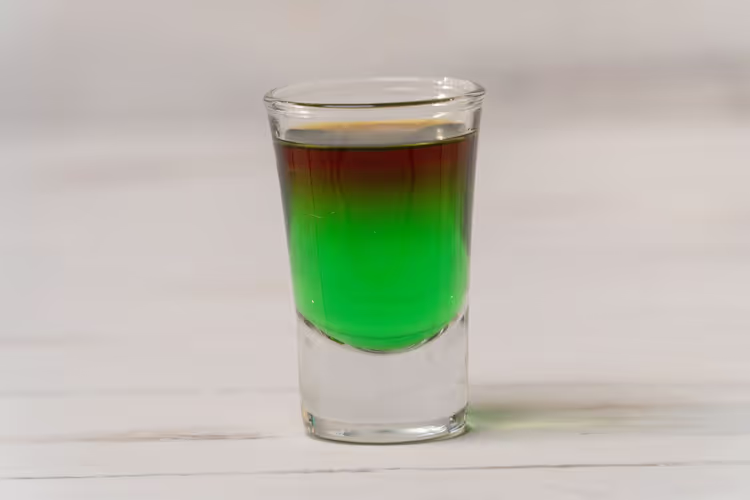
Mint liqueur, or menta, is also among the popular Bulgarian drinks. Its base is ethyl alcohol and mint. Its distinctive features are a smooth taste, a rich green color, and a fresh aroma. Bottles come in various sizes, from large one-liter ones to small flasks.
Menta is rarely drunk undiluted. The liqueur is very sweet and concentrated, so it works best in cocktails. Summer drinks made with it turn out wonderfully. Menta pairs excellently with Sprite, ice cream, cream, and lemon. Tourists who are not afraid to experiment try a local cocktail made from menta, milk, and sour cream.
The most famous cocktail is called "the cloud." It is made with strong anise-flavored Mastika and menta in equal proportions. The two drinks have different densities, so they are poured in layers and not mixed. The cocktail is topped with cream. "The cloud" is perfect for a romantic evening.
According to local beliefs, strong Mastika symbolizes the masculine principle, while the gentle sweet liqueur embodies feminine charm. This cocktail is said to heighten the senses. Resourceful home cooks also use menta in the kitchen, adding it to desserts. A bottle of this liqueur makes an unusual gift: the drink is great in cocktails and desserts.
- Who it's for: for summer cocktails and homemade desserts.
⁉️🤔 Frequently asked questions
What can you bring out of Bulgaria without any issues?
Food, alcohol, cosmetics, ceramics, and textiles in reasonable quantities can be taken out freely. Restrictions apply to rare plants: Mursal tea is forbidden to harvest in the wild, so bring it in factory packaging. Before your trip, check the rules for bringing food into your own country, as they vary.
How much money should you set aside for souvenirs in Bulgaria?
It all depends on the scale. A jar of jam, honey, or a spice set costs about as much as a couple of cups of coffee. Silver, ceramics, and leather will cost more, while rakia and wine fall somewhere in between. Cheap edible souvenirs are easy to pick up at a supermarket, but for a silver or copper gift, budget a separate amount.
Can you take Mursal tea out of Bulgaria?
The tea itself is not prohibited from export if it is bought in factory packaging at a store. The ban applies only to harvesting the plant in the wild: Sideritis scardica is protected by law, and picking it is not allowed even for personal use. Herbs sold by street vendors may have been harvested illegally, so buy packaging from a producer.
Which souvenirs from Bulgaria make good gifts?
For a colleague, rose jam, rose oil cosmetics, or honey work well. For a child, bring Turkish delight and tulumbichki. Those who love handmade items will appreciate ceramics, silver, leather goods, and a kuker mask. For a man, you can get rakia, and for a woman, copper cookware or filigree jewelry.
Where should you buy souvenirs in Bulgaria?
Edible souvenirs are cheaper and more reliable in supermarkets and at honey fairs. Buy cosmetics and medicines at pharmacies and brand stores. Look for artisan goods in workshops and at markets, where bargaining is appropriate. Save street stalls in tourist centers for small items: counterfeits are more common there.
In short: what to book
When packing your suitcase from Bulgaria, decide in advance what matters most to you. If you are bringing treats for a large group, go with rakia, wine, and lukanka. For a colleague, rose jam and cosmetics work well, and for kids, bring Turkish delight and tulumbichki. Those who appreciate handmade work will like ceramics, silver, and a kuker mask. Honey and herbal tea make a calm gift for parents.
Before your trip, take care of connectivity and insurance: compare eSIM options and insurance plans.

A small editorial team writing guides for independent travel. We travel ourselves, but we haven’t been everywhere, so we check prices, opening hours and how to get there against official sources.