
















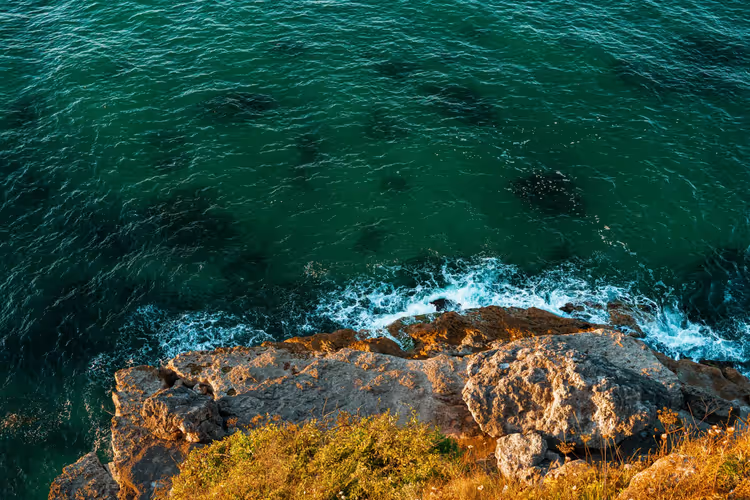
Cape Creus: lighthouse at the edge of the world in Spain's easternmost point
Cap de Creus juts out into the Mediterranean farther than any other point in Spain. It is the easternmost point of the Iberian Peninsula: a rocky outcrop above the sea. It lies in northeastern Catalonia, about 25 km on the map from the French border.
People come here for two things: the slate cliffs of the natural park and the Salvador Dalí house-museum in nearby Cadaqués. The nearest major city, Figueres, is about 39 km away on the map.
Below, you will find out how to get to the cape, what to see along the way, and where to eat right by the lighthouse. Plus practical details: distances, walking time, and booking rules for the house-museum.
Ad: this article contains affiliate links, we earn a commission if you book through them, at no extra cost to you.
Where Cap de Creus is and how to get there
💡 In short:
- Cap de Creus, the easternmost point of the Iberian Peninsula, lies 39 km on the map from Figueres.
- In summer, a tourist train runs from Cadaqués to the cape; in other months, you get there by taxi or on foot.
- The Dalí house-museum in Portlligat is closed in January; tickets are booked in advance for a specific time.
- Prices and opening hours of the house-museum: 09/2026, verified on the official website.
Cap de Creus is located in the municipality of Cadaqués, in northeastern Catalonia. The road from Figueres goes over a pass and first leads to Cadaqués. In summer, a tourist train runs from Cadaqués to the cape. In other months, you get there by local taxi or walk. The walking route from Cadaqués is about six kilometers on the map.
You will be walking on mountain roads, so wear comfortable shoes. The climbs here are mostly gentle, and you do not need any mountaineering skills. This hike gives you more than a ride: you see the park gradually, from the first cove to the cliffs by the lighthouse.
Cadaqués and the Dalí house-museum
Cadaqués, a former fishing village, lives and breathes art. Picasso, Miró, and Duchamp worked here, and Salvador Dalí built a house in nearby Portlligat. Around 2,900 people live in Cadaqués year-round, and in summer many times more people arrive.
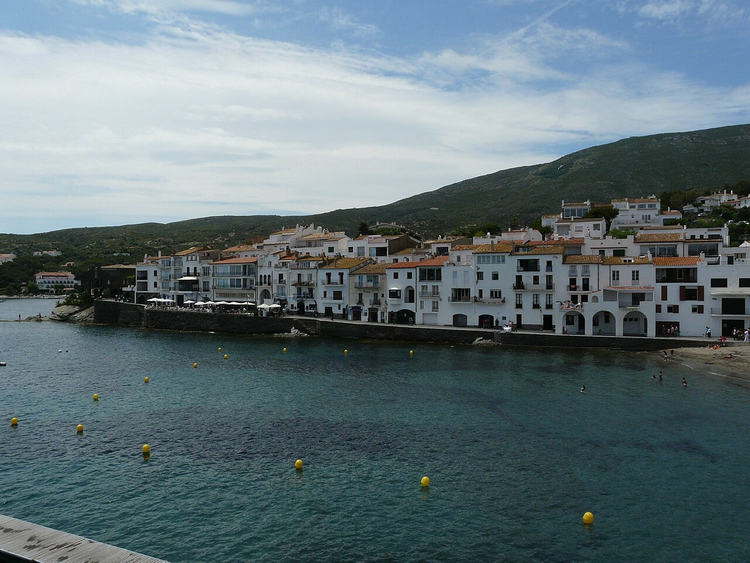 © Pere prlpz ( talk ) · CC BY-SAPhoto: Pere prlpz ( talk ), CC BY-SA (https://creativecommons.org/licenses/by-sa/3.0), Wikimedia Commons
The Salvador Dalí house-museum (Casa Museu Salvador Dalí) stands in Portlligat, in a cove next to the town. You buy tickets online only, for a specific time. Book your slot in advance: in summer, there are few open windows. You need to pick up your ticket no later than half an hour before the tour starts, otherwise you may not be admitted. In January, the house-museum is closed for maintenance; check the price and schedule on the Dalí Foundation website (as of: 09/2026).
- The catch: slots sell out quickly, and without a prior booking you risk being left outside.
Tours and tickets in Cadaques
Guided tours, skip-the-line tickets and activities — most offers can be cancelled free of charge.
See offers on TiqetsThe widget loads once you give your consent.
Natural landscapes of the cape
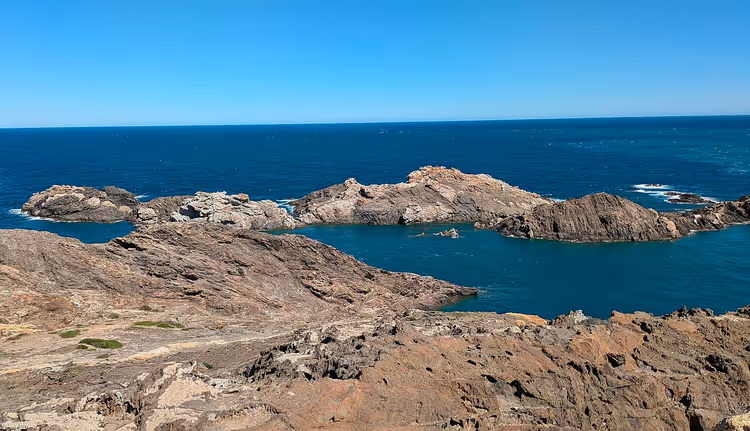
A trail runs along the coast from Cadaqués to the cape. In winter and the off-season, you walk or take a taxi. The road climbs into the hills, but most of the route is easy.
The surrounding area belongs to a natural park created in 1998 to protect the geology. The cliffs here are made of ancient slate and granite. The tramontana wind and sea surf have polished them into striking shapes. In places, the rock looks like melting cheese with holes.
In the cliffs you will find grottoes and caves carved out by the sea over thousands of years. Some of them are open for viewing, but you should not go deep inside without a guide.
The terrain changes with every kilometer. Smooth slabs give way to sharp ridges that look like sets from a film about other planets. The coast is cut by small coves with clear water. In summer, people swim and snorkel in them.
Flora and fauna of the cape
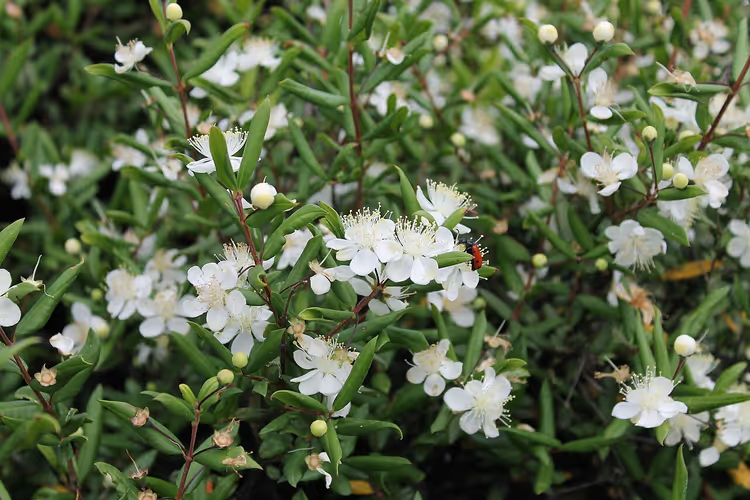
The park's vegetation consists mostly of low shrubs and grasses. In spring, the slopes are covered with a colorful pattern; in summer, the grasses burn out to yellow. There are almost no trees; thickets and scree slopes take their place.
Seabirds nest on the cliffs, and schools of small fish stay close to the water. In the clear coves you can see sea urchins and small coral colonies. Among the animals, you may encounter wild cats, and birds of prey circle above the cliffs.
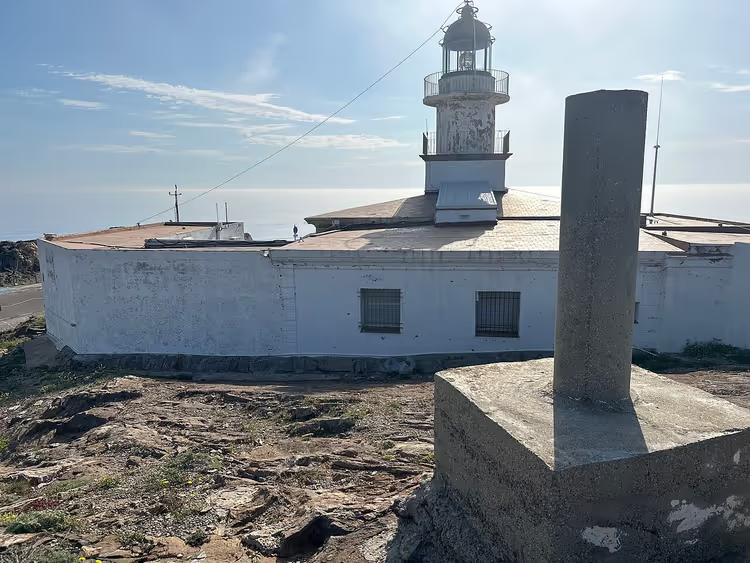
The cape at the edge of the world
 © Caçavertex · CC BYPhoto: Caçavertex, CC BY (https://creativecommons.org/licenses/by/4.0), Wikimedia Commons
The last stretch of the trail climbs steeply. You will have to make an effort, but the reward is worth it. From the top, there is only water, sky, and rock around you. From here you can see why the cape is called the edge of the world.
The tramontana blows here constantly and strongly. The cold northern wind blows with great force and often changes the weather. According to local legend, it can put a person into a state resembling hypnosis. Bring a light windbreaker even in the heat.
These are the landscapes that appeared in the film The Light at the Edge of the World, based on the novel by Jules Verne. The round-trip walk takes several hours if you stop for photos and descents to the water.
- The catch: in summer, the area by the lighthouse is crowded, and the tramontana blows almost all the time.
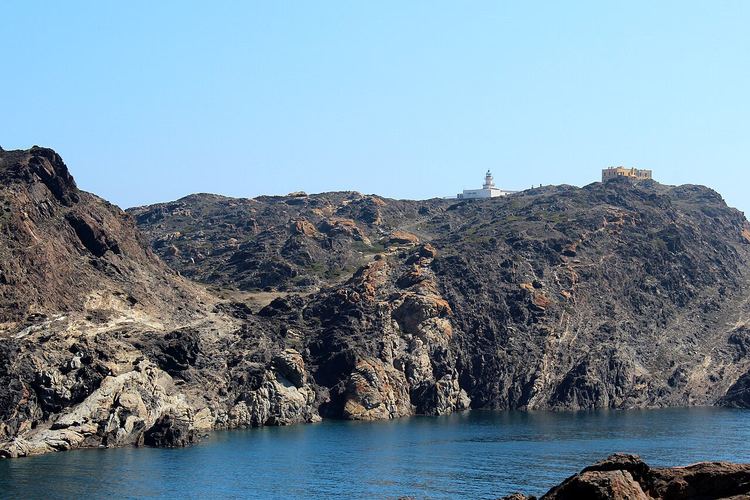
The Cap de Creus lighthouse
 © Maria planas aulet · CC BY-SAPhoto: Maria planas aulet, CC BY-SA (https://creativecommons.org/licenses/by-sa/3.0), Wikimedia Commons
A lighthouse stands at the very edge of the cape. It sits at an elevation of 87 m, and its light is visible for 34 nautical miles (about 55 km). The lighthouse is operational: the rocky coves here are dangerous for ships, so the signal is never turned off.
An old legend is tied to the lighthouse. Locals believed that the cape itself was carved out by the mythical Hercules. A separate story is connected to the filming of the movie about the lighthouse at the edge of the world: a decorative tower was built nearby and later removed to restore the landscape to its original appearance.
Tourists are usually not allowed inside the tower. Next to the lighthouse there is an open viewing area where you get the best panorama of the cliffs and the sea. Come at sunset, when the light on the water is softest.
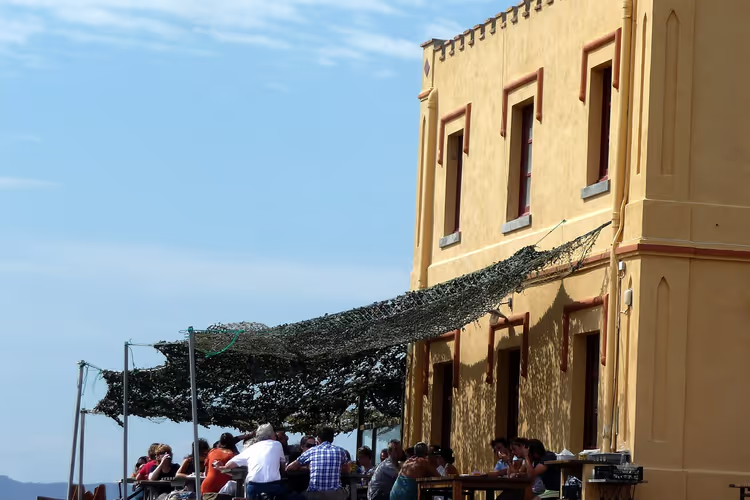
Restaurant Cap de Creus
 © Olga Gairin · CC BY-SAPhoto: Olga Gairin, CC BY-SA (https://creativecommons.org/licenses/by-sa/3.0), Wikimedia Commons
At the end of the route, the Cap de Creus restaurant awaits you. It has a simple terrace with wooden tables, no tablecloths, and a view of the cove. For a light snack, people order cappuccino, tortilla, and bread with grated tomato. Prices are moderate; check the exact amounts on the menu when you are there.
If you are hungrier, order seafood, vegetable dishes, and spicy Indian cuisine. On the second floor, you can rent a room and stay overnight. Early in the morning, the sunrise over the sea will wake you. Many people come to the cape for the weekend just for that.
The way back and how long it takes
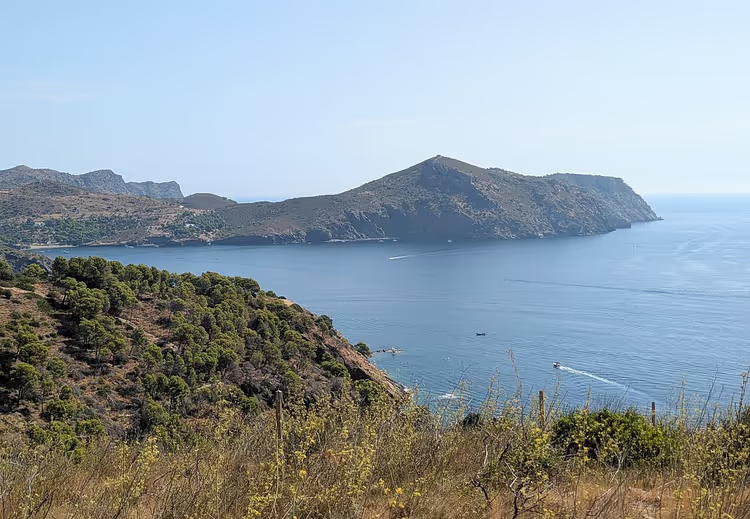
The easiest way back is by taxi, or by tourist train in summer. The ride takes less time than walking, but the view from the window is just as good. If you are not staying overnight, plan to leave before dark.
The whole route with the museum and lunch by the lighthouse takes a full day. Bring water, sun protection, and cash for the taxi. In high season, arrive in the morning so you can do everything without rushing.
You can continue the Spain theme: read about the Alhambra fortress in Andalusia.
⁉️🤔 Frequently asked questions
How do you get to Cap de Creus without a car?
In summer, a tourist train runs from Cadaqués to the cape. In other months, local taxis operate, and the coastal trail is walkable. From Cadaqués it is about six kilometers on the map.
When is the best time to visit Cap de Creus?
In high season, the tourist train runs and access to the water is open. In spring and autumn there are fewer people, but be prepared for the strong tramontana wind. Bring a windbreaker in any month.
How much does admission to the Dalí house-museum cost?
Tickets are sold online only, for a specific time. Check the price and schedule on the official Dalí Foundation website before your trip. In January, the house-museum is closed for maintenance, so it is better to plan your visit for another month.
How long does the walk around the cape take?
The trail from Cadaqués to the lighthouse and back takes several hours if you stop for photos and descents to the water. Plan a full day for the whole route with the museum and lunch.
Can you go inside the lighthouse?
Tourists are usually not allowed inside the tower. Next to the lighthouse there is an open viewing area with views of the cliffs and the sea. Come at sunset, when the light on the water is softest.
In short: what is worth booking
Cap de Creus suits those who want to combine nature and art in one day. Here you will see the easternmost edge of Spain, the slate cliffs, and the Dalí house-museum along the way. Come in late spring or early autumn: in summer it is hot and crowded.
- If you have one day: take a morning slot at the Dalí house-museum, then head to the lighthouse after lunch.
- If you are traveling with children: choose the tourist train from Cadaqués; it is shorter than the walking route.
- If you want quiet: come on a weekday morning, before the tour groups arrive.
If you want to see the cliffs from the water, book a tour on GetYourGuide.

A small editorial team writing guides for independent travel. We travel ourselves, but we haven’t been everywhere, so we check prices, opening hours and how to get there against official sources.