













Semana Santa in Andalusia: where to see processions and how to plan the week
Easter in Andalusia matters more than Christmas. In Seville, Malaga and Granada, thousands of people in pointed hoods take to the streets, and the whole city lives and breathes these seven days.
Maundy Thursday and Good Friday are official public holidays in Andalusia. Easter Monday is not a holiday, which surprises many travelers from Germany and Austria.
Below is a city-by-city breakdown: Seville, Malaga, the Costa del Sol, Granada, Cordoba, Cadiz and Jerez. We also cover how the processions work and the Easter performances that people travel here specifically to see.
Ad: this article contains affiliate links, we earn a commission if you book through them, at no extra cost to you.
What Semana Santa is
💡 In short:
- Watch the processions in the evening and at night: that is when you get the best views.
- Pick a hotel away from the route, otherwise you will not be sleeping with drums outside.
- Procession schedules and routes: 09/2026, according to the Consejo General de Hermandades y Cofradías.
Semana Santa translates as "Holy Week." It begins on Palm Sunday (Domingo de Ramos) and ends on Easter Sunday (Domingo de Resurrección). Each year the week falls in late March or early April.
The main players here are the brotherhoods, known in Spanish as hermandades or cofradías. Each one keeps its own floats (pasos) with a figure of Christ or the Virgin Mary and brings them out onto the streets together with the nazarenos, people in tunics and tall pointed hoods.
The procession is not a show for tourists but a living tradition that these cities pass down from generation to generation.
The week itself is divided by day: Palm Sunday, Holy Monday, Holy Tuesday, Holy Wednesday, Maundy Thursday, Good Friday, Holy Saturday and Easter Sunday. Each day has its own set of processions, so it is worth checking the schedule in advance.
The night processions leave the strongest impression. They set out after sunset, the streets are lit only by candles, and saetas ring out from the balconies. Even if you are not religious, the atmosphere is captivating in its own right.
Holy Week in Andalusia
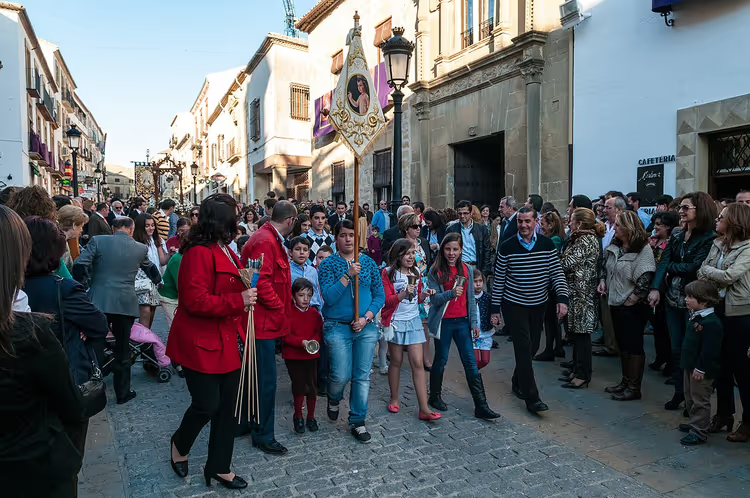
During Semana Santa, Seville, Malaga and Granada are packed. People stand shoulder to shoulder along the procession route, and finding a spot with a good view is not easy, especially in the evening.
When choosing a hotel, pay attention to its location. If the procession passes under your hotel windows, you can forget about a quiet night's sleep.
A good view depends on where you stand. Along the official route in the central squares it is crowded; near the church exit there are fewer people. Arrive an hour before the start and stay near the edge of the crowd, and you will be able to see both the floats and the brass band.
Easter processions take place in many cities in Andalusia. The largest and most impressive are in Seville, Malaga and Granada. Below we cover each of them, then add the smaller cities and the Costa del Sol.
 © Michal Osmenda from Brussels, Belgium · CC BYPhoto: Michal Osmenda from Brussels, Belgium, CC BY (https://creativecommons.org/licenses/by/2.0), Wikimedia Commons
Semana Santa in Seville
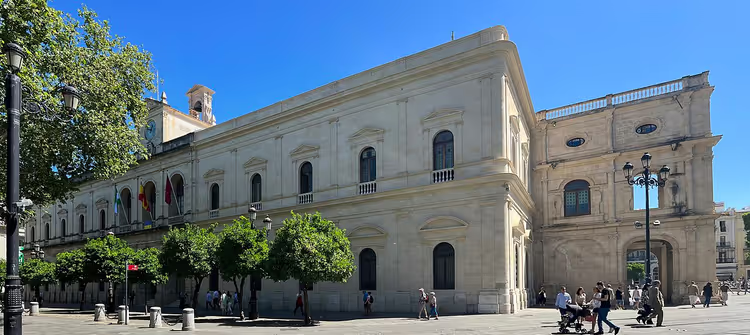
In Seville, processions run through the old town around the cathedral all week. More than sixty brotherhoods take part, making this the most packed week in Andalusia (as of 09/2026, Consejo de Hermandades).
 © Chabe01 · CC BY-SAPhoto: Chabe01, CC BY-SA (https://creativecommons.org/licenses/by-sa/4.0), Wikimedia Commons
One of the main events falls on Palm Sunday itself. The La Borriquita brotherhood procession starts from Iglesia del Divino Salvador, and around six hundred nazarenos take to the streets (as of 09/2026, official data from the Council of Brotherhoods).
The main days of the week are Maundy Thursday and Good Friday. That is when the two most famous processions set out: La Macarena from Basílica de la Macarena and La Esperanza de Triana from Capilla de los Marineros.
The processions run in the afternoon and at night, most often from seven in the evening until one in the morning. Pick your spot in advance: crowds gather at the cathedral and at the brotherhood churches, but on the side streets of the old town you will have more room. Schedule and routes: checked on 09/12/2026 on the official website of the Council of Brotherhoods of Seville.
Tours and tickets in Seville
Guided tours, skip-the-line tickets and activities — most offers can be cancelled free of charge.
See offers on GetYourGuideThe widget loads once you give your consent.
Semana Santa in Malaga
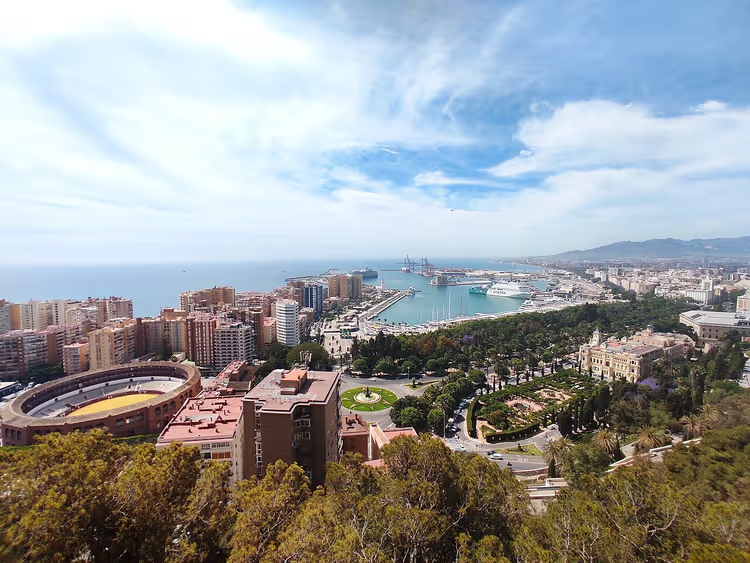
Malaga puts on more than forty processions, making it the busiest week on the Costa del Sol (as of 09/2026, ABC guide).
 © Viktar Palstsiuk · CC BY-SAPhoto: Viktar Palstsiuk, CC BY-SA (https://creativecommons.org/licenses/by-sa/4.0), Wikimedia Commons
Neighborhood brotherhoods start on Palm Sunday. They move through the old town's narrow streets, past the cathedral and along the stands on Alameda Principal.
The most spectacular procession takes place on Maundy Thursday. Cristo de Mena starts at 6:55 pm from the Casa Hermandad in the Perchel district (according to the ABC schedule, 09/2026). It is accompanied by the Spanish Legion, which disembarks in the port of Malaga in the morning and marches through the center. The procession itself runs late into the night.
For locals, El Cautivo on Monday matters most. The brotherhood from Iglesia de San Pablo on Calle Trinidad carries the largest and heaviest throne in the city.
Among the participants in the María Santísima de Lágrimas y Favores procession of the Cofradía de Fusionadas on Palm Sunday, actor Antonio Banderas, a Malaga native, is often mentioned. It starts at Iglesia de San Juan Bautista on Calle San Juan.
The El Penitente app makes planning easy: it shows routes and the current location of processions on a map for Malaga and Seville.
Processions in Malaga differ from those in Seville. There is less solemn pomp here and more street energy.
Maundy Thursday in Malaga begins long before evening. From the morning, the center fills with spectators, and by the time Cristo de Mena comes out, the streets are already packed.
Semana Santa in the province of Malaga
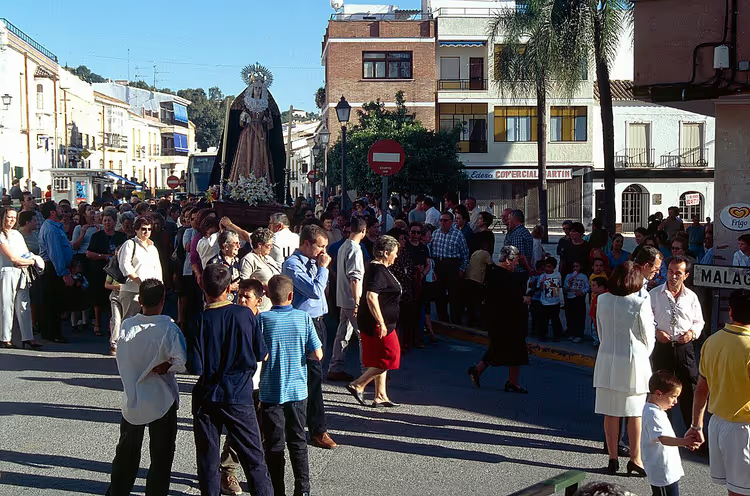
You don't have to watch Semana Santa in a big city. Smaller towns in the province of Malaga hold their own processions, and there is noticeably less crowding.
 © Ziegler175 · CC BY-SAPhoto: Ziegler175, CC BY-SA (https://creativecommons.org/licenses/by-sa/3.0), Wikimedia Commons
Ronda: processions above a deep gorge
Ronda sits on cliffs above a gorge, and Holy Week here unfolds against the backdrop of the stone bridge. It's worth seeing the Gitanos procession on Palm Sunday, El Silencio on Wednesday, and Padre Jesús on the night of Good Friday, the famous Madrugá. Crowds here are smaller than in Seville, and the scenery is just as good.
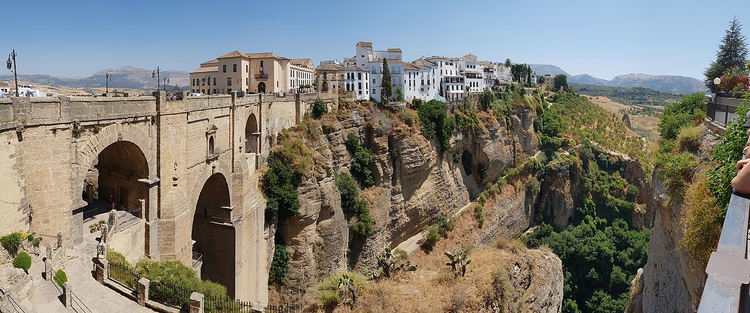 © M.A. Ros Almirón · CC BY-SAPhoto: M.A. Ros Almirón, CC BY-SA (https://creativecommons.org/licenses/by-sa/4.0), Wikimedia Commons
Antequera: running with thrones uphill
Antequera is known for the Correr la Vega ritual. Carriers run with thrones up the city's steep slopes. The most impressive are the Vegas with the figures of Virgen de los Dolores, de la Paz and del Socorro (according to the Antequera tourist office, 09/2026).
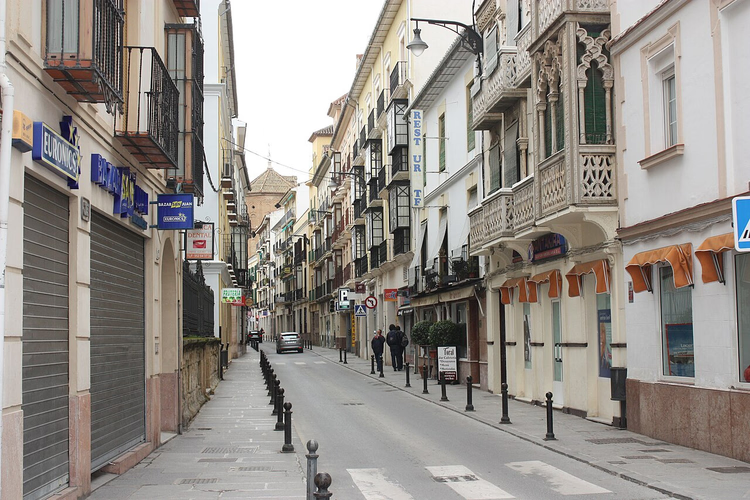 © Dguendel · CC BYPhoto: Dguendel, CC BY (https://creativecommons.org/licenses/by/4.0), Wikimedia Commons
Velez-Malaga: a festival of national interest
Semana Santa in Velez-Malaga is recognized as a festival of national tourist interest. The week opens with the famous Pollinica and Virgen del Rocío processions, followed by Ecce Homo and Huerto y Desamparados. At the end of the week, Estudiantes and Jesús El Pobre pass through the streets on Maundy Thursday, and Cristo de los Vigías and Las Angustias on Good Friday. Routes and all the thrones are collected on the interactive week map.
 © Alan Grant · CC BY-SAPhoto: Alan Grant, CC BY-SA (https://creativecommons.org/licenses/by-sa/4.0), Wikimedia Commons
Other towns with special traditions
Other towns in the province have developed their own customs as well.
- Marbella: a more intimate week, with processions winding through the narrow streets of the old town without the capital's crowds. The schedule is published at semanasantamarbella.com.
- Nerja: east of Malaga, with its own brotherhoods and processions, modest in size but without the crush. A good option for a first introduction to Semana Santa.
- Torremolinos: the week also takes place on the resort part of the coast, which shows how deeply the tradition is rooted even where there are many foreign tourists.
- Archidona: here it is worth seeing the processions of El Nazareno, La Humildad and La Soledad.
- Alora: do not miss La Despedía, which is also a festival of national tourist interest, plus the Nazareno de las Torres procession on Maundy Thursday.
- Arriate: two brotherhoods, Cristinos and Jesuistas, compete for the most impressive procession and service.
- Alhaurín el Grande: the brotherhoods of Santa Veracruz ("the greens") and Nuestro Padre Jesús Nazareno ("the purples") play an important role. They are rivals, but are linked to each other and present their figures on Maundy Thursday and Good Friday.
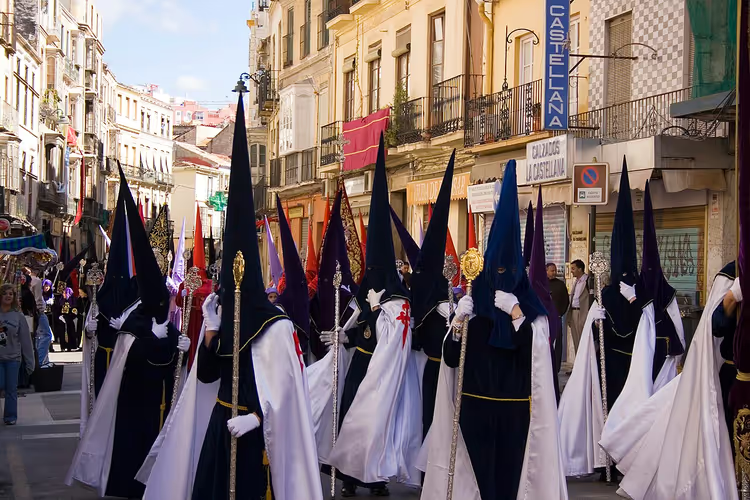 © Torimine · CC BY-SAPhoto: Torimine, CC BY-SA (https://creativecommons.org/licenses/by-sa/4.0), Wikimedia Commons
Semana Santa in Granada
In Granada, more than 30 brotherhoods hold processions from Palm Sunday to Easter (according to Real Federación de Hermandades y Cofradías de Granada, 09/2026). The setting itself makes the week special: the Alhambra above the city, the cathedral, the Albaicín and Sacromonte neighborhoods with their caves.
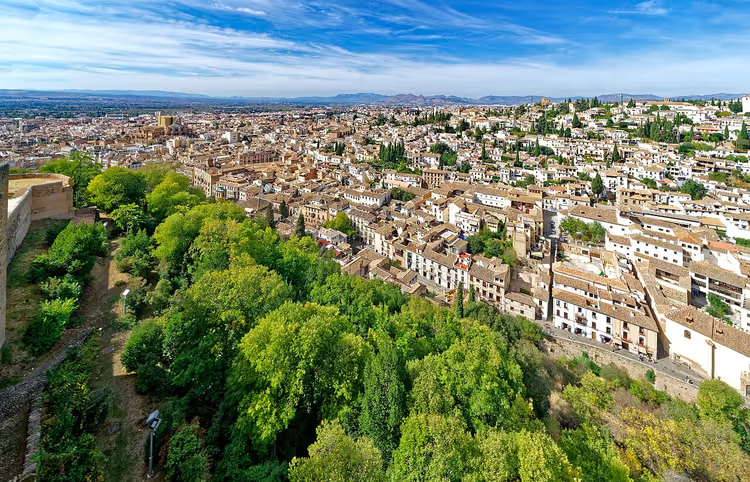 © Holger Uwe Schmitt · CC BY-SAPhoto: Holger Uwe Schmitt, CC BY-SA (https://creativecommons.org/licenses/by-sa/4.0), Wikimedia Commons
The gitanos procession through Sacromonte is considered one of the most beautiful. Here you can expect saetas, bonfires, and a procession of silence. Cristo de los Gitanos comes out on Wednesday evening and continues late into the night.
Another tradition is the Hora Nona, a prayer at three in the afternoon on Good Friday at Campo del Príncipe. The Albaicín brotherhoods are also worth seeing: the narrow streets of the old quarter create a special atmosphere.
It is best to find a good viewing spot early: in Granada, processions move through narrow streets, and the area near the church exit is almost always crowded.
On Sunday afternoon, the week in Granada ends with the Los Facundillos procession. Children carry a small float on their shoulders, followed by other children ringing clay bells.
Semana Santa in Cordoba
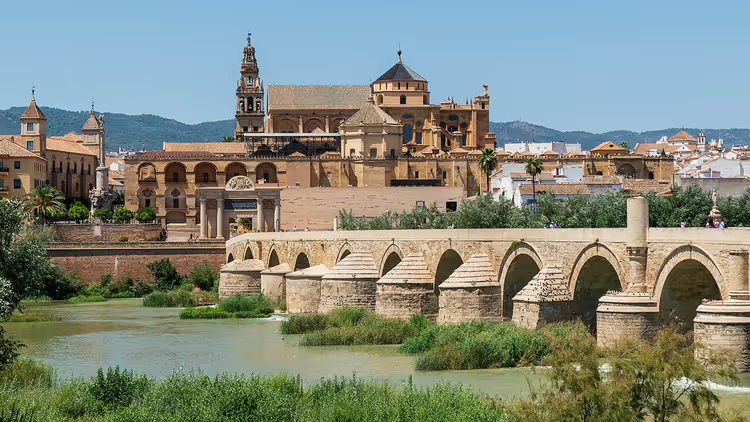
Semana Santa in Cordoba differs from Seville and Malaga. Here it is quieter and more contemplative, and that is exactly why it is impressive in its own way.
 © Jose María Ligero Loarte · CC BY-SAPhoto: Jose María Ligero Loarte, CC BY-SA (https://creativecommons.org/licenses/by-sa/4.0), Wikimedia Commons
When the processions pass through the picturesque lanes of the old town, especially near the Mezquita-Catedral, you can see how deeply this week is rooted in the city's history.
One of the most famous processions belongs to the Hermandad de la Paz. It comes out on Wednesday of Holy Week and fills the streets with people.
The advantage of Cordoba is that you stand closer to the procession than in Seville: the crowds are smaller, and the streets are just as narrow.
The gitanos brotherhood procession on Tuesday looks completely different. It starts from the La Aurora parish, and its route through the Jewish quarter is one of the most powerful of the entire week. Improvised saetas and the closeness to the people make this procession a special sight.
Schedules and routes are published at hermandadesdecordoba.es.
Semana Santa in Cadiz
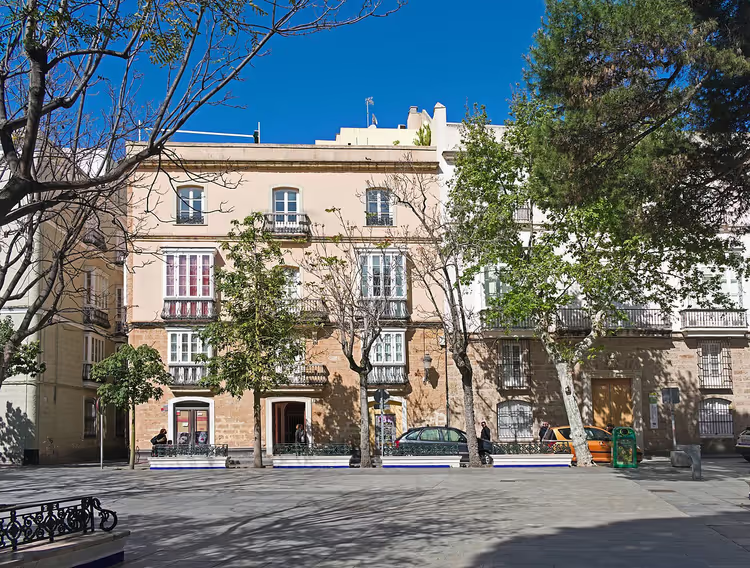
Cadiz undeservedly remains in the shadow of other Semana Santa cities. While the processions of Seville and Malaga are known worldwide, the week in Cadiz goes almost unnoticed. And that is a shame.
 © Ymblanter · CC BY-SAPhoto: Ymblanter, CC BY-SA (https://creativecommons.org/licenses/by-sa/4.0), Wikimedia Commons
One of the oldest cities in Europe sits on a narrow peninsula, and this gives the week a setting that is hard to match. More than 30 processions march to bands, drums, and trumpets past the cathedral with its golden dome right by the sea (as of 09/2026, Diario de Cádiz guide).
There is also a technical detail. In Cadiz, the floats are carried on shoulders using poles that run from front to back, without additional protection. In most other Andalusian cities, the bearers remain underneath the float and are not visible.
The main event of the week: the Cristo de la Buena Muerte procession on Good Friday. It leaves the church of San Agustín and proceeds in complete darkness, lit only by a few candles. Those who have seen it once never forget it.
And if you love music, on Good Friday the Oratorio Santa Cueva traditionally performs Haydn's "The Seven Last Words of Christ". The commission for this work originally came from Cadiz itself.
Semana santa in Jerez de la Frontera
Jerez is clearly underrated when it comes to Semana Santa. In terms of the number of brotherhoods, the city is second in Andalusia only to Seville, and the quality of the floats and figures is no lower.
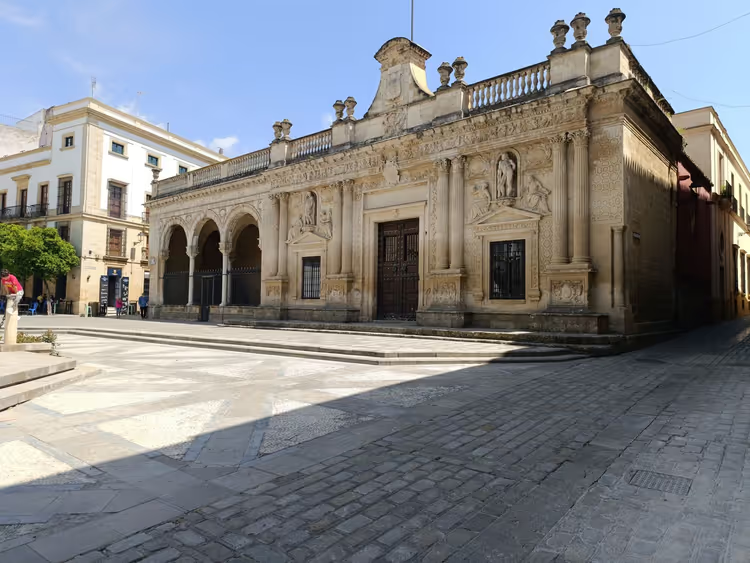
The local week has been declared a festival of national tourist interest. If you avoid big cities but want to see a truly significant Semana Santa, you will not go wrong here. Schedules and routes are published by the Jerez city council.
Easter processions also take place in other Andalusian cities. In Jaén and Almería, schedules and routes are published by the local brotherhood federations.
History and traditions of Semana Santa
The somber-looking spectacle of Easter processions originated in the Middle Ages and reenacts the Way of the Cross. Since the 16th century, countless processions have moved through Spanish cities and villages during Holy Week.
Life-size figures, pasos, are carried through the streets. These are sculptural scenes of the Passion of Christ, usually wooden, with figures of Christ, the Virgin Mary, and saints.
The processions are organized by brotherhoods, hermandades or cofradías. Seville has the most brotherhoods (as of 09/2026, data from the Council of Brotherhoods of Seville).
Floats weighing up to two tons are carried by costaleros. They prepare for Holy Week in advance and rehearse holding the floats and figures.
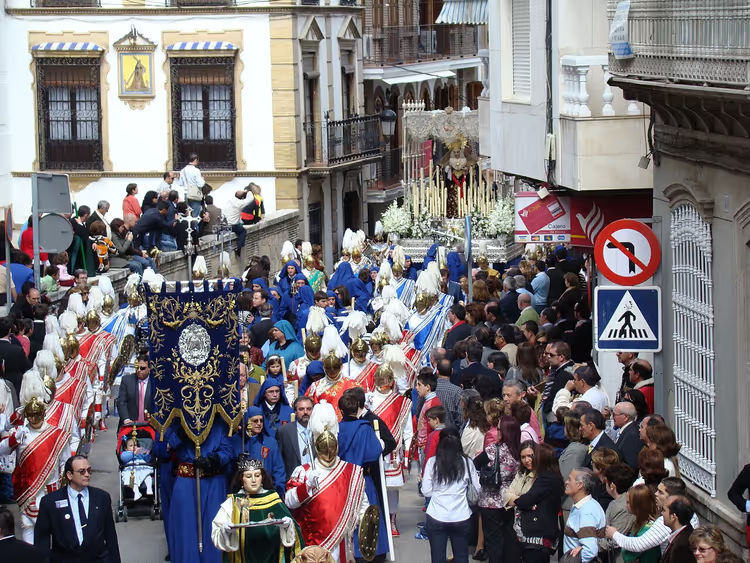
Penitents, nazarenos and penitentes, walk alongside in tunics and pointed hoods. The procession is often accompanied by music groups and "widows" in black lace mantillas.
Semana Santa is celebrated throughout Spain, but the regions differ. In Andalusia, special attention is paid to jewelry work, lavish floral decoration, and embroidery.
How a procession works
If you want to see the week from the very beginning, come to the first procession on Palm Sunday. On this day, olive and palm branches are blessed.
After that, in most cities processions take place daily, several per day. The most intense night is from Maundy Thursday to Good Friday.
The climax begins on Good Friday, when the church doors open. First the bearers come out with the leading cross, then the paso with a biblical scene, followed by the chapel. The crowd welcomes the exit, but during the procession itself people remain quiet. Penitents in long robes with hoods follow.
A single procession often lasts several hours.
During a saeta, a song is sung from a balcony in honor of the figure of a saint.
The home parish church serves as both the start and finish of the procession, and the route is the same every year. The Puerta del Perdón, the door of forgiveness, is typical; in Granada, for example, it leads out of the cathedral.
Semana Santa ends on Easter Sunday. Easter Monday is not a public holiday in most of Spain.
Easter plays and festivals in Andalusia
Besides the Holy Week processions, Andalusia also hosts Easter plays. Amateur actors perform the Stations of the Cross and the resurrection of Christ. These productions take place in many towns, on stage or right in the streets.
The most famous play takes place in Riogordo. It has been performed since 1951, and every Good Friday and Holy Saturday thousands of spectators come to see it (as of El Paso de Riogordo, 09/2026). A small town in the province of Malaga turns into an open-air stage.
The play in Riogordo is performed by the residents themselves, and the stage occupies part of the town. Tickets for the stands are bought in advance; on the day of the performance there are usually no seats left.
Slightly more modest but no less interesting is the Paso de Istán near Marbella. It dates back to the 17th century and is among the oldest in Spain. Performances take place on Maundy Thursday, Good Friday and Holy Saturday. It starts at the sports ground in Istán (Calle Calvario), and after the Last Supper scene the whole procession climbs the hill above the town.
In Cajiz, a small district of Vélez-Málaga, they stage a dramatic scene of the Passion, death and resurrection of Christ. More than 250 residents take part in El Paso de Cajiz, and 36 scenes from the Old and New Testaments are performed (as of the Semana Santa map of Vélez-Málaga, 09/2026). The play runs on a purpose-built stage on Good Friday and Holy Saturday.
If you are traveling specifically for the plays, check the performance days in advance: they are tied to Holy Week and change from year to year.
Other plays and traditions
- Estepona: on Holy Saturday an Easter play is performed at Plaza San Francisco in the old town.
- Benalmádena: El Paso has been performed here since the early 20th century. At Parque Rústico El Retamar, thirty-five acts present the most dramatic moments of the Passion, based on an anonymous 19th-century text that combines verse and prose. Between scenes, saetas are danced and sung.
- Igualeja: every year on Holy Saturday they perform "Pasión y Muerte de Jesús de Nazaret".
- Cartajima: Easter is celebrated here in a special way. At dawn on Easter Sunday, residents set up a garden in the streets and later burn a figure of Judas in it. At seven in the morning, a figure of the infant Jesus is carried from the church of Nuestra Señora del Rosario to the garden, where it remains until it meets the town's patron saint. Then comes a dance of mother and child, which is why this custom is called "La Cortesía", meaning courtesy.
Processions, plays and local customs make Semana Santa in the province of Malaga very diverse. Whatever you choose, impressive processions or street plays, in Andalusia at Easter you will find a blend of deep faith and living folk tradition.
 © Jopamo · CC BY-SAPhoto: Jopamo, CC BY-SA (https://creativecommons.org/licenses/by-sa/3.0), Wikimedia Commons
⁉️🤔 Frequently asked questions
When does Semana Santa take place?
Semana Santa always runs from Palm Sunday to Easter Sunday, that is, exactly one week. These dates shift every year because they are tied to Easter. Check the exact dates by city on the official websites of the brotherhoods: schedules are usually published a few weeks before it starts.
Do you need tickets for the processions?
You can watch the processions from the street for free, no payment needed. Seats in the stands along the official route are sold separately, and they sell out in advance. You can book a seat and check prices on the websites of city councils, brotherhoods and tourist offices.
Where to watch the processions in Seville?
The densest crowds are in the center, on the official Carrera Oficial route around the cathedral. It is also worth going to the Macarena and Triana neighborhoods: the most famous brotherhoods come out there, and the crowd is noticeably smaller than in the center. Arrive an hour before the start; spots along the route fill up quickly.
How long does one procession last?
From leaving its home church (salida) to returning (encierro), it easily takes six to eight hours. So do not plan to drop by for five minutes. If you want to see the departure itself, come early and take a spot along the route.
Are museums and shops open during Holy Week?
On Maundy Thursday and Good Friday many shops and some museums are closed: these are official public holidays in Andalusia. On Saturday and Easter Sunday not all places are open, so check hours in advance on official websites. The busiest days are Maundy Thursday and Good Friday.
In short: what to book
Semana Santa in Andalusia should be planned in advance, otherwise the choice of accommodation and routes shrinks sharply. Accommodation in the center sells out months ahead, and stand seats go even earlier.
- If you want the most processions: stay in Seville.
- If quiet matters more to you: choose Cordoba or Jerez de la Frontera.
- If you are driving along the coast: add Ronda, Antequera and Vélez-Málaga.
Prices on these dates are noticeably higher than usual. See hotels in Seville on Trip.com.
It is convenient to travel between cities by trains across Andalusia, and tours and tickets add to the experience.

A small editorial team writing guides for independent travel. We travel ourselves, but we haven’t been everywhere, so we check prices, opening hours and how to get there against official sources.